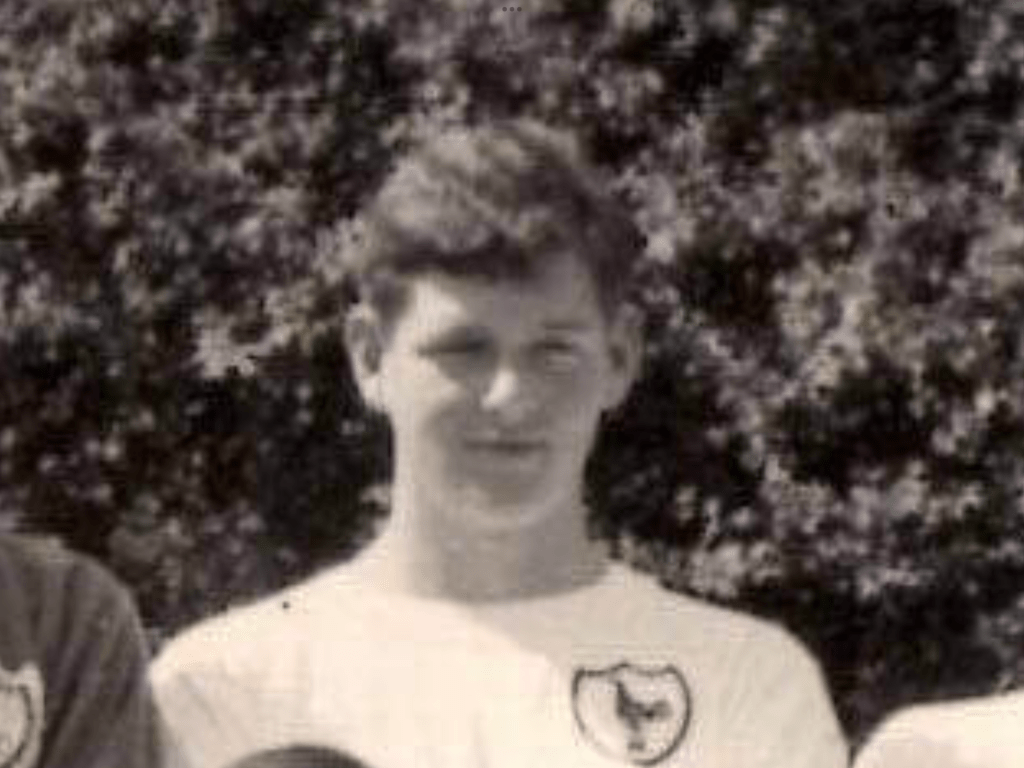
Martin O’Donnell was incredibly unlucky in the sense that he never got to reach his full potential at Spurs. However, he bounced back really well from a terrible injury, to forge a very successful career post Spurs, as well as also doing well in non-League football. O’Donnell is from Chiswick in West London, although a versatile player, he did play mainly at left-half for Spurs at youth level. Martin was formerly of Eton Manor, prior to being scouted by Spurs scout Ronnie Clayton and assistant manager at the time, Eddie Baily (Eddie’s son Graham Baily was playing against Eton Manor, when Martin was spotted). Martin would join Spurs as a schoolboy footballer in around 1963, and he would progress well and would later be offfered apprenticeship forms in 1965, which he signed. Training with the likes of Jimmy Pearce, Ray Evans and Paul Shoemark during those days at Spurs’ old Cheshunt training ground, Martin was progressing well and he was playing regularly for the Spurs Under 17 side in the 1965/66 season. A season in which Martin helped the Spurs Under 17 side win the South-East Counties League II and Cup double.
A fast, skilful, creative and composed player, who had a real eye for goal, O’Donnell once scored a memorable hat-trick for the Spurs Under 17 side in the South-East Counties League II in a league game with Chelsea in 1965/66. He was compared to former Rangers player Jim Baxter by Spurs’ former Chief-scout Dickie Walker during his time as an apprentice. However, just days after being told that he was going to be offered a professional contract by Spurs, Martin fractured his femur (thigh bone) at Cheshunt. He would spend nine months in plaster in hospital, and he could not play football properly again for another 18 months. However, Spurs looked after Martin well during this time, and he even returned for them at youth level for a while on a short basis later on in the 1960’s. After leaving Spurs O’Donnell would play non-League football for the likes of Hayes (alongside his now very good friend Dave Bassett), Northwood, Southall and a Walthamstow Avenue side which contained a number of former Spurs youth team players. At one time in his non-League football career, Martin was meant to go to Nottingham Forest for a trial, and going back to his time at Spurs, he had ambitions of playing for the Republic of Ireland, as his parents were from there. Although he still played at a good standard of football, he was understandably not quite the same player after his thigh injury.
After football Martin O’Donnell embarked on a highly successful career in business. He started in sales and would later go into the fragrance and cosmetics business, where he worked for Revlon and later Estée Lauder, where he became sales director for Europe. Martin was also very successful when he set-up his own fragrance and cosmetics business, later on in his career post Spurs. Although he didn’t get the chance to progress as he would have hoped to at Spurs, because of his injury, Martin O’Donnell did ever so well for himself in his professional career. Since I interviewed Martin in 2018, he has become a good friend. Now retired, he has so much to be proud of, and Spurs is still a club close to his heart. He is a really top man, and he was at my Spurs mid 1960’s youth team reunion last summer in Essex.
A talented player who was clever in his all-round play, midfielder Allan Charles Cockram was born in Kensington, London, in October of 1963. Playing for Camden Schools during his youth, Allan was invited to Spurs by a scout called Fred Ricketts during the 1970’s. Allan’s association with Spurs was quite a long one, and he played for the second Spurs youth team in the South-East Counties League Division Two, before later progressing to the senior youth team, a team which he made good progress in. The Londoner was also a member of Spurs’ South-East Counties League Senior Division One that won the league in 1980/81. The Spurs man did sustain a bad injury as a youth player at the club, which could have ended his footballing career. However, Allan bounced back and he went on to later help Spurs’ very talented youth side reach the final of the 1980/81 FA Youth Cup against West Ham. He also went on to play for the very competitive Spurs reserve side in the Football Combination League in the 1980’s, before achieving what every Spurs youth player dreams of doing, and that is playing for the first team.
A central midfielder with a real eye for a forward pass, but also someone who liked to get on the ball and keep it moving in the central areas of the pitch. Allan Cockram could also play on the right of midfield, and the player who signed professional forms with Spurs in 1981, would make his debut for the Spurs first team in a league game against Watford in 1984, at White Hart Lane. He did make an additional appearance for Spurs’ first team (also in a league game), in a match against Southampton shortly before the 1984 UEFA Cup final. Allan Cockram left Spurs after the following 1984/85 season. He would go on to achieve some really good things in the game, post Spurs. At Brentford he was a part of a good Brentford side who went on a memorable FA cup run during the 1980’s, eventually setting-up a glamour tie with Liverpool. A game in which Allan also played in, and which he recalled to me in our interview in 2019, just how special a memory that was to him. In no particular order, Allan also played for San Francisco Flyers, Bristol Rovers, St Albans City and Reading, post Spurs.
During his career Allan was player-manager of St Albans City and also Chertsey Town, as well as later becoming assistant manager of Leatherhead, and then in more recent years manager of the Cambridge University side. However, the former professional footballer and at one time firefighter, has since 2017, been dedicating his time to volunteer and run the Brentford Penguins FC, which he played a big part in setting-up. They are a football programme for footballers with Down’s syndrome. Allan is helping to do absolutely wonderful work for the Brentford Penguins FC, and just recently he deservedly won (after being nominated) the Royal Voluntary Champions Award, for the recent coronation. Also, the Brentford Penguins now have charity status (Planet Penguin football foundation), and they also have an over 55 men’s mental health walking football team, and also recently an over 40’s women’s walking football team. There have also been two films made on the charity. I have had the pleasure of meeting Allan, and he is probably the nicest ex-footballer that I have ever met. He still loves Spurs, as well as his old club Brentford. And he has so much to be proud of, and he has given so much to the community of Brentford/West London in recent years. He is an absolute gentleman, and a legend!
A real character in the game of football, whose talent and tenacity saw him recommended to Spurs, who he later joined during the late 1970’s as a youth player on part-time forms, Glen Alzapiedi was in fact an Arsenal supporter as a youth. For this part of my where are they now, former Spurs youth/Academy players series, we’re going back a good while in time. However, still very much involved in football to this day, Glen has given a lot to non-League football in recent years alone. Brought up in Waltham Abbey, the talented, tough tackling central midfielder was highly thought of at Spurs at the time, and he was a regular for Spurs’ South-East Counties Division Two side during his time at the club, as well as making one appearance for the very talented Division One side in that time, during the 1980/81 season, when they won the league. During his time at the club, he was also selected to play for a Spurs Youth side in a friendly with Swiss side Chenois Geneva, at Cheshunt. Graham Roberts, Terry Yorath and Don McAllister all started that game, which must have been a great experience for Glen at the time. Glen’s era of Spurs Youth Team players would have had players such as Ian Crook and Allan Cockram around at the time.
Glen did however, spend basically a whole season out injured for Spurs at youth level, which didn’t help his progress at the club. Glen’s final season at Spurs was in 1980/81, and at the end of the season he sadly didn’t get an apprenticeship. However, Glen did get an apprenticeship at Birmingham City, who he spent a while with, which would have added to his footballing grounding as a youth player. Later spending some time at Stevenage later on in his footballing career, although he did unfortunately have some injury problems while he was playing for them. Glen did the knowledge to become a London taxi driver during his footballing career, and he still does that job to this day. However, still very much involved in football on the non-League scene, the former Spurs man has a great knowledge of the game, and Glen is using his knowledge to help players at non-League level, and he has so far had a really successful coaching career in the non-League. One of his finest achievements so far, was helping Concord Rangers get promoted to the National League South, alongside Danny Cowley.
In addition to his coaching achievements with Concord Rangers as an assistant manager/coach, Glen has also managed and coached at clubs such as Ware, St Albans City, Cheshunt and Brentwood Town, and he has a lot of experience at that level. And at the beginning of the Isthmian League Premier Division season that has just finished, alongside his son Dan, Glen was appointed by Aveley on to the management staff. And both Glen and Dan helped Aveley (they had only been promoted to the Isthmian League Premier Division for the start of the 2022/23 season), to achieve a great feat, in winning last season’s Isthmian League Premier Division play-offs, to impressively win promotion to the National League South. I attended an Aveley game last season, and I was impressed by the way that they played, and also at how difficult they made it for the other side to play their game against them. Glen’s time at Spurs and days spent at their old Cheshunt training ground may have been over 40 years ago, but it would still have left an impression on Glen, and his coaching career. He is a really nice man who has a lot to be proud of, and I wish him and Aveley further success in the future.
Nowadays Spurs’ Academy/youth players often go abroad to compete in an end of season tournament, as well as often participating in a pre-season tournament and sometimes a mid-season tournament (in recent seasons for example: they have competed in a French pre-season tournament). However, it was during the late 1950’s, in the years after the Second World War, that I believe that Spurs first started regularly entering their Youth Team into tournaments in Europe, with this trend first starting just prior to the beginning of the 1960s, in around 1958/59. Spurs would enter youth sides into tournaments in Switzerland, Germany, The Netherlands as well as one in Austria, during the late 1950’s/early 1960’s. These tournaments, although not always end of season tournaments, were often the pinnacle of the players’ footballing careers, and many of those former Spurs youth team players still talk about those tournaments/tours with great affection. During the early days of the tournaments that Spurs used to enter, one of the teams that they sent to compete in a tournament was in Groningen, in The Netherlands, during the 1958/59 season. Spurs won this tournament.
In the tournament in Groningen, Spurs competed with the host club Groningen’s youth team, as well as Ajax, Belgian side Beerschot and a couple of other sides. Spurs won this tournament, with players such as Frank Saul featuring for Spurs in the Netherlands. For that particular tournament the Spurs youth players would all have to meet at Liverpool Street Station in London, and then with the Spurs members of staff (usually it was Jimmy Joyce and former player Sid Tickridge, who were in charge), they would get the train to Harwich, before getting the ferry to The Netherlands. In another tournament this time in Zurich, Switzerland, the Spurs Youth Team stayed in a great hotel in Zurich – The Hotel Stoller. Although they didn’t actually win this tournament (the Blue Stars Youth Tournament) Spurs did reach the semi-finals, which they lost to Italian side Juventus. Former Spurs youth and A team player David Sunshine played in the tournament in Zurich, and when I interviewed him in 2019, he was pretty sure that Manchester United won that tournament, which took place in May of 1961. Spurs had a really talented team at the Blue Stars Youth Tournament, and with forwards such as Frank Saul and Terry Lloyd playing, Spurs would have been a difficult team to play against.
Other youth tournaments that took place around the time of the late 1950’s/early 1960’s include one in Berrenrath in Germany, in 1959/60, which I understand that Spurs won. There was also an interesting tournament which took place in Imst in Austria. This tournament was particularly interesting as a number of junior players who weren’t on the Spurs ground-staff, were included in the squad, as a thank you for their hard work during the season in the Spurs Youth Team. Although as I understand it, Spurs did include a number of more experienced/older players in the squad that traveled to Austria during the late 1950’s. However, there was some sort of misunderstanding regarding player eligibility in the tournament, and so some of the players were unable to really play in the tournament in Imst. Fast forward a couple of years to the mid 1960’s, and Spurs had competed in a couple of youth tournaments in Den Haag, in the Netherlands. In one of these tournaments, which included future Spurs first team players such as Jimmy Pearce and Joe Kinnear, Spurs played against a talented Ajax side which included the legendary Johan Cruyff.
During another year and tournament at Den Haag, Spurs won the tournament. Other teams competing in that tournament were Arsenal, Ajax and Charlton Athletic. Former Spurs assistant manager Eddie Baily traveled out with the Spurs Youth Team for that tournament. This is just a very brief history of some of the early days of Spurs entering teams into end of season tournaments. However, in the many years that have followed, Spurs have competed in very similar tournaments on many, many occasions. Just last season a Spurs Under 19 side competed in the annual end of season Terborg Tournament, in The Netherlands. These tournaments are an important part of Academy development, where you get to play against some top, top sides in a very competitive tournament scenario. Youth football has certainly changed in the years since the days of youth tournaments in Groningen, but as I mentioned previously, they created memories for those Spurs youth players that they won’t ever forget.
Martin Plaskow has been attending Spurs matches for over 80 years. The lifelong Spurs supporter from South Tottenham, attended his first Spurs match in 1942. Martin has since been a regular at Spurs matches, and he is a loyal Spurs supporter, who I recently had the great pleasure and privilege of talking to, at length, about his Spurs memories.
How did you come about supporting Spurs? And what are some of your earliest memories of watching their games?
Martin: I lived in South Tottenham, which is obviously not very far from the ground, and would take about 3/4 of an hour to walk to. My father wasn’t really a football man, but he did take me to a couple of away games. Also, my friends from school were all Spurs supporters, and that’s how it all started. The first Spurs game that I actually saw was during the Second World War (1942), but the actual first match was actually Arsenal versus Brentford, as they used to share the same ground as Spurs. Then the first Spurs game that I ever saw, was in October of 1942, when they played Aldershot in the league south. Spurs won 4-0, and they had an amateur playing for them called AH Gibbons, who was a centre-forward, and he scored four of the goals. Aldershot had the international half-back line of Britton, Cullis and Mercer. After that my friends and I started going regularly to Spurs, and a little later on I attended Tottenham Grammar School, which was even closer to White Hart Lane. So from there it just developed and developed, and we went more regularly to games as we got older.
When Spurs were playing away from home, then we would go to what we thought might be the best game in London. Generally it was Arsenal, as we thought that they were quite good, and also to teams like Leyton Orient, but it was always Spurs who were our first love. We used to go to away Spurs matches in London, as they were easy to get tickets to, but further afield we didn’t go a great deal, because of our age. But we did go to see a semi-final at Villa Park, and also to Leeds, to see Spurs play in the FA Cup, and also at Sheffield United, as well. I’ll always remember that we went up to Sunderland for a cup match, and I think that it finished 2-2, but the amazing part was that we were in the enclosure with Sunderland supporters. And even though they had bottles of beer, we were all friendly and jovial, and it was just quite a nice atmosphere.
What your early days of watching Spurs in the 1940s like? And also what was it like watching Spurs during the following decades?
Martin: There was probably a crowd of about 6,000, but in those days you had a league south with other London teams and southern teams, because of the war. We used to get a taxi from Stamford Hill to the Spurs ground. There was six of us, but they only allowed five in a cab, and so one of us lay on the floor. It cost us one and six pence to get to Tottenham, which was seven and a half pence each, in money today. To get in the seats at Spurs (the old White Hart Lane West stand) it would cost 15p in today’s money. But if you gave the man on the turnstile half of that, then you’d go under the turnstile. So going to Spurs was a regular thing, and we used to stand on The Shelf. At the time there used to be an orange programme which was a single sheet for just one penny. And during the war they didn’t know who was going to turn up on the programme, so they used to put in AN Other, or something like new man. So one match that I saw this AN Other played a brilliant game, and then in the next home match that we were at, I said to my friend that the AN Other was not on the team-sheet, but the reason is that the AN Other was just written down, because they didn’t know who was going to turn up. So I don’t even know who I saw that day!
During the war they used to put the player’s rank in the services, on the match day programme. So you had people like Roy White, who was a lieutenant, but you also used to have corporals and captains in the team, as well. You used to see all of the fixtures being put up on the board at White Hart Lane, and then you had the Enfield central band, who gave us the entertainment. As the war started to finish we started getting bigger crowds at the games. In 1949/50 season Under Arthur Rowe when we got promoted from the second division, and then in 1950/51 we saw the push and run team, who won the league (the first division) that season. However, the 1960/61 season was the greatest period of football that I have seen. I saw the first game that Bill Nicholson took charge of as manager, which was against Everton, when we won 10-4. I couldn’t believe it!
From your first three decades of watching Spurs play, are there any matches that really stand out in your memory?
Martin: A lot of those games were high scoring ones. I saw us beat Nottingham Forest 9-2, and I also saw us beat Crewe Alexandra 13-2 in the FA Cup. It was an incredible match, but when I got home that night my father said to me that I must of enjoyed myself at the game (he’d been watching a sports programme on the television) and that he was surprised that it had finished 10-1. But then I told him that that was only the half-time score! Another exciting game that I attended, but disappointing, was the return match against Benfica in the European Cup, our first season in that competition. We’d lost the first leg 3-1, and then we were 2-1 up in the second leg. If we’d have got another goal in the return leg then we’d have played extra time. However, the referee disallowed goals and penalties, so it was a very frustrating game, but we played well although we didn’t do it. Also, another memorable game in the European Cup, we played Gornik (that’s when the people dressed up as angels appeared at White Hart Lane). Going back in no particular order to the first year after the war (1947/48), when we played our first game in the second division that season (against Sheffield Wednesday), we had a player called Johnny Jordan playing. That was his league debut and he scored two goals as we beat Sheffield Wednesday.
In a cup match against West Bromwich Albion which we won 3-1, there were 71,000 people at White Hart Lane. So that was another exciting game. Another cup match, this time in 1949/50, was against Sunderland (then a first division side). Two weeks before we had to go up to Tottenham to queue up for tickets, and we used to queue up from the Paxton Road end to get your tickets, and in fact they sold out very quickly. Then we won promotion during the same season, it was our last home match (which was against Grimsby Town) and having already won the league we thought that we’d walk it. But bugger me we lost 2-1. And we also lost our last home game of the season in 1950/51 as well, when we won the first division. When I was interviewed by Tottenham they asked me who was the best player that I ever saw? And I said Jimmy Greaves. He was just great, and he was in that six yard box, and in the right position at the right time, and he could sense where that ball was going to go. I saw him score his greatest ever goal for Spurs, against Leicester. He dribbled with the ball from the halfway line, and he was going past the Leicester players before scoring with a powerful effort.
On Jimmy Greaves I can remember his first game for Chelsea (against Spurs), and also his first game for Spurs, which I believe was against Blackpool. Individuals scoring goals for Spurs always stand out to me, and I can remember when Alfie Stokes scored five goals in a game against Brighton, which was similar to when Colin Lee scored scored four goals against Bristol Rovers some years later. Years ago if a player were to get injured in a match then they’d stick them out on the wing. And I can remember Charlie Withers in a game against Preston North End, when we recorded a 2-2 draw, and yet despite being injured he scored both of Spurs’ goals! A similar thing happened to Les Bennett when he got injured in a match against Middlesbrough, with a player called Ugolini in goal, and yet he scored four goals as Spurs won 7-1! And as for the 1960/61 team, they were winning games 6-1 and 6-0 against good teams. But a game that really stands out from the 21st century, was the Spurs 6-4 Reading game. We were winning, then Reading caught up, and then Dimitar Berbatov scored yet another goal at the end. Now that was an exciting game and mainly because there were a lot of goals in the game.
In an FA Cup match many years ago, Spurs beat Sunderland 5-1. And Sid McClellan scored a goal, but in the first ten minutes of the game he got knocked out, and had to be carried off the pitch. And although Sunderland were the much better team at the time, we still managed to beat them 5-1. So that game really stands out. One worrying/scary moment from when I was watching Spurs, took place in about October 1943, in a game against West Ham at White Hart Lane, in a league south game. Anyway, this doodlebug was spotted above the ground, and that was pilotless, and when the engine stopped, well that was when it was going to drop. The players as well as us supporters all went to the ground, as we didn’t know where it was going to fall! So anyway it ended up falling at the Angel, Edmonton. So that was V1, but later on when I was at grammar school in Tottenham, unfortunately this V2 landed on a teachers training college opposite. I went to the ground, and I also pushed a friend of mine to the ground with me, when it landed. And as I did that this sheet of glass came across the table where we’d been standing, but luckily we were on the ground.
Who are some of your favourite ever Spurs players who you remember well from your time watching Spurs in the 20th century?
Martin: Going back to the early 1950s, you had Ditchburn, Willis, Withers and Ronnie Burgess, who was a brilliant captain. You also had Bennett, Medley and the centre-forward Len Duquemin. But coming up to the 1960/61 side, which I saw, then you had players like Bill Brown, Dave Mackay, Maurice Norman, Blanchflower and John White and Cliff Jones, and also Bobby Smith. And Bobby Smith was as strong as an ox, but he was also a skilful footballer. So those Spurs teams played beautiful football, and then of course years later you had Glenn Hoddle and Ossie Ardiles and Ricky Villa playing for Spurs. So we’ve had some great individual players at the club, but I think that apart from a spell in the 1980s, after 1960/61, that we never really gelled again as a Spurs team, apart from also the Mauricio Pochettino team that also reached the UEFA Champions League final. Jimmy Greaves was my favourite player, because I loved his football and the way that he played the game. But there’s been so many great players for Spurs, like your Danny Blanchflower’s, and he was a real leader! Blanchflower was the governor for Spurs on the pitch, and he would switch the players’ positions on the pitch. Also, there was Dave Mackay, who was a hard player, but also a great footballer.
I feel as if the players from years ago for the Spurs had charisma, which I don’t feel as if the current players do. Other memories which stand out, were the UEFA Cup final at White Hart Lane in 1984, that we won on penalties, and also Paul Gascoigne’s free-kick goal against Arsenal in the semi-finals of the 1991 FA Cup.
Following on from the piece that I wrote on Spurs Academy player George Abbott last summer, I thought that I’d write another short piece on George, who has made some really good strides this season at Academy level, and today Spurs announced that he had signed his first professional contract with the club, which is great news. The Londoner who was born in Islington and brought up not very far from the Tottenham Hotspur Stadium in Muswell Hill, North London, is a versatile player. George can play as a defensive-midfielder, box to box midfielder, or as a full-back on either flank. Tenacious in defence and very hard working off the ball, Abbott reads the game very well, and has good skill on the ball. A regular starter for the Spurs Under 18 side this season, he has helped them to reach the final of the Under 18 Premier League Cup, as well as helping a Spurs Under 17 side reach their equivalent of the Premier League Cup final (the Under 17 Premier League Cup).
George has really good balance to his game, and this season he has played in a variety of roles, and for the Spurs Under 18 side he has still managed to provided a respectable three assists so far this season for that Spurs side. George is very good at breaking up play from a defensive-midfield role, as he has shown for Spurs’ Under 18 side, since really establishing himself in the side early on in the second part of last season. Since impressing at full-back at the annual Terborg Under 19 Tournament, in the Netherlands last season, the second year scholar has impressed in that position for Spurs at various levels so far this season. Impressing for the Spurs Under 19 side in the UEFA Youth League this season at right-back, he has also stepped-up to represent the Spurs Under 21 side well, on six occasions so far this season.
The 17 year old Spurs Academy player particularly impressed me in the recent Premier League 2 fixture with Crystal Palace, a game in which he started at left-back in. He was defensively solid during that game in my opinion, but he also showed his quality on the ball, as he travelled inside well with it into midfield, as well as looking to receive it in similar positions during that game. A player with good pace and whose off the ball work I really admire, George Abbott also impressed me when he came on as a substitute in the second half of the Spurs Under 21’s 1-1 draw with Everton, earlier this year. Signing a much deserved first professional contract with Spurs at this stage of his career must be a very proud moment for George, and I would like to wish him all the very best for the remainder of this season with Spurs. He will also have two cup finals to look forward to with Spurs this season!
Former Spurs Academy player Luis Binks left the club during the 2019/2020 season to sign for MLS side Montreal Impact. Binks had been in consistently outstanding form for Spurs’ two main academy sides since signing scholarship forms with the club in the summer of 2018 (he actually made his Spurs Under 18’s debut two seasons earlier in a Premier League South game, along with Noni Madueke). A tall central defender, Luis Binks has great ability on the ball and a really good sense of positioning. Having progressed up through the Spurs Academy ranks with the club, Luis had formed a very good central defensive partnership with Malachi Fagan-Walcott, who he would of course continue to team up with very well for Spurs at Under 18 and Under 21 level. After making further good progress with MLS side Montreal Impact, the Gillingham born former Spurs defender made a really good number of appearances for Montreal Impact, and it wasn’t long before Italian Serie A side Bologna signed Luis, although he was loaned back to Montreal for a short time.
In his first full season with Bologna the former England youth international made an impressive 15 Serie A appearances, at the age of 20. However, this season he has joined Italian Serie B side Como 1907 on a season long loan, and Luis has already made 24 competitive appearances for Como during the current 2022/23 season. He has been in good form for Como this season, a Como side which includes Cesc Fàbregas. Binks has improved even more of late, and he is helping Como climb up the Serie B table, with his impressive defensive performances. Como are currently in 13th place in Serie B, with 35 points from 28 league matches played. They are just four points off the play-offs section of the league table. I always try and watch the games that Luis is involved in, and on last Sunday I was lucky enough to attend a Como match (against Modena) as he put in a really good defensive performance on the left side of a back three. Luis was defensively very solid and he made some really clever defensive decisions during the game, which Como won 1-0.
Luis Binks also provided the winning assist (the first of his senior career), after setting-up Alberto Cerri’s goal with a cross, in the win on Sunday. It is so good to see Luis doing well this season and getting regular football for Como. He is one of my favourite former Spurs Academy players, and at Spurs he was excellent at Academy level for the club. I wish him all the very best of luck for the remainder of this season.
Tarrelle Whittaker is a highly skilful and versatile forward, who can play in a variety of positions. The former Spurs Academy player who joined Spurs full-time in the summer of 2019, would feature regularly for the Spurs Under 18 side in his first season with the club, and he scored a good number of goals for the side that season. Whittaker featured for the Spurs Under 18 side on occasions during the 2018/19 season, prior to signing scholarship forms with the club at the end of that season. He would often play at centre-forward or out wide on the flanks, during the 2019/20 season, and in my opinion he did well during that season. Tarrelle is very skilful and has great ball control, as well as outstanding pace and off the ball movement. He can finish well inside the penalty area, and he is also well capable of creating good chances for his teammates. The 20 year old forward started the following 2020/21 season also with the Spurs Under 18 side, scoring two goals from 14 Premier League South appearances, and he would also make one appearance for the then Spurs Under 23 side (as a substitute) in a Premier League 2 game with Chelsea, during the same season.
Tarrelle Whittaker didn’t really feature for Spurs at Academy level during the second half of the 2020/21 season, and at the end of that season he left Spurs at the end of his contract. Signing for Swansea City for the following 2021/22 season, Whittaker quickly started doing well for Swansea at Under 23 level, in the Professional Development League. He impressed for the Swansea City Under 23 side during his first season with the club, scoring seven competitive goals for them. And during the first part of the current 2022/23 season, Tarrelle was in really good form for Swansea’s Under 21 side, impressively scoring 11 competitive goals for them. This was made even more impressive by the fact that he was often not playing at centre-forward. I attended a Professional Development League fixture between Charlton Athletic and Swansea City Under 21’s, in January of this year, to watch Tarrelle Whittaker.
In the game against Charlton, the former Spurs Academy player was excellent. He scored a really good free-kick goal in the 1-1 draw, but it was his superb skill on the ball, dribbling ability and link-up play which impressed me the most. Tarrelle also showed his great pace, and his ability to bring the ball forward really well from wide positions as well as his movement off the ball, made him in my opinion the best player on the pitch during that game. His fine progress with Swansea was clearly noticed by other clubs, and he recently signed for National League side Wealdstone on a loan move. So far Tarrelle has made five appearances for Wealdstone, scoring one goal. His most recent appearance for Wealdstone came in a league fixture against FC Halifax on the 28th February. I would like to wish Tarrelle all the very best for the remainder of this season.
Goalkeeper Alfie Whiteman is a local lad to Spurs, in Tottenham, and he has always been a Spurs fan. The 24 year old Academy graduate recently signed a new contract with the club until 2025, and the player who made his debut as a late substitute in a UEFA Europa League group-stage fixture against Ludogorets Razgrad in 2020, also impressed for the Spurs first team in matches during the following pre-season. A talented and commanding goalkeeper with great reflexes and a good amount of success at saving penalty kicks, Alfie Whiteman has been at Spurs for a long time, along with goalkeeper Brandon Austin, who was also part of the same very talented 2015/16 Academy age group. Impressing and featuring a lot for the Spurs Under 18 side during his two years of scholarship with Spurs, Alfie would later step-up permanently to the then Spurs Under 23 side, from 2017 onwards.
A vocal goalkeeper with good organisation skills, I remember well Alfie Whiteman’s time in the Spurs Academy, from the scholarship days onwards. He was consistent for both the Spurs Under 18 and Under 23 side, and the former England youth international who was capped by England up until Under 19 level, would put in some big performances for the two main Spurs Academy sides. I can remember him putting in a brilliant performance at Old Trafford for the old Spurs Under 23 side in a Premier League 2 fixture with Manchester United in 2018, as well as some other really good ones against Arsenal and Leicester City respectively. And in the same season (Alfie and Brandon were the two main goalkeepers for the Spurs Under 23 side that season) Alfie got a really good amount of game time for Spurs. He would later often train with the first team in previous seasons, as well as playing some matches for the Spurs Development side, on occasions.
Very good at saving efforts from distance owing to his impressive positioning, the Spurs goalkeeper also claims corner-kicks and set-pieces well, and he has very good reactions from close range. Alfie Whiteman would join Swedish side Degerfors on loan during their 2021 season, before returning to Spurs and later rejoining them on loan for the 2022 season, where he got some very good experience of playing regular football in the Swedish top flight. Not long after returning from his second loan move at Degerfors, Alfie played a match for the Spurs Under 21 side against Liverpool, in the Premier League 2. He had a really good game against Liverpool, making some fine saves and also organising the Spurs defence well. I am very pleased that Alfie has had his stay extended at Spurs, as along with Brandon Austin he really deserves it. Also, given the opportunity with the first team in a match, I am sure that he would do the club proud. I would like to congratulate Alfie on his new contract, and I wish him well for the remainder of this season.
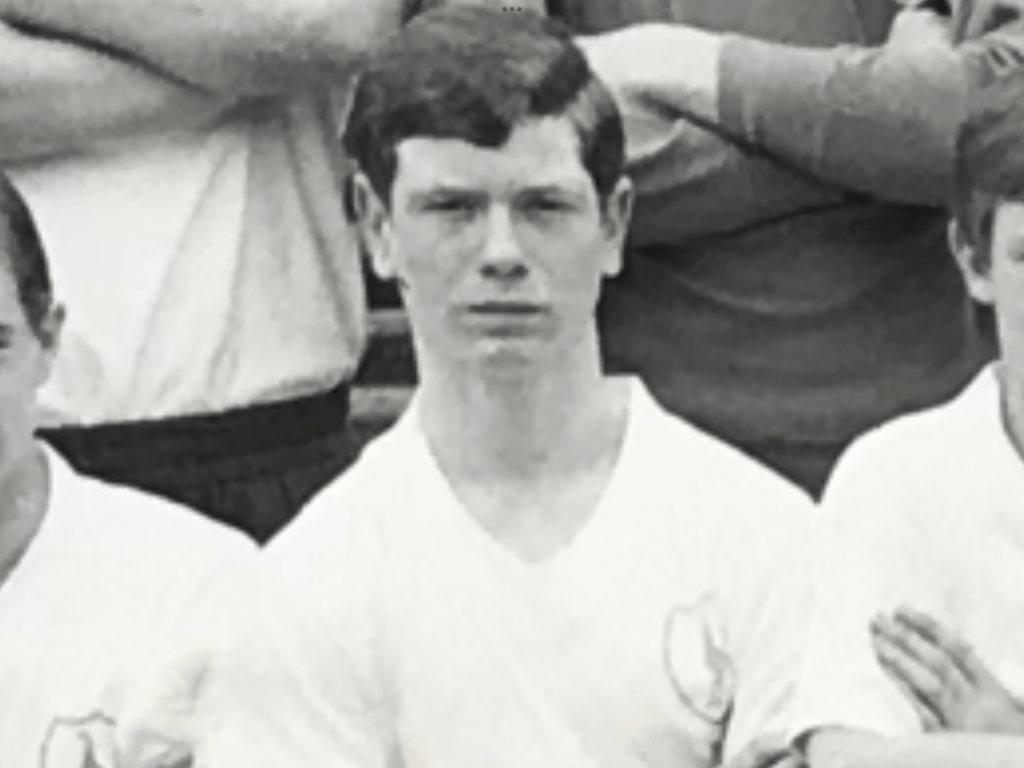
Stephen William Pitt joined Spurs as an apprentice in 1963, and the very fast and skilful winger with a real eye for goal, was a very highly rated young player at the club. The Willesden born former Spurs player progressed up through the various youth ranks, the A team and the reserves to make two first team appearances for the club. Steve Pitt made his first team debut for Spurs as a 16 year old, in a friendly with the Maccabi club of Tel Aviv. He would also make a Football League appearance for Spurs, in a fixture with Blackpool, in the same year. Later playing for Colchester United, Stevenage and Corinthian Casuals, after leaving Spurs during the late 1960s, Steve did spend a really good number of years at Spurs during that decade, playing with some great players. I recently had the great pleasure and privilege of interviewing Steve about his time at Spurs during the 1960s. Steve is a really top man!
What are your earliest footballing memories?
Steve: My earliest footballing memories would obviously be at school. I was playing for the school team and then when I was ten I got picked for the county team. In fact in those days I used to have to borrow a pair of boots to even play football, from a friend of ours, and they were the old leather boots with studs, that you used to have to nail in. I later played for Middlesex and then London Schools, before being invited to the England squads for trials. And I can remember playing at Highbury against an Arsenal youth team, and I walked into Highbury and then they had underfloor heating, which was great. So they would be my earliest footballing memories.
How did you come about joining Spurs? And what are your earliest memories of your time at the club?
Steve: I left school just before I was 15 (I was born on the 1st of August, and the term finished on July) and so that’s when I left the school. So then from my time playing schools football Dickie Walker contacted me, as we had one of the only phones on the North Circular Road, as my dad was a bookies runner. So my dad told me that a scout had been in contact, and that he was going to see me tomorrow. I wasn’t really too interested, as I thought that this was a big club and so I was a bit nervous. So the next day I went out all day and didn’t come back to the house, because I didn’t want to see him. So my dad got annoyed when he realised that I wasn’t there, and so he then made arrangements for the scout to come back again to the house the following week. He would then invite me to a trial at Cheshunt, and so I went to Cheshunt. But back then I used to have to get the train from Stonebridge Park to Dalston, and so on and so on to Cheshunt. So anyway I went up there and had the trial and played pretty well, and then they offered me an apprenticeship straight away, and that was in 1963.
I enjoyed the camaraderie at Spurs in those early days, but going to a big club like Spurs was a big step-up for me. I didn’t used to enjoy training as a footballer, and me and Jimmy Greaves were probably the worst two trainers at the club, then. So I suppose that I didn’t push myself enough, and so I could have done a lot better. Just before I was 17, Spurs told me that they wanted me to sign me as a professional.
Did you have any footballing heroes/inspirations? And if so who were they?
Steve: As a youngster I liked Dennis Law, who I thought was always a great player, and who had style and class. I also used to really like John White as a player, who was also a really lovely bloke. And so then you had Greavsie and Mackay, who most people would probably say were the real influences. And Greavsie was just so good, and he was so casual and laid back in training, and just a genuinely nice bloke. Most of the players were really nice, but the two that really impressed me were Greavsie and Mackay. I was also on the end of Danny Blanchflower’s career as well, but I would still mention Greavsie and Mackay as the main two, and that would probably be most people’s view.
Who were your greatest influences at Spurs?
Steve: Eddie Baily was a character, who wouldn’t stand any nonsense. But in them days the players mostly ruled the roost! When I was picked to play against Blackpool I travelled up by bus to training, and then Bill Nicholson told me that I was on the team. I couldn’t get back home in time, as the game was in the evening, and I had only came for the training at the ground. So I stayed in the snooker room at White Hart Lane, and on the biggest night of my life nobody explained to me what to do or give me advice, and so I was on my own all day, and so I was disappointed about that. They did tell me what to do when the players and I got into the dressing room, and I was of course up against England player Jimmy Armfield in that game, but things are so different these days. I went out onto the pitch at White Hart Lane completely nervy, obviously, and I didn’t really play my own game, which was getting on the ball and dribbling past players. But as I say, I was a bit overawed by it all on that day in front of 40,000 or so people.
Could you describe to me what type of player you were? And also what positions you played in during your time at Spurs?
Steve: When I was at school I used to play at inside-forward, and I was a little bit better than most of the other players as I had the speed and dribbling ability with the ball. I always scored a lot of goals from playing in that position, but then when I started playing for the county, I started playing on the wing. So I could play on the left or right wing, which were the positions that I eventually played in at Spurs. Later on when I was at Stevenage I ended up playing as a sweeper, and despite my height I ended up playing pretty good at it. I used to score a lot of goals as a winger at Spurs, and I remember that I was the top scorer in the Metropolitan League for Spurs, one season.
Were there any players at Spurs who you would watch closely to try and improve your game or look to learn from?
Steve: There wasn’t really anyone player that I used to study, as I just used to play my game, and so there wasn’t anyone that I used to watch closely.
Could you talk me through your memories of your two Spurs first team appearances for the club? (against the Maccabi club of Tel Aviv, and also the game against Blackpool).
Steve: I travelled with the Spurs first team to play a match in Tel Aviv after being picked to be a part of the Spurs squad (I was still 16 then). In that game against the Maccabi club of Tel Aviv, I played pretty good and I’m sure that Alan Gilzean scored a goal from a cross that I put into the box. So that was a great tour, but I was amongst the big players at the club, whereas I was in my comfort zone in the Youth team, A team and reserves, but stepping up to that level was different. But I did play pretty good in that game in Israel, and I had a really good time there, and we stayed in a big hotel. The game was the John White Testimonial game, and in that game I was able to play my own game, and I did well. I enjoyed that game a lot more than I did the Blackpool game, and I was a lot more relaxed than I was in the Blackpool game. As for the Blackpool game I can remember sitting in the dressing room before I went out, and it’s weird as I wasn’t really told what to do. So I was very nervous as I walked out at White Hart Lane, and I was very disappointed with my game against Blackpool. I actually should of scored in that game, as I got put through, but I just slotted the ball wide. That might have made a difference to me, had I have scored.
In that game against Blackpool I found myself running back and forth, and not really playing my game.
What was your time at the Lilywhites like on the whole?
Steve: I had a great time. A lot of the lads who you have interviewed, who played at Spurs during my time, like Jimmy Pearce and Jimmy Walker, well we were like a unit. Most players at football clubs are mostly the same. They like a laugh and enjoy going out and having a few beers, and so I had great social times at Spurs, even in the first team. Even when I got a car when I was 17, I used to be able to meet up with the other players and go out with them. The Rolling Stones used to be my favourite band, and I remember when they used to perform at the Angel Edmonton, and I went with Jimmy Walker and Jimmy Pearce to watch them. We also used to go down to the Tottenham Royal to watch The Dave Clark Five.
Could you talk me through some of your favourite memories or ones which stand out from your time in the Spurs Youth sides, A team and the reserves?
Steve: I was also a good player in those sides, and I think that my goals proved it. I used to enjoy playing at that standard as well. I also obviously won the Metropolitan League during my time in the Spurs A team. And I can remember we played a penalty-kick short in one game in the Metropolitan League, to pass it. I don’t think that many people probably knew that at the time, but unfortunately I didn’t score from that penalty! We used to play against some tough teams and players in the Metropolitan League, and in them days we did have Dave Mackay and Ron Henry at times playing for the A side. Just before I made my first team debut for Spurs, I played in a game against the Spurs first team. And Dave Mackay, who was the hardest man who I ever came across in football, well me and him went in for a 50/50 challenge. I expected to get clattered by Dave Mackay, as it was a really hard tackle. However, he stopped me after the tackle and he told me that he admired me for that, and that it was a great tackle.
Unrelated to that, I remember playing a game (probably with Stevenage or Spurs) and I think that it was away at somewhere like Brighton. And Bobby Smith was playing (either in the reserves or A team) and one of the fans in the stand was having a go at Bobby all of the time during the game. When the ball went out of play near where the half-way line was, he jumped over and got hold of this fan and went for him! I’ll never forget that.
What was the greatest moment of your footballing career?
Steve: Obviously I didn’t fully enjoy the game against Blackpool that would probably be the one, along with the game in Israel and the cup that we won there. Plus I was one of the youngest players to play for the first team at Spurs. Also, playing for that England Youth side against Arsenal was a big thing for me, as I got to play with some really good players, such as Frank Sibley of QPR.
Who was the greatest player that you have had the pleasure of sharing a pitch with?
Steve: There was so much individual talent in that Spurs team of the 1960s, from Maurice Norman at the back, right through to Dave Mackay, and Greavsie and John White. I was of similar stature to Terry Dyson, and he was someone who I used to admire. He was also at Colchester when I was playing for them, and he was living in Sudbury and I was at Wembley, but we used to meet at the tube station and travel to Colchester together, and we used to have such a laugh.
Were there any players at Spurs who you were particularly close to?
Steve: My main friends were Jimmy Walker, Jimmy Pearce, Tony Want, Billy Mail and Ray Evans. We used to all meet in a group and get together quite often and that was my main group of friends, although I got on with all of them.
Could you talk me through your career after you left the Lilywhites? And what prompted you to leave the club?
Steve: I was at Spurs until 1969. One day I got called in and I was told that the club weren’t going to renew my contract, and they then told me that Colchester United wanted me to sign. The Colchester manager at the time was a hard man, and he offered me a house in Colchester to sign for them at the time. So anyway I was there for a little while, and I’ll never forget a game for them against Doncaster Rovers, that I played. I got injured in both legs after a Doncaster player slide tackled me, which meant that I was off for probably four or five weeks. So I was just getting fit again after that injury, and the manager put me as a sub in a home game against Chester, after my return to the side. It was 0-0 until with about five minutes to go Chester scored. He told me to get warmed-up for the game, and after I got on I was probably on for about four or five minutes before the final whistle went, and so all of the lads knew what to expect if you lost at home. Anyway the manager went around and was having a go at the players for their performances. So he gets to me, and I’m thinking that he’s not going to say much to me, as I’d only been on the pitch for a couple of minutes. So he told me that he was going to have me in to train every morning, afternoon and evening to run until I could run no more.
So nobody used to answer the Colchester manager at the time, but I told him that I ain’t going to be doing what you’ve told me to do. I also told him that he wouldn’t see me at Colchester United again, and at the time all of the players were looking at me in disbelief. I went up to the secretary’s office and told him that I wanted to finish with the club today. He couldn’t believe it, but I went around to my house after leaving, and as I got there I could see four or five of the Colchester players telling my wife that I was going to be leaving Colchester. So that was it anyway, and after four of five months we left Colchester the next day. After that experience with Colchester I wasn’t that bothered with playing football full-time. Jimmy Burton was a business partner of Dave Mackay’s tie making company, and he was a big Spurs fan. He eventually got me to Stevenage, to sign for them, as he became a director of Stevenage. I ended up playing with them for almost four years, before finishing my playing career with Corinthian Casuals.
What would your advice be to the young Spurs players of today as they look to progress up the various ranks at Spurs?
Steve: I think that they have a lot better an opportunity than all of the players from my era at the club, so it’s difficult to say. The set-up nowadays is far better then when I was playing as a youth player, as we didn’t have that much personal one to one training, so it was very different.
After all these years how do you look back on your time at the Lilywhites? And is Spurs a club that you still hold close to your heart?
Steve: I loved being a part of the group at Spurs, and I had a fantastic six years at the club. I could have done a lot better at Spurs, but I loved the six years that I was there, and I would have stayed there longer had they have wanted me to. I loved the people at Spurs and I also loved the camaraderie at the club. That gave me a good confidence for all aspects of life, and so Spurs taught me that.
 superhotspur