Remembering the day that Spurs played a Bermuda Select XI without a number of first team squad members available to them:

The year is 1979. Spurs were on a world tour and had traveled to Hamilton, Bermuda, to play a friendly match against a Bermuda Select XI to finish off the post season world tour on the 6th of June. A number of first team players of which included club captain Steve Perryman, Gerry Armstrong, Ossie Ardiles and countless others were unavailable to make the trip because of injury, or because they had already gone away on holiday. Spurs traveled to Bermuda with a first team squad containing just nine players, and only seven of those players were footballers. The other two who had traveled to Bermuda for the match were Mike Varney (Spurs’ club physio) and Peter Day (Spurs’ club secretary). The seven Spurs first team players who were starting for Spurs that day were Barry Daines, Don McAllister, Colin Lee, John Lacy, John Pratt, Milija Aleksic (Milija played outfield during the match as a midfielder), Terry Naylor, Chris Jones and Gordon Smith. Because Keith Burkinshaw’s Spurs side were short of numbers for the friendly match Spurs (this was the first to time to my knowledge that this had happened in a Spurs match in recent history) they asked the home side whether some of their players could be part of the Spurs squad for the match. In what must have been a fantastic experience for the Bermudan players, all four would play in that match for Spurs against their own side, although all four players started on the bench for Spurs, with Peter Day and Mike Varney starting for Keith Burkinshaw’s side.

The Bermudan players were Marischal Astwood, Ralph Bean Senior, Alan Marshall and Simmonds. Alan Marshall was a midfield player, but following his introduction in the second half of the match he would play for Spurs as a full-back, because Spurs were short of numbers in that position. A then 27 year old Ralph Bean Senior made a fine impression on the game following his introduction in the second half, and he scored a goal and also registered an assist after creating a goal. Spurs won the match 3-1. Chris Jones and Colin Lee got the other goals for Spurs, in what would have been a memorable game and day for most of the Spurs players involved. It was certainly a day that won’t be repeated in regards to how Spurs lined up, and also with how many players that they were missing. Although that was a very special day, it wasn’t actually the first time that Spurs had played a friendly match in Bermuda, as they had travelled there to play a match in the 1960s. They would also later travel back to Bermuda to play another friendly in the December of 1986. However, after reading about some of the Spurs players who played in that friendly match all those years ago in 1979, I thought that I’d write a short piece about the match, but also try to collect the memories of some of the players who played in it for Spurs. I was lucky enough to speak to former Spurs players Don McAllister and John Pratt about the day and game, and also former Bermudan footballer Ralph Bean Senior, who I had the great pleasure of speaking to recently.

Thanks must go to Ralph Bean Senior’s old team North Village Community Club, who were kind enough to put me in touch with Ralph. Below are some memories of the trip, day and match from three of the Spurs players who played for Spurs on that day.

Memories of the match from some of the Spurs players who played that day:

Don McAllister: It all started when we won the Japan Cup in an end of season tour. I think that we played a game in Malaysia (I could be wrong). We had a great time in Japan visiting things like a sumo fighters training camp, and of course Tokyo. So we win the cup and some prize money, we could take it home and lose most of it to the tax man, but the club asked if we would be interested in going to Bermuda and for those who could bring out their family, but obviously there would be some of the guys unable to come. I had been to Bermuda a couple of years before when I had finished playing with Washington Diplomats recovering from surgery, after the end of season tour a couple of years earlier. So I knew what a beautiful place it was. We arrived and stayed in a resort called Coral Island, and our families (those available were already there). But there was a little problem. We had to play a match because the club could not just pay for the players holidays, and we were short of players. So new players included Mike Varney, Peter Day the club secretary, and local guest players. And a great day in the history of Tottenham Hotspur Football Club was had by all. Plus we had a great holiday in one of the most beautiful places on the planet.

John Pratt: Although I can’t remember the game, from that trip I can remember that our families also went, and that they met us there (we did a world trip and had ended up in Bermuda). I always remember that we were there for seven days, and for six of those days it was raining! But it was a very nice trip and I met up with my mate Clyde Best (ex-West Ham player), who I had played with in America. But as for the game I haven’t got a clue about it, but it was a very relaxing trip. 

Ralph Bean Senior: We had normally hosted English teams before like Aston Villa and Coventry, and each time they had beaten us because of how good they were. We knew that Tottenham were just finishing their league season and that they were coming to Bermuda for a bit of rest and relaxation. But while they were here they decided that they would play a friendly game with our Bermudian national team. But on that particular trip they didn’t bring their full list of players, as they might have been going off somewhere else on vacation. So they were short of a few players, especially outfield players anyway. And so our national coach decided that if Tottenham wanted then they could use a couple of players to make up their numbers. Of course I was one of those players that they decided to bring to Tottenham. But I was a little bit surprised when they (Tottenham) decided to put me on the bench and allow one of the goalkeepers (Milija Aleksic) to play out on the field before letting an outfield player play, but I was content and it wasn’t a problem. Then at half-time the Bermudian team were thinking that Tottenham weren’t going to use me, and that I might as well play the second half with them. So anyway later on in the second half Tottenham decided to bring me on as a substitute, because the goalkeeper that they were using had run out of steam. So that’s when they decided to bring me on as a sub, and when I did come on the field at the beginning they didn’t pass me the ball to see if I could play or not.

It just so happened that the ball bounced towards me and I got it and scored a goal. After that they realised that I could play a bit and so they started to play the ball to me, and later on in the game I managed to create a goal for one of the other Tottenham players, and in the end they won 3-1. It felt really good to play for Tottenham and around that time I was about 27 and I don’t know whether the coach here thought that if Tottenham had saw me playing then they would have given me a trial or something. But maybe I was too old for that. It was a very long time ago, but it was a nice time for me and going back that far to that game I didn’t think that anyone was interested anymore.
Spurs Under 23’s 1-1 Barnet FC: (match report)

Spurs’ Under 23 side played their final pre-season friendly on Saturday when they faced National League side Barnet FC at The Hive Stadium. Wayne Burnett’s side recorded a 1-1 draw with Barnet on the day, in what was probably a fair result. Spurs started the match with Joshua Oluwayemi in goal, while a back four consisting of Marcel Lavinier, Maksim Paskotši, Malachi Fagan-Walcott and Dennis Cirkin lined up in front of him. Captain Brooklyn Lyons-Foster started the game as a number four, while Harvey White started the game as a number eight, and Alfie Devine a number ten. Dilan Markanday and Romaine Mundle started the game out on the flanks and J’Neil Bennett led the line for Spurs. Spurs got the game underway at The Hive Stadium, but it was the home side who had the first real chance of the game. Barnet’s number seven (the team-sheet had no numbers on it) headed wide number ten’s free kick, before Marcel Lavinier came close to latching onto Alfie Devine’s lofted pass at the other end of the pitch. The Barnet goalkeeper, who was often positioned quite high on the pitch, would come out to clear the ball just in time before Lavinier could get to the ball. Shortly afterwards and this time inside the Spurs penalty area Lavinier had to block number seven’s effort on goal, before Markanday blocked the same players effort on the follow up.

Markanday had a deflected effort saved by the Barnet goalkeeper, and then after winning the ball on the left flank and surging forward, Romaine Mundle forced a save from the Barnet goalkeeper. A Barnet throw-in which was headed towards Joshua Oluwayemi’s goal by their number five went just wide of the Spurs goal after coming off of a Spurs player last. After Devine had played a quick one-two with Markanday, the Spurs midfielder brought the ball towards the edge of the Spurs box, before being fouled and brought down by number four. Harvey White’s resulting free-kick came off the Barnet wall before going wide. Oluwayemi tipped over a cross from Barnet’s right-back, before he then gathered a cross from their left-back. At the back post inside the Spurs box, and after connecting with number three’s cross, Barnet’s number ten clipped an effort wide of the Spurs goal. After playing the ball down the right to Dilan Markanday on the right flank, the Barnet born player showed some good skill on the ball inside the Barnet box. He then tried to square the ball to Harvey White, but his pass was intercepted and then cleared. After receiving Dilan Markanday’s pass on the edge Barnet box Harvey White curled a first time effort with his weaker foot just wide of the goal. A couple of minutes later Mundle received Devine’s back-heeled pass on the left flank. He then traveled forward with the ball before coming inside onto his right foot in the Barnet box and curling an effort narrowly wide of the goal.

A long kick forward from Spurs goalkeeper Joshua Oluwayemi was brought down and controlled well by Markanday on the right flank. He then advanced forward with the ball before trying his luck on goal. However, his effort was saved by the Barnet goalkeeper, but Mundle was there to slot home on the follow up, 1-0. The home side got the second half underway and an early penalty appeal from Markanday was turned down by the referee, before Harvey White hit an effort over from long range. Barnet’s number ten then squared the ball to their trialist centre-forward after getting beyond Dennis Cirkin down the right flank. The Barnet centre-forward finished with a first time effort into the bottom right hand corner of Oluwayemi’s goal from inside the Spurs box, 1-1. The alert Brooklyn Lyons-Foster did well to make a block from number 20’s effort, before the Barnet player hit the ball wide of the goal from the edge of the box on the follow up, and then Malachi Fagan-Walcott blocked another Barnet effort on goal. Spurs then made a whole number of changes as Romaine Mundle, J’Neil Bennett, Maksim Paskotši, Brooklyn Lyons-Foster and Dennis Cirkin were replaced by Yago Santiago, Max Robson, Rafferty Pedder, Marqes Muir and Matthew Craig respectively. 

Soon after the game started again Marqes Muir made an important block, before Malachi Fagan-Walcott headed clear a long Barnet throw-in. Spurs made two more substitutions as Michael Craig and Thimothée Lo-Tutala came on to replace Alfie Devine and Joshua Oluwayemi respectively. The impressive Marqes Muir did well to clear a cross from Barnet’s right-back, with the ball then coming to a Barnet player on the edge of the Spurs box, but Fagan-Walcott was able to clear his resulting effort. Yago Santiago’s low but powerful effort from the edge of the Barnet box was saved really well by their goalkeeper. Muir then headed wide from Harvey White’s corner kick before Spurs made their final change of the game as Jeremy Kyezu came on to replace Dilan Markanday at left-back. Number 19 hit a deflected effort wide, and then a couple of minutes after Muir anticipated a Barnet forward move well to make a really important challenge on their number 20 inside the Spurs box, to win the ball and then get it clear. After Harvey White played a clever one-two with Santiago he whipped an effort towards the Barnet goal from the edge of their box, but the goalkeeper made a fine reaction save to tip the ball behind. The final bit of action from the game came from a deflected Harvey White cross which fell to Fagan-Walcott inside the Spurs box, but his volleyed effort on the turn went wide. Spurs get their Premier League 2 season underway on Monday the 16th of August, when they host Chelsea at the Lamex Stadium.

Player reviews:

  • Joshua Oluwayemi: The Spurs goalkeeper didn’t actually have a lot to do today, but I thought that he dealt well with crosses into his box.
  • Marcel Lavinier: It was another solid performance from the 20 year old right-back, who made some important blocks, got forward well and also read the game well. 
  • Maksim Paskotši: Playing at RCB the Estonia international formed a good defensive partnership with Malachi Fagan-Walcott on the day, in my opinion.
  • Malachi Fagan-Walcott: Good in the air and always alert in defence, LCB Malachi Fagan-Walcott put in a good defensive performance against Barnet. 
  • Dennis Cirkin: Playing at left-back Dennis Cirkin liked to get forward a lot down the left flank during his time on the pitch.
  • Brooklyn Lyons-Foster: The deepest of the three Spurs midfielders liked to get on the ball and he also made an important block during the second half. I thought that he did well.
  • Harvey White: A player who I thought grew in to the game as it went on, Spurs’ number eight Harvey White was playing in a more advanced midfield position than usual today.
  • Dilan Markanday: Starting the game out on the right flank as a winger, Dilan Markanday went on some tricky forward runs and he showed good skill on the ball, and was always looking to go forward with it. Markanday created our goal before later filling in at left-back for a short time.
  • Alfie Devine: The most advanced of the three midfielders worked hard and often dropped deep to get on the ball. His standout moment came from his fine run towards the edge of the Barnet box, before being fouled and winning a free-kick in the first half.
  • Romaine Mundle: Starting out on the left-wing against Barnet, the scorer of our only goal of the game also went on some good forward runs.
  • J’Neil Bennett: Playing out of position as a centre-forward, the 19 year old winger tried his best even though he wasn’t playing in his usual position.
  • Yago Santiago: The midfielder occupied the left flank during some of the second half, and he came close to finding the goal on one occasion.
  • Max Robson: Replacing J’Neil Bennett up front, midfielder Max Robson worked hard off the ball but didn’t have much service.
  • Rafferty Pedder: The midfielder went out to play on the right flank during his time on the pitch.
  • Marqes Muir: My man of the match, see below.
  • Matthew Craig: After replacing Lyons-Foster, Matthew Craig came on to play as the deepest midfielder. 
  • Michael Craig: Michael Craig came on to partner his twin brother Matthew in central midfield during the second half.
  • Thimothée Lo-Tutala: The Spurs goalkeeper didn’t have much to do after coming on.
  • Jeremy Kyezu: The defender came on late in the game to play at left-back. 

My man of the match: Marqes Muir. Although he only came on in the 63rd minute of the game I thought that the centre-half (he played at RCB) performed really well after coming on. Making an important clearance, block and challenge, the composed defender also won all of his headers, and he was always alert. Muir has been very impressive in pre-season for Wayne Burnett’s side.

Spurs Under 23’s versus Barnet FC: (match preview)

Spurs’ Under 23 side will play their final game of pre-season on Saturday afternoon (the game starts at 15:00pm) when Wayne Burnett’s team face National League side Barnet FC at The Hive Stadium. Spurs lost their last pre-season friendly against Crawley Town last Saturday 2-1, which was their first defeat of this pre-season, after having won their three previous games. Barnet recorded a 1-1 draw with League One side Oxford United in their most recent pre-season friendly, and they certainly won’t be an easy team for Spurs to play against on Saturday. Since the Spurs Under 23’s last friendly against Crawley Town, Spurs have loaned out centre-forward Kion Etete to League Two side Northampton Town. Also defender Jubril Okedina has joined League One side Cambridge United on a permanent transfer, having spent the second half of last season on loan with them. So that means that there could be a couple of changes to the Spurs starting eleven on Saturday, and it will be particularly interesting to see who plays at centre-forward, as Alfie Devine started the Crawley game there, while Max Robson started the Hastings United game in that position. With Dane Scarlett possibly in the squad for the first team friendly game against Arsenal on Sunday, that would leave Spurs with only one recognised centre-forward in first year Academy player Jamie Donley. Spurs’ development side last played Barnet in the Papa John’s Trophy in 2017, and on that day Wayne Burnett’s side lost 2-1. I will be reporting on Saturday’s match and I hope to publish my report on Sunday. I would like to wish the team all the very best of luck for the game.

My predicted lineup: (4-2-3-1) Oluwayemi, Lavinier, Muir, Paskotši, Cesay, Lyons-Foster (c), Michael Craig, Markanday, Devine, Bennett, Robson.

Subs from: Lo-Tutala, Kyezu, Hackett, Matthew Craig, Pedder, Mundle, Santiago.

Injured/unavailable: N/A.

Doubtful: N/A.

Previous meeting: 1-2.

My score prediction: Spurs 2-1.

My one to watch: Barnet’s 30 year old forward Adam Marriott.

My interview with former Spurs player Graham Lawrence:

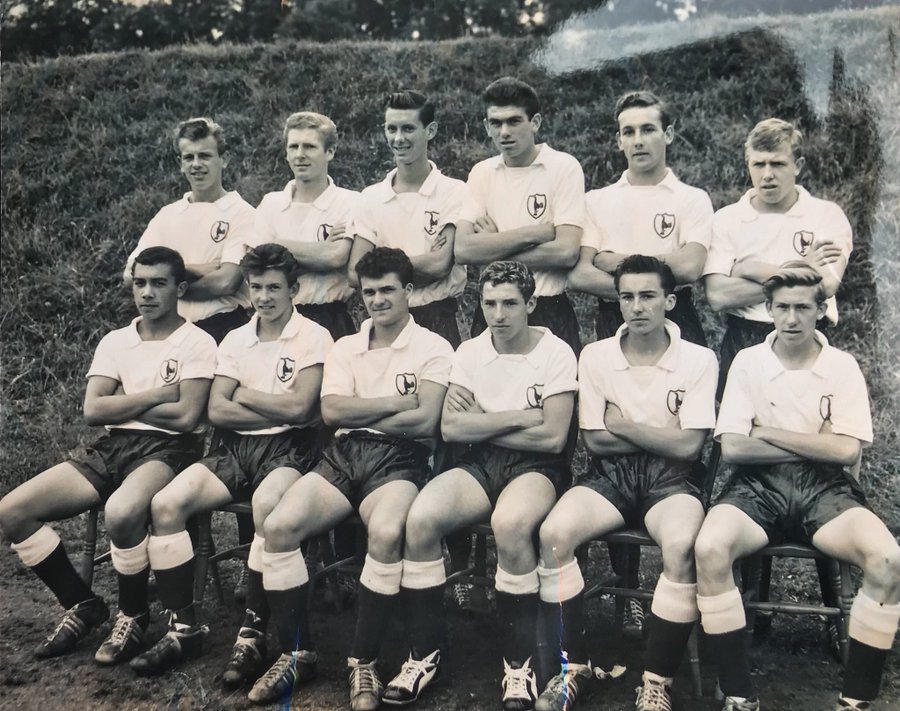
(Graham is pictured the fourth across from the left, of the back row.)

Graham Lawrence was a versatile footballer throughout his playing career as he could play in a variety of positions. Scouted by Spurs’ then Chief-Scout Dickie Walker, Dagenham born former footballer Graham Lawrence joined the ground-staff at Spurs for the beginning of the 1958/59 season and he would stay at Spurs until the end of the 1959/60 season. Primarily a youth team player at Spurs, Lawrence did also play for the A team and the reserves on occasions. After leaving Spurs in 1960 he joined Brighton & Hove Albion (after impressing against them in a mid-week game for Spurs). Graham also played for the likes of Cambridge United and Wisbech Town later on in his career. I recently had the great pleasure and privilege of interviewing Graham in person about his time at Spurs.

What are your earliest footballing memories?

Graham: My earliest memory was when I was playing for the school, and then I progressed from there up the grades, and I played for the school side in football and cricket. Dagenham was a big supplier of professional footballers and West Ham was the nearest team, but there was also Tottenham. There was quite a few people from the school who progressed up the stages, and there was also Jimmy Greaves who was in the school further over in Dagenham.

What are your earliest memories of your time at Spurs and how did you come about joining the club?

Graham: I played for Glendale which was a local football club for juniors, and so I played for them. I got spotted for them by the old West Ham centre-half Dickie Walker, who was a scout for Tottenham and he would go to the junior clubs and like in my case where he suggested that I went to Tottenham. I used to get the Green Line bus from Dagenham to the ground in Tottenham. I went into the ground-staff at Tottenham, which was what they used to call it, and I would clean the boots of the players. We had four teams at Tottenham with 48 players in total, and we used to train with the professionals in the morning and then after lunch we used to clean the boots. I used to play in the A side then, but you also had the Tottenham first team, the second team and also the Mid-week A side, who I also played for. 

Did you have any footballing heroes/inspirations and if so who were they?

Graham: As a boy my dad used to take me to watch Dagenham as we supported them, but we’d also sometimes go to watch West Ham play, and the fans there then were mostly dockers. There was no bad language used at the ground then, we just used to have fun. I used to like to watch a number of players play for West Ham, like Geoff Hurst.

Who were your greatest influences at Spurs?

Graham: We had four particular coaches at Spurs then, and also one who was part-time who used to coach the youth team. Sometimes we didn’t used to play regularly as they would have players on trial, and you wouldn’t be able to play. I can’t remember the names of the coaches at Spurs, who coached me, apart from Johnny Wallis. But I remember that one of them used to run a pub in Wisbech for a while in recent years. Sometimes the second and third team coaches used to take the training. I do remember that the first team players used to do what they liked within reason. 

Could you describe to me what type of player you were and what positions you played in during your time at Spurs?

Graham: When I was at school I used to play on the right flank, because I could run fast. I later played (at Spurs) at right-half, full-back and inside-forward. Then when I went to Wisbech they played me at centre-forward, and I used to score quite a few goals at centre-forward. I used to score goals after running in from the wing.

Were there any players at Spurs who you would watch closely to try and improve your game or look to learn from?

Graham: Dave Mackay was one, and also Cliff Jones. Dave Mackay was a really hard player and he even broke his leg, but along with him I also looked up to Danny Blanchflower and John White. People like Danny Blanchflower and John White were no different to anybody else, and Blanchflower didn’t have an arrogance about him as he was quite an easy-going sort of person. I also liked Ron Henry and an inside-forward called Tommy Harmer, who was very frail and tiny, and when the pitch was muddy they used to have to play someone else because Tommy couldn’t stay on his feet. I remember that he played at Norwich once for the reserves in the Football Combination, and I remember that he started kicking off and telling me where to go and what to do. I also remember once how Ron Henry got into a little scuffle once outside the ground with a reporter, as I think that the reporter was trying to get information out of him. The players in them days used to do a lot of betting, such as with cards and snooker as well, and when they used to play cards in the snooker room after training they used to bet with quite a lot of money, but then the top earners were only getting £20 a week then. But Bobby Smith did used to get in a bit of trouble because of his gambling. Another thing that I remember was how fast that Johnny Brooks was. 

What was your time at the Lilywhites like on the whole?

Graham: It was enjoyable even though I didn’t make the grade to get into the first team, but I didn’t know that at the time as I used to train with the reserves and the A side, and I trained then with players like Roy Moss and Brian Fittock. I was always hopeful at Spurs but it was enjoyable, although all of the time that I was at Spurs they only signed one lad onto a contract (Dennis Walker), but also in them days they were able just to go out and buy somebody. Bill Nicholson’s favourite player from my group of players was Frank Saul, who was brought up to the first team, but he was a favourite of Bill Nicholson’s, and Frank was like a centre-forward. Because there were 48 players at Spurs then sometimes I couldn’t get a game on a Saturday for them.

What prompted you to leave Spurs and could you talk me through your career after you left the Lilywhites?

Graham: From Spurs I was picked up by Brighton & Hove Albion (after impressing in a mid-week game against them for Spurs), where I progressed from their junior side and A side to the reserve side. After that I was taken on by Wisbech and when I arrived at the station I was picked up by the manager Jesse Pye, who used to play for Wolves and was a top player for them. I was sponsored by a farmer at Wisbech, who used to invite me to his home for dinner. It was enjoyable at Wisbech, as the people there all knew who you were, and also I was the only full-time player there. From there I went to Cambridge United, who I played for in the Southern League, but I later played for Cambridge City before deciding that I’d had enough. I did play for the village side for a couple of seasons with three other ex-pros who had dropped down to play for them, and like them I needed a permit to play. Although I didn’t make the grade at Spurs I was happy with the way that things worked out in the end.

What was the greatest moment of your footballing career?

Graham: I think that the greatest moment was being invited to go to Tottenham. I also remember when Spurs won the Eastern Counties League (in 1959/60) when I was there, but I had to go there with a sore head on the day. As we were all messing about in the shower at the ground, and Frank Saul had thrown a scrubbing brush across the shower and it had hit my head. That was in the afternoon and then later on I still played in a match, but we had some fun at Spurs during my time there. 

Who was the greatest player that you have had the pleasure of sharing a pitch with? 

Graham: I think that that would be Danny Blanchflower. He would help you and talk to you during matches, whereas some of the other players thought that they were the bee’s knees. But Danny Blanchflower was quite a happy lad who got on with everybody, even if you were just like me and on the ground-staff he would still talk to you. Also there was Dave Mackay and Tony Marchi who I played with, and Tony went to Italy, but he was a good player. Jimmy Greaves was also a good person to play with in matches, and I used to play against him in a school competition. Also there was Tommy Harmer and Cliff Jones. Cliff Jones was the quickest player in the team and at running down the line. You also had big Maurice Norman and Johnny Brooks, and Johnny was very quick in sprint training. Not forgetting John White, who was the king of Spurs at one time, and when he joined after coming from the services I can remember the day that he arrived. He would stand up against people like Dave Mackay, and he was a very good player.

Could you talk me through some of your favourite memories or ones which stand out from your time in the Tottenham youth team and reserves?

Graham: I remember once that we went to Copenhagen with Spurs with the junior side for a competition. We traveled by train to Copenhagen, and we traveled from Holland where we got the train, and we got there in a day. We traveled over night and I can remember that we were spaced out in a cabin, and I remember that one of the lads (one of the junior players) had got smelly socks on, and so we put his feet out of the window! 

Who was the toughest player that you ever came up against?

Graham: Ron Henry could be a very tough player, and so I would say that he was the main one.

Were there any players at Spurs who you were particularly close to?

Graham: I was close to a number of lads at Spurs like Brian Fittock. As I used to talk to him and go about with him. I used to talk to Roy Moss as well, and I remember that he was one of the players who used to get a lot of the games. I also remember David Sunshine, as there used to be a record shop down the road from the ground in Tottenham where he used to be, and I used to have to get the Green Line bus to Dagenham. He used to get off halfway on the journey, but I used to always travel with him on the bus. I also knew Micky Harris as we both went to Brighton together after leaving Spurs. 

What would your advice be to the young Spurs players of today as they look to break into the first team?

Graham: I would advise them to get a trade. As I was lucky as although I didn’t make the grade I did have somewhere to go to afterwards. I think that you’ve got to try and understand whether you are or aren’t going to make it, and I think that you can tell yourself. As there’s a good number of players who don’t make the grade. Getting that trade helps you when don’t make the grade in football.

After all these years how do you look back on your time at the Lilywhites and is Spurs a club who you still hold close to your heart?

Graham: Tottenham was the club that me and my son Daniel mainly used to go to, but I also went with him for quite a few years to Norwich. If there were two games on the telly then it would always be Tottenham that I would watch. 

Farewell and good luck Jubril Okedina:

Today it was announced by Spurs that young development side centre-half Jubril Okedina had departed the club to join League One side Cambridge United, a team that he made 14 competitive appearances for last season, while on loan from Spurs. The versatile 20 year old defender signed scholarship forms with Spurs for the start of the 2017/18 season, having made his competitive Under 18’s debut for the club during the previous 2016/17 season. Okedina’s first season at the club full-time was heavily disrupted by injury, and he only made two competitive appearances for the Under 18’s during that season. However, during the following 2018/19 season Jubril established himself as an important player for the Under 18 side (he made his competitive Under 19’s and 23’s debuts during the same season), playing both at right-back and at centre-half. He would also really impress at right-back during the end of season Terborg Tournament, in The Netherlands. During the following 2019/20 season the Londoner made the permanent step up to Wayne Burnett’s Under 23 side, making 15 competitive appearances for them during what was a fine season of development for the ever improving defender. And in the 2020/21 season (he made the bench for the first team on one occasion in pre-season), and after making 11 appearances (scoring three goals) for the Spurs Under 23 side, Jubril went out on loan to then League Two side Cambridge United, who he made 14 competitive appearances for. Whenever I saw Jubril play for Cambridge United last season he performed very well in my opinion at centre-half, as he helped them to achieve promotion to League One.

Always composed on the ball and often looking to make ambitious forward passes from deep, Jubril is a really promising centre-half, who reads the game well and is very clever in how he he defends and approaches situations in games. He has good pace and is also skilful on the ball, and dominant in the air, but he likes to defend on his feet. As a right-back over the last couple of seasons Jubril has shown for Spurs at Under 23 and Under 18 level that he is effective at both ends of the pitch. The player who featured in all four of Spurs Under 23’s friendlies this pre-season, is very good at getting up and down the right flank, but he knows when to stay deep. But he also is good at linking up with the winger when getting forward (he likes to make overlapping runs), and he can deliver a really fine cross with his right foot. I remember very well how important Jubril was for Spurs’ Under 18 side during the 2018/19 season, when they came so close to winning the Premier League South. A consistent defender, I have no doubts that Jubril will do very well at Cambridge United, who he has joined on a two year contract. I look forward to following his progress in the game and I wish Jubril all the very best of luck for the future. I am sure that he has a very good future in the game, and I always enjoyed watching him play for Spurs.

My interview with former Spurs player Peter Garland:

Peter John Garland was a hardworking midfield player who liked to pass the ball, and he had a good passing range too. The Croydon born former player who played for Spurs during the 1980s and 1990s, would make one competitive first team appearance for the club during his time in north London, but he did make additional first team appearances in friendlies. However, Garland was a regular and important player for the Spurs youth team and the reserves. After leaving Spurs in 1992, the one time England Under 17 international signed for then manager Kevin Keegan’s Newcastle United side. Peter later played for the likes of Charlton Athletic, Wycombe Wanderers and Leyton Orient. I recently had the great pleasure and privilege of interviewing the Spurs fan and former player about his time at the club.

What are your earliest footballing memories?

Peter: That would be playing for my grassroots team which was called Selsdon Juniors. We were out of Croydon and we were a good team and we had some good players, like Gareth Southgate, who was in our team. I really enjoyed playing for them, and then because I was local I ended up training with Crystal Palace, before then training with Arsenal for a while. But Tottenham was always my team and so at 14 a Tottenham scout asked me if I would like to come to Tottenham, and Arsenal had offered me schoolboy forms, but as Tottenham came I said that I was going to go to Tottenham. So I left Arsenal and signed schoolboy forms with Tottenham, and then at 16 I signed the YTS forms.

What are your earliest memories of your time at Spurs?

Peter: When I first came to Tottenham I used to travel up a couple of times a week, and we used to train behind the ground (White Hart Lane) in an indoor AstroTurf area. Spurs had two youth teams and they had the A league and the B league as such, and so on a Saturday you used to play for one of those. I can remember when I was still at school and I had been playing with the South East counties Division Two team, and I had been doing quite well. I got a phone call on a Monday from Keith Blunt, and he said that he wanted me to play in the FA Youth Cup for the main team. And there were a few of the older lads in there like Vinny Samways, and so that was a good achievement for me.

Did you have any footballing heroes/inspirations and if so who were they?

Peter: I loved Glenn Hoddle and that’s why Spurs was my team. I used to think that he was brilliant, and I also thought that Ossie Ardiles and Ricky Villa were fantastic. But Glenn Hoddle was just fantastic with his passing and everything, and it was just a shame that he had already left Spurs when I had actually came to the club. But then when I signed you had the likes of Chris Waddle and Paul Gascoigne, which was great. And actually Chris Waddle was a good friend to me when I eventually left Spurs and went to Newcastle.

Who were your greatest influences at Spurs?

Peter: Keith Blunt was very good in the youth team when I started off there, and there were some good players there like Shaun Murray. I was going in there thinking that me and him were like the same position and that I’ve got to be better than him to play. But Keith Blunt helped me and after playing at Spurs I got picked for the England youth team which was good. But then once I moved on it was Ray Clemence who was the reserve team manager, and I really respected him because he was such a good person, but he helped me out too. 

Could you describe to me what type of player you were and what positions you played in during your time at Spurs?

Peter: I played central midfield, and I could either play holding midfield or attacking midfield. I liked to pass the ball as I liked Glenn Hoddle, and I liked the way that he was, and so I wanted to be like him. So one of my strengths was my passing of the ball.

Were there any players at Spurs who you would watch closely to try and improve your game or look to learn from?

Peter: Paul Gascoigne was just phenomenal and he was on a different level to everyone else, but when Nayim came to Spurs he was like the most technical and gifted player that I’d been in the team with. He was so calm on the ball and just brilliant, but Gascoigne was just the best by far. It’s a shame that he got that injury because he would have just went on and been the best ever. 

Could you talk me through your memories of your competitive first team debut for Spurs against Norwich City in the April of 1991. And how did that day come about?

Peter: I was a sub in an FA Cup match at Blackpool which we won, but I never got on. Then when the Norwich game was coming around Paul Gascoigne had just had an operation and so Spurs had told me that I was going to be on the bench that day. They needed Paul Gascoigne to have some minutes and I think that he played about an hour before I got the call that I was being brought on, and I was thinking wow! I didn’t expect it as there were some other good players on there who played in the same sort of position, but Terry Venables told me to get on there, and it was just magnificent and a dream come true.

What was your time at the Lilywhites like on the whole?

Peter: I really enjoyed it and I learnt a lot but there just wasn’t as many opportunities as you would have liked. Sometimes if a player got injured and you’re in the reserves then you think that you’re going to step into that position in the first team, but sometimes it wouldn’t happen and they’d give someone else a chance. There were no transfer windows then, but at the end of the day you train all week and you just want to play and at the end of it I just wanted to play, as Spurs had a a big squad with big players and so I ended up getting a move. But I loved my time at Spurs and I learnt a lot, and I met some great people and I was coached by one of the best coaches in Terry Venables and I really enjoyed my time there. I’m just glad that I did get on to make my debut for the club that I support, and still support now.

What prompted you to leave Spurs and could you talk me through your career after you left the Lilywhites?

Peter: Like I said Spurs had a big squad and it just came about that the old comedian Kenny Lynch, who was a friend of mine was also good friends with Kevin Keegan. He rang me up and said that he had been telling him about me and that he’s had a look at you, and he’s spoke to his scouts who have given you good reviews, and would you like to go up there and sign for them. So I said let’s give it a go and Newcastle at the time were down at the bottom of the First Division as such, but I signed for them on transfer deadline day. I played the last game of the season for them when we needed to stay up against Leicester, who were going for the play-offs, but we beat them 2-1 in the last minute of the game and Newcastle stayed up. Then the season ended and I went home and then Sir John Hall had came in to Newcastle and given Kevin Keegan millions and millions of pounds to go and buy the players. So he started buying all new players and so then I’m up in Newcastle as a reserve team/first team player again, but more likely to be playing in the reserves. I was a London boy and I just thought to myself that I could be back in London with all of my family instead of being up here doing the same. At the time Gavin Peacock was playing for Newcastle and his dad was assistant manager at Charlton. Keith used to know me as he used to always try and get me on loan from Spurs when he was manager of Maidstone. So after explaining the situation to him he said that he would see what he could do, and then Kevin Keegan said to me that I could down to Charlton but only play for their reserves, and not their first team and we’ll see what happens.

I played for Charlton’s reserves in my first game and we beat Chelsea 1-0 and I scored the goal and so then Charlton said that they wanted to sign me. So I said let’s do this and I signed for Charlton and spent three and a half years there before I got injured. I also went to Wycombe on loan after Martin O’Neil phoned me up, and  I had five games with Wycombe who were in the play-off positions against the top five teams. I had a months loan there and things were going well when Martin O’Neil asked Charlton to extend my loan, but they said no as you’ve got to sign him permanently. I went back and asked Charlton why they were doing this and so I had a bit of a fallout with Charlton as they could have let me play and help Wycombe for the rest of the season. So when that didn’t happen and I went back to Charlton the atmosphere between me and the manager wasn’t that great, and I still had a year left. I spoke to Martin O’Neil, who said come and sign for me, but when I went to sign he left just before as he’d got the job at Leicester and so that all fell through.   So I had to go back to Charlton, but when I started off I was not involved at all when one day I got a phone call asking me what I wanted for pre-match meal today. I said what do you mean as I’m not in the squad? But they said yes you’re in the squad to play against Wimbledon to play tonight in the cup. I’d been training with the youth team as that was where they’d put me. But when I got to the hotel (I thought that it was a joke) all the lads were laughing saying that it was nice of me to come and watch them tonight. So we were all having a laugh about it.

I remember when we went into the team room and the manager named the team and I found out that I was starting. I played and scored and we beat Wimbledon 4-3 in the cup. I played a couple more games and we I played in the return leg at Wimbledon which we also won. In the next game that I played after that I was given man of the match, but then the manager dropped me again as he said that it was my fault that we lost 1-0. So we fell out and I was dropped and so I had come back in after not being fancied and done well, but then they dropped me again. So then they said that they’d pay me to leave, but then Patsy Holland who was one of the youth team coaches at Tottenham had gone to Leyton Orient. So he said to me come down to Leyton Orient, and so I went to them and signed a years contract. We played a game for Leyton Orient against Wales in a friendly when I was on trial there, and I scored a goal in that game and so they signed me for a year. Then Patsy Holland stayed and had a lot of old players playing like Alvin Martin and Peter Shilton, but then Patsy got the sack after five months and Tommy Taylor came in. All he wanted to do was play the long ball, but being Tottenham I was brought up to pass, pass, pass. And so every time that you went to pass across the pitch he’d stop the training and make you do press-ups. So they then said that they weren’t going to renew my contract at the end of the year, so I said that’s fine.

Then non-League Crawley we’re just opening their ground and the manager of Crawley who I knew had phoned me and said why don’t you come down as we’re opening the ground and we want a couple of ex-players in the team. So I ended up going to Crawley and then my dad was manager at Dulwich Hamlet, and so after a while at Crawley I went to play for Dulwich Hamlet, with my dad as my manager. And also my brother and friends were in the team as well. 

What was the greatest moment of your footballing career? 

Peter: Just playing for Spurs because I was a Spurs fan, and getting on that pitch was great. Also representing my country at youth level was good, but apart from making my debut for Tottenham I also scored on my full debut for Charlton, which was also good.

Who was the greatest player that you have had the pleasure of sharing a pitch with? 

Peter: I would have to say Paul Gascoigne as he was just on a different level. 

Could you talk me through some of your favourite memories or ones which stand out from your time in the various Tottenham youth teams and reserves?

Peter: We always used to have good cup runs with the youth team in the FA Youth Cup, and one day we got through to I think the quarter-finals of the FA Youth Cup after playing Manchester City. They were the team to beat and they came down to White Hart Lane and we beat them, so that was good. You met good people and I was just enjoying my football at Tottenham and to start your career at a team that you supported was just better than anything. You were playing football and you were getting paid for something that you loved doing which was great, and I did love doing it. 

Who was the toughest player that you ever came up against?

Peter: When I played for Charlton I played against Roy Keane and he was at Nottingham Forest at the time, just coming through. He was tough, and strong and quick. He wasn’t just an enforcer but he was also a good player. 

Were there any players at Spurs who you were particularly close to?

Peter: After I left Spurs and moved to Newcastle, Chris Waddle (he was at Marseille at the time) rang me the day that I joined from Marseille to say to me congratulations, and he asked me what I was doing and I just said that I was sitting in the hotel room. And he said to go down to the bar in half an hour and my best friend will come down and pick you up and take you out for dinner tonight. Every time that Chris used to come back home from Marseille we would always go out together in Newcastle, and I always appreciated that. I used to have to clean his boots at Spurs. As for at Spurs I used to have to go back to south London so you didn’t really have too many friends then, as a few of the lads were staying in lodgings. They are your friends and you would do anything for them but at the end of the day you’re all competing to play at the weekend. And also everyone had their own lives outside the football. 

What would your advice be to the young Spurs players of today as they look to break into the first team?

Peter: I think that you need to keep your feet on the ground, enjoy what you’re doing and just keep working hard and never stop learning. Because everyone will help you, and you need to watch the players who play in your position to see what they’re doing. But just enjoy it and just be happy when you’re playing. 

After all these years how do you look back on your time at the Lilywhites and is Spurs a club who you still hold close to your heart?

Peter: Yes. I loved my time there and I learnt a lot from some very good people, and like I say they’re my team and I support them. I still go and watch them and also my son supports them as well.  

My interview with former Spurs player John Gilroy:

(This photograph is from Tottenham Hotspur FC)

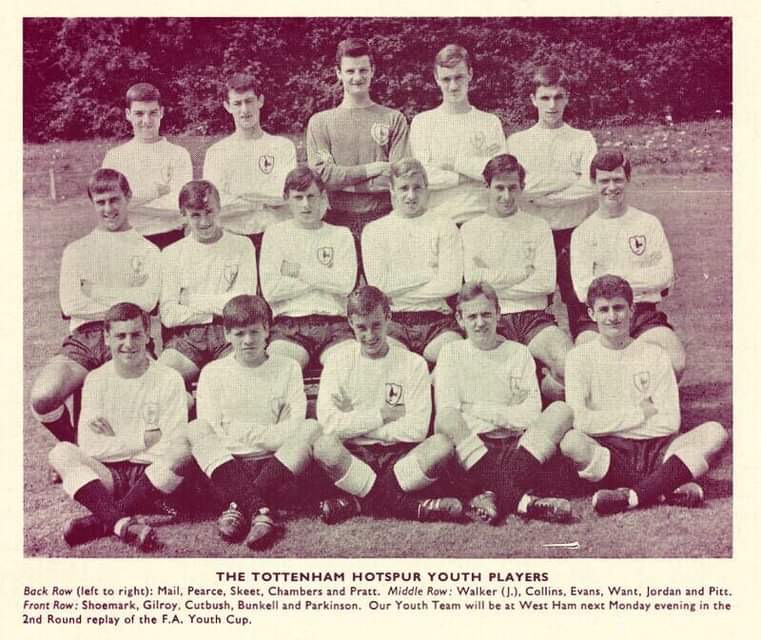
John Gilroy was a fast, skilful and direct winger, who also had a good eye for goal. The former Spurs player from Welwyn Garden City in Hertfordshire, was at Spurs for a good number of years during the 1960s as a youth and reserve team player. After leaving Spurs, Gilroy would later move into non-League football, where he played for Hatfield Town FC, before later playing amateur football. I recently had the great pleasure and privilege of speaking to John at length about his memories from his days at Spurs.

What are your earliest footballing memories?

John: As a youngster around Welwyn Garden City there wasn’t a lot of work around, and so there wasn’t enough for the youngsters to have bikes and things like that. So all that there was was football, and I used to kick a football about all of the time. Me and my best mate Billy used to play football all of the time, and sometimes even a tennis ball. If we didn’t have a ball then we would go around gardens and take one. Then when I went to junior school, and they had a team there I used to play at centre-half, and then after that I got into the junior county team and that’s when it all kicked off. I went to senior school and the teacher there was called Phil Mowbray, and he was a Spurs scout, and when I started playing for the school team he asked me if I would go down to Tottenham. I used to go there on Tuesday and Thursday nights, and I’ll always remember that on the first night that I went there Danny Blanchflower was taking the training, and as somebody who had always followed Spurs, he was my hero. After Danny Blanchflower stopped taking the training Laurie Brown took it a few times, and then the others were Roy Low and Eddie Clayton. 

What are your earliest memories of your time at Spurs?

John: I used to go training on a Tuesday and Thursday in the ball court, and they used to have like 25 or 30 players in the ball court, and there would be two teams playing and then the rest would be standing by the wall for a time. Bill Nicholson used to come and walk by and have a chat with us, and then you’d have the other ten players who were in the smaller gym, and they’d do ball skills. I was 15 in April, and just before that in February/March there was a series of trials down at Cheshunt. Initially there was 40/50 players who were vying for four apprentice places. In the first game that I played we were playing against QPR’s youth team and they had players like Frank Sibley, and they actually beat us 7-1 but I actually made the one goal that we scored. Then it was brought down to 22 players and there was like four more trials, and then it came down to this final trial in mid April. I was playing at outside-left and the player who was playing right-back had just been picked to play for England Schoolboys at Wembley along with Paul Shoemark. That was one of the best games that I’ve ever had as I gave this full-back a really difficult game, and I also scored a wonder goal. The ball was crossed from the right and then the keeper got up and punched it and I then came running in from the left wing and hit it into the far corner of the net on the half volley. I think that it was that goal which made Bill Nicholson and Eddie Baily choose me as one of the apprentices. 

Did you have any footballing heroes/inspirations and if so who were they?

John: As a footballer it was Danny Blanchflower. I used to admire John White, Dennis Law and George Best. I always used to say that that forward line of Charlton, Law and Best at Man United was unbeatable. I also obviously liked Jimmy Greaves and I also liked Ron Henry, who was one of the coaches in the evening. And I also liked Dave Mackay, and my dad actually bought me his book which described how he went to Hearts and then Tottenham, and that was fascinating reading. 

Who were your greatest influences at Spurs?

John: In the early days I used to get on well with Eddie Baily, and he used to take you to one side in the early days and try and tell you what you should have done instead. Obviously there was Danny Blanchflower when he was there, and when he was talking I was just listening to the things that he was saying. But I would say Eddie Baily because his knowledge of football and what he could do with a football even at his age then was excellent. He used to tell you to take a corner and hit the near post as there would be somebody standing there to flick the ball on. I would mess it up and he then used to come over and he would tell you what to do while actually hitting the post while he was talking to you. So he was a good influence on me.

Could you describe to me what type of player you were and what positions you played in during your time at Spurs?

John: I had a bit of pace and with my pace I was pretty skilful on the ball, and I played mainly on the left wing at Tottenham. But I could also play up front, although most of the time I did play outside-left. I was able to take people on outside and go down the line, and then when I came up to the full-back rather than going down the line I would cut inside. And I scored quite a few goals cutting inside like that on my right foot. My big strength was my pace.

Were there any players at Spurs who you would watch closely to try and improve your game or look to learn from?

John: Stephen Pitt used to play at outside-right and he had a bit of pace and his control was good. He used to take full-backs on and beat them, and I used to watch him closely as he was my type of player, and he had been at Spurs a couple of years before me, and I wanted to do the same as what he had done. My first year as an apprentice Stephen Pitt played for the first team against Blackpool, but I used to enjoy watching him play and train.

What was your time at the Lilywhites like on the whole?

John: Initially it started off fine, but in the end I was getting disillusioned by certain aspects of my game. I had a bad ankle injury and in those days you would have treatment on your ankle and you’d have ice in one bucket and hot water in the other bucket. When you’re out you would lose match fitness and I was really struggling keeping up with the pace of matches, and then I’d go over on my ankle again and be out for several weeks and have to have treatment. Then I’d come back and lose my match fitness again, and then on top of that I broke my arm in a game against Millwall. I always seemed to get injuries in training down at Cheshunt apart from the one against Millwall, but all of the other injuries came in training. Like when Tony Want injured my shin in a challenge, and in another week a 50-50 challenge from John Collins left me with ten stitches in my other shin. Professional football when I was starting out wasn’t what I thought it was going to be, and you also had to clean the gym and the ball court and stuff like that. When I signed for Spurs as a pro life did get better. One man who I could never get on with though was Johnny Wallis and if you couldn’t get on with him then it made things difficult. I remember that I scored a hat-trick against Arsenal in the Metropolitan League and yet I was called into Bill Nicholson’s office after we beat them 4-0. He told me that I should have done this and that, even though I had just scored three goals.

What prompted you to leave Spurs and could you talk me through your career after you left the Lilywhites?

John: I had this ankle injury and I had lost all of my pace as such even though I was still pretty quick. As I said I started off well with Eddie Baily but then over the five years that I was down there it got to the point where we weren’t getting on well, and in the end I wasn’t getting on well with Bill Nicholson either. I had a chat with my dad and I said that I wasn’t going to make the first team and so I didn’t want to just be in the reserves, and so anyway I left Tottenham at the end of the 1969/70 season. I then went to play semi-pro football for Hatfield Town and I really enjoyed my football then. I also had a job in a factory where I was earning good money, and I was earning £30 a week at Hatfield, whereas Tottenham were paying me £24 a week. So in 1970 I was earning a lot of money. I played for Hatfield for a couple of seasons before a person from Boreham Wood approached me (that wasn’t allowed in those days). They asked me whether I would play under a different name and as I was getting so much per week I was getting cash in hand. I did that for quite a few games and then I got a good job and so I gave up my pro status, and went to play as an amateur after getting a permit. I was playing football with my mates as well on a Saturday and also on a Sunday morning, and I really enjoyed it as it was really good. You could also go out for a drink which you couldn’t do at Tottenham. But at the end of my time at Tottenham I became quite disillusioned about football, and the same kind of thing also happened to John Clancy, who I thought was a really good player. 

You had Graeme Souness who came to Spurs and like Steve Perryman he was a good player, but Steve Perryman had this attitude that he wanted to do everything in training. He was good at fighting for the ball and at passing the ball.

What was the greatest moment of your footballing career?

John: One of the games that sticks in my mind was when we played Millwall in the London Youth Cup final and we won 4-3. I was having a really, really good game, and for the first goal Steve Perryman got the ball and played it through. I then got the ball and went around two players before putting it around the keeper and sticking it in the back of the net. We also had a few games when we went on tour to Holland and the Dutch people made us feel welcome. I think that we played against Newcastle in the final in the Feyenoord stadium, and they were playing Ajax that afternoon, and so there was about 40,000 people in the stadium, and they watched our final first. So playing in front of all of those people was a bit of highlight for me.

Who was the greatest player that you have had the pleasure of sharing a pitch with? 

John: Jimmy Pearce was a big influence on me and one of the best players that I played with, along with Steve Pitt. When we used to go training down Cheshunt they used to put the A team, reserves and first team all together so I played with and against a number of players. But in my mind it would be Jimmy Pearce, Steve Pitt and also Brian Parkinson as well. Brian had a lot of skill. 

Could you talk me through some of your favourite memories or ones which stand out from your time in the Tottenham youth teams and reserves?

John: From playing in the reserves I can remember playing against Cardiff City at White Hart Lane and I scored on my debut with a diving header, and also another memory which stands out was the 4-3 win over Millwall. The best memories though is from when I went on tour to Holland, and you would stay with different families and they would then bring you down to training. At Spurs you had to be very strict with what you ate, and you couldn’t drink and so it wasn’t very social. Also another memory was from the tour to Holland. Over the years of going there we had got to know people and other players. There was one particular time when we were based in Rotterdam and four or five of us went on a train down to The Hague. There was one guy who played for ADO Den Haag’s youth team and he was with us, and we’d only missed the last train coming back! We didn’t have money for a taxi so we started to walk to see if we could hitch a ride or something. We were walking through The Hague for about 15 or 20 minutes and like the Arc de Triomphe in Paris with all of the roads around it, well there was a similar kind of place in The Hague. We all had the same idea to take a bike and cycle back to Rotterdam. Anyway we turned onto this road and realised that we were on the motorway! The police turned up and asked us what were we doing, and we said that we had borrowed these bikes from our friends in The Hague, as we had missed the last train back to Rotterdam.

They (the police) told us a safe way to cycle to Rotterdam, but we all thought that we were going to get in trouble about the bikes, but we didn’t.

Who was the toughest player that you ever came up against?

John: I remember playing Leyton Orient in a league match at Brisbane Road and Eddie Baily came up to me and asked me to give Tommy Taylor a really tough game. And although we won the game and I did well, he was one of the toughest players that I ever came up against. 

Were there any players at Spurs who you were particularly close to?

John: Jimmy Neighbour, John Cutbush, Paul Shoemark, John Clancy and also Graeme Souness when he arrived from Scotland. I used to always see John Clancy when I used to get the train to Tottenham, and he always used to have a pack of cards on him.

What would your advice be to the young Spurs players of today as they look to break into the first team?

John: Go out and do your best, as they used to say in our day. But it’s different now, but in our day we just used to try and enjoy ourselves and do our best.

After all these years how do you look back on your time at the Lilywhites and is Spurs a club who you still hold close to your heart?

John: I feel proud of what I’ve done as not many people can say that they played for Tottenham. I only wish that I’d have done things a little differently, and got on better with Johnny Wallis and in the later days Eddie Baily and Bill Nicholson.

Spurs Under 23’s versus Crawley Town FC: (match preview)

Wayne Burnett’s Spurs Under 23 side have so far had the perfect start to pre-season. They have won three of their three pre-season matches so far, scoring 13 goals and conceding no goals. The last time that a Spurs development side played Crawley Town was back in 2018, when a Spurs side containing a number of first year Academy players put in a very impressive performance, to record a 1-1 draw in normal time in the Papa John’s Trophy group stage. League Two side Crawley Town faced West Ham United’s Under 23’s in their last pre-season game. The match finished 2-1 to Crawley. Spurs played non-League side Hastings United in their most recent pre-season friendly, and it was a game which Spurs won 3-0. Crawley will be by far Spurs’ most difficult test of pre-season so far, and so it will be a challenging game for Spurs’ Under 23 side on Saturday (the game starts at 15:00pm and takes place a Crawley’s The People’s Pension Stadium). Unfortunately I am unable to attend and report on tomorrow’s game. However, I would like to wish the Spurs team all the very best of luck for the match.

My predicted lineup: (4-2-3-1) Oluwayemi, Cesay, Muir, Okedina (c), Lavinier, Bowden, Devine, Santiago, Robson, Markanday, Etete.

Subs from: Lo-Tutala, Kyezu, Hackett, Michael Craig, Matthew Craig, Pedder, Mundle.

Injured/unavailable: N/A.

Doubtful: N/A.

Previous meeting: 1-1 (Crawley Town won on penalties).

My score prediction: Spurs 3-2.

My one to watch: If he does play on Saturday then Spurs will be have to be aware of former Spurs Academy player Nicholas Tsaroulla (22). The left-back who loves to get forward and take players on for skill, was a player who I really enjoyed watching when he played for Spurs.

Remembering Spurs’ very popular and important former assistant manager Harry Evans: 

As a footballer Harry Alfred Evans was mainly a forward throughout much of his playing career. He started off with Sutton, who he played for after leaving school. He combined playing football with them while working at a wine and spirits merchants as a clerk. Harry Evans’ early years (he was born in 1919) must have been very difficult for him, as he lost his mother, father and one of his sisters to the Spanish Flu epidemic in 1921. The Lambeth born former footballer was brought up by an aunt during those early years. During the Second World War Harry Evans served as a PT instructor in Farnborough, Hampshire. During this period of time he also played football for Woking, Fulham and Romford, before joining Southampton (he also played as a guest for Aldershot) in late 1943. While there the Londoner played with the great Sir Alf Ramsey, but the vast majority of his games for them came during the Second World War. However, Evans did make five competitive appearances for Southampton after the war had ended. The latter years of his playing career saw Harry play for Exeter City and later Aldershot, who he played for in competitive competition. After having to retire from playing not long after returning to Aldershot after a bout of Peritonitis, this meant that he was unable to continue playing, but Evans worked hard to gain a number of important qualifications, of which included coaching qualifications.

Harry Evans took on the role of secretary-manager at Aldershot in the winter of 1950, it was a role in which Evans would remain in until he decided to go to Spurs as assistant manager to Bill Nicholson (after being sacked by Aldershot), after the Spurs manager was impressed by Harry following his application for the role. Harry and his family made home in Winchmore Hill, not too far from White Hart Lane. He was joined by a future Spurs legend in Scotland international John White, who stayed at his house not too long afterwards, and would later marry Harry’s daughter Sandra. In just a short number of years Bill Nicholson and his assistant Harry Evans, and a very talented group of Spurs players made Spurs one of the best teams around. They of course won the double in 1960/61, the FA Cup the following year, and they also reached the semi-finals of the European Cup. The polite and very popular Harry Evans was a big part of this. He was an intelligent footballing man who was respected by the Spurs players and also Bill Nicholson. He was in many ways the perfect assistant to Bill Nicholson, in the sense that he was in some ways like one of the players, such was his popularity amongst them, and also because he was a very sociable person too. I spoke to a small number of people that I know who were around Spurs at the time that Harry Evans was there, to try and get a better picture of what the former assistant manager was like during his all too brief time at the club.

One of the players who was around Spurs when Harry Evans was assistant manager, was youth, A team and reserve team player David Sunshine. In a recent conversation with David Sunshine he recalled to me how friendly a person Harry Evans was, but also how he was the complete opposite of the great Bill Nicholson. Sunshine also told me that in addition to Evans’ first team duties he also took training for the Spurs A team and youth team. Another former Spurs A and reserve team player Derek Tharme recalled to me how on the brief occasions that he came across Evans, how he was a pleasant and reasonable person to speak to. A first team and also reserve team player at the time who would have come across Harry Evans at Spurs more, was Eddie Clayton. I was speaking to Eddie just the other week and I asked him what Harry was like as an assistant manager. He explained to me how Mr Evans always did his best and on occasions would even take first team training when Bill Nicholson was unavailable. Mr Clayton also recalled how Harry Evans was a gentleman who got on well with everybody at the club. Not only was Harry Evans assistant manager at Spurs, but for a time he was also the main man when it came to the impressive scouting system at the club. 

Eddie Clayton’s older brother Ronnie Clayton is the last of the Bill Nicholson, Eddie Baily, Dickie Walker and Charlie Faulkner era. I recently spoke to Ronnie, who actually joined Spurs as a scout when Harry Evans was at Spurs and part of the scouting system at the club. He recalled how in addition to his first team and occasional work with the A and youth teams, that Evans would take training for Spurs’ then very talented and successful reserve team. He also recalled to me with great clarity a conversation that he had with Harry while the pair were watching a reserve team game between Spurs and Crystal Palace in the early 1960s. Ronnie has fond memories (although he didn’t know Harry too well) of both Harry Evans and his son-in-law John White from those great Spurs days in the 1960s. Harry Alfred Evans was without doubt a big and important part in his own right of the success that Spurs enjoyed during the early 1960s. He is an important person in the history of Tottenham Hotspur Football Club, and Spurs supporters should be proud of what he achieved in his relatively short career as a coach. Very sadly Harry Evans passed away in the December of 1962 at University College Hospital, after suffering from pancreatic cancer. Those who knew him and who are still around today remember him with such great fondness.

My preview of Spurs’ Under 18’s 2021/22 season:

Spurs’ Under 18 side begin the 2021/22 season with an away Premier League South fixture against current Premier League South champions Fulham at Motspur Park on the 14th of August. New Under 18’s head coach Stuart Lewis has a very big and talented Spurs squad this season, with 25 players a part of the Under 18 side. In addition to the 25 players there are also two goalkeepers – Thimothée Lo-Tutala and Isak Solberg, who are part of the Spurs Under 23 side, but who are still eligible to play for the Under 18’s as overage goalkeepers. Spurs’ first home game of the season is against Chelsea, before they travel to the English Midlands to face a new side in competitive competition in Birmingham City. They have been promoted to category one Academy status, meaning that there are now 14 teams in this seasons Premier League South. In addition to the Premier League South, Spurs will also compete in the prestigious FA Youth Cup as always, but there has been no communication on whether the Premier League Cup will return to how it was before, when it was just for category one Under 18 sides. Fulham and Chelsea are always tough games in the league, but also Arsenal, Crystal Palace and Aston Villa are in my opinion teams to watch out for this season.

Spurs’ Under 18 side played their first friendly of pre-season last Saturday when they played Ipswich Town. Spurs lost the match 3-2, with Jamie Donley and Rio Kyerematen getting our goals. Although there is technically 25 players who are part of the Under 18 side this season, I would personally expect a couple of players such as Dane Scarlett and Alfie Devine to feature rarely for them, because of their involvement with the Under 23 side and first team. Centre-forward and new first year scholar Jamie Donley already featured (Rio Kyerematen and Alfie Dorrington also featured last season) for the Under 18 side on a good number of occasions last season. A tall and physical centre-forward who is clinical in front of goal, Donley has represented both England and Northern Ireland at youth level. I personally wouldn’t at all be surprised if he even stepped up to play for the Spurs Under 23 side on occasions this season. There is a very good number of England youth internationals in the Spurs Under 18 side this season. With Aaron Maguire, Brandon Bryan-Waugh, Alfie Dorrington, Jordan Hackett and Thomas Bloxham just some of them. Although I have hardly seen any of this seasons first year Academy players play apart from Jamie Donley, I have seen a lot more of the second year Academy players over the last two seasons.

Midfielder Khalon Haysman (17) made eight competitive appearances for the Under 18 side last season, but he is in my opinion a really good player, and after impressing for the Under 23 side during pre-season I would expect him to get more starts for the Under 18 side this season. Winger Roshaun Mathurin was in excellent form for the Under 18 side last season and I wouldn’t be at all surprised were he to feature for the Under 23 side in competitive competition this season. I have a good feeling about this season for the Spurs Under 18 side, and I would like to wish them all the very best of luck for the season.

The squad: 

Goalkeepers: Aaron Maguire, Adam Hayton, Luca Gunter.

Defenders: Jahziah Linton, Brandon Bryan-Waugh, Alfie Dorrington, Jordan Hackett, William Andiyapan, Dante Cassanova, Renaldo Torraj, Maxwell McKnight.

Midfielders/wingers: Oliver Turner, Rio Kyerematen, George Abbott, Billy Heaps, Riley Owen, Jez Davies, Khalon Haysman, Alfie Devine, Axel Piesold, Thomas Bloxham, Jaden Williams, Roshaun Mathurin.

Forwards: Dane Scarlett, Jamie Donley.