As a player Brian Parkinson was a very skilful forward thinking one, but like so many others his professional career was ended early because of injury. A youth team and later reserve team player for Spurs, where he was a regular for a number of years during the 1960s, Brian Parkinson later played non-League football with Kings Lynn and Stevenage Borough. I recently had the great pleasure of talking to Brian about his time at Spurs.
What are your earliest footballing memories?
Brian: That would be school football, which was at Ashmore in Southgate. All I wanted to do was to kick a ball. In the end I got picked for the district, Barnet, which then went on to the county which was Hertfordshire. When I was nearly coming up to 15 there were some scouts that came down to look at some players, and they were from Man United, Liverpool, Tottenham and Arsenal. There was one bloke called Dickie Walker who really stood out, and he was chief scout for Tottenham. He came round to my house, and so then I didn’t want to go anywhere but Spurs, and that was all that I wanted. I just started going training a couple of evenings a week down there to start off with, and then when it was my 15th birthday Spurs wanted to sign me as an apprentice, which was a dream for me. There was another player who played for my district and county, and he was called Alan Oliver. He was an excellent player, and they (Spurs) were going to sign him as an apprentice on the Monday like me, but he had a school cup match on the Saturday, and he broke his leg. That did his career in.
What are your earliest memories of your time at Spurs?
Brian: John Collins, Stuart Skeet and Johnny Pratt were my friends at Spurs when I first went there. We used to do chores, like cleaning the boots, but the biggest memory was going to the gym. Johnny Wallis was a lovely guy and he was like a dad to me, and he used to send me and John Collins down the gym to sweep it out, but we always had a ball there and would play one touch football for hours, and I think that he knew that. They were absolutely lovely times.
Did you have any footballing heroes/inspirations and if so who were they?
Brian: The one for me had to be George Best, as he was my hero. When I was 17 they used to do Five-a-side football at Wembley, and there were eight of us who got picked and I was one of them. We got through to the quarter-finals, and then we played West Ham and I got picked to play as one of the five. Out came Bobby Moore and Geoff Hurst, and I just couldn’t believe it. So anyway we played and we won 1-0, and then we got through to the semi-finals and we played Man United! And George Best came out! In those days in Five-a-side you weren’t allowed any physical contact. I came out and was on for I think two minutes, and that guy did some things with the ball that I’ve never seen in my life, and I just stood there staring until they took me off. That’s one thing that I’ll never forget.
Who were your greatest influences at Spurs?
Brian: During the early years there was a little inside-forward called Tommy Harmer, and he was like a magician. He was very, very small like I was, and he was the guy who I wanted to be like. So he was my biggest inspiration. After that came a very, very good friend of mine called John White, and he was such a skilful player. So people like that were my influences at Spurs. But also you had Alan Mullery, who was the loveliest man who I’ve ever met in my life. He would come back in the afternoons and teach us and tell us things one by one and in his own time.
Could you describe to me what type of player you were and what positions you played in during your time at Spurs?
Brian: I was a greedy player, who loved to beat players and put the ball through their legs, so you could say that I was flash, I suppose. During my time in the reserves I played against Portsmouth at White Hart Lane, and Bill Nicholson and Eddie Baily were watching as the first team weren’t playing. They told me that I was beating the full-back and instead of crossing the ball I was turning round and beating them again. So what they did was they put blinkers on me in front of a 6,000 crowd, and so I went out and played the second half in a pair of blinkers. And that’s a true story! But that was to try and teach me a lesson.
Were there any players at Spurs who you would watch closely to try and improve your game or look to learn from?
Brian: In the early days it was the winger Cliff Jones, who was absolutely amazing. Then as I progressed and got into the combination side it was Derek Possee. The guy was so small and he had so much speed. His timing when he jumped was absolutely amazing, and so I tried to model myself on him a little bit to try and get my timing write. Another magician who I looked up to and got on well with was Keith Weller, and he was a very skilful player. So I looked up to people like that, but I was sort of my own enemy because I wanted the ball all of the time and wouldn’t pass it. That was my biggest fault.
What was your time at the Lilywhites like on the whole?
Brian: It was absolutely fantastic and the people were fantastic, and if I could do it all over again then I would definitely do the same thing. The people such as Bill Nicholson, Eddie Baily and Johnny Wallis were absolutely amazing, and they helped people so much that it was unbelievable. But if you’re not meant to play for the first team then you’re not meant to. And injuries got in the way in the end, even though I was on the verge of playing for the first team.
What prompted you to leave Spurs and could you talk me through your career after you left the Lilywhites?
Brian: Well I was put on a free transfer after getting injured in a game against Leicester. I went into a tackle and it was a fair one, but afterwards I looked down and my foot was facing the other way, and to the point where it was pointing backwards. I’d done all of the ligaments and cartilage in my leg and so I was out for about four months, and then I started playing and training again, but every time I played my knee would come up like a balloon. So after every match that I played I couldn’t walk or anything for three or four days, so I had that to contend with that. And in the end Bill Nicholson said that he didn’t know if my future was in professional football, and that was how it really ended. But because I loved the game so much I went to Kings Lynn up in Norfolk for about a year, although I didn’t used to train as I just used to play on the Saturday. Then when I left there I came back to Barnet and got a phone call from Stevenage asking me if I’d be interested in joining them on trial for a while. After two weeks they signed me and I was there for four years. After the second year my mate Steve Pitt came along. But playing football was very hard, because every time that I played my knee would come up like a balloon.
What has been the greatest moment of your footballing career?
Brian: It would have to be the Five-a-side one with George Best. The other one was when the first team played at White Hart Lane and the reserves didn’t have a game, so we were on the line watching. In that game Pat Jennings came out to punch a ball and on the edge of the box George Best got it and he just stood there and lobbed it, and the only place that he could put it, he put it there. And even Pat Jennings stood there and clapped him (he got told off for it). I just thought that George Best was unbelievable.
Who has been the greatest player that you have had the pleasure of sharing a pitch with?
Brian: I think that skill wise and for dedication it would definitely be Keith Weller, and even though he played for England a few times, he should have gone further than he did. He was absolutely amazing and whereever he looked, that was where the ball would go. He was sort of like Bobby Moore, when he used to pass the ball.
Could you talk me through some of your favourite memories or ones which stand out from your time in the various Tottenham youth teams?
Brian: I remember when we went to Holland over on the boat, but anyway we won the tournament and Bill Nicholson flew out, and we also had flowers and watches given to us. Keith Weller, Tony Want, Roy Brown John Collins, Steve Pitt and me were all there. I think that that was the best time that I ever had at Spurs.
Who was the toughest player that you ever came up against?
Brian: When I signed apprentice they would let you train with the first team for two or three weeks. When I went into the gym and we played five or six a-side I got hit right against the wall all of a sudden by Dave Mackay! Then two minutes later I went into another tackle with him and he got me by the scruff of the neck and said “ right, you did not pull away from me and you wasn’t frightened of me. Well done! ” He was the hardest man that I’ve ever seen in my life.
Were there any players at Spurs who you were particularly close to?
Brian: As I say it was John Collins, Stuart Skeet, Jimmy Pearce, Steve Pitt and Jimmy Walker, as well as Tony Want. John Collins came to my wedding and I went to his as well, and so we were friends as well as colleagues.
What would your advice be to the young Spurs players of today as they look to break into the first team?
Brian: I wanted to be an individual like George Best, but there are no characters nowadays. So I would say to try and be your own person.
After all these years how do you look back on your time at the Lilywhites and is Spurs a club who you still hold close to your heart?
Brian: I’m just grateful for the way that I was treated and the way that Spurs looked after me. I was a very, very greedy footballer and they (Spurs) tried everything in their power to get that out of me, and I wished that they had have done, as I think that I could have gone further. The club were absolutely amazing.
(Barry is pictured third across, on the left of the extreme right, of the above photograph.)
Barry Roffman was a lively inside-forward during his days at Spurs as a youth and A team player, but the Luton born footballer could also play up front as a centre-forward, as he did so on occasions. With the help of Barry’s former Spurs teammate David Sunshine, this commemorative piece will be focusing on the late Barry Roffman’s time at Spurs, as well as focusing on some statistics and matches from his time at the club. Barry joined Spurs as an amateur (he signed professional forms later on) in the summer of 1959, after leaving school. The inside-forward would have most likely started off by playing with the old Spurs Under 18 side in the South East Counties League, and during one season with that side he impressively scored 15 goals from 25 appearances. During a time of such competition for places in the three main sides that Spurs had (not including the Under 18 side) in the late 1950s and early 1960s, the Spurs A team, reserves and first team were very difficult to break into. With internationals even playing in the reserve side, the A team contained quality players who could easily have got into some Second Division sides, such was the quality of the players in that side. As well as playing in the South East Counties League during his early days at Spurs, Barry would have also played in competitions such as the London Midweek League, the London Minor Cup, the FA Youth Cup and later on the Eastern Counties League, with the A team. A skilful player with good close control and distribution, Barry Roffman was a regular scorer for the Spurs youth team, and he even scored four goals in a preliminary round FA Youth Cup win over Terrington Lads, on one occasion.
Barry’s consistently good performances for the Spurs youth team were rewarded during the famous double winning season of 1960/61, when Barry made his first two competitive appearances for the Spurs A team in the Eastern Counties League. Of his two appearances that season he scored a hat-trick for the A team in a 9-0 league win over Biggleswade Town. During the following 1961/62 season Barry had a breakthrough season for the Spurs A team. He made 23 appearances for them in the Eastern Counties League, scoring eight goals, and he also scored an additional goal for the A team in an Eastern Counties Football League Challenge Cup game against Stowmarket. Scoring for the A team in games against the likes of Ely City and Southend United respectively, this would have been a memorable season for Barry. Although the Luton born footballer never played a competitive game for the reserves (he may have played for them in a non-competitive game), it was incredibly difficult to make that step up into the reserve side in those days. Especially when you had players like double winner Frank Saul getting games for the reserves, in the days when there were no substitutes for first team games. Back when Barry was a Spurs player the youth policy at the club was very different to what it is today. Often Barry would have turned up to play youth games for Spurs not knowing, nor having played with some of the players that would be playing in the same Spurs Under 18 side as him, or possibly (no records exist to my knowledge) even for the second youth side in the Wood Green & Metropolitan League. That was because Spurs used to often field trialists in those games, trialists who more likely than not would never play for the club on more than one occasion.
Barry did play in the same youth and A side as players who would go on to play for the Spurs first team. The most notable former player is Spurs legend Phil Beal, but other players that Barry played with who played for the Spurs team, included Derek Possee, Roy Low and Ron Piper. As his old teammate David Sunshine recalls, Barry was a popular and well liked member of the Spurs youth and A team, and David also remembers that Barry had a good sense of humour. Although it is unknown whether or not Barry continued to play football at any level after leaving Spurs, he did go into the fashion industry and set up a business called Pret A Porter, before later moving to Spain (Barry sadly passed away in 2014). To have been at Spurs during those three and a bit years must have been a wonderful time for Barry, as it was for all of the players who were at the club during that period. And to have been at Spurs for the length of time that he was, like with all of the players who were at Spurs during that period in the 20th century, it speaks volumes of just how talented they were as footballers.
East End born former footballer Paul Van Gelder was a right-back during his time at Spurs in the 1970s as a youth player, having previously been a midfield player. A talented and technical full-back who liked to get forward down the flank, after leaving Spurs Paul Van Gelder would play for Barnet, and then later Wingate & Finchley, where he played under a number of former Spurs players. Paul also represented and captained Great Britain at the Maccabiah Games. I recently had the great pleasure and privilege of talking to Paul about his time at Spurs, which was over 40 years ago.
What are your earliest footballing memories?
Paul: We used to play out in the street and I sort of grew up in the East End, and so we used to play quite a lot of football. It was always a case of being called up to go upstairs because it was bed time, kind of thing. So that was really what it was all about as we didn’t really have much else, so it was really all about football, as there weren’t any computers or any of that around then. If anyone had a football then that was it, and it was just great.
What are your earliest memories of your time at Spurs and how did you come about joining the club?
Paul: Well I’d got invited for a trial, as obviously I’d been spotted playing for my local club. Back in them days the trial was at Cheshunt, and so when I turned up at Cheshunt basically it was a sort of in-house game with some juniors, some youth team players and some trialists. We had a game with both of those categories, and so that was the first trial. Then I got invited back which was great, and we used to train at the ground on Tuesday and Thursday nights, but obviously back then it was a lot different to what it is now. There was only one team and not all of these different satellite clubs and different academies, as it was just a squad of probably 16 to 18 players. You were quite privileged if you like and it was quite a big thing because it was at the ground, and it was exciting.
Did you have any footballing heroes/inspirations and if so who were they?
Paul: I am a Tottenham supporter and I always was a Tottenham supporter, and so it was a massive thing for me to be involved with the club. At the time probably my biggest hero was Steve Perryman, because he was this young lad coming through the ranks. Initially I was that type of player but I ended up being a different type of player, but I suppose that I modelled myself on wanting to be like Steve Perryman, but beyond that my biggest influences are obviously the greats, like George Best and Johan Cruyff. Those types of players always inspired me and I loved that type of footballer.
Who were your greatest influences at Spurs?
Paul: I would probably have to say our manager Ron Henry from the double team, and it’s funny because I went there as a midfield player. In my first year there I struggled a little bit to pin down a regular spot in midfield, and the game was obviously a lot quicker than I was used to as a midfield player. Then out of the blue one Saturday we turned up and Ron Henry called me to one side and said that our full-back at the time Roger Wade wasn’t available, and so Ron asked me to step in at right-back. He could have told me to play up front, centre-half or anywhere as I’d have said yes, but I had a really, really good game there, and it just seemed to suit me. From that day on I was right-back regularly and never missed a game, as I was always picked, and I would have never have done that had I have stayed a midfield player. So Ron saw something in me and trusted me to play there, and I would say that that was a breaking point for me.
Could you describe to me what type of player you were and what positions you played in during your time at Spurs?
Paul: I played in lots of different positions over the years but at that age I always considered myself either a midfield player or a forward, because as a youngster you always like scoring goals. I was a skilful player and technically very good, and I just think that being further back and having everything in front of me enabled me to read the game a lot more. And I would say that in the modern day I was one of the original overlapping fullbacks in them days, which we would call wing-backs now. So I would say that I would be a modern day wing-back.
Were there any players at Spurs who you would watch closely to try and improve your game or look to learn from?
Paul: Probably everyone that you’ve spoken to from my age group would talk about one person and one person only, and that’s Glenn Hoddle. Going back to that trial game I remember saying to Gary Hyams and Barry Pace, who was the number ten, and was he a youth team player? And bearing in mind that the youth team players would have been two/three years older than us at the time, but they said that he was one of the juniors and that he was the same age as us. Glenn just stood out and he was just phenomenal, and we used to train during school holidays at Cheshunt, and we would train with the youth team then, and Pat Welton was the youth team coach at the time, and he was a very, very good coach. Any demonstrations that needed to be done from what we were doing at the time, Pat would always pick Glenn above all of the youth team players. He was just in a different league and I was lucky enough to play at right-back behind him in quite a few games, and it was just so easy as you would just give him the ball. It was just do your bit and give him the ball and let him get on with it, as he was just phenomenal, and without a doubt the best player that I’ve ever played with, and probably even seen.
What was your time at the Lilywhites like on the whole
Paul: I loved it and it was a dream, and I mean it was just turning up on a Saturday and training on Tuesday and Wednesday. And we used to get trained occasionally by Mike England and Martin Chivers, and as they were senior players they would come down on the odd Tuesday and Thursday night and give us a little bit of coaching. So that was obviously a dream and then to turn up on a Saturday and get on the coach outside the ground and put that kit on, you just can’t beat that. After the game we used to come back and if the first team were at home then we’d get our tickets for the game, and so it was just a boyhood dream.
What prompted you to leave Spurs and could you talk me through your career after you left the Lilywhites?
Paul: Basically I probably got to Spurs six months too late, as by the time that I’d got there a lot of the lads had already been there for two or three years. It came to signing apprenticeship forms and both myself and Chris Hughton got called into the office in front of Bill Nicholson to say out of probably eight lads who didn’t sign apprentice, that they wanted us both to stay, and sign what was then amateur forms. Both I and Chris did sign amateur forms, and after the first year I started to play more regularly and started to make a few appearances for the youth team if people were injured, as youth team players got priority. Then when that season finished they asked us both to do the same again, but I didn’t feel that I was getting anywhere with it. But obviously in hindsight if you could go back and put an older head on those shoulders, then I would have probably stayed. I remember going on a summer holiday and coming back and my mum said that Peter Shreeves, who had just taken over the youth team, and he had phoned. I spoke to him and he said that he wanted me to stay, but he said that he couldn’t guarantee me regular football because of such and such. I suppose that I lost a little bit of the drive that you needed to have, and the rest is history and Chris Hughton decided to stay and go for it, and look where he ended up! I’m not just saying this but I was actually a better player than Chris Hughton, but that’s my story. It was different times then and if you were doing that now then there is so many other opportunities to play a decent level of football and earn a good living out of it. Back in them days which was 40 odd years ago, even the top pros at Tottenham weren’t earning fortunes, and it wasn’t like it was a great career financially.
So then it didn’t feel that important as I thought that well I hadn’t quite made it, and so I’m not going to do it. Ron Henry was obviously friendly with Dave Mackay, who was at Swindon at the time, and he said that he could get you to go down to Swindon, and I also had an offer from Leyton Orient. But for me it was Tottenham or nothing, but then I played a couple of games for Barnet under Barry Fry, back in the day when they were in the Southern Amateur League. I then got a bit fed up with the travelling and the midweek games to somewhere two or three miles away, and then getting back home at one o’clock in the morning. I then actually got asked to play for Wingate, and I knew a few of the lads who were playing down there. At the time they were playing at a decent Sunday morning level, and then I stayed there for a while and went through the leagues and I ended playing in the Ryman’s, so I was there for a long time.
What was the greatest moment of your footballing career?
Paul: Obviously going back to putting on that Tottenham shirt is definitely the biggest highlight, but I would say after that it would probably be representing Great Britain in the Maccabiah Games, which is like the Jewish Olympics. So that was important to me, and so countries from all over the world would compete as an Olympian. And obviously I captained the Great Britain team and represented them on three occasions throughout my career (it is held every four years), and I captained them on the second and third occasion. So I suppose that would be my personal achievement and it is very like the Olympics, and the opening ceremony is live on TV in Israel, and there’s 60,000 people in the Ramat Gan Stadium. So that was a great experience.
Who was the greatest player that you have had the pleasure of sharing a pitch with?
Paul: Glenn Hoddle, without a doubt. But I played with Paul Miller, who I knew for a long time and he actually managed us at Wingate for a while with Joe Kinnear. Outside of that I have a good friend called Jeff Bookman, who captained England Under 18’s and played for Chelsea and Arsenal as a youth team player, and I’ve known him for a long time. But also Barry Silkman was another one, and he played for Man City and QPR, and he’s a good friend of mine, and we actually play in the same vets team. But no doubt the best player that I’ve ever played with at the highest level is Glenn Hoddle.
Could you talk me through some of your favourite memories or ones which stand out from your time in the various Tottenham youth teams?
Paul: I think that it goes back to to the South East Counties League Division 2 Cup game against Chelsea, and obviously we played the first leg at the ground, and that was an incredible memory to go and sit in the changing room and put your kit on. And then you’d come out of the old tunnel at the old west stand and play on the pitch. Following that we played West Ham in a two legged final and the first leg was at White Hart Lane, and again we won that one-nil, and then we went up to Upton Park which was a great experience to play there. We actually lost that second leg one-nil, and we had the replay the following week at Cheshunt, and that was in 1975 and so West Ham had just won the FA Cup and so there was a lot of people at Cheshunt for that game, and eventually we beat them one-nil. So probably those three games are probably the three games that stand out the most as far as me being at Tottenham.
During your time at Wingate you played under a number of former Spurs players. What was that like?
Paul: That was great and I got on great with all of them, and they obviously knew my background a little bit, so I would say that I got a little bit of special treatment from the old lads like Tommy Harmer and Terry Dyson, who were fantastic. Then obviously when Paul Miller and Joe Kinnear came down that was great, and I knew Paul anyway. And also there was Micky Dulin, who had obviously been at Wingate for a long time, but I got on great with all of them. We even had George Graham down there at one time, and he was there for about a year, just before he took over at Arsenal. As he was doing some work at QPR and one of the people at Wingate who knew him quite well got him to come down to Wingate.
Who was the toughest player that you have ever came up against?
Paul: Vinnie Jones. He used to play for Bedmond who were in the South Midlands, and we used to play against them. This was obviously before he went to Wimbledon. But other than that nobody really stands out, but I suppose that I probably wouldn’t have even mentioned him if he hadn’t have been the Vinnie Jones who ended up playing at Wimbledon. But I can’t say there was anybody when I was at Tottenham who I used to play against that was really difficult to play against.
Were there any players at Spurs who you were particularly close to?
Paul: I was close to Barry Pace, because I knew Barry before I had went to Tottenham. But there were other players who I used to play against that I used to know, such as Billy Porter who used to play for Leyton Orient. But at Tottenham me and Barry Pace used to meet at Liverpool Street on a Saturday morning and then get on the train to Cheshunt, as we used to live near each other.
What would your advice be to the young Spurs players of today as they look to break into the first team?
Paul: Looking at it as a supporter now and the experience that you think you’ve now gained over the years, I would say just do the best you can. It’s a totally different game now and what you need to make it as a pro, especially at a club like Tottenham, but it’s difficult as a youth player to break into any team. I look at somebody like Harry Kane, and I’d be one of the first to admit that when he first came into the side that there was no way that you would ever think that he was going to be the player that he has turned out to be. But he’s obviously worked very, very hard and he’s obviously very dedicated, and I think that his hard work is paying off for him, and so for me he is the perfect example for any young footballer trying to break into the first team. I remember seeing Wayne Rooney play at 15 against the Tottenham youth team when Everton came to White Hart Lane, as a friend of mine called Michael Stone was coaching the Tottenham youth team. He invited me down to the game and I remember him saying to me before the game that Everton have this player who is 15, and to keep an eye on him. You knew straight away that he was going to be a top player, and he scored two goals that night and he just stood out. I also remember watching Gascoigne as well at a young age, but you would never say that about Harry Kane, whereas with Gascoigne and Hoddle you knew. Certain players you look at and you think that he’s got it, but not with Harry Kane. So I would say to any young player to look at Harry Kane.
After all these years how do you look back on your time at the Lilywhites and is Spurs a club who you still hold close to your heart?
Paul: I went there as a supporter and I remember not long after I left that Glenn Hoddle had made his debut and Spurs got relegated, and I think that I only missed two games that season, home and away. Me and a group of friends used to go everywhere, and in one particular game we turned up away to Bolton and we were a couple of tickets short. We were sort of standing around when the Spurs coach turned up and Glenn got of the coach and we had a chat, and he asked me if I was alright for tickets, and I said that actually we need a couple. He said to come back in ten minutes, and he actually sorted us out a couple of tickets. I remember going into the hotel and seeing Peter Shreeves, who was the manager, and we used to have a chat. But listen Tottenham is my club and will always be my club, no matter what happens.
Stephen John Perryman (M.B.E.) is Spurs’ most successful ever player, and the former Spurs man from west London who wrote his name into the history books of Tottenham Hotspur during a 19 year spell with the club as a player, was someone who had one of the best footballing brains in England during his time as a footballer. His anticipation of situations in games, his tenacity and energy on the pitch, as well as his ability to pick a pass and keep the ball moving, were all first class attributes of his. Always one step ahead of the game as a player, regardless of whether he was playing in midfield or in defence, Perryman’s reading of the game and defensive organisation skills more than made up for the fact that he was never one of the quickest players on the pitch. Rarely missing a game for Spurs since he stepped up to play for the first team, the Londoner was the complete captain, who had the respect of every player that he played with at Spurs. Without doubt Spurs’ most successful ever homegrown player, Steve Perryman won two FA Cups, two League Cups and two UEFA Cups during his time at the club as a player. Joining the club as an apprentice back in 1967, Spurs’ all time record appearance holder endeared himself to the Spurs faithful during that time, and still to this day the Spurs fans have a massive amount of respect and gratitude for one of their own. After leaving Spurs in 1986, Steve Perryman played for Oxford United, before becoming player-assistant manager and later player-manager at Brentford. Since then Steve has held roles of which included being manager of Watford, assistant manager to Ossie Ardiles at Spurs, a successful spell managing Japanese club Shimizu S-Pulse, and also being director of football at Exeter City.
I recently had the absolute privilege and pleasure of interviewing Steve about his legendary association with Spurs as a player. From those early days as a youth player at the club, to captaining the side to major silverware. If you haven’t already read Steve’s fantastic book which is called A Spur Forever, then I would highly recommend that you purchase a copy. Even if you are not a Spurs fan, as you will still thoroughly enjoy reading it.
What are your earliest footballing memories?
Steve: In general it would be going over to the field or the park, or in the road outside of our house, as we lived in a cul-de-sac. There were not a lot of cars around in those days and there wasn’t too many of us. And my brothers were actually responsible for getting us a park as we only had a field to go to, and so they went around the next estate and turned the field into a park, which is Lime Tree Park in Northolt. So that was my earliest memories which was playing with my older brothers and older kids, but not always, although they were usually my brothers age. And then I played football for my school which was never easy as you’re playing against bigger, tougher, stronger boys.
What are your earliest memories of your time at Spurs and how did you come about joining the club?
Steve: So I had relative success at primary school level, and for instance I was in the district team a year early, and if you got into the team you were a good player, but if you got into the team a year early, then you were a very good player. I managed to be good enough to get into the team in my fourth years, but I then dropped completely out as I got into a basketball playing grammar school, and I followed my two brothers to one of the local grammar schools. Of course I was going to follow my brothers as I could share their blazers and stuff, but anyway I dropped out of the football scene. Although my brother wrote to a couple of clubs like Brentford and Reading and at 13 years of age I had trials, but I had no backup and I wasn’t going in there with any real confidence, as when you’re young you don’t know that you’re a good player. But anyway you would go to a trial situation, and I think that I went on trial to Chelsea because they had a lad called Steve Skoulding who joined Chelsea as an apprentice professional, and he was from our school. My dad and my brothers asked him if there were any trials at Chelsea and if so then to let us know. So I just turned up at Stamford Bridge and there was about 60 kids there, and then when they read out all of the names of everyone that had been invited, they said had they missed anyone? So I said me! As I had been invited but they had just missed me off the list, and so they asked me where I played? And I said inside-forward, and so they said that they had plenty of them but they said could I play left-back? So I said yeah. But that was not successful, and it was not until my last year at school that I got put into the district trials again, because of the new sports master.
I got into the Ealing District team, and then eventually throughout that year I progressed into Middlesex, London and England. But on my very first game for Ealing against Harrow the chief-scout at Spurs (Charlie Faulkner) scouted me. Instead of scouting a professional game in the afternoon he came around our house and he invited me to training. My eldest brother Ted, sort of believed in me the most, and Charlie Faulkner had asked me to sign this form to come to training, but Ted said no, he doesn’t have to sign that form. How he knew that I do not know, because I would have been 14, and therefore Ted would have been 18 and so I don’t know how an 18 year old knew the rules, I don’t know. I couldn’t understand it as no one was asking me to go training and this was Tottenham Hotspur, and although I had never been to a Tottenham game I was obviously aware of Bill Nicholson and the double team, and all that went with that. So anyway Ted was right and I could go training without signing this form but I did go training, and as my sort of schoolboy career progressed I ended up being the only England Schoolboys player who wasn’t signed to a club. So the interest in me was huge but ironically I never ended up signing for the team who knocked on the door first, and the decision on why I went to Tottenham was on how they treated me, and how they treated my family. And I’m talking about respect and not money, but that was down to Bill Nicholson, who had his finger on the pulse of everything that happened at that club. He even visited my house at least twice during that year and he was also writing letters to us, and of course Charlie was backing all of this up as chief-scout.
Charlie in fact was new to the job and I suppose that I was his first sort of signing as such, and Charlie didn’t live a million miles from us and so and he was always around the house. You never know what would have happened if you went somewhere else, and the contenders were West Ham and QPR, and QPR were because I was local and I used to enjoy watching them play in the old Third Division. And if I wasn’t at QPR then I was at Brentford following my two brothers, but West Ham were because of Hurst, Moore and Peters, and also my brother Ted was a a bit of a Ron Greenwood fan. But when it came down to it Bill Nicholson was the man and he was honest, and I said to someone the other day that the love for his club just shone through every pore in his body. And that was a convincing sell, and he wasn’t very praiseworthy and said it like it was, and so I thought that with someone like that then you are going to have a chance.
What was it like adapting to being at Spurs during those early days as a young player. And what was it like to have so many top clubs wanting to sign you as a schoolboy footballer?
Steve: So the minute you sign for someone else then you forget about all the other clubs, and I forgot about most of them (it was only between three) as I knew that I was never going to live in digs somewhere up north. Adapting was difficult, it was strange, it was four hours travelling (two hours there, and two back), and it was tough physical, stressful, and you had to do your bit, work-wise and playing-wise. So you were taking in all of this new information, which is why you joined a club led by Bill Nicholson, and they certainly didn’t fall all over you because you were a good player, because they were all good players. Certainly the younger group of the club maybe thought that I was an England schoolboy who thought that I was better than everyone else, but I certainly wasn’t that. But the fun part was when you were training and when you were playing, and that gets you through the moments where you think what am I doing. I was thinking this is tough, I was falling asleep on the train and missing my station which was Northolt and ending up at West Ruislip, which was about five past where I should have got off. I also got an injury which was a bad back and I missed about six months of my development, and although it was the same as everyone else, the treatment wasn’t great in them days. For some reason the medical thing with injuries hadn’t moved on but thankfully I had all my injuries early on in my career, and not later on. So I had got a bad back and was having to spend all of these hours on a train, and also sweep the gym, and spend time in the drying room in the summer, which was stifling hot.
So when you’re having to do all this nasty stuff that you haven’t done before and with a bad back, you were not walking properly and couldn’t walk straight and so that was testing. A lot of these days I’m hearing about people and stress and all this stuff, but forget my stress think about the people who fought in wars and were in the trenches and who weren’t fed properly. So I was the next stage of that which was nothing, but as a young person you’re thinking about your bad back. But looking back on it and if you get through all of that then it toughens you up, and you deserve a career.
Did you have any footballing heroes/inspirations and if so who were they?
Steve: With local football being QPR and Brentford, Rodney Marsh was the standout player. But there were lots of other players that I liked, like Mark Lazarus and Peter Angell and Frank Sibley, and George Francis and Jim Towers at Brentford. But at the international stage the higher class of football would have been Bobby Charlton and he was the pinnacle and the one to look up to. In terms of how he acted and played he was such a good role model, and I’m lucky enough because of my success that I have met him in later years, which is great.
Who were your greatest influences at Spurs?
Steve: Well I’ve been very lucky and I think that your career depends on your influences and at a young age I had Ted, and then when I joined Tottenham, from a managerial point of view it would have been Eddie Baily and Bill Nicholson. You weren’t dealing with them everyday as they had bigger fish to fry, but they were having a total influence over the club and that filtered down to you as an apprentice. Of course if you were playing for the England youth team then you would get a telegram from Bill Nicholson saying “ wear the white shirt of England just as proud as you would the white shirt of Tottenham, and you’ll be fine ”. But from a playing level as it’s who you’re mixing with everyday and who you are leaning from everyday, and so that would be Phil Holder. He was my age group and he seemed to do everything, and he had experience before his time and he had fighting qualities and as a competitor he had nous, and he knew how to live his life. I was from west London and I wasn’t from the east end or anything, but Phil was was just a dream for me. We traveled in together and traveled out together, and when I eventually turned pro and could drive I would pick him up at certain stations and then drop him off. So we spent hours and hours and hours together in the car, and you live off someone as competitive as him off of their words. My brother Ted made me a captain by saying that if you realise that if you help the man on the ball (your teammate) then it will help you as a player. Not that he’s got to listen to you as there is a lot of things going on in peoples head when you’re on the ball, if you’re telling them to turn or shoot or whatever. He said that they don’t have to listen to you but if you just pass on that then it makes you a better player and gives you an opinion on the game. Not because you’re a better player than them, but because none of us have got eyes in the back of our head.
What advice that is to a young schoolboy player, and it gave me such a leadership string to my bow, and you need as many strings to that bow to make you selectable. I was never a captain at school or in the youth team but people and particularly your teammates notice when you give them good advice, and if it’s good advice then they trust you, and you then give them more advice. It gives you the confidence that you’re saying the right things and so eventually when I get in the team as a 17 year old (I’m still not a captain) I didn’t have any problem to advice Jimmy Greaves that he could turn, or Gilly that he could hold it. That was part of you getting integrated into the team but if you were doing that in a flash way then that could work against you, but because I was brought up the right way I never took liberties with it no matter how good I was. So I just accepted whatever I got with good grace and tried to help those around me, and that put me in very good stead over the years.
Were there any players at Spurs who you would watch closely to try and improve your game or look to learn from?
Steve: Alan Gilzean, as Bill Nicholson put me as a room partner with Gilly. So I was taught to be humble but not listen to nonsense, and to stand up for myself. Those two things are quite hard to put together because if someone pulls you up for talking nonsense to them, then it could be because you’re flash. But stand up for yourself, be humble and listen to the advice, as the next bit of advice that someone may give you may be the best bit of advice that you’ve ever heard in your life and that can change your football life, and therefore your life. So if you’ve got too big an ego to listen to that bit of advice then you’re going to miss it, so I learnt more life things than football things at Spurs, because football is life.
Could you talk me through that 1969/70 FA Youth Cup triumph with Spurs. And also your standout memories from that cup winning campaign?
Steve: So the final was over four legs. We had a very good team, and me and Phil, and Barry Daines were in our last year in the youth team and we’d turned professional. The year below us had good players like Mike Dillon, Ray Clarke and Graeme Souness of course, and then we had a group of apprentices. So Eddie Jones who was a local lad, and people like that, but Spurs also had a group of amateurs and that’s not being disrespectful, because they were not on the professional staff. But they were as important as everybody else, as if you had a 15 year old apprentice left-back, and their best player is the right winger who has played in someone’s first team then you may lose the game because of that sort of battle. So you needed this age group of amateurs, who were attempting to do what people like Chris Hughton and Terry Naylor had done, and do enough as an amateur to then be offered professional terms later in life. Some people would say that if I’m good enough to sign apprentice then I don’t want to as they wanted to go into education as well, and therefore if they were good enough then the club would offer them the chance to play as an amateur. But we all develop at different rates, and I was in the first team at 17 at a club where you had 22 year olds who had never really played for the reserves. Because there was a team in-between which was an A team, and so in a way that was sometimes difficult to cope with, as in a way they were looking at me as if I was a favourite. But managers don’t have favourites, they have players that they trust, and if trust means that you get selected then that could be turned into you being a favourite. Well he (the manager) trusts what you do and likes what you do, and his job depends on you doing it at first team level.
If the manager doesn’t quite trust you like with Graeme Souness, who didn’t do enough to be trusted to the point where his patience ran out and he decided to go home. The timing has got to match, but at 17 and in the first team I don’t think that I was in a position to say that I was homesick or that I’d lost patience, as there was no reason for me to do that. But going back to the FA Youth Cup winning team, we were a very successful group of lads who had a very successful few years, but the pinnacle was to win the FA Youth Cup. I think that we only lost one game that year which was away at Colchester. So one week I was playing with Jimmy Greaves and Alan Gilzean, and Pat Jennings, and then the next week I’m playing with amateurs. But that’s not being disrespectful, but there were people like Bobby Wiles and John Oliver who were in that bracket and trying to do well enough to achieve a professional contract. So the expectancy level just went sky high for me as I’d just played for the first team. But I didn’t play against Arsenal on one of the last games of the season, because I was playing in the FA Youth Cup final and we wanted to win it. So that was a good decision by Bill Nicholson, but of course he wanted to beat Arsenal as well in the first team game, but managers had to make thousands of decisions everyday, and there is a mistake around every corner. But Bill Nicholson had his finger on the pulse of everything at Spurs, and of course he appointed Pat Welton, who had had success at the Little World Cup, and a lot of good players had come through his leadership in that team. Probably the first time that I was coached in an FA manner, was by Pat, as he was an FA coach. But Bill Nicholson, Eddie Baily and Johnny Wallis was more competitive, and there was 11 v 11 football, and there was a guideline of things to stick to, such as playing quick, easy and accurate.
So you were told all of these things, and I’ll never forget when Alan Gilzean had controlled the ball, that he wanted to play the ball in behind to Jimmy Robertson, past the reserve left-back Tony Want, but Jimmy was stood still. So in his eyes he had played it in behind, but Bill Nicholson had said to stop that and why did you put the ball there for? And Gilly was right, and he knew what Bill was going to say, and that was that the man off the ball makes the play. And so he said to Gilly what was he doing? And so he said that he was stood still, but Bill said to leave it to him to dictate that he makes that run, and that you have to respect that he’s the man off the ball. That’s a very simple thing but it’s so right from a managers point of view, and those lessons were gold dust for you, and you were getting those messages regularly. Sid Tickridge was our manager at weekends in the youth team, before I got into the A team with Johnny Wallis. Those messages just kept coming thick and fast, and if we played a big game such as on the pitch at White Hart Lane then Bill Nicholson and Eddie Baily would have been there along with a number of the first team players, which was great. And the players would say what a goal that you scored or well played, when we saw them in the corridors the next day. But Bill Nicholson used to have a session with us in the away dressing room, and he just used to be underlining all those messages again, such us one goes back, the next one should go forward. So there were maybe 20 of these which were the framework for which you played your game within, and he wasn’t telling you that you couldn’t do a step over, and he wasn’t telling you that you couldn’t do a trick on the ball. But if you did and you did not adhere to one of these rules then you had to watch out. They didn’t actively encourage flair but they didn’t discourage it either, as it was what the flair resulted in, and that was a very good way to manage, as you knew exactly where you stood.
Could you talk me through your memories of your first team debut for Spurs, against West Ham United in a friendly in Baltimore, in the May of 1969?
Steve: So I was very surprised to have been taken on that trip as I don’t think that I’d played a reserve team game up to that point. So I was travelling with a group of people who knew me and my face, and my name, but they didn’t really know me, although I certainly knew them. West Ham were based in Baltimore and we were visiting them, and so that was to sort of spread the name of football in that country. The game was played in a baseball stadium and the pitch included the diamond and the track where you run for the baseball was also there, so that was different. I was playing against Hurst, Moore and Peters, against the team who were managed by Ron Greenwood, who I might have joined. The similarities between the two clubs were amazingly close, and Bill Nicholson and Greenwood were great friends and I think that Bill and Eddie both went there when they left Spurs, because of the closeness of ideas. I can’t remember too much about the game but I loved it and I enjoyed it, and I ran about and I just loved being in the company of these players, and I probably did okay in the match. I was supposed to play that game and then go home, as Alan Gilzean was joining that after that game because he’d been playing for Scotland in an international game. But anyway David Jenkins had been swapped with Jimmy Robertson at Arsenal, and he was on the trip, but he couldn’t play in that Baltimore game because he had sunburn on the top of his feet. You can imagine how Bill Nicholson reacted to that and so he sent him home and I stayed, and so there’s little moments like that in your career where there is no way that they could be planned. That resulted in me having an extra opportunity, and I ended up playing every game on that tour, from Baltimore to Atlanta, and then to Toronto in a tournament playing Glasgow Rangers and Fiorentina.
I think that that trip gave Bill Nicholson the thought of me being involved in the first team at a quicker stage than he was already thinking. It was inhibited by a thigh injury, and I never got injured other than that back injury, but I had a thigh injury in pre-season and that as Bill Nicholson described, stopped me from being in the first team photo, that is sent out to every away team at the start of the season for their programme. So Bill Nicholson would say that if you hadn’t have got that injury then you would have been in that first team picture, but you never answered Bill Nicholson back. But if I’d have been braver then I would have said Bill, do you think that I want to be injured? But of course you don’t say it. So those things live with you for ever, as it’s such an important mark in your career, and that said a lot about their reaction to injuries. I remember when Bill Nicholson came into the treatment room and he would just stare at you, and then sort of end up sighing, before walking out. The message was, that if you were injured then you’re no good to me, as I’ve got to concentrate on the ones that are good for me. And I think that there’s something to be said to that.
What was it like to play for the great Bill Nicholson at Spurs. And could you talk me through the impact that he had on you making that transition from being a youth player at the club to becoming an established first team player at Spurs?
Steve: Well it was all in the preparation, and that was through the apprenticeship and the young professional, which wasn’t long in my place. It was treating you in a tough love type of way and nobody really told you how good you were. Looking back now, I was part of the squad who went to Baltimore and I was also on the list that was kept on rather than being sent home. So then I was selected in the team to play against Fiorentina and Glasgow Rangers. Alan Mullery told me that he was on an England trip and he came back having played all three games, and Bill Nicholson phoned him and said how did you get on, Alan? And so he said yeah I feel fit, and so Bill said to him to have a good rest, and also did you do well? Alan said that Alf Ramsey said that he was the best player. And Bill said that that’s great Alan, as I’ve found you’re replacement! He said who? And Bill said young Steve Perryman, and he’ll replace you one day. You can imagine Alan Mullery’s answer to that. But yet Bill Nicholson wouldn’t say that to me personally that I would be replacing Alan Mullery one day. If Bill smiled at you then you did a lap of honour, if he said well done to you then you must have played well, but it was tough love wilt everything. When I was about 21/22 I got married on a Monday in March, during the season. Bill said why are you getting married in the season for? Well I said that I wanted to leave the summer clear to rest and enjoy myself, and in the super professional Bill Nicholson’s eyes that was just so strange. Bill Nicholson also couldn’t stand long hair, and I think that the fact that I had a short haircut (I used to get my haircut by a guy who used to cut hair for the local boxers) didn’t harm my case for when I got into the first team.
Bill Nicholson truly thought that Spurs were special, and why wouldn’t he believe that, as they had been great to him. And he had been great for them as well.
Could you talk me through some of your favourite memories or ones which stand out from your time in the Tottenham youth teams and reserves?
Steve: I remember when I played a reserve game for Spurs in front of probably 200 people away at Crystal Palace, and I think that we won about seven-nil. It was known that I was going to leave the club, and so I assume that people had come to look at me, to see if my legs had gone, or if my attitude was bad. As how’s he going to cope playing for the reserves, after 866 games playing in the first team. But I absolutely loved it, because I was surrounded by young players who wanted to learn and who wanted to thrive. They were at the same stage as me all those years ago, and they wore the white shirt of Spurs with some pride and passion, and they would listen to me as I was the captain of the club. They weren’t worried that I had one foot out the door, and so how could I be arrogant and flash, and think that I don’t deserve to be in this team? I’ve never understood why a player who is out of the team for whatever reason (mostly injury) would not want to play for the reserves to get back to fitness, to help young players improve and give advice. From the Spurs youth team there was one day that was special. As that one year I played for the youth team, the reserves, the first team and the England youth team, and how ever many games I played that year I do not know, but I don’t think that I had one midweek off. During this year the Spurs youth team were playing a final against West Ham at Cheshunt, and I’d have been training with the youth team at Cheshunt the day before and nobody had told me that I was involved in this youth final. Maybe I should have asked the question, but you can’t have it both ways, and I wasn’t told that I was needed for this game and therefore it was a day off. It was difficult training and playing in the first team and you needed your rest, but anyway I got a phone call from Pat Welton asking me where I was. I said that I was at home and so he asked me what I was doing at home, as I had been picked to play.
No one had told me that I was in the squad, which can happen as coaches have a lot to think about, and a lot of planning to do, and I was in two teams. I had to knock on next doors door, as my brother was at university and my dad was working, and so there was no one who could drive me to Cheshunt. But I eventually got a next door neighbours son who wasn’t into football to take me, and by the time that I’d got to Cheshunt I went into the changing room and got changed and I got put on for the second half. Spurs were either two or three-nil down. I’m not the player, unlike Souness or Jimmy Neighbour who can change a game like that, but anyway we got a goal and we were back in the game and in the end we ended up winning three-two or four-three. But it was as if I had made the difference, and in a way I did, but not the normal type of difference you know, when you come on and score four goals, as I was and never would be that type of player. So that is a game that I remember because it was so unusual for the miscommunication and how I dealt with it, and I didn’t come in and play like some superstar, I just played like I had the first time that I had played for the youth team, as a 15 year old. That was doing my best, working hard and in this situation trying to get a goal back, and not over celebrate when we got that goal, and instead get the ball back to the halfway line, and on we go again, and let’s be relentless, and in the end we won it.
Could you talk me through some of your favourite memories or ones which standout from your time in the Spurs first team. As well as talking about the various cup successes which you were a part of?
Steve: So it was like a whirlwind when I got into the team and all of a sudden I was playing with Jimmy Greaves, and Pat and Gilzean, who were all great people and players. Then Jimmy Greaves goes and Martin Peters arrives, and all of a sudden I’m in a new midfield with Mullery, Peters and Perryman. So wow, it’s not always great week in week out, but eventually we get to the League Cup final and we win that, and then in the following years we got to a League Cup semi-final which we lost, and then another final. It appeared to me that you didn’t have to have a great whole season to win a trophy as you just had to win various games, and if that luck came as well then it was that competition which you won, be it the UEFA Cup or the
League Cup. So it was like a whirlwind and this young Steve Perryman was just going along with it all, but they were great moments if not particularly great individual moments. I had my moments in every competition, like when I kicked the ball off the line very importantly against Aston Villa at 0-0, and I know that I did my job against Norwich. I also certainly did my job over two legs in the Wolves game, but I done more than my job in the first leg semi-final against AC Milan when I scored two goals. It was very unusual for me to have two shots at goal, let alone to score two goals, and it was very unusual to shoot the ball under eight foot for me, and twice as well! So you’re basically doing your job and some weeks you’re doing it surprisingly well. But then there was relegation in the mid 1970s and life goes into a depression because your great club that you’ve been loyal to is now not signing great players, like we have had in the past, and so we were signing second and third rate players. So the club just goes from bad to worse and that is a bad thing to cope with, but when you’re talking about stress, I don’t like the word stress, but it’s all that I hear these days out of young peoples mouths.
But anyway Spurs managed to regroup and get up again and that was my favourite season as that was the season that was the pinnacle for me, in terms of me showing my ability. Because I went to the back and just brought the ball out and set Hoddle free and McNab free, and John Pratt free, as well as the overlapping full-backs. It sounded like I didn’t make a mistake but I didn’t make many mistakes, but from being a worker/runner I sort of returned to my youth of having a freedom, because of lack of pressure, in terms of having an immediate opponent. I just flourished with this freedom of playing, and this is why today I get so disappointed with how clubs don’t play the ball out of the back good enough. There is too many square passes and there is no one going between two players and running forward between the two, and that very rarely happens, and I think that’s where England lost out to other countries, as they could do it to us in such a way. But that season was a particularly good year and we managed to get out of the division and eventually sign Ossie and Ricky and get a really good team together, and have the purple patch of seven games in 18 months at Wembley. I can’t distinguish really between all of them, but Ricky Villa’s goal and the way that we were leading and losing and then get back and win it, and then get back on the stage. I led that team down and I led them up again, and now I was leading them at Wembley and was going to pick the cup up. That was the greatest day of your life, the greatest! And so they were the sort of highlights but of course I missed out on the 1984 UEFA Cup final at Tottenham, but you know what I sampled it against Wolves, and I know what that crowd can do to a team. Yes they can be critical and they’ll let you know if they are not happy, but when the crunch came, they lifted us over that line.
What a night it was at the Lane, and Danny Thomas missed a penalty and they chant his name back to the halfway line. That is a special crowd and if there was one, how does the next penalty taker feel having heard the reaction to Danny Thomas, if they understood that the crowd were chanting Danny Thomas’ name. That’s the power that a crowd can have on you and don’t undersell or undervalue the power that supporters have got. The referee for the semi-finals of the UEFA Cup cost me my appearance in a final, and you know what the Anderlecht players all apologised to me after the game, even though I thought that they were apologising for celebrating my second yellow card in that tournament. But I consoled myself that we had won the final and that I had already done it against Wolves.
What prompted you to leave Spurs and could you talk me through your career after you left the Lilywhites?
Steve: I just didn’t really get on with the chairman at the time, and it was becoming a different club to the one that I had joined. My legs had ran out and so I wasn’t worthy of a new contract and so I do understand that, but I’ve never understood how Tottenham say goodbye to players, as it’s ridiculous. So I went to Oxford United who were trying to stay in the top division with a capacity crowd of 6,500 at the Manor Ground. We managed to stay up, and I ended up moving on as assistant manager/player to Brentford under Frank McLintock, and I eventually took over from Frank. Then after a couple of years I moved onto Watford, and then Ossie gave me the chance to come back to Tottenham as his assistant, and the club was now totally not the one that I knew. It was almost a different club with different ethics and different ways, and of course the game becomes more of a business as time carries on. But do not tell me that Bill Nicholson wasn’t a businessman, but he was a football man first, with an eye on the business. Some of the chairmen when I was involved with Spurs did not trust anyone, and if that was to do with football then that is a disgrace. So anyway I moved onto Japan after some time in Norway, after Ossie had offered me the chance to join him in Japan, which I did, for the experience and adventure. We were very successful in Japan, individually and as a pair, but eventually I came back to England for a while, before getting another job in Japan, which I took up. I eventually returned after 2002 and decided that I didn’t want to work for any businessman again, who had enough money to tell me what to think about football. So we moved down to Devon, and I helped Exeter City who were in dire financial straits, and I worked for them for nothing for four years, before starting to turn it around and starting to put the youth policy into action.
Exeter City eventually got back in the league and spent many good years there, and then supporters wanted to tell me what to think rather than chairmen of football, and that was when I decided that that was enough for me. But I’m delighted to see some of the former players like Ollie Watkins doing well, and the club now is in a very healthy position in terms of money, and that was done by hard work. The owners kept a distance, but when the supporters trust didn’t want to keep a distance anymore then that was enough for me.
What was your time at the Lilywhites like on the whole?
Steve: It was wonderful, with great people. If you have supporters, the club and it’s players and then you have the people in-between who are supporters and they live local and they work for the club. Like the groundsman, office staff and the scouts, and that group of people were top football people, and I remember that I used to go in the local cafe, and the groundsman used to go in there. One would say are you ever going to have a shot on goal, Steve? And that was just gold. No one ever speaks of those people, like the laundry lady, the tea ladies and the lady at the training ground who made the lunches, and the groundsman at Cheshunt and his wife, those people are what Tottenham is about. Of course it’s about Jimmy Greaves and Gilly and Pat, and all those greats, but we were all one, together. That’s my abiding memory of Tottenham, and as I just described what they (the supporters) did to get us over the line at Wembley and against Wolves, when the team and the supporters are one then you’ve got something, and that’s a force that can’t be reckoned with. I’ve seen some highs and I’ve seen some lows, and relegation is a low, but if I’d have changed clubs and I’m sure that I would have met good people at the other clubs, but I wouldn’t have met as many good people that I met at Tottenham Hotspur.
You returned to Spurs during the early 1990s to serve the club as assistant manager to Ossie Ardiles. What was that like and could you talk me through your memories from your time in that role?
Steve: Awful! Football was not the most important thing anymore and it was about making money and it was not good, and it was not the club that I joined. It was not what I believed that the football club should be. When I was sacked I was absolutely delighted as I did not want to be surrounded by these people who were in control and have to listen to their nonsense. They could not teach me one thing about football or life. I’m a great believer in respect for football, respect for the players and respect for supporters. So it was a very sad time for both Ossie and me, and that’s why I’ll never ever criticise managers, as you don’t know what’s happening behind closed doors. Spurs had to pay me and Ossie to leave the club, which I’m not proud of, but that’s the rules. And for us to then go and do what we did in Japan, they should be ashamed of themselves.
What was the greatest moment of your footballing career?
Steve: Picking the cup up in 1981. I led the team down and I led them up, but to be serious you have to win a trophy and the FA Cup is a serious trophy, and that was a serious victory with a lot of style and richness about us. I’m truly, truly proud of that. The second year was good but it didn’t feel as good.
Who was the greatest player that you have had the pleasure of sharing a pitch with?
Steve: That’s a difficult one, as how do you judge a saver of goals like Pat Jennings to Jimmy Greaves, a scorer of goals? How do you judge a Glenn Hoddle, who played it his way and delivered the ball and then George Best who did his stuff? But I’m just proud that I played with and against some of the best players of all time.
Who was the toughest player that you ever came up against?
Steve: I think in tough in terms of a competitor it was Bryan Robson. I remember saying in a magazine interview that this player was going to be a superstar, and without being like a George Best or a Glenn Hoddle, he was in his own way. And that was in terms of drive, energy, power and desire. He was the toughest player that I ever played against, and I don’t mean that in a nasty way.
Were there any players at Spurs who you were particularly close to?
Steve: Phil Holder is still to this day my best friend in football. I had a closeness in play with Glenn Hoddle. Alan Gilzean was another one, as I roomed with him and he was like a father figure to me, and also Pat Jennings in terms of respect. I respect Pat’s career and what he stands for, and maybe he would say the same about me. We had a mutual respect.
You were the captain of Spurs for many years but you’re also the clubs record appearance holder during your 19 years at the club as a player. What do you put that down to?
Steve: That is a bit of luck, and also being a stopper of goals who could help turn a team to be in a position to make the goals. And that’s what a good captain does and he helps to set the scene. I had a football brain for sure and I had a football desire, and a desire to keep learning, and also a competitiveness.
What would your advice be to the young Spurs players of today as they look to break into the first team?
Steve: Be humble, keep listening to football people, never forget that the most important people in football are supporters, and enjoy what you are doing.
After all these years and a 19 year association with Spurs as a player, how do you look back on your time at the Lilywhites and is Spurs a club who you still hold close to your heart?
Steve: Yes. It wasn’t before I joined but the moment that I walked into the club I knew that it was something special. Bill Nicholson was a special man and it’s no surprise that he made a special club. I love it when Spurs win and I don’t like it when they lose, and I love the style of Tottenham over the years, which all comes down to Bill Nicholson, from my knowledge. I’m proud of what Tottenham stands for, and if I can be labelled Spursy, then I’m proud to be that, because that attaches me to the great Tottenham Hotspur.
A Spurs schoolboy youth player from under 9’s level to under 16’s level, Tony Hazard played for Spurs at youth level during the 1990s and 2000s. The son of Spurs legend Micky Hazard, midfielder Tony Hazard unfortunately wasn’t offered a scholarship by Spurs, and he left the club at under 16 level. Hazard would later play for Sevenoaks Town in the non-League, after having been on trial with some other clubs. I recently had the great pleasure and privilege of talking to Tony about his time at Spurs.
What are your earliest footballing memories?
Tony: One that stands out was when my dad was on TV, and we were watching and he went to charge down the goalkeeper. He thought that the goalkeeper was going to kick the ball but he basically did a trick on him, and so watching football that always sticks out in my mind. But playing football it was with a lot of the players who went to Spurs with me in our team, and we were beating teams like 8-0 and 9-0, and playing good football for Somerset Amberry. So I really enjoyed playing when I was younger.
What are your earliest memories of your time at Spurs and how did you come about joining the club?
Tony: There was a guy called Robbie Stepney, and I think that he watched my club team. And I think that about eight of us actually signed for Spurs and stayed there until we were about 16. At first there was no competitions or playing against other teams, as it was just all training until about a year later when we would play other teams. I always remember that Watford would be a good game but one that really stands out to me was playing Crystal Palace, and I actually had a really good game. Although I scored an own goal, missed a penalty and gave away a penalty but I did have a really good game, and so that game will always stick out in my mind.
Did you have any footballing heroes/inspirations and if so who were they?
Tony: There were two people that I would always watch or certainly try to play like. One was Paul Scholes, and my dad would always say to watch him as he always had a picture in his head before he received the ball. I don’t think that he was one of the best players ever, but David Beckham was somebody that I always used to try and use his technique to try and kick a ball. He had a very unique technique and I sort of tried to copy that technique. So Scholes and Beckham were always the two players that I watched as a youngster, particularly Scholes as he was my favourite footballer throughout, and I was sad when he retired. So those two players were the ones who I used to watch, and with Beckham I always wanted to have that same technique that he had.
Could you describe to me what type of player you were and what positions you played in during your time at Spurs?
Tony: I was mainly a central-midfielder, but I think that I was mainly a centre-back when I first went to Spurs. I always respected my dads views because he was always truthful in what he said, and he said that I reminded him of Glenn Hoddle on the ball, and I could make a pass even though I wasn’t the dribbling type of player. But like Scholes I had a picture in my head of what I wanted to do with the ball before I received the ball, and so when I received the ball I just wanted to be more creative. In terms of playing those through balls and moving the ball quickly, so I would basically say that I was more of a defensive midfielder who liked to create from a deep lying position.
Who were your greatest influences at Spurs?
Tony: David Ginola was always one and I’ll never forget watching Ginola, and I never had the movement that he did because of my height as I was very tall. So I wish I was more flexible and could drop a shoulder kind of thing, but growing up at Spurs there weren’t many players to really choose from. Another one was Steffen Freund, as his mentality and attitude to football was what I thought that you needed as a footballer. If you have that attitude then the fans will love you no matter what, and they loved him. He wasn’t a fantastic footballer but he never gave up, and I think that should be everyone’s attitude. So I would say Freund for his attitude but Ginola as a footballer at Spurs.
Were there any players at Spurs who you would watch closely to try and improve your game or look to learn from?
Tony: I had a spell at centre-back at Spurs and I think that Ledley King was definitely a player who I thought that if he didn’t have his injuries then he could have been one of the best, and so he was a player that I would definitely watch. But we were never a good team when I was growing up, so there wasn’t many great players. But I was trying to be a midfielder and so there weren’t many great players at Spurs in my time that I would watch closely. I think that’s why I decided to watch Paul Scholes.
What was your time at the Lilywhites like on the whole?
Tony: It was probably the best time of my life. Even if my dad hadn’t have played for Spurs, my mums side of the family are all Spurs fans and season ticket holders, and so I would have been Spurs no matter what. Just having the opportunity to put on that shirt and play for them and also play against teams which even at a young age that you know you dislike, such as Arsenal, Chelsea and West Ham, you treated it as though the games meant a lot. Even though there were no leagues or anything it still meant to me that I don’t want to lose to this team, but I would say that it was definitely the best time of my life. If I could go back and do it all again then I would.
What prompted you to leave Spurs and could you talk me through your career after you left the Lilywhites?
Tony: I was there for eight years and throughout most of it I would always say that I was a starter for at least six years of it. At about 13/14 I had a massive growth spurt which really affected my running, and I became tall and really not agile enough. So I was going in an hour before training three times a week to do fitness work but when I was 16 it was still affecting my running, and so I ended up being on the bench a lot. But I was quite unlucky as well because we had a manager who I did eventually win over as he had put me on the bench, and I would come on with ten minutes to go in games, before it went up to 20 minutes and then 30 minutes. So I started to win him over and start matches but then he left, and then the next manager came in and it was straight back to square one and I was on the bench again, and I wasn’t really playing. So I would say that it was a bit of both, as maybe I could have done a bit more when I wasn’t training, to work on my running, but also it was a bit frustrating to win a manager over and then after he left you were back on the bench again. So I would say that I was partly unlucky but also there was a part of me not doing enough. So Spurs eventually let me go at 16, and as Spurs was all that I sort of dreamed of I sort of stayed out of football for two years as Spurs was just me. Once I was released I had a few letters come through the door from teams like Barnet, Bristol Rovers and Plymouth. But I chose not to and I stayed out of football for a couple of years, but I played for Broxbourne Borough’s Under 18 side when I was 18, before I went on trial with Dagenham & Redbridge. But I couldn’t stand it as their motto was give it to the full-back and just hit the ball down to the line.
I think that I was at Dagenham & Redbridge for about a month when I left, and then I went to Maidenhead on trial for their reserves. I really enjoyed it at Maidenhead as they sort of preached the same style of football that I’ve always been brought up to, which is the passing game and keeping the ball on the floor. As a midfielder that is what you want and you want to be involved and pass the ball around, and that is what they did. They wanted to sign me but they just couldn’t give me any money, and so travelling to Maidenhead from where I lived was like an hour and a half drive everyday. So with training and match days it just made it not really practical for me and I actually didn’t even have a car at the time either. I then just helped my dad out at Sevenoaks Town as their Under 18 team had been promoted to the first team, and so me and Ricky just wanted to give them some more experience. And so that was where my footballing career stopped.
Having to leave Spurs must have been very difficult for you. How did you find that?
Tony: Even though I knew that it was coming because I was on the bench and that also the club only keep on eight players at the most, then I knew that I was going to be released. But it was still a massive disappointment and I remember that when I got told that I still got watery eyes, and it’s weird that I knew that it was going to happen but I was still devastated by it. As a kid all I had known was playing for Spurs, and today I still think about it and how things could have been different. But I wouldn’t have changed anything about my time at Spurs, as it was the best time of my life.
What was the greatest moment of your footballing career?
Tony: There’s two that stick out for me. One is scoring against Arsenal when I scored a really good goal, and I had the ball played into me and I just lobbed the keeper. Then when I was 16 there was a tournament which I think was called the Nike Cup, and all of the Premier League teams and a few Championship teams were involved. So you obviously got to play teams that you wouldn’t normally play, but we got to the quarter-finals against Newcastle and we were 2-0 down and then we got it back to 2-1. Then in the last minute of the game we had a free-kick. The player didn’t hit the free-kick properly but it went along the floor and came straight to me and I sort of pretended to shoot and let it go through my legs, and it sort of fooled the keeper and went in, and we managed to pull it back to 2-2. Because that tournament had a bit of an incentive to go out and win and that you knew that if you lost then you were out as it was always just friendly matches sort of, as a youngster. So to play in that tournament and have that incentive to go out and win and then have the feeling of winning or getting knocked out, that really inspired you to not let the team down. So that tournament was definitely my favourite of my playing career.
Who was the greatest player that you have had the pleasure of sharing a pitch with?
Tony: I actually managed to share a pitch with Gareth Bale when he was at Southampton as a left-back, but our right-midfielder always managed to get the better of him. I always remember him as he had a lovely left foot, but our right-midfielder always sort of got the better of him, and when he signed for Spurs our right midfielder got kept on and they had a conversation where he said that he really didn’t like playing against him. I also played against Theo Walcott at Southampton, and I don’t think that he ever made it but there was a player for Fulham called Billy. And he was an aggressive player who I used to love playing against as I loved the aggressiveness and the tackles. Jake Livermore was a year younger than me and he made it and was in my team at Spurs, but Spurs rated him so much that they put him into our year.
How big an influence was your dad – Micky Hazard. On your footballing career?
Tony: Massive! Without him I don’t think that I would have been anywhere near being a footballer. When I looked at the other coaches at Spurs it looked like the main thing that mattered was winning the games rather than improving young footballers. At that age my dad never cared about the result, he just wanted everyone to play well and to play the right style of football. My dad had a massive impact and I don’t think that anyone would have been able to train me the way that he trained me, although it was easy for me to answer him back and I was a nightmare sometimes. But I would never have been the player that I was without him, and the one thing that he says that he regrets was working on my running more, but again that was down to me. And I could have done that by myself and in my own time, but in terms of the footballer that I was I would have been nothing without my dad. I always thought that I was a step ahead of other players on the pitch and that was down to him and his training sessions, and what he would do. Whatever team that he managed whether he was at Spurs or Crystal Palace, they would normally go unbeaten throughout the season. That was all down to him and his style, and how he would help you in each individual position and where you needed to be. He always liked diamonds on the pitch and so if you had the ball then there would always be somewhere for you to pass, because there would be diamonds and triangles all over the pitch. So if anyone got managed under him then they would probably say the same, because he was an unbelievable coach. And so I would not have been the player that I was without him.
Could you talk me through some of your favourite memories or ones which stand out from your time in the various Tottenham youth teams?
Tony: Definitely the Nike Cup which we spoke about, but there was another time when we went to Italy on tour and we played against AC Milan and Chievo Verona, and that was like a massive bonding session between everyone. As we went with the group below us as two teams, and there was more incentive to go out and win matches and it felt real. There was also a time that we beat Arsenal 5-1 and I was on the bench, but it was 0-0 when I came on. I played probably the best match that I’ve ever played and I used to love playing against Arsenal, and I miss it so much be honest. When I watch those games on TV now I just want to be out there playing against them, and it infuriates me when you see the players just strolling around in those games. Another memory was getting to play at White Hart Lane with about 200 people watching us play.
Who was the toughest player that you ever came up against?
Tony: Definitely the player for Fulham called Billy, who I played against. Because of the way that he was as he was like a Scott Brown type player who would do everything to frustrate you, but you’d enjoy the battle and you’d shake hands afterwards, and it would all stay on the pitch. I must say that when Theo Walcott was playing as a striker at Southampton, he was really good. Because of his pace he got in behind everyone and would always cause us a lot of problems. I also really enjoyed playing against Aston Villa.
Were there any players at Spurs who you were particularly close to?
Tony: Before joining Spurs I played with a lot of the players at Somerset Amberry such as Cian Hughton who I was really close with, and also there was Matt Wells who I went to secondary school with, and also Nick Chrysanthou, and we still play golf together. I felt that I was close with everyone and that we were all sort of good mates.
What would your advice be to the young Spurs players of today as they look to break into the first team?
Tony: Don’t get distracted by anything outside of football and if you’re not training then train at home. The only way to get good at things is to practice, practice, practice. Just because you’re at Spurs it doesn’t mean that that’s it, and I don’t think that that was my attitude but when I wasn’t training then I was just sat at home doing nothing. Use that time by being in the garden and doing one touch passes against the wall, as anything helps. Anything that you’re not good at or could get better at, you need to work at. Don’t get distracted by silly things and just work and work, as your work will eventually pay off. I’d love to go to a professional club and try and teach young players, and try to guide them in the right way.
After all these years how do you look back on your time at the Lilywhites and is Spurs a club who you still hold close to your heart?
Tony: Massively. I’ve got a season ticket and I’ll never not stop supporting Spurs even though I was released by the club. I still went to the games and supported them and I go to away games as much as I can afford, and even European away games. I would say that part of my problem as a youngster was that I preferred going to the games rather than playing football. Spurs are never going to go from my heart, and I was lucky enough to have my dad play for them, but I’ve also got four or five generations on my mums side of the family, so supporting Spurs is not just because of my dad. But Spurs are here to stay throughout my life and nothing will change that.
An exceptionally agile goalkeeper for a big guy, Patrick Anthony Jennings’ (O.B.E.) outstanding all round ability as a goalkeeper made him a hero to so very many fans of football, and a hero he continues to be to so many, regardless of the team which they support. Born in Newry, Northern Ireland, in 1945, Pat Jennings grew up in the Chapel Street area of Newry and was a talented GAA (Gaelic football) player and basketball player during his youth. Not to mention the fact that he was also a very talented goalkeeper in the sport of football, Jennings played for his local teams Under 19 side as an 11 year old! For a man who never dreamt of playing football for a job because he never thought that it was possible, Jennings would enjoy a very long career in the game, and one which very many goalkeepers would have loved to have had. Having played for local clubs Newry United and Newry Town during his youth, the Northern Irishman was spotted by a number of clubs playing for a Northern Irish youth team in England. Among those interested were Watford and Coventry City, but Pat opted to sign for Spurs legend Ron Burgess’ Watford in the May of 1963. He played just over a season for the then Third Division side, and in his only full season at the club he played every competitive game during that season. Spurs came calling in 1964 and young Pat signed for Bill Nicholson’s side in the June of that year. Bearing in mind that the furthest away from home that Pat had been was Derry, prior to coming to England for that first time, it was totally understandable that he took a little bit of time to adapt to Spurs (he made his competitive debut against Sheffield United in the August of 1964) at the beginning, having jumped two divisions in the process.
Success soon followed though, and the man who would replace double winning great Bill Brown in goal, was soon a hugely important member of the Spurs first team. His many outstanding saves wowed and endeared him to the Tottenham faithful, and during an over 13 year association with Spurs as a player in his first spell with the club, the Ulsterman helped to contribute to the many successes which Spurs enjoyed during that period. Starting with the 1967 FA Cup final against Chelsea, where Pat made some important saves as Spurs won the game 2-1. He also scored a goal against Manchester United from long range, as Spurs won the 1967 FA Charity Shield. Additionally, Pat was also a member of the Spurs sides which won the 1971 and 1973 League Cup’s, and also the 1972 UEFA Cup, as well as playing a massive part in helping the club to avoid relegation to the Second Division on one occasion during the mid 1970s. Pat stayed at the club until the summer of 1977, when he was sadly no longer wanted by the club at the time, despite his many years of phenomenal service to Spurs. A move to Bobby Robson’s Ipswich Town came very close to happening, but ended up breaking down. So Pat decided to cross footballing rivalries in north London and join Arsenal in the August of 1977. And the man who would win 119 international caps for Northern Ireland (he played in two World Cup finals for his country) helped Arsenal to win the 1979 FA Cup final. He is also somebody who despite playing for both Spurs and Arsenal is so greatly appreciated to this day, by both sets of supporters. Pat Jennings was awarded an MBE in 1976, which was later upgraded to an OBE ten years later.
After a very good spell with Arsenal, Pat returned to Spurs in the August of 1985, where he was one of the backup goalkeepers to the great Ray Clemence, although he would play a number of games for the Spurs reserve side. He finished off his club career with a short loan move to Everton towards the end of the 1985/86 season, as backup to Bobby Mimms, after Neville Southall was injured, as Pat was preparing for the 1986 World Cup with Northern Ireland (he signed non-contract forms with Spurs for that tournament, to be able to play). Just like in all of his footballing career, Pat performed with class, and he represented his country so well in Mexico. It brought to an end a wonderful playing career, but this would open another door for Pat, one as a goalkeeping coach, something that he never had in his footballing career. Jennings was Spurs’ first team goalkeeping coach when Ossie Ardiles was manager of the club in the 1990s, and he would later become a goalkeeping consultant for the club during the same decade. Goalkeeping coaching roles at Northern Ireland and also Oxford United followed, before Pat returned to his beloved Spurs in a coaching capacity. And at the age of 75 he still works for the club on a part-time basis, as Academy goalkeeping consultant, and he is a familiar face at Hotspur Way. So greatly respected by the young goalkeepers that he coaches and has coached in the past, Pat is also greatly respected by the outfield members of the Spurs youth teams. I remember once that Pat arrived to watch an under 18’s match at Hotspur Way and he was standing a little further back than the rest of the spectators. The Spurs under 23 side were making their way across to another pitch for their afternoon training. Each member of the squad came up to greet Pat, and their genuine respect for a true great of the game was clear to see.
As a goalkeeper Pat Jennings was one of the very best. He was a big, well built and physical goalkeeper, who was confident and very vocal on the pitch, despite being softly spoken off it. His positional sense was unrivalled, while the composure which he showed in challenging situations was remarkable. Dominant and very good from crosses and corner kicks, Jennings could command his box very well, and he would often come out with ease and gather the ball with one hand! A determined and very competitive footballer, Jennings could read and anticipate situations like Spurs legend Steve Perryman would as an outfield player. In addition, he was also a fine kicker of the ball and as John Pratt mentions below, he also had good control with the ball at his feet. He was so fast on his feet and former Spurs man Wayne Cegielski recently told me that Pat used to win all of the sprinting races at Spurs. But Pat’s reflexes were absolutely sensational and perhaps his greatest attribute, as old video footage will prove. Jennings literally had no faults to his game whatsoever as a goalkeeper, and like all goalkeeping legends he is respected and admired by supporters of all clubs. As a youngster I never got to see Pat play live, but for a very long time I’ve always been aware of Pat, and the legend that he is in the game, especially as my dad is also Northern Irish, and Pat is his footballing hero! As I’ve got older and when I was at school I really used to study old videos of Pat as a goalkeeper. I used to think to myself how did he make that save? And how did he anticipate where the ball was going to go? As it was moving at such pace. Two of my Spurs heroes are two players from Northern Ireland who I never got to see play live, but who I have grown up watching old videos and reading books on – Pat Jennings and Danny Blanchflower.
To this day Pat Jennings still loves Spurs and the fact that he is still working fo the club to help their promising young goalkeepers, just proves that. He has been associated with the club as a player and as a coach, for over 40 years. And the supporters of this great club still adore him to this very day.
Some memories/thoughts on Pat Jennings from former Spurs players and staff members that I’ve recently talked to:
Peter Corder (former Spurs youth and reserve goalkeeper during the 1980’s): My time at Tottenham as a youth and reserve team goalkeeper was between 1983-86. During this period, I was very fortunate to have the great Ray Clemence to watch in the first team. In my last season at the club, Pat Jennings returned to train and play in reserve games in preparation for the 1986 World Cup Finals. I can remember when Ray introduced me to Pat and we shook hands, it suddenly dawned on me that stood before me were arguably two of the best goalkeepers to have played the game of football and both were Tottenham goalkeepers. Whilst Pat’s return actually did me no favours as I was unable to play any further games in the reserves as these were shared between Tony Parks and Pat, the experience of watching Pat in training and in reserve games was an opportunity to try and learn more about the art of goalkeeping. Pat was always willing to talk and pass on advice.
Charlie Freeman (former Spurs youth goalkeeper, who was at Spurs as recently as 2019): Friday’s were always one to look forward to, the main reason being Pat would take us goalkeepers for a session, always filling us boys with nothing but confidence and advice from his personal experiences, Pat is an all round legend to sum him up! The training sessions he put on were always tough and he had us all working hard! But equally fun and it was great to be taking shots from him!
Roy Brown (Playing once for the Spurs first team in a competitive game, Roy Brown was at Spurs during the 1960’s): I realised that he was special and I would never take his (Pat Jennings) place, so after eight years at Spurs from a 15 year old Brighton schoolboy to Spurs reserves, I asked to leave to get first team football.
Steve Outram (a Spurs youth player during the late 1960s and early 1970s): I was in awe of Pat, he had a real presence about him. We would be cleaning the boots in the boot room and Pat alway came through with a friendly “ good morning lads ”. He was a true proffessional and always encouraged us younger players. A true gentleman, and I never understood why Spurs let him go. A true great!
Thomas Dudfield (former Spurs youth player during the early 1970s): The man with the big hands, and a heart even bigger. Big Pat is a legend!
Robert Walker (Spurs’ former Northern Ireland scout): As a young boy Pat played mostly Gaelic football until local side Newry Town FC asked him to sign on the dotted line, to begin what has been an incredible career. Pat spent two years at Newry before arriving in N17 (via Watford) where the big man became a genuine Spurs legend. The best thing of all about Pat is that he never lost his humility or forgot where he came from. Always had time to talk to the fans and who else could have played for Spurs and then sign for Arsenal, and get a standing ovation from the Spurs crowd when he came back to play at the Lane. A true legend and in my humble opinion Northern Ireland’s greatest ever sporting ambassador.
Martin O’Donnell (former Spurs youth player during the 1960’s): I first came across Pat Jennings in 1963. I went to the Little World Cup Final, which was held at Wembley Stadium. It was a mini World Cup competition for Under 18 teams, and Pat was in goal for the Northern Ireland team that had reached the final and were playing the England team, and the score I think was 4-0 to England. I think it could have been a lot more but for Pat Jennings the Northern Ireland keeper. He was at the time on the Watford books having joined them as a youth from his local club in Newry, Northern Ireland, I was an apprentice at Tottenham Hotspur when he signed for the club in 1964/65. He was an amiable guy who always had time for you, and he used to call me “ Big Fella ”. He had enormous hands and once he had settled in it wasn’t very long before he made his debut in the first team, and would come out for corners and pluck the ball out of the air with one hand. It was breathtaking! He was an outstanding goalkeeper who shone throughout the early/mid sixties, and he went onto become in my view the best goalkeeper in the world. His move to Arsenal was sad because I believe there was an issue with regards to giving him a wage increase and a longer contract.
I have bumped into Pat on occasions at Spurs home games as he does the hospitality with the older players, and he is good friends with Phil Beal, who is a long standing friend of mine. Pat plays golf regularly and is a member of the Variety Golf Club of Great Britain, who meet up once a month and do a tremendous amount of charity work.
Gerry McKee (Spurs’ former Northern Ireland scout): Friday afternoons and running out of school to travel to Newry with a family friend (Paddy McCarthy). Paddy drove a coal lorry for a local distributor and each Friday collected the coal from Fisher’s in Newry. I would stand on the back of the lorry and just stare up at Pat’s family home wondering was he there. That was in the late 60’s. Later in the mid seventies he was credited almost single handed as he kept us in the first division. In 1987 Pat was an ambassador for International Youth Year and the YTP scheme I was managing had raised some funds for charity, we invited Pat to make the presentation on our behalf, he accepted, that was the first time I met him face to face. The presentation was to the local Hospital Mother & Baby Unit and unknown to us Pat, I believe was Honorary President of that Charity. I remember driving him home to Newry that night in thick dense fog and rather than jumping out of the car in relief he asked me to hold on while he got some autographed photographs. Later on during the period I was scouting I was fortunate to meet him on several occasions and latterly in my role with the Irish Football Association I have been to several presentations where he has been in attendance. I have seen him at McDonald’s events where children by the 100s line up for autographs and he patiently and diligently treats every child the same from first to last and I am sure that has been the case throughout his career.
As a goalkeeper for me Pat has no equal he has gone from Newry to Watford to Tottenham and then missing in action for a few years!! Acknowledged in his prime as the best in the world by his peers. I was privileged to live in the era that he played and got to meet my hero and was never disappointed.
Paul O’Donoghue (former Spurs youth player and professional during the early 2000s): Pat Jennings was as an absolute legend around the place. He worked with the goalkeepers, and all our lads who worked with him used to say how down to earth he was. He had a sort of iconic feel to him. Tall, longish hair with sideburns and a deep voice that when he said something to you, you were mesmerised. I remember in a training game we were up against the first team and I done okay, and he came up to me after to let me know I done well. I felt ten foot tall after that.
John Pratt: Pat joined Spurs as a pro from Watford in 1964, and I joined in 1964 as an amateur. For someone who didn’t have a particularly good time when he first came to the club he later on proved what a shrewd buy he was from Bill Nicholson, and he’s a great lad but someone who could always look after themselves in situations in a quite dignified manner. As a goalkeeper in my opinion there’s no one better. Ray Clemence was a big mate of mine, and he was unfortunate that the England manager at the time used to pick Peter Shilton, and Peter Shilton was a great shot stopper but Ray would come and catch the ball and come for crosses. Whereas Peter hugged his line a bit more, but if you combine the pair of them together then Pat is the personification of all those in one, and those two players had about 200 international caps between them! Pat was just fantastic, and any ball that went over your head as a defender you knew that he was going to come and catch it. One of the unjust things is that two of the best players to have ever played the game i.e. Pat Jennings and George Best never got the opportunity to play on the big stage much. I think that Pat played at a World Cup twice and I don’t think that George played in a World Cup, and that’s what people judge people by which is ridiculous! Older people talk about Lev Yashin and Ron Springett and Peter Bonetti, and all of those are fine goalkeepers, but when you’re talking about the cream of the cream that was Pat.
If we were defending a corner at Tottenham I would stand by the near post just out on the six yard line, and if the ball would go over my head then Pat would catch it and throw it to Alan Gilzean, and then Alan would lay it off to me and I’d mess it up and we’d start all over again! But there was one occasion where the ball went over my head and I don’t know what possessed me but I shouted “ keepers ”, and the next thing I knew after I had started to run there was Pat lifting me up with his hands around my throat and with the ball underneath his arm. He said “ I’ll tell you when it’s the keepers. You don’t need to shout. ” And when people say was Pat quick? Well he was electrifying, and we had Jimmy Greaves, Martin Chivers and also Jimmy Neighbour who was also very quick, but Pat was one of the quickest. There’s a board on the wall which was called a Sargent’s jump and it went up to ten foot, and Pat went about two foot over that! People say to me would he manage in this day and age? Well he had good enough control with the ball at his feet to be able to do that and that would have solved that problem, plus the fact that he wouldn’t give you the ball in dodgy situations. I couldn’t speak any highly of the man and I’m fortunate to have him as a friend.
Micky Hazard: He was simply the best. My everlasting memory of Pat at Spurs is as a 16 year old apprentice and virtually weeks after I’d joined the club full-time, and Peter Shreeves was taking a training session. Pat came across after the first team had finished training to ask for some extra goalkeeping work, so about ten of us who had been training with Peter put on this training session with Pat. Obviously the shooting practice became very tiring for Pat, as he had to dive and either save it or let it in, or whatever. With ten of us getting ready to take shots it became very tiring, and so he let some in as once you had scored you could go in to lunch. I was one of about three of us left out there and he’d let about five or six go in so they could go in and have their food, but then he just kept the rest of us out there all day! We were just hitting shots at him, into the top corner, bottom corner and you name it he was just making save after save after save. Until in the end he could save no more as he was just so tired! He was simply the best and also one of the most unorthodox goalkeepers that I’ve ever seen. I mean I’ve never seen a keeper come out to catch a ball with one hand but he did, and he was just simply the best and in my opinion one of the best two keepers that I’ve ever seen along with Gordon Banks. They were both just sensational keepers who were worth a lot of points during the course of the season.
Pat really was a special, special, special goalkeeper. And more importantly he is just a really wonderful human being, and a gentleman.
Eddie Clayton: I played with Ted Ditchburn, and my debut (against Everton in 1958) was his last game I think. Spurs then bought Bill Brown but before that Johnny Hollowbread also played. With Bill Brown and also Pat Jennings you just felt so comfortable with them in goal, and you knew that you were in safe hands and they were both goalkeepers who you could rely on. Pat Jennings was probably just as good as Gordon Banks, but I thought that Pat was just a terrific goalkeeper. I think that he was 18 when he came to us, and he was a very quiet and shy guy, but like Gilzean, Blanchflower and Mackay, Pat Jennings is a great.
Steve Perryman: Pat Jennings was the classiest man I’ve ever met in my 50+ years in football, in training, matches, travelling, in hotels, with supporters, charity events or socially in person or our phone calls to discuss latest events he’s been totally professional in all his actions + deeds. A calm thinker with a huge amount of common sense but an intense competitor and performer on the field of play where he was most comfortable. Pat never put his self forward first or to the front, unless for a good cause, someone else’s good, that he’s regularly involved with. I’ve heard experts on TV re football opinions and Pat has more knowledge backed up with experience, tinged with a large amount of humility in his (large) little finger than all those pundits put together. I’m extremely proud to know that I eventually passed his appearance record at THFC but, not stupid enough to know also that I wouldn’t have got anywhere near his eventual career total in terms of League + International matches. A truly wonderful family man + professional footballer with class in every action or step he takes. He eats, breathes + acts with pure class.
Ricky Hazard was at Spurs as a schoolboy youth player from under 9’s level to under 16’s level. The son of Spurs legend Micky Hazard, Ricky was born in Enfield and he joined Spurs in 1994, and would play for the club at schoolboy youth level until 2001, when he wasn’t offered a scholarship by the club. After taking a break from playing football, the midfielder returned and would end up playing for the likes of Sevenoaks Town and Hoddesdon Town in the non-League. I recently had the great pleasure and privilege of speaking to Ricky, as he looked back on his time at Spurs.
What are your earliest footballing memories?
Ricky: it’s not a good one but I would say the 1993 semi-final against Arsenal, and I remember that there was an Arsenal fan holding onto the back of a bus singing “ donkey won the derby ”, because Tony Adams had scored the winner. My mum said to me at the time “ even though you’re only a child you can swear if you like? ” So I think that going to watch Spurs at Wembley in that game, even though we lost, is my earliest memory.
What are your earliest memories of your time at Spurs and how did you come about joining the club?
Ricky: I was scouted by a guy called Robbie Stepney. I had played for Broxbourne Rangers/Somerset Amberry, and Robbie Stepney scouted me and asked to me come to Spurs, and I had always wanted to play for them. And I was about nine or ten when I was scouted at Broxbourne Rangers.
Did you have any footballing heroes/inspirations and if so who were they?
Ricky: I loved Klinsmann when he came to Spurs and also David Ginola was one of my favourite players, so they were who I watched growing up. But I also used to like watching the old videos of my dad’s side with Glenn Hoddle as well. As a kid, seeing Klinsmann and Ginola as the first sort of players that I saw live at Spurs, I thought wow! And I just loved them.
Could you describe to me what type of player you were and what positions you played in during your time at Spurs?
Ricky: I was skilful and as a youngster I was a dribbler, and I became sort of a goalscoring midfielder. Although as I went on and as my career went on, I sort of dropped deeper, but definitely growing up as a youngster I was a skilful dribbler who would score goals from midfield.
Who were your greatest influences at Spurs?
Ricky: My dad would have to be the main one, from playing and training with me most days as a youngster. He coached me at Spurs from the age of about 12 until 14/15, and so he coached me for about three years. I probably come across as biased, but I’ve never seen a coach like him and I remember when I was younger he would study the Ajax youth Academy videos, and how they would train. He would preach the passing game and his sessions were such an enjoyment, because everyone just liked playing a game really. But you used to enjoy the sessions which he put on and the one touch football and little triangles that we used to do. I’ve never played under a coach that did training sessions like him, and it was a joy to grow up with. It was actually when he left that I started falling out of love with football at around 14/15 really, and I stopped caring a bit as the enjoyment had sort of gone.
Were there any players at Spurs who you would watch closely to try and improve your game or look to learn from?
Ricky: I used to love watching Ginola but as I was growing up I don’t think that we were blessed with great players. But as a youngster I remember I always loved watching Ginola, but again my dad was one who I liked to watch, just to see how he played. He was just a good player to watch and to learn how to improve from, as he was a good dribbler himself.
What was your time at the Lilywhites like on the whole?
Ricky: In the early years I absolutely loved it, but I think because I got to Spurs at the age of nine, it became like a full-time job. I essentially lost out on a childhood, because my dad was quite strict about not going out and going to bed early. I would never get to see games on Match of the Day, because we had games on Sunday and there was training on Monday, Tuesday, Thursday and Friday. So I’d never get to see Match of the Day as I’d be in bed, and I’d be straight home from school and I’d be going to training and back. By the time that I was 15 I’d sort of fallen out of love with it, and I’d had enough. It became like a chore rather than something that I enjoyed doing. The early years were great but towards the end and at about 15/16 I’d sort of lost interest in it a bit, which is a shame as later in life I realised how much I missed football.
What prompted you to leave Spurs and could you talk me through your career after you left the Lilywhites?
Ricky: They actually released me anyway, but I had actually spoken to my mum and dad and said that even if I get kept on then this is not for me. I think that it is because I missed out on things, like my friends would go out and I wouldn’t be able to go out and enjoy myself with them, and I maybe just wanted to experience that side of life as I didn’t really enjoy football then. Some of the coaches that followed my dad, I didn’t like the way they played and I didn’t enjoy my football and so I just wanted to give it up and have a life with my friends. But later in life I realised that I could have done both, but I was young and sort of naive at the time. So I was about 16 when they released me and it was only when I was about 23 that I got back into football, and I started trying to play again, but then it’s sort of very hard to get back into. When I returned to football I didn’t play in any of the first teams at Barnet when I went there or Dagenham, as these were like trials. But I played in a lot of their reserve games and also at QPR, but then I ended up signing for Maidenhead in the Conference South, which I think they were in then. They sent me on loan to FC
Leyton, who I think were folding as a club and they had promoted their youth team and so I was playing with a youth team. We were getting beat like seven or eight – nil every week, so that wasn’t the best loan time, and Maidenhead was a long journey for me, and it used to take two hours to get there and I wasn’t getting paid a lot of money to play there either.
When I was about 28/29 I went to Sevenoaks and I played a season there before finishing at Hoddesdon. But playing in the seventh tier was actually where I really enjoyed playing my football.
What was the greatest moment of your footballing career?
Ricky: I scored a goal from the halfway line at Sevenoaks after I had dribbled past four or five players, so I’ll always remember that. But a memory from when I was a youngster playing for Spurs was scoring against Arsenal with my left foot, I was right footed but I sort of became two footed in the end. But at the time I was about 13 and I can remember picking the ball up outside the box and shifting it onto my left foot, and then smashing the ball into the bottom corner against Arsenal, and I didn’t like them! So that is one of those moments that I’ll never forget, and even though it wasn’t for the first team I played for Spurs and scored against Arsenal! So that is one of the memories from my time at Spurs that I’ll always remember.
Who was the greatest player that you have had the pleasure of sharing a pitch with?
Ricky: I could say my dad because he actually played as player-manager for Sevenoaks, where he actually came on in a game. But when I was at QPR there was a guy called Ákos Buzsáky, and I think that he was there when QPR got promoted to the Premier League, but he was very good. QPR had just sacked Micky Harford, who was the manager who I was sort of training under, and then when the new manager came in he sort of said that we haven’t got time to look at you, and they were also going to bring some other players in. But I remember doing some training and Ákos Buzsáky, who they had brought in was playing, and he was really good and a very tough player to play against, and one that always sort of sticks in my head. But I played with some really good players in my Spurs team as well, such as Paul Burton who was a great midfielder to play alongside, and me and him were the two centre-midfielders. That was when I most enjoyed my time at Spurs as we had quite a good partnership. But during my trial at QPR, I thought that I didn’t look out of place with the Premier League players and I’m doing a good job amongst them, and so I thought that I had a good chance of getting in. But then when the new manager sort of came in he straight away said that he was bringing his own players in, and he had no time to look at me and so he sort of let me go. After that I sort of stopped and it was a real sort of low, and I thought that is this really worth it?
Could you talk me through some of your favourite memories or ones which stand out from your time in the various Tottenham youth teams?
Ricky: Scoring that goal at Arsenal would be one, but when we went on a tour to Keele University, Ajax were there. We played them in the final play-off round, and obviously they were famous for having an unbelievable youth team. I think that we recorded a one-one draw with them, but it was an unbelievable game of football that I’ll never forget, and in that tournament we also played against the likes of AC Milan. So playing against those sides as a youngster was amazing, but in another tournament we played a team in the final. But when we got to the final to play this team, we found out that they had been playing overage players (we were 13/14 at the time) and they had been playing 16 year olds and youth team players. So to play against all of them players who were so physically stronger was a great experience, and we sort of held our own against them even though we lost three- nil. But I do remember it because we were more than a match for them for most of the game, and these were players who were two/three years older than us. So I sort of remember those moments, but definitely playing against Ajax and AC Milan always stands out.
Who was the toughest player that you ever came up against?
Ricky: Although I only really played against him once I would probably have to say Ákos Buzsáky. But we played against Arsenal a few times, and they had a midfielder who I loved playing against and it was always a great battle, but I can’t remember his name. It was always a big thing when we played Arsenal, as it was always a battle between me and him in midfield, and I used to love playing in those games as well, and I used to relish it.
Were there any players at Spurs who you were particularly close to?
Ricky: David Kendall was one, as he used to live around the corner from me, and he didn’t get a scholarship, which was staggering as we all thought that he was going to go on and become a captain for England. But also Paul Burton and Dave Hicks were my closest friends I would say, as us three grew up together playing for the same club side (Somerset Amberry) and we all sort of joined Spurs at the same time. Somerset Amberry were a very dominant club side who used to win most things, and so growing up with them they were probably my closest pals at Tottenham.
What would your advice be to the young Spurs players of today as they look to break into the first team?
Ricky: Practice, practice, practice. Never give up and keep trying, as my biggest regret is that my attitude and passion came too late, and so I would say to make sure that you’re passionate and look always to listen and learn. As people are trying to help you.
After all these years how do you look back on your time at the Lilywhites and is Spurs a club who you still hold close to your heart?
Ricky: I look back on it with fond memories as it was great growing up as a youngster to play for Spurs, and I’ll never forget some of the moments it gave me as a youngster. Being able to score against Arsenal at the time for a young and passionate Spurs fan, has given me one of the best memories of my life. I’m still a season ticket holder at Spurs and I still absolutely love them.
Gavin Toussaint was a skilful and technically gifted forward (capable of playing out wide or up front) who played for Spurs as a schoolboy at youth level, having previously played for Chelsea. Toussaint would play up for Spurs’ youth team (under 17 side) on one occasion during the early 2000s, but unfortunately he wasn’t kept on by the club when it came to the time when they gave scholarships out to youth players. Gavin subsequently played for the likes of Grays Athletic and Waltham Forest in the non-League, and I recently had the great pleasure and privilege of talking to him about his time at Tottenham Hotspur.
What are your earliest footballing memories?
Gavin: My team is Man United and they are the first team that I actually saw play on TV, and they were actually playing Wimbledon. Because Man United won the game I think that I just started to support them, and as I say they were the first club that I saw play on TV, and obviously they’re a worldwide club as well. So that was my very first footballing memory and I’ve supported Man United ever since.
What are your earliest memories of your time at Spurs and how did you come about joining the club?
Gavin: First of all I was actually at Chelsea before I went to Tottenham (I was there for six or seven years), and I obviously wasn’t going to be offered a contract there. So I then went to Spurs, and I was over at Tottenham for two seasons and then for the very first training I was signed on to schoolboy forms, which obviously takes you up to the scholarship stages. I wasn’t really one of the favoured players there and it was a case of me trying to prove myself, which I did time and time again. But what I can say is that I had good experiences at both Chelsea and Tottenham, and I played at all of the stadiums and stuff like that and been on tour in Europe, so I had good experiences of travelling with the team. So I can say that I was there as an Academy player, but I suppose that I was unfortunate in some ways.
Did you have any footballing heroes/inspirations and if so who were they?
Gavin: One of my favourite players is Brazilian Ronaldo and I’ve not seen a better striker than him in my lifetime. Obviously I supported Man United in the era where you had Eric Cantona, Ryan Giggs, Andy Cole and obviously Beckham and Scholes, but I think that Eric Cantona was probably the main one from watching Man United. But then worldwide you had Ronaldo as I said and also Ronaldinho, and now Lionel Messi is my favourite player, but I also like Neymar and Pogba and Martial. So there’s quite a few players that I can kind of relate to and just like their style of play, but Brazilian Ronaldo was the first one.
Could you describe to me what type of player you were and what positions you played in during your time at Spurs?
Gavin: I’m left footed and I was a striker and as I got older I played more as a number ten, but because of my height (I’m 5’6/5’7) and because back then there was a shortage of left footed players, so they used to play me out on the left wing. When you’re younger you think well I don’t play there so why am I not being given a chance where I want to play? And I was technical and skilful as a player, and in this country they like players who run a lot and are hard workers and don’t get me wrong everyone has to work hard, but the technical attributes are the main thing. I think that’s what worked against me as Spurs had two strikers at the time, one was called Andy Barcham and the other was called Danny Jones, and so both of those players were not better than me technically but the coach at the time liked them. So I had a very European style of play about me and as I said they played me out on the left wing, and that kind of worked against me in a way because when you’re younger you sulk a bit and think why am I not being given a chance? You also had Charlie Daniels who would later play for Bournemouth, and he was playing behind me at left-back and then when it came to picking the players for the scholarships, that’s when Mark Wright went to left-back, and Charlie Daniels actually moved up to left-midfield. So that was how I got moved out of the team, and in my opinion it was a joke to be honest with you and on ability alone I should have definitely been one of the players who got taken on. I can remember doing work experience and part of that was to practice being a scholar, and so at the time I went to train with the under 17’s and I showed everyday that I worked hard and could get better, and also showed that what I had to offer.
The then manager of the under 19’s at the time was a guy called Pat Holland and the manager of the under 17’s was Jimmy Neighbour. And when I was doing my work experience we played against the under 19’s, and the under 17 team had players like Owen Price, Michael Malcolm and Joe Watson, and so I was training with them and we played an under 19’s team which had players like Jamie Slabber and a few others. I was only a schoolboy but we (the under 17’s) played the under 19’s one time and I think that we beat them 2-1 and I actually scored one and created one, and I remember Pat Holland speaking to Jimmy Neighbour and saying who’s that? And he obviously said that’s Gavin and he’s come from the under 16’s, and then that was my first chance to play for the older age group because everyone says that if you play for the older age group then basically your going to be taken on. That was my opportunity and we played West Ham, and I started the game and played ok but it was more of a case of I wasn’t one of the favoured players, so it was more like a case of any excuse to kind of take me off. And so from there it was kind of an uphill task to convince them but I got released from the scholarship stages, and the biggest problem which I see in football a lot is the aftercare that I didn’t receive. These clubs build you up to be a professional but then when they don’t think that you’re good enough then they kind of leave you to it, and that’s kind of what happened to me. I had no real fallback option but at the time I had a chance to go to Burnley when they were in the Championship, but nothing really happened and I think that the club didn’t really push anything. Because I knew Mark Wright he got me some trials at Southend United and Rushden & Diamonds, but the problem is that the lower the level you go down the more it’s about the hustle and bustle kind of thing.
Technically I was good enough but physically I wasn’t really ready yet, and it was a case where a lot of these players that they took on from these trials were all physically ready at the time. From there I just went down the leagues, and now I just play five-a-side football.
Who were your greatest influences at Spurs?
Gavin: If I’m being honest with you then I probably wouldn’t say anyone, and I think that the only person that gave me encouragement as such was Pat Holland. I didn’t see much of him but he was the only one that kind of took the time and effort to say hi and stuff like that. In terms of players from the team I would probably say Phil Ifil and he obviously played for the first team as well, but because of the background that Phil has and the background that I’ve come from I related with him more than anybody else. But in terms of coaches and players I wouldn’t really say that there were too many great influences on me, to be honest.
Were there any players at Spurs who you would watch closely to try and improve your game or look to learn from?
Gavin: As I say I was a striker and so I looked at some of the players that they rated highly, and someone from the older age group was Michael Malcolm. Obviously when you’re younger you think that he’s a good player because the club are obviously building him up to be that kind of player. But then it was only when I started training with him everyday that I thought that I could reach his level, but in terms of technique I would say that I was ahead of him although he was more advanced than me at his age. So I kind of looked at him as somebody who is a year older to kind of look at to reach their level, because he was obviously taken on and given a pro. But I kind of looked at him and thought that I’ve got to better him, and then you also had Owen Price who was another one who was favoured, and he used to play on the wing which was where I was played. I looked at him and thought what is he doing for them to give him this sort of hype, and he liked to take on players and he was a bit more skilful as well. He was also confident which is what probably allowed him to do what he wanted to do, but as I say Michael Malcolm at the time was someone who I watched as he was favoured. But also there was Mark Yeates who was in the older age group, and I remember watching him play for the under 19’s, and he was a good player who was very good on the ball and also technical as well. So he was someone who I thought was the level that I needed to try and get to and obviously he played for the first team as well, but I would say him more than anyone was one of the top players, from what I saw, along with Michael Malcolm.
What prompted you to leave Spurs and could you talk me through your career after you left the Lilywhites?
Gavin: Well it wasn’t me leaving Spurs as it was basically them leaving me, more than anything. As I said I didn’t get offered my scholarship and luckily I’m a strong-willed person and I kept it together and thought that there is something else that I can do, even though my career had not gone how I had wanted to it. So after leaving I had to start again, and from getting released from Tottenham I went on trial with a couple of clubs such as Cambridge United, Southend and Rushden & Diamonds, but then that didn’t really work out. So then I ended up going to play for Grays Athletic, and then I just went down the leagues and I also played for Waltham Forest as well, but from there I just went down the leagues.
What was your time at the Lilywhites like on the whole?
Gavin: If I was to give it a mark out of ten I would probably give its 3.5, and that’s because of my experience there. There were times when we went on tour and they were good experiences and you obviously do remember those times, but on the whole you could clearly see who were the favoured players and who weren’t. I was playing on the wing and they had Andy Barcham and Danny Jones who ended up playing like every game, but I ended up outscoring them from playing on the left-wing, which is a bit of personal pride for me. I remember when we played MK Dons and back then we used to play like three 20 minute half’s, and the first team that was picked was in their eyes the strongest team. Obviously I wasn’t part of it but they went 1-0 up and one of the strikers scored, and then in the second quarter they swapped the team around which meant that I came on and got to play upfront. In the first six minutes I scored two goals in the game, and then about a couple of minutes later the coach goes to me and says that I think you’re finding it a bit too easy. I was thinking that didn’t make any sense, but he took me off and I didn’t play that whole second quarter, but then in the third quarter he brought me on for like ten minutes. My dad who is quiet and would just let me get on with playing, he actually spoke to my Spurs coach at the time and said what’s Gavin’s chances of playing up front? And the first thing that he said to my dad was that we’ve got two strikers of England national team recognition, meaning that the club were going to recommend them for England trials at that age, which was basically saying to me that I wasn’t going to be given a chance. Then as I say I had to prove myself, which I did but then when it came to that game where I scored two and the coach took me of I had basically embarrassed him in less than ten minutes. But as I say my time there was probably a 3.5 out of ten.
What was the greatest moment of your footballing career?
Gavin: I’d possibly say when I was at Chelsea when we went to France to play in a tournament, and I think that in the end we got beat in the quarter-finals, but I remember that before we got to the quarter finals we played Marseille and I scored the winner. And I played well and you can tell that you’ve played well when you’re getting praise from the coaches who were saying how well I’d played and stuff like that, and so on a personal level that is something that probably stands out in terms of playing for the pro clubs.
Who was the greatest player that you have had the pleasure of sharing a pitch with?
Gavin: There’s been quite a few and when I went to Amsterdam with Tottenham I can remember playing against PSG and I don’t remember the name of this player but he was a good player, and I’m pretty sure that he might have made it as a professional. We also played against Marseille and Samir Nasri played, and he was on another level and just so technical and good on the ball and you could see why he made it as a professional. We took a young team out there which was made up of the younger age group and some of the ones who I didn’t think were favoured. But when I was at Chelsea we went to a place called Keele University which is near Stoke, and all of the best teams in the country would go there and play in the tournament. And I remember playing against Everton and Wayne Rooney was playing and I’ve never seen someone so dominant on the pitch, and he was just too strong, too quick and too technical. I think that they beat us like 4-1 and I think that he definitely scored two and also had a hand in all of the other goals, but he was just someone who could do what he wanted to do, and he was just ridiculously good. I think that I went to barge him in the game and he didn’t even try but I fell on the floor and he was just that physical and good, and you could see then the career path that he was going to have. And based on that game alone I would say that I have never played against someone who was that dominant. There was also a player called Ryan Smith at Arsenal who was quite a good player, but there’s been quite a few players who I’ve played with and against who were good.
Could you talk me through some of your favourite memories or ones which stand out from your time in the various Tottenham youth teams?
Gavin: I think that the most notable one was when I got chosen to play for the older age group, and that was something that excited me because I had been there for two years and I’d never had the opportunity to play there. I thought that I was just going to be training when I was doing my work experience and then I would just go and play for my normal age group on the Sunday. But Jimmy Neighbour said to me Gav, you’re with us tomorrow (meaning on Saturday), and in my head I was shocked because I didn’t expect it but it was showing the kind of progression that I was having when I was training there full-time. I didn’t look out of place and I was one of the better players in training and obviously in the matches, and I thought to myself that no matter how good I would do, they still chose the other players. But at the end of the training session when the coach said are you with us tomorrow? I was happy because I thought that it was justified because of the work that I put in, in those two weeks.
Who was the toughest player that you ever came up against?
Gavin: Wayne Rooney was one, but I never really played against someone where I thought that I couldn’t get past them or they are just too good, as I never came on the pitch with that sort of mentality. Wayne Rooney was really good to play against but I would probably say Colin Kazim-Richards when I was at Chelsea, as he used to play at right-back and he was known as a tough tackling right-back, and so I was playing against him directly. Because he was a tough tackler you always had to be a bit wary, and he was quite quick as well and also difficult to get past, so I would probably say him.
Were there any players at Spurs who you were particularly close to?
Gavin: The two guys who I was close to were Phil Ifil and Harrison Tait, and the reason that I knew Harrison was because we both played for Redbridge District team. I was there before him but he came to Spurs on trial and got signed on schoolboy forms up until the scholarship, and we built up a bit of a friendship because we weren’t favoured players, and so I would say that the two players that I was close to were Phil Ifil and Harrison Tait.
What would your advice be to the young Spurs players of today as they look to break into the first team?
Gavin: I actually work as a teacher at a school, and so my advice to any player who is aspiring to be a footballer or aspiring to break into the first team is to basically just have no regrets. Try and do everything that you possibly can to better yourself, and if I had my chance again then I would make different choices and I would just focus on football and nothing else. I believe that if you really want something such as being a footballer, then you’ve got to make sacrifices and try everything possible to make it.
After all these years how do you look back on your time at the Lilywhites and is Spurs a club who you still hold close to your heart?
Gavin: To be honest with you because of my experience there I don’t really have any affiliation with Tottenham, the same as with Chelsea. Chelsea was very similar to Tottenham in terms of my experience, but I would probably say that because I was at Chelsea for longer I have a bit more of a connection than what I have with Spurs. I joined Spurs at a stage where a lot of the players had been there for years and a lot of them were favoured players, so I don’t really look back there with any fonds memories and I don’t really look out for their results every week.
Matt Young was at Spurs from under 9’s level to under 16’s (formerly of Charlton Athletic) before leaving the club in 2010, after not being offered a scholarship by Spurs. A defender by trade, the Romford born player joined Southampton after leaving Spurs, where he played for their under 18 side and also the reserves/under 21’s, and Young would later join Sheffield Wednesday and while he didn’t play for their first team, he did go out on loan with Carlisle United for a spell. The defender has since played for the likes of Woking, Chelmsford City and most recently and as of last season Hampton & Richmond Borough. However, now running his own successful business where he works as a Mental Performance Coach, Matt is currently not involved in football in a playing capacity. I recently had the great pleasure and privilege of interviewing Matt Young about his time at Spurs.
What are your earliest footballing memories?
Matt: My earliest footballing memories were when I was about four or five years old, and my dad used to take me over to the local park which was Harold Wood Park in Romford. He used to take me over there and kick a ball around with me, and I also remember me and him approaching a couple of Sunday league teams about me playing for them.
What are your earliest memories of your time at Spurs and how did you come about joining the club?
Matt: I was at Charlton originally and I spent one year there before I left, and when I left at maybe the age of seven or eight a friend of mine who I played with for my Sunday team had just joined Spurs. When I left Charlton out of my own decision my friends dad got in touch with my dad and said that I’ll put a word in for your son at Spurs, and so he spoke to the Spurs under 9’s manager at the time (Russell Small) and he said bring him in for a trial. I went in for a trial and then away we go, and the training for the youth used to be in a little hall which was attached to White Hart Lane, and so there was a little court in there where we used to train. They were my earliest memories when I used to train in there with Russell Small, and then when I moved up to under 10’s Steve Grenfell was my manager. I used to go there to train every Tuesday and Thursday night, before later playing our games at Spurs Lodge at Chigwell, and then Myddelton House.
Did you have any footballing heroes/inspirations and if so who were they?
Matt: For me I only ever had two, and between the age of five and maybe 12 it was always David Beckham. Then from about 12 or maybe younger I moved position and started playing centre-back before I went to right back, and then it was always John Terry. So David Beckham and John Terry were always my idols.
Could you describe to me what type of player you were and what positions you played in during your time at Spurs?
Matt: So when I was at Charlton I was a right-midfielder because of David Beckham, but I was always big for my age and I’m actually the same height that I am now since I was 15. So I was always big for my age and so I moved to centre-back at Spurs for the whole time that I was there, from under 9’s to under 16’s. It was only after Spurs when I moved to Southampton that I moved to right-back, so that was always my position, and I was very much a leader and I was very much a captain. I captained most of if not all of the sides that I was in, and I was very vocal and very demanding as a captain and as a leader as well, and so that was my way. I was always about the work ethic side of things and very much high on the attitude and the effort and hard work, and discipline. So that would be how I would characterise myself as a vocal leader.
Who were your greatest influences at Spurs?
Matt: From a playing perspective it was always Michael Dawson and I used to love Michael Dawson, and I used to take parts of his game and put them into my own game. Obviously he was playing in the first team at the time and so from a playing perspective it was always Michael Dawson, but from a coaching perspective I’ve had many great coaches there, but the main coaches who had the most profound effect on me were Steve Palmer and Bradley Allen. Ose Aibangee was also very good with me, and so those three all had a very big effect on me. But when I first started there was a guy called Roger Miller who ran a youth centre when I first started, and he was a massive influence on me.
Were there any players at Spurs who you would watch closely to try and improve your game or look to learn from?
Matt: So as I say Michael Dawson was always my inspiration, but I used to really study players when I was younger. I always used to look at the first team and generally it was Michael Dawson and Ledley King at centre-back, and I played more like Michael Dawson than Ledley King, but I used to really study Michael Dawson a lot. I also used to really like Younes Kaboul as well and I used to really like the way that he played, and he was a bit quicker than me but he was definitely someone that I also used to look at and think how can I put more parts of his game into my game. So they would be the two players I would say.
What prompted you to leave Spurs and could you talk me through your career after you left the Lilywhites (so far)?
Matt: So I was 16 and going for my scholarship and I was a centre-back, and very basically I was 5’11 and the opinions of the powers that be at the time were that I wasn’t going to be tall enough to be a centre-back at Tottenham Hotspur. So that was it and they let me go for that reason, and I was there for seven years and then that was the end of that. Then leaving there at the age of 16 I signed for Southampton, and pretty early on during my time there they moved me to right-back. I had a two year scholarship and a two year professional contract at Southampton, so I played under Nigel Adkins and Mauricio Pochettino and Alan Pardew, and as I say I have been a right-back ever since that time and after leaving Southampton I went to Sheffield Wednesday where I spent a year. While there I went on loan to Carlisle United, and then I spent a bit of time playing for Dover Athletic and Kidderminster Harriers, and then I spent probably one of my best seasons as a professional at Woking in the National League, which was a really strong time. And since then I moved more into part-time football to play mainly in the National League South.
Having to leave Spurs must have been very difficult for you. How did you find that?
Matt: It’s funny because when I joined Spurs at under 9 level my manager was Russell Small, and he actually let me go after one season. So at under 9’s he let me go and that was very much a shock to me, so I went away and left the club and then when the new manager Steve Grenfell came in at under 10’s, someone got in touch with him and said that maybe I shouldn’t have left. So he actually got in touch and I signed for Spurs again and I stayed there ever since, so that was quite a shock for me. Then it came to under 16’s when they let me go, but I’m a resilient person because of stuff that had went on in my own life up until that point, so I have a resilience, desire and discipline to say ok you’ve let me go and this is upsetting, but let’s go. So I was very driven in that aspect.
What was your time at the Lilywhites like on the whole?
Matt: It was really, really good and I wouldn’t have a bad word to say as the coaching was phenomenal, and the facilities even at Spurs Lodge were really, really good. So I was at one of the most prestigious clubs in the world and I was there for seven years of my life as a young boy, and I was somebody who loved football and wanted to be a professional football player, and so being in that environment I couldn’t have asked for anymore. So on the whole it was absolutely phenomenal.
What was it like to play with Harry Kane for a number of years and from a young age. And what was he like then as a player?
Matt: So Harry was the year above me, but when you moved up into the under 15’s side the under 16’s were also part of the same team. So basically I used to play a lot with Harry as an under 16 when he wasn’t himself stepping up to play for the youth team. So I was a centre-back but Harry used to play as a defensive-midfielder, and he’s gone onto maybe be the Premier League’s greatest ever striker but playing with him as an under 15 and him being a defensive-midfielder he was always quite tall. But honestly he wasn’t the most eye catching at that time and I’m not saying that he wasn’t a great footballer at all, but he wasn’t the Harry Kane that we see today. But he was one of the lads and if I remember correctly he was quite vocal I think, and he was quite vocal on the pitch. But honestly did I see at that time or think at that time that he was going to be the Harry Kane that we see today? I think no. But I also didn’t think that he’d go onto be a number nine in the way that he has, so all credit to him.
What was the greatest moment of your footballing career (so far)?
Matt: Getting my professional contract at Southampton. I was 17 and the club had just been promoted to the Premier League it was a very tense moment because we knew that three weeks previous to that that there were going to be decisions made. So since the age of five that was what my goal to become a professional footballer, so that was definitely my greatest moment.
Who has been the greatest player that you have had the pleasure of sharing a pitch with?
Matt: Playing with I would say Luke Shaw, as I played with him at Southampton (I also played with some unbelievable players such as James Ward-Prowse and Harry Kane) in many different sides, and he has absolutely everything and if he wants to be the best left-back in the world, then he can be. I played against Adnan Januzaj in a reserve match and he was a tough player to play against, and I played against Jesse Lingard, but I found Adnan Januzaj to be tougher to play against. So Adnan Januzaj is the one that springs to mind, so I’ll say him.
Could you talk me through some of your favourite memories or ones which stand out from your time in the various Tottenham youth teams?
Matt: When I was an under 14 player we went to Qatar to play, which was really amazing to play on tour there. Then when I was an under 15 we went to America to play on tour which was amazing as well, and also when I played for the under 10’s I scored a last minute equaliser against Ipswich away, which was quite a big moment. So those are the three memories that spring to mind.
Who was toughest player that you ever came up against?
Matt: As I said before it would probably be Adnan Januzaj and I came up against him twice, and I found him to be quite a tough player. I’ve played against some really tough players as well, such as international players like Romelu Lukaku who was a very good player to play against, so I would say either Adnan Januzaj or Romelu Lukaku.
Were there any players at Spurs who you were particularly close to?
Matt: From my Spurs days I was always close with Jack Munns and I still am now, and I also recently got back in touch with Kevin Stewart which is quite cool. Growing up I was also quite close with Jack Barthram, and so I was quite close with both Jack Munns and Jack Barthram, and as I say I’ve recently got back in touch with Kevin Stewart. So those are the players who I would say that I was close with.
What would your advice be to the young Spurs players of today as they look to break into the first team?
Matt: I could go very generic and talk about attitude, but for me I feel that we live in a day and age of everything’s now, now, now. And if you’re not doing it now then you are doing something wrong, and I don’t believe that that is generally the case. I believe that in any youth setup across England that there are some incredible, incredible players and I’ve played against many of them, so I know how great they are. So for me, for any youth player trying to breakthrough I would say two things and one is to look at the team and see what you need to do in terms of what someone is doing in your position, and what you need to model and how you can add more value to that. Then two is to trust the work that you are putting in, and if you know the work that you are putting in is the right work then trust that and go with that, and don’t get swayed and don’t think that you should have it quicker than what you already do. Because as I say I feel that that is very much the day and age that we live in, so they are the two things that I would say to do.
After all these years how do you look back on your time at the Lilywhites and is Spurs a club who you still hold close to your heart?
Matt: Definitely! I naturally always look out for the Spurs results and always have a look, and I actually had the pleasure with my business as a mental performance coach to speak at Spurs, which was an absolute pleasure. So they are always a team that is close to my heart and I spent seven years at Spurs, and so it shaped me into the footballer that I have become. So I’ll always have fond memories of my time there, and of the coaches and the setup, and the platform that it gave me. And as I say it’s always a club that I’m looking out for and cheering on, unless they’re playing West Ham of course!
Barking born ex-footballer Glenn Poole was a talented and determined goalscoring midfield player who would enjoy a very long career in the game. Poole joined Spurs as a 12 year old and he stayed at the club until he was 18, and during that time he played mainly for the Spurs youth teams in the South East Counties League, but he also did play for the reserves on occasions. A youth player at Spurs during the 1990s, Glenn Poole was part of a talented Spurs age group of which included Ledley King and Peter Crouch. After leaving Spurs in the late 1990s Glenn Poole played for a number of clubs, of which includes Yeovil Town, Brentford, AFC Wimbledon and Billericay Town. Now retired from the game, Glenn runs his own soccer school – the Glenn Poole Soccer Academy. I recently had the great pleasure and privilege of talking to Glenn about his time at Spurs, which was over 20 years ago.
What are your earliest footballing memories?
Glenn: I remember playing my very first game for a team called Crystal Boys, and I remember playing over at a college in Redbridge. We won 4-2 and I scored two goals, and I can remember the kit and my number which was 11, and that was fitting as that’s what I ended up wearing at Brentford. So that was my first sort of football memory which was when I was about six years old.
What are your earliest memories of your time at Spurs and how did you come about joining the club?
Glenn: My first memory at Spurs was actually going to watch an FA Floodlit quarter-final against Norwich, and we (my mum and dad) just went into the ground (White Hart Lane) and enquired about a soccer school which is like what I do now, and it was a Tottenham in the community one. They told us where the venues were and asked me what my name was and I obviously said Glenn Poole, and they said that that name rings a bell, and they elaborated on it before saying that they’d been watching me. So they asked me if I wanted to train with them until the end of the season and just take it from there, and that’s what I did and luckily at the end of that season I got signed on for a year and it just progressed from there. I remember going into the ball court up at the old stadium and just training with the other players, and being a Tottenham fan as well it was just unbelievable. And never did I think that I’d end up representing the club as an apprentice.
Did you have any footballing heroes/inspirations and if so who were they?
Glenn: When I was young Ryan Giggs was somebody who I looked up to, but from a Tottenham point of view I’m named after Glenn Hoddle and so he was a big inspiration. I saw one of his last games for Spurs against Oxford United, when he dummied Peter Hucker and just slotted it in the goal, and I remember going to that game. We went to two games in that week, and we went to a game against Charlton (my first ever game) just before the FA Cup final in 1987 and we won 1-0, and then my dad took us to a game again the next week as well, and we saw them win 3-1. So Glenn Hoddle was a big influence on me and watching videos of him he was just unbelievable, and he was ahead of his time and just such a gifted footballer. Then growing up and as I was getting older and developing in the game and playing for Tottenham as an apprentice, my favourite player was David Beckham. I totally related to his game as I wasn’t the fastest wide player and I relied on my technique and my crossing ability, rather than getting the ball and dribbling past five players and then crossing a ball. So David Beckham was kind of like myself, as he could play out wide or play as a central midfielder as well, and so he was a big inspiration for me growing up. For me one thing that stood out with him was his work rate and it was unbelievable, and he was also a dead ball specialist and I used to focus on them as well.
Could you describe to me what type of player you were and what positions you played in during your time at Spurs?
Glenn: When I first went to Spurs I actually started off as a left-back, as that was where I played for my Sunday team, district team and school team. I went there essentially as a left-back but then I remember playing a game for an under 15/16 side against a full Wingate & Finchley team (first team). I remember that Bobby Arber sort of called me over and gave me a shirt, and I looked and it was number ten and I thought ok. So he played me in central midfield against a men’s team and I was quite small at that time, but at the end of the game Bobby called my dad over and asked him how tall did he reckon I would grow and how tall are his grandparents, because what he did tonight was fantastic. What he said that he really loved was that the goalkeeper Gavin had the ball between his hands, and I went between the two centre halves to get the ball after Gavin had rolled it out. Bobby was a big believer in me and he was hard at times with me, and I wasn’t a very strong tackler and I wasn’t as physically imposing as some of the other lads, and so he was only hard at times with me looking back, because he rated me. He tried to convert me into a central midfielder but I did play out wide a little bit, and I played out wide in the FA Youth Cup games when I came on, but the majority of the time I was playing in central midfield.
Who were your greatest influences at Spurs?
Glenn: We had some great coaches and Colin Reid was one of the first coaches that I ever had at Spurs, and Colin was technically a fantastic coach and he’s still doing wonders with his coaching career now. Des Bulpin was the youth team manager at the time and he was fantastic with me and he was very, very welcoming to me. Bobby Arber was one who really, really believed in me and like I said he was hard with me at times, and I remember once we were doing a football session and he tackled me really hard, and so I was a bit embarrassed and a bit confused as to why. But then looking back at it now he was doing it to try and toughen me up, because ability wise I was confident in what I could do, but it was just physicality that sort of held me back a little bit. I think that Bobby was trying to get that nasty streak out of me, and eventually it does come out of you as a player when you get older but Bobby was a big inspiration to me. He always showed faith in me, even when I’d been officially released, and I remember that we went to Holland for a postseason tour and I literally hadn’t played all season, and then he said that I was going to play. And I did play for most of the tournament and I did so well, and I remember we played against Celtic and I did so well and we beat Celtic. I also think that we beat Ajax but I definitely remember that we beat Celtic and afterwards one of the Celtic coaches asked Bobby who I was, as I had played quite well. Then at the end of the tournament Bobby said to me in front of all of the squad that I know that you’ve been released but you’re coming back in pre-season. So I was like ok, as I had already been released and went to the exit trials up at Lilleshall, and also had clubs messaging me to see if I’d like to go on trial.
So I thought this was great and so I’d put other clubs like Yeovil off and also Barnet, as I was thinking that I was going back to Spurs. But Bobby Arber was a big, big influence on me and he did believe in me, so I was grateful for that.
Were there any players at Spurs who you would watch closely to try and improve your game or look to learn from?
Glenn: Any chance to watch the first team was great, and as I say I was a Spurs fan and so I was there watching great players, the same players that I had pictures up on my wall of. Jurgen Klinsmann was a massive hero of mine from being at Spurs the first time, and then when he came back there I was cleaning his boots and picking his kit up. David Ginola when I used to watch him was just unbelievable as a player, and also an unbelievable bloke as he dropped us off at the train station a few times. I remember when there was a couple of us on first team duty, and David Ginola was out there practicing free-kicks and then after we had collected all the balls, we were then out there practicing free-kicks as well. And he stayed out with us for another half an hour watching us, and I remember that he said to me that I had fantastic technique, and so that for me was just unbelievable. So David Ginola was one, and watching him in that season in his prime, was incredible. I also remember that at at times I would help out in drills with Rory Allen and Stephen Clemence with Chris Hughton, and I was in goal and I loved it, and I was diving around wearing big Pat Jennings’ gloves. But in terms of influences Stephen Clemence was one, and I remember that when I came on to make my Spurs reserve team debut, Stephen came off. And he gave me a big cuddle as he was going off, and he said go and enjoy it and you’ve got a few extra quid, as you used to get a little bit extra for making a reserve team appearance. Justin Edinburgh was quality as well with us and he actually ended up being my manager at Grays and he was always good with me, and also Les Ferdinand and Ruel Fox and Chris Armstrong were all good lads. When you used to go into the changing room they’d give you a bit of banter and you’d walk in all shy but they’d try and encourage you.
As a Spurs fan those memories at Spurs are something that I will never ever forget, regardless of went on in my career.
What prompted you to leave Spurs and could you talk me through your career after you left the Lilywhites?
Glenn: I mean you never want to leave but it’s just one of those things, and as I say I went back that summer for pre-season as Bobby had told me to come back, and so I followed the instructions and came back. I was there for two weeks and then Peter Suddaby asked me to come into his office and he said what are you doing here? I was like well Bobby’s told me to come back, but basically he said well Bobby’s not in charge, I am. But I think that Bobby was in charge of the reserve team the year before, when there was a bit of a structure change and it was because of him that I got involved with the reserve team. So I said to Peter Suddaby that’s fine and I’ll go then, and that was when they signed two Italian players, for what they maybe could have offered me, but I ended up leaving. I had spoken to Yeovil and even though I had put them off a little bit they ended up offering me a three year deal, and at the time I was playing some games for Witham Town in the Ryman League just to get games and a bit of money. Anyway a guy had spoken to John Moncur Senior at Spurs, and he said that he was the best technical player that we’ve had at Spurs for a long time, but physically he’s not up to it yet. So anyway I ended up signing for Yeovil for three years when they were in the Conference, and I scored on my debut against Hereford, but I was in and out there for two and a half years really. I went out on loan to Bath City and played one game there before getting injured, and then I came back to Essex to play for Ford United which is now Redbridge. I moved back home when I was 20 and moved into part-time football, and I was working in a hospital when I was playing for Ford United, and thats when my career sort of really picked up motion, and that was when a guy called Craig Edwards (manager of Cheshunt) came in and I just took off.
The work rate that Craig Edwards instilled in me was just unbelievable, and it was ironic because in his first game he left me out. But then I came in and I scored 22 goals from left-midfield in my first year, and then 30 from left-midfield in the second season, and then the season after that I ended up being transferred to Thurrock. At the end of that season I had another 25 goals before moving to Grays Athletic, who had just been promoted to the Conference, but they were full-time. Obviously being back in full-time football was what I’d always wanted and I didn’t want to be working in a hospital for the rest of my life with all due respect. My career then took off in a different way and I finished top goalscorer in my first year and we came third in the Conference and then lost in the play-offs semi-finals, but we actually won the FA Trophy and I scored in the final. There were a couple of of Football League clubs who came in for me at the end of that season but I ended up staying at Grays, and our manager went to Stevenage and wanted to take a few of us with him, but nothing ever materialised. I then ended up going on loan to Rochdale in League Two for about six weeks and at that point I’d never played in the Football League, and I thought I’ve got a chance to play in the Football League and even if I play one game you can’t take that away from me. So I went up there and played six games but I didn’t do great to be honest and it was a bit bizarre, I was also the only southerner in a northern squad, so I didn’t really settle there to be honest. But they actually wanted to sign me and they offered me a one year deal, and so I’d spoken to Dagenham and Barnet and then Brentford phoned me and the assistant manager had seen me playing in the FA Trophy when I was playing centre-midfield, and it was one of the best games that I’ve ever had. So he’d said to Terry Butcher that we’ve got to get him in, and they offered me a better deal and a bigger signing on fee, and so that’s where I ended up signing.
I signed at Brentford for two years and for 18 months of those two years it was phenomenal and in my first year again I finished top goalscorer from left-midfield. That summer I had interest from some League One clubs such as MK Dons and Leyton Orient and I even read that Leeds were looking at me but nothing ever came of it and my agent never mentioned it, but to be honest I wanted to stay unless a club was offering me unbelievable money. So I said to the Brentford manager that I wanted to stay, and he said give it a little bit of time after the season starts as I’m trying to build a team that will win the league, and then we can talk about a new deal. So I scored seven goals after 21 games and then I found that I wasn’t in the team or the squad at times which was bizarre, but that’s football. I then left Brentford and went back to Grays for a while but that wasn’t the best experience as we were struggling, and I then signed for AFC Wimbledon which is a fantastic club but it was just the wrong time for me as my heart wasn’t in it at the time. I then went to Barnet with Mark Stimson but he then got the sack and Paul Fairclough came in and said that he was going to pay me off or send me out on loan, as I’d been injured. So I thought that there was no point going out on loan so just pay me up so I can go and sign elsewhere, and that’s what I did. I went and signed for Braintree and won the league with them (Conference South) before leaving there and going back to Thurrock for a while, and then signing for Billericay. That was a fantastic time for me and I loved Billericay and it’s still such a great club with great people there, and that’s when I fell in love with football again. I signed for Craig Edwards who always, always got the best out of me along with Mark Stimson.
We won the league that year as well (Ryman Premier) and went up into the Conference South, and that was fantastic. I stayed there for like two and a half/three years before signing for Canvey Island for a little while, which I enjoyed as the lads were good but I just wanted to go back to Billericay, as it was just such a great place. So I ended up going back there for six months before signing again for Thurrock as player-coach with Mark Stimson, and that year we got promoted (Ryan 1 North) from the play-offs at the first attempt. Then I finished off my career with Grays, going back there as a player-coach but I knew that it was the right time for me to stop because I wasn’t playing as regularly and I was 37 at the time, and the old saying is that when you get to that age you can’t do two games in a week, which I thought was not right. Because the season before at Thurrock I played 48 games as a 36 year old just turning 37, and I said that once I’m in and out of the team then that will be it for me, and I was officially player-coach but never really did any sessions. So I thought that it was just the right time, and I had met my now wife as well and we were talking about starting our own little family and I’ve also got two stepson’s as well, and so it was just the right time. I’m not going to lie I miss the game massively now but for me it was just the right time to finish, and that was nearly three years ago now.
What was your time at Spurs like on the whole?
Glenn: On the whole it was unbelievable and I don’t look back on it with any negativity, because at the end of the day the likelihood of me ever playing in the first team at Spurs was like one in a million. You look at the likes of Ledley King who was in our year, he was always, always going to make it and he was one of the best players who I’ve ever played with. You could tell when he was 14/15 when he came to Spurs just how good he was, also Peter Crouch was the same and in my opinion he was always going to have a great career. I always thought that he would have a good career in the Premier League as he was just fantastic at a young age and he just excelled, and he just got better, and better and better. And also them two were absolutely fantastic lads and even now they are the same down to earth people. But I’ve got no negativity whatsoever about my time at Spurs because it built me up a great footballing education for whatever career I was going to have and what I did have, because the footballing ethics and the professionalism and the way that you conducted yourself was instilled in me from when I first signed there as a 12/13 year old. Just watching those players and the way that they conducted themselves was just great, as well as actually being part of a club which you support and their history. Nobody will probably remember who I was at times but playing with players like John Scales, Les Ferdinand, Chris Armstrong and David Howells in that reserve team was just unbelievable. If you were to say who was Glenn Poole they’d be like who? But to me that was just so, so valuable and there’s no negativity whatsoever, and I’ll always look back on it really well as it was just fantastic. Because I could have been a trainee at like Barnet with all due respects, as that was not for me as being at Spurs was just a great environment to grow up in from when I went there as a 12 year old, to when I left there at 18.
Me and Dean Harding got on fantastic at Spurs and we just got on really well, and we were two proper technical footballers who weren’t on the big side, and me and Dean just clicked from the first session that we had at Spurs. But there was no negativity from my time at Spurs.
What was the greatest moment of your footballing career?
Glenn: Scoring in the FA Trophy final for Grays (we had a great team) was great, and also at Brentford winning League Two and winning Football League goal of the year for Brentford was also great. Winning leagues at Braintree and Billericay were amazing as well and to have medals on the table is always something to be proud of, and is something that I can show my son and stepsons, and also my grandchildren in the future. Winning trophies was always satisfying for me but probably the most satisfying was winning the FA Trophy final, because we had such a great team and it was a great group of lads, and it was the most enjoyable season collectively that I’ve ever had. Just to top it off I won that in front of loads of friends and family at Upton Park which was local to us, which was just fantastic.
Who was the greatest player that you have had the pleasure of sharing a pitch with?
Glenn: Ledley King from a teammate point of view was great and he was a teammate for so long in the youth team days, but I ended up playing against him in a friendly for Grays at Spurs Lodge. He was playing that day, and as was Luka Modric and he was just playing at half pace. I also played against Steven Gerrard in the very first FA Under 19 game and he absolutely ran the show, and even then you could tell that he was going to be a player. So from them days I would say those players.
Could you talk me through some of your favourite memories or ones which stand out from your time in the various Tottenham youth teams?
Glenn: I remember scoring a goal in a South East Counties game on a Saturday against Bristol City at home, and it was a really, really cold day and we were losing 2-1. I remember Bobby Arber sending me on and I remember the ball came to me and I sort of like let it bounce and swivel and then hit a volley, and it went over the goalkeeper and straight into the top corner, and that was one of the games where I thought that that was decent. So that sort of built my confidence up as I was quite shy as a youngster and quiet, but that brought my confidence out. I also remember scoring a penalty against Southampton in one of the FA Youth Cup games and hitting the ball into the top corner. I also remember my first reserve game at White Hart Lane and ironically that was against Southampton as well, and we won 5-0 on a sunny day. There were a few of us younger lads there and we had to be ballboys as well and I was sitting at the Park Lane end, and I was sitting there on my own and thinking I might be getting brought on here, and there were some top players on the pitch for us. I remember Bobby Arber calling me and waving from the dugout, and it was just unbelievable and to play at White Hart Lane even though there was no one there was just something that I’d always wanted to do, and I couldn’t care how many people were there as it was just an achievement for me. And we won 5-0 and that was unbelievable, also playing in the FA Youth Cup games in front of a bit of a crowd was great. I remember coming on in a game against Walsall and I should have scored a goal but I snatched at a shot and it got cleared off the line, but I should have had a touch and slotted it in.
Who was toughest player that you ever came up against?
Glenn: I just remember one game and it was a testimonial game and I don’t really remember anyone who gave me such a hard time, but it was Damien Johnson who played for Blackburn Rovers. I remember playing left-back for Yeovil (I was 19) in this testimonial and they beat us like 10-0, and I was petrified every time that he got the ball and that was the only game in my career that I was embarrassed in, and I can’t really remember anyone else to be honest.
Were there any players at Spurs who you were particularly close to?
Glenn: Me and Dean Harding were close from 12 up until 16 when he left, and we would always pair up with each other when we did drills. His dad used to speak to my dad as well and me and Dean would always sit next to each other on the coach, then growing up Wayne Vaughan who was the year above me and was the golden boy at Spurs at the time, we were quite close, and as apprentices he used to pick me up and we would drive in. David Lee is a really good lad and I used to play with him at Thurrock and I’d always see him about, also James Dormer was another one who was the year above me. In my year there was Ledley King, Peter Crouch and Gavin Kelly the goalkeeper and we all used to travel home with each other when we were on the train. Mark Arber (Bobby Arber’s son) was another one who I’ve been close to over the years, but whenever I would see someone from Spurs we would always have a chat.
What would your advice be to the young Spurs players of today as they look to break into the first team?
Glenn: Have a fallback plan as you’re not always guaranteed to make it, and you need to work hard and not get sidetracked, also keep your feet on the floor as nothing is guaranteed, never mind a football career. You need to want to learn as I was guilty at times of thinking that I knew it all but you never do, and the book of knowledge is never full. Also don’t take things to heart at times and just have a fallback plan, and if you’re not playing games for Spurs then go out on loan and play games and learn your trade instead of being comfortable sat on decent money. And just enjoy playing because it goes so, so fast.
After all these years how do you look back on your time at the Lilywhites and is Spurs a club who you still hold close to your heart?
Glenn: Like I say the experience that I had at Spurs was invaluable for me as a player, person and as a supporter, because not many Spurs fans would be in my situation. A lot of the lads when I was there supported Chelsea and Arsenal and so it might have not meant as much to them, whereas to me I’ve always been a Spurs fan and I always will be. I was there when Spurs won the Worthington Cup, and to experience that was just unbelievable, and I had so many valuable life experiences at Spurs, and it’s a club that I’ll always support even though they can really frustrate me. I also do think that if the Spurs manager gets the players that he wants in the summer then he will bring success, but as I say Spurs are a club who are still very, very important to me and it’s a club that I love and always will do.
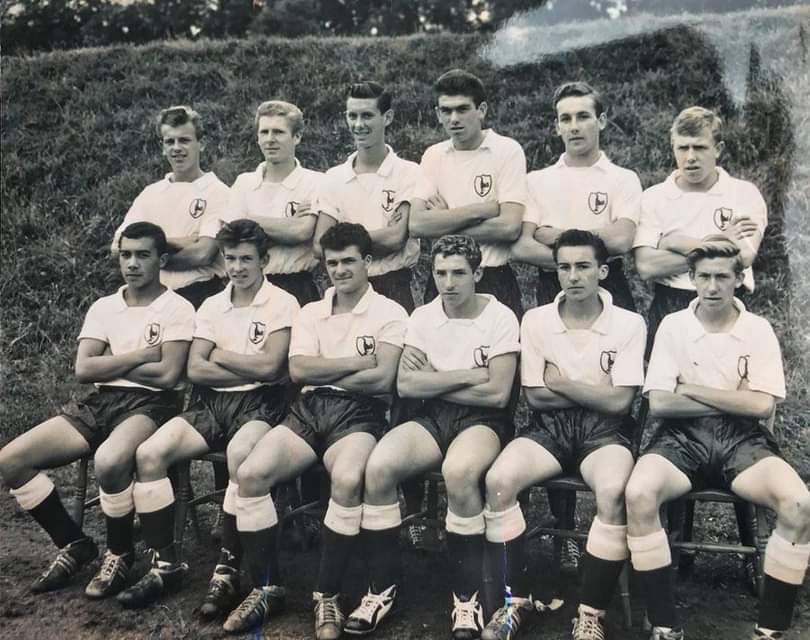
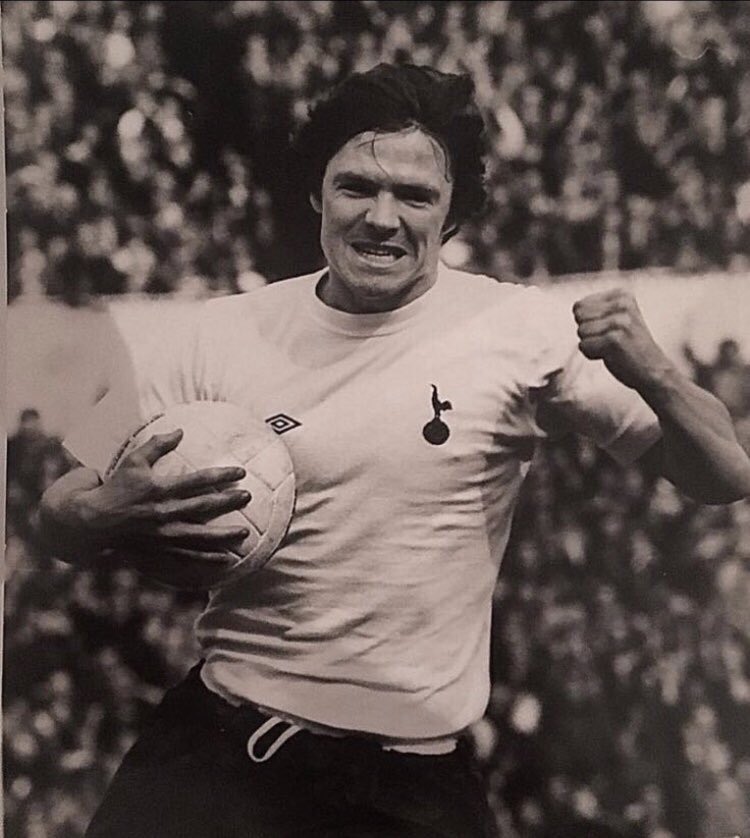


 superhotspur