Chris Landon was signed by Spurs at a young age and would play for the Lilywhites up until his late teens, working his way up the various youth ranks and into the reserves. A talented left back by trade who had a wicked left foot and who played in a very talented age group at Spurs of which included the likes of Sol Campbell and Danny Hill, Chris Landon unfortunately suffered from injury troubles which forced him to leave the Lilywhites when he was at reserve team level. I recently had the great pleasure of catching up with Chris to look back on his time at Spurs during the 1980’s and 1990’s.
What are your earliest footballing memories?
Chris: Well kicking a ball around in the playground was obviously one, I would also have a kick around with my uncles and my dad in the garden and all that type of stuff. In terms of playing for an actual team I think that I was about eight or nine and there was a local team called Alexandra United, and me and a mate from my primary school signed up for them and played a year out of our age group, so we played for the under 10’s. So that was the first real memory and I was hooked ever since then.
What are your earliest memories of your time at Spurs and how did you come about joining the club?
Chris: Well it would have been about the following year, so I think that I would have been ten, and we used to play against a local team called Stoneleigh. They had a few decent lads and one of their dads a fellow called Larry Pritchard used to come and watch, and I think that he used to play for Sutton United, and he might even be record cap holder for Sutton United or something like that. He was good pals with Ted Powell who at the time was running the School of Excellence south of the river for Tottenham. He didn’t live a million miles away from us but he lived a bit further out at Epsom Downs, and I think that Larry got in touch with Ted and said that there were a coup of lads in this local team that you might want to have a look at. And Ted had watched us a couple of times and then invited us for some trials, and my earliest memories at the club would have been when I was about ten. I think I went through about four or five stages of trials and there seemed to be a lot of kids, and then at every stage it got smaller and smaller and smaller, to the point where there was probably about 20 of us. And then you got asked to be a schoolboy at the Centre of Excellence which was over Crystal Palace way at Sylvan School I think it was.
What was your time at the Lilywhites like on the whole?
Chris: It was really enjoyable it really was and I met some really good coaches and some cracking lads who were fantastic and funny.
Did you have any footballing heroes/inspirations and if so who were they?
Chris: So the earliest one would have been Glenn Hoddle and I’m 45 now and I still go and watch them home and away and abroad, and I get out there with Danny Bolt and go to Juventus, Barcelona and all over the place. However, Glenn Hoddle would have been obviously the earliest one with the 1981 and 1982 cup finals, and just the way he played, Glenn was just elegant. And beyond that and as time went on probably the best player that I’ve ever seen and am ever likely to see in a Spurs shirt is Gazza, and over a period of about ten years I don’t think that there was another player in the country who could get anywhere near him I don’t think
Could you describe to me what type of player you were and what positions you played in during your time at Spurs?
Chris: In the early days I was quite lightweight and small so I used to play as the older number 11 as a left winger. However, then as I got a bit older and started filling out a little bit and actually went from schoolboys to different age groups, I think that I was in my last year as a schoolboy so I would have been 15 and then I got offered an apprenticeship straight from school, and that would have been as a left back. And from playing up front and left midfield I really enjoyed it, because it’s not often you receive the ball with your back to goal and a lot of the play is in front of you. So I really enjoyed it.
Who were your greatest influences at Spurs?
Chris: At Spurs I think probably the coaches, so the two people that stick out for me were Keith Waldon and Keith would have been when I first got into the youth set up from school, he would have been managing the Division One South East Counties side. He was fantastic for me and he probably had me playing football that I didn’t know I could play, so talk about over performing if you like I probably had my best year under Keith in that first year of apprenticeship football. He was a great guy who would give you lots of confidence and reprimand you if you needed it, but generally he was really helpful and a nice guy. And then there was Ray Clemence who I got on well with and again despite being a goalkeeper he just seemed to say the right thing at the right time, he just had great knowledge and he was just a great guy as well.
Were there any players at Spurs who you would watch closely to try and improve your game or look to learn from?
Chris: Yeah there was and in the early days when I used to sit in the stands I used to watch Pat Van Den Hauwe who I remember coming to Spurs. He wasn’t your typical Spurs player at the time, he had won trophies with Everton and he used to put his foot in at every opportunity, and yeah I looked at him and thought if there was one part of the game to be a successful defender, then you need to be a bit like that. So he was definitely one and just a couple of years above me there was Justin Edinburgh after Spurs had bought him, and so I used to watch Justin and aspire to be like him at that time to look to break into the first team.
What prompted you to leave Spurs and could you talk me through your career after you left the Lilywhites?
Chris: So I did the first two years apprenticeship and then signed the pro forms in the spring/summer, and then picked up an injury in the pre-season down at Crawley in the first year of the pro year. I struggled to get back fit and it felt like for ever, I then ended up going to have a knee operation up at Harley Street with I think Doctor Browett who was the fellow that did Gazza’s knee the year before. Gary Mabbutt was actually in the bed next to me having the same operation done, and then coming back from injury it just seemed to take for ever to get back fit. And then being in the reserves and not playing I think truthfully during that time that part of me felt out of love with the game a little bit in that time. And then I asked to be released from my contract and I spoke to Steve Perryman and Ossie and they got it cancelled, and then I don’t think that I hardly played football again until about a year after that. It took a long time for my knee to get back to 100% right as well as having a bit of confidence to come back and play again. And I didn’t look to go into anything serious for about five years I think it was, but I enjoyed going back to playing with my mates and I found that passion again and loved it again. Then in that time as well I needed to get a job or a trade behind me, and so I did an apprenticeship as an electrician and from that I’ve gone onto become an electrical construction manager.
What was the greatest moment of your footballing career?
Chris: On a personal level it would have been in the Southern Junior Floodlit Cup final against Arsenal, and we’d lost the first leg at home to Arsenal, I think it was 2-1. Then we went and beat them at Highbury in the second leg of the final and I scored a header at the Clock End, and it felt like I had run around the stadium ten times celebrating. It was amazing and a great feeling to stick my head on the ball there at Highbury so I think that that is personally the one, and then my overall best football memory was when John Terry slipped in the Champions League and missed a penalty against Man United. So I think that that’s my favourite ever footballing memory.
Who was the greatest player that you have had the pleasure of sharing a pitch with?
Chris: That would be Gazza absolutely no question about it, I can’t think of anyone that would get near him although there was other good players who I was fortunate to train with at the time. Players such as Nayim who was class and Gary Lineker who was class and Gary Mabbutt who were all good pros along with Steve Sedgley and Neil Ruddock. However, I don’t think that any of them could get near Gazza.
You were part of a very talented Spurs youth team of which included the likes of Sol Campbell and Danny Hill. What was it like to play in that team with those players?
Chris: That was a pleasure and at that the first year of my apprenticeship where I would have had expected to be playing in the South East Counties Division Two side. However, I hit the ground running in my first year and was playing a year up really and Nicky Barmby was also in that team and Jeff Minton and Lee Hodges and Darren Caskey and Sol. However, it was phenomenal and the one lad who I thought along with the club would go on and maybe be the next Gazza was Danny Hill, but I think that he ended up at Dagenham in the end. However, with Sol you could tell from an early age that he was great because every time he stepped up a level he just did it wish ease. We would have been 16/17 and he would go training with the reserves and he’d just be outplaying all of the reserve players. Or he’d go in with the first team and train with them and just his physical strength was phenomenal, back then he used to play central midfield or as a a striker. And even all the big centre halves and central midfielders who were big strong lads struggled to contain him as he was a strong lad.
Could you talk me through some of your favourite memories of your time in the various Tottenham youth teams and reserves?
Chris: I think that I played in most of the games leading up to the FA Youth Cup final, and we had a lad that played left back who was a year above me called Kevin Jordan. And we had drawn Man United and I had fully expected me to be playing and starting, but we got up there and I was sat in the changing room and told that I was just going to be part of the squad that day. I think that because it was the end of the year it was the shop window for a lot of players that weren’t going to be taken on on professional forms for the year above me. Anyway Kevin ended up starting but that was a real eye opener playing up at Old Trafford, and sitting in the stands watching that I think that were 18 or 20,000 people at the ground. That was really wow, and then the players came out to warm up you had the likes of Paul Scholes and you had Robbie Savage who I think might have played along with Gary Neville and Chris Casper. I don’t even think that David Beckham could even break into the side, but I remember that Ryan Giggs had broken into the first team at Man United and was playing and scoring. I’ll never forget that he came running out before the game with a ball towards the halfway line and just dropped kicked the ball past his own goalkeeper from the halfway line, and crashed it in off the bar. I remember sitting there and thinking just wow, I’d love to be out there but just watching it was a real pleasure. And he had a good battle all night, he was playing wide left against Neil Young who was a right back. And he was a no nonsense hard tackling fullback and I watched Giggs give him the run around for 90 minutes. I was also good friends with Billy Hudson whose uncle was Alan Hudson and I’m not sure what really happened to Billy, but he was one of those kids who would come in always with a big smile on his face. And he was always the life and soul and just a good lad, and back then we had a young trainee come over from South Africa called Quinton Fortune. He came over I’m not sure if it was for a year, but he came with a fellow who was like his minder and also a lady who used to look after him.
Quinton would probably have been two or three years younger than me so he was probably 14/15 playing with lads who have left school and were doing an apprenticeship. I remember thinking back then that he would have a good career whereever he ends up but what a great lad as well, always laughing and he was a real nice kid and a fantastic footballer.
Who was the toughest player that you ever came up against?
Chris: I think that it was a player called Nicky Summerbee and although he went onto Man City and a few other clubs, but at the time I was playing at left back in a reserve game. And he would have been playing right wing for Swindon, and I think it was when Glenn Hoddle had gone there and he had set up them with a style of play and a way of playing. Summerbee was probably two or three years older than me and I was quite quick, but he was quick and he was only a skinny lad but he was hard as nails and it was just a tough tough game. You’d go up for a header and you’d have an elbow in your ear and if you faked to go long he would drop back short. And obviously his dad used to play for Man City for years and so growing up in his garden he must have learnt every trick in the book as he was a very tough lad to play against.
Were there any players at Spurs who you were particularly close to?
Chris: I was close to Billy Hudson but to be honest with you I was close with all of the lads as when you do spend two or three years in each other’s pockets you do end up being close to all of them. There was two Irish lads who lived in digs in Enfield and I would stay at theirs quite a bit. We would finish training and go and play snooker and then stay at their place rather than going back to Surrey, so they were Stephen Robinson and Darren Grogan and I used to get on well with them two. Then a couple of years before and for about five or six years I used to travel up to training with Danny Bolt, and then Dan got released at apprenticeship stage and went to Fulham and then his career moved on in a different direction from Fulham.
What would your advice be to the young Spurs players of today as they look to break into the first team?
Chris: Try to enjoy it as much as you can because every time you go up to the next level the pressure goes up, and I think that too often you forget to enjoy it along the way. And just keep working hard and keep your head down and do the right things and eat well and sleep well. I think that it’s ingrained into these kids a lot more now, much more than when I was playing, when after you finishing training it was straight in the bookies, or the first team would be straight down TGI Fridays or in the pub, as it was different back then. That was the old egg and chips pre-match meal days you know.
After all these years how do you look back on your time at the Lilywhites and is Spurs a club who you still hold close to your heart?
Chris: Without question, I’ve kept going ever since and I’ve always been a big Spurs man and we tend to get away to every game in Europe. So that will never change.
Physical centre forward John Sutton was scouted and signed by Spurs as a 14 year old, and the Norwich born player would go onto become a consistent goal scorer and performer at youth level during his time in north London. John who is the younger brother of former Celtic and Chelsea player Chris, was prolific at under 17 level for Spurs scoring a highly impressive 25 goals in 26 games for them during one season. A talented cricketer during his youth, Sutton continued his fine form into the under 19 side before later playing for the reserves. After a loan move to Carlisle United John Sutton agreed to be released by Spurs to join Swindon Town on a one month contract in 2002. The rest of his successful career saw him predominantly play in Scotland apart from playing for Millwall, Wycombe Wanderers and Central Coast Mariners, he had two successful spells with Motherwell, as well as playing for the likes of Hearts and St Johnstone. The striker most recently played for Scottish Championship side Greenock Morton however, he now works as a personal trainer. I recently had the great pleasure of talking to John about his time at Spurs.
What are your earliest footballing memories?
John: That would be playing in the back garden with my brothers and my dad, and then pretty much going to school at about five years old. And pretty much since then I was always playing in the playground with my class mates right up until about high school and this just escalated from there really.
What are your earliest memories of your time at Spurs and how did you come about joining the club?
John: So I was playing in a county game for Norfolk when I was 14 and John Moncur was there so I think he might have been chief scout or organising the youth department at Spurs. Anyway he said he was quite impressed and I’d managed to score a goal in the game, and so he said to come and play for the under 14’s at Tottenham at Spurs Lodge. So I went down and we played Leyton Orient and I scored a hat-trick if I remember correctly, and things sort of went from there. I had been at Norwich but I left at the same time as my brother did, and so I had been playing local football but then to get that and go to Tottenham was really really good.
What was your time at the Lilywhites like on the whole?
John: It was really really good although it was tough in some ways because I lived a fair bit away as I come from Norwich, so I went from being at school every day to being in a completely new environment. However, I probably didn’t appreciate how much I learned from the football side of things until I left but it was great, and I received some really great coaching down at Tottenham. I think I suffered in the same way that a lot of other people do because before my time you could argue that it was slightly easier to get through however, it was just so incredibly hard with the amount of players in the first team squad and reserves. The competition was incredibly tough and it was so tough to get in the team, the strikers you had there were Teddy Sheringham and Rebrov and Ferdinand and people of that calibre. So it was incredibly hard to make the breakthrough but certainly it stood me in pretty good stead for my future career elsewhere.
Did you have any footballing heroes/inspirations and if so who were they?
John: Obviously I’m a bit biased but growing up my brother was obviously one, he’s a fair bit older than me (ten years) but I used to follow him round the country watching him play. So generally I tended to support whatever team he was playing for and obviously be rooting for them, so he would probably be the big one. Growing up slightly earlier and obviously coming from Norwich there were players like Robert Fleck, and also Tottenham had quite a big link with Norwich in terms of the first team. They had a lot of ex Tottenham players playing such as Ian Crook, Ian Culverhouse and Mark Bowen who had all been in the reserves at Tottenham before coming to Norwich. So I remember watching them quite a lot and I think that Ian Crook was one of my favourite players as well and he scored some very good free kicks, so he was someone who I liked watching.
Could you describe to me what type of player you were and what positions you played in during your time at Spurs?
John: I was a centre forward so I tended to score quite a few goals and although I couldn’t tell you exactly of the top of my head however, I certainly scored a fair few goals. We had a really good team and we got to the semi-finals of the youth cup, and it was actually a real disappointment to go out because I think that we’d beaten Leeds away and Bolton. We also beat Walsall but I mean with respect to Walsall you’d expect to beat them, the other two were good victories and then we played Blackburn at home who were a really really good team and we knocked them out. We then played a two legged tie against Everton, one at Goodison Park and I was really pleased with the goal that I scored there, and then we played them at home and I’m not sure if we were losing 2-1 but I can’t remember. However, we lost and I remember Wayne Rooney scoring a really good goal in that game, but it was really really disappointing because we had a really good set of players and I don’t think that anyone from our team has obviously gone onto the heights of some of the recent youth teams at Tottenham. Obviously you’re looking at boys who have been regulars in the first team but certainly I felt that we were really strong with the likes of Dean Marney and Stephen Kelly who had good careers. I played up front with Lee Barnard and we had a really strong team, and it was just a shame that we couldn’t sort of make a name for ourselves and get to the final and go on and win it.
Who were your greatest influences at Spurs?
John: Obviously your coaches such as Jimmy Neighbour and Pat Holland, I think that Peter Suddabby was head of youth. So they were the main people that I was involved with and I have to say that although I wasn’t involved with him Chris Hughton he was such a nice person, he was really really helpful and he went out the way to say hello and be very friendly. Glenn Hoddle was there as my manager and he was ok with us, but from a playing point of view like I say the biggest disappointment at my time there was that a lot of the youth teams were very strong. We never really got the chance to go through with the first team that much but when we did and especially when I was there with the reserve squad certainly Teddy Sheringham made a big impression on us. He made an impression on us in terms of his technique and he would always help out with the younger players, but I would have to say that all of the first team squad were really really good with us. See if you were walking back from Spurs Lodge I remember Sol Campbell would give us a lift and then chat away, Tim Sherwood was the same and he would take time to talk to you and see how you are and encourage you along with Jamie Redknapp. So they were a great bunch of people and looking back you certainly appreciate that they didn’t have to do that, but they were just good guys, and I think that that means a lot to every young player when people are like that with them.
Were there any players at Spurs who you would watch closely to try and improve your game or look to learn from?
John: Yeah Teddy Sheringham was one but It was always a disappoint because it’s every young kids dream to play at White Hart Lane with the first team, but it would have been great to train more with him. Obviously it was always a separate entity sort of thing with the academy from the first team group however, just watching him train and watching him play you learn so much. We never really got the chance to do that until I was 18/19 as oppose to when you’re first and second year there, but just watching the guys technique and his attitude towards training and doing things well and properly was huge. Tim Sherwood as well when he played for the reserves with us was absolutely brilliant, and just watching the confidence of the guy and the way he went about things and the way he was talking on the pitch was great. Jamie Redknapp was another one and like I say he was really really good with us, but they are the ones that stand out because they are the ones that sort of played a couple of reserve games with me where they were coming back from injury or something like that. However, when you’re about people like that you learn so much.
What prompted you to leave Spurs and could you talk me through your career after you left the Lilywhites?
John: So to be honest when I was at Tottenham I had always scored a lot of goals, and when I had my third year at the club I started the season with the reserves and I got a couple of goals for the reserves. Then I got asked if I would like to go on loan to Carlisle, and to be honest at that stage I was just itching to get out as I just wanted to play first team football. So I went to Carlisle and done ok although I didn’t score as many as I would have liked but it wasn’t easy as we were bottom of the league at the time. And then I came back and played a couple of games and scored a couple of goals, and then David Pleat sort of took me in the office in the Christmas time and said do you think it’s better if the club let me look for another club and try and get more game time. I think that looking back I don’t know if I should have been a bit more get my head down and really graft away with the training, but the sort of personality that I had was really impatient as I wanted to do well with my career. So I sort of took that up and and I trained at Leicester for a little while but didn’t get a contract, I went up to Raith in Scotland and scored a lot of goals, then Millwall paid a fee for me and I came and played for them for a little while. We got to the FA Cup final although I never made the squad on the day, I also played for Dundee but the main clubs have always been in Scotland. I also played for Motherwell and scored quite a few goals for them in two spells and I think that we managed to play five years of European football albeit the early rounds, so that was great. I also played for Hearts for a couple of years which was a great experience as well, and I had quite a bit of success at two spells at St Mirren. So I’ve been really lucky with my career and I’ve enjoyed playing up here, and to be fair to my time at Tottenham it certainly helped me out in terms of the technique and learning about my game.
I was actually at Greenock Morton as a reserve team coach and I coached for a year and then it was never really my intention to play but the manager was very keen for me to help out when I could. So I played a bit last year but unfortunately with COVID and whatever that’s no more so I won’t be doing that either unfortunately.
What was the greatest moment of your footballing career?
John: It’s a tricky one because we were very successful at Motherwell, I mean we managed to finish second in the league on the last day of the season which was great but it’s not winning anything. We played in a couple of cup finals and were runners up but I’ve been very very lucky to have won the league twice with St Mirren to go up into the Premier League in Scotland. Once when I was very young and once when I was a bit older so all of those experiences were good but I regret that I never won one of the big cups up here. You know I got to the Scottish Cup final and the Scottish League Cup final, and with Millwall I was in the squad or I was hoping to play in the final of the FA Cup against Man United. So that’s been a bit disappointing but I can’t really moan about anything as I’ve managed to play lots of European football and I even played against Tottenham funnily enough, with Hearts in the Europa League. I also played at Anfield in the Europa League, and with Motherwell we went on a couple of really good runs in the Europa League so it’s all been good. However, I couldn’t really point to one specific thing and say that was the outstanding bit.
Who was the greatest player that you have had the pleasure of sharing a pitch with?
John: I keep saying it but Teddy Sheringham at Tottenham was certainly one, I also played Liverpool in the first leg of the Europa League and we done ok and we lost 1-0, although we were a little bit unlucky I think to lose 1-0. And I think that they must have been reasonably worried because in the second leg they put Gerrard and Suarez back in the team. Just sort of being about Gerrard and how quick and good he was and the same for Suarez, so that would be two. However, probably my brother would be upset if I don’t mention him as well but they were the two standouts. Although in fairness I’ll take that back a little bit even though I’ll still put those two as the best, but we played Tottenham at Tynecastle for Hearts and we lost 5-0 and Gareth Bale was obviously playing and van der Vaart. So all not bad players anyway.
Could you talk me through some of your favourite memories of your time in the various Tottenham youth teams and reserves?
John: I used to go down every Sunday which was great but youth team games were good and I used to love playing against Arsenal but they were always at training grounds. However, the ones that sort of stood out were when we played in the youth cup because you got to play at White Hart Lane, or you got to play at Elland Road or at the Bolton stadium. So they were probably the stand out times but like I say scoring at Goodison Park was great because it was a really good goal as well as I took it off my chest and volleyed it in from outside the box. However, it was just a disappointment that we couldn’t put the cherry on top and get to the final and win it. However, the youth cup one would have probably been the highlight of my time there.
Who was the toughest player that you ever came up against?
John: I get asked this one a lot but when I first came up to Scotland Martin O’Neil’s Celtic team were really really good, I mean they obviously got to the UEFA Cup final so they were a very very good team to play against. However, a bit later on I had to play against big Virgil Van Dijk at the back for Celtic and it’s no surprise that everyone rates him as a pretty decent player now. So there’s that one and then I remember playing against Tottenham in the Europa League and I played big Michael Dawson at the back and he was obviously a very good player although I couldn’t really say off the top of my head who the other one was. However, big Van Dijk would have been the toughest one.
Were there any players at Spurs who you were particularly close to?
John: There was four of us in a house but there was pretty good team spirit, so you had Robert Burch who was the goalie and he had a good career. Also you had Johnny Black who was from Northern Ireland and then we had big Jamie but I can’t remember his surname who was the goalie, and he was a bit older than us. We also had Mark Hughes who was a really nice guy as well however, they were all great people and it was great, but as I say it wasn’t easy moving away from home and I think that a lot of people find that tricky. However, I had a really good time.
What would your advice be to the young Spurs players of today as they look to break into the first team?
John: You’ve just got to practice hard, I mean it’s not easy but one thing I would say over the last few years is that Tottenham has had a really good track record of getting boys in the team. And I’m certainly not saying that I would have got in the first team but I think that a lot of the time you’ve got to be patient and not be too eager or disappointed if you don’t get into play. I think that that might have helped me a little bit but that’s the person that I was, but it’s great to see so many young boys coming through for Tottenham, it’s absolutely brilliant. Even if you don’t make it at Tottenham you can use what you learned and do really well there.
After all these years how do you look back on your time at the Lilywhites and is Spurs a club who you still hold close to your heart?
John: Well first of all and I don’t push my kids in any direction but I’ve got four kids and they are all Tottenham fans. I don’t quite know how that’s happened and it’s more likely that I’d nudge them towards Norwich but they are absolutely adamant Spurs fans and they’d love one day to come and watch a couple of games down at the new stadium. They are always looking out for the score so I’m sort of still a Spurs fan in my own way as I’m always sort of looking out for the score and cheering them on. However, I look back on it and think that I learned an awful lot when I was at Spurs and I never appreciated it at the time but the things that I learned I used over a long career, and I use it with my coaching now. So I’m very grateful for that, but it wasn’t easy to move out from home at such a young age but I sort of grew up a lot in that time, and it was a really good youth learning experience. As I said we went on a really good youth cup run and it’s just a shame that we didn’t finish it off with a bit more style. However, it was great.
Ciarán Toner was born in Craigavon, Northern Ireland but grew up in the town of Lurgan. A former Northern Ireland international, Toner who operated as a right sided midfielder but could also drop into defence when needed, combined playing football with Gaelic football as a youngster. The Northern Irishman who played once for Spurs’ first team in a pre-season friendly against Stevenage Borough in 2001, also made the bench for Spurs in the Premier League. Toner started off with Northern Irish side Glenavon as a youngster before being scouted and signed by Spurs, he would join the club as a trainee in 1997. The midfielder would go onto play for the youth team and the reserves during his time at Spurs, and after leaving them he had a good career in the game, playing for the likes of Leyton Orient Rochdale and Grimsby Town. I recently had the great pleasure of chatting with the former Spurs man who now coaches at Rotherham United, about his time at Tottenham during the late 1990’s and early 2000’s.
What are your earliest footballing memories?
Ciarán: Well obviously I’m from Northern Ireland and so I sort of grew up in a town called Lurgan, and I suppose that we would say nowadays that I started playing football pretty late. I was maybe eight or nine years of age which is still quite young, but I think nowadays football teams start at fives and sixes, and really my earliest memory of playing was with my mates. We used to go once a week to a school which had an indoor football night which was run by a local guy who was actually a scout for Celtic, and we just went there once a week and played for fun. There was no real competition or teams or leagues or anything like that, and it obviously kind of started from there, also as well being a youngster 20 odd years ago I used to be out on the street day and night really with my mates playing football. So I got quite a good bit of practice at a young age sort of in the thick of it playing against older lads as well on the streets, so yeah pretty good memories. However, I would say that that was my first kind of thought when I think about football in the first instance.
What are your earliest memories of your time at Spurs and how did you come about joining the club?
Ciarán: I always reflect on it with a bit of a smile, so when I was about 13 I would say I was playing for a club that was involved in a league, and one of the coaches was a scout for Tottenham called Gerry McKee. And he would identify players in the area that were good enough for trials where we would have someone from Tottenham come across and watch a game, and see if there was anyone of interest. Now in this particular instance there was a couple of lads who were older than me (I think they were one or two years older than me), and they were picked out as potential players for Tottenham to look at. So Gerry had arranged a trial game and he obviously asked me if I would make up the numbers to play the game, so we played the game anyway and there was a Tottenham scout who had come over to watch it. And then not long afterwards Gerry had said that the scout had actually liked what he had seen of me even though I was a younger player, and he wanted to kind of keep tabs on me really. So the following year there was another trial game but Tottenham specifically came over to watch myself and another lad called Ciaran Duffin. And then it was one of those situations where everything that I tried in the game just came off, and it was one of those strange instances where I suppose in some respects I count myself as very lucky that I was able to deliver when it mattered. However, everything just went well for me and I knew even before being spoken to by anybody that I’d nailed it. And I remember saying to my dad who used to take me everywhere and kind of never missed a game and was a big part of my progression in football, and I remember saying to him afterwards that I knew that I’d nailed it. And he said yeah I know you did, you played really really well, and anyway then Tottenham had asked me to come over to London during the school holidays to train with the younger lads.
The other lad who I had played in that game with Ciaran Duffin came over as well and then they asked us kind of would we like to sign. And so we signed schoolboy forms and I think I was around 14, and then I played for another couple of years in Ireland before I was just about to turn 16. That was July 1997 and then I moved over to London but obviously in between that period and in school holidays I would have traveled over to train and play, and then the scholarship started in July 1997 so that was how I ended up coming over on a full time basis. Myself and Ciaran had stayed in digs that the club had put up for us and that was kind of where it all started really, that was with Bobby Arber and Des Bolton who were the under 17’s and under 19’s managers as it was back then.
What was your time at the Lilywhites like on the whole?
Ciarán: On the whole it was a valuable experience let’s just say that, there were ups and there were downs but really did I apply myself fully to give myself the best opportunity to progress as a professional footballer? Probably not. You look now at the progressions of players and at how they are always in the gym working out and with nutrition and all of that, but that was never really the case with us back then. It was never really prevalent, I suppose the science and research wasn’t really there so there was a different kind of culture back in that time. However, I look at some of the people that I’ve played with such as Peter Crouch who was in the youth team and Ledley King and Alton Thelwell, and Johnnie Jackson who was a year younger. They all went onto have good careers in the game you know, so I had some good times and so travelling over from a smallish town in Ireland to the big bright lights of London was a culture shock. However, it was completely manageable because you’re going over to live your dream and try and make it as a professional football player which was the aim. I was at Spurs for five years and I suppose in the second scholarship year when Patsy Holland came in he really helped me and pushed me forward, and I was lucky really to get a one year professional contract because there was individuals who came into the club who I didn’t really connect with. However, I was able to get a professional contract and that’s when I came into Chris Hughton’s kind of group when he was reserve team manager. He just completely transformed me as an individual really, and him and Theo Foley God rest his soul were really influential along with Colin Calderwood in my development as a player.
I was still a young kid and still growing up an learning but you know they had real positive influences on me. Then I managed to get into the first team squad and I was in quite a few first team squads for games and I managed to get on the bench in the Premier League. George Graham was the one that really brought me into that fold and he was fantastic, he came with a really big reputation of being a disciplinarian and a hard individual but listen he was great. If you class being disciplined i.e. being professional and doing the right things then yes that was him but he certainly wasn’t any more than that, so I was really surprised as I envisaged this kind of headmaster type of person coming in and dictating and things like that. However, for me he was fantastic really, and he really gave me confidence to get into the first team squad and train and be involved. And then sadly and unfortunately for him and probably not warranted he was replaced by Glenn Hoddle, and myself and Glenn didn’t really see eye to eye and he probably won’t remember me to be honest, but it didn’t really work out. Although his assistant John Gorman was a phenomenal guy and I couldn’t speak any higher of him because he loved the younger players and seeing them progress, and he wanted them to do well, and he wanted them to have fun and enjoy it and live life to the fullest. I really clicked with him but it just didn’t work out and listen I don’t begrudge anyone about that because probably in hindsight I wasn’t good enough to make it to the next level, because I probably didn’t give it enough. I only say that based on how I see football now as a pro license coach, and I coach under 18 footballers and I can totally see what they need because I was in that position, and I was in that bubble where I thought that everything was fine and doing ok. And you know what I was doing ok and sometimes I probably do myself a disservice on the attributes that I had, but really if I wanted to be really ruthless of my opinion of myself then I probably didn’t give it the full hit that it needed.
So we just parted ways and I want to say that that was at the end of 2002 when I traveled to Bristol Rovers for like the final six weeks of my contract in that transfer window. That was me left Tottenham ready to progress to the next stage and so I think that was March 2002, and so yeah it was a good experience and I’ve got fond memories of the football club and always want to see the football club do well because I was part of it for quite a while. I met some really really good people and players and it was certainly a valuable experience.
Did you have any footballing heroes/inspirations and if so who were they?
Ciarán: Not really in terms of heroes or people I looked up to, I mean I was a big Man United fan when I was young and they had some really really stand out players. So they had Roy Keane obviously and Dennis Irwin and Mark Hughes and Brian McClair but it wasn’t a case of having a hero. However, to be honest my heroes were my dad and my mum because they were hard working individuals and they instilled a quality and character in me, and also resilience and being able to cope and deal with adversity of face adversity, and also step up to the mark. So in terms of a personal perspective they were the two people that I looked up to however, football was just a game that I loved and I loved watching good players. I never really looked at a player and thought I want to be like him, if I felt that a player was doing good things I would probably say what are they doing and maybe what can I do as well to try and achieve those levels. However, it was never one individual, it was a combination of wanting to be a good footballer and immersing myself in a culture at Tottenham of having good players around you and just competing.
Could you describe to me what type of player you were and what positions you played in during your time at Spurs?
Ciarán: I came as a midfield player although I started off originally when I was younger as a right back and developed into a central midfield player. At my time at Tottenham people would probably say that I was an industrial midfielder, I was never pacey and I didn’t have the speed, but I had a determination and a good character. I could play both footed which was probably one of my standout qualities and that developed significantly as well as I developed as a player. I was able to find passes with both feet so if I needed to play I could play on both sides of midfield as that wasn’t really a problem. So that was my sort of time when I was an aspiring football player at the football club but once it got to the stages of probably being surplus to requirements I was just sort of played in different positions. I played in a sweeper role at the back in a left sided three of defence and also as a fullback in reserve team games, so I was played in different positions but really probably moving forward central midfield was where I would have excelled at the most.
Who were your greatest influences at Spurs?
Ciarán: I mean Chris Hughton was a big influence and before that Patsy Holland who became youth team manager and took a real shine to me. However, Chris had Theo Foley with him who sadly passed away recently, and he was a lovely character and I got on really well with him. That created a really good environment and also Colin Calderwood who I’ve come across in the game as I’ve got older, he treated us in the right way and he treated us as adults and he was able to coach us in a way that we could relate to. So those were big influences and then in the first team I obviously spoke about George Graham who brought me into the first team squad, and then during the Glenn Hoddle era John Gorman the assistant manager I had a really good affinity with. Because he just loved young players being better and enjoying it and loving life, so there were quite a few positive people who certainly influenced myself.
Were there any players at Spurs who you would watch closely to try and improve your game or look to learn from?
Ciarán: Like I said there was players that I wanted to surround myself with who were good players and people, and who were solid individuals in terms of there characters. Stephen Carr springs to mind and even some senior players like Jose Dominguez and David Ginola and Darren Anderton and those types of players. Also Teddy Sheringham was a real great person to be around, he had what I would class as a real elite quality about him and he came as a big big elite player. There were other characters there as well such as Serhiy Rebrov who was a very good player but also a good guy, Steffen Freund was brilliant with the younger players and I got on really well with Steffen and again he probably got some harsh criticism about his attributes. However, he was a tough tough character and a tough player to play against and he absolutely loved integrating and speaking to the young players and helping them and giving advice to say you should be better and you can be better, believe in yourselves. And he was great really and I remember those sorts of things and I think that the more that you interview people in football you’ll realise that it was never about who made you a better player, because obviously the player develops and you take maybe small percentages from coaches and other players. However, it’s about who really made you feel important and you’ll find that a lot of players have drawn themselves towards that when they speak about influences in the game when they’ve grown up.
What prompted you to leave Spurs and could you talk me through your career after you left the Lilywhites?
Ciarán: So obviously Glenn was the manager at the time and he didn’t feel that I warranted a new contract, and so I got a call from my agent when I was out in Lichtenstein with the Northern Ireland international team. And the agent just basically said that there was an offer for you to finish your contract at Bristol Rovers, and so I went to Bristol Rovers in the March time about six weeks before the end of the season and they were in what would have been League Two. They were really sort of struggling down at the bottom of the league, and so I went there and incidentally a couple of other Northern Ireland players went there at the same time. Players such as Wayne Carlisle who was originally from Crystal Palace and James Quinn who had a really good career in the game, so immediately I had a couple of guys that I kind of could connect with. And so I went and played there for six weeks and did really well and they offered me a contract but I was settled in London, and I’d got an offer from Leyton Orient and Paul Brush was the manager at the time with Martin Ling as his assistant. So they offered me a decent contract which I then signed, so I spent two years at Leyton Orient and then got injured sort of the start of the second season which held me back, but I came back strong but unfortunately some promises that were made didn’t come to fruition. So I left there on a bit of a sour note and then because I had played with Gary Taylor-Fletcher at Leyton Orient I ended up going to Lincoln as he was with them at the time. So I went up for a trial at Lincoln and signed for them under Keith Alexander who was a great man and sadly again he isn’t with us, and then from there I ended up signing for Grimsby where I probably had my most prolific goal scoring time.
I spent three years at Grimsby and Russell Slade was the manager of the time and we got to the play off final and the Johnstone Paint Trophy final. So then Russell left and Alan Buckley came in and then just by sheer opportunity I moved onto the left side of midfield at Grimsby and sort of got quite a few goals from that position. It helped that I had my sort of my best mate in football Tom Newey playing left back behind me, so we had a real good chemistry in the game not just with our technical output but also with our psychological skills that we had as well. So that was a really good enjoyable time because we loved a challenge, we loved being competitive and we loved going up against good players and getting the better of them, and that was a positive experience for me. Then I moved on in 2008 to Rochdale under Keith Hill and Dave Flitcroft and they were just amazing people, they were crazy but in a good way and they just had an appetite and a real passion for the game and making players better. They treated me at that time as a 26 year old as a proper adult with an opinion and they listened to my opinion and really made me feel very comfortable, and probably it was the best kind of period of my football career. However, then after the two years with them we got promotion to League One and I didn’t stay as I’d picked up a bad injury and I didn’t play the second too much, although I finished it off. So my time had come to and end there and I had an opportunity in 2010 to go to Luton Town however, I ended up making the decision to finish playing. As I just thought that at that stage I’d gone through a lot in my football career and even though I’d had good times from Rochdale just finishing, I just felt that I needed to look to the next aspect of my career and my life, so I actually quit in 2010 and went and got a proper job.
So I quit the game altogether and I kind of just stopped playing, I turned down a contract offer at Luton Town and went and got a job as a buyer for a metal recycling company in Sheffield which was near where I lived. I was also starting a family as well so it was sort of time for me to do that, people sort of say would you have changed anything or would you have taken the contract at Luton Town, but I look at where I am now and I’m happy at where I am now. I’ve worked really hard for it but I wouldn’t change it as ultimately you can’t turn back the clock really. However, incidentally when I started working full time I got opportunities to play at semi-professional level so I signed for Harrogate in 2010 and then started my semi-professional career which spanned about five years up until I became a full time coach at Rotherham United.
What was the greatest moment of your footballing career?
Ciarán: I’d probably say making my debut for Northern Ireland’s senior team, we played Italy in a friendly and Sammy McIlroy was the manager, and that was in 2002. So we went out to play in the friendly game in Italy and I came on for 25 minutes I think it was, and I just had such a good experience, I played well and was feeling good. And going back to my trial at Tottenham everything just seemed to come off in the game, and that was a really special time for me because it only really hit me then what I had achieved. And that I had actually been lucky enough to put on the international shirt at senior level, I mean I had a real good youth international career and I played quite a few games for the under 21’s. I captained all the teams from under 15’s to 16’s, 18’s and 21’s and so I had a successful international youth career but to actually play at senior level was actually really special for me. Then of course we had Spain the following week in a European Championship game, so it was a double header really. We drew that game 0-0 and I came on for the last ten minutes at Windsor Park, so I’ve got a couple of special moments really that I’ll always remember with fondness on my achievement in the game really.
Who was the greatest player that you have had the pleasure of sharing a pitch with?
Ciarán: Probably the best player that I’ve played against was Dennis Bergkamp, we played a reserve team game against Arsenal and they were preparing for the semi-final I think of the FA Cup. So he played and I ended up marking him because I was playing in defence for this game, it was towards the back end of my career at Tottenham, and that was such a great experience as he was a legend and such a quality player. It was tough don’t get me wrong but it was a really great experience for me to play against someone of his quality, also of course in the international senior games I played some really great players in the Italy game and the Spanish game. However, in terms of playing with it would have to be my time back at Tottenham when I was involved in the squads and playing pre-season games and you had the likes of Teddy Sheringham and Les Ferdinand and Darren Anderton and Christian Ziege and Jose Dominguez who were great great players. There was a lot of them at Tottenham and I was quite fortunate really to play in some way, shape or form with those players.
Could you talk me through some of your favourite memories of your time in the various Tottenham youth teams and reserves?
Ciarán: When I was in the youth team at Tottenham I think that we got to the final of the Premier Youth League and we played Arsenal, and we had some really really good players in those groups. Players such as David Lee and John Piercy who were a year above me, then you had Peter and Ledley and a couple of other lads and they were real highlights to play in those games, they were something that you maybe at the time don’t consider. However, certainly when you get older you look back and say that was a really really good experience, also making the bench in the Premier League against Leicester was fantastic for me. I remember in the warm up playing and we did a possession practice and Tim Sherwood who was a real real quality player and a real good guy, anyway we were warming up and playing this possession game and I ended up knocking the ball through his legs. I wasn’t trying to be clever I was just trying to keep the ball but then I thought to myself it was maybe not the best thing to do that to a senior pro before a Premier League fixture. However, it’s little things like that that you kind of look back at and say that was a good time really. However, even coming in and training down in Spurs lodge at Chigwell and the environment there was just an elite environment that you just wanted to be a part of. And that felt like a real good place to be at at that time.
Could you describe to me what it was like to play for Spurs’ first team on one occasion?
Ciarán: Listen I played in pre-season games and I wasn’t fortunate enough to get into competitive games with them however, again in hindsight I maybe wasn’t at the level I needed to be. So playing in pre-season games was ok and that’s really all it was, it was a good experience but I always say to players now when I’m coaching them that you’re not really a first team player until you’ve made 50 starts you know what I mean. So I look back on that and I wasn’t really a first team player, it was only really when I stepped into the real world of kind of League Two football at Bristol Rovers and then Leyton Orient and then further up north to Lincoln and Grimsby and Rochdale that you only start to get into what being a professional footballer is all about.
Who was the toughest player that you ever came up against?
Ciarán: That’s a good question but I mean in terms of actually a one on one battle not physically but I remember playing against David Noble who was previously at Arsenal and I remember playing against him in the youth team at Arsenal. However, he was a great player but he probably didn’t do as well as he should have done in his career, but he was able to instigate a real one on one type battle with you in midfield where it was you against him and there was no hiding place. I remember playing against him when he was at Boston and I think that I was at Lincoln at that time and I think that we played in a cup game, and he just really took me apart in that game if I’m honest, he kind of like just got on the ball and he faced me one v one. And he would lead me into challenges and still come out with the ball, and I remember thinking after the game that he was a decent player and that was a solid test for me. I’m not saying it all went wrong for me but it was certainly something where I thought to myself yeah he’s got the better of me in that game. I don’t think that there’s been many players that I’ve played against where I’ve felt that a player has done that, I’ve always been quite capable of coping, but he was certainly a player that I though that that’s decent from him. And how he’s able to front up a one v one and create that psychological battle with a player and come out on top was a tough encounter, although it was a decent game to be involved in.
Were there any players at Spurs who you were particularly close to?
Ciarán: Yeah so one of my closest friends is Steven Ferguson who came down from Scotland as I want to say a first year pro and he came down from East Fife. Because he was in digs not far from where I was living, so we kind of connected and became quite close really and we speak quite regularly now. So that is something that you don’t often come across in football, and let’s just say we lived a good life back in our younger days. He was a good player and a good centre forward who maybe didn’t get the break that he deserved at Tottenham, but he then went onto have a decent career in the lower divisions.
What would your advice be to the young Spurs players of today as they look to break into the first team?
Ciarán: Listen first of all those players at Tottenham will be decent players who will be technically good and they’ll all have an attribute that puts them up there in that elite category. However, if they don’t have resilience or if they don’t have the commitment to be the best that they can be, and if they think that they can kind of just run alongside or not look to excel or do more and can’t cope or pick themselves up when things go wrong, then they are going to end up a statistic. They are going to end up thinking that they should have got a contract and made it, and they’ll be blaming everybody else without really looking at themselves in the mirrors. Those young players are not all going to be good enough and they are not all going to get the opportunities because it is a ruthless industry and it’s all about opportunities. However, they have to look at themselves everyday in the mirror and say am I doing enough to get through this day, and have I got targets to hit today and can I be the best that I can be, so that’s not being in the gym 24 hours a day and seven times a week. It’s also not running around on a football pitch to cover the most distance, it’s about understanding as an individual what am I good at and what am I not good at and what am I doing about that. Ultimately this is the problem at this level as well, we talk about this category system in place now and we look at Tottenham being a category one academy development centre. Where you’ve got a lot of finances and money going towards the programme and resources, but ultimately you find that a lot of those players can’t cope when they get released and they go further down the ladder. Because they go into what I call the proper game, which is understanding that playing out from the back is not always a five yard pass to someone whose stood in your box, it’s also not about trying to play the nicest football because everybody thinks that passing the ball and keeping the ball is the be all and end all.
It’s about understanding what are the basic principles of the game and being physical to get around the pitch and cope but also have in game intelligence, because it’s about ultimately preparing people for the future game. Also without game intelligence and what I mean by that is understanding that there are decisions to be made and they are willing and prepared to understand how to make those decisions and the opportunities and outcomes that they are searching for. Then ultimately they are not going to be anywhere near good enough and I’m not just talking they might just miss out, they’ll be nowhere near good enough and that’s for me how the game has shifted a lot. When I was playing we could get by by going out a couple of times a week and having a couple of beers, and I had a decent career don’t get me wrong I had a really really decent career however, nowadays you have to do more and you have to become a different animal, and you have to live and breathe it but in the right way. You have to understand how recovery works, how preparation works and understanding the game and learning and studying the game. Ultimately the frustration for me as an elite coach now is that players nod there head when they hear that but they are not prepared to go through that pain because it hurts. Those top players have gone through pain in some way shape or form and it’s actually well documented, if they want to research any top players who have been elite players then you will always see something about adversity. Also good times and bad times and being in pain mentally and physically, and about it hurting and wanting to be better, and having to make hard choices.
Quite frankly a lot of people aren’t prepared to go to those limits, and what I would say and it’s not to be doom and gloom it’s to be realistic. I’ve been in the game nearly 25 years so I think that I’m well versed and experienced to say it, but really the bottom line for those players is it’s entirely up to you what you want to do but don’t start blaming everybody else when you’re not getting what you want because you haven’t put the effort in. Be realistic about what you’re going to be and understand what you need to do to get there and if you’re doing it then the chances are you’ll probably have a good opportunity to reach it. If you’re not doing it and by the way everybody knows if they are not doing it, individually you know if you are not doing it so don’t start blaming everybody else, take it on the chin and move on.
After all these years how do you look back on your time at the Lilywhites and is Spurs a club who you still hold close to your heart?
Ciarán: Yeah absolutely, you know I always and I say to my kids as well that I have an affinity with the club because I was involved with them for a significant amount of time. They were the starting point of my career in England and they gave me the opportunity and I’ve grown up and been able to understand that yes it is about opinions, and yes I might not have agreed with peoples opinions but you respect the position of the club that they are in. I met some good good people who had positive influences on me, not just as a player but as a person and I do feel that moving into the professional game with Tottenham with Chris Hughton and Theo and Colin that that propelled me as a different player. That gave me the platform to go on and be successful, so would it have been different if I’d have signed for someone else well who knows really, but you know I’ll always reflect on my time at Tottenham with fondness of the people that I met and the experiences that I got as I’m quite a resilient character. So I can take it on the chin that it didn’t work out and move forward and ultimately that’s kind of the way it is, and that’s probably a part of what I got from being at Tottenham. Because it was an elite environment, and it was you’ve got to be better and do better and do more, and that’s what happens when you’re involved in high performing academies now and high performing teams. I was able to take that on board and relish that challenge and move onto the next challenge even through the times of disappointment, so I wouldn’t change it because it’s made me who I am today partly. I met some really really good people and I always want to see the club do well now and in the future, and probably always will.
Tricky Hammersmith born winger Matt Edwards came up through the youth and reserve ranks at Spurs during the late 1980’s and early 1990’s. Edwards who grew up in County Surrey, went out on a couple of loans (Reading and Peterborough United) during his time at Spurs to help aid his development before leaving the club after being given a free transfer at the end of the 1992/92 season to join Brighton & Hove Albion. Edwards had a successful time down on the south coast where he played over 60 games, scoring six goals. After departing the ’ Seagulls ‘ the winger dropped into non league where he played for a host of clubs of which included Kettering, Walton & Hersham and Enfield. The good two footed winger who could play on either flank also made 8 appearances for Spurs’ first team (he started two of those games) and made his debut in a testimonial for West Ham manager Billy Bonds in 1990. Edwards was also a part of the Spurs side that toured Japan in the early 1990’s, and he scored his first and only goal for Spurs on that tour. I recently was fortunate enough to interview Matt about his time at the Lilywhites.
What are your earliest footballing memories?
Matt: I’ve always loved football but I guess that my earliest memory was as a Crystal Palace fan because I ended up being a Palace fan, as my dad went out and got me a football shirt around Christmas. And the only shirt that they had left was a Crystal Palace shirt, so that I guess is my first kind of memory of football as such however, football was something that I always did as much as I can remember.
What are your earliest memories of your time at Spurs and how did you come about joining the club?
Matt: I joined when I was probably about 13/14 and so I was playing locally where I lived in the Surrey area and one of the guys who used to play in my team his dad used to be a footballer, a guy called Fred Callaghan. And he was very good mates with Ted Buxton who at the time was obviously at Spurs, and I didn’t know that Ted had come along to watch me and then after one of the games they said do you want to come to Spurs. So I used to do the journey up to Spurs on a Tuesday and Thursday night, and I used to have to leave school kind of early to get myself up to Seven Sisters and along the road to White Hart Lane to do training every Tuesday and Thursday at the old White Hart Lane. They used to have an indoor pitch next to the reception area and we used to sort of train in the indoor pitch on a Tuesday and Thursday night.
What was your time at the Lilywhites like on the whole?
Matt: It was thoroughly enjoyable but I guess like a lot of footballers you kind of take a lot of things for granted because it just almost becomes the normal. You don’t really think about it as you’re playing football however, it’s only when you leave a club like Spurs that you kind of look back at playing for a club like Spurs and really take in what you were doing and all of the rest of it. I’ve still got pictures at home with likes of Gascoigne and Chris Waddle and people like that, and I’ve also got programmes. I think that it’s only when you look back that you kind of realise how good it was.
Did you have any footballing heroes/inspirations and if so who were they?
Matt: My hero was always Chris Waddle as I was a winger myself and I guess that the time that I was playing as a kid it was always Chris Waddle for me.
Could you describe to me what type of player you were and what positions you played in during your time at Spurs?
Matt: So I was always a winger and I was kind of reasonably good with both my right and my left foot, so I was always on the left and the right wing although it was more the left than the right. However, I was always a winger basically.
Who were your greatest influences at Spurs?
Matt: That’s a difficult one but I guess it was ultimately when we were kids on the YTS’s and there was a guy called Keith Blunt and another Keith whose name I forget. So I guess that they were as they were the guys who you did training with and you did your YTS apprentices with, so I guess that they were probably my greatest influences at Spurs.
Were there any players at Spurs who you would watch closely to try and improve your game or look to learn from?
Matt: Gazza was always the one even though he was as mad as a hatter there is no doubt about that, but yeah he was always the one that you would kind of keep an eye on and want to see what he was doing and how he did it and all of the rest of it. He was just so skilful.
What prompted you to leave Spurs and could you talk me through your career after you left the Lilywhites?
Matt: So I never played for the first team apart from a couple of tours and testimonials and it just got to a point where it was evident that I was never going to make it in the first team. I was sent out on loan a couple of times, so I went to Reading on loan and then came back to Spurs and then I went on loan to Peterborough United towards the end of the season and I think it was probably that Spurs weren’t going to offer me a contract then because they were trying to get me into a new club as such. So I went to Peterborough United and played a handful of games for them on loan and so then after the season had finished I was then contacted by Brighton & Hove Albion. They wanted to sign me and so I went down and I signed for two years down at Brighton and had two happy years with them, and I think that I played 60/70 games for Brighton. I think that the highlight for them was scoring against Man United on David Beckham’s debut for Man United, and then we had a new manager Liam Brady and me and him didn’t really see eye to eye, or he didn’t particularly fancy me as a player. So I was released after my two years their and I then ended up signing for Kettering who were then in the Conference, and I think on pretty much my first game for them I actually managed to do my cruciate ligament. I guess that that was the start of the end of my career as such, I had a year out of the game and I then sort of played for a couple of non league sides. I played locally for Walton & Hersham and I had a couple of good seasons with them and then I ended up back in north London playing for Enfield however, my knees just kept on going for me. So I did the non league circuit for a couple of years and then after that my knees just weren’t up to playing football, so I had to call it a day and that was the end of the career as such.
What was the greatest moment of your footballing career?
Matt: It would be playing and scoring on David Beckham’s debut for Man United, we played Man United three times in the cup when I was at Brighton and we drew 1-1 with them at the Goldstone and then I scored on David Beckham’s debut. So I guess that it’s always something that is very relevant now based on what he went onto do in his career.
Who was the greatest player that you have had the pleasure of sharing a pitch with?
Matt: That’s a good question but it would certainly be Gazza I would say.
Could you talk me through some of your favourite memories of your time in the various Tottenham youth teams and reserves?
Matt: Again we were quite successful in the reserves and I think that we used to win the league pretty much every season but I guess that the highlights would have been the following. We had a tour where we went off to Hawaii and had seven days in Hawaii and then we had a couple of games in Japan so that was towards the end of the season. Then at that the start of that season I was actually in a first team squad for a couple of tours and I think that we went over to Norway and Ireland and Italy. So they would probably be the highlights of it.
You played for Spurs’ first team on eight occasions what was that like?
Matt: So I played for them a couple of times and I certainly remember playing in Billy Bond’s testimonial at West Ham on a cold winters Tuesday night. I was sort of young and had long blonde hair and I can remember getting absolutely slaughtered by the West Ham fans that day. However, apart from that it was just in tours and testimonials for the first team.
Who was the toughest player that you ever came up against?
Matt: I would say that it would probably be one of the Man United guys when we played against them, so it would be Gary Pallister because he was playing up front that day.
Were there any players at Spurs who you were particularly close to?
Matt: I had some good mates at Spurs and one of my good mates was a guy called Peter Garland, and as he was from Croydon and I was from Surrey we used to travel up to training. We were both in the same youth team and were both pros for sort of four years. So he would probably be somebody that I would say that I was probably the closest with during my time at Spurs. Peter I think then went off to Charlton and Newcastle after I think playing a handful of games for Spurs in the first team.
What would your advice be to the young Spurs players of today as they look to break into the first team?
Matt: That would be a really difficult one because I think that it is just such a different world this day and I think that clubs are much more professional now than they were when I was playing. So I guess making the most of every minute at Spurs basically and not taking it for granted, because I think when you are a young player and you’re playing for Tottenham and things like that you just never think that life’s going to be any different.
After all these years how do you look back on your time at the Lilywhites and is Spurs a club who you still hold close to your heart?
Matt: Yeah I always look for the Spurs results and I’ve got mates that are Spurs fans and so it is always a team that I always look out for their results and stuff like that. I must get up to the new ground at some point but in my mind it’s still the old place and how it was, where you had the Hummel shop in the corner, but it would be amazing to go up and see the ground as it is today.
Vinny Samways was born and grew up in London’s east end in the late 1960’s before later moving to Cheshunt, Hertfordshire which was near where Spurs’ old Cheshunt training ground was. The one time London Schools player who had been at Spurs since a young age was signed as an apprentice in the April of 1985. A gifted and skilful central midfielder who could do the under appreciated sides of the game to great effect in regards to his passing, as well as being able to create good chances for teammates who were further forward with his fine range of passing. A ball playing midfielder, Samways was a player of slight frame however, he was a specialist in his own style of midfield play. A technically gifted player, Vinny Samways made well over 200 appearances for the Lilywhites and he put in some important performances in big games for them. Samways played a big part in helping Tottenham to avoid relegation during that 1993/94 season when we were battling to stay up, the midfielder also put in an excellent shift during the 1991 FA Cup when Spurs defeated Nottingham Forest, and in many ways he was a player ahead of his time. Vinny would leave Spurs in 1994 after spending several memorable and eventful years with the club during the 1980’s and 1990’s. He departed the club to join fellow English side Everton before later playing for Wolverhampton Wanderers, Birmingham City and Spanish side Las Palmas, Sevilla, Córdoba and Algeciras, as well as returning to England to play for Walsall during that time. The former footballer also turned his hand to management and coaching before becoming a football agent, a job which he still does to this very day in the south of Spain where he resides. I recently had the great pleasure of catching up with the former Spurs star to chat about his long and eventful time with the Lilywhites.
What are your earliest footballing memories?
Vinny: Obviously for me it was probably when I got the chance to go and train with Spurs and like yourself my family and even my wife’s family have always been big Spurs supporters. So to have the chance to go to the club that you support to train was always a dream really, and whether you succeed after that is another thing but fortunately enough and luckily enough I was able to have had that opportunity.
What are your earliest memories of your time at Spurs and how did you come about joining the club?
Vinny: Well obviously I was playing for our local team in east London and obviously the district and also the county, and I then got scouted when I was playing for east London. And at the time I was actually training with Crystal Palace and then Tottenham asked me if I would like to go there a couple of times a week to train. So obviously that was really good and so that was were it sort of started for me. My earliest memories of my time at Spurs were obviously that it was a massive club but it was also a very friendly club, and the coaching staff and everybody were top professionals in what they did, which you could only imagine for a club that size.
What was your time at the Lilywhites like on the whole?
Vinny: It was fantastic and I’ve only great memories of my time there and it was actually my own choice to ask to leave, so I can only talk of having fond memories from the minute that I started at Spurs to the minute that I left.
Did you have any footballing heroes/inspirations and if so who were they?
Vinny: Obviously once I started training at Tottenham I always looked at the likes of Ossie Ardiles and Glenn Hoddle and them kind of players. So for me they were ones that I would benchmark if you could get anywhere near them, as they were absolutely phenomenal players.
Could you describe to me what type of player you were and what positions you played in during your time at Spurs?
Vinny: Well when I first sort of started out at Spurs I was sort of a left midfielder and most teams in them days played a 4-4-2, so I would have been left of the four in midfield. Then gradually over the years I played more inside as a central midfield player which I preferred and I would have said that I was more of a ball player, or organiser or that kind of title but I would call myself a ball playing midfielder.
Who were your greatest influences at Spurs?
Vinny: I would say that the one that really not only as a player but obviously I had the pleasure to play for and that was Ossie Ardiles. He was a guy that came over to England to play when it was super difficult for foreigners to come over, and he was a sensational player and a fantastic manager and person as well.
Were there any players at Spurs who you would watch closely to try and improve your game or look to learn from?
Vinny: The likes of Ossie and people like that because for me the way he played and the way he wanted to play was obviously the way that I had been brought up. So obviously he would be one that I would try and look at and set a benchmark to, but that was obviously difficult because the guy was sensational.
Could you talk me through your memories of your competitive first team debut for Spurs against Nottingham Forest on the second of May 1987 and how it came about?
Vinny: Well obviously at the time I think that it was David Pleat as manager and for a couple of weeks before hand he was bringing me from the reserve team to train with the first team. That was obviously a great experience for me and then if I’m correct they had an FA Cup game or a very important game the following week, and David Pleat put me in the squad as a sub. So for me just being in and around the first team was fantastic but it was a surprise being so young, but I appreciated him having the trust in me.
Could you talk me through some of your memories of that 1991 triumphant FA Cup run and what it felt like to win the FA Cup with Spurs?
Vinny: Well I think every kid grew up watching the FA Cup and as a kid I always remember thinking one day I’d love to play in an FA Cup final. However, it didn’t used to matter what team was playing in it I used to religiously watch it from when it started and they used to have the cameras in the team hotels, and obviously it was always a dream to play in an FA Cup final but to play at Wembley. So to play for the team that you support and win it was like a dream come true, it was just an amazing experience. I think that we had a very good team during that campaign and I was fortunate to play with some exceptional players in that side such as Gazza and Lineker, so they are the two that stand out possibly the most however, we obviously had a very good team. We believed on our day that we were as good as any team but maybe over a period of five months and being consistent to challenge for the league wasn’t sort of in our make up. However, on our day in a cup competition we always thought that we could play against anybody, so it was an incredible journey.
What prompted you to leave Spurs and could you talk me through your career after you left the Lilywhites?
Vinny: I’d been training down at Tottenham since I was like 13/14 years old and I got to a stage where I just thought that I needed a change and I’d only just signed a new contract, and obviously I played one season under Ossie Ardiles who had put a lot of trust and faith in me. However, it was a decision that I felt was just right for me at that time and then obviously I left there and went to Everton which didn’t work out as I would have liked it to. However, they are another fantastic club but for whatever reasons which happens to many many players when they go to another club and it doesn’t work out for whatever reason. Obviously I then left Everton and I went to Las Palmas in Spain and I was their for I think six and a half seasons and I thoroughly enjoyed it because I think that the football in Spain possibly suited me more at that time. So I have very fond memories of playing in Spain and also at Sevilla which was a fantastic club, and to have the chance to play against some of the best players in the world in La Liga was a marvellous challenge.
What was the greatest moment of your footballing career?
Vinny: I would possibly say winning the FA Cup with Spurs which obviously was an amazing experience so that would possibly go down as the highlight.
Who was the greatest player that you have had the pleasure of sharing a pitch with?
Vinny: I would say that the best player I’ve ever played with was Paul Gascoigne as he was phenomenal. However, the best player that I’ve played against and I’ve been fortunate enough here in Spain so there are a couple that stand out such as Zidane, the Brazilian Ronaldo and Raúl. So that’s obviously why my experience in Spain was incredible because I played against some absolute world class players.
Could you talk me through some of your favourite memories of your time in the various Tottenham youth teams and reserves?
Vinny: Obviously coming through the youth team at the time you had two teams, so you had like the South East Counties one and two league. So I remember that I always started in the second team and then worked my way up from the A team, and then from the A team the next step would have been the reserves. So I sort of went quite quickly through the South East Counties team to the reserves and they were a really good side, because in the reserves a lot of the players that weren’t playing for the first team or were injured coming back used to be put in those teams to get match fitness. So you were playing with and against a lot of first team players, so that was a real good experience.
Who was the toughest player that you ever came up against?
Vinny: That’s a difficult one but I would probably say the Liverpool midfield which back then had the likes of Souness and Steve McMahon and those kind of players in a great team. So they were super difficult to play against.
Were there any players at Spurs who you were particularly close to?
Vinny: I was very close to Mitchell Thomas and Justin Edinburgh who unfortunately passed away last year. I was also close to Andy Gray, so these were people that I was close to and I had very good relationships with them.
What would your advice be to the young Spurs players of today as they look to break into the first team?
Vinny: My advice is to just try and work as hard as you can day in day out, and obviously when you go to training training it’s obviously not just going through the motions, you’ve got to treat it as a match day because you can’t just switch on when it comes to games. So you need to work as hard as you can and be dedicated.
After all these years how do you look back on your time at the Lilywhites and is Spurs a club who you still hold close to your heart?
Vinny: Spurs is the first result that I look for when there’s matches and I’ll always be a Spurs supporter and like I’ve said I’ve only got fond memories of my time at Spurs. You can see now that the club is on the move and they have built an absolute incredible stadium which is as good as any that is around at the moment. So let’s hope that they keep on improving and with a very good experienced manager let’s hope that they can get back to challenging for the top four at least and also get a good run in the cups. Because that is what everybody wants to see.
Southwest London born Danny Bolt was scouted and signed by Spurs at a young age and he would go onto play for the Lilywhites until the age of 16 when he was unfortunately not offered YTS (He did go onto play in one South East Counties game for Spurs). Bolt played as a centre forward at Spurs during his youth days but after leaving the club he would play out on the left wing and as an attacking midfielder, which was his preferred position. Upon leaving Spurs Danny joined then Second Division Fulham as a trainee in 1994, and he would go onto progress up the ranks at the London club to make over 15 competitive appearances for them, scoring two goals. After leaving Fulham Bolt went into the non league where he played for a whole host of clubs of which included Slough, Woking, Dover, Sutton United and Canvey Island. I recently had the great pleasure of chatting with Danny about his time at Spurs as a youth player.
What are your earliest footballing memories?
Danny: As a kid I was really hyperactive and as soon as I found football when I was probably about five or six years old my dad bought me a Spurs kit which was the 1983 kit, so that is probably my earliest football memory. Being hyperactive as a kid football was somewhere where I could release my energy and I was literally addicted to football, honestly I played every single day and all I wore up until I was 15 years old was football kits. So my earliest memory would be getting my first football kit.
What are your earliest memories of your time at Spurs and how did you come about joining the club?
Danny: I lived in Tooting as a kid and then me and my mum moved over to Epsom in Surrey, and I then joined a local team in Stoneleigh called Stoneleigh Boys. I was playing for them but I was playing a year over my age group because I had just joined that team so I was playing in a team that was a year older than me. And the next year the manager pulled me in and said look you can stay in your own age group and play under 8’s. However, I then felt that I was better than everybody else in my age group if that makes sense, as there was a big difference. Anyway I was playing in Epsom for Stoneleigh and there was a manager floating around who wanted to make his own team, but really what he did was he nicked all the best players to form his own team. However, we didn’t know that at the time and I got asked to go for a trial with this new representative team and I was the first one picked. So they formed a new team and within about two months I was playing for him and there was a scout who came down to watch all of our games, and he was called Ted Powell, and he actually ended up being England under 18 manager with Sol Campbell. And so he scouted me and came up to my dad and introduced himself and said that he was a Tottenham Hotspur scout, my dad either laughed or burst into tears as he was a massive Spurs fan. And anyway my dad called me over at the end of the game and introduced me to Ted and said that he wants to ask you something, he is a scout (he didn’t tell me the team) and he said that he was a scout from Tottenham which I couldn’t believe because that’s my team. So my earliest memory would be at a place called Sylvans School as we used to train down in Crystal Palace every Monday night. Obviously we played football on a Saturday and Sundays for your teams and then you would go down there on a Monday, and it would be training inside a gymnasium with two age groups, one was five to six and the other was six to seven.
So some of them were there but actually weren’t with Spurs such as Ben Thatcher who was there but he ended up going back to Spurs later. So we had quite a few players from that centre that made it but actually didn’t play for Spurs however, my best memory was at the age of 12 when Gazza came down to train with us. So that was like just the best thing ever. However, from a football point of view everything at Spurs was very technical, like everything was to do with technique and skill. Ted Powell was a brilliant coach but he whispered so you couldn’t hardly hear him, so you had to really listen to what he said, but football wise he was a very intelligent coach.
What was your time at the Lilywhites like on the whole?
Danny: It was unbelievable as it was my dream to play for Spurs and I played one South East Counties game as a schoolboy for the Division Two team, and that was like the only time that I played in a competitive game at that level however, just to put the kit on was just a dream. So we trained at Sylvans in Crystal Palace until we were about 14 and so then what they did was they took the best players from the south of London which was the Crystal Palace set up and also the ones that trained at the ground, so they mixed them together at 14 to 16. So at 14 I went up to the ground to train every Monday and Thursday, we trained downstairs in the gym and then we trained up at the Astro pitch which was behind the old west stand. My dream was to be a professional footballer and play for Tottenham but I never made it at the top level but I did put the kit on, so to me I lived the dream.
Did you have any footballing heroes/inspirations and if so who were they?
Danny: Glen Hoddle was my very first ever player that I actually loved so he was my absolute idol, and then on the world stage it was Maradona as he was left footed and he was just a class above the rest. Then growing up as a teenager and from the minute Gazza joined our club and to now he is my favourite player of all time.
Could you describe to me what type of player you were and what positions you played in during your time at Spurs?
Danny: When I was at Spurs I played as a centre forward but when I left Spurs I went to Fulham and I ended up playing as a left winger. Then as I faded out of the pro game and went into the Conference and non league I sort of played as a number ten, so I would say that I was someone who liked to play in the hole as a number ten. However, I also liked to drift wide and put crosses in. I was skilful but I had deceptive pace not blistering pace, and at the time I was probably a typical Spurs player as I didn’t like tackling too much.
Who were your greatest influences at Spurs?
Danny: Ted Powell was one and also my last coach at Spurs was Pat Holland who was also a very good coach, but I only had a year with him.
Were there any players at Spurs who you would watch closely to try and improve your game or look to learn from?
Danny: When I was at Spurs the year older than me was very strong and so we went to train at White Hart Lane and the year above us was a very strong team. A lot of the players (5) went to Lilleshall and there was a player who was the year above me called Danny Hill who I thought was unbelievable. He played in the first team for Spurs but Sol Campbell was the same age as Danny Hill, and if you had to say at that age who was going to make it then you would have said Danny Hill as he was unbelievable. I also remember that I did my work experience with Tottenham so when you’re at school everyones asked to do work experience, and everyone’s getting sent off to the garage or wherever. And I spoke to Spurs and said could I do my work experience at the club with the first team, and so they said yeah. And so I went in and one day after training they were doing shooting practice with the young apprentices and me, and Danny Hill hit this shot and I’ve never seen a ball being hit like that at that time in my life. However, if you were to ask anyone my age or above who was at Spurs then they would all probably say that they would watch Danny Hill.
What prompted you to leave Spurs and could you talk me through your career after you left the Lilywhites?
Danny: So I got to 16 and it was like whether you were going to get taken on or not and so there were three other forwards called Junior Haynes, Steve Slade and another whose name I forget. They were only taking three on and so Pat Holland called me in and he was ultra nice about it even though I was devastated about it at the time, he just said that we don’t think that you’re at that level that we think that we need you to be at. He said that I wasn’t far from it but he thought that there were other players in front of me, and probably at that time when I look back on it now he was probably right. I think that if I’d have stayed at Spurs because I was quite shy and I used to question myself and my ability all of the time, then I think if I’d have got taken on by Spurs then I think that I would have got swallowed up a little bit. I dropped down the leagues and obviously went to Fulham who were in Division Two at the time, and without being big-headed I was the best player in my age group ability wise and player wise. Because coming from Tottenham I had been educated and taught much better than they the Fulham players had been taught, so it benefited me more being a bigger fish in a smaller pond. However, I think if I had stayed at Spurs then I don’t think that I would have got a look in, and I think that the more powerful characters around would have swallowed me up. So after doing a two year apprenticeship at Fulham and a two year professional I played handful of games (I think that I started 13 and was a substitute for about six) and I eventually then got let go by Micky Adams, and eventually I dropped into the non league. I played at a team called Slough who were in the Conference and Brian McDermott was the manager, and then a bit of a sad story but I’ll tell you it, and so I played at Slough and had a really good year and there were clubs looking at me. And then the club got folded up at the end of the year because the chairman had a heart attack.
So I found myself down to Woking who were the top team in the Conference at the time, so I signed for them and then sadly a couple of months later a personal family tragedy happened. So I then didn’t play football for six months and so obviously from there I never recovered in terms of getting back in the pro game and I ended up drifting, so I went down another league and played for Sutton United and was a local player who had done well, and my mates used to come down and watch me play. So at that time in my life I was like 23 or 24 and I suppose i was going out on a Saturday night as I knew that I wasn’t going to be a professional anymore. So that was the next best thing.
How difficult was it to find out that you weren’t being taken on by Spurs full time as a youth player?
Danny: I was absolutely devastated but at the same time Pat Holland when he told me that I wasn’t quite good enough for Spurs, did tell me that he thought that I was going to get an apprenticeship somewhere. He gave me a list of clubs that were interested in me and he said I know that I could go to Leyton Orient and he would get me a YTS now because he had connections at that club. He set me up trials at Ipswich and Norwich and Charlton, but at Fulham they literally trained around where I lived, and the youth team manager at Fulham had watched me play since I was about 11 years old. He came to watch a game once and I was playing on the left wing and as I have ginger hair and he went up to the manager and introduced himself and then asked about me. However, the manager said that he had no chance as I was at Tottenham and will never leave them so don’t even bother introducing yourself type of thing. However, I was devastated at being let go by Tottenham but ultimately I just wanted to be a professional footballer and so at that age you obviously think that I’ve been let go from Tottenham, but at Fulham I’m going to get in the first team and then Tottenham will buy me back. However, that never quite happened.
What was the greatest moment of your footballing career?
Danny: It was to make my first team debut for Fulham so that was probably my greatest moment. I’ve got a son now who’s 17 and I sometimes I go over to the park and watch games and you see every kid, and every kid wants to be a professional footballer. And to just play one game I think is an absolute unbelievable achievement, when you think that every team that you’ve ever seen play and you look at all the age groups, it’s got to be like millions of kids playing at one age group. And on the back of that teams take on about ten apprentices a year, so that’s 900 kids who get taken on a year, and out of those 900 probably about 200 play professional. And out of them 200 probably 150 play one first team game, and so now I’m older looking back at it I appreciate that more than I did at the time if you understand what I mean. So then you take it like I’ve just played a first team game, but now I appreciate it a lot more.
Who was the greatest player that you have had the pleasure of sharing a pitch with?
Danny: I played against Glenn Hoddle for Fulham reserves against Chelsea reserves when he was Chelsea manager. I also trained with Gazza twice and I also played against Ruud Gullit, so they would probably be the best three at friendly and reserve team level. However, at youth level Mark Kennedy at Millwall was very good when I played for the Fulham youth team.
Could you talk me through some of your favourite memories of your time in the various Tottenham youth teams?
Danny: I remember one game where we played against West Ham and I was having a bit of bad game to be fair and the goalkeeper got injured. And the manager got us in at halftime and said to all of us who wants to go in goal and of course no one stuck up their hands. I was having a shocker and I knew it, and so the manager looked at me and said do you want to go in goal? And so I said not really but he said I think that you should, so I ended up going in goal and kept a clean sheet and we won 3-2, so that was one memory. I also remember one goal that I scored against Wimbledon and at that time most of the kids who I knew that lived around me and played in the local leagues all played for Wimbledon. So that game which was 3-3 was probably the best game that I ever played in and I also scored a top corner goal at the old Chase Lodge training ground. Obviously also training with Gazza and just being among the first team was great, and I remember that we used to train at Cheshunt back in like the mid 1980’s, and I remember going there and getting all the players autographs. I remember that Steve Hodge who I liked at the time was there and I said can I have your autograph? And so he said yeah come over to my car as it was raining and here I was sitting in his car which was just great.
Who was the toughest player that you ever came up against?
Danny: There was one bloke called Mark Beard who was at Millwall and he wasn’t the best defender but he was difficult, like Stephen Carr for example who I played against after I was let go from Spurs. I didn’t find him as difficult as Mark Beard because we (Fulham) won 2-0 and I made one of the goals. However, Mark Beard who played for Millwall and scored against Arsenal in the FA Cup was just really difficult to play against and he was all elbows and knees, and just awkward to play against. I actually know him personally as he is a friend of mine, and I always say that he was my hardest opponent. Also another hard opponent was Duncan Jupp who was a year older than me at Fulham and he went to play in the Premier League for Wimbledon, and he was an absolute beast. So I trained against him for two years and on a daily basis he was so, so hard to get past.
Were there any players at Spurs who you were particularly close to?
Danny: There was a lad who was a year older than me called Chris Landon who I’m still very good friends with now and he was a left back who was in the same year as Sol Campbell. He played for England but never played a first team game for Spurs however, funnily he got a pro contract and was playing in the reserves and then one day he went in there and said for me it’s not for me and he quit, and he never played pro or non league again. He’s actually a Spurs fan now and we go to Spurs games together but he was a good friend, another one was a lad who I used to get the train with to Spurs called Billy Hudson, who was hilarious at the time. I’m actually still in contact with a few of the boys such as Ijah Anderson who I’m friends with on Facebook and we still have a chat every now and again along with Danny Foot who was in my age group. Also there was a kid called Neil Le Bihan at Spurs who was a nice lad and I actually played with him for non league Dover before years earlier having played with him as a kid outside of Spurs.
What would your advice be to the young Spurs players of today as they look to break into the first team?
Danny: I’m saying this as a 44 year old bloke who misses football badly, and it’s very hard because if someone had given me advice at that age I probably wouldn’t have listened to it if I’m being honest. Because you’re quite single mined and childish however, I would say enjoy every moment in football, that’s number one. Also work the absolute hardest you can and also listen. I would say for me personally that I sit here now at 44 and I’ve got regrets where I don’t think at certain times that I tried my hardest. I know that this is top level but someone like Frank Lampard got everything he absolutely could out of himself as a footballer and there are more gifted players than Frank Lampard who never made it such as Danny Hill. So I don’t think that I worked hard enough and I was quite moody so I used to get sulky about things quite a lot, so at them times I didn’t have the right attitude. So yeah attitude, listening and also asking questions of the more senior pros and ask why they hold that position or why do extra training. So I would seek advice from older players.
After all these years how do you look back on your time at the Lilywhites and is Spurs a club who you still hold close to your heart?
Danny: Like I said it was my dream to play for Tottenham at any level and I got to put a kit on and I played one South East Counties game where I was in a pro ground. And today I’m a season ticket holder and I go with my son, and I also went to the Champions League final. So I go every week and the club means so much to me and I’m emotionally involved in it, so it drives me mad that we don’t win trophies. However, as a kid I used to go to all the Tottenham games until about 1992 when I got let go by Tottenham and then I obviously went on my own career and played non league and pro. I then went back to Tottenham and took my son there when he was six and for the last ten years I’ve been going to every game.
Born in Lewisham, south London to Irish parents from County Kerry but brought up in Catford, strong central defender Paul O’Donoghue had previously played for Welling United before signing for Spurs as a 16 year old trainee in the summer of 2000. O’Donoghue would go onto represent the Republic of Ireland at under 19 and under 20 level while at Spurs and he also progressed up the ladder at club, first moving up from the under 17 side as a 17 year old into the under 19’s. The tenacious defender who was dominant in the air was also a regular for our old reserve side and he would also go onto play for our first team on six separate occasions in pre-season friendlies. O’Donoghue was loaned out to non league side Hornchurch in 2004 and during the following year he was loaned out to Heybridge Swifts who were managed by former Spurs man Brian Statham. The defender ended up signing for Heybridge Swifts on a permanent basis after being released at the end of that 2004/05 season. However, after not spending long with the non league side O’Donoghue had a brief spell with Beckenham Town before dropping out of the game all together. Also a talented Gaelic footballer the young O’Donoghue played for a number of Gaelic football clubs, of which included John Mitchels, Austin Stacks and the prestigious County Kerry side. I recently caught up with Paul O’Donoghue who is now a secondary school teacher and head of year to discuss his highly interesting career and time at Spurs. And can I just say that Paul is a thoroughly nice and motivational man who was an absolute pleasure to interview.
What are your earliest footballing memories?
Paul: They would probably just be getting taken to the park with my dad and playing around, and I don’t know if I can admit this but I was a Liverpool fan. And so we used to get the Liverpool kit and go to the park and pretend to be Steve McManaman or whoever when I was running with the ball, and we’d use a couple of trees for goals and you’d look for a few lads in the park. Everyone had their own team and you’d play a game called FA knockouts but you couldn’t both be the same team, so one would be Arsenal and one would be Liverpool or Man United. So we’d do that every Saturday and when you got a chance after school you’d go up but with Irish parents that would never leave you out of the house you had to wait for the weekend, and that would kind of be it.
What are your earliest memories of your time at Spurs and how did you come about joining the club?
Paul: So I came in from a non league club called Welling and John Moncur brought me down via a lad called Robbie Stepney. I was actually about to sign for Welling and I can remember the youth manager at the time was saying look Paul I know a guy down at Tottenham called John Moncur and he’s had a look at you, so will you come down for a trial. So I went and I hoped for the best and you think give a good account of yourself and see what happens, and in the end I ended joining the club after being on trial. Joining the club was just unbelievable as it was such a big deal, Tottenham had such a huge reputation and even going down there on trial I think the first time that I went down that my dad came with me. I saw David Ginola come out with a cowboy hat on and you’d just think what! As a 16 year old boy before doing my GCSE’s it was just so surreal and the journey down there would see you get off at Chigwell but the name of it and the fact that you were heading into Tottenham, Tottenham Hotspur football club, Premier League. And no disrespect to someone like Crystal Palace or Charlton but the only step up for me after Spurs at that time would be going on trial to somebody like Manchester United. So going down to Tottenham would make you very nervous because of the prestige of the club, you’d go in and see Ginola on the way in and I think Stefan Iversen who had an unbelievable Mercedes, and he was just speeding down that little road when you were going down to Spurs lodge. My dad and I would walk down there and we’d see the cars going down and it was kind of like the Green Mile, and you were thinking will this be a good day or will it not be a good day however, it was good enough.
However, just going into Spurs you just get a feel of how serious the club is and even the grass was cut pristine and everything was just done well. The club were very welcoming when I came down and I think that there was three of us on trial that day, and I actually remember the name of another guy who I think was at Crystal Palace at the time and I think that Tottenham just brought him down to have a look at him. And this was Ricky Dobson’s (former Spurs youth player) cousin Craig Dobson and I think that he was like a Nike freestyler, and I can remember thinking when all three of us trialists were doing kick ups when this guys doing flicks and keeping the ball up on his neck. So I was that’s not me as I can’t do that and if that’s the standard that this club is at then that is not my game at all, as I was more of a robust defender who kept things organised and did my job and that was kind of it. Anyway when we were going into the games I felt that I could deal with this, and I was playing alongside a guy called Ronnie Henry we he just seemed to gel well with each other and the coaches saw that. However, it was the feel of the club such as putting on the training kit with the badge and knowing that it represented something huge and also knowing the history, so you were just trying to process that in your mind as a young man. However, you were trying to put that to the back of your head as it was just football so you should just get on with it and show them what you can do. However, going back to John Moncur he was genuinely a great guy who gave me a lot of guidance and a lot of advice, although I was kind of a bit scared of him when I was a bit young.
John Moncur seemed like a guy who had so much power at the club and over the youth team along with David Pleat, and also George Graham as well was fearful. I only have a couple of memories of him but John Moncur was very good, he would bring me in after every day training knowing that I had far to go from training from Catford to Chigwell. So they used to ask how was it today, also John Moncur knew that my parents were Irish and he used to joke around by saying that he couldn’t understand a word that my dad was saying. So he just settled me down because he knew the magnitude of the possibility of joining the club, and I think that he could kind of see that I was ok and doing well, so he would just guide me. I remember one day that I was going to be on the bench for Welling in a pre-season friendly against Millwall. The Welling manager Kevin Hale was aware that I was on trial at Tottenham and so he said look Paul we need you on the bench, and so it was a difficult decision for me and I can remember just going to John Moncur in the morning and saying look this is the situation. He said to me that I’ve got a real big chance here, and I think from that I thought I can’t blow this and I could read between the lines that they wanted me. So he was brilliant with me and then when I did sign again it was the same thing as he would ask me how I was getting on, and he’d tell me that we’ll get you in digs down here with a lovely lady who will take you in, as you’re travelling a bit far away. So John Moncur was a big influence and a good presence to have, plus when I heard other lads saying oh Paul Johnny Moncur’s talking to you he must like you. He did seem to take a bit of extra time for me, I don’t know if that’s because I came very late to Tottenham because I wasn’t that aware of the professional game, it was more go out with my friends kick a ball around, so I think that he could see that I had a bit of talent.
He knew that he could help my talent and finesse it by talking to me and reassuring me here and there and also taking an interest. And looking back now as a teacher and head of year at a school I would try and do the same thing every now and then if I could see that a kid needs it, and it doesn’t have to be shouting at them it’s more is everything ok. And John Moncur done that for me when I was injured a couple of times and he used to say look Paul don’t worry we know what you can do and you’ll be fine, he also used to ask me if everything was ok in digs and so it was good to know that there he was fighting in your corner for you. That calmed me down a bit because I came into it late I could really tell that the boys at Spurs were so on edge about getting a contract, because they were probably used to that from under 11 when they were thinking am I going to get a contract. Am I going to get a contract for under 12 and under 13, and am I going to get YTS. So because I missed that I think that John Moncur was letting me know look Paul at the end of these 18 months we’re going to be letting everyone know, so you need to hit the ground running. However, yeah he was very good for me and I was very thankful for it and if I ever saw him I’d just like to say that you were brilliant for me, because when you are that young you don’t think to ever say thank you.
What was your time at the Lilywhites like on the whole?
Paul: Honestly It was honestly brilliant and going there at 16 was absolutely incredible as a naive and very innocent person who just loved football, you just wanted to test yourself. And you do and then I suppose you can say I can do this and I can play at this youth level, and so I can break it down a bit for you. So the first year I done very well and I got into the youth cup team and there was a guy called Clayton Fortune who was the year above me who they kind of highly rated. I can remember doing well as an under 17 and Jimmy Neighbour was constantly praising me, and you can just get a feel so when I was in there people would say look Paul you’re the golden boy now blah, blah, blah. And I was playing really well and doing very well and I can remember that at 16 I was with the under 17’s and Pat Holland was over the under 19’s, and every now and then we would play against the under 19’s every week and the under 17’s had a good team, and every now and and then we would win. Chris Hughton the reserve manager at the time used to come over every now and then and borrow a couple of the under 19’s, and I remember that he came over he just bypassed the under 19’s and he said Paul you’re with us. And I can remember thinking that I didn’t even know that Chris Hughton knew my name, and then the under 17’s were just looking at me and when I was walking past the under 19’s I could kind of get the feel that in a really harsh way it was a little message to them that you’re contracts are coming up soon centre backs, and an under 17 is getting called up to the reserves before you. I can remember training and I was on a lad called Dave McEwen, and Chris Hughton and Theo Foley was there and they called me afterwards and they said look Paul you’ve done really well in fact you’ve done very well. And I remember then David Pleat when I was having breakfast the next day saying Paul I hear that you’re doing very well, and so then I knew that Chris Hughton, Theo Foley and David Pleat wouldn’t really be talking to all youth team players like that, I just got that kind of feel.
So things were progressing very well and I done well in the youth cup and then Peter Suddaby called me into his office to let me know that Ireland now wanted to bring you into their international fold. Also England are enquiring about you so you’re going to have to make a decision and I was just still in shock genuinely, because six months before that I was playing against Thamesmead Town and Beckenham Town knowing that I was ok however, my plan was to get into Welling’s first team at 16, I’d like to be established at 17 and then I’d like to get a move when I’m 18 into professional football. However, then when you’re hearing the England and Ireland youth teams want you, then you start thinking what’s going on, this is a bit more serious than I thought. So things were brilliant in the first year and obviously I declared for Ireland as I couldn’t go for England or I’d have been kicked out of the house, as it was staunch Ireland in our house. Although I can remember speaking about it with mum and dad and they were quite relaxed about it but for me I thought that I’d love to play for Ireland and so I played for them. Then in the second year about three months in, and I think at this time that George Graham had gone and I can remember walking in in the morning and seeing Chris Hughton talking to Glenn Hoddle. And I had heard that Glenn Hoddle was coming in and I could just see Chris Hughton talking to him and Glenn Hoddle was sizing me up as Chris was telling him that I’ve got a good chance, so I could just get a good feel for that. And then one month in I got called after training by Penny who was a great woman who was a receptionist at Tottenham, and she looked out a lot for the youth team players. And she said Paul I’ve got a message for you, can you go to David Pleat’s office.
And then I was thinking that somethings wrong genuinely because I had lashed out at an Ipswich player the week before and it just got a bit physical, so I just thought that this could be something to do with that. However, the boys in the changing room were saying that’s it your pro, and I would have been the first person in that team to get it and that was quite early. I went in and sat down with David Pleat and honestly when I flashback to it it feels as if you’re sitting in front of the president of America. You’re just thinking what’s going on, but he just explained to me that if we look at the first team we think that we can see you in the first team in a year. We can imagine that it will be you and Ledley at the back and that’s no lie, that’s exactly what he said to me. So I was just thinking right ok and so he was asking me do you have an agent and I said no and so he then said that I was very wise. However, it’s only now when I look back on things and think that maybe I wasn’t wise but you’re naive to it and you want to play for Tottenham and you know that you’re being offered a professional deal, and you think get me a pen now and I’m going to sign that. He said also said that you’ve got an option to sign for two and a half years or three and a half years, and so I signed for three and a half years. So I signed a contract to take me to my 18th birthday and then the three year contract would start when I was 18, but there was then a dip in my performance. And when I look back at it now retrospectively I can really see that, and even though I would be a very hard worker I took my eye off the ball when I signed that pro contract there’s no doubt in my mind when I reflect on things. I was 17 and three months before my 18th birthday and I thought that’s it as David Pleat had told me that I’m going to be in the first team I’m a year, so I’m going to be there in a year.
I think that made me take my eye off the ball a little bit and I think now that I lost my game a little bit, I lost a little bit of that fight, that edge and that want to show that I’ve come from non league but I’m just as good as you. It kind of felt as like yeah ok now I’m there, and it wasn’t arrogance it was naivety, and at this point I really notice my own sole responsibility. However, it would have been great for someone to realign me and say no Paul it’s nothing, you now need to come out and work even harder, and maybe I should have known that myself but I didn’t know it fully. I was still applying myself as well as I could but in the back of my mind I think that I lost an edge from that. So from then the January to the end of the year I got to the youth cup semifinal, and so at the end of my first year I was playing for the reserves which was pretty big and then into my second year I was still playing for the reserves. Colin Calderwood came in and I signed a pro contract but by about March/April I was kind of feeling as if somethings not right. I was pushed up to train full time with the reserves and I was like the only under 18 up at the reserves the whole time so it was like Paul forget the under 18’s you’re now up with the reserves. Pat Holland said that we don’t want to see you down here anymore so forget training with us as you’re now going to be with the reserves after you’ve signed professional. I wasn’t ready to do that looking back as I didn’t understand the game properly as a defender and I was very raw, anyway I went up to play and train with the reserves full time in my second year and was then told that I’m now a pro, so then by March I was thinking somethings not right here. And now when I go back and look at it, it is because I didn’t understand the game as a defender, I didn’t know when to press properly, I didn’t know when to drop off as it was just on instinct. At under 18 level you can get away with that because you don’t get punished as heavily for a moments lapse in positioning.
I didn’t learn quick enough and I couldn’t learn quick enough so I didn’t understand the game and that was probably because I didn’t watch football enough, and particularly players in my own position. I wasn’t good enough to know the game intuitively and to suppose I probably needed to be sat down and given video analysis, and shown what I needed to do and that’s what I needed to do, and plus I probably wasn’t seeking that myself because I was just so naive. I didn’t know that that’s what I needed to do, and probably I didn’t think hard enough about it as if this is not working out I’m not sure why as up until this point I’ve kind of been able to work things out for myself at football. However, I was very raw and going up to training with the reserves you’d be on people like Matthew Etherington, Simon Davies and Christian Ziege who was thrown down there a couple of times, and also Ben Thatcher who was actually there for a long period. These players didn’t care how you old you are, they just knew that you were in there and didn’t see that you’re 17 or just turned 18, so you’re expected just to know, and do and perform. So I think that I missed out in my own development, also the lads in my under 18 team were probably better defenders at the time because they understood the game and got it. However, I suppose I had the rawness of defending as well as the physicality but they understood the positioning more so than me, and they also understood the nuances of defending. Whereas I’d be a bit more robust which I think is the best way to describe it however, I could defend very well but it was more reactive than preventive. The higher level you were to go you can’t just be reactive, you have to be that the strikers looking to move here and that the player on the ball is making that movement because he’s looking to do this. When you’re in the back four or back three which we played with Hoddle at that time you need to be in this part of the field and you need to have this type of support around you.
I really felt that I was sinking fast and I don’t understand why because I think I’m ok and people are telling me I’m a good player, but that’s not happening on the pitch, and that really affected my performance. It also affected my own outlook on how good I was as a player which was feeding into how I was performing as a player, and I didn’t seek the support that I needed. And that was foolish because I could of easily gone to Colin Calderwood who was again a great man and a great coach, but I couldn’t access the coaching because I didn’t know enough of I suppose the fine arts of defending, and to be able to tap into what he was doing. I could of easily gone to him and said Colin I’m at such a loss here as I don’t have a clue, and none of my mates are with me as they’re in the under 18’s so I’m around serious defenders like Alton Thelwell and Anthony Gardner, and I’m lost. I really should have said that and if I had my time again I suppose I would, and I’d be craving some video footage to say where do I need to be here and why, and I wasn’t confident in that environment. That is my own fault to not ask questions to Colin like I don’t get that, or what kind of training should I be doing and do I l now need to go to the gym and do some weights. Who should I ask what kind of strength exercise I should go on, nutritionist what do I need to be eating as I’ve noticed that the defenders here are all stronger than me which I wasn’t used to because I was generally one of the strongest in my youth team. So you’re kind of feeling that your advantages have now been neutralised and what can you do now to compensate for that, so I should have asked all of those questions and I should have demanded to know what I needed to eat, what gym sessions do I need to be doing and what extra stuff do I need to be doing. Plus perhaps I could have done that myself and gone off privately and done that but I didn’t, so I’ve got to take my own responsibility for that. However, just to be in that environment and not take advantage of that high level coaching I look back on it and think that that is so naive.
Now all I’m doing is looking for people in high level positions and thinking what can I take from them to add to my own profession. However, there I was as an 18 year old with world class coaching available and yet enough I was not smart enough to open my mouth to ask. So at the end of the second year I went into third year and that was a very bad year for me as I had some terrible injuries but I had been doing quite well, so I had been called into Ireland. However, even though I said that second year wasn’t great it was still ok but my first year was great and my second year was good, but it was the first time that I thought ok I’m up against it and this is what it means to be a professional footballer. I didn’t know the questions I needed to ask ask to move forwards, but in the third year I broke my jaw badly against Charlton and I was out for three months. The keeper Gavin Kelly was rushing out for a ball and talk about the nuances of defending I’m still being very naive running back, and then diving in with my head to make sure that the striker can’t get there. His knee then wrapped around my jaw and I was spitting out teeth at the back and that wasn’t good, so I was out for three months and then came back. I was back for about two or three weeks when my cartilage flipped upside down in my right knee and I felt something go, so I was carried in from training and was out then for seven months after that. So that was my whole third year gone which was tough to take, and in that third year to be honest when I was injured I was going out an awful lot in London. I had easy money and I just didn’t respect the fact that I was a professional footballer and I didn’t respect my body totally, and still the words of David Pleat were ringing in my ears that I’d be in the first team in a year.
I also wasn’t doing the right thing and though I was doing the rehab probably I was then enjoying the night life in London, and just doing things with my friends who were other 18 year olds that worked in an office and were then blowing off some steam. At that time I didn’t realise that no Paul yes I’m 18 but they’ve got a different outlook as your body is actually your instrument that you need to refine and use and respect, because they are in an industry that doesn’t need that whereas you do need yours properly. So that was the end of third year and then I came back in my fourth year and at this point I’m 19/20 and I can feel now that David Pleat, John Moncur and Peter Suddaby are now thinking Paul what are you doing and are you giving everything that you can to being a professional footballer or are you now just expecting to be put in the first team because you’re a professional, because it doesn’t work like that. In my own mind I know it sounds crazy but I kind of did, because I thought that I’m doing ok in training and I’m feeling like I’m competing quite well. From next to Anthony Gardner and Alton Thelwell I think that I’m doing quite well comparatively but I’m not going above and beyond, and in my mind it’s so crazy to say but I didn’t know that you had to go above and beyond. That must sound ridiculous but I genuinely didn’t know that as I thought that you just had to get your training sessions done and show that this is what I can do. I remember Pete Suddaby really nailed it home to me one day because I was nothing to do with the youth team as I was beyond under 19 and I’m now playing for the reserves and doing ok, and captaining them here and there. However, Pete Suddaby really put a shot across my bow and said Paul what are you doing, I went to see you play for the reserves the other day and you weren’t good. And I was just thinking what do you mean I wasn’t good, as I thought that I’d done ok, but I suppose I was just in a pure comfort zone playing for the reserves and a prestigious club like Tottenham.
I was thinking I’m going to get another contract soon anyway and I’ll be here until 24, and I’m on the verge of the first team and I suppose I was just living in la la land, I was genuinely not pushing myself and again not asking the big questions or knocking on Glenn Hoddle’s door and saying what’s going on. I’m doing ok in the reserves why I am I not getting a chance for the first team and what’s happening, so again I didn’t ask the right questions and when Pete Suddaby said that to me I thought Paul there’s a serious issue. Those little minor red flags in your head are now getting larger and you’re thinking hang on you’re 19/20 and there’s younger than you playing for Premier League clubs, maybe not as defenders but you are getting to a point now where maybe things aren’t going to work out. So you start thinking well hold on I need to do something and so fourth year was a very average year and I think that it was the first year where I thought I’m now doing something totally wrong. It’s not naivety I’m actively selecting to not do my job properly and why is that, and I need to do something about that. At that point I thought that I’m failing, and it’s not just now that things aren’t going to plan, I’m actively choosing to not do the right things, so I’m choosing to not go to the gym and how come and what’s the reason behind that. In fact Paul why have you been choosing not to go to the gym for the last two years, are you just expecting what you are doing on the pitch as being enough. Then fifth year came and Clive Allen was now our coach and Jacques Santini was in first and then Martin Jol came in, and then I just knew straight away that Martin Jol was just not fancying me at all. I played a few pre-season friendlies but he pulled me to a side and he was saying look Paul you’ve got very good distribution but you’re a long way off is essentially what he said to me. I kind of took from that that things weren’t working out here for you, Frank Arnesen then was saying Paul look you are a typical English defender and you’ve got the physical attributes but technically you’re not what we’re looking for.
I just thought hold on, in my mind I’m still coming back to that point that David Pleat said I’m going to be in the first team in a year and that was now three years ago and I’d done absolutely nothing aside from just doing as well as I could on the pitch, I’ve done nothing and no extra work really to demonstrate that I’m going to make this happen. Looking back at it this is unforgivable it really is and it’s something that I’ve had to square my own head to be well Paul you didn’t do that then and you can’t dwell on that, you now need to make sure that you do everything as good as you can the whole time and then more, because it’s not enough to just do the acceptable amount. However, to get to an acceptable level you need to go beyond and just keep pushing, pushing, pushing. David Brailsford the UK cycling coach talks about marginal gains which is a real buzz topic and that’s something that I didn’t seek, like I didn’t go out and watch the first team and maybe players like Ledley King when he trained, to see his own positioning. Even before that I didn’t stay back and watch Chris Perry and Sol Campbell although you can obviously watch them in a game, but watching their application in training and what it was that they were doing is something that I need to be doing, so why am I not doing that. If he’s doing that and he’s playing in the first team then I need to be doing what he’s doing at a minimum and more, and I wasn’t showing that. I cannot believe that when I look back that I didn’t and that would be a bit of a regret but the fifth year came and I was captaining the reserves here and there next to Davenport, Dawson, Defendi and Naybet. However, they were not players that I would overly rate although Dawson in fairness was good, but I thought they are in and my time here is coming to an end and then it did and that was it, but definitely learning experiences all the way through Tottenham.
There were great people down at Tottenham and it was my own fault for not using those resources properly, and now when I’ve got the chances to get access to someone who is a field leader or a trailblazer in their own industry you’re really tapping into them because I know that that opportunity doesn’t come around a lot. So it took failing to recognise that however, overall Tottenham is an amazing club with great people.
Did you have any footballing heroes/inspirations and if so who were they?
Paul: Definitely Paul McGrath and I can remember watching the World Cup and I was just thinking that this guy he just seems to be doing this effortlessly, but he generally did and he seemed like he could do this at his own leisure. I think just Paul McGrath was my footballing hero as he was big and growing up you wanted to be him. Then coming to Tottenham you hear about Ledley King and you just think that I should have been watching him the whole time, but again when you talk about effortless it was the same with Ledley. It just seemed like he could defend as if it was not meaningless but he could defend effortlessly and that came from positioning, as he had the physicality and the understanding of the game to just be in a position to prevent something from happening before it escalates to being a goal threat. So Ledley would be someone as well along with of course Sol Campbell who was such a dominant, dominant figure and he’d be someone when I was 14/15 you’d see him and a player like Jaap Stam and be thinking that they were giants of men. They were also natural leaders who imposed their personality on the game and you would try and take a bit from that yourself, but they would be two very different characters to Ledley and Paul McGrath but again I’m just showing the different types of defender that there were and you’d try and take a bit from all of them. So when I was young it was Paul McGrath, then it was Sol Campbell and Jaap Stam when you’re about 14/15 and you are thinking that you are a bit of a tough guy defender who needs to be doing the same thing as these guys, not realising how tough that they really were. Then when you get to Tottenham you hear about Ledley and then you see him and you see that he plays with the grace of a midfielder but as a centre back, and I suppose that that was an evolution to a different kind of centre back with the Rio Ferdinand and Woodgate’s.
What was it like to represent the Republic of Ireland at youth level?
Paul: That was incredible I remember getting dropped off at the airport by my dad and checking into Dublin airport however, before that I had been called up a few times but I couldn’t go with injury. You’re always worried incase they wonder that they think that I’m not declaring for Ireland because I’m going to jump into the next England squad and Brian Kerr rung me and I remember saying look Brian genuinely but he said Paul look we know that you are genuinely injured as we’ve been talking to the youth team lead coach Pete Suddaby. So we know that you’re injured so don’t worry you are always in our thoughts, so then when I did go over and I met Brian I was waiting at the airport for like five minutes and he said Paul have you been waiting long, and I said no, no not at all just about five minutes. And I can remember him saying to me that that was five minutes too long! You just remember things like that and it really relaxed me, but as a teacher now if I was late to see a parent then I would say the same thing. I was sharing a room with Damien Delaney who was again a very decent person but I can remember playing for Ireland and my family were at the game and it was a fantastic experience. I’ve still got the jersey’s and the caps for when I played for Ireland however, it was an amazing feeling knowing what’s going on and I think that you know that you’re doing it for you but I think the feeling that it gives your family and the sense of pride is a big deal.
Could you describe to me what type of player you were and what positions you played in during your time at Spurs?
Paul: So I was definitely a centre back although I did play right back a couple of times and by a couple I mean twice and I definitely didn’t like it all. So I was definitely just a centre back and I was a physical player who was good in the air, my distribution over a long distance was good although sometimes my pass selection from the back going into midfield was average. So I think that physical would be the best way to describe me as I enjoyed the physical side of the game and I was also very raw and competitive, and I was also a player who wouldn’t give you something for free. So I think that I was very much of the school of the ball can go past me and you can go past me but you and the ball aren’t going past me. That would be quite an old school defensive mindset where I wouldn’t allow that to happen, and I think that the coaches kind of like that, and the players around me also like that as they knew that I was kind of dependable to the point where I wasn’t going to allow that to happen. So there wasn’t a prayer or a hope that anybody was going to get an easy chance but when it came to the fine arts of defending I needed a lot more, and I needed to invest a lot more of my own time in working out what to do at this stage of the defensive phase. So if you didn’t have the ball, the organisational things and what to do then, and if we’re under a counter attack then not desperately trying to win the ball immediately but just getting yourself into a position to delay an attack. I didn’t have that type of defensive brain at that point although I would now, but definitely not the physicality because now you watch football and you understand it a lot more, whereas then it was a lot more defending on instinct. So I was an instinctive defender but not a considered defender nor a deeply thoughtful one either.
How difficult was it for a young Spurs player like yourself to break into the first team during the 2000’s?
Paul: Well if I look at our youth team you had Stephen Kelly at right back, you had Ronnie Henry and I at centre back, and then Marcel McKie and Chris Herron vying left back. You then had Mark Hughes and Dean Marney in midfield with another lad called Walter Thomas, you then had at left midfield David Galbraith and Nicky Wettner here and there, then at right midfield you had Mario Noto who was kind of in there and sometimes also Lee Barnard, you also had John Sutton and Jamie Slabber up front. So Stephen Kelly’s gone onto forge a good career in the game and he was a good player so there were opportunities definitely at Tottenham if you were good enough. Dean Marney was given an opportunity, Lee Barnard was given an opportunity and Burchy in goal was on the bench a few times, also Jamie Slabber was given an opportunity before Lee Barnard and also Mark Yeates and Johnnie Jackson who was a very very good player (you could talk to him too as he was very down to earth) were given opportunities too. So definitely there were opportunities there 100%, and if you looked at it Anthony Gardner who was brought in from Port Vale and was thrown into Tottenham’s first team and then you had Alton Thelwell at 19 being thrown into the first team. Also you had Gary Doherty when he was 20/21 when he came from Luton, so you’re looking at Alton, Anthony and Gary Doherty who are three of your back five with Stephen Carr and Ben Thatcher and they are under 21. Also Simon Davies and Matthew Etherington were brought in, so there was definite opportunities for young lads particularly at Tottenham, as I suppose they weren’t challenging for the league so they needed to invest in youth and bring players through. That I think would have been David Pleat’s kind of overarching philosophy to develop the young from within, because it makes financial sense if you can find someone around the localities there to bring up to the first team. However, it didn’t happen for all of us but it did happen for enough to evidence that if you had the talent then you’re going to be given an opportunity.
Who were your greatest influences at Spurs?
Paul: Definitely the coaches that I had such as Jimmy Neighbour, Pat Holland, Peter Suddaby, Johnny Moncur, David Pleat and Colin Calderwood. They were all just serious and strong people who were strong minded, so Pat Holland was very no nonsense and if you made a mistake he’d let you know immediately. And it’s amazing how much of there personality rubs off on you, because now if I see a child at school as I’m a head of a year group and I’ve got over 240 kids in there. So I kind of use a bit of Pat Holland and a bit of fire when you need to, then you kind of soften up with a bit of Jimmy Neighbour if you need to and then you’ve got the sharp eye of John Moncur and looking and thinking. For observation Pete Suddaby was the one as he used to be a maths teacher and I now also teach maths, but he was strict as well, also you had Colin Calderwood who was a bit of an uncle when we were 18/19. So we didn’t need the crazy shouting although he could do that too, but he was quite funny and also a serious coach as well. So they would kind of be the biggest influences.
Were there any players at Spurs who you would watch closely to try and improve your game or look to learn from?
Paul: I should have and I didn’t and that was a huge mistake as I should have and I think that Sol Campbell and Ledley King would be two, but how can you not do that. If it’s like being a young mathematician and you’ve got a maths genius next door, how can you not work with him and and find out why he’s processing information like that, so it is the exact same thing. I can’t work out why I didn’t take up that opportunity, I can only put it down to naivety and not making the most of it, and we were told about going out there and having a look at Sol Campbell and Chris Perry, and to a lesser extent go out there and have a look at Ramon Vega. However, someone Like Ledley, Anthony Gardner and Alton Thelwell were all guys who I could have easily spoken to, to improve and for whatever reason maybe not having enough confidence to do it or not having enough will power to do it I just didn’t take that opportunity. However that was a fundamental mistake because when you’re not asking questions you’re not developing, and you are just going to develop at the speed of what you’re learning naturally as oppose to going in and doing the extra work to find out what more do I need to do. I would always come back as a teacher and do the homework and do the class work passively and the drills, but it’s the people who are going on the internet and finding new ways of doing things. So that’s the same as being a player and finding out what other players are doing and finding out how you can do that, so in this part of the game Ledley’s standing here and Sol is standing there and they are talking and making sure that people aren’t switching off. They are pulling people in, the other team are playing with this kind of formation and leaving one up. For example when we played against Arsenal and Bergkamp was playing he just played in a way that I couldn’t work out on the fly how to deal with, because I’ve never come across someone like that. He was dropping into an area in between midfield and attack, and it was what do you do, do you push him and then leave the space for a runner to go forwards. If I leave Ronnie Henry one on one at the back with Jérémie Aliadiére I think it was, I think that Ronnie’s going to get caught for pace.
So going back to teaching references which is the easiest thing for me, so if you go into an exam and you’re unprepared it’s frightening. Because you need to work it out now, but with the pressure of an exam it can’t happen as you need to have your prep work done before hand and gone through any type of issue or problem, because when you’ve done that and you’ve trialed out your responses to it and you go into an exam or a massive game against Arsenal then you’re going to know what to do. Because you’ve done it 100 times already, but when you haven’t done it 100 times already that is through no fault of anyone but my own then it’s a difficult thing as you add making mistakes that are costly. You shouldn’t do that as a professional as you would have needed to have rehearsed time and time again that this is what happens in this situation, and that this is the natural response for that. If that happens then I need to do this and this is the measured response for that, and when you don’t have that in your defensive arsenal then it’s frightening when you’re up against the pedigree of players like that. It’s not like you’re playing in an under 18 game, this is a very serious game where there is a world class player up against you, and that’s it it’s curtains.
What prompted you to leave Spurs and could you talk me through your career after you left the Lilywhites?
Paul: I suppose that there was no prompting there was just Paul that’s it, that’s time for you. I did have a few opportunities to go to a few places as Tottenham at the time had an association with Slavia Prague so they were saying for me to go over there, also Frank Arnesen had lined something up for me to go down to Millwall for a period, and also Charlton wanted me to go down there. However, I just totally thought that this isn’t for me and honestly when I say that now I know that it sounds crazy but I just thought that this is not for me. How can you say that you’re going to be in the first team or Tottenham were saying that they were going to give me another contract but it didn’t happen, and I was just thinking I’m 21 and can people genuinely do that. Can people say that they are going to do this and then not happen, so I’m going to have to take some responsibility here for my own life. What happens if I go to Charlton for a couple of years and I earn £1,500 a week, what am I going to do then at the end of those two years, that’s when I thought I need to find something and I need to do something where no one else has got control over my future. I need to have control over my future, plus I didn’t think that I was good enough to be a footballer at that level, I’d kind of seen that level and thought that I’m not good enough. On reflection now but Paul you didn’t give yourself a chance to work hard enough and get to that point, you were obviously thought of at that level to have been given that length of contract. People weren’t saying that I’m going to be in the first team without reason at this time, but looking back at it I just didn’t work hard enough to progress at the same level that was needed to get to that point. However, I didn’t know that at the time, when I got to 21 I thought well that hasn’t worked out, I’m not going to make it at that level where you’re going to earn enough money to have a guaranteed decent life. So then I started going back studying for A Levels and playing football in non league with a team called Heybridge Swifts under Brian Statham. I did have a couple of better offers however, going to Slavia Prague and going down to Millwall I just thought I’m going to be fighting it out my whole life to have a sustainable living. Then if I get to 33 or 34 what am I going to do.
So I done my A Levels and played football so I had some money coming into combine my studies but I didn’t enjoy it at all playing football in non league, that is ironic because at 16 I thought that that was the way into having a successful career. However, after about six or seven months at Heybridge I just thought that the players here are not interested at all and it’s so loose however, that’s through no fault of Brian. Brian was very articulate and a decent man who was highly intelligent, but it’s just the nature of the beast that these chaps who were obviously not playing professional football for a reason even though they were good decent guys as well. They don’t have either the physical capabilities or the mental attributes to be a professional, and it was just I thought I can’t be part of a dressing room that is just like this because they just don’t care. So I just drew a line through that and thought ok forget that, you’ve got enough to get through your A Levels and then your’e going to go to university and then that was it, just put football behind me. However, going back to Heybridge and Brian Statham, at that time I was a very hot headed young person who was feeling aggrieved about a lot of things, I’d been carted from Tottenham and not interested in too much to do with football and he was actually very good to me. Actually at the time he was really good to me and he used to say to me like Paul you’re going to be back playing in the professional game and you’ll be driving a car like me soon, and he had a Porsche. So Brian kind of gave me a glimmer of feeling good about football again but I was just totally lost to football at that point. No one could have brought me back to it, but he was a thoroughly decent man and I think that the way that I ended it with Brian was that I text Brian and said that I wasn’t coming to a game. However, he got me back involved, he said look Paul don’t worry he reached out to me and said come back when you can.
And I came back for the next training session, but then I did it again and for me I had to be fully committed to it and I wasn’t as it was solely just for money. The way I left it with Brian, if I could go back and rewind and say to him look Brian I should have given it a better go at the time and I think that he if anyone could have been somebody to have. Because he had a good mindset about him but my psychology was not really in, but I think that he could kind of see that Paul is talented and if I can just get him mentally in the right frame of mind then I think that he might do well and that we might be able to get him back playing. However, he said some very nice things to me at halftime in games and at end of games where he’d be saying it in front of the whole team that Paul you’re not going to be here for long. That’s why this lad is going to be playing at this high level before you know it so let’s make the most of him while he’s here, so he kind of made me feel good about myself at a time when I suppose I was quite down from thinking I was at Tottenham and now that’s gone. So he was very good like that and then if I did get the chance to say something to him I would like to say that he was very good for me and I hope that everything going on for him works for him, as he is genuinely a very good person and I mean that beyond a football coach. After leaving football I did go onto play Gaelic football even though I did play it throughout my time at Tottenham. If there was a final I’d get a call and they’d put me under pressure to play this however, I’ve been playing since I was 12 and being from Kerry it’s honestly what you’re based on as a man down there. How good are you at football and the GAA, so I’d be playing that the whole time and it was kind of like an aspiration to play for Kerry.
Even when I was playing for Tottenham you wanted to play in the Premier League but in the back of my mind there was always something to do with Gaelic football. In the back of my head I was planning to get my A Levels and go back to study in Ireland to put myself in the frame to play for Kerry. When I got my A Levels I applied to study in the Institute of Technology Tralee to study PE, I got in there and was playing well. So I got called into Kerry and played with Kerry a couple of times and it didn’t work out as I would have wanted with them but the key thing from that is that I learnt from Tottenham. I was doing everything that I could to play at the highest level I could over there, and playing for Kerry was very similar to playing for Ireland and Tottenham because it was a very proud moment for my family. Putting the jersey on and playing to a high level as you could was a great experience, and so I was playing football and doing my degree and done well in my degree and got a first. I then came back to London and even now I’m still playing a bit of Gaelic football for my own team, and just getting on with things.
What was the greatest moment of your footballing career?
Paul: I think playing for Ireland and signing professional for Tottenham has to be two of my greatest moments. I can remember a game and Glenn Hoddle came in and it was pre-season against QPR, and it was something like Stephen Carr right back, Christian Ziege left back and I was centre back with Chris Perry I think. Anyway it was a proper first team 11 plus me as a pro and I think that he had kind of done that to say look Paul what can you do. Chris Hughton told me that I was going to have a chance this year and so here it comes. Ten minutes in and it’s going good and I’m not feeling as if this is anything out of the norm as I’m playing with exceptional players who kind of make it easy for me. Then I remember a ball went up in the air and Kevin Gallen was the striker at QPR and he was good however, it was a ball that I could never have won but I think that you’re just dying to impress at that point as the Premier League was starting in four weeks. Here I am starting for the first team and it’s not as if we’re playing I don’t know Cirencester with a reserve 11, this is QPR and next week it’s Watford and we’re gearing up for the Premier League, so this was proper, proper things here so you need to show what you can do. I went up never won the ball as it was about five yards from me and flew in, and I took the head off Kevin Gallen along with my own head, and split my head open. Alasdair Beattie the physio comes running on and I just said Alasdair just tape it up but he’s looking at me like no Paul. I’m not saying that in a type of Braveheart way but I genuinely said to him just tape it up, because in your mind you’re thinking that this is a big opportunity and this is a huge opportunity with the Premier League starting in four weeks. You’ll probably be on the bench in a few weeks and then who knows what can happen and if there’s an injury then you are in. However, Alasdair was saying to me Paul just come off to the side of the pitch and we’ll bandage you up and see what happens. However, he just took me to the changing rooms and the doctor came down and stitched up my head and that was that. However, that was a huge moment and it was Watford after that and then an Italian side and that was Glenn Hoddle’s last friendly before the start of the season.
So it was QPR and if I start in that then I’ll be on the bench for the next two games and the Premier League, so that was unfortunate. However, playing for Ireland, signing professional for Tottenham and I suppose starting in an established first team 11 like that knowing that you’ve got a chance to show what you can do. So they were all big moments.
Who was the greatest player that you have had the pleasure of sharing a pitch with?
Paul: I think Bergkamp or Wayne Rooney, one of the two, they were very different players with Bergkamp being very indirect with his movements as he would get the better of you. He’d be getting the ball to feet and just slotting someone in and playing a ridiculous pass after controlling it ridiculously. Rooney on the other hand would take you on and beat you, and make it impossible for you to stop him as he was a very direct player. Those two were two world class players that were very very difficult to play against.
Could you talk me through some of your favourite memories of your time in the various Tottenham youth teams and reserves?
Paul: Winning with the under 17’s as we were a great team and the run to the youth cup semifinal felt like you just couldn’t be beaten. We knew that we were being watched by people in Tottenham’s hierarchy and we knew that they thought well of us so there was great synergy. Even the first team players knew the youth team but looking back on it I feel that we should have won the youth cup as we could have curtailed Rooney. We should have but he scored three over two legs against us but we could have curtailed him as I felt that we were the better team than Everton, and Aston Villa beat them in the final. Believe it or not a great memory from Tottenham wasn’t football but instead when we (the under 17’s) went on a team holiday to Spain and we had a great time with a lot of togetherness and great memories. On the pitch we were competing for contracts but off the pitch there was good spirit, other good moments in the youth team were I suppose seeing some people get called up to the first team as that was always good. When you went to a game and seen Rob Burch on the bench and seeing Stephen Kelly come back from QPR and then talking to Steo as we knew Stephen Kelly in the changing room, and finding out that he’d been called into the Irish senior squad and you’d just be thinking what! So an incredible thing like that was great whereas for the reserves I think it would be more when you got called up to the first team. Such as in pre-season friendlies as that would be a big moment and you’d be around top players, but for the reserves maybe captaining them was a good moment and shouting at people like Milenko Acimovic to track back his runner. Also shouting at Sean Davis and telling him that although this is the reserves that you need to do something. Another one was one day in training I shouted at Christian Ziege because he didn’t do something which he would have done in the first team so I said why are you not doing it here even though he’s a World Cup winner. I take moments like that and it’s just a basic standard and that is something that I would keep now.
It doesn’t matter who it would be at work there’s a level of accountability, so that would be a different type of favourite moment. So you’d think that you’d had the courage to hold people to account at that level but I just wish that I’d have held myself to account more by pushing myself. So to summarise any day that you go into Tottenham is a favourite moment as you are going into a world class institute so make the most of that. Everything we had there was top notch.
Who was the toughest player that you ever came up against?
Paul: On the pitch it was Bergkamp and Rooney but in training Teddy Sheringham was so difficult. However, you know who was tough for different reasons was Frédéric Kanouté because he was so awkward and he was quick, and how can you stop him because he was six foot three and powerful, and I can remember when he done the worst step over I’ve ever seen before. However, I can’t risk going into tackle him because if he goes on a run I’m just going to have to foul him to stop him, so he had different attributes which made him very difficult to defend against. And I suppose that those type of strikers were difficult but Hélder Postiga was different as I never thought that he was going to have a chance to do much here. Even at the time I thought that he’s going to struggle to make it in the Premier League here. However, playing against someone like Sheringham, Bergkamp, Rooney and Darren Bent who was tough enough to play against was again quite awkward. Also playing against Defoe was a nightmare because he’d get a shot off when you would think that you had an angle covered. Also Les Ferdinand was a seriously strong player who was also a very good man as well actually, so yeah they would probably be the top players who would make it very tricky for you as they’d ask you different questions but they were all different types of players. However, they’d all keep you guessing and none of them would give you a moments peace, whether it’s there movement or there physicality or just closing you down. They’d just let you know that this was going to be a tough game and that gets into your head as a player because you know that they are a good player and that I’ve got to be at the top of my game here.
Were there any players at Spurs who you were particularly close to?
Paul: I wouldn’t say overly close to as I had a lot of friends growing up and I came in quite late to Spurs as a 16 year old. So we went on a team holiday together and when I say team holiday that was not with Tottenham but just us as lads going on holiday. Stephen Kelly would be someone who I would speak to with the Irish connection, also George Snee I kind of talked to a little bit but you talk to everyone but nobody that you’d really confide in. I suppose that I was in digs with Dave Galbraith and Ronnie Henry and we’d kind of be knocking around with each other and going to the David Lloyd leisure centre here and there and talking about nonsense. I had my good friends outside of football and I kind of kept to that because I was always conscious that it was very competitive although we all got on with one another. I used to text with Lee Barnard when I was at university and he was getting into the first team at Spurs. I saw Burchy propose to his wife on GMTV and I couldn’t even send a message of congratulations however, in my own mind I kind of needed to shut everything down and move on because I didn’t want to be someone who was just hanging onto that. When I got to the end of 21/22 I needed to put that all behind me and learn from it and move forwards, because I’ve seen quite a few people hang on and when I was in non league there was a few of them who were talking like they were professional footballers and I thought that that’s not me. So I move on and wish the best for everyone but take the learning from it and and progress and move forward.
What was it like to play for Spurs’ first team on six occasions?
Paul: You’re just thinking what is going on and I can remember the first time it happened and me and Rohan Ricketts were warming up. We were playing Colchester United I think and so it was just after second year and I think that Glenn Hoddle fancied me as a player to give a chance to that year. And I had been on the bench at Bournemouth and these are proper first team friendlies and anyway me and Rohan Ricketts are talking and he is a bit of a live wire. It was about the 59th minute and I’m warming up and Rohan comes over to me and starts going on about some Arsenal youth team player who he used to play with that was unbelievable. In my own mind I’m thinking Rohan just be quiet as all I want to do is concentrate on what’s going on as there’s about 16,000 people here and we could be going on, so just be quiet. It’s only that I’ve studied psychology as it was part of my degree and I was actually then in my mental rehearsal stage and visualising what I needed to get done. So Rohan probably didn’t need to do that but I did, and then out of nowhere Chris Hughton’s just done his wolf whistle and said Paul you’re on. I’m thinking here it comes you’re on and you are just standing there and I think that Glenn Hoddle’s saying something but if I’m being very honest I’m not even listening, as I’m on the pitch here and whatever happens I’m going to make sure that I do as well as I can Glenn. I can remember that I done something and that felt very good and Glenn Hoddle was just shouting at me Paul well done! And so you’re thinking ok that’s not too bad and then I passed the ball to Darren Anderton and it was a good pass and he’s ended up doing something with it. However, he’s turned around and said Paul don’t ever do that again and I’m thinking what do you mean don’t ever do that again. Now I know that it’s because I played him a square ball and he needed to reposition his body quickly before he was going to be tackled, so it’s only when I’m older that you process why did he say that. However, coming on for that game and playing in subsequent friendlies was just unbelievable and just as good.
What would your advice be to the young Spurs players of today as they look to break into the first team?
Paul: You’ve got to work and I was taken to work with my dad every summer holiday as he’s a builder. So every summer holiday and half term I’d be working, working, working, and I do it now I still work. I’m a maths and PE teacher at school but I’ve got a lot of responsibilities down there as I do a lot with discipline and behaviour too, and if you ask any teacher there or any member of staff they’ll joke that Paul sleeps in the building. As I am relentless with my work ethic absolutely relentless, and I say the same things to the kids that the minimum expectation is that you give your maximum effort, and I think that I have read that from Sean Dyche. That really is the mantra that needs to be kept for every single person that the minimum expectation is that you give your maximum and then you do what you can on top of that. That is something that I apply to all aspects of work whether if it’s in teaching or in the property business that I kind of run with my family, you have to do that, you absolutely must. If you’re not working hard then someone else is working hard and they are after your position. I’m earning good money with school and it’s that sustainable future that I always wanted as I have a family. It’s not like football where you can lose everything, I’ve got this with the money that I’ve got from professional football and I’ve invested it into some houses and I’m running this business with my brother and dad. That’s going well and we’ve got a portfolio of properties and the teaching is also going well, but I’m working all hours, and the reason why I am saying that is because it has to be the same as a youth team footballer. Because at that age you’re so naive and you are actually more smart as a ten year old because at ten you’re listening to adults for advice and you know that you need to learn, but at 16 you kind of think that you know but you don’t because you know nothing. So the way that I would say it is that you have to work at a minimum for what the coaches are saying for you to do, at a minimum. It can’t be just coming to training a minute before it starts and rushing to put your boots on, so you need to be there early.
You need to be getting to training like 45 minutes early and getting your pre training warm up in and knowing what you haven’t done in the game before, as well as knowing that your passing is a little bit of off for example. What would be great in the youth team is if they partnered kids up, I’m not sure if they do it but if they said look Paul you and Ronnie need to be here 45 minutes before training, with one of you serving the balls in and the other is chesting it and passing it out to a cone which is replicating the right position. Or Paul you, Ronnie and Burchy need to be coming in every Monday and Tuesday right through to Friday and you need to serve some balls into Ronnie and then he has to head that back to the keeper, and then Burchy you need to kick it out to Paul so he can head it back. To put it in a more concise way you need to identify what coaches should do as they should identify parts of your game that you need to work on and that you then take to work on an hour before training and an hour after training. And you would hope that the coaches are of an ability to identify what exactly it is you need to work on, so at 16 or any age you need a good coach. Particularly they need to say things like your distribution is off or your positioning is off, so rather than just going onto the pitch I will sit down for half an hour before training to show you the positioning of four of five top class centre backs, and not just like a clip that you’d see on Match Of The Day, instead a whole pitch view. Then look at it on the whiteboard and see where you need to be positioned and why, and then you don’t just sit there and take it in as if it’s Pythagoras’ theorem and you’re going to be at lunchtime shortly. They need to be taking all of that information in like it’s no ones business and that needs to be taking that information on and building on it and also applying that information throughout. However, it’s the work before and after training that will make them a success however, the coaching advice is key and seek out the information and ask the coaches questions and be brave to ask them.
It’s only by the age of 20 that as a defender you understand the fine arts of defending, it’s like a degree and you need to be taught it and you need take an example or a simulation of a scenario in your mind and replay it 100 times. You need to treat football as if it’s a degree and you need to go out and learn it and that you need to recognise that you’re not on the first row of the ladder as you are not even on the ladder. You need to get the coaches information and advice and strive to work and learn so you can start moving forwards and getting your way up that ladder because it’s not just going to happen for you. All of my kids in my PE class last year got and A or above in their exam results and that’s no lies. They got that because I was onto them everyday that we did PE, because on a Tuesday and Thursday we stayed for an hour extra after class.
After all these years how do you look back on your time at the Lilywhites and is Spurs a club who you still hold close to your heart?
Paul: I look back on my time at Spurs as a hugely formative experience and also as a great experience, they are a world class institute and there’s not many 16 year olds that can say that they spent five years at an establishment that is a world leader. It’s such a respected academy and it was an amazing place to be, and looking back at it the characters in there have shaped me to such a point where I can borrow some of the advice that I learnt from them especially from a lifestyle point of view. The advice of some of the coaches and how they carried themselves and behaved, and represented the club and demanded that you also represented the club well such as turning up in a suit with a tie that was done properly and with your shirts tucked in, and that would be when it came to Pat Holland when it came to some big games. However, it was definitely a great experience which shaped me, and from what I failed doing at Tottenham to be able to reflect on that and think ok now put that into practice in the future and make sure that what goes on from here you put into the right way that you can learn from it and move forwards. So as much as I did fail at Spurs what can I learn from it and why did it not happen in the way that I wanted it to, so now put that into practice and you can learn from it. However, they are a great club and I would definitely look back on them and still look back on them even now and look and see that they were doing well under Pochettino. They are a great place and I only want the best for the club.
West Londoner Danny Hutchins was a tidy, skilful, determined and highly rated fullback/midfielder who was part of a very talented Spurs youth team during the late 2000’s, of which included the likes of Danny Rose and Yuri Berchiche. The former Northolt High School pupil who was a member of the Spurs under 18 side which won the Premier Academy League title during the 2008/09 season, Hutchins was at Spurs from a young age. He would work his way up the various and many youth ranks at the club before moving into the reserve side and then being loaned out to then Football League club Yeovil Town in 2009. Hutchins would leave Spurs and sign permanently for Yeovil during the same year before later venturing into the non league where he played for the likes of Dunstable Town, Kings Langley and Hayes & Yeading United, before being forced to retire from the game at a relatively early age due to injury. However, the former Spurs man is still involved in football and he is currently a scout for Premier League side Crystal Palace. I was fortunate enough to catch up with Danny earlier in the week to chat about his eventful and interesting time at the Lilywhites.
What are your earliest footballing memories?
Danny: My earliest football memories are probably going to watch QPR as a kid because I grew up around the west London area and QPR was probably the nearest team to me. It’s weird because I grew up a Chelsea fan but I went to watch QPR quite a bit because of family, but then once I got into Tottenham at the age of seven I was just at the club every week and I started going to White Hart Lane and became a Tottenham fan.
What are your earliest memories of your time at Spurs and how did you come about joining the club?
Danny: I was playing Sunday league as you do as a kid and I got offered to go to a soccer school which was a Steve Grenfell soccer school in Enfield. I was at the school for a few weeks and then I got offered to go to Tottenham which I think was the Centre of Excellence at the time, which was under 7’s or under 8’s. I went there and I signed for Tottenham and each year at the end of the year you get told if your getting kept on or not, and each year I just kept being told that I was being kept on. So I grew up with a lot of managers and I had a different manager every year, but I had the best time as a kid growing up playing for Tottenham. It’s every boys dream.
What was your time at the Lilywhites like on the whole?
Danny: It was very good and it was probably the best time of my life to be honest as I was at club for nearly 12 years, as I was there from the age of seven right up until 19. So yeah I had the best time travelling to training every week from west London and eventually when I went full time at the academy I moved into digs. I made a lot of good friends and my best friend now is somebody who I met through football, so it was the best time of my life as it was an amazing experience, and any kid who is at the club now is very very lucky. It’s a lot different now as you get a lot more perks and they get treated differently especially with the new training ground and all that, it must be amazing going there every week now. I used to go to White Hart Lane and there was a ball court outside White Hart Lane where we used to train and just as I left the club the new training ground was being built. However, as I say it was an amazing time and I’m very very proud of spending that long at the club. It was eventually hard leaving the club but I had no choice as my contract wasn’t getting renewed by Harry Redknapp at the time however, I went onto play in the Football League which stood me in good stead.
Did you have any footballing heroes/inspirations and if so who were they?
Danny: Growing up I used to be compared with Dennis Wise although I was nothing like him the older that I got. When I was a Chelsea fan I always had the shirts with Wise on the back, and then as I got older my hero was Joe Cole. I loved watching Joe Cole as he was just brilliant to watch especially when he was a bit younger and in his early days at Chelsea, and he was just a brilliant player. And he sort of came through the same way that I did as well, growing up at West Ham as a kid and making it all the way through, but I used to love watching him. Dennis Wise and Joe Cole were my two footballing heroes.
Could you describe to me what type of player you were and what positions you played in during your time at Spurs?
Danny: So at the start I was a central midfielder all the way up til 16 I think and then I played one game which I think was a friendly at the training ground. I remember that one of the fullbacks must have been injured and I played fullback and I honestly had the best game of my life. And then ever since then and all the way through my youth team days I was a fullback and then when I moved into the reserve team I got moved back into central midfield. I did really well for the reserves under Clive Allen and obviously playing with the reserves down at Leyton Orient a lot of us were coming to the end of our time at Tottenham, so you would get a lot of scouts at the ground, and that’s where I got spotted by Yeovil as a central midfielder. However, I went to Yeovil and played fullback so I was sort of central midfielder, fullback, central midfielder and then a fullback, but I class myself as a fullback now as I played all of my professional games in League One as a fullback. I was naturally both footed so I could play both right and left back but I preferred left back, but I wasn’t a quick player I was quicker more in my mind, but I was very technically gifted but I wasn’t physically gifted and that sort of let me down a little bit. If I had a bit more strength, power and pace I reckon and I’m going out on a limit that I would have made it a lot further than I did.
How difficult was it for a young Spurs player like yourself to break into the first team during the 2000’s?
Danny: It was difficult because I saw a lot of change in managers and I think that a lot of managers came in with their own ideas and I was growing up around the time when we would buy a lot of overseas players. The academy didn’t really get a look in and funnily enough the biggest chance that I had was when Juande Ramos was in charge and I was called up to the first team, and while he was at the club I was training with the first team but as we know he didn’t last very long. I think that when he left we were in the relegation zone and that’s when Harry Redknapp came in and I got put back down to the reserves and never got out of it really. So it was very hard especially with the bigger clubs with a lot of money buying all the best players from overseas. In our youth team we had a Spanish player, a French player and a Czech player so it was hard in that sense but if you were good enough at the time you could be overlooked. So I wasn’t that good enough to make the first team although I was close when Ramos was their but unfortunately for me he was sacked, and that’s where it all started going a bit down hill for me.
Who were your greatest influences at Spurs?
Danny: As a young kid Micky Hazard helped me a lot and I’m still in touch with him now and that was from the ages of seven to 12. Then once I started getting into the youth team the big influence on my time at Tottenham was John McDermott and Alex Inglethorpe who came in when I was 16 which was my first year at Tottenham. They helped me a lot and I’m still in touch with them now, and the good thing with them is once you leave you don’t really feel like you have left properly because you’re always welcome back and they are always on the end of the phone to help you progress in your career. Whether that is playing, coaching, scouting or whatever you want to do, so Alex Inglethorpe and John McDermott were probably the biggest influences while I was at Spurs.
Were there any players at Spurs who you would watch closely to try and improve your game or look to learn from?
Danny: At the time we had a lot of good players when I was coming through the youth team as you had the likes of Gareth Bale, Tom Huddlestone and Aaron Lennon but I always personally although he is not in my position watched Jermain Defoe. He was always there to help the young kids and at lunchtime he would always sit with you and talk with you, and after training he was practicing his finishing after everyone had gone in. So it was good for the boys to look up to and learn from him, and the good thing with him is that he would sit and talk to you and try and help you improve in your game all while he is at the top of his game. Also players like Edgar Davids after training used to take five or six of us and become a coach and take us in a little session and try and help us to improve on our technical game.
What prompted you to leave Spurs and could you talk me through your career after you left the Lilywhites?
Danny: It wasn’t really my choice to be honest as my contract was coming to an end and Harry Redknapp had just come in and he got rid of all the reserve players that were at the club before him bar one or two. We got told around Christmas time that our contracts weren’t getting renewed, so we had a bit of time to look for a new club, and that was when I got the call from Yeovil to go on loan, it was an emergency loan as one of their fullbacks had got injured. So I got a call on the Tuesday afternoon asking me whether I could play on the Tuesday night, so I had to rush down to Yeovil and after it being an initial one month loan where I played a few games in that month. So then it got extended until the end of the season (I joined them on March the 9th) I had impressed and done well at Yeovil, well enough to earn a two year contract as they knew that my contract at Spurs was coming to an end. That’s when I got my first taste of league football and it went from there and so for two years I was with Yeovil in League One. After leaving Yeovil that’s when I dropped out, so about a year and a half into my contract at Yeovil I had to terminate my contract due to a few issues, and when I left Yeovil I got a bad ankle injury and I had to have surgery which meant that I was out for about six months in a cast. I then went on trial with a few clubs but I just couldn’t get that same fitness back as something wasn’t right with my body, and later on down the line I found out that I had a bad hip so I’ll need a hip replacement. I then fell into non league after Yeovil and played for Hayes & Yeading and Hemel Hempstead, and I just floated around non league until about two years ago when I couldn’t physically play anymore so I had to officially hang up the boots. I went into coaching and now I’m scouting for Crystal Palace. So yeah after Yeovil I just fell into non league like a lot of players do unfortunately.
What was the greatest moment of your footballing career?
Danny: A couple spring to mind, I think that I was 14 at the time when I was offered a pre-contract by Tottenham and so I signed a contract that said that I will be signing a professional contract in three years time. I was thought highly of at the time and that sort of secured my career if you like at the time, and meant that I could go to school knowing what I was going to do. And the second biggest one was probably making my Football League debut which is something that you’re working towards coming up through the youth team and dreaming of playing for the first team. My debut for Yeovil was probably one of my proudest moments as a 19 year old who was playing men’s football after coming out of the academy and out of the reserves. All of a sudden I was playing in games where every point and every kick of the ball mattered, and you were playing in front of fans who cared about the club. So it was amazing and I had a great two years at Yeovil.
Who was the greatest player that you have had the pleasure of sharing a pitch with?
Danny: If you remember Adel Taarabt he was the probably the most talented and gifted footballer I have played with but at the same time he was very very frustrating. He was amazing to watch but if you were playing on the same team as him it was very frustrating however, another one was probably somebody like Ryan Mason who was brilliant and he went onto obviously play in the Premier League. Also you had Andros Townsend and Danny Rose who I was close to growing up, but if we’re talking about technically gifted players then it was probably Adel Taarabt as he was just amazing to watch, and the things that he could do was just outrageous.
Could you talk me through some of your favourite memories of your time in the various Tottenham youth teams and reserves?
Danny: A lot of good memories come from the international tournaments that we had and for three years running we went over to Switzerland and competed in tournaments. I saw a lot of Europe growing up and I was lucky and very very fortunate to do that because we traveled all the way around Europe and playing in these tournaments in different countries. I’d say that at least half of these tournaments we won and they great memories, just being in other countries and playing against the likes of Barcelona, Bayern Munich and Bayer Leverkusen and all the top international sides, so they were probably my best memories from Tottenham. Also making good friends for life and training day in day out and playing under so many top, top managers which I was lucky to do.
Who was the toughest player that you ever came up against?
Danny: The best player that I’ve ever played against is Jason Puncheon when I was a young kid on loan at Yeovil. We were playing against MK Dons and Jason Puncheon just ran the game and to this day I’ve probably said that he is probably the best player that I have played against. However, I have played against a lot of good players but on that day Jason Puncheon I would say. I’ve also played against Lukaku as well when he was at Anderlecht and playing at one of the tournaments, and he was good and also so much bigger and stronger and powerful than everyone else even though he was only 16.
Were there any players at Spurs who you were particularly close to?
Danny: Yeah so my best mate who is still my best mate now and that’s David Hutton who is another one who fell out of football after being in League One and League Two. However, I lived with Danny Rose when he first got bought by Spurs from Leeds and we were close and also Ryan Mason is still a good friend now along with Cian Hughton. So we had a little group which included Ryan Mason and Danny Rose, but a lot of the other lads now have fallen out of football and are working normal jobs back in the real world.
You were part of a very talented Spurs youth side of which included players such as Athletic Bilbao’s Yuri Berchiche. What was it like to play with and be a part of that team?
Danny: Yuri was a good lad and he was one of the ones who I was talking about earlier who was one of the overseas players along with Tomas Pekhart. However, our youth team was good and there was a lot more players from our youth team that should of played longer and higher, I mean the only ones who have only really succeeded from our youth team were Ryan Mason, Jake Livermore, Danny Rose and Andros Townsend. Then you’ve got others like the Jon Obika’s who have made a living out of football but are just in the lower leagues. Another good friend of mine is Steven Caulker and we’re still in touch and he is playing abroad now, but we had a great youth team and at the time we were the best, and we would always finish top of our league. We would go to international tournaments and we’d win half of the tournaments that we went to, so yeah there was us, Aston Villa and Leicester who were probably the biggest and best youth teams at that time which was about ten or twelve years ago now.
What would your advice be to the young Spurs players of today as they look to break into the first team?
Danny: Listen don’t think that you know it all as I fell victim to it as I had a bad attitude, but I would just say that you don’t know best at that age. Everyone of that age, the coaches and the players around you are trying to help you, and it’s too big an opportunity to mess up. Being a footballer is the best job in the world, every kid dreams of it so why would you even do anything to jeopardise it. Just keep your head screwed on and work hard everyday and listen, and even when you are at the top and you are England captain you’ve still got to listen to all of the advice given to you.
After all these years how do you look back on your time at the Lilywhites and is Spurs a club who you still hold close to your heart?
Danny: I follow Tottenham religiously now as my missus would tell you. I’m always watching them and screaming at the telly and I’ve become a big fan, and that is due to just being at the club for all them years. I didn’t start off as a Tottenham fan but I love the club now and my greatest memories were growing up in that Tottenham setup for 11 years, and I’m proud of it as it’s a big part of my life. It’s something that I can look back on and tell the grandkids and all that stuff. I love them now, I watch them every week and I’ve just turned into a proper avid fan.
Talented central defender Rakesh Dhall was a player who was very good and comfortable on the ball during his playing days, and he could bring it out from the back with great effect. At Spurs from a young age, Dhall progressed up the various youth ranks at the Lilywhites to play for their under 17 and under 19 sides but was subsequently not offered YTS forms. The former footballer who grew up in County Hertfordshire would later trial with a number of clubs such as Luton Town and Notts County however, he saw his future away from football and ended up going into education, but today he is still involved in football in some capacity. I recently had the great pleasure of catching up with Rakesh to look back on his interesting time at Spurs, primarily during the 2000’s.
What are your earliest footballing memories?
Rakesh: Some of my early football memories were to do with Arsenal because I’m a big Arsenal fan believe it or not, like a few of the lads at Spurs were. I always remember Ian Wright and Bergkamp and their combination play and how Ian Wright used to just always be the poacher and goal scorer. I remember always watching Arsenal versus Spurs games and so that stuck in my mind as my earliest sort of memories going back. Also looking at players like Michael Thomas and Paul Merson as well as that Arsenal back four with Tony Adams and those top performers going way back, but also looking at early memories beyond that I think that Michael Owen’s goal at the World Cup against Argentina for England was like one of those moments that just makes you excited about football. That just got me thinking about the prospect of this being a real future for me in football and also thinking about the possibilities, but also some personal early memories were looking up to players like Rio Ferdinand because I played centre back. However, I was like a footballing defender so I liked bringing the ball out from the back, so I was like a modern day centre back such as Piqué and players like that who would pass the ball out. I liked Rio Ferdinand because he was willing to take risks as a defender like bringing the ball out, and for me that he was somebody that I found had a lot of similarities with my game, and actually quite a few people said that about my game. So from a personal point of view I’ve said big moments like that Michael Owen goal however another early memory for me was the France 1998 World Cup as well. Because I actually went to the World Cup with my school team, and so being in France and seeing Ronaldo with his legendary Nike boots with him tearing up defences was great. I know that we’ve got Cristiano Ronaldo now but for me there is only one Ronaldo and that’s the Brazilian one, so yeah being in the middle of Paris soaking it all in was probably my earliest memory highlight. So there are a few early memories there.
What are your earliest memories of your time at Spurs and how did you come about joining the club?
Rakesh: It was a really interesting story, so when I was about ten years old I was playing for a Sunday league team called Broxbourne Saints because I lived in Hertfordshire. Ray Clemence was the president of our club and both him and Stephen Clemence were good friends of the club and Stephen actually went to the same school as me which was Broxbourne School. So the Clemence’s were partly involved and essentially I was one of the better players at the club, and I was winning player of the year at Broxbourne Saints every year and I was quite a young developer at football. Then essentially the best players in our Sunday league team were picked for the rural friendly rep team which was called the rural friendly league, so players like Graham Butler and Jamie Slabber who I know really well was part of that team. So essentially our rural friendly team played against a Spurs youth team in a match, and our coach Kevin Butler had good connections with Tottenham and so anyway he set up a match against the Tottenham youth team between the best players of the Sunday league team, and I was one of them. We basically spanked the Spurs team about 10-2 or something, and so a lot of the Spurs scouts were watching the game and thinking hang on a second a lot of these players from the rural friendly team are pretty good so let’s try and sign them up. So I think about six or seven of us got transferred over to Tottenham’s academy after that game and we got trained with them. So the noticeable ones would be like Jamie Slabber and Mark Bunn who was one and he went onto big things with Aston Villa and Blackburn and stuff as goalkeeper. So of that select group I was one of the fortunate ones and that’s how I joined Spurs but my earliest memory I would say even though I have so many good memories from my days at Spurs, but I would say that my earliest memory was seeing Alan Sugar and Gerry Francis in the Spurs reception, and just walking past them like it was just any other day. Also watching David Ginola was another early memory as we used to get free tickets to watch Spurs matches which was quite a nice perk at the time.
So we used to go to all of the Spurs home games and we used to sit right in the lower east section right where Ginola used to pick up the ball from the left wing and he was just unbelievable. It was probably one of the best experiences to learn even though I was a defender, but seeing a winger and how he used to drop the shoulder and shimmy inside was just amazing to watch. So seeing Ginola playing on that left wing was my earliest memory of being at Spurs but also seeing people like Gerry Francis and Alan Sugar as well as seeing how many Spurs managers got changed throughout my time at Spurs was pretty crazy as well.
What was your time at the Lilywhites like on the whole?
Rakesh: It was great although it was pretty intense because you’d be training like three times a week as well as playing a match on a Saturday. So it was all I ever knew really, so I would essentially go from age 10 to essentially 17/18 playing football after school and straight away going to training. Obviously football was what I loved to do so I didn’t see it as a chore or something that I thought was a really bad job or anything like that. So for me it was just all about playing football and I wanted to play more and more although I was kind of put in a situation where I almost didn’t have a choice, because when you are younger you just kind of get on with things like playing football and going to school and doing homework and things like that. However, for me I was just fortunate because I was really good at football that I had to play at that level but I didn’t have a say on it so I just got on with it. I loved the experience and I loved the regularity of like playing football however, I think I was always looking forward as I am a very forward thinking person. So I was always looking forward to the next game and the next training session or the next big match. And the coaches were great and the staff were brilliant and they looked after us, and I think that they kind of raised our expectations a lot as well in terms that there was only good things from players and coaches. However, we had coaches like Robbie Stepney back then and he was a real big advocate for me actually and he really championed me and used me as an example on a lot of things, and I loved playing under Robbie and that was really good. Robbie was also a legend of the Spurs academy and the coaching setup, he was just so passionate about football with him coming from Aldershot and he actually was the first person who had a real impact on my Spurs playing days, I would say because he was such a good man manager who would kind of take you under his wing. He would also really care about what we were doing outside of football and how we should work inside of football, and he was also quite strict and hard on us but I think from an early age I learnt valuable skills like discipline, teamwork and motivation which I think for me really helped me.
So I would say that overall that I wouldn’t change my experience but if anything I thought that I would be at the club for even longer really because it was always so good.
Did you have any footballing heroes/inspirations and if so who were they?
Rakesh: Very early on growing up I would look at a player like Tony Adams, as from a centre back point of view I felt that he was like an amazing role model because he wasn’t blessed with the most pace but his positional play as a defender was just amazing. So from an England point of view I would definitely say Tony Adams, but then kind of developing further Rio Ferdinand was as I mentioned definitely a real good role for me because I based my play and ability on Rio a little bit. However, I suppose more recently Patrick Vieira and Thierry Henry were big role models for me because Vieira and Henry for me just symbolised everything that I love about football. Vieira being the all rounded midfielder who could tackle, drive forward and score goals as well as being a leader, so for me Vieira is my favourite player of all time basically. I know that this is a Tottenham interview but I think that if you ask a lot of Spurs fans then they would say that they appreciate a player like Vieria because he could just do everything. I think after that I looked at a lot of players from abroad such as Cannavaro the Italian centre back who again was only short but he was probably the most brightest defender I’ve ever seen in terms of intercepting play and positionally being brilliant. He won the Ballon d’Or and the World Football Player of The Year one year, and so along with Cannavaro I watched a lot of Italian and Spanish football as well but as I say my real role models were Tony Adams and Rio Ferdinand, Vieira, Henry and players like Cannavaro as well.
Could you describe to me what type of player you were and what positions you played in during your time at Spurs?
Rakesh: So I would say that I was a footballing defender but in terms of how to describe me I would say that I was very comfortable on the ball and liked to start attacks from defence. So I would often go on a few runs and play a few one twos into midfield as well as join up in the attacking play which was not typical from an English defender, because back then I think that when I was involved in the youth set up it was very much get the ball away when you were in danger, and just be a good defender like the John Terry’s and Colin Hendry’s of the world. However, I was quite different to that so I partnered very well with a player like Danny Foster and Marcel McKie back in the day, as they were very good at defending and being an all out and out defender. However, for me I was a really good defender but I was also really good on the ball so a lot of my earlier reports at Tottenham when I was under a coach whose name I can’t remember, his reports were saying that I could play in midfield because I was that good on the ball. So I got a lot of reports saying that I was really good on the ball and that I could play in midfield, so I would describe myself as a footballing defender who was blessed with pace and really strong at interceptions. I was also a really good man marker which was something that I was labelled as, so I was often asked to man mark I suppose the most dangerous striker on the opposing team because I’m good at man marking. Man marking was played quite a lot back in the day even though it’s more zonal now, but anyway I could take a big striker out of the game and I would also say that I was an intelligent defender as well. I was clever about the positions that I took as a centre back, and so yeah I was a technically strong and fast defender who also liked to play forward and join attacks.
How difficult was it for a young Spurs player like yourself to break into the first team during the 2000’s?
Rakesh: I would say that it was really difficult because for me I think that the highest that I played was under 19 level, so I played for the under 19’s which was one behind the reserves and then you had the first team. So it was only like two positions away as at the time those were the sort of levels that it was, so I was playing for the under 19’s which was great as I was picked to play for them at the time. Jimmy Neighbour at the time was our coach who coached the under 15’s and under 17’s and unfortunately he passed away, but again he was another legend of the club. And I loved playing under Jimmy because he just really believed in my ability and I was always in the starting eleven, and I was part of the key players in that set up in that under 17 team. So for me when I was in the under 19’s I thought that there was a real opportunity to really come and develop and turn into a real player at Spurs. Then I think that David Pleat was on the board at the time and when essentially he came to watch our matches and things like that there were a few players around me playing for the England team as well. So in the England setup at the time there was Jamie Slabber, Danny Foster, Marcel McKie and Nicky Wettner and they were all picked up by England but I wasn’t. So I kind of felt like for me to reach the first team or have any chance of that I’d have to be involved with the England setup at least as well. So I was a bit far away and then obviously when YTS happened I didn’t get YTS so that was basically a big blow, and what actually happened was a very interesting story actually because I thought that I was definitely going to get YTS and then a professional contract after that. The coaches really loved me and had nothing really bad to say about me and I really liked playing with the other players however, basically John Moncur was the head of the academy at the time and so he called me and my parents to his office. He said look we’ve got to make certain decisions and he was like if it was up to me then I would take you on, so he was kind of saying that it was up to higher people at the club such as David Pleat and other people who were making the decisions.
John Moncur was saying all the right things like I saw you in the Watford match and you were intercepting brilliantly but we want to see that more often. So basically I got released around the 18 year mark when I basically would have got YTS and so I was devastated about it as I had never heard a bad word said about me and I was pretty much nailed on with the team. So nobody really gave me any foresight that I was not going to potentially make it so I was pretty devastated but then two weeks later I got a call from Spurs again. My phone was ringing all the time at home from other clubs all across the country because Spurs were trying to help me to get another club as well, so I went to Lilleshall and exit trials and I got scouted by Luton Town, Birmingham, Notts County, Fulham and Macclesfield. So a few clubs got interested in me straight away such as Fulham and Luton who were both in the Championship at the time so I went to trial at Fulham and Birmingham City so those three clubs were the real prospects at the time. I went to Birmingham and we actually played against Spurs and drew 1-1 however, there was a 90 minute rule that came into play and so I couldn’t join them as I was out of 90 minutes of the area because I was living in Hertfordshire and couldn’t move there. However, basically to cut a long story short I went to a few trials and then Spurs called me back after two weeks and they said that they might have made a mistake about me and that they thought that they wanted to call me back to be sure that they made the right decision. They also said that I was one of the better players and so they called me back, and you can imagine what’s going through my mind as a young man who had been at Spurs for eight years and who had never really wanted to leave the club. So when they called me back I was like ok I’ll go back and play for Spurs however, I was then under immense pressure to perform because all eyes were on me sort of thing and as a defender if you make one little mistake then the ball is in the back of the net.
So there was a lot of pressure to perform and I also had a lot going on as I was bright and could do my A Levels and go to University, and that sort of stuff. So I had lot of big decisions to make about my football career and whether I carry on playing football overall, so I did play a few more games for Spurs but it never transpired into them offering me a YTS but to be honest I don’t think that I was playing at my absolute best either because of the pressure. So that was a really strange story because so much was going on and after being at the club for eight years they had released me then called me back and then I was under a lot of pressure. However, I had been scouted by Micky Hazard who was my scout, and he championed me a lot and he loved the way I played, and so he was like look why don’t you go and play for Luton as I know that you’ll be a big hit over there and you’ll be in the Championship. So I went to Luton and I trained with them for four or five weeks and they wanted to sign me and take me onto their youth academy scheme. However, I felt like the facilities weren’t as good as Tottenham and I would have to stay in digs and leave home at a very early age and stay in Luton, so I had to make a big decision and in the end I rejected the offer from Luton. And so instead I decided that I’d carry on and do my A Levels and go to University, so I felt that was my biggest decision that I had to make however, I felt like I made that decision because it wasn’t a scratch on Tottenham Hotspur really as the facilities weren’t as good and also staying in Luton wasn’t really for me. I also didn’t want to work my way up as I wanted to stay in the Premier League and at the top, so it could have been a little naive thinking like that because I was quite young and also my dad was never the most vocal about me having to be a footballer. So I didn’t really have that background level of support like other people had with their dad doing that. So in the end I rang up the coach at Luton and said that I was going to go to University and they respected that decision, because it was my decision at the end of the day and ever since that I never really looked back. So it was a real interesting series of developments that happened during that time.
Going back to your question I felt that I was a little bit far away from the first team at Spurs though I think that if I’d have signed a professional contract and got YTS then I think that I would have been much closer to thinking about the first team. I definitely felt like I was good enough it was never that question, it was more about whether I was given the opportunity I think.
Who were your greatest influences at Spurs?
Rakesh: So earlier on I mentioned Robbie Stepney and as a coach he was a real big influence for me because he used to use me as a role model in training with the rest of the team. He used to say look at Rak, look at how he’s running around and look at his effort and all this kind of stuff, so he always made me feel good about my football and so he was a big influence over me at Spurs. Also we had a good mix of players growing up that we played with week in week out but I always felt that I was always in the mix of like if not being one of the better ones, than I was one of the better ones of the other group really. Jamie Slabber who I’ve known for years and years from growing up in the same Sunday football rep team to going to training together and all of that kind of stuff, because he was the first one to really break the mould of like actually getting to the first team at Spurs and make a couple of appearances. He wasn’t an influence I would say but I admired what he did because he had a lot of troubled times as well in the youth days and there were times when he wasn’t getting picked or getting in the starting eleven but he stuck with it. I think that a lot of it was down to coaches as well, because at Spurs there was two or three different coaches that we had but my biggest influences at Spurs were definitely Robbie Stepney and Jimmy Neighbour as coaches as well as Ricky Hill who was a really good coach and also Chris Hughton as well. Chris Hughton’s daughter used to go to my school Broxbourne School, but I’d often seen Chris Hughton and he’d know that I was at the school also. He was in and around Spurs at a very high level and he wasn’t obviously biased to me being at the club but I did look to him as an influence as well because I kind of knew of him.
Were there any players at Spurs who you would watch closely to try and improve your game or look to learn from?
Rakesh: That’s a good question and yes there was a few players who I actually looked up to growing up at Spurs. One of them was Ronnie Henry who was another centre back who I played with and he was a really great lad who I played with at the back quite a few times, and I’m actually surprised that he didn’t go all the way to be honest, because he was a really good defender and guy. Another guy who I used to look at was Ben Bowditch and he was a brilliant player who was always amazing in training but again he was a player that I loved playing with as well as he was a top, top player who again I really looked up to. The other one was Chris Eagles who went onto play for Manchester United and Burnley as a winger, he actually came down to Spurs for a trial when I was there, and he was at the club for about a month before he went to Manchester United. However, he was unbelievable and I remember that he used to turn up for the training sessions and basically everyone used to be in awe of him and although many people don’t know that he was at Spurs he had a decision to make and he ended up joining Manchester United. I can remember when I first saw him it was like he had eyes in the back of his head because he used to get the ball and just be so aware of his surroundings, and he used to craft something out of any situation. So Chris Eagles even though he wasn’t at Spurs for a long time as he was a trialist but I was wowed by him, and obviously he went onto achieve great things as well however, I don’t think that he ever really fulfilled his potential as I don’t think he really developed himself physically. He was quite a slight player but I think that if he developed a bit more physically then he would have been a real strong player I think.
What prompted you to leave Spurs and could you talk me through your career after you left the Lilywhites?
Rakesh: So I obviously got released on YTS which was really tough to take and at the time I never really wanted to leave Spurs. So when I got a call back two weeks later to say come back for another trial I was under a lot of intense pressure about the situation and I didn’t get to say goodbye to a lot of the players that I had played with for so many years. So that was a little bit of a shame because I had grown up with all of these lads and I had played with them for many many years and to be honest with you a lot of those players in the under 19’s did end up getting released anyway. So there was a side of me that thought that I was quite fortunate that I didn’t have those couple of years and then not have anything to fall back on. However, what prompted me to leave Spurs were that were other opportunities elsewhere where I knew that I could have a go at it and when I had decisions to make whether I was to go into football, I’m one of those people who loves tennis and socialising and has other interests outside football as well. So for me to make it as a footballer I would have to devote 100% of my time to football, and at the time I wasn’t able to do that because I could still go to University and do other things. So I had to make this tough decision whether I was 100% going to be a footballer which is a big decision for somebody so young, so for me I didn’t have that hunger to be devoted 100% to football. Also I wasn’t willing to work my way upwards because I was at Spurs for eight years which is such a long time that was all that I basically lived. So for me to leave Spurs and go to like a lower league side would have been difficult, and then the other side is that the quality of football as you go lower down the leagues also really dropped. I can remember going for a trial at Notts County and they paraded me like a new signing and they showed me their stadium and said that I was going to be really great here and all this. However, when it came to the trial I played probably the worst that I’ve ever played in my life, like it was the worst trial that I ever had and I was actually pretty embarrassed because my mum and dad and brothers came to watch me. However, the ball was always up in the air and there was no technical play it was just get it down the wing, cross it in and there will be a big unit to head it in and that just wasn’t the football that I was used to.
So I was playing with more physical players than me with a different type of football, and I just felt that this was not the quality of football that I was used to and that was probably why I was looking so bad, because I was like this trial is going really horrendously bad and in the end obviously they didn’t call me back for another trial. I did give it a go at different clubs however, I think that the main chance where I could of made it was at Luton when I decided to stop playing football basically. Even after that I left the door open, I went to Leicester University and played for their first team and played at the then Walkers Stadium and stuff like that. However, for me the reason why I left football was obviously Spurs shutting the door was one. But I don’t think that there was a real enticing opportunity, with the only one being at Birmingham where I would have been willing to go. However, it was just unfortunate that there was this FA rule that I had to live within 90 minutes of the club, but if I had have been within 90 minutes of Birmingham I am pretty sure that I would have joined them because it had a good academy set up. It was also similar to Spurs whereas Luton was just too far the other way that I wasn’t willing to go to them. I can remember going to Luton and looking in the changing room and just being shocked because it was so run down and just so bad. There was another guy who played with me at Spurs called Matthew Judge who was a really good player and he went to Luton at the time and he carried on playing for Luton, but I wasn’t willing to do what he did. I can remember going to training with Luton and being transported in this rugby van to this bumpy park so from going to train their to training at Chigwell was just not football for me. So I think that what prompted me to leave Spurs was obviously they shut the door on me, but it was also the fact that I wasn’t willing to go to another club which didn’t do Spurs’ way of doing things nor have their facilities.
What was the greatest moment of your footballing career?
Rakesh: I think that there was definitely a season in the under 17 team with Jimmy Neighbour where I think that we went unbeaten for that whole season. I was at the back playing with Danny Foster, Marcel McKie and Daniel Perry, so that back four and also Luke Bauckham in goal as well as a really strong team. I just loved that season because we were like invincible and no one could beat us, and I was going into every game knowing that I was starting basically. However, a real memory that stands out for me was this game against Chelsea and I was on the bench but we were losing like 2-0 or something and either Robbie Stepney or Jimmy Neighbour decided to stick me up front. I was playing striker and I played out my skin and I scored the equaliser and I also hit the bar, and then I set up the winning goal in that game to see us beat Chelsea 3-2 and we had nowhere near looked like beating them before that. It was only because I came on that we won but I can remember all of the lads after the game calling me Rakaldo and so that became a bit of banter in training after that. I was a defender obviously but because I had pace and was also good on the ball the gaffer just stuck me up top, and I can remember being at the Chelsea training ground which had amazing facilities, and I was coming off the pitch thinking I’ve just scored a goal and set up one and it just felt really good. Because I didn’t score loads of goals I can still remember that goal now and it was a really good technical goal as well, where I faked to shoot and then just flicked it over two defenders and hit it in the corner. So it’s weird those memories that you get but I think that that was one of the best memories I had in a Spurs shirt, so along with those two memories the Spurs versus Arsenal games were also great ones being an Arsenal fan. Playing against Arsenal gave me an extra buzz and also their facilities at London Colney were great, so yeah playing against Arsenal was great as well.
Who was the greatest player that you have had the pleasure of sharing a pitch with?
Rakesh: It’s quite interesting because I’ve shared a pitch with quite a lot of very good players but there’s three or four that stick out who have gone onto big things. However, I would say Glen Johnson was a really good player who I’ve shared a pitch with, and as a centre back with West Ham he was really accomplished at football and a really good defender. So I would say that he was one of them, I also shared a pitch a lot with Ashley Young when he was at Watford and I actually had to mark him once when I was playing right wing back, and I was like this is going to be interesting because he was quite small and I was quite tall. So I couldn’t really find him when he was running around me and so I was like where is he, but he was often behind me or trying to play me offside or things like that. So that was a hard game to play right wing back when I was used to playing centre back, so marking Ashley Young was quite hard, but I think that Ashley was a good player and the Watford coaches raved about him but personally speaking I didn’t rate him as highly as other players. However, he was a player who went onto make it pretty successfully, so along with the two that I’ve mentioned I’d also say David Bentley as well as I was in the same age group as David Bentley growing up and everyone at Spurs and in our year group used to talk about him a lot. Because he had this arrogance about him and he was technically so gifted, so he was a player who I would often mark when he was playing for Arsenal and he was a great player, but I think that he just fell out of love with football really which was his thing. So I would say Glen Johnson, Ashley Young and David Bentley and then also Chris Eagles and Dean Marney as well, and the great thing about Dean Marney was that he actually got better and evolved after the youth days and the coaches loved him. However, he kept the game really simple and he was a really good passer who liked to go from side to side and also drive forward, but he always very very slight, and then afterwards he really bulked up a bit a lot more because he needed to. Another player who I would mention was John Sutton who is Chris Sutton’s brother, and he just scored goals for fun in every other game basically.
Again I wouldn’t say that he was a great player but he was someone who was kind of strong, and actually another player was Lee Barnard the striker who I was always marking in training and I always played against him. That was really good actually because he was a real good target man and we had loads of tussles in training and stuff like that and he went onto have a successful career as well. Again I’d say that those players were some of the greatest that I’ve shared a pitch with.
Could you talk me through some of your favourite memories of your time in the various Tottenham youth teams?
Rakesh: I touched upon the under 17 team which was a really special memory because we had an unbelievably strong team back then, and I was playing regularly as part of the starting eleven. So that was a really good memory for me, another one was very early on when I used to play at the ball court which was within White Hart Lane, and that was an indoor AstroTurf complex and that was where we used to train every day basically. Then after training we’d go into the tea room and get paid our money which was like £2 a training session, and that was a really special memory because I used to love playing in that ball court. It used to get really hot in the ball court as there was no real ventilation or stuff like that however, you felt close to Tottenham Hotspur because you were literally going into the stadium every other day and seeing the stadium, as well as really getting a feel for Spurs at the age of 10/11. So you really got to see how big a club Tottenham Hotspur is and going in the big gates and the car park, as well as the ball court where you would train so they were some of the best memories, especially going into the ball court. And I always felt comfortable and at home their, and it obviously became a home as well as I was spending so much time their, so they were some good memories from playing at White Hart Lane from the age of 10 to 14. Also playing at Chigwell was great because we had the best facilities and the match days were brilliant however, I think that the one thing that was lacking was the atmosphere which was something which really dawned on me as I was getting older. As I loved playing in front of a crowd and actually feeling the buzz from the fans, so missing out playing out in front of crowds made me have to motivate myself all of the time as only coaches could speak to you because parents had to stay silent. So you lose a bit of the edge from games however, good memories would be training week in week out and playing at the ball court from an early age, and also playing really competitive matches against the likes of Arsenal and Chelsea and some of the best other academies in the Premier League which was great.
Going back to early memories another one was I would say seeing players like Ledley King and Les Ferdinand in and around the ground, and seeing Darren Anderton pulling up in his Ferrari were all pretty vivid memories. Because they stick with you and you think maybe one day I might get a Ferrari and be doing that, so they were quite interesting memories as well.
Who was the toughest player that you ever came up against?
Rakesh: When we played Millwall I came up against a striker called Cherno Samba and on Championship Manager he used to have amazing stats and everyone used to sign him and he would score loads of goals. However, whenever we played Millwall a lot of the lads were like we’re in for a tough game here, and often I had to mark Cherno Samba and you could really tell that this guy was electric. He was really quick and he was also a really good player, so he was probably the toughest opponent that I came up against. Also there was a player called Andre Boucaud and he played I think for Reading at the time, and he always reminded me of Luis Suaréz or Carlos Tevez in the fact that he was really arrogant and quite a nasty player. However, he gave me quite a tough time, so I would say the two toughest players that I came up against were Cherno Samba and Andre Boucaud as they were really tough competitors to play against.
Were there any players at Spurs who you were particularly close to?
Rakesh: There was a group of about four players and we all grew up in Hertfordshire and we all used to go to training together and matches together, so I was very close to them. However, as we’ve got older I’ve kind of lost touch a little bit more just because of our own lifestyles, but Jamie Slabber who went onto play for the first team, I used to go to training with him and so I was very close to him coming through the ranks. There was another guy called Lee Barnett who went to the same school as me and we played in the same Broxbourne School team, and he actually went onto YTS as well. He was a really strong footballer and a really good player who I was very close to because I would basically go training with him everyday. Daniel Perry the right back was another one, so he, Lee Barnett and Daniel Perry, Jamie Slabber and another guy called Osman Ibrahim who grew up in my area, and I was really close to him then as well as now. There were other players within that sort of set up who grew up within that area such as Mark Bunn who was part of the same rep team, so I was close to those guys particularly because we were basically the guys fromHertfordshire and the rest of them were all from other areas. However, we all used to go to training together and I sort of grew up with them. Also not forgetting Mario Noto who I was really close to after he initially joined as a trialist, and he did really well as a winger because he had a lot of pace and he was also a nice guy who was also part of our group I suppose.
What would your advice be to the young Spurs players of today as they look to break into the first team?
Rakesh: My advice would be to basically sacrifice everything to become a footballer, so dedicate yourself to football. That means living well, eating well and sleeping well as well as not partying out and dining out because the sacrifices will be worth it if you want to make it, but if you do want to make it you do have to sacrifice everything. If I really wanted to make it I know that I could have at a certain level but I would have had to sacrifice everything. But I wasn’t willing to do that. So if you are really serious about your football and you really want to make it at Spurs then you’ve got to dedicate yourself to playing for Spurs, and also don’t lose sight of the bigger picture as well. Don’t get too wrapped up in the hype about making it because very few do make it and you do need a little bit of luck as well, so I would always let your football do the talking and I’d work hard at my craft.
After all these years how do you look back on your time at the Lilywhites and is Spurs a club who you still hold close to your heart?
Rakesh: Definitely because almost half my life was playing for Spurs really, so up to my 20’s all my life was playing football and even now I just love football. So for me Spurs will always be a close club to my heart even though I might support Arsenal I always look out for Spurs and how well they are doing. And that year when they got to the Champions League final I couldn’t believe because it was something that I didn’t think in my life time that I would see, but I think that I was really proud to have been part of the Spurs set up when it was and I was at the club for a good chunk of time. It wasn’t like I was at the club for like a month, I was with them for a good eight years so for me those memories and those contract renewals just don’t go away. So for me I think that it taught me invaluable skills that I can take on in my life now, like stuff like discipline and teamwork and understanding about stuff like routine which is so important for mental health. I do think that football can help you with your mental health as much as it can also affect your mental health if you leave football and don’t make it I suppose. So some of the best memories in football have been from Tottenham Hotspur for me, and it’s just unfortunate that it didn’t carry on for me, but I’ve got no regrets at all for me because I don’t really have any regrets in life. If it’s meant to be then it’s meant to be, so that’s how I think of it, and I’ll always keep an eye on Spurs’ results whether it’s from their youth academy or their first team going forward. However, I loved my time at Spurs and I was proud to play for them during my time and I think that if you ask those players in and around the youth set up when I was at the club then I think that they would say the same. However, on the flip side I would say that I’ve learnt a lot about academies and about coaches and about how football is played in this country. My career now is going into football in a different way but I’ve learnt that there are very few Gazza’s around or Joe Cole’s around in this country although they are starting to emerge more now which is great. Such as the Ross Barkley’s of this world and Sancho’s and Sterling’s so we’re in a good moment in this country with football, whereas a few years back we were thinking about where these players were going to come from and it wasn’t that far away.
I think that a lot of that is down to like over coaching players because at an early age you just want to be encouraged to play football and have freedom to play football, but I think that the over coaching that we do in this country is sometimes detrimental because it doesn’t allow players to be as skilful or as free to play their football. So they are not as free to play their football like Brazilians or the Spanish players do and it really stifles that creativity. So as much as I loved playing through the set up of academy football I did find it very intense and restrictive to the point where you just weren’t allowed to go and play your football, as there were always like stops in training where you had to stop and do certain drills and that sort of stuff. I feel like when you are young you just want to be told to have fun and enjoy yourself because when it comes later down the line, then tactics and certain formational stuff begins to matter more than it did in the beginning. So I think that that is the reason why we don’t get the Gazza’s and the Joe Cole’s of this world, and even now we have got good wingers but if you ask where are we going to get the next Messi or Ronaldo then it will be tough because they are one offs but yeah I’ve learnt a lot from my time at Spurs but I would say that some of the best years I’ve had were playing for Spurs, no doubt.
Former footballer and half-back Frederick Charles Sharpe from Brockley in south London was a talented player who joined Spurs as a junior in 1954. Sharpe would go onto represent Spurs at A team, reserve and first team level during his nine years with the club. An important member of the Spurs side that won the 1960/61 Eastern Counties League, Sharpe was also a regular for the reserves during his time in north London. He also made two competitive appearances for Spurs’ first team with both coming in the First Division. Sharpe’s debut was a memorable one as he scored the winning goal of our 1958 league game against Nottingham Forest at White Hart Lane. Later going onto play for Norwich City after departing Spurs in 1963, Freddie Sharpe would make over 100 competitive appearances for the ‘ Canaries ‘ before finishing his playing career with Reading. He would later coach football in various schools whilst also working as a salesman as well as running a car valeting business. A popular person on the playing staff during his time at Spurs, Sharpe’s love for the club is still as strong now as it ever was. I recently had the great pleasure of catching up with Freddie to look back on his time with the Lilywhites during the 1950’s and 1960’s.
What are your earliest memories of your time at Spurs and how did you come about joining the club?
Freddie: That would be when I played for London School boys against Germany when they were travelling all over England playing games. And in that game Tottenham had seen me play and so they asked me to go along for a trial, and afterwards they took me on the ground staff and while I was on the ground staff you used to have to put the kit out everyday as well as train with the club at the younger age group. So it was all very competitive, and when the reserves used to play the first team you would think that it was two different clubs who were playing against each other because as I say it was very competitive. Even when we used to play games such as table tennis against each other it was very competitive and the environment was also very strong. That competitiveness and that strong environment went a long way to getting them the success that they had at that time along with also the good manager that they had in Bill Nicholson.
What was your time at the Lilywhites like on the whole?
Freddie: My time at Spurs was first class and I had some great memories such as my debut against Nottingham Forest which was one. I enjoyed the competition that there was at Spurs, not just on a Saturday but also in training as well, everything at the club however, was genuine and there was no ifs and buts. During my time at Spurs I also went into the army at 17 which you had to do in that era, and so I went to Aldershot but had already signed for Spurs at 17 before I went into the army. I did the eight weeks at Aldershot which they used to call square bashing, and while I was in the army I also represented the army side which had first class players from all different clubs all over England such as Tottenham, Chelsea, Arsenal and Manchester United. When I was in the army it didn’t matter where you were stationed as we had a contract which meant that we were to be their from Monday to Friday, but then on a Saturday you could go back to your clubs to play for them. Then back on a Monday and during the week you would play for the army side and I went all over the world representing the army. So basically it was a good life basically playing with top class players.
Did you have any footballing heroes/inspirations and if so who were they?
Freddie: They were Danny Blanchflower and Dave Mackay as they were two of the best players in their position that you could ever have.
Could you describe to me what type of player you were and what positions you played in during your time at Spurs?
Freddie: Well I was a defender who could play as a four and as a six, also fortunately I could kick with two feet which was very rare in those days. I wasn’t frightened to go into tackles or anything like that and so I always had a few cut eyes here and there, and I only ever had one bad injury but other than that that was what it was like.
Could you describe to me what it was like to make your first team debut for Spurs against Nottingham Forest on the 17th of September 1958?
Freddie: It was great that I was playing for this great club and I was also very excited as well. The goal that I scored in that game I can remember right up until now, and I was not an attacker but a defender however, for some reason or another I got into the other part of the field and after it had been passed around I eventually ended up finishing up and putting it in the back of the net. So it was a joy for me even though I wasn’t in the position that I should have been in, but it happened.
How difficult was it for a young Spurs player like yourself to break into the first team back in the late 1950’s and early 1960’s?
Freddie: The thing was that there were great players ahead of you although they all got on well with one another all the way to the staff in the office. That was Spurs’ policy that nobody was to rule type of thing which didn’t happen at every club then and even now I should think. The Spurs players at that time were stars but they didn’t behave like stars as they were genuine people away from the club who you wouldn’t even think were stars. That was the way that their life was and they were successful and they enjoyed their football, and that was what the club was bred on really because that was the attitude from the directors down to Bill Nicholson and the young players coming into the club, or those who had been signed on from other clubs. And Bill Nicholson was very fair, there was no doubt about that and you couldn’t get over him that type of thing because that’s the way it was and it worked. Whether or not that still goes on now I think that one or two might overstep the mark and think that they are too great, but that is life. However, that is in life in general, not just in football.
Who were your greatest influences at Spurs?
Freddie: Again that would have to be Danny Blanchflower and Dave Mackay who were two different types of players and the ability and the style that they had was top class. However, everyone at Spurs was treated the same by the likes of Blanchflower and Mackay, even down to Bobby Smith and on and so on. For example Maurice Norman is my daughters godfather and the reason I came to Norwich was because he was a Norfolk boy and he came from Norwich to Tottenham. I never thought that I was going to get another chance to play in the Tottenham first team due to the successful types of players that they had, but anyway Maurice told me about Norwich and so I went to the club and fortunately it was the best thing I ever did as otherwise I probably wouldn’t have stayed in football much longer. I had five years at Norwich and the club was great but that’s nothing to do with Tottenham but it gave me the same feeling of what I had at Tottenham. So it was great to know that I had been at that club and had the same excitement and enjoyment that everybody else did which went right through to the supporters. The competition at that time made people want to be part of the club.
Were there any players at Spurs who you would watch closely to try and improve your game or look to learn from?
Freddie: I would say that the two players that I spoke about earlier on Dave Mackay and Danny Blanchflower who were both different than each other. Dave had good ability but he also had strength as well, while Danny was a stylish player, and those were the two players that I looked up to as a defender myself. However, I still looked up to and appreciated the attackers but the two that I looked closet at was Dave Mackay and Danny Blanchflower, who were right the opposite from one another but were still great and efficient. However, the two of them as well as everybody else at the club was not bigger then anybody else as we were all on the same level and appreciated, there were certainly no primma donna’s in those days but again that was in life in general. Even when we as players used to have a day off or whatever we still used to come in and train and that shows you what life in general was like then.
What prompted you to leave Spurs and could you talk me through your career after you left the Lilywhites?
Freddie: I left Spurs basically because I wasn’t going to get in the side on a regular basis even though I was a regular in the reserves which was as far as I could get. Anyhow Norwich made an offer to Spurs for me after scouts had watched me and Maurice Norman came to know about it and so the first thing I asked him was what was the club like. Bill Nicholson had told me that my contract was alright for next year but that another club had come after me which was Norwich, so I thought that if I wanted to improve and get a bit higher as well as being a regular player then I thought that I should sign a contract with Norwich as I was never going to get ahead of the Dave Mackay’s and Danny Blanchflower’s on a regular basis. So that’s why I took the decision to join Norwich really which fortunately really worked out for me even though Tottenham was my life basically. After my time at Norwich had come to an end I went to play for Reading where I was captain of the club for two years, and then at the age of 32 and after 14 years as a professional I ended my career as a footballer. After that I went to colleges and schools to teach sport however, Tottenham as far as I’m concerned was the number one thing and there is no doubts about that as everything to do with the club was first class. I actually still go and see some of my old Tottenham teammates such as Maurice Norman.
What was the greatest moment of your footballing career?
Freddie: The greatest moment of my footballing career was the first game that I played for Tottenham. At that time I didn’t see it coming and also at that time the results for Spurs weren’t going too good however, that game against Nottingham Forest was the best moment of my career. However, I did have a good career and I enjoyed it, and I couldn’t have met a nicer crowd than the Tottenham supporters.
Who was the greatest player that you have had the pleasure of sharing a pitch with?
Freddie: The greatest one in my opinion was Dave Mackay because he had everything but also to a certain degree I also thought that Jimmy Greaves was.
Could you talk me through some of your favourite memories of your time in the Tottenham A team team and reserves?
Freddie: Well when I was playing in the reserves towards the end of my time at Spurs I became captain of the side and that was a great honour for me. However, the greatest honour was being at Tottenham and also playing for them as well as scoring that goal against Nottingham Forest. The first club that I look at when football is on now is Tottenham and that will never change.
Who was the toughest player that you ever came up against?
Freddie: I would say that the toughest player that I’ve ever played against was Peter Osgood funnily enough as he had that difficult style of play as well as being bigger than me. Although I wasn’t as big as him I had extra training at the club where they had the ball up on a rope and I had to go up and head the ball and the ball would end up getting higher and higher. With me not being six foot I used to then be able to get above the bigger players and head the ball even though I used to get a few cuts which I excepted. The training at Tottenham was first class there was no doubt about it.
Were there any players at Spurs who you were particularly close to?
Freddie: Maurice Norman from when he joined Spurs from Norwich, and we still go up and visit him in Norwich as he is my daughters godfather. I also still correspond with Jimmy Greaves and last year I spoke with Jimmy and we remembered the good times at Spurs.
What would your advice be to the young Spurs players of today as they look to break into the first team?
Freddie: Enjoy making a career for yourself in the game and listen to advice, and don’t give up. It’s you who has got to make it enjoyable and it works two ways both with you and with the club, and you’ve got to give everything and you must be dedicated. You get for what you put in.
After all these years how do you look back on your time at the Lilywhites and is Spurs a club who you still hold close to your heart?
Freddie: I love the club itself full stop and I loved every minute of it, and Tottenham will never leave me. I will love them until the end of my days.

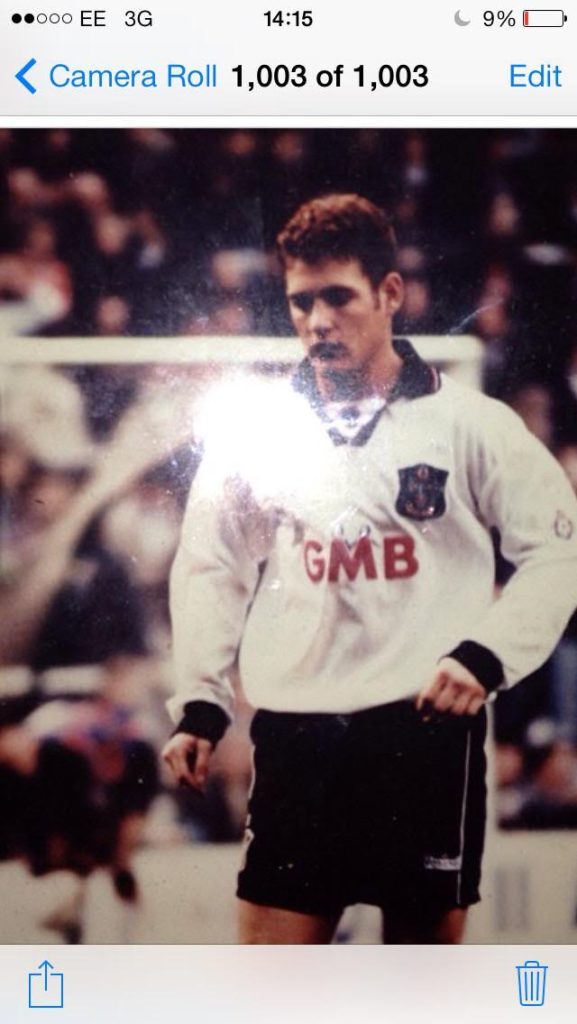

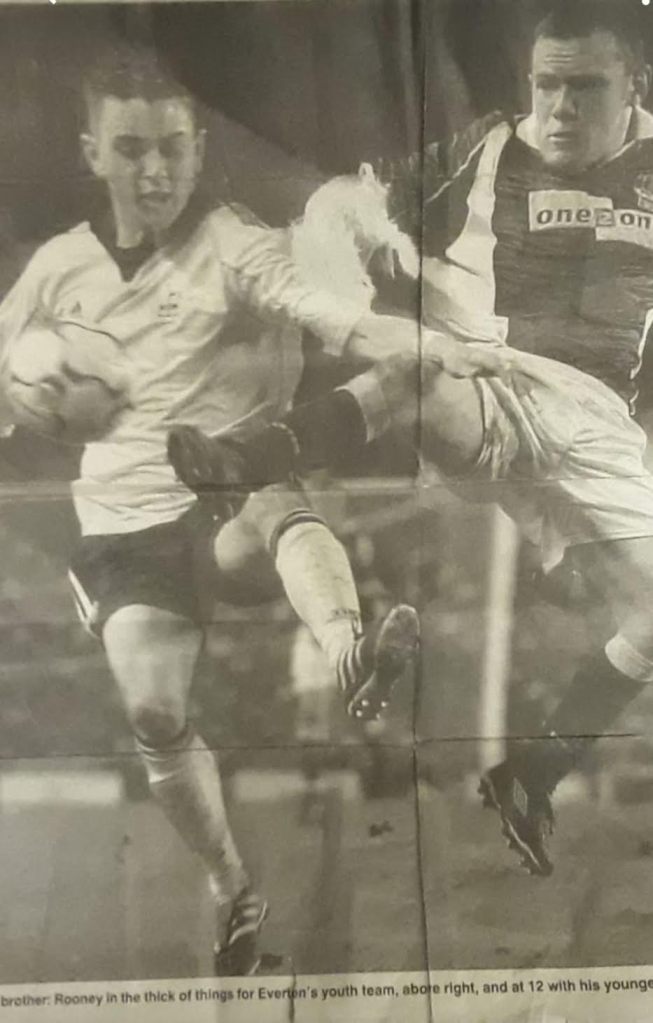
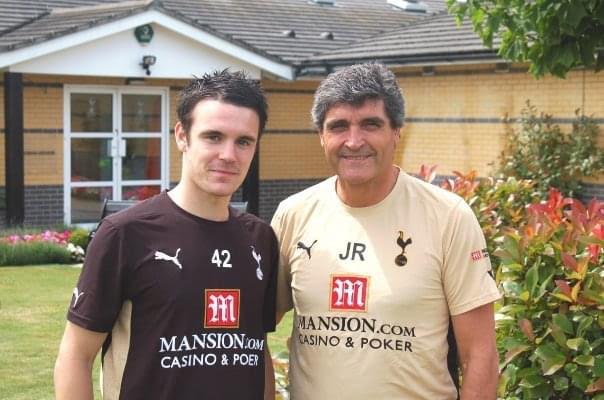
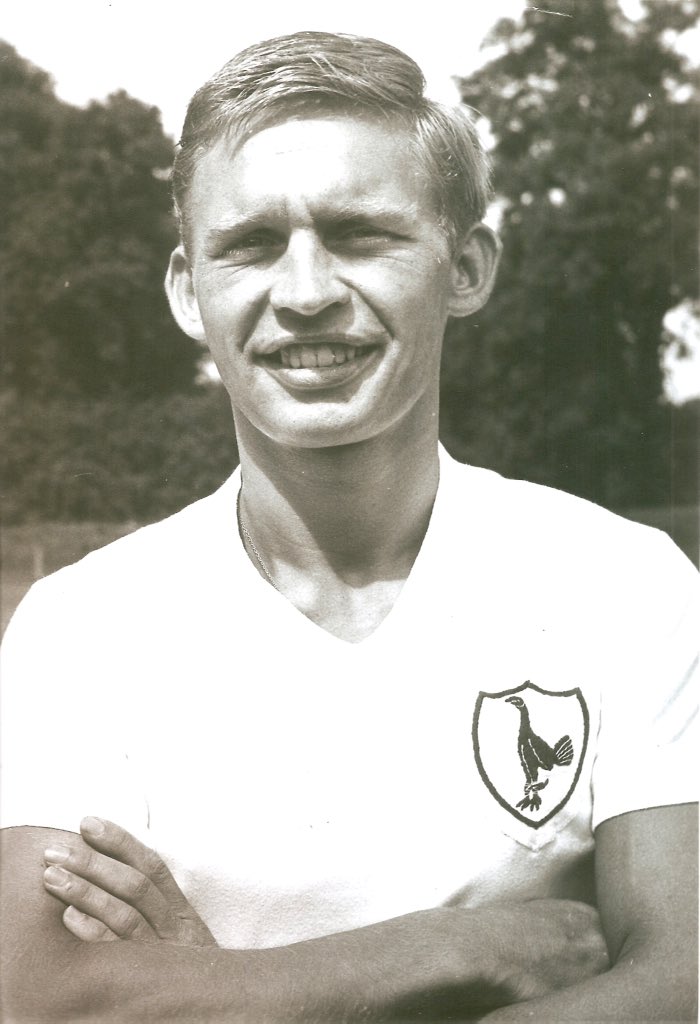
 superhotspur