James John Pearce was a versatile forward during his Spurs days, in the 1960’s and 1970’s. Tottenham born and bred, Jimmy Pearce had played for Tottenham Schools and England Schools during his schoolboy days before joining his boyhood club Spurs as an apprentice in the May of 1963. Admired by his teammates at youth level during those early days at Spurs, Pearce as a player was a very skilful one and he possessed great ball control and was a superb ball player, but he also liked to take on and beat his man. Able to play as an out and out winger or as a centre forward and as a midfield player, Pearce worked his way through the various youth ranks and up from the reserves to Bill Nicholson’s first team. He made his first team debut for Spurs in an end of season tour of Greece and Cyprus, in a game against Anorthosis in the May of 1968. At the beginning of the following season Jimmy made his competitive debut for Spurs, in a First Division game against Arsenal in the August of 1968. Going on to make over 200 more first team appearances for Spurs (not all of which were in competitive games) scoring 35 competitive goals, Jimmy Pearce played a big part in helping Spurs to reach the 1971 Football League Cup final, by scoring the winner against Bristol City in the semi-final second leg. Although Jimmy was an unused substitute in the final of that seasons cup final, and an unused substitute in both legs of the following seasons UEFA Cup Final, he did deservedly start in the final of the 1973 Football League Cup, when Spurs beat Norwich City one-nil, thanks to a Ralph Coates goal. Sadly and not long after that memorable day at Wembley, Pearce was forced to retire from playing due to injury. He did however, play again for a spell, playing for Walthamstow Avenue. I recently had the great pleasure and privilege of speaking with Jimmy about his time at Tottenham Hotspur during the 1960’s and 70’s.
What are your earliest footballing memories?
Jimmy: Well being a Tottenham supporter is one. Also playing football at school in the juniors where I started off, but also playing at home on the grass. I played for the junior school and I played for the Tottenham under 11s before I went to the secondary modern school in Tottenham, and I then played for Middlesex Boys before playing for England Schoolboys. So you know it was all from there.
What are your earliest memories of your time at Spurs and how did you come about joining the club?
Jimmy: Well playing for the Tottenham Schoolboys and England obviously all the scouts were about, and I think that Fulham, Chelsea, Tottenham, West Ham and Arsenal (who I went to see early on when I was at school) were watching me, but I was a Tottenham supporter. I could have left school when I was 15 but I got invited down (by Spurs) in 1963 although I had a couple of England games left, and so I stayed on at school for a term and then when I left they (Spurs) signed me on as an apprentice, and that was in 1963. When I was going to my interview with Bill Nicholson with my dad, one of my school friends who played with me in the England team, we passed his house, and he called me and said that Ron Greenwood has spoken to me and he said whatever you do don’t sign for them (West Ham) because he knew that I was going to go down there. When I got down to Spurs I had the interview and I signed, and that was it really, but I did have Ron Greenwood coming round my house that night.
Did you have any footballing heroes/inspirations and if so who were they?
Jimmy: Well it was all the Tottenham team right from before the double side, so from about 1958. You know everyone was great, and from when I arrived at Spurs you had Dave Mackay and Jimmy Greaves and just so many names you know, I was just in awe of them all.
Could you describe to me what type of player you were and what positions you played in during your time at Spurs?
Jimmy: I started off as an inside forward which was a position that you used to have at number eight and number ten. I was a number ten or whatever, but then when I started playing professional and that, I started playing on the wings and at centre forward, and I think that I played a game at left-half as well. So I was versatile and I never had a set position as I was a utility player.
Could you talk me through your time playing in the various Tottenham youth teams and reserves, and could you share some of your favourite memories or ones which stand out from your time in those sides?
Jimmy: I remember that the youth games were played at Cheshunt and we played the likes of Arsenal and all them you know, and we had a good side and I think that we won the league once as well. Being an apprentice was quite tough you know and you had to knuckle down, I can remember being an apprentice because we used to do the grounds and the covers on the ground, where you used to roll them out when the snow was coming and all that, so that was difficult. As regards to the games it’s a bit hard to pick out as there were so many, and I was trying to think the other night about reserve games but they all sort of role into one. I did get some goals for them but it was just a matter of carrying on and just sticking by it you know, and there was a lot of luck involved.
Who were your greatest influences at Spurs?
Jimmy: Well obviously the trainers. You had Johnny Wallis who was our main one in the A team which was above the juniors in the South East Counties. Also you had Eddie Baily who was the assistant manager and he used to do a lot of shouting, but I think that he tried to toughen me up to get the centre forward spot but also to get stuck in. Though I wasn’t that type of player as I was more of a ball player, and without sounding big-headed it sort of came naturally to me you know, and I loved dribbling. As regards to players there were such great names at the club and I was just in awe of them every time and it was just unbelievable.
What are your memories of your competitive debut for the Spurs first team against Arsenal in the First Division, in the August of 1968. And how did it come about?
Jimmy: That was unbelievable (we lost two-one) but I can remember having a shot on goal and Bob Wilson saving it, and I think that it was a left footed screamer from the edge of the box and it was going into my top left hand corner. And Bob Wilson had just got to it, but I thought what if I had got that, but that’s all that I can remember from that game as you just remember little things you know, but it was a tough old game as they (Arsenal) were becoming a good side you know. I think that Martin Chivers was injured for that game so that was why I got in and I was centre forward.
Were there any players at Spurs who you would watch closely to try and improve your game or look to learn from?
Jimmy: Well I loved Jimmy Greaves and also Dave Mackay as a kid, since he joined in 1959 and he was just unbelievable really with his determination and grit and everything that he done. But I liked every player in the team from Pat Jennings to Cliff Jones who I used to love as well, but really it was just the whole team as they were so good.
If possible could you share some of your memories of your time as a player at Spurs during the 1971 Football League Cup winning campaign, the 1972 UEFA Cup winning campaign and the 1973 Football League Cup winning campaign?
Jimmy: Well in the final I was a substitute against Aston Villa but I got a couple of goals in that campaign including in the semi-final second leg against Bristol City when I got the winner, and that was that. I know in the other campaigns such as in 1972 that I got an away goal against West Brom when we won one-nil in the League Cup. In the 1973 Football League Cup final I knew that I hit the post in that game and I thought how did I miss that! Although Norwich played well in that game Ralph Coates got a goal, and I can remember that John Pratt was very unlucky in that game to come off after not being on very long. It wasn’t a classic game I know that but it was fantastic to win, and I remember going back to 1971 against Aston Villa when we won two-nil, and that was a better game although I didn’t come on in that. Although I didn’t play in either leg of the final in the 1972 UEFA Cup, I did play in some of the rounds, and I do remember the game against Olympiakos well and I scored two goals in that, which was during the following season.
Other than the various cup campaigns that you went on with Spurs could you share with me some of your other favourite memories of your time at the club, or ones which particularly stand out?
Jimmy: Every game that we won! It was just fantastic and I loved it you know but you always analyse yourself when you lose and you just think the worst, and you go through all of your bad points, and what you should have done and what you couldn’t do and this, that and the other. When I did start off I was totally besotted with Tottenham and I remember that we used to go straight from school to the ground for the cup games and the replays and all that. And I remember queuing up to get in the ground and the atmosphere and everything was just fantastic.
What prompted you to leave Spurs and could you talk me through your career after you left the Lilywhites?
Jimmy: Well I remember that we won the League Cup and I remember that my last game was in 1973 and it was towards the end of the season, and against Sheffield United in the league was my last game. My knee was playing up and from then on I had this condition in my knee and at the end of that season I had an operation up at Stanmore, and the condition was Chondromalacia of the higher patella and I’ll always remember that. They did the operation on my knee and so then I was out for a year, and in that time I did a little bit of scouting for Spurs, but I didn’t want to leave Spurs, it was just because of this condition that I had. My ex brother-in-law used to play for Walthamstow Avenue and he used to keep on at me and say that he wanted me to come down to Walthamstow, and so I gave it a try. Although I only played about three or four games and that was it, as I was doing a job full time and my knee wasn’t good, and so that was it really. If my ex brother-in-law hadn’t have kept on at me then I wouldn’t have kept playing, as I knew that it just wasn’t right.
What was your time at the Lilywhites like on the whole?
Jimmy: It was brilliant really. I mean as an apprentice you used to do an hour and a half of training a day from half past ten to 12, and then you used to have lunch and then you used to come back for an hour or so during the afternoon and that was that. Then as a professional you just had the mornings and then you used to go back in the gym during the afternoons, but it’s so different now as they are all so organised with their diets and whatever. We (the players) used to go down the cafe down the road as apprentices and have competitions as to who could eat the most dinners and silly things like that, and then go back and train and run it off. However, my time at Spurs just went so quickly but it was a brilliant time.
What was the greatest moment of your footballing career?
Jimmy: Although we lost it would be the game against Arsenal in my first game, so I think that that would be the highlight in a way, apart from winning the League Cup I suppose. I didn’t win a lot apart from that but when I look back now it was all like a dream for me and it was just fantastic.
Who was the greatest player that you have had the pleasure of sharing a pitch with?
Jimmy: It’s got to be Jimmy Greaves.
Who was the toughest player that you ever came up against?
Jimmy: Well I played against Chelsea and they had some hard players, and also Liverpool had the likes of Tommy Smith and whatever while Chelsea had Ronnie Harris. Leeds were also tough but the pitches were different to what they are now and they used sand on the pitch as well, so it was a bit hard on your legs obviously, and nothing like the pitches that they play on now.
Were there any players at Spurs who you were particularly close to?
Jimmy: There were a couple who I used to be close with and as apprentices we all used to go around with each other, and you’d go bowling or something, however, the main players were all married and they had their own lives. I used to try to play golf but I couldn’t get the hang of it although I loved it and I still love it, but I never took to it because for me it seemed to take up too much time when you were bringing up a family and trying to get the balance right. I did used to get on alright with most of the players at Spurs though and we used to have a good laugh.
What would your advice be to the young Spurs players of today as they look to break into the first team?
Jimmy: I think that the only advice I can give them is to make the most of what they’ve got now and really try and make each day your best day. I remember Cliff Jones saying to me that your career in football goes so quickly that you don’t realise it, and you wake up the next day and it’s all gone. So you’ve just got to make the most of it and make each day count as it’s a brilliant life.
After all these years how do you look back on your time at the Lilywhites and is Spurs a club who you still hold close to your heart?
Jimmy: As I say it’s like a dream, and I’ve got all my old clippings from when Spurs won the double and from going to the town hall as a youngster and from taking photos on the balcony, and so afterwards I was part of that in a way. And I think that it was just unreal, and so that’s how I feel really.
A technically gifted and highly skilled creative midfield player, Sunderland born Michael Hazard had his footballing talents spotted by a Tottenham Hotspur scout as a 14 year scout during the 1970’s, and the former St Aidan’s School pupil eventually joined Spurs as an apprentice, at 16 years of age. With great vision, a superb footballing brain and quick and tricky feet, Hazard created many a fine chance for the Spurs forwards during his two spells at the club thanks also to his fine passing range, and he also scored some really taken and important goals. After rising through the youth and reserve team ranks at Spurs, Micky would go on to make his competitive debut for the club in a First Division game against Everton at White Hart Lane in the April of 1980. Going on to make a further 169 competitive appearances for Spurs during his time at the club (scoring 25 goals), Hazard’s successful first spell saw him play his part in helping us to win the 1982 FA Cup and 1984 UEFA Cup, as well as being a part of the side that finished as runners up to Liverpool in the 1982 Football League Cup final. Hazard’s first spell at Spurs came to an end in the September of 1985 when he made the move across London to Chelsea. A shining light at the Blues during their time in the Second Division, Micky Hazard also helped them to get back to the First Division, by winning the 1989/90 Division Two league title, and also the Full Members Cup in 1986. A spell at Portsmouth and later Swindon Town (under Ossie Ardiles) followed for Hazard, and he helped Swindon to win the Division One Play-off final in 1993. However, towards the end of his career he joined Spurs for a second time, and it was at his first professional club where he ended his time in the professional game in 1995, before entering the non-League, where he played for Hertfordshire based club Hitchin Town for a time.
Hazard did return to Spurs once again though, when he joined them as an academy coach, spending a good number of years coaching Spurs’ talented young players, players that to this day still speak about with him such high regard. He would also go on to become an academy coach at Crystal Palace before holding a number of positions in non-League football. Now working in hospitality on match days at the Tottenham Hotspur Stadium, Hazard is rightly regarded by Spurs supporters as a club legend, and is much loved by them, and he is without doubt one of the nicest former professional footballers that you’re ever likely to have the pleasure of meeting. I recently had the great pleasure of talking to Micky at length about his time at his beloved Spurs, a club that he still holds very close to his heart to this very day.
What are your earliest footballing memories?
Micky: My earliest football memories was playing for my junior school and we was a top top footballing school, and there were lots of players that sort of came through that school, such as Kevin Dillon and Micky Harford, who were all in my teams and they went on and became professionals at the highest level. So that was my earliest memory, but in particular there are certain things, like we used to win cups such as the County Cup which was called the Bishop’s Cup, which was like the biggest cup for schools in the area. I can remember scoring a wonder goal in the final (it was a two legged final) and we went away to a team with the same school name as us – St Cuthbert’s, and mine was St Cuthbert’s. We drew one-one away and I scored a wonder goal, and then in the home leg we won one-nil, so we won the Bishop’s Cup and so my name or my school was written on the Bishop’s Cup, so I’ll always be a winner of the famous Bishop’s Cup. So that’s my earliest memory really.
What are your earliest memories of your time at Spurs and how did you come about joining the club?
Micky: Well obviously Spurs had an assistant manager in the day called Wilf Dixon who was born and bred in Sunderland, and he had set up a little small scouting network up there, basically a one man, and the one man came and befriended my dad. He came and watched me every week and got friendly with my dad and invited us for dinner, took me for extra training etc, etc, etc, and when it came to decision day at the age of 14 which in those days you couldn’t sign outside of an hours journey for anyone, so I had to wait until I was 14. So when the decision had to be made he won my dad’s heart and my mum’s heart and that was it, it was done. I’ll always remember coming down as a schoolboy and getting a train with the first team as they thought highly of me, and getting a train with the likes of Steve Perryman and Glenn Hoddle at the age of 14/15. I don’t remember too much about the playing as such in those days because you just got in little friendlies, but when I got to 16 I became full time and I remember this one game in particular when I scored a goal. If we had a video of it, it would probably go down as the best goal that I’ve ever scored and one of the all time great goals. We were playing Arsenal as well and we beat them five-nil and I scored this goal, and it was described in the programme (that’s probably how I remember it so much) as a copybook goal. I picked the ball up just inside Arsenal’s half and I played four one-two’s to the edge of the box, and the final one-two got me in behind the defence and I slotted it away. That is unheard of to have so many one-two’s and certainly at the young age of 16, it was an incredible goal, and because it was against them as well it sort of made it much more satisfying as well, and it’s something that’s probably stuck with me forever. That is probably my earliest memory of one of my first ever games for Spurs.
Did you have any footballing heroes/inspirations and if so who were they?
Micky: I did, my favourite all time player was Johan Cruyff and I thought he was incredible, graceful, elegant and stylish. He played the game in the way that I believe it should be played, the way that growing up my dad would preach to me. Also I loved Alan Ball and he was an absolutely wonderful footballer and the first to wear white boots, and the first to win the World Cup, so he was one of my heroes. But I loved the great Leeds team of the 70’s, and they were absolutely brilliant to watch and I thought that they were as hard as nails, but they played football the way that it should be played in terms of the passing game, and they were brilliant. It was only really when I joined Spurs at the age of 14 that they became my favourite team over Leeds, and obviously I’d been spotted by Spurs at 11 so I knew that I was going to go to Spurs one day, so they were there. But watching Leeds was brilliant, absolutely brilliant to watch, Johnny Giles, Billy Bremner, Allan Clarke were super super footballers. Norman Hunter, Bobby Charlton, Terry Cooper, I could name the team, but then obviously once I joined Spurs there is something about when you join a club, there is something about finding your home and a chemistry and something that just seems to fit. That didn’t happen immediately as obviously it takes time but once you settle and you get rid of the homesickness etc, I use the words chemistry and where the heart is, but you sort of just fall into it and then it’s like nowhere else you’ve ever been. It happens without you actually realising it as well, you don’t know how much you love the club until later down the line. My motto on how the game should be played, is be creative, play with flair and excite people. Me and Tottenham sort of fit like a hand to a glove in many ways, so that was the way I sort of fell in love with Tottenham really.
How would you describe yourself as a player during your time at Spurs?
Micky: I think I was very gifted and very talented, and without being big-headed I would say that there was only one player that I felt had more natural talent than me and that doesn’t mean that I was the best player. It means that in terms of natural ability that I think that me and Glenn Hoddle were very much from the same book, and so in terms of talent I didn’t fear anyone, I had no fear of any other player. Maybe at times I was a little bit in awe of Glenn with how good he was, but in terms of every other player I never felt in awe of any one, I always felt well I’m very gifted and I can hold my own with anyone. I had a great range of pass, short pass and long pass, either foot, outside or inside. Technically I was very good as well and also very skilful, I had very quick feet and I was nimble and I could jump in and out of tackles as I was very aware of where the tackles were coming from. I could also see the pass too, so I would say that if you would sort of value me in today’s market then you would probably value me around about £4 billion or something like that!
Could you talk me through your time playing in the Tottenham youth team and reserves, and could you share some of your favourite memories or ones which stand out from your time in those sides?
Micky: Well that goal that I scored against the Arsenal youth team obviously, and obviously we had a great cup run in my second year at Spurs (when I was 17), and we reached the FA Youth Cup semi-final, where we played the great Crystal Palace team of Kenny Sansom, Jerry Murphy and Vincent Hilaire. They had an incredible team and we played them away in a two-legged semi-final and we’d been brilliant up until this semi-final. We’d been absolutely superb and then we played Crystal Palace away and it was two-legged, and we actually played really really well on the night, and I played really well as well against a very very powerful team. They were a lot more experienced than we were as most of them were playing in the first team, and then of course we’d got them back to White Hart Lane (we’d lost two-one I think in the first leg), and we’d got them back to White Hart Lane and we were incredibly confident, I mean incredibly confident. After two minutes Paul Miller got sent off, so not only were we playing the best youth team around at that time, we were now doing it with ten men and eventually we lost six-nil. So it was very difficult for inexperienced youngsters at that age to play against a top youth team, and of course when one goes in, and two goes in it becomes a very big ask, but it was a wonderful run and a wonderful time, and something that I thoroughly thoroughly enjoyed. I must be honest it built my taste for success up, because the following season I was desperate to win the FA Youth Cup and I thought that we had the team to win it. I thought that we played absolutely brilliantly and I can’t remember which round we went out in (I think we won two games) but we were brilliant. I think that we played Liverpool with Sammy Lee and we lost two-one and got knocked out although my memory sort of fails me a little bit, but so again it was disappointing because I thought having had the experience of playing with a very very young youth team from the previous year, we were now all experienced youth players, as we were in our third year.
You had three years in the youth team and we were in our third year and we were all coming up to our 18th birthdays and somehow we didn’t make the most of it, which was very disappointing. When I say it was disappointing more or less the similar group of players in the reserve league which was called the Football Combination in those days, we won it three years running. So we went from a youth team into a reserve team and managed to win the Football Combination three years running, and I don’t know if that’s ever been done before but we did it. So it’s strange because having been at school and won trophies every year for my school team whichever school I was in, it felt like the norm, so to win three Football Combination’s just felt like the norm because we used to win the league every year at school. So it just felt like eventually the natural progression would happen, and we’d win the league and the FA Cup every year, but it took me a little while to realise that it actually doesn’t happen like that, sadly. But winning the Football Combination is an incredible achievement as is winning the league three times in a a row, but especially as youngsters. What you have to remember about the Football Combination is that it was used as a stepping stone for good youngsters in the first team, but also as a place for experienced players to keep fit when they weren’t in the first team, or coming back from injury. So I played against the England captain (Gerry Francis) when I was 17/18 in the reserves you know, so that was the great thing and that is what I think is wrong about today’s football. I think that there should be a reserve team because of the experience it gives you of playing with great players. I played in the reserves with Glenn Hoddle, Steve Perryman, Ossie Ardiles, Ricky Villa and Steve Archibald, because they were coming back from injuries so you got the experience of playing with great players and playing against great players.
Today youngsters spend their time up to the age of 23 more or less playing in their own age bracket, which incredibly will stifle development because the better the player you play with and against the more you learn and the more you learn to cope with it. And the more you learn to actually become a better footballer, if you don’t learn it tells the story that you weren’t good enough to get there anyway.
Who were your greatest influences at Spurs?
Micky: I would say Keith Burkinshaw and Peter Shreeves, obviously they were my coaches but also Glenn Hoddle and Ossie Ardiles. Glenn Hoddle was someone I looked up to and admired and watched a lot, and would often try and learn from, from the things that he did. Ossie Ardiles was probably the single biggest individual influence on my career and he loved me as a player, and wanted to educate me in other areas of the game such as the little tricks. And the fact that I was up against Ossie from a positional sense, and the fact that he was prepared to help and advice me all along the way says a lot for his character. Steve Perryman was another one who would spend lots of time talking to me and advising me, so yeah there were quite a few big influences, but if I had to choose one I would say Ossie Ardiles.
What are your memories of your competitive debut for the Spurs first team against Everton in the First Division, in the April of 1980. And how did it come about?
Micky: Well I was supposed to make my debut the previous week against Man United at Old Trafford, and we trained on the Thursday and I developed a blister on my big toe. That night I burst it myself at home, and when I woke up the next morning on the Friday it had got badly infected, and so I couldn’t walk and i couldn’t train and so I obviously didn’t play in the game. It’s an interesting fact that if Spurs had won four-nil then I might never have made my debut, but we lost four-nil at Old Trafford, so he was going to make changes the following week. I was fit and ready and I sort of had an idea all week because when we were playing first team versus reserves I was often in the first team, and then on the Friday they confirmed it that I was playing. I don’t remember too much about the game except that I got man of the match, I wasn’t because there were better players but I got the sympathy award because I was a youngster coming through the system and playing with all of these great players. I remember sitting in the dressing room and on one side I had Glenn Hoddle and on the other side I had Ossie Ardiles, and I was thinking to myself what the heck to do they need me for if they’ve got these two. So yeah, it was an incredible experience and another was John Pratt whose place I’d taken, had come up to me before the game and said listen Mick show the fans how good you are and they’ll absolutely love you, and your skill and your flair, express yourself and they’ll love you. That I thought was an incredible thing and after the game he came in to me while I was lying in the bath and said Micky absolutely superb today, pleasure to watch you. I thought that was wonderful and I hold him in such high esteem because of that.
It’s easy as a player to wish someone who has taken your place not to do well, but not John Pratt as he was full of praise and full of compliments, and he was brilliant.
Were there any players at Spurs who you would watch closely to try and improve your game or look to learn from?
Micky: There was so many! Obviously you looked to players who have played in your position but there was lots to learn from other types of players as well. You’ve got Glenn and Ossie and Ricky who were very similar positions to me, and if you don’t learn of them then you are not going to be learning at all. Then you’ve got Steve Perryman who would teach me things about being a leader and talking, and helping to make your game easier by talking to your teammates around you. So there’s lots of ways around you to learn from, such as Ray Clemence who was a born winner and there was just lots of things to learn. You should never ever put a stop to your learning, because the minute that you think you’ve learned it all puts limitations on what you can learn, and so you shouldn’t do that because there’s always something to learn.
If possible could you share some of your memories of your time as a player at Spurs during the 1982 FA Cup winning campaign, the 1984 UEFA Cup winning campaign and the 1982 Football League Cup campaign when we finished as runners up?
Micky: It’s interesting the 1982 League Cup campaign, as right the way through to the final I played really really well. I scored three winning goals in the various rounds, and I got the winner in the semi-final, and we won one-nil in all three games and I scored all three goals. So I was very instrumental in us getting to the final, and I scored a very good goal in the semi-final for us to win one-nil against West Brom, and then in the final we were winning one-nil until I got taken off, as Keith had taken me off. I remember Jimmy Greaves in the paper after we had lost, saying (it’s easy to say this when you lose, by the way) it was the biggest mistake from a manager since someone (I can’t remember who it was) got taken off in the 1970 World Cup, so yeah I didn’t really deserve be taken off. But I got took off and I was sitting on the bench, and to compound my misery we were one-nil up and we lost three-one after extra time, so that was incredibly disappointing. But then in the FA Cup final a couple of months later we put it right, and we had all played 60 odd games that season so we were all exhausted. The final went to a replay and Wembley was amazing, my parents, my family and everyone was there. I remember walking out before the game and seeing them in the stadium and them seeing me, and imagining how they would feel looking down on me. One of their sons and their brother, who was walking out at Wembley stadium and about to be playing in an FA Cup final, it truly was an amazing experience. And we won it which made it even better, you know defeat is very difficult to take in a final but when you win a final it’s absolutely glorious. It glosses over every single bad thing that might have happened on the day and it clouds your judgement as time passes, and everything seems to have gone perfect and was wonderful. If we had lost everything sort of gets a bit darker, but no it was a wonderful memory.
Then in 1984 it was absolutely wonderful and for some reason I found my form and in the semi-final I remember that we had Hadjuk Split. I remember that I was outstanding away in Hadjuk Split and we came away with a two-one defeat, I don’t know how as we should have won by five. I of course then scored the winning goal when we got back to the Lane and again I was on top form, and then of course to get to the final in your own stadium in the second leg. We were in top form in both legs and away, and then obviously we lost our captain Steve Perryman and we had no Glenn Hoddle, and we had no Ossie Ardiles, and no Garth Crooks and no Ray Clemence. So a lot of the starting 11 were out, and a lot of the responsibility rested on my shoulders because I was the most creative player left and again I found my top form and we won it, and it crowned what was a wonderful week for me having been picked for the full England team. Three days after the UEFA Cup final I was sub for the full England team at Hampden Park against Scotland, so yeah wonderful memories which with age do get better. As I said everything clouds your judgement, I mean the goal that I scored in the quarter final of the FA Cup at Stamford Bridge for instance I know exactly how I scored it, but 38 years later ironically I had just scored a 20 yard shot from the edge of the box that went in instead of beating seven men from the halfway line. In victory everything seems wonderful but when I look back at all the winning goals that I got in the cup runs, and I got three winning goals in the League Cup including the semi-final winner, and I got the winner in the semi-final of the UEFA Cup as well as the winning goal in the quarter final of the FA Cup, and I think wow! If someone had have told me when I was a young boy growing up dreaming of playing in these big cup games and these finals, that I was going to score so many winning goals along the route, and particularly along the semi-finals, then I would have paid money to do that!
What prompted you to leave Spurs for the first time and could you talk me through your career after you left the Lilywhites prior to rejoining them?
Micky: I didn’t really have a choice, we had played Newcastle at home on the Saturday and we had won five-one, and I had scored. I was in the players lounge celebrating and Peter Shreeves called me in and told me that the club had accepted an offer off Chelsea for me, as they had a few cash flow problems, and Chelsea had offered a then record fee for them, for me. So that’s how my move to Chelsea came about though I never wanted to leave Spurs obviously, and I was quite a shy boy then as well, as the only club that I’d ever known was Spurs, and the only manager and players that I’d ever known was at Spurs. So suddenly I had to take my shyness elsewhere and I knew the problems that that would create for me and so I basically ended up joining Chelsea. I was basically given an ultimatum that if I don’t go then I won’t be picked again, which tended to happen in those days. So I went and then I longed to come back to Spurs, which isn’t putting down Chelsea or any other club that I played for, it’s just that Spurs were my club and I longed to come back. I was absolutely worshipped by the Chelsea fans, and they loved me and they sang my name every week, they loved my kind of player but ultimately your heart is where your heart is. And then I had three fantastic years at Swindon with Glenn and Ossie, helping them to win promotion to the Premier League, so to get the opportunity to come back to my schoolboy club and my first love was absolutely incredible at the age of 33. So yeah I grabbed it with both hands and in fact I was so happy to return, that at the age of 35 and when Gerry Francis arrived and obviously wasn’t going to build his team around me as I was too old, so obviously I wasn’t going to be in the plans. I was offered contracts, Birmingham City offered me a contract for quite a lot of money but I thought no, I’m finishing at my club as this is where I started and this is where I’m finishing. I don’t want to be anywhere else and I don’t want to go anywhere else and so I’m just retiring.
Obviously I was having a few injury problems at the time so it made the decision easier, but to retire at the club that I started with was absolute ecstasy, and I’ve worked at the club ever since. I also did go to Hitchin after Spurs, I did but I didn’t as what happened was that the former Spurs player Paul Price was playing for Hitchin, and he wanted to get the managers job. So to get the managers job he asked me to do him a favour and to play in one or two games. So I went and played in a game and I played really well, and then they decided that they’d give me and Paul the joint managers job but I’d had no experience of managing or coaching or anything at the time. So I went into Hitchin because of Paul really not because of me, as it wasn’t really my ambition at that stage. So I sort of went in and helped Paul as player-manager, and I would sort of bring myself off as it gave me an excuse not to play, so I would go home with 20 minutes to play when it was all slowed down. That lasted a while and then years down the line I went and managed one or two non-League clubs but I didn’t particularly enjoy it, and if I was living my life over I wouldn’t work at that level and I would stay at helping young players. I worked for Spurs for ten years in the academy and I would have stayed working there, because I was very successful. When I worked for Crystal Palace for instance I worked with Victor Moses, Nathaniel Clyne, Sean Scannell and Wilfried Zaha, and we got about 17 young players through into the first team over a three year period. So I enjoyed working at that level, one because it was part-time and it wasn’t 24/7 which management is, so if I was living it again I would stay working at academy level.
What was your second spell at Spurs like?
Micky: Even though I got a very bad tackle and injury and had two operations on it which I never really recovered from, I was playing but I was probably only 75% fit. And after the operations I never got back to 100% peak of fitness, and obviously with age the injuries take longer to heal, so by the age of 35 when Ossie left, he had involved me from the start from some games and then rested me as a sub in others. Then when Ossie left and Gerry came in I knew that that was curtains for my career, and that was fair enough because I’m not going to say to a manager build your team around me I’m 35, but yeah it was fantastic and I loved every minute of it. The club had changed from my earlier days, in fact it had become very different so there was a lot of friction around, and that was not what I’d sort of been used to at Spurs because the club was never in that place when I was there as a youngster, not that I would have noticed it. But obviously when I came back at 33 the club had changed in many respects or was going through a very different era.
Other than the various cup campaigns that you went on with Spurs could you share with me some of your other favourite memories of your time at the club, or ones which particularly stand out?
Micky: The one at Liverpool stands out, when we hadn’t won at Anfield for 73 years and at some point, we must do, but 73 years is such a long time but I played a part in the goal that won the game. I was very unfortunate that I had hit an unbelievable volley into the top corner but somehow Bruce Grobbelaar had sprung and saved it, and as it dropped Garth Crooks had tapped it in. Then I remember the final celebration afterwards and it was just incredible to go 73 years without a win at a stadium against a certain opposition, and then you’re part of the team that breaks that spell or whatever it is and you’re part of the goal that did it, so that is just an incredible memory, and I absolutely loved it. There are so many wonderful memories that you have at Spurs, that you have in any football career and generally the best memories are not necessarily on the pitch, one of my favourite memories was rejoining them. I had a sponsored car when I played at Swindon and obviously when I left I didn’t have a car, but I would have walked the length of the M4 and the length of the M25 and A10 to get to Spurs. So that was one of the best moments of my career, but you can’t replace scoring big goals in semi-finals etc, but walking up the tunnel I don’t think that there is a greater feeling. And one of the sadnesses that I always feel about football is that the fans of a football club sort of unconditionally love a football club without any reason to. And when people say oh Micky you’re so in love with Spurs yes of course I am, but I do it from a point of being educated how great this club is, and I’ve done the things that every fan dreams of doing. I’ve walked down the tunnel and I’ve come onto the pitch in front of 40,000 fans to glory glory, and felt the goosebumps run through me as I’ve walked up onto the pitch, and it’s echoing round glory glory Tottenham Hotspur. I’ve felt these things and I’ve scored winning goals and felt the elation of the fans and felt the excitement and adulation of the fans, and them also singing my name one Micky Hazard when you’ve just scored a winning goal. So I’ve felt all of that and so my love for the club is born out by achievement within the club, and seeing from the inside just how incredible this football club is.
So my admiration for fans who have the same devotion to Spurs as I have is something that I admire so much, because they do it without doing the things that I did that make me love the football club, because I’ve seen and done it all there. So it’s easy for me to say yeah I love this football club because I’ve experienced the fans singing my name and I’ve experienced walking up the tunnel to glory glory, and I’ve experienced lots and lots of many good things off the football pitch. For instance one of the greatest memories that I’ve got and totally unexpected, is that on February of the fifth of this year which is my birthday, I went to White Hart Lane and I was working at the club as there was a game on that day. I got told to go down to the pitch at half-time for an interview which is what I do and have done on numerous occasions, so it was nothing unusual. And then when I walked out onto the pitch there’s a presentation made to me by the football club of a Spurs shirt with Hazard 60 on the back as it’s my 60th birthday, so I mean wow what football club does that? So I’ve been a player there for not how many years and then on my 60th birthday I get presented on the pitch and the fans inside the stadium are singing happy birthday. So memories that you’d pay millions for and that’s without the football memories, so these fans don’t get to experience being given a shirt on the football pitch for their birthday, not like I did. So there’s so many things that enables me to love the football club and these guys unconditionally love this football club you know, and that’s incredible, incredible! So yeah there’s so many wonderful things that I could sit and talk about all night long, and it’s wonderful.
What was your time at the Lilywhites like on the whole?
Micky: On the whole it was the best time but there was bad times like when you’re not in the team, so it wasn’t all hunky dory, but ultimately it’s not anybody’s else’s fault but your own. And not more so than in my case because I was one of the most gifted players at the football club, so if I’m not in the team then that’s my fault, it’s not the managers fault, it’s my fault. So it’s up to me to perform to a level that makes sure that I don’t get out of the team, so when you’re not in the team or you’re injured or you’ve had an operation, they are for sure bad times. You can get a bit down about it, but I always used to cling to the fact that I’m very gifted and I’m very talented and one day the manager will want me again, because he won’t be able to do without me, and that’s how I used to hang in there when the going was tough. I just used to tell myself that he’ll want me soon, as I was that sort of very talented footballer, and more often than not sort of nine or ten games later he’d pick me. Operations and injuries were the worst ones and you’re sitting in the stadium and watching the team, and there’s nothing you can do to help them or be part of it, because if they win six-nil and everyone’s celebrating you never feel part of it when you celebrate, because you’re injured. So yeah there were times like that time at Tottenham but overall I would give my time at Tottenham a ten out of ten. I once read a comment and I thought that it was one of the most wonderful comments that I’ve ever heard and it said that somewhere, somehow and sometime I found myself in a place I’d never been before, I found myself somewhere that I didn’t know, I didn’t know where I was. And I found myself looking around me and thinking this is my home and I get emotional because I’ve spent 40 years of my life at Spurs, but as I looked around it felt like my home, and in the end it became my home. And I don’t think that I can sum it up in a better way, and even though I’ve sort of channeled the words to my way of thinking, they are not 100% my words.
That for me is now what I feel about Tottenham Hotspur football club, remembering that I’m from Sunderland and how did a young backstreet boy from Sunderland find himself in this place somewhere, somehow and sometime? And I did but was I lost? Yes I was lost and homesick, so that sums up my time at Spurs absolutely to perfection, and it’s still my home, and the Spurs family is my family.
You served Spurs as an academy coach for a number of years. What was that experience like for you?
Micky: I loved it and I worked with some of the most talented youngsters that I care to imagine, and I was very blessed and obviously I preached the Tottenham way because it was my way. So any youngster that worked with me they would tell you that if you wanted to put it in row Z then you weren’t on my team! I wanted you to put it on the floor, and I wanted fast flowing, creative flair football which was the Tottenham way. When the goalkeeper had got the ball I had banned my goalkeeper from kicking the ball out, and one of the best compliments that I ever got was when we were playing Southampton and he (their coach) said wow, just wow. You’re goalkeeper has not kicked the ball out once today and you’re team are playing unbelievable football. And that’s a big compliment because I always believe that if I go over to the Premier League for instance or if I go over to Hackney Marshes and Pep Guardiola’s team is playing there, I would be able to pick out Pep Guardiola’s team by his style of play and the way the team plays. I wanted people to say the same thing about me, and the director of the academy came to me one day and said why are you not allowing your goalkeeper to kick the ball out? Because he said that he needs practice at kicking the ball as well he said. So I explained to him that he can practice goal kicks and kicking it out of his hands everyday of the week, but match play is where you learn as an outfield player, so when the keeper kicks it out he bypasses all the education of all of my defenders, and he bypasses all the education of all of my midfielders. I want to teach them how to make an angle for the goalkeeper so that it can be spread, and I want to teach my centre backs how to receive the ball off the goalkeeper, but also to make an angle for when the fullbacks got in. I want my midfielders to be able to split between two defenders and get the ball threaded between them, so by allowing him to kick it out it restricts the amount of coaching that I give the youngsters. So that’s why I don’t allow him to kick it out, and he said you’ve just had an unbelievable compliment of the opposing teams manager, so I guessed what he would have said, because it was that particular day. However, I never ever allowed my goalkeeper, and you have to remember at the age of 13/14 the youngsters aren’t very powerful to throw the ball out.
So often they would throw the ball out and it would lead to a goal, and the one thing that you can’t do when you’re coaching a youngster and when you’re telling him not to kick a ball out, is when he throws it straight to the centre forward and give him a telling off, because it’s not his fault, it’s your fault. What you have to do in that instance is educate them and say listen don’t try and throw it where the defenders are. Work out where the best angle is and the one in the most space, so you’re coaching the goalkeeper within that and so I never apologise for not allowing him to kick it out, as I think that it was better for him and his education, and all of the outfield players’ education. I loved it!
What was the greatest moment of your footballing career?
Micky: From a playing perspective it would have to be the UEFA Cup final and from a team perspective the UEFA Cup semi-final, and from an individual perspective it would be that my children and grandchildren are ardent Spurs fans. My sons’ go home and away and my grandchildren have all been to games, so that fills me with pride that the legacy that I’m going to leave behind is one the Spurs player I was and the Spurs coach I was and the amount of work that I did for the club. But I’m also going to leave a legacy that the Hazard family throughout the generations will be ardent Spurs fans who will follow and support their club through thick and thin. From a Tottenham Hotspur football club perspective I think that’s a pretty good legacy to leave behind and it’s something that I’m incredibly proud of. Sometimes I’ve seen my sons’ on the TV at a Spurs away game and I can see them in the crowd singing and that brings a tear to my eye, because that’s what I would have wanted and wished for, so that would be my greatest thrill I think.
Who was the greatest player that you have had the pleasure of sharing a pitch with?
Micky: Well I’ve shared it with Ossie Ardiles and Glenn Hoddle and so I couldn’t put anyone else above them two. I’ve obviously played on a pitch with Johan Cruyff and he was my all time hero, but I’m talking about people who I’ve played with. So I couldn’t put anyone above Hoddle and Ardiles as I thought that they were two very different players, but unbelievable players in their own way. I think that Glenn was probably the best English footballer I’ve ever seen, certainly the most gifted and I’ve never seen anything that he couldn’t do. Ossie was a genius in a different way, and he read the game so well and was three or four steps ahead of everyone, and he was a wonderful footballer. So yeah I couldn’t put anybody above them two.
Who was the toughest player that you ever came up against?
Micky: Ossie Ardiles when I played for Chelsea. I came up against Ossie Ardiles and I’d scored two at White Hart Lane the previous year for Chelsea to win three-one and then I came up against Ossie Ardiles, and I was sitting in the dressing room thinking Ossie’s got such a great brain, he’s going to know everything that I do, so I’m going to change my game today. Little did I know Ossie was sitting in the other room saying Micky’s a clever footballer and he’s not going to play his normal way, he’s going to change his game because he knows that I’m going to be waiting if he doesn’t. But he was waiting somewhere else where I went! So yeah he was very difficult, very quick, very sharp and very quick thinking, so he was always ready for anything that I tried, and so he was just a super player.
Were there any players at Spurs who you were particularly close to?
Micky: I was close to quite a lot of them although they might not have been as close to me, but I felt as close to them. Ossie was obviously my closest friend and he was my room partner, but I was very close to Ricky Villa and I get on great with all the boys, and I’ve got no problems with any one of them as they are all nice guys. When you watch football you can see someone as flash or arrogant or this or that by the way that they play football, but that’s not the case off the pitch, or in general certainly in my time. The vast majority of the players that I came across are lovely guys, and still are.
What would your advice be to the young Spurs players of today as they look to break into the first team?
Micky: I would say work hard, but don’t just work hard work on particular things that would improve you as a player. Don’t spend all of your time keeping the ball up as that won’t improve you as a player, instead work on things that are going to improve you as a player, and the next comment I’m going to make I got off Glenn Hoddle. Don’t do the same thing twice because when you get to the top you do it once, and the next time the best players are waiting for it to happen. So mix it up and vary your game and do something different, do a step over once and next time do a double step over so you fool them, or drop your shoulder one way then drop it the other way and do a turn this way. Always do something different because top class opponents will find it hard to read which one you’re going to do.
After all these years how do you look back on your time at the Lilywhites and is Spurs a club who you still hold close to your heart?
Micky: My only club. I had great times elsewhere but nothing will ever touch Spurs, listen you can’t help who you fall in love with it’s as simple as, and it’s the same in football. You can’t help who you support as it’s in your blood and it’s in your soul, I don’t make any apologies for the fact that Spurs is my club and I don’t apologise for the fact that my sons’ are Spurs fans. It’s something that controls you rather than you control it, and it’s something that’s in your blood.
Islington born Brian Woozley was an attack minded midfielder who played for Spurs at youth team level during the mid 1960’s. Playing for Tottenham in the South East Counties League senior section and junior section, Brian’s brother David also played for Spurs during the same decade, while his nephew who is also called David, played for clubs such as Crystal Palace and Torquay United. Brian Woozley was an amateur with Spurs during his time there, and after leaving them he would go on to play for the likes of Croydon who he enjoyed a very good spell with, Hendon and Wembley. I recently had the great pleasure of speaking to Brian about his memories of his time at Spurs during the 1960’s.
What are your earliest footballing memories and how did you come about joining Spurs?
Brian: It would be going back to 1959 when I was playing for Islington Boys under 11 team, and their first game surprisingly enough was against Tottenham Boys at White Hart Lane, so that was a good start. Then after that and going to 1963, basically playing for Islington Schoolboys at under 15’s we used to train at Highbury the Arsenal ground once a week. And the one thing that I really remember about that was the underfloor heating at Highbury and it was magical, when you finished your game and you came into the dressing room you had underfloor heating, so in them days that was magical as you can imagine. Then basically after that a friends dad said to me would you like to get a trial for Spurs? And I said well yeah, I don’t mind. Anyway later on that year I got a letter signed by Bill Nicholson inviting me to take part in a junior trial match over at the Cheshunt ground, and that was at the end of July, so that’s how it all started.
What are your earliest memories of your time at Spurs?
Brian: It was getting the 259 bus from Caledonian Road sort of twice a week to go training, and training was taken by Sid Tickridge, and one of the nice men there at Spurs was called Jimmy Joyce who was in the admin, and he was a lovely man who was really nice and very friendly. And so anyway I left school at 14 and took part in the trial which unfortunately I didn’t quite make the grade for an apprentice, but they offered to sign me on amateur forms, like a lot of the youngsters, and I think that even John Pratt signed amateur forms first of all. So at 15 I didn’t quite get up to the standard but they signed me on amateur forms and then two weeks later I got a job as a messenger with the Evening News, earning £3 a week, which was really expensive stuff! I was issued as an amateur player with a pass to go into the games (at Whiter Hart Lane) if I wanted to go in to watch the first team, and that was good. Anyway after that I played for the junior section of the South East Counties League, and my brother David also made the senior section of the South East Counties, and he played about 13 games for them, and he then went down a different road. I have two telegrams on me, one is dated 28/2/64 saying you’re playing tomorrow, meet at Spurs ground 1:30pm. The other one was, no training stop, meet at Spurs ground 1:15pm. And that’s how they used to communicate with you if you weren’t training that week. So in 1965 I signed the amateur forms and I was actually asked by the London FA to represent them in the FA Charity Youth Competition, which was mainly for amateur players like myself and John Pratt.
We played Kent in the first round and we won six-two, and Bill Nicholson was actually watching that match, and I was told that he was very impressed with my performance. And then shortly after and at one particular game John Pratt I think signed as an apprentice professional, and Ron Ashley took his place in the London side. After that I was made captain for London and then we went on to reach the final after playing five rounds, and we met Leicester who we beat in the final, after two legs. Notable players from Leicester at that was David Nish and he was playing for Leicester, and I think that he also went on to play for England. The other one was Rodney Fern who was quite famous, and as a result of playing for London I was issued with a cap which was beautiful. So that was my time and it was quite memorable really, it was three years that I actually played there and I think that I had one game in the Metropolitan League (it was five tiers as you had the first team, reserves, Metropolitan, under 18’s and under 16’s), so that was my time at Spurs. We had some good players in those times, lots of very good players.
Did you have any footballing heroes/inspirations and if so who were they?
Brian: I admired Dave Mackay and I just thought that he was an outstanding player, and obviously Jimmy Greaves you can’t take away from, and why he’s never been knighted I’ll never know. But they were two great players, and I didn’t even get to meet Bill Nicholson after all three years which is strange, although I know that he came to watch me but that’s about it I think.
Could you describe to me what type of player you were and what positions you played in during your time at Spurs?
Brian: Mainly midfield, sort of attacking midfield as I liked to go forward and have shots on goal, and I carried on doing that through my amateur career as well, I also played for London in midfield and it was just enjoyable really. Going back to the days of playing at Cheshunt, the pitches at Cheshunt were just fantastic compared to playing at Hackney Marshes on a Sunday or something. It was out of this world and they were just some of the greatest pitches that you could ever have I think in them days, although it is a lot better today. It was also a pleasure to put on one of these yellow shirts when I first had my trial at Cheshunt, and it was one of these silky shirts with the cockerel on it, although I never had a picture taken of me when I was at Spurs, which I do regret.
Who were your greatest influences at Spurs?
Brian: I suppose anybody was because they were such a good side in the 60’s and they went on to good things.
Were there any players at Spurs who you would watch closely to try and improve your game or look to learn from?
Brian: Well as I say I always admired Dave Mackay and I mean you couldn’t get any better that. He was outstanding going forward, defending, tackling and you name it he could do it you know, he was my idol really and I like to say that I based my game on him.
What was your time at the Lilywhites like on the whole?
Brian: In them days for a young lad of 15 years of age to sort of represent Tottenham made you feel like you were on cloud nine really, and that’s how I felt. It was just great and I loved every minute, and you know it taught you everything really, and although my hope was to have signed professional it wasn’t to be and I wouldn’t have changed it for the world.
What was the greatest moment of your footballing career?
Brian: I had quite a few times once I left Tottenham, playing for a club called Croydon FC we went the whole season which was 42 league games without being beaten, which is quite an achievement really, and I don’t think that any other club has really done that.
Who was the greatest player that you have had the pleasure of sharing a pitch with?
Brian: Well there was quite a few actually. One year when I was playing for Tottenham youth I played against Trevor Brooking and that was in 1965, and he was playing at centre forward, and I was playing right-half with John Pratt playing left-half as that’s how it used to be in them days. I also played against Steve Kember who used to play for Crystal Palace, and also Jimmy Pearce used to play for Tottenham and he played when I first played for Islington Schoolboys under 15’s. Also Keith Weller who played for Spurs, went to Barnsbury Boys School which was the same school as me.
Who was the toughest player that you ever came up against?
Brian: Basically I played for Maidenhead in I think around 1972, and basically Brentford came along and asked if I would like to represent them in a game at the London Charity Cup. I said yeah and I jumped at the chance to play for Brentford just for the one game, and you’ll never guess who it was against, it was against Tottenham at Tottenham! So I jumped at the chance and that was the first time that I came up against Graeme Souness, and boy did I know that I’d been in a tackle, and he really did see to me. He was a lot fitter than I was anyway, and he was always quicker on the ball than me so he really did stand out, and I think that was really just the start of his career at Tottenham really, because it would have just been a reserve side. So he was one player that really stood out during my career.
What prompted you to leave Spurs and could you talk me through your career after you left the Lilywhites?
Brian: Well I didn’t think that I was going to go any further to be quite honest, I sort of played that well for London and Bill Nicholson said it was very good, but there was no sort of movement there and I wanted to be a professional. So I heard that Hendon were interested in me and they were a top amateur side at that time so I thought that I’d give it a try. I could have stayed on at a Spurs as they didn’t sort of say that they didn’t want me anymore but there you go. My time at Hendon was great and quite a lot of the side were England amateur internationals, and basically when I had went there they had drawn in the first round of the FA Cup at home to Reading. I was twelfth man that day at the age of only 18 which was very unusual, and I went on for the last 20 minutes but we lost the game in the end. Also Hendon in another year got through to the semi-final of the FA Amateur Cup, where they were drawn against Skelmersdale United, and that was played at Derby’s Baseball Ground. Unfortunately we got beat and that was the dream of playing at Wembley gone, and as you can imagine you’re in the semi-final of the FAAmateur Cup and it would have been lovely, but there you go. After Hendon I went to a club called Wembley, and a Scottish amateur international called George Taylor was building the side there. So I went there and it was quite good there, and then from there I went to Maidenhead and while there although I played for them on Saturday’s, I used to play on Sunday’s in Islington for a local team called Carlton United who I don’t think exist anymore. It was a very experienced side and we had Peter McGillicuddy playing for us as well.
At Carlton we got through to the All Sunday Cup final which took us all around the UK and we went to Liverpool, and then in the final we up to Durham, and we won the final there which was quite good. After Maidenhead I went to Tooting & Mitcham who were managed by Roy Dwight who used to play for Nottingham Forest, and he was the only player that scored in the FA Cup final and then got carried off with a broken leg, and he was also the uncle of Elton John. So I went to Tooting and stayed there for a couple of years and then I went to Croydon and as I say we had quite a good side at Croydon in the league, and then after that I went to Horsham and then I finished my career at Dorking and that’s when I joined the police, so I couldn’t sort of carry on anymore after that which was a shame. I then spent 33 years with Sussex police, so I’ve been all around the place as you can imagine.
Were there any players at Spurs who you were particularly close to?
Brian: Only Alan Hesling really, I don’t think that anyone used to live around my way, there was only one bloke who used to get the bus back with me and that was Alan Hesling. I think that he used to get on the 259 with me and he’d go his own way to south London and I’d go back to Islington. Also Ron Ashley was another good lad, and he represented Tottenham and London as well, after John Pratt turned professional.
What would your advice be to the young Spurs players of today as they look to break into the first team?
Brian: Obviously the times of the 60’s are totally different to now with the fitness regimes that you’ve got today, and your eating and everything. So I’d say that you’ve just got to stick at your football.
After all these years how do you look back on your time at the Lilywhites and is Spurs a club who you still hold close to your heart?
Brian: Oh yes without a doubt although I’m an Arsenal supporter because I was born and bred in Islington, but they still mean a lot to me. I support two teams in a funny sort of way, but I’ll always think of Tottenham without a doubt.
Hackney born midfielder and Spurs legend John Arthur Pratt in fact started his footballing career off with west London club Brentford, whose youth team he used to play for. An exceptionally hard-working, versatile and intelligent midfield player, Pratt joined Tottenham Hotspur as an amateur, after having been spotted playing by Spurs legend and double winner Terry Medwin at Clark’s College in Enfield, where Medwin was a coach at the time, and where Pratt was a pupil. The tenacious John Pratt signed professional forms with the club in the November of 1965, and he would play for the juniors and the youth team in the South East Counties League, before progressing onto the reserve side. Excellent at breaking up play in the middle of the park, the defensive minded midfielder also had an eye for goal as well as being able to strike a ball sweetly, and he scored a very respectable total of 64 goals from 462 first team appearances for Spurs, although not all of which were in competitive games. After having risen through the various ranks at the club, John was eventually given his first team debut for Spurs by the great Bill Nicholson, it came in an end of season tour of Cyprus in a friendly against a Cyprus International XI (John made his competitive debut for Spurs against Arsenal the following year), with Spurs winning three-nil thanks to a brace from Jimmy Robertson and a goal from Alan Gilzean. Pratt would go on to establish himself in the Tottenham first team in a spell at the club as a player that would last almost 15 years, and he won the 1972 UEFA Cup, the 1973 Football League Cup (he played a big part in the run up to the final of that seasons competition), and he also played in both legs of the 1974 UEFA Cup final, when we finished as runners up to Dutch side Feyernoord. After enjoying on the whole a very successful time at Spurs albeit with the team enjoying mixed fortunes in that long period of time, Pratt left Spurs to join American side Portland Timbers in the May of 1980. He would later return to Spurs to coach both the youth and reserve team, before becoming assistant first team manager to Peter Shreeves for a period.
After having left Spurs permanently, Pratt would later manage Chesham United, coach Stevenage Borough and become assistant manager of Worthing, to name just some of his post playing career roles. I felt extremely privileged to have recently got the chance to interview John about his hugely memorable and eventful time at Tottenham Hotspur.
What are your earliest footballing memories?
John: It was going to the Crown and Manor Boys Club in Hoxton where I was born, and going over to Hackney Marshes. I was in the under 11’s when I first went to Crown and Manor and they were called the minors, and when I was ten and a half they had a really good team, and they got to the London Federation of Boys Clubs finals. And the manager of the team was a guy called Dougie Workman, and he was one of those people that was far ahead of his time, he was a Chelsea supporter but in years later I let him get away with that. He was a forward thinking man and I got picked to play in the semi-finals, and all of the 14 year olds said no, no, no we aren’t going to have that, we want Jimmy Mason who was one of their mates, and they wanted him to play. But Dougie said well no, if you don’t want to play with him then I’ll get ten other boys that want to play with him. So they went out and I was sitting there but I was ten and a half so I didn’t know what was going on. Eventually they all came back in and said yeah alright we’ll play, and so we played on Hackney Marshes against a good team called Alexander who were from Stoke Newington. I was playing on the wing in them days and I was having a really good first half and then in the second half they had a Hackney and London fullback playing, and they changed him over to mark me and so instead of going down the right hand side of the pitch we predominantly went down the left hand side of the pitch. So obviously I wasn’t getting a kick of the ball and it was freezing cold, and I just got colder and colder and colder, and at Crown and Manor we had the British lightweight boxing champion called Arthur Howard. I remember him picking me up and carrying me from pitch 167 all the way back to the dressing room, I was so frozen!
We ended up winning that game and I’ll always remember that welcome to the world, tactically it was the right thing for us to do but I didn’t get a kick of the ball in the second half as one the player was a very good fullback, and two we changed our tactics. That was my first realisation about playing football at any level, but my dad was a good footballer and he basically sort of showed me all of the techniques when I was around that age group. Then afterwards I had the good fortune that at the school that I went Terry Medwin from the double side at Tottenham was our coach at school. So I had another good mentor to follow, but basically most of it was off the cuff and you just played and you enjoyed yourself, perhaps a little bit more than the boys do now as there is too much pressure on young players now I think.
What are your earliest memories of your time at Spurs and how did you come about joining the club?
John: Well I played for Brentford when I was 14/15 in the youth team there, and I think that we had played Tottenham and I had had a couple of good games. However, because of the association with Terry Medwin when I was 16 Terry said that Tottenham wanted you to go and have a trial, and this was in 1964. I said well I’m doing alright at Brentford and I was only 15 and I’d had half a dozen reserve team games, but he said to me where are you going to go if you don’t make it at Brentford. And I didn’t have a clue as I was just a kid from Hoxton who didn’t know about all of the things in football, and he said to me well put it this way John if you don’t make it at Tottenham then there are 91 other teams that you can go to. And I thought wow what a good answer that is, I’ll have some of that, and so unfortunately for Tottenham it was the day that John White was being buried when I went for my trial. So one John went and one John came, and the 45,000 people who were there at Tottenham were hoping that the other one hadn’t gone, but that was the day that I had the trial. My dad used to say to me when I played for London and others, that all of the people around you ask them their names and say if you pass the ball to me and make me look good then I will pass the ball to you and make you look good. So when I went and had my trial up at Cheshunt I said to the winger and I said to the fullback that my name is John Pratt, and I said exactly that. So I probably got a little bit more of the ball than I may of done, because to be fair you know that people are trying to make themselves noticed and they are going to want to dwell on the ball and have it more than perhaps they should do. So after that I played for a year, and Bill Nicholson was big on education and he said to me that I want you to stay at school and so I said alright then I’ll stay at school.
So I stayed at school for a year as an amateur in the youth team and the first year that I was there the under 17’s were formed in the South-East Counties League, and I think that Bill Nicholson fancied winning that. I used to play in that sort of as a centre half or as a left back, and Tony Want who played in the first team and went to Birmingham also played in it, and he seemed as if he really wanted to win the under 17 league by putting some of us who were playing in the FA Youth Cup team in cup games. We did go on and win the league, but we were playing West Ham in the FA Youth Cup in I think the fifth round, and we’d drawn about three or four times. We were playing up at Upton Park and the only other amateur playing on that day was Trevor Brooking and myself, and I’d played centre half and after the game people were saying how did I play centre half. However, like Gary Mabbutt I had a good technique to jump and head the ball, and I was a pretty decent header of the ball. So after the game Ron Greenwood came up to me and said that I understand that you’re an amateur, and I said yeah and then he said are Tottenham going to sign you. I said well I don’t know, and he said well if they don’t want to sign you then we’ll sign you and so I said well I’ll ask Bill Nicholson if he wants to sign me, so afterwards I went to see Bill and I knocked on his door and got an appointment with him because I actually worked for a month before I turned professional, in the import and export business in the city. And unfortunately it was a bittersweet situation because I signed on the 19th November 1965 when I turned pro and it was on a Friday, and I’d worked and then I met my dad at Liverpool Street station. We went on the train to White Hart Lane and then went across the road to Bill and this was after half past five, and on the Saturday I was supposed to play for England Amateurs.
That was the only time in my life that I was good enough to play for England, and I used to play for a Sunday morning team called Samuel Lithgow which was another boys club in the London Federation of Boys Clubs. We had nine England amateur internationals in our team and me, and needless to say we won most of our games, and so I was due to play as I had got picked to play. In the Evening Standard and the News of the World on a Friday night it was John Pratt from Hoxton signs professional terms with Tottenham Hotspur. I arrived at London airport with my dad on the Saturday and they said no you can’t play because your a professional, but as I know now I wouldn’t have been a professional until the Monday. Because it was after half past five so I wouldn’t have been registered with the FA until Monday morning, but nevertheless one of the biggest days of your life when you found out that you were going to become a professional footballer happened on a Wednesday. We were playing in the Metropolitan League at Charlton and I had arrived from work as I’d had another afternoon off work, and the firm Gillespie Brothers were brilliant and they were really good to me, I spent more time playing football then I did doing any business on the import and export business. Anyway I’ve arrived at the game and Eddie Baily’s got his clip board and he’s thrown it on the floor and he’s said Pratt we’ve only got to sign you professional and he said what’s the game coming to. However, Eddie Baily loved me and he was one of the reasons why I did get into the Spurs first team and played in the early 70’s with him and Bill. So that was how I became a professional footballer and somebody has said what’s the game coming we’ve got to sign you professional, and so that’s how I signed for Tottenham.
I think that I had went to Tottenham three times prior to signing for them, and that was the Benfica game, the Glasgow Rangers game and the game against Aston Villa in the FA Cup sixth round. My mates at school were all Tottenham supporters but I had only been there (White Hart Lane) three times before I had actually joined them, but I’m a Tottenham supporter now as I’m a fair bit older obviously and having done all of the things that I’ve done at the club they are my team. At the time I suppose if I had supported anyone it was Leyton Orient, because my dad played for Leyton Orient before the war as an amateur, and when he came back from the war they offered him £6 a week, but he was getting £7 a week working as a plumber at Truman’s. So it was a no brainer that he stayed at Truman’s, but he was a pretty good footballer and I was lucky enough to inherit his natural ability, I think.
Did you have any footballing heroes/inspirations and if so who were they?
John: I think inspiration wise it would sort of have been the Manchester United 1958 team that died in Munich. My mates were Arsenal fans and I remember that I went to Arsenal on the Saturday when they played Manchester United who beat them five-four, but the only thing that I can remember about the game was one of the goals that they scored. Duncan Edwards played but I can’t remember seeing him play although I obviously saw him visually, and I suppose that in 58/59 Bobby Charlton was the player that everyone wanted to aspire to be. Where I lived after the FA Cup final on the Saturday you used to go out, and you used to have to have a fight to be Bobby Charlton before you actually played the game, because everybody wanted to be Bobby Charlton. The irony is that ten years later I was playing against him, which was obviously an experience to say the least. Then when I was at Tottenham I suppose that Dave Mackay was a massive sort of influence by watching him play and the way that he conducted himself, and he was a born winner and I have always enjoyed winning. To be fair I didn’t watch that much football as I was always playing, and on a Saturday morning and afternoon, and Sunday morning I was always playing football. There’s loads and loads of people that I admire and since playing against them you become more and more aware of players ability and one thing and another, and having played in as many positions as I did. I think that I’m the only person to have played for Tottenham that’s played in every position apart from goalkeeper, for obvious reasons as I’m five foot seven. If I looked at people like Ron Henry who was my captain in the reserves, and when I was doing my coaching badges Ron was very influential there and also in the A team he was brilliant.
Also there was Terry Medwin and people like Jimmy Greaves, so there were loads of them really in and around Tottenham. Later on I had the great fortune to become very friendly with Bobby Moore, so there was lots of people to admire but there was loads of people that weren’t actually professional footballers that told you a lot of great things about life. Johnny Wallis who was the kit man used to train all us young lads, and apprentices and young professionals up until you were 20 and teach us all of the fundamental things about discipline and hard work etc, and technique and quality, and they were all of the things that Tottenham are known for. So the people were my dad, Terry Medwin, Johnny Wallis, Eddie Baily and Bill Nicholson. But the three managers that I played under Bill, Terry for the year that he was there and Keith Burkinshaw were people who I learned a lot from, and they all helped me to become a better player.
Could you describe to me what type of player you were and what positions you played in during your time at Spurs?
John: I played every position to the point where I can remember we were training at Cheshunt and Cyril Knowles got injured (he had pulled a muscle or something) and Alan Mullery said to Bill what are we going to do about the left back, and he said that it’s not a problem, John Pratt will go and play left back. I just happened to look up and I saw the face of the reserve team left back at the time, and his face just hit the floor and he thought I must be a good player, because we’ve got a midfield player which I predominantly was, going to play left back. Because I played in the youth team at left back and centre half, as well as centre forward for few games and I took a right hiding there because I was alright at dishing it out. In midfield if you get kicked you know how to give a hard tackle back but I was having a really hard time, and it was about three games that I played and I went to see Bill, and I was taking a bit of a chance. I had only been on the first team squad a little while, and I said about being a centre forward I don’t mind taking it as long as I can give it a little bit back as I don’t have a clue, and he said it’s ok John Pratt Jimmy’s fit and he’ll be playing. As I walked out the door he went by the way I’m going to move you back to midfield, so I thought thank goodness for that, and so because of the education that I had had in the youth team of playing every position if I wasn’t a Jack of all trades, master of none then I wouldn’t have played as many games as I did. I also wouldn’t have been substituted as many times as I was, because with the one substitute at the time you had to cover a number of bases and apart from the goalkeeper I covered most of them. So I was fortunate enough that I was reasonably good at most of those positions that it gave me that opportunity to play as many games.
Who were your greatest influences at Spurs?
John: Just by watching them and looking at them the managers and Johnny Wallis, and basically listening and watching the way people conducted themselves and technically how they adapted themselves, and the approach that they gave it was just phenomenal. You learn different things from different people, I learnt awareness of the people around me from Jimmy Greaves, and my competitiveness sort of got me accepted into the first team squad. I went into a tackle with Dave Mackay and you could have heard a pin drop thinking that Dave was going to have a go at me, and instead he just slapped me on the back. So I was sort of accepted into the first team pool as they say.
Were there any players at Spurs who you would watch closely to try and improve your game or look to learn from?
John: Well basically you learn from different people, so with Greavsie people used to say that Greavsie weren’t a brave player and things like that, but when you knock a ball on to someone and you shout man on you see an opponent try and close them down and tackle them. Someone knocked the ball to Greavsie once and I shouted man on, and he knocked it back to me and then I played the ball, and I looked around and the look that he gave me was like what are you talking about man on! He’s miles away. So the next time the situation has happened the balls gone up to Greavsie and this player was onto him and Jimmy dropped his shoulder one way and went with the ball the other way, and I went keep your mouth shut when it comes to Jimmy Greaves you know, because he knows what he’s doing. People like Cliff Jones for example, he was only five foot seven but he was a good header of the ball and when I played wide on the left or wide on the right I would always make sure that I wasn’t staying wide on the right when he was on the left or vice versa. I’d make sure that I was getting inside the box, so that was one of the things that I learned from Cliff. Also Alan Gilzean, when I was playing centre half in the reserves I would be marking him at Cheshunt and his elbow would come out and hit me in the face and he’d tread on me, but it was just natural and he did it. I said look Gil you’ve just elbowed me, but it was such second nature and part of his game to feel the centre half etc and if you like give him a little bit of a whack, that I said Gil I’ll have to give you a little kick soon (not that I would have done!) but I learnt those little things from him. You know if you’ve got any intelligence at all and there’s football intelligence and intelligence, but if you’ve got any football intelligence then you pick up things by looking at different people doing different things.
The day that you think that you know it all is not a good day, because you are learning all of the time and I found that out when I was coaching. A lad would do something and I’d say could you do that again, and then I’d get the whole group in and I’d say now he’s under pressure because he’s got 20 lads watching him. He’d perform the technique which he’d done, and if someone sees one of the other lads doing it then they think that there’s no reason why I shouldn’t be able to do it. So you’re learning all of the time and seeing different people doing different things, and I mean years ago Johan Cruyff did that turn and it’s forever been known as the Johan Cruyff turn. It’s peoples awareness of like forwards against defenders to touch them to feel you, before then pulling away. John Duncan was someone who scored goals of all different types like from the back of his head or anywhere, and he used to stand still in the box and where you had all the movement in the box he just used to stand still. He used to say well John well everyone else is moving and the great majority of the time the ball would find him, and he was quite prolific at putting it away. So different people you learn different things from.
Could you talk me through some of your favourite memories or ones which stand out from your time in the various Tottenham youth teams and reserves?
John: Well I suppose with the youth team it would be from the under 17’s because the South-East Counties was the under 18’s, and then they brought in an under 17 team and to be fair you know in that league you could be playing someone who was 19. If there birthday fell the right way then you could be playing against a 19 year old as a 15 year old, which I did. I actually forgot to mention that when I was I think 13 I went down to Portsmouth in Easter time when they used to invite a lot of players down, and we stayed in a hostel which Dougie Reeves the centre forward at Portsmouth years before had run and looked after. And Jimmy Dickinson the famous Portsmouth player was I think the director of football there or in the hierarchy, so we played against Chelsea on the Royal Marine pitch down in Portsmouth. We lost like nine-one but I got the one and it was quite a long distance shot and so shooting from long range was something that I became a little bit well known for. My thesis on that is if you don’t buy a raffle ticket then you’re not going to win the raffle, and that’s something that I don’t see us doing at the moment. If you keep having shots on goal then the goalkeeper is going to say to his defenders to close him down and stop him trying to have attempts. Then when you close him down then that’s when you do your little push and runs, instead of trying to do the push and runs all of the time and making it a five a side game you’ve got to make people think, and also think that they’ve got to close him down. So you learn from different people. Ossie Ardiles used to use the weight of people running at him to beat them, so as they are closing him down the ball would come to him and as they’d close him down he would knock it past them and run past them. Ossie was a very intelligent player and an intelligent man, but you learn all of those things as I said before you are never too old to learn.
Keith Burkinshaw once called me in one day on a Friday when I was in my 30’s and he said John Pratt I’m thinking of leaving you out tomorrow. And I said I’m glad you’re only thinking about it (I laughed but he didn’t) but he explained the reason why, and I could understand the reason why because he said I’m not saying that sometimes you don’t see a situation, but you can’t get your body in the right position to make the pass. He said what you’ve got to do is give other people credit that they see the same thing that you do, and your playing in a high class team that they should see what you’ve seen. So instead of trying to disappear, hold it up and knock it back for someone else to play the through ball, and the thesis we had at Tottenham was that for every sideways and backward pass there should always be a forward pass. That is pretty alien to the game in general at the moment, and I love me football but I personally think that it’s becoming very Italian 1970’s, where everyone keeps the ball and and they drop off. We was always taught at Tottenham like basketball to always create two on one situations, so if you’ve got the ball and you run at an opponent, then drag him into an area where he doesn’t want to be. And then you make a forward pass and you don’t have to follow the pass sometimes, particularly if you’re a defender but if I played right back my first look was the winger or wide player. And my second look was the midfield, while my third look was the second centre forward as we always used to play with two centre forwards, and he’d come short. If that wasn’t on then my last get out ball was a clip into the other centre forward to run into, and I don’t like all this arm waiving when people don’t have the ball trying to get people into positions. It’s the man off the ball that makes the play not the man with the ball.
If you’ve got the ball and I run, and say I’m in the inside of the forward position and I want to go into the left hand side of the position and you knock the ball, then wait hold on that’s not where I want it, I want it here. Roberto Soldado’s movement was fantastic at Tottenham and he obviously didn’t get too many plaudits for what he did, but he would go one way and then go back in the aisle. Our fullbacks at the time were looking down at the ball which you shouldn’t do because you should know where the ball is, as that’s one of the first things that you learn as a footballer. So his movement was wasted, but it’s the man off the ball that makes the play and that was ingrained in us all of the time. Some memories from playing in the reserves with Spurs, was one when I was playing in Swansea and we had a Welsh fullback called John Collins who played a couple of times in the first team when he was young. So we’re playing Swansea away and they were constantly kicking us and we had a lad Roy Woolcott and he was a semi-professional player, and Roy was so hard and he was six foot three. This centre half was kicking him and he went whack, and he chinned the geezer! The referee didn’t see it and there was a commotion going on and he said he’ll be alright, but the crowd was shouting go home you cockney so and so’s and all that. But John Collins is going but I’m Welsh, but in the end he said whatever! The other one was when we had just signed Dennis Bond and we were playing at Fulham and Bondy came and he had this lovely new suit on and he looked a million dollars. We came in at half-time and big Roger Hoy who went to play for Crystal Palace, and in the end he had a go at Ron Henry about something. Well Ron flew at him and all of the teas went over Dennis, and we all turned around and said welcome to the club Den! But that showed the passion.
I think that at this moment in time that everyone should be captains and there was three of us later on at Tottenham, Terry Naylor myself as well and Steve Perryman who would always be shouting and encouraging, and if you had to shake your fist at someone then you shook your first at someone. But now if something happens then everyone accepts it but everyone knows what should be done and alright you’ve done that mistake, but show me what you’re all about. Like all things in life as you go on, you know the ones that you can have a go at and you know the ones that you can’t have a go at. Whereas as a manager there’s some players you look at and say sorry, and there’s others that you put your arm round and you say that they are a million dollars and get your head up. So we’re all different people and consequently you can’t treat everybody the same, but you should have 11 captains out on the team, not just one. I’ll always remember that Bill Nicholson used to say that playing football is like driving a car, you should be driving everyone else’s car so you know what they are doing. So I said Bill is that why I keep on smashing my car up! The other memory from the reserves was when Tottenham were playing Liverpool away and it was the time that they got beat seven-nil, and me and Terry Naylor were playing in the reserves and I was playing centre half. We were playing Chelsea and they had a load of young lads playing and so I’m marking the centre forward, and at the old ground at Tottenham they used to have the alphabets up. They used to put the half-times up when we were playing, and in the corner every 15 minutes they would put the first team score up, and so after 15 minutes we’re three-nil down at Liverpool. So me and Terry Naylor are laughing hysterically and the centre forward went what are you laughing at? And so I said that the first team were losing three-nil. And he said don’t you want them to win? Well put it this way I said if they were three-nil then I’d be marking you again next week!
We were only on half a bonus anyway if you didn’t get in the team, so it wasn’t a lot to lose to get back in the team. I was brought back in for the next game.
Do you remember much about your first team debut for Spurs in a friendly against a Cyprus XI in the May of 1968?
John: Well that was eventful because it was Cliff Jones’ last tour, and the pitches were like concrete with sand thrown over them. However, that was a good tour as we had Greavsie, Terry Venables, Dave Mackay, Gilly and Cliffy Jones, so there were some characters there on that trip, and it was great to be introduced into the first team on that tour. Me and Tony Want were only told a week before that we would be going on the tour, and so we had to go and buy some trousers and all this, that and the other down in Barnett’s down in Bruce Grove. The man there knew us and because our thighs were quite big we used to have our trousers taken in and those were days, as nowadays they have them taken out. It was a good trip though and it was a nice way to get brought into the first team squad.
If possible could you share some of your memories of your time as a player at Spurs during the 1972 UEFA Cup winning campaign, the 1973 Football League Cup winning campaign and the 1974 UEFA Cup campaign, when we finished as runners up?
John: Well that was a terrific sort of three/four years really and of course I also played a few games in the 1971 League Cup campaign and got a medal for it, but there was only one substitute allowed back in them days anyway, so that was good. Then in 1972 I remember that I broke my nose before the second leg of the UEFA Cup semi-final against AC Milan, and now they talk about people playing too many games. However, back then we’d played on the Saturday and then on the bank holiday Monday against Ipswich, and then we were playing AC Milan in the semi-final replay on the Wednesday, and I broke my nose after eight minutes against Ipswich. Colin Viljoen who eventually went to Chelsea did an overhead kick on the halfway line, and I’d gone up to head the ball and all my nose was on the other side of my face. So I had to have all of that pushed back the following morning up at the hospital at Bruce Grove, with the possibility that I could be playing on the Wednesday. That’s when Alan Mullery got called back from Fulham, and Steve Perryman scored two goals against AC Milan, and then we went out to the most electrifying atmosphere that I’ve ever played in, even more than Wembley, which was the San Siro stadium when we played AC Milan. I hadn’t headed a ball all week and I played in the reserves and Ian Hutchinson was the centre forward, and he was all arms and legs. Bill Nicholson said to me that he wanted me to play centre half but that he didn’t want me to head the ball, and I thought that I’m playing centre half but you don’t want me to head the ball, ok that sounds feasible to me. So I got the 90 minutes under my belt and then Bill just like Keith always told you the team either the night before, or an hour before the game. And the night before we’ve gone to Milan he’s said you’re going to be playing and I’m going to leave Alan Gilzean out, and I want you to mark Gianni Rivera, the AC Milan captain and captain of Italy.
About that I thought ok then, because at that period of time over those four years if you like that was my job and I had marked the creative player of the other team, and I suppose with the ability that all of these players had if I could put them out of the game then they weren’t going to miss me as much as the other team were going to miss their player. That was a compliment from Bill for my ability and you name them I marked them and we had good results, but so I did think wow they’re leaving Alan Gilzean out but for me that was some compliment. So that was that one and I got the winners medal for that one and the runners up one for the other one. I suppose that the disappointing thing was that Feyernoord game because we had done so well but the referee didn’t have a great game that day, and Chris McGrath scored a goal which should have stood, and Martin Peters missed like three headers which you would have given him on any other day. Then they scored just before half-time and of course the crowd were fighting (that’s not the reason why we lost) but the fact that we conceded two goals in the last last five or ten minutes at White Hart Lane was the reason why we lost over the two legs. That was what cost us the game really and so that one was a bittersweet one, they had called Bill out just as he was going to give the team talk, and when he came back he threw his coat on the floor and said they’re tearing the place to pieces. So it wasn’t so eerie for me, but my wife and my mum and dad, and her mum and dad were there, as I had sort of flown them over to watch the game. It’s the only time that I would possibly say that I’ve been embarrassed to have been an Englishman. Having said that the Feyernoord supporters were no angels and they fought the good fight so to speak but it was eerie, and even the following day (we didn’t come back until the Monday) you sort of kept your head down.
You also didn’t want to speak because if you spoke with an English accent or in my case a London accent you felt that you were intruding on their territory so to speak, but it was better to have played in the finals than to never have played. I suppose the only regret really is that I had the good fortune in those early 70’s to play with so many good players and that we never won the league. Me as a workman like player if you like and as a team man winning the league would have been fantastic to have been the best over 42 games, yeah it would have just been the icing on the cake. Like most flamboyant teams if you like which we were, you have to win the right way and you have to win entertainingly and you have to do the right things. At this moment in time Tottenham are winning by dropping off and defending, whereas back in the day dare I say it Spurs supporters expected you to play in a certain way and to win a certain way. Alan Mullery has got a great saying and he says sometimes you have to win ugly, and that’s a fantastic line to go by and I mention that all of the time. Put it this way I’d rather win ugly sometimes than play all the best football in the world and lose every week. It’s like when you’re coaching which I went into, and when I was youth team manager they (Spurs) had not taken any apprentices for ages and ages, and the saving grace for me was that the government brought in the YTS scheme, and for every apprentice that we had we could sign two YTS players that the government played for. So we had people like John Moncur and Vinny Samways and Shaun Close who was another one that played in the first team, so there was like four or five of them which played in the first team, including Richard Cooke. And they were all 16 year olds and we were suffering some bad defeats, we got beaten nine-nil at Ipswich and centre forward Jason Dozzell who played for England a couple of times, got five!
Neil Ruddock played for Millwall and he was a centre half and he got three goals against us, and at that moment in time we just didn’t have that turn over where the experienced players in the youth team could help the younger ones. You need a certain amount of success to make people believe what you’re telling them is the right thing, it’s about enjoying it but the end result is about winning. Back to my memories of the 1973 League Cup winning campaign obviously the final when Bill Nicholson said to me that he wanted me to mark Graham Paddon. He said that he would give me the signal when to release myself, as I loved getting forward. I’ll always remember Terry Neill saying to me John I want you to get forward and score me some goals, because I know you’re going to run back so get yourself forward. The season that he was there I scored 13 goals, I was eighth leading goal scorer in the First Division, but that League Cup final was great, especially playing at the old Wembley which was iconic. Ever since I was about seven I sat there on cup final days and watched the FA Cup being played at Wembley and all of the things used to start at nine o’clock in the morning and went on until long after the game had finished on the television. So I as I say Bill said to me to mark Graham Paddon, and about 20 minutes in Bill shouted go on, and I marched on and when I came back I went to make a slide tackle and my left knee hit the ground while the rest of my body was going the other way, and I tore my abductor muscle. I had to come off after 25 minutes and the saving grace was that Coatesy came on and he scored, and having won it it would have been lovely to have run around the pitch but I was on crutches.
Me and and Ralph were joined at the hip and he was a lovely man, and I remember that he went to the 1970 World Cup with England. I used to say to Coatesy what would have happened to your career if I hadn’t have been injured, having already gone to Mexico for the World Cup, but he was a lovely man. And it was better to be on the winning side than not, and he scored the winning goal which was fantastic, but that was a bittersweet memory, but it was better to be on the pitch for 25 minutes than not at all. People now are derisory of the League Cup and I go to these people that say that it’s a Mickey Mouse cup, well how many times have you won it and played in it? Have you played at Wembley in front of 100,000 people? So I’ve been involved in all those four cup runs, the two League Cup campaigns and the two UEFA Cup campaign but we didn’t the league and we didn’t win the FA Cup. We got to the sixth round a couple of times, and I was only a pro for two years in 1967 when we won it, but it was a really good party at the Savoy afterwards which I thoroughly enjoyed. But winning the FA Cup and the league were the two things that I wish I’d had the opportunity to have had the chance of winning, but I’m not going to give the other four medals back.
Could you talk me through some of your favourite memories or ones which stand out from your time in the Tottenham first team?
John: Well I suppose those campaigns which we did ever so well in and there was sort of a camaraderie, and we had a good team with Jennings and Kinnear, Knowles, England, Mullery, Philip Beal, Martin Peters, Chivers and Gilzean. Going back a bit further you had the good fortune of playing with Dave and Jimmy Greaves and Cliffy Jones on tour so they were fantastic memories. From a boy from Hoxton to have played as many games that I did was great, and there weren’t too many other people to have played more games than I have. So from someone that wasn’t supposed to be particularly adequate I didn’t do too badly.
Are there any memories from your time as assistant manager of the Spurs first team that standout?
John: Well I remember that we won at Liverpool for the first time in I think 73 years, but when people say that, me having a Leyton Orient background, Liverpool came up in 1960 with Leyton Orient. So I said I’m not being funny or anything but how can we beat Liverpool if they’re in the Second Division? And they were in that division for loads of years, but we had grounds like Anfield where we played particularly well at, and we had as many draws as we had defeats there to be fair, but then we didn’t win. So as assistant manager when we went there and Garth Crooks scored the goal that was great, also the European journey that we went on was good and we got Real Madrid but decisions didn’t go our way on that day. Mark Falco scored a fantastic goal and that was disallowed and then Steve Perryman got sent off straight away after that, but yeah it was a learning curve for me. Shreevesy was a fantastic coach, and I mean the Bill Nicholson and Eddie Baily partnership was what Keith Burkinshaw and Peter Shreeves were. They were both good for each other and as I say you always learn all of the time, and once again having been part of that as assistant manager I felt that we should have been given a little bit more time. We’d bought Chris Waddle, we’d bought Clive Allen and Paul Allen and they had their various reasons for needing time to settle in the team or settle at the club, but we weren’t given it, but having said that I’m back now doing match day hospitality for the club when we’re allowed to go there. So yeah it’s been a massive part of my life from when I signed in 1965, and I’m still there now in 2020 so I think that I should be super proud of myself. I’ve never been a boastful person but sometimes my mates go Pratty how many people do this and how many people do that, that you realise what you’ve done. I’ve had many a supporter come up to me and said that you weren’t a good player, and I go well everyone’s entitled to an opinion but the three people that mattered were the three managers Bill Nicholson, Terry Neill and Keith Burkinshaw, and they thought that I did a job for the team.
As I say now that the priority is that it’s a team game and it’s all about helping each other and getting the best out of each other. I suppose that one of the pluses that I’ve had for the club, was that when I was doing my coaching badges I helped shape Glenn Hoddle. It’s funny because I coached him when he was young and then playing with him when he made his debut and he scored at Stoke, and I’ll always remember Brian Moore interviewing him after the game and he said what made you shoot? And Hod went well John Pratt said shoot and if John says shoot then you shoot. And you know that’s lovely and we’re still mates till this day, and I think that’s the one thing that I would take away from all of my experience with Tottenham is, from all the eras from Cliffy Jones who is now 85 from the 60’s side to Glenn Hoddle and Steve Perryman and Ossie Ardiles and Paul Miller and Pat Jennings is that we are all mates. We all care about each other, and I’m lucky enough that from the era I played in that we all became firm friends that will do anything for each other. And if that’s the legacy I’ll take away from me then that will do me, because people are the most important thing.
What prompted you to leave Spurs and could you talk me through your career after you left the Lilywhites?
John: Well it was 1980 when my contract was up and in my 16 years at the club I’d only ever been on a one year rolling contract. So I went in to see Keith and it was the only time that Tottenham have ever offered me a two year contract and I said to them am I going to be in the team? And Keith Burkinshaw who is sometimes a little bit too honest went well you’re my perfect substitute, and I took that as a compliment, I didn’t take it as a negative. I said well Keith I want to be in the team but I’ve had this offer from America to go and play out there for Portland Timbers, and I said that if I’m not going to be in your starting team, but then he said I’ll have to bring you back after three games like I normally do. And I said just imagine those three games have gone and start me it’s that easy, but I said that I needed a free transfer and he endeavoured to eventually get me one, and there was a little bit of haggling over that at the time, because the club wanted a quarter of a million for me, and I hadn’t cost them anything. I said well look I’ll retire as I’ve had a better career than I thought I’d ever have so forget it, and then all of a sudden I got a phone call from Keith saying that I had a three transfer. So I went and played at Portland Timbers for three years and it was just like being injured because during the campaigns when Spurs won cups, Stevie Perryman, Ossie and Paul Miller kept me in touch with everyone and the ball that they played at Highbury with against Wolves in the semi-final, they all signed that and sent it out to me. They also all signed an Ossie’s going to Wembley record and so it was like being injured and I couldn’t play but I was still involved, so that was great. Unfortunately the recession of 82/83 put an end to my time in America and I lost all of my money, but they were great years that the family had. My wife became Marie Pratt instead of the wife of John Pratt the footballer or the footballers wife, and the whole family had a great time there.
If somebody said to me you’re going to lose all of your money but you’ll have three of the best years of your life, I’d take that all day long. 18 months before that Keith had phoned me up and offered me the youth team managers job, and then when I came back from America (we had deportation orders and one thing and another) I said to Keith can I train down at the ground? I wanted to continue playing and that’s the reason why I didn’t take the youth team managers job anyway, and then Harry Redknapp asked me to go to Bournemouth with him as like a player-coach and then Keith said do you want to be the youth team manager? And we just sort of changed house and so I took the youth team managers job, then obviously I became the reserve team manager and the assistant manager and the sack which is now an inevitability in football, but Tottenham will forever be a part of my life and the people involved with it.
What was the greatest moment of your footballing career?
John: There’s a few so I couldn’t put one, people ask me who was the greatest player that I played with at Tottenham and years ago I used to say Dave Mackay straight away. Garry Brooke once asked me whose the greatest player in their position that you’ve ever played with? And I said that it’s Pat Jennings, but then no one ever says the goalkeeper, although going back to the greatest moment of my footballing career it was signing pro, playing at Wembley, making my debut against Arsenal which was my local team when we lost one-nil. The following year I scored my first league goal against Arsenal and I nearly got my mates in big trouble because they were in the Clock End and they said well we jumped up when you scored and then we spent the next 20 minutes trying to explain to the people around us who were angry that you were our mate, and that we lived in the same block of flats as each other. Then obviously the League Cup final and the UEFA Cup finals, and above all of them is having the good fortune of having played with as many talented players as I did play with. When you’re lucky enough to have had as many of those things as I had then it’s very difficult to name one, it’s like the lads who played in the FA Cup final and then the UEFA Cup final which was the best? Maybe the first or maybe the last, they’re all great at the time and in there own context they were always the best times.
Who was the greatest player that you have had the pleasure of sharing a pitch with?
John: Well that’s what I was saying with Pat Jennings, but I always say Dave Mackay because Dave was all things to all people but that would be detrimental to Mike England the best centre back, Cyril Knowles the best left back. And also Jimmy Greaves who was the best goalscorer that I’ve ever seen, then there was Alan Mullery and Martin Peters and Alan Gilzean, where do you stop. Having played with Glenn Hoddle, Steve Perryman and Ossie Ardiles it’s very difficult to stop, because in there own way they were all very good players, and some of them great players. By the way George Best is the greatest player that I’ve ever played against, by far.
Who was the toughest player that you ever came up against?
John: Well the only time that I’ve ever went into a tackle where I’m still shaking now was with Romeo Benetti of AC Milan, and he was built like a house. It was in the semi-finals of the UEFA Cup in Milan and I was shaking for about ten minutes after it, he had legs that were bigger than Mark Hughes’ and Alan Mullery’s and Graham Roberts’ all put together. He was a colossal and there’s a difference between being hard and being dirty, and there were nasty players such as Johnny Giles who is arguably one of the best player to play in England, and he could leave his foot in there, but there was one or two that I played with that could do that as well and be equally as nasty. I always like to think that I went for the ball fairly and sometimes people are going to be quicker than you and they’ll get to the ball first, but I can’t say that I ever deliberately tried to hurt somebody because that shouldn’t be in the game. It’s like all this pulling and punching and one thing and another, there’s no need to pull each other.
What was your time at the Lilywhites like on the whole?
John: It wasn’t all sweetness and light obviously, they bought Martin Peters and I got left out, they bought Roger Morgan and I got left out, they bought Ralph Coates and I got left out, so obviously those times weren’t particularly good times, but I like to think that I was a good professional and that’s why I got back into the team. I also think that I proved that we were a better team with me than they were without me, and I think that the statistics do prove that actually.
Were there any players at Spurs who you were particularly close to?
John: When I first joined Spurs Tony Want the left back who went to Birmingham was the best man at my wedding and we’re still mates. Also big Pat and all those that I’ve mentioned we’re all mates, and even the people that I didn’t play with but I coached I still like to think that I’m a friend of Gary Mabbutt’s and Graham Roberts and Micky Hazard and Steve Archibald and Clive Allen and Paul Allen, so there are numerous people, but probably the closest one at Tottenham was Tony Want. I’ve also known Pat since 1964 and all of the people still about like Alan Mullery, Cliffy Jones and Mike England and big Martin Chivers. The phone go’s and it’s how are you, and once you meet again it’s like yesterday that you were altogether.
What would your advice be to the young Spurs players of today as they look to break into the first team?
John: Have an open mind, look, listen and adapt yourself. There’s no substitute for hard work no matter what walk of life you’re in, Gary Player used to say that the harder I practice the better I become. Apply yourself and become the best player that you can be, and work to get as fit as you can. When I hear now about the wonder boys that play too many games, only the successful teams play too many games. Nowadays everyone’s bigger, my son is bigger than me and it won’t be long before my grandson is bigger than me. But back in 1967 Jimmy Robertson could do 40 yards in 4.4 seconds, in 2007 Thierry Henry was reported to be able to do 40 yards in 4.4 seconds, but who was the quickest? It’s the same.
After all these years how do you look back on your time at the Lilywhites and is Spurs a club who you still hold close to your heart?
John: Well obviously I’m a shareholder and ex player and ex coach and ex legend in inverted commas. Tottenham was good for me and I would like to think that I was good for Tottenham in my own way, which was at times making other players fulfil all of their ability. A reporter once said in an article that he once done that I used to watch caveat and champagne, Mackay and Blanchflower, now I’m watching bread and bread, Perryman and Pratt, but Perryman and Pratt played over 1500 games for Tottenham Hotspur between them. As good as those two other players were they didn’t play as many games as we did. Always be yourself, that’s what I would say to the young players of today.
A schoolboy with Spurs for a period during the early 1980’s, Ilford born Spurs supporting midfielder Stephen Charles Castle would go on to enjoy a very fine career in the professional game. A central midfielder with an eye for goal, Castle joined Leyton Orient in 1982 after not being offered associated schoolboy forms with Spurs, it was to be the first of three very successful spells with Leyton Orient. Castle would later play for the likes of Plymouth Argyle, Birmingham City, Gillingham and Peterborough, but since retiring from playing Steve Castle has since gone into football management. The manager of Royston Town since 2013, he has achieved great things at the club from Hertfordshire, and they play some great football as well. Playing with the likes of Des Walker, Martin Hayes, Gary Cooper and Perry Suckling at youth level at Spurs, all of those players weren’t offered associated schoolboy forms by the club, but still went on to have great careers in the game. I recently had the great pleasure of catching up with Steve to look back on his time at Spurs as a schoolboy youth player.
What are your earliest footballing memories?
Steve: Going back quite a way it was as a young kid when I was playing for quite a successful team in Romford called Romford Royals, and I was playing with a player called Tony Cottee and several other lads who made it or get apprenticeships such as David Ridley, Ian Beal and and Carl Cowley. So we had a very successful football team which kept together for three or four years, and I don’t think that we ever got beat so that was quite a task in itself, and from there I went to a team called Redbridge United which was obviously where I lived. That was a reasonably successful team as well with players that had gone on to become pros so that would probably be my earliest memory, when you could go to most pro clubs if asked but really only if you signed associated schoolboy forms then you had a choice of whichever club you wanted to train for.
What are your earliest memories of your time at Spurs and how did you come about joining the club?
Steve: Well obviously Tottenham is my team as well so that was obviously a real bonus, but I was at Arsenal and I did play a couple of games for the county. I got an invitation from a scout called Johnny Simmonds and he used to play amateur football with my dad, he said that he saw something in me, and I was very excited about it and we were as a family as well. I went down to Spurs and I think I had a couple of training sessions before my first game which was against Leyton Orient and I scored two goals, and Robbie Stepney was really impressed and he said that we would like to offer you associated schoolboy forms.
Did you have any footballing heroes/inspirations and if so who were they?
Steve: Bryan Robson when I was very young, and then Glenn Hoddle as well as Ossie Ardiles and Ricky Villa and Graham Roberts to a degree, but in general the Tottenham team of the late 70’s and early 80’s were my idols.
Could you describe to me what type of player you were and what positions you played in during your time at Spurs?
Steve: I played in a midfield role at Tottenham probably on the left hand side and occasionally centrally, then obviously as a pro I ended up playing central midfield all of the time but I could also play on the left as I was very predominantly left footed. So I was a midfielder and a left back as a push, but generally I was a midfield player.
Who were your greatest influences at Spurs?
Steve: Well Robbie Stepney, Ronnie Henry and obviously the older lads who were there at the time such as Gary Brooke, Terry Gibson who were a little bit older but were obviously playing youth team football at that time as well as Pat Corbett who I knew when he came to Leyton Orient. They were generally the lads along with Allan Cockram who were a couple of years older and who I always looked up to playing Saturday football, which was the first taste really of professional albeit in the Southeast Counties League. So they would be the group of lads who I would look up to.
Were there any players at Spurs who you would watch closely to try and improve your game or look to learn from?
Steve: Yes, so at the time David Kerslake was above an awful lot of people especially in midfield, so obviously he would be one that would be there. Also Des Walker who although not a centre half did look an excellent footballer and I was very surprised when he didn’t get the invitation, but obviously he had other avenues and has made it into international football, but probably out of our little age group they would have been the ones.
What was your time at the Lilywhites like on the whole?
Steve: Well it wasn’t as successful as the rest of my career has been as I think that I’ve excelled at most of the clubs that I’ve been at, but I was a young kid who was probably overawed by an awful lot of things and I wouldn’t be the first person to be like that. However, as I said to you earlier on Tottenham was my boyhood club and it was a dream that I’d put the shirt on and played a few games but if I’m really truthful I don’t think that I done myself justice, as I really was intimidated by the whole atmosphere, and I probably didn’t have my best of times playing wise, and consequentially and unfortunately I didn’t get what I wanted which was an apprenticeship at Tottenham.
What prompted you to leave Spurs and could you talk me through your career after you left the Lilywhites?
Steve: Well as I say I initially got offered associated schoolboy forms and probably stayed for a year just after that but didn’t really do as well as I would have liked to, as I sort of mentioned. I was one of quite a big group that weren’t taken on that actually went and sort of done quite well after being released from Tottenham, and after I got released I played in a county game. Leyton Orient saw me playing in that county game and my dad was quite well connected to knowing people in that regard, and someone came up to him and said what’s going on at Tottenham, and he said I don’t think that he’ll be getting anything. It was a lad called Jimmy Hallybone that said that if he doesn’t then we’ll have a look at him down at Leyton Orient, and I played two or three competitive games under Ralph Coates at Leyton Orient at youth level and they sort of decided to take me on, on a two year apprenticeship. So I did my two years at Leyton Orient and I had another two years as I say as an apprentice before having another nine years as a pro. From there I moved on to Plymouth and there I had three years and had a successful period down there, I then went to Birmingham City for two years in the Championship and then went to Peterborough via Gillingham on loan. I then went back to Leyton Orient for the last few years of my playing career.
Being released from Spurs must have been incredibly disappointing and difficult. How did you find that at the time?
Steve: Obviously I was probably devastated at the time but I can’t remember as being as disappointed as other people would, as I pretty much knew that I wasn’t up to the standard at the time. Half of me was probably a bit relieved that I didn’t have to keep on to get to the high standards that were needed, and for my development probably Leyton Orient was perfect as I had that time to mature and get bigger as I wasn’t the biggest of people. The boy that I was at probably 15/16 was the man that I was at 18, so those formative years of development were really important and they sort of put me in good stead for a professional career. However, it was very very disappointing as Tottenham is one of the best clubs in London if not the country and it still has such an established set up, so it was still disappointing but I had the advantage of bouncing back quite quickly.
What was the greatest moment of your footballing career?
Steve: I’m very lucky as I’ve got a few. I scored a six minute hat-trick for Plymouth up at Stockport, I scored four goals as a youngster playing for Leyton Orient against Rochdale. I scored three goals against West Brom at West Brom which was probably my highlight I would say, but yeah I’ve been lucky enough and I’ve had a few promotions and I’ve played at Wembley. So there’s a few that I could add, I couldn’t add one specific thing.
Who was the greatest player that you have had the pleasure of sharing a pitch with?
Steve: Well I shared a pitch with Glenn Hoddle albeit in a charity game which is obviously quite a testament in that, passing to him and passing back to me, and he looked fitter than me but that’s beside the point. I’ve played with quite a few good footballers with Steve Bruce being one and Gary Ablett and Mark Ward who were very good footballers for Birmingham when I was there. So I’d probably put Steve Bruce as a regular lad that I played football with on a regular occasion.
Could you talk me through some of your favourite memories of your time in the various Tottenham youth teams?
Steve: There weren’t many but unfortunately that’s the case, but for me my first competitive game that I played for Tottenham against Leyton Orient which we won seven-two and I scored two as well as the offer of the signing was a real highlight. After that we got invited with all of the parents of the under 18’s youth team to go and watch Tottenham play against Manchester United at Old Trafford, so that was another highlight. Obviously getting to know a few of the other lads that got invited, which was my first sort of time talking to lads like Martin Hayes, Perry Suckling and Des Walker which was really good. Obviously I didn’t realise that they were going to be as successful as they eventually were, but they were sort of the two highlights that I could name along with playing on what was the reserve team pitch at Cheshunt which was another highlight as it had a stand which was fantastic. Under 18 games and reserve games, as well as practice games were played there, so Cheshunt was an impressive place as well.
Who was the toughest player that you ever came up against?
Steve: Probably Jimmy Case the old Liverpool player who after playing for Liverpool used to play for Brighton, and I played against him on several occasions and he was a very strong player, who you could tell had been a top top player in his day. For playing against quality it was probably playing against Steven Gerrard, but yeah I’ve been lucky enough that I’ve played against a few including Glenn so it’s sort of been an experience.
Were there any players at Spurs who you were particularly close to?
Steve: No not really, because as a kid you sort of just go in and mix with everybody and as I told you before it was a time that I wasn’t particularly excelling so I sort of kept myself to myself, and I wasn’t a confident or overly confident person. As a 14/15 year old lad you probably just keep yourself to yourself a little bit.
Now as a manager yourself, what would your advice be to the young Spurs players of today as they look to break into the first team?
Steve: Just express yourself and enjoy it, I had that sort of disappointment of probably not doing that and it getting that little bit too much for me. Don’t worry about not getting taken on or don’t worry about getting released or whatever like that because there’s always pathways, and just prove yourself in the nicest possible way by working hard and really trying to make the most of every chance that you get.
After all these years how do you look back on your time at the Lilywhites and is Spurs a club who you still hold close to your heart?
Steve: I’m still a Tottenham supporter and I have no regrets and no resentment, and in an actual fact looking at it now I wasn’t good enough at the time but it will always be a fantastic grounding even though it didn’t work out for me. Little did I know it just gave me the resilience to be what I was over these last 20 years.
Joining Spurs as a schoolboy in the 1980’s at the age of 11, Swindon born boyhood Spurs fan Greg Howell spent ten years at the Lilywhites, leaving the club as a professional at the age of 21. A part of the last Spurs side to win the FA Youth Cup in 1990, Howell unfortunately suffered a really bad knee injury as a second year professional, which effectively put an end to his time at the club. A spell playing in New Zealand with Wellington United followed, before Howell returned to England to forge a career in the non-League. Playing for the likes of Enfield (player-manager), St. Albans (during two spells) and Aylesbury United, the talented midfielder who had a tremendous passing range, is the son of Ron Howell who played for Spurs as a schoolboy in the 1960’s. I recently had the great pleasure of catching up with Greg to look back on the ten highly interesting and eventful years that he spent with Spurs.
What are your earliest footballing memories and what are your earliest memories of your time at Spurs. Plus how did you come about joining the club?
Greg: Obviously my dad (Ron Howell). So Barry Fry used to be brilliant and he used to let me go in the dugout when my dad was player-coach at Barnet, and one of my earliest memories was when they played Arsenal in a pre-season friendly, and I think that Terry Neill brought the whole first team down. My dad’s got photos of me in the dugout and I think there was Brian Talbot, Viv Anderson and them type of players playing. So obviously with my dad’s background all I wanted to do was play football ever since I could walk, as my mum would say. I really had some fond memories, such as when my dad got to the FA Cup fourth round with Enfield and I think they played Barnsley, and they were going to hold it at Southbury Road, but they couldn’t because the attendance was going to be too high. So they swapped it to White Hart Lane, and this was the time when the new west stand was just being built, so there were only three sides up, and I remember my dad telling my uncles to just turn up at ten past seven and you’d be able to just pay on the door. They turned up and there was a queue and they couldn’t get in, and I think that they said afterwards that there was 4,000 fans that couldn’t get in, and that it was a capacity crowd of about 33,000. That was for a local non-League side although they were very very good at the time, but yeah I remember being there on my mum’s knee watching the game, and although they got beat three – nil in the replay, although they should have won it at Oakwell, my dad got man of the match that day, he was outstanding.
I think that Mick McCarthy and Steve McGavin were playing, so they had a good side at the time but that was sort of at the end of my dad’s career as he went into the non-League. From then I played for my school team, and what was really big back then which is something that I talk to my son about, because now it’s all academies, academies, academies and they take them at six years of age. However, back then it was your district and your county, and I represented Enfield and I say this to my son all the time, and I loved playing for my district. I then got picked for my county Middlesex before then getting picked for the whole of London, but I think it was when I was playing for Middlesex I’ll always remember who scouted me, and he was one of the best up until ten-15 years ago, and he was a guy called Dickie Moss. So Dickie scouted me, and all it was at that time was a Monday night at the ball court where we used to go up to and train, and it wasn’t Astro at the time, it was cement. That sorted you out and it did used to get a bit tasty in there, but yeah on a Monday night we used to train there and I used to go up and get my expenses which I think was a couple of quid. That used to be up on the fourth floor and Dickie used to be up there, and you used to have a cup of tea and a biscuit, and I’ll always remember it as they were great times. Then obviously playing for school, and I think back then as a schoolboy we played at Middleton House which is a the back of where the new Spurs training ground is, and the pitches were lovely there as well.
I then carried on as a schoolboy all the way up from 11 to 15 and I can remember playing for my secondary school team at the time which was Salisbury, and we managed to get to the final of the Middlesex Cup where we beat a team called Latymer. They were always the school that everyone wanted to go to, and we beat them in the final 4-1 and I remember that Mount Salisbury had never won the trophy before. There was a guy who had been to the school whose name I can’t remember, and he had done really well for himself and was living in America, and he heard about this Middlesex Cup against Latymer. And so he flew all of the team over to Atlanta, and I was the only one who couldn’t go because obviously I’d been offered YTS at Tottenham, and my mum wasn’t very happy about that at the time because Spurs said that I couldn’t go. So I missed out on a great trip there but these things happen, and you’re never going to turn down a two year YTS at your boyhood club who I lived around the corner from, and could see the floodlights from my bedroom. So it was always an ambition of mine and when I got the two year YTS it was the best feeling in the world when I left school. As I will tell you later on in the interview if it wasn’t for my injuries I do think that I would have played, and fingers crossed would have made a lot of appearances for the club, but I think that I did the cartilage in my right knee in the first year of my YTS, so they obviously weren’t fond memories. However, you were treated so well, and I remember John Sheridan and Dave Butler (John was brilliant) got me back fighting fit after my first one, when I basically had a clear out of the cartilage on my right knee.
When I came back from that injury it took me a while to get back into it again, but when I did I featured in a lot of the games. So I was a first year YTS and obviously second year YTS was like Ian Walker, Neil Smith and Warren Hackett, and as it’s all sort of coming back to me now, previous to that when I was a schoolboy still at school, I think I was 15 when I was on the bench against Arsenal, so that was my first ever memory. I’ll always remember getting dropped off on a Saturday morning with my mum after I’d had my breakfast, and I didn’t know anyone there because obviously it was all sort of YTS boys at the time. However, looking back I think there was Dave McDonald and Billy Manuel and them sort of boys along with Ian Gilzean who I got on really well with in the end. So that was my first memory in the end, and they made quite a big thing about that in the programme saying that I was one of the first boys to ever feature as a schoolboy in the youth team, and it was against Arsenal, so that was a really brilliant memory. So going back to when I started my first year YTS, the memories I have of that, and after my knee injury was fantastic because we went on to win everything, and I think that it’s got to be up there as the most successful youth team there ever was. I think we won everything, like the Southern Junior Floodlit Cup, the Southeast Counties League and obviously the FA Youth Cup. However, what I remember fondly the most was the days when we used to play against Arsenal. We talk about it now because I still go and watch a lot of the academy and under 23 games at Tottenham, and I speak to people there still and I say this is too nice. We wanted a fight in the car park afterwards, and I remember us going to a couple of nightclubs, and we used to have our bar and Arsenal used to have their one. They were great times and I think that they all sort of talk about them now, the likes of Ray Parlour, Andy Cole and Mark Flatts, and they had a great team as well but they could never beat us for some reason.
I remember when they beat us one – nil at White Hart Lane in the first leg of the Southern Junior Floodlit Cup, and it went back to Highbury and they made such a big thing of it, and there was a massive crowd. I played in that game as well and we beat them two – nil and we were parading the trophy around Highbury, which didn’t go down too well. That year was fantastic but obviously the highlight for me and I still talk about it now, was playing at Old Trafford in the semi-final of the FA Youth Cup against obviously Ryan Giggs, Robbie Savage and Mark Bosnich who was in goal, but it was a shame that it wasn’t the Beckham/Neville era. I think that I was a sub for that game but I came on for the last half hour and did really well, and after that game I got picked for the England under 17 squad, just off the back of that really. And then we obviously got Middlesbrough in the final, but going back to the quarter-final that was the day that I probably had one of my best games in a Tottenham shirt against Man City at Maine Road, which was the old stadium. I’m pretty sure that my mum and dad were telling me at the time that Man City were the favourites, and they had Gary Flitcroft and Mark Hughes, and they had a really good side. I think that they were the favourites and we beat them two – one or one – nil, but I probably had my best game in a Tottenham shirt, that year anyway. Although I didn’t score that night I did used to score quite a few goals as I was a goalscoring midfielder, but then it was obviously Man United in the semis (we really wanted them in the final!), and then we played Middlesbrough in the final. I think that we beat drew at Ayresome Park and I played the whole of the first leg, and I was always looking to the final, but Keith Warden and Pat Holland pulled me to one side and said that they’d spoken to Terry Venables and said that they had to play players who were getting released from the club. That was a shame really because of what we’d done and what we’d won, but I don’t think that they could have taken on so many professionals.
So on that day they told me that I was going to be a sub but they did tell me that I was going to be coming on, and I think that I came on for the last half hour of the final along with Stuart Nethercott I think it was. So that was one of the highlights of my career, and then when I was a second year YTS obviously we were the older ones then, but obviously I’d struck up a really good relationship with Ian Walker. I remember that he was staying up at digs in Alexandra Palace and he didn’t like it, and because me and him had sort of hit it off he ended up coming and living with us and my mum, and so we became really really good friends. However, going back to when I was signing YTS Jamie Redknapp was at Spurs as well, and me and Jamie were really similar players and Harry had played with my dad when he was at Millwall and Harry was at West Ham. And he told my dad and my mum that he wanted a meeting with us, and we went and saw him and had a bit of a dinner, and he said that he wanted to take me to Bournemouth. However, obviously because I was living with my mum and was a Tottenham boy, but my dad thought that it would be a good decision to go down to Bournemouth with Harry as he did sort of promise that if I didn’t get injured then I would be in the first team with Jamie at 17/18. However, my mum said no he’s not going anywhere! Which in hindsight if I’d have go down to Bournemouth and not been with my mum, it was quite a decision, but I wasn’t too fussed really. I just said to my mum what do you think, but she said no I don’t want you going, and so I said fair enough. Going back to my second year that went quite well although it didn’t go as well as planned but we did have a really good side as well. We did have the first year YTS’s coming through at the time and they had a really good group of boys coming through, with players like Darren Caskey, Andy Turner, Jeffrey Minton and Kevin Watson who all sort of made first team appearances.
So that was another good group of boys coming through and I think that we got beat by Birmingham that year in the FA Youth Cup, I think that it was in the fourth round, and I missed a penalty that night and it just didn’t go for us. That year I had a few injuries but I still played well that year, and then you sort of come round to the end of the season where are you going to get a professional contract, which is all that you ever dreamed of doing and wanted. I remember that there was a few clubs sort of coming in for me, and I remember the day when we were all at White Hart Lane in the box holders lounge and we were all getting called up to see Keith Warden and Patsy Holland, one by one. It was a tough day that was when you’re seeing boys coming down who weren’t getting offered contracts, and I remember me going up and they said that Terry really thinks a lot of you and he’s got high hopes for you, and so they offered me a two year professional contract. So that was obviously one of the best days in my whole life, and then for some of the boys it was probably the worst day in their whole life. I remember that there was various agents getting into contact with me and my mum, and I didn’t really know what it’s all about to be honest. I remember Eric Hall getting in touch and saying that he wanted to see me and my mum and my dad and everything else, and we went and met him but we didn’t need anyone at that time. So my dad said when we go up to sign my contract he’ll come with me to see Terry, and I remember the day we went up there to the ground with my dad. And it was obviously a really really proud day for my family, and I remember my dad saying to me let me do the talking and I’ll ask for this and I’ll ask for that, and I’ll ask for a bit of appearance money. I was like ok dad I’ll leave it all to you, and I remember Terry sitting there and he shook my dad’s hand and he obviously remembered my dad from playing against him from when he was at QPR, and they’d had some battles together, so they were having a laugh.
The contract was all there in front of me and he sort of said to my dad, Ron I’ve got really high hopes for him and this was the best compliment I ever received from anyone and I still talk about it now, he said to my dad that he’s the best passer of a ball at the club since Glenn Hoddle. So you can imagine that was a great compliment, and so we sat there and Terry said this is what we’re going to offer him and before I could sort of say anything my dad said that will do. So there was no negotiations, no appearance money, and so I looked at my dad and thought really! But he said that will do and where do you sign, but obviously the money was great after YTS when you were on £27.50 a week I think, when you used to get your boots and bits and pieces. So going from that to a really good contract was brilliant, and I think that my dad said I could have got a bit more money out of it but then again I didn’t want to sort of rock the boat at 18 and start asking for this and that. However, I also remember him saying as well that I was at the bottom of the ladder, and when you think that YTS is the bottom of the ladder and you’ve crept up that ladder by getting that professional contract, no you’re at the bottom now and you’ve really got to work, and this is where all the hard work starts son. After I signed that contract obviously Ray Clemence was my reserve team manager and what a great man he was, and I’ve got some fond memories of Ray. So he was my reserve team manager and I think we played Norwich at Carrow Road as a first year pro, and we won one – nil. I played against Ian Crook who played for Norwich that night, and other than the Man City Quarter-final that was one of my best games for Tottenham. I can remember on the coach on the way back Ray called me down to the front and said listen I think that you’re going to be in the squad (I think that we were playing Wimbledon in the FA Cup) the following weekend. And he said just listen and keep doing what you’re doing and take the day off tomorrow.
I can remember going into the ball court when I should have had the day off and recovered, and I went in to do a few extras, and I went in the gym and I was messing about in the ball court. I can remember going up for a header playing about with a few of the young lads, and when I went up I got knocked in the air and as I came down the knee my left leg buckled underneath me really badly. It was one of them where my shin and my foot went one way, and my thigh and my body went the other. And I just knew straight away that it was something serious, and I went down into the home dressing room and they called the doc and everything else, and they thought that it might settle down, and I wasn’t allowed to do anything until the swelling went down. This was two or three months and I remember Ray coming in and saying to me is it that bad, and can you strap it up and will it be alright and this and that. And I said I don’t think I can as I can hardly walk, and I know for a fact that it was Nick Barmby who came through and sort of took my place, and I can remember him scoring the diving header against Wimbledon on ITV. Then obviously once I done that and once we knew the extent of the injury I had my operation done in the Princess Margaret by John Browett who done Gazza’s, and then that was it for 14 months. I think that a month later was when Gazza done his knee in the FA Cup final, and then once he done his we struck up a really good relationship because we were both sort of in rehab together. And for me that was really it, I never thought that I could really come back from it and I was told as well by the surgeon, and my mum and dad were told as well that I might not ever play again, it was that serious. However, I managed to still come back and I did sort of get a bit of money from the PFA, and I can remember Terry left the club (these 14 months out took me to the end of my two year contract) and I was sort of left in limbo really. I was on the verge of being involved with the Spurs team by playing that well against Norwich at Carrow Road, to all of a sudden like going in to do some extra training thinking that it was good, but it ended up being the worst thing that I’ve ever done.
I later went out to New Zealand to play for a team called Wellington United and so I went out there, and then I came back and I think that Harry Redknapp was at West Ham and he said to me to come in and do some training. So I done some training there just with the youth team to get my fitness, and that youth team was an unreal one which had Lampard, Carrick and Rio Ferdinand, and so I was training with them for a little while. But I remember at the time that he was overloaded with midfield players and I would have had to have paid the money back with the PFA to sort of semi-retire from the professional game, but then that’s when I went into the non-League scene. That’s when I sort of played for various clubs in the non-League.
Could you talk me through your memories of that famous 1989/90 FA Youth Cup winning campaign?
Greg: So obviously the Man City quarter-final at Maine Road was probably my best game, and we weren’t favourites as Man City were favourites but we ended up beating them one – nil. I had probably one of my best games in a Spurs shirt that night, and then we played Man United over two legs in the semi-final and again I don’t think we were favourites for that, because they obviously had Ryan Giggs, Robbie Savage and Mark Bosnich playing. Obviously we got through that one and then played Middlesbrough in the final, which was at the old ground at Ayresome Park and it was a shame really because I think that the following year Sky Sports came in and that was when it was televised. Obviously ours wasn’t as we were the year before, but I think that there was about seven or eight thousand at White Hart Lane that day when we beat Middlesbrough in the second leg in the final. Obviously there was Ian Walker, Ian Hendon and Scott Houghton and Warren Hackett and David Tuttle, and we won it off the back of our defence and having Ian in goal, that’s how we won that, the league and the Southern Junior Floodlit Cup finals. I remember that Ian Walker and Andy Cole had been at Lilleshall, as had a few of the Arsenal and Spurs boys but I hadn’t fancied going there that much. So every time that he played against them it was brilliant and the games were so heated, and you know what the Spurs v Arsenal games are like now, but when you watch it now I don’t see any of that passion or the tackles. The way I look at football now is that there’s not the personalities, I think that there’s so much money involved now in the game that they are athletes and everything is structured. Back in our day and I always said that Terry Venables was the best coach although I didn’t really work under him, because everyone sort of looked up to him when we sort of trained and used to play against the first team and the reserves, and also the times when I used to train with the first team squad. He was a fantastic coach (the best!) and he used to let you let your hair down but at the right times, and if you look back at some of the players we had there such as Paul Stewart, Pat Van Den Hauwe, Andy Gray, Steve Sedgley, Gazza and John Moncur, we had some great characters.
Everyday going into training was a joy really as it was enjoyable, and it didn’t feel like work it just felt as if you were going in with your mates to play football. The atmosphere was fantastic at the time, especially under Terry Venables.
Did you have any footballing heroes/inspirations and if so who were they?
Greg: Well obviously my first hero was Glen Hoddle and I did try to base my game around him because I was obviously a good passer of the ball as well, and I scored goals from midfield. So he was definitely one of my first heroes and he was the king of White Hart Lane as they used to call him, and I’ll always remember his last game which was against Oxford, when he went went round the goalkeeper and put the ball into the empty net which was fantastic. So Glen was my first one, and then after that when Paul Gascoigne joined the club I looked up to him and he was brilliant. He was brilliant for the young lads and he was the first one on the training pitch playing rondos like the piggy in the middle, and he was always the last player off the training pitch. I used to love standing out there practicing my free-kicks with him and we used to be out there for hours with Ian Walker and Erik Thorsvedt, and they used to have to drag us off the training ground at Mill Hill because he just loved playing football. I’ve got some fond memories of Paul from when I was in rehab with him, and when he eventually went to Lazio he invited me out there and I went and spent the weekend with him in this villa in Rome. I went to one of the games and I met his manager at the time Dino Zoff, and I also went into the changing rooms before the game, so it was just fantastic. However, that was just the guy he was and I remember when my mum was really ill at one point and he would ring her up and talk to her on the phone and have a laugh and a joke with her, and he was always buying her chocolates. He was just great and he just used to treat all of the young lads well, and I do say now that he would have been one of the best players in the world if not the best if he hadn’t have injured his knee the second time. They were fantastic times, just the best really.
Could you describe to me what type of player you were and what positions you played in during your time at Spurs?
Greg: I was a central midfield player but we used to play a diamond, so I used to play to the right of the backside of the diamond. I always had an eye for goal and I used to take the free-kicks and the penalties, and I remember when Harry Redknapp wanted to take me to Bournemouth, me and Jamie were very similar players, good passers of the ball and had a good eye for goal. Jamie had a great career whereas mine after my injury I didn’t sort of get back to the heights of what I would have done. So yeah I was an attacking midfield player who was good at set pieces, good at scoring goals and also a really good passer of the ball.
Who were your greatest influences at Spurs?
Greg: I’d have probably have said Terry Venables as he always liked me, and I can remember Keith Warden saying to me he really liked me. Whether that was because Terry was a midfield player and a really good passer of the ball or whether he saw some of what I done in his game i don’t know. However, he used to take me to one side and have chats with me and tell me what I’m doing right and what I’m doing wrong, but he was always encouraging and always trying to give you confidence. That is what I say to my son now to enjoy his football and be confident, and play how you want to play and don’t let anyone tell you what to do and how to play. All these players now they seem to be able to play in all of the same positions and this is why this Jack Grealish is a breath of fresh air and he’s the nearest player that I’ve seen to Gazza. I’m not saying that he’s as good as Gazza but he’s the nearest thing to him, but I still keep in contact and play golf with Harry Kane and I’m in business with David Bentley who I’ve got a flooring company with called GFS Bentley & Howell Flooring which is based in Bishop’s Stortford. So I still keep in contact with ex players, players now and obviously a few of the coaches down at Spurs such as Stuart Lewis whose doing really well, and he was at Tottenham as a youngster as well and he’s a good family friend of mine. I’m just sort of looking at my son and I do see a lot of myself in my son but I’m not putting any pressure on him, I just want him to enjoy his football and we’ll see where it goes.
Were there any players at Spurs who you would watch closely to try and improve your game or look to learn from?
Greg: Gazza. He’d always say to me when we used to be in rehab and when we used to be swimming at the Swallow Hotel where we used to spend a lot of time, he used to say that he’d talk me through games and get me through games, if I had got to that level. He was brilliant for me and I always used to watch him play in training, and another one who thought a lot of me and I used to clean his boots and that was Nayim. He was a technically gifted player who had so much skill it was just frightening, and so yeah I used to look up to Nayim, Gazza and obviously Terry who was great for the ball playing midfield players. I always say now that I was a typical Tottenham player who was good on the ball and on the eye, and looked to pass and score goals, but when it gets down to the nitty gritty can they do it.
How difficult was it for a young Spurs player like yourself to break into the first team during the 1990’s?
Greg: To be honest with you Terry was brilliant and he used to give all of the youngsters a chance and he would have looked to have given me my chance and I’m 100% sure of that, because Ray Clemence liked me and he was sort of pushing me through before I done my knee. However, the boys that came through the year after me such as the likes of Sol Campbell, Darren Caskey and Andy Turner were all given their chance, along with Paul Mahorn. So it was a great club back then for giving players a chance, it really was.
What was your time at the Lilywhites like on the whole?
Greg: I wouldn’t change it for the world, like still even now I get people saying to me do you have any regrets or do you beat yourself up, but I say listen if it was meant to be then it was meant to be. If I was meant to have gone on to play 200 or 300 games for Tottenham then I wouldn’t have gone in the next day to have gone Into training to do some extras. I would have had the day off and it might have been different, so I always say that things happen for a reason and now I’ve got a wonderful wife and a wonderful family, and I live in a wonderful area. I’ve also got a successful business and I look at some other players such as David Bentley who I’m in business with and who I’m a really really good friend with, and when I talk to them it’s all a bit of a blur to them for some reason. They always say that they were like race horses and to honest with you I wouldn’t say that they enjoyed it, and I know that David used to always say to me that it was a nine to five job, and that he had to go to work. So I think that it’s much harder now than what it was back then, and as I say we did used to have some fun back then and like I say now they are athletes whereas now you can’t drink and you can’t eat the wrong foods. I think David used to tell me that they were weighed every day and had a urine test everyday. If you were half a pound over or half a pound under then they would want to know why, and people say to me that it’s the best job in the world and it is and the moneys great but it affects some players. It’s really not easy now.
What prompted you to leave Spurs and could you talk me through your career after you left the Lilywhites?
Greg: Like I said when my contract ran out and I think Terry left the club as well at the same time, I did say would there be any chance of another year but Terry said no, and I’ll see if I can take you to where I go. I was sort of waiting around and I didn’t really know what to do, but like I say from 11 to 20 everything was done for me like dentists and doctors, and I could ring up the club if I needed anything as everything was done for me. Then when I left it was like right what do I do here, and this is where even now lads have there problems, and I’ve been talking to and educating a few of the boys that left Tottenham a few years back just to have a chat with them really, and to just tell them that it’s not the end of the world. What you’ve done so far is great and now they do have to do there education and there A Levels, and so if it doesn’t work out as a footballer then you can go out and get another job in London and play non-League football and be on a really really good wage. And then also have a chance of getting back into the Football League’s, although obviously when I left I was like what do I do know and a few people such as Terry tried to get me sorted out, and like I say Ted Buxton (the chief scout at the time) rang me and said do you want to go to New Zealand. Of course they speak English there and I said yeah, and I remember Ian Walker driving me down and my family to the airport, and I was like right, and then I can remember being on the flight and thinking what have I done! However, once I got there and I settled in and they’d gave me a flat and a car with good wages, plus I was coaching in some of the schools so in the end I really enjoyed my time out there, I absolutely loved it. Like I say when I was out there Tony Potts who I was in the same youth team with me, they were looking for a centre forward, and so I asked him if he wanted to come out there and he did, and I’m pretty sure that he enjoyed his time out there as well.
When I came back from New Zealand I’d obviously spoken to Harry Redknapp through my dad and I went to West Ham and trained there, and Harry was obviously great like that for getting my fitness. So he was great to let me train there but I didn’t sign as they had too many midfield players plus I would have had to give the PFA my money back, so then I think I went to Enfield and that didn’t work out for me. I was offered a contract but the manager at the time didn’t put the contract in the top drawer and he didn’t file it with the FA, so then I started to find out all of the tricks and the trades of the non-League game. I then went to St. Albans under a guy called Allan Cockram who was a fantastic manager, and he used to be at Tottenham too. I think that I had four years at St. Albans and I got to the second round of the FA Cup where we played Bristol City after I’d scored the winner against Wisbech in the first round. However, we got beaten I think 7-3 by them, so that was one of the highlights of my non-League career, and then I had a little spell with Enfield bringing the young lads through when we were playing at Boreham Wood when the Southbury Road fiasco was going on. I really enjoyed that and since then I’ve just enjoyed playing and now coaching my sons team – Potters Bar United EGA under 15’s. So I’m involved with that and I’m really really enjoying that, and we’re playing at the stadium, and that’s a really good league as EGA is just under academy football. I’m also sort of involved with an agency called YMU with Rob Segal whose sort of really good friends with Daniel Levy, and I do a bit of scouting for them and watch players. So yeah I’m still involved in the game in quite a big way really, obviously through my son and my business with David and going to watch the youth team at Spurs and the under 23s, which I enjoy doing.
What was the greatest moment of your footballing career?
Greg: I’d probably say winning the FA Youth Cup and obviously signing my professional contract, and Terry Venables telling me that I was the best passer of a ball since Glenn Hoddle. As compliments go they don’t come much bigger than that, and like I say it weren’t meant to be and I’m a big believer in that and also to be positive, and it just wasn’t meant to be. I haven’t got any regrets and like I say I’ve got a lovely family, a wonderful wife and I’ve done alright for myself.
Who was the greatest player that you have had the pleasure of sharing a pitch with?
Greg: I’ve still got photos of it and I remember playing in the game when Lazio were there to make sure that Gazza was fit enough to travel and sign. That was a game at Mill Hill and it was such a great game with floods of water. Sol Campbell played in that game as well. I was up against Gazza and me and him had such a battle, so I would say that Gazza was the best player by far that I’ve ever played with.
Could you talk me through some of your favourite memories of your time in the various Tottenham youth teams and reserves?
Greg: Obviously for the youth teams it was the games against Arsenal, also all of the cup finals along with the FA Youth Cup which was by far the most prestigious don’t get me wrong. But the final against Highbury when we were one-nil down after the first leg and then we beat them two – one in their own backyard at Highbury is something I’ll always remember, and the marble foyers and the changing rooms and everything else. I remember in the warmup thinking that they’d already won it, and yet we were the ones who beat them two – nil and were singing we are the champions and jogging round Highbury with the trophy at the end. So beating Arsenal was one of the highlights as well, and then reserve wise it was beating Oxford United five – one at White Hart Lane and in that game I was exceptional and I sort of ran the show. And Terry came up to my mum and said that you must be really proud of him, so that was one of the best reserve games that I ever had. Also a few of the tours that we had were good and I scored a few goals in Germany but I can’t really remember whereabouts we were. I do remember that in one of them we played Paris Saint-Germain in the final and beat them, but we just got that confidence that we were going to win as we had such a great back four and a great goalkeeper in Ian. If ever we got beat it was like what are they doing they aren’t supposed to beat us.
Who was the toughest player that you ever came up against?
Greg: I only played against him once but probably Vinnie Jones in a reserve game. I remember me and John Moncur playing against them and he was playing and I was looking at John Moncur like I’m not going near him. He hit me in one tackle and I’ll always remember that. Training wise at Tottenham the toughest one was definitely Neil Ruddock.
Were there any players at Spurs who you were particularly close to?
Greg: Just Ian Walker really, and when I signed YTS we sort of struck it off really well and had a really good relationship. Obviously he wasn’t happy in his digs he was staying in, and my mum said that there was a room free in mine in Tottenham, and the club sorted it out with my mum and paid my mum for food and this, that and the other. So he came and stayed with me and obviously we struck up a really good relationship, and we’re still in touch now. So Ian is the only one that I’ve really kept in touch with, although Tony Potts is somebody who I also stayed in touch with as he came out to New Zealand with me to Wellington United. Also I still see Ollie Morah now and again and he coached my sons teams as well, but in terms of talking to it would be just Ian and Ollie.
What would your advice be to the young Spurs players of today as they look to break into the first team:
Greg: Just stay focused, it’s so professional now and you’ve just got to stay focused and work hard at your game, so there’s nothing more I can say really now because like I say they’re athletes and they’ve got to eat the right food and they’re not allowed to drink. It’s very very different from the days back in the early 1990’s when I was playing. Enjoy yourself and express yourself. Will we see another Paul Gascoigne that’s the thing. One day I would love to see my son put that white shirt on, and he’s got half a chance but as long as he enjoys it that is the main thing.
After all these years how do you look back on your time at the Lilywhites and is Spurs a club who you still hold close to your heart?
Greg: It was the best time of my life and I still go and watch them now and I went loads to watch them last year. I still go and watch the academy side and the under 23 side and I’m still involved in a little bit now with recruiting young players, and like I say from when I got scouted by Dickie Moss when I was 11 and going to do my first session on a Monday night in the ball court to now going to watch them at 47 is a privilege and it always will be. It was the best time of my life and I’ve actually won something there and people still say to me now that Spurs still haven’t won that FA Youth Cup since 1990 and to be honest with you that’s quite devastating really, because that’s over 30 years ago and we still haven’t won it since.
(Thanks must go to former Spurs players David Sunshine and Derek Tharme for sharing their memories of certain former Spurs players, which helped me to write this piece. Bob Goodwin’s excellent book the Spurs Alphabet also came in very useful for individual player statistics. Pictured above was a highly influential player in the reserve team during the 1961/62 season – Eddie Clayton. I unfortunately couldn’t find any pictures of the reserve team together during that league winning season.)
At a time of immense success within the club, Tottenham Hotspur was at its very best (to date!) during the early 1960’s. Our first team, A team and our reserve side were all very successful during this period, and they were winning the silverware to show for it too. Our reserve side had been richly talented for a number of years running up to the double winning season of 1960/61 however, the Spurs glory years meant that a good number of very talented players who in many other years would have been regular fixtures in the Spurs first team, would mostly play for the reserves during this period of great success. Players such as the great Mel Hopkins, inside forward Eddie Clayton, Ken Barton, John Smith and John Hollowbread were all regular fixtures in the Tottenham reserve side during the 1961/62 season. A season when these talented players struggled to get into Bill Nicholson’s Spurs first team, due to the players that were in front of them, this meant that our reserve side turned into an extremely talented one, with a great wealth of talent within a squad which contained experienced players alongside young prospects who were looking to make the grade in north London. We had won the reserve league before (the London Football Combination League), in fact we had already won it six times before winning it during the 1961/62 season, first winning it way back in its old format in 1920. However, arguably no side would have been as richly talented and as competitive for places, as the won which had won it in 1962. Of course there were no substitutes allowed back in the early 1960’s however, when you had absolutely first class internationals such as Mel Hopkins, who made 26 appearances for the reserves in the Football Combination League during the 1961/62 season, it spoke volumes about just how good our first team was during the early 1960’s, and also how unlucky many players were.
The Football Combination League was a very competitive one during the early 1960’s, and with teams like Arsenal and West Ham United in the league, Spurs would have had to have been very good on a consistent basis to have won the league during that particular period. Although there was no official manager of the reserve side during the 1961/62 season (Harry Evans was the most responsible coach for the side up until his untimely death during the season, while Jack Coxford and Johnny Wallis would have served as coaches, with Bill Nicholson most probably picking the team on most occasions) Spurs’ reserve team started the Football Combination League season off by recording a 4-2 home win over London rivals West Ham United on Saturday August 19th, 1961. Goals from John Smith, Jimmy Collins and a brace from a young Frank Saul saw us to our first victory of the campaign, although we would end up suffering a rare 5-3 defeat to Arsenal in our next game. It was however, a season of great joy for Spurs’ second team, and in a campaign where they won 23 of their 34 league games, scored a staggering 123 goals, conceded just 44 goals and defeated the likes of Mansfield Town 8-0 and Ipswich Town 10-3, Spurs won the league in style (they finished on top of second place Arsenal by five points). With so much attacking prowess in the reserve side, you had the likes of the already experienced Eddie Clayton who was in outstanding form during that 1961/62 season but you also had centre forward Frank Saul who was also prolific, as well as Terry Dyson and Bobby Smith dropping down to play for the reserves on occasions, Spurs were quite literally spoilt for choice.
You then had half backs such as Freddie Sharpe and John Smith who once again added experience to the side, while you also had for example the highly skilful Anthony Smith at centre half, with acrobatic John Hollowbread in between the sticks. It must have been an absolute delight to have watched this team during that season, and watching them play good but well structured football too. All of the Spurs players in that reserve side at that time were good players in there own way, and just like the A team and the junior team during the early 1960’s you had to have been a very good player to have been associated with Spurs at that very successful time in the clubs history. With Spurs academy games currently being played behind closed doors, I have been unable to report on games, and while I am still doing my match previews I will now be doing a number of historical pieces on Spurs, and I also do plan on doing more interviews with ex Spurs players in the very near future. This piece which is of the same format to the one in which I wrote on the Spurs A side that won the Eastern Counties League during the 1960/61 season (I will also be looking back at every player who played in the Spurs reserve side during this particular season), is one in which I have researched a lot, and have written in a way which hopefully makes it easy enough for people to read, and also find informative.
The team:
Frank Smith: Colchester born (1936) Frank Anthony Smith was a part of the Spurs A team which won the Eastern Counties League during the previous 1960/61 season. The big, tall, well trusted and commanding goalkeeper who was strong in the air, had previously played for home town side Colchester Casuals, and had joined Tottenham back in 1953. Behind Bill Brown and Johnny Hollowbread in the goalkeeping pecking order during the majority of his time at Spurs, the goalkeeper who had previously worked as a mechanic prior to joining Spurs, would go on to reach treble figures for games played for the Lilywhites at reserve team and A team level, and below. A player who was unlucky not to make the step up to the Tottenham Hotspur first team, Smith eventually left Spurs at the end of the 1961/62 season, a season in which he made five appearances for the reserve side. After leaving Tottenham, Smith went on to play for Queens Park Rangers, and while the goalkeeper wasn’t always first choice during his three seasons at the west London club, he did make over 60 competitive appearances for them. He would later enjoy a good spell with Wimbledon, before later retiring from the game, but then coming out of retirement and playing for non-League side Cheltenham Town later on in the 1960’s. However, after permanently leaving football Smith worked in banking, and he was last known residing in county Surrey.
Roy Brown: Still a teenager during the 1961/62 season and who didn’t sign professional forms with Spurs until the October of the previous season, Roy Ernest Eric Brown of Hove, Sussex (born in 1945) first came to Spurs’ attention playing in an international trial match involving England and the Rest at the beginning of the 1960’s. Then a fine young goalkeeper who stood at over six foot tall, the player who would spend almost seven years in north London would go on to establish himself as a regular for the reserves in the years to come. Brown only made a single appearance for the reserves during the 1961/62 season in the Football Combination League with John Hollowbread and Frank Smith ahead of him. Patiently waiting for his chance in the first team during the 1960’s as both the great Bill Brown and Pat Jennings played for the Tottenham first team in goal, the youngster from Sussex who did also make the bench for the first team on occasions, made his first team competitive debut (his only ever appearance for the Spurs first team) in the October of the 1966/67 season. Brown’s debut which was against Blackpool in the league came about due to the first choice goalkeeper Pat Jennings being injured, and although Spurs lost the game he was given the man of the match award after putting in a very good performance in between the sticks. Never again to play for the first team after that game against Blackpool, Brown as he recalled to me in an interview back in 2018, was not content to just be picking up his wages as a reserve and so he went in search of regular first team football.
Brown joined Reading in 1968 and would make over 60 competitive appearances for them in a spell which also saw him go out on loan to then Southern League side Dartford. He would later join Notts County in the summer of 1970 with whom he enjoyed a successful four year spell at before finishing off his career with Mansfield Town. After retiring from the game Brown worked in a number of jobs of which included working for Reading council, but now retired the former goalkeeper who won a number of youth team and reserve team honours with Spurs, lives back in his home county of Sussex.
John Hollowbread: Goalkeeper John Frederick Hollowbread from Ponders End in Enfield (born in 1934), was described to me by former Spurs player David Sunshine as an acrobatic, extremely agile goalkeeper and a great shot stopper, who was like current England international Jordan Pickford in his style of play. Hollowbread himself had played for an England Youth XI during his teenage days and the Enfield man and the former Tottenham Technical College pupil in fact started his footballing career playing for the now defunct Enfield FC (he also worked in the printing trade), just like the great Peter Baker did. It was playing for the team off of the Great Cambridge Road where Hollowbread was spotted by Arthur Rowe’s Spurs and he signed for the First Division side as an amateur in June of 1950. The tall goalkeeper worked his way up the various ranks at Spurs and into the A and B teams, and then into the reserves while also serving in the army in between this, during his national service. In total John Hollowbread would go on to make over 350 competitive appearances for Spurs below first team level, and he eventually made his first team debut for the Lilywhites in November 1956, in a friendly against Scottish side Heart of Midlothian. He would make a further 81 first team appearances for Spurs (73 of which were competitive) with his competitive debut coming close to two years after that friendly with Heart of Midlothian, in a league game against Blackburn Rovers. In an almost 14 year spell with Spurs the goalkeeper was often a second or third choice goalkeeper, firstly behind both Ted Ditchburn and Ron Reynolds in the pecking order, and later behind Scotland international Bill Brown.
Often playing for the Tottenham reserve side during most seasons, Hollowbread was the first choice for Spurs during Bill Nicholson’s second season in charge of the club, the 1958/59 season where he played the vast majority of the first teams games up until Bill Brown was signed at the end of that season. Sold to Southampton at the end of the 1963/64 season for a fee of £3,000, he would play just over 30 competitive games for the Hampshire based club before suffering a career ending knee injury. Hollowbread did go on to play local football in county Hampshire where he resided for a number of years, playing mainly with Mullard Sports. He would also run a pub in the county before later becoming a bar manager at the Bramshaw Golf Club in the New Forest, Hollowbread would later retire to Spain where he passed away in Torrevieja in the December of 2007. During that 1961/62 reserve season he was a near ever present in the side, making 28 appearances and putting in some really strong and consistent performances. Very interestingly Hollowbread took and scored a penalty kick for our reserves in the Football Combination League that season! It came in an 8-0 home win over Mansfield Town in the March of 1962.
Alan Dennis: Born in Ashcot Somerset, during the Second World War (1944), but brought up in Bermondsey south London. Full-back Alan Edmund Dennis (also a talented cricketer during his youth) played for London Schools during his youth before signing for Arsenal as a junior, before then moving up the road to Tottenham Hotspur to sign as an amateur in the May of 1960. The left back who played for England Schoolboys with a then future Spurs manager David Pleat, in fact captained them on six occasions as he proudly recalled to me in an interview I did with Alan back in 2018. Only making his competitive debut for our A team during the previous 1960/61 season, Dennis would make the step up to the reserves to make two appearances for them in the Football Combination League during the 1961/62 season, both of which came at left back. A talented and intelligent defender, Alan Dennis would spend the majority of his five years at Tottenham playing in the A team and the reserves where he established himself as a regular in the side. Dennis did also make two appearances for Bill Nicholson’s first team on two occasions, both of which came in friendlies against Arsenal and Leytonstone respectively. Released at the end of the 1964/65 season, Alan linked up with former Spurs player Tony Marchi who was the manager of Cambridge City. A now versatile player, Dennis spent two years with Cambridge City before moving on to Dover in 1967. He would later play for Harwich & Parkeston, Clacton Town and Tilbury, before then moving into management where he took charge of Truro City for a spell in 1979. Now retired Alan currently resides in county Kent.
Phil Beal: Born in Godstone, Surrey (1945) Philip Beal made an incredible 479 first team appearances for Spurs in a spell which spanned over 15 years. The former Surrey Schools player was an extremely versatile player throughout his career and he played in a good variety of positions. The always highly rated defender who signed for Spurs as an amateur in the May of 1960 and would make his Spurs A team debut during the 1961/62 season, would also in the same season make one appearance for our league winning reserve side as a right-half in the Football Combination League. In the coming seasons he would establish himself as a regular and important player for the reserves, and the former England Youth international made his Spurs first team debut in a league game against Aston Villa in the September of 1963. The defender who always kept great positioning would enjoy a highly successful spell in the first team, winning the Football League Cup in 1971, the UEFA Cup in 1972 and the Football League Cup again in 1973 during his 13 seasons almost exclusively with the first team in his almost 500 appearances for them (he scored one goal for Spurs during that time). A player who was more than capable of sweeping up at the back, Beal always kept fantastic composure in games no matter what position that he played in, and the hardworking player was always so reliable for manager Bill Nicholson. Unfortunate not to win a single cap for his country England, Beal’s influence on the club that he spent so many of his footballing years at was quite profound, and he was a key component in the Spurs sides which won four major trophies during his time in north London (he missed out on playing in the 1967 FA Cup final against Chelsea due to injury). His extremely successful time at Spurs finally came to an end in the summer of 1975 when Spurs manager Terry Neill released him.
Beal was one of the greatest ever homegrown players to come through the Tottenham Hotspur youth set up, but after leaving Spurs he signed for Brighton & Hove Albion. After almost two years on the south coast, he moved on to America to play for Los Angeles Aztecs before later playing for Memphis Rogues. However, Beal did return to England where he finished off his career by playing for Crewe Alexandra, Oxford City and Woking, before working as a chauffeur amongst other later jobs. Now retired, Beal was an occasional match day host at the Tottenham Hotspur Stadium prior to the current situation. He is without doubt a Tottenham Hotspur legend.
Ken Barton: A popular player amongst his teammates at Spurs, Kenneth Rees Barton was from Caernarfon in north Wales (born in 1937), and he played for his hometowns boys club as well as Wales Schools prior to making the trip to England to join Spurs in his youth. A full-back who predominantly played on the right hand side of defence, Barton linked up with Tottenham as an amateur in 1953, later signing professional forms with the Lilywhites after a trial period at the club. Barton like many other young players at Spurs during that period in time, worked his way up the various youth ranks and into the A team and the reserves. Although the Welshman did make his first team debut for Spurs in a friendly against Plymouth Argyle in 1955 (he would play in another friendly for Spurs during his time at the club), he would spend the majority of his time at the club playing for the reserve side. He did also make four competitive appearances for the Tottenham first team, all of which came in the league, and he was one of only 17 players that Bill Nicholson used during the 1960/61 First Division winning season (Barton made his competitive debut in a league game against Manchester United during that season). Yet he was never able to establish himself in Tottenham’s excellent first team which was filled with stars, and he would have found it extremely difficult to dislodge regular right back Peter Baker who was an excellent player for Spurs. A steady player, Barton who was also Spurs’ PFA union man during his time at the club, actually made the most appearances of any Spurs player during the 1961/62 season when we won the Football Combination League (32). A consistent performer for the side throughout that campaign (he played all of his 32 games at right back), he also scored a single goal for the team, with that coming in a 2-1 away win over Crystal Palace. Barton was strong in the tackle although not the quickest of players, he was in someways akin to Danny Blanchflower in his style of play.
Barton left Spurs in September 1964 to bring an end to an over 11 year association with the club. He joined Millwall, but he didn’t spend long at the south London club and in the December of 1964 he moved on to Luton Town, who he made 11 competitive appearances for. He finished his career with Dunstable Town, before going on to work for a pharmaceutical company. Sadly Ken passed away at the age of 44 in Chester, northern England in 1982.
John Smith: One of many good players around at Spurs during the early 1960’s, Shoreditch born (1939) John Smith played both for London and Middlesex Schools during his schoolboy days. Comfortable operating either at half-back or inside-forward, the east Londoner was signed by West Ham United as an amateur in 1954 and he had represented England at youth and under 23 level, which goes to show just how highly rated he was on the international scene and at club level. An attack minded player, Smith also played for the army team during his national service however, it was at West Ham where he made his first step into the professional game. Making over 120 competitive appearances for West Ham scoring 20 goals, the promising Smith caught the attention of Bill Nicholson’s Spurs and in March of 1960 the Lilywhites paid a sum of £20,000 plus offering striker Dave Dunmore to West Ham in the deal. Smith was signed as a first team player with real potential however, he spent the majority of his time in north London playing for the reserves. In total John Smith made 24 competitive appearances (he made his debut in a league game against Everton in 1960) for Spurs plus three more in non competitive fixtures (he scored one goal), he was also another of the 17 players used by Bill Nicholson during the season that we won the double in 1960/61. During the following season (1961/62) the player who posed a good threat going forward spent the majority of the season playing for the reserves. He made 28 appearances for our reserve side during the Football Combination League winning season, scoring an impressive total of 12 goals, as he played all of those games at half-back (27 at right-half and one at left-half). Yet another consistent performer throughout that season who offered a lot to the side and also more than played his part in our success, Smith would stay at Spurs until the March of 1964 when he moved on to Coventry City.
Going on to have a successful career in the English game, Smith enjoyed spells with Leyton Orient, Torquay United and Swindon Town. However, it was with Swindon that he enjoyed the finest moment of his individual career, as he helped them massively to defeat and upset Arsenal in the final to win the 1969 Football League Cup. Following that successful spell with Swindon, Smith went on to play and manage Walsall, before going over to Ireland to become player-manager of Dundalk. Smith spent one season at Dundalk, where he helped them to win the 1973/74 Leinster Senior Cup. Smith would later return to England after leaving the game and at the time of his untimely death from a heart attack at the age of 49 in 1988, he had been the manager of a McVitie’s social club in northwest London.
Mel Hopkins: Born in Ystrad, Rhondda, Wales in 1934, one of Spurs’ finest left backs of the 20th century Melvyn Hopkins, the son of a miner signed for the club in 1951 having previously been on the books of the Ystraad Boys Club. Hopkins loved to attack and get forward down the left flank, but he also maintained a good amount of tenacity too in his defensive play, as well as possessing great pace. At his peak he was probably the best left back in England however, to get to that point he had to rise up through the various ranks at Tottenham e.g. the A team and the reserves. A Wales international (he won 34 caps for his country) who played for his country at the 1958 World Cup in Sweden, Hopkins had arguably his finest game against Brazil in that tournament when he effectively marked their legendary winger Garrincha out of the game. The former Tonypandy Grammar School pupil who lived in digs in Ponders End during part of his time at Spurs during the 1950’s, made his debut for Spurs under then manager Arthur Rowe in a First Division game against Derby County in 1952. Hopkins would make a further 270 first team appearances for the Lilywhites enjoying his best period at the club in the mid 1950’s. However, he did suffer a very bad injury when he broke his nose and upper jaw in an international game against Scotland in 1959 which kept him out of action for a long time, and he was never able to dislodge Ron Henry from the Spurs first team upon his return to full fitness. As a result of this Hopkins unfortunately missed out on playing for Spurs’ first team during the double winning season, something which he was incredibly disappointed about. He did stay at Spurs until 1964, but during the 1961/62 season he was almost exclusively with the reserves. Playing for them on 26 occasions (all at left back) Hopkins along with his compatriot Ken Barton on the other flank were far too good to be playing reserve team football, but that just shows how richly talented Spurs were at that time.
After leaving Spurs in the October of 1964 Mel Hopkins signed for Brighton & Hove Albion, before later going on to play for Canterbury City, Ballymena in Northern Ireland, Bradford Park Avenue and Wimbledon. After retiring from playing Mel scouted for Derby County and then Lancing, he also worked as a sports centre manager at Horsham Sports club, one of a number of positions that he held after leaving football. Mel settled on the south coast and he passed away in Worthing at the age of 75 in October 2010. A number of Mel’s old Spurs teammates attended his funeral at Worthing Crematorium. He is yet another Spurs legend who was a big and important part of the Spurs reserve team during the title winning season of 1961/62 season.
Freddie Sharpe: Brockley born (1937) half-back Frederick Charles Sharpe started a nine year association with Spurs when he joined them as an amateur in the June of 1954, after being spotted playing for London Boys against Germany Boys who were touring England at the time. Sharpe was comfortable playing as a number four and as a six, and this stood him in good stead throughout his professional career. The south Londoner played mostly in the A team and the reserves during his time at Tottenham however, he did make two appearances for the first team, with the first coming against Nottingham Forest in the September of 1958. He scored the winning goal of the match in that one with a powerful strike, yet he would only go on to play one more game for Bill Nicholson’s side due to the world class players that were in front of him, and that also came during the same season. A good and versatile player who was calm in possession and who also asserted himself well on games, Sharpe was very good with both feet and he was never afraid to go into tackles. During the 1961/62 season the player who stayed at Spurs until the summer of the following season played almost exclusively for the reserves. Making 23 appearances for the side during that campaign, Sharpe played 19 of those games at left-half and four in central defence. Another player who was popular amongst the Spurs squad, Sharpe would later play for then Second Division side Norwich City who he made over 110 competitive appearances for, before finishing off his career with Reading who he captained up until his retirement at the age of 32 in 1971. Enjoying a good career in the game, Freddie would later on in life teach sport in schools, as well as working as salesman, and owning a car valeting business. I interviewed the now 83 year old former Spurs man who resides in southeast England as recently as this summer, and his love for Spurs was still as strong as it has ever been.
Tony Marchi: Anthony Vittorio Marchi (born in 1933) always had time for the youth players at Spurs as recalled David Sunshine to me, and the local lad of Italian heritage who was born just up the road from White Hart Lane would enjoy two successful spells with Spurs. The left sided half-back who played for London and England Schools as a teenager joined Spurs as an amateur all the way back in the summer of 1948 to begin the first of two successful spells at his local club. Marchi rose quickly up through the ranks at the Lilywhites and while still 17 years of age he made his first team debut (one of 317 appearances for Spurs) for Spurs in a league game (Second Division) against Grimsby Town in the 1949/50 season. During the following 1950/51 season when Spurs won the First Division for the first time in their history, Marchi was one of the players used by manager Arthur Rowe. By the mid 1950’s he was a regular in the Tottenham first team, and he was a more than consistent performer within the side. However, the summer of 1957 saw Italian giants Juventus come calling for Marchi and their big bid of £42,000 was accepted by Spurs. He was however, loaned immediately out to fellow Italian side Lanerossi due to the fact that Juventus had exceeded their limit of having one non-Italian player in their squad. The left-half who was an England B international enjoyed a fine season with Lanerossi, chipping in with over half a dozen goals before moving back to the city where he should have been playing – Turin but to Juventus’ rival club Torino. He played one season with Torino before looking to return to England, and in the June of 1959 Tottenham Hotspur signed him for a second time. During the following 1960/61 season he found himself being one of the 17 first team players used during the double winning season, meaning that he was the only player used during both the 1950/51 and 1960/61 title winning seasons.
Yet Marchi’s greatest success with Spurs was his strong involvement in the side that won the European Cup Winners Cup in 1963. The Londoner eventually left Spurs two decades after he joined them in 1965 when he took the position of player-manager of non-league side Cambridge City. He would later go on to manage Northampton Town before running a wallpaper business after leaving the game altogether. Tony Marchi made 12 appearances for the Spurs reserve side during the league winning season of 1961/62 (he scored one goal), he played 11 of those games at left-half, and one interestingly as a centre forward. The now 87 year old former Spurs man now resides in southern England.
Bill Dodge: Hackney born (1937) half-back William Charles Dodge joined Spurs from Eton Manor as an amateur in 1955 along with Eddie Clayton. The late footballer who was a regular for the A side and the reserves during his time in north London, made his first team debut in a friendly against Brazilian side Bela Vista at White Hart Lane in 1958. Dodge made 12 additional appearances for the Spurs first team during his more than seven years at the club (ten of which were competitive, with his first one coming against Blackburn Rovers in the league in 1959), the half-back who was comfortable playing on either side would struggle for first team opportunities come the beginning of the 1960’s. During his final season at Spurs, he made nine appearances for our league winning reserve side scoring one goal. Six of his appearances that season came at right half, while the other three came at left half. Upon leaving Spurs in the summer of 1962 Dodge joined Crystal Palace but he didn’t feature much for their first team, and he would later play for non-League clubs Kettering Town, Ashford, Canterbury City, Leyton-Wingate (player-manager) and finally Aylesbury before retiring. Dodge was a tough tackling defensive minded player who was also good on the ball, with his best skill without doubt being his tackling.
Derek Tharme: Having been a key player for the A team during the previous 1960/61 season when they won the Eastern Counties League, Brighton born fullback Derek Tharme joined Spurs in 1956 (he initially shared digs with Mel Hopkins) having previously been a schoolboy with Brighton & Hove Albion, and then on the books of local club Whitehawk at the time of being signed by Spurs. Tharme, who was a left back but could also fill in on the right, was a highly intelligent defender who despite his height was of good build, strong, pretty fast and just a good all round left back. A player who could have made it at Spurs according to David Sunshine, Tharme was a part of the Spurs A team that won the East Anglian Cup, Derek was a stalwart for the A team during his time at the club, and while he never played for the first team he did play for the reserve side. Making eight appearances for them during that 1961/62 season (his final one at Spurs), Tharme played six of those games at left back and two at right back. After leaving Spurs at the end of that season he moved to Southend United, Hastings United with the great Bobby Smith, Crawley Town and Burgess Hill. He also managed a number of clubs in the Sussex County League before leaving the game. Now retired, Derek lives back on the south coast.
Anthony Smith: Very skilful centre half Anthony Brian Smith made the second most appearances of any player in the reserve side during the 1961/62 season (30), with all coming in his natural position of centre half as he impressed throughout the season. The Lavenham born (1941) defender spent the vast majority of his time at Spurs in the A and reserve teams, since joining them as an amateur back in the August of 1957. Tony Smith was known by Spurs teammates for his ball juggling and communication skills, and having already been a key part of the A team that won the Eastern Counties league in 1961, he was well suited in playing in a highly competitive and very talented team. During Smith’s almost nine years at Spurs he only made two first team appearances, they came in friendlies against Reading and Leytonstone. After leaving Spurs in 1966 he moved to South Africa where he played for Southern Suburbs, Addington (under Spurs great Peter Baker), Durban Spurs, Durban United, Durban City and Hillary. Smith also went into football management in the 1980’s when he took charge of South African side Bush Bucks. It is unknown where the former Spurs man went after that.
Brian Fittock: Extremely skilful and agile left winger Brian Fittock was a terrific striker of the ball during his playing days, and the man from East Ham in east London had performed really well for the A team during the 1960/61 season. Fast forward a season and during his five appearances for the reserves (all as an outside-left) Freddie Fittock as he was known by his teammates, scored four goals in the Football Combination League. However, the reserves was as high up as the player who had a great sense of humour would get, and later on in the 1960’s and after leaving Spurs he dropped into non-League football.
Les Allen: Dagenham born (1937) inside-forward Leslie William Allen started off with local club Briggs Sports before signing for west London club Chelsea in 1954 via a stint at Spurs as an amateur. A strong and powerful attacking player, Allen had good distribution, could hold up the ball well, took his goals clinically and fitted in really well within the first team squad. Allen scored over 11 goals in 44 first team appearances for Chelsea however, he was playing for their reserve team at the time Spurs signed him in 1959, due to the fact that the prolific Jimmy Greaves was in front of him in the pecking order. Les Allen’s time at Tottenham was hugely successful, and the statistics (75 goals in 147 appearances) showed for it, and he was a highly consistent performer during the double winning season of 1960/61, when he scored 27 competitive goals for Bill Nicholson’s side, including one against Sheffield Wednesday which effectively won Spurs the league title. The 1960/61 season was without doubt Les Allen’s finest season at Spurs, and while he often wasn’t a regular up until he left the club in 1965, the former England under 23 international more than made his made his mark on the history of the club. In the seasons that followed the 1960/61 one Allen did play a fair few games for our reserve side. And during the Football Combination league winning season of 1961/62 he made three appearances for our reserves, scoring three goals from those games, all of which were played as an inside-left.
Allen left Spurs to join Queens Park Rangers in 1965, and he enjoyed a successful time in west London which saw him win the first ever edition of the Football League Cup in 1967, and he also served Rangers as player-manager during his spell at the club. He would later manage Greek side Aris Thessalonika, and then non-League side Woodford Town (player-manager), before serving Swindon Town as chief scout and later as manager in the 1970’s. The now 83 year old worked in the automotive industry after leaving football for good, and his son Clive and nephew Paul would also go on to play for Spurs’ first team in the 20th century.
Roy Moss: Roy G Moss was born in Maldon, Essex (1941) and joined Spurs in the late 1950’s. A goal scoring centre forward by trade, Moss was a very skilful player who had been in really fine form for the Spurs A team that won the Eastern Counties League during the 1960/61 season (he scored 14 goals in 22 appearances). During the 1961/62 season Roy Moss played three games for our reserve side scoring two goals, yet despite being a very good young player at the time he was never to get beyond reserve team level at Spurs. He left the Lilywhites at the end of that season to play for Gillingham who he made 14 appearances for (scoring two goals) during two seasons. Moss left Gillingham to play for Canterbury City, before going on to coach sport for a number of years after leaving the game.
Colin Brown: Colin D Brown also known as Buster Brown had previously played for Aylesbury United where he scored 15 goals in 56 appearances for their first team. An energetic and enthusiastic centre forward, Brown was only ever part-time at Spurs due to the Watford born player also working in the print trade. Brown had scored 28 goals in 29 appearances for the Spurs A team during the 1960/61 season, his third last one at Spurs, although in the 1961/62 season the player with a powerful right foot who was also good in the air despite his lack of height, would spend virtually all of that season with the A team bar playing one game for the reserves, which he played at inside-left. Unfortunately where Brown went after leaving Spurs in 1963 is a bit of a mystery, and it is unknown whether or not he continued his playing career.
Jimmy Greaves: Adored by Spurs fans and former teammates alike, Spurs’ greatest ever goal scorer (306 goals in 420 appearances) James Peter Greaves in fact made his debut for Spurs in the Football Combination league during the 1961/62 season, following his move from Serie A winners AC Milan. The inside-forward played against Plymouth Argyle in the December of 1961, scoring a brace in that game. An extremely skilful player, Greaves was the scorer of fantastic goals throughout his career, from those early days at Chelsea where he started his career in 1955, to his latter playing days in the non-League. Such a clinical player, Greaves read the game to perfection, had excellent close control as well as possessing great speed which allowed him to glide gracefully past players with ease. The East Ham born player who won the 1966 World Cup with England, is without doubt one of if not the greatest player to ever put on a Spurs shirt. Whoever Greaves played for he scored goals and oozed class in every aspect of his play, the forward won two FA Cups, two FA Charity Shield’s and one European Cup Winners Cup during his over nine years in north London. The Spurs legend also played for the likes of West Ham United, Barnet and Chelmsford City after leaving the club, in what was an incredible career which was filled with goals. Back in 2011 Greaves was briefly the assistant manager of Witham Town, his only official coaching role in the game. Jimmy’s son Danny played for Spurs at youth level during the late 1970’s and early 1980’s.
Derek Possee: Still very young during the 1961/62 season, Southwark born (1946) winger Derek James Possee made just the one appearance during that campaign, with it coming at outside-right. Possee joined Spurs as an apprentice in 1961 and would go on to make 19 competitive first team appearances for Spurs (he scored four goals) after progressing up from the reserves. A fast, direct and quite traditional English winger, Possee would stay on Spurs’ books until 1967 when he moved to Millwall. After a very successful spell at the south London club, where Derek Possee scored a really good number of goals (he is currently Millwall’s third all time top scorer), Possee moved to Crystal Palace. He later moved to Canada where he eventually settled and where he remains today, he played for Vancouver Whitecaps and also held a number of positions in football in the country.
Barrie Aitchison: Colchester born (1937) winger Barrie George Aitchison, like Spurs reserve teammate Frank Smith started his career with local side Colchester Casuals. Aitchison signed for Spurs as an amateur in 1954 by manager Arthur Rowe, after being spotted playing by Rowe for London and Home County Schools. A versatile winger who was capable of playing on either flank due to being two footed, Aitchison possessed good pace and was a really good crosser of the ball. Barrie spent almost all of his time at Spurs playing for the reserves and the A team, and during the 1961/62 season he was a very important player for the reserves, scoring 15 goals from 29 appearances (15 as an outside-left and 14 as an outside-right). Aitchison did also play once for the Spurs first team during his time at the club, that came against an Army XI, and he scored a goal in that game in 1960. Released by the club in 1964, Aitchison played for Colchester United before suffering a very bad injury to his leg, he later played for Cambridge City (under Tony Marchi) and finally Bury Town. He later went on to work for a furniture upholsterers in Colchester. Barrie turns 83 tomorrow!
Jimmy Collins: Scottish inside forward (right footed) James Collins was born in Lorn in Ayrshire in 1937, and the skilful player who excelled at A team and reserve team level started out with Lugar Boswell Thistle. Collins signed for Spurs in the summer of 1956 after being spotted by a club scout, and he soon went on to establish himself in the A and reserve teams. Only ever making three first team appearances (two competitive) for Spurs’ first team, with the first coming in a friendly against an Army XI, Collins made 26 appearances for the reserves in 1961/62 (all at inside-right), scoring ten goals. Making a big impact on the reserve side during the time that he was at Spurs, Collins’ influence on the team during the 1961/62 season was no different. Collins left Spurs in October of 1962 to join Brighton & Hove Albion, where he enjoyed a good almost five year spell, scoring 44 goals in 201 league appearances. He would later play for Wimbledon, Stevenage, Southwick (player and manager), Shoreham, Saltdean United and Corals. Sadly Jimmy passed away at the age of 80, where he lived in Shoreham-by-Sea in 2018.
Frank Saul: Known by teammates as the Canvey Kid, Frank Landen Saul of Canvey Island in Essex, was a standout player within his youth team at Spurs ever since joining them as an amateur in 1958. The fast developing forward who turned professional in 1960 and who made his debut for both the A team and the reserves while still at school, was the type of forward who could play up front as well as out on the flanks as an inside forward. Saul was quick and strong, he could ride a challenge well but he was also good with both feet, which helped him in front of goal. Making his competitive debut for the first team in a league game against Bolton Wanderers in September of 1960, the then 17 year old who was one of the players used by Bill Nicholson during the double winning season, he was also used by the reserves during their league winning season of 1961/62. The striker who scored 60 goals from 158 first team appearances made 25 league appearances for the reserves during that season (mostly at centre forward) as he scored 22 goals. Arguably Saul’s finest moment in a Spurs shirt came when he scored against Chelsea in our 2-0 win over them in the 1967 FA Cup final. Saul left Spurs as part of the deal which brought Martin Chivers to the club in 1968, as he went the other way to Southampton. Saul later played for Queens Park Rangers, Millwall and Dagenham before later going into the fashion industry and the building industry, after leaving the game.
Eddie Clayton: Bethnal Green born (1937) Edward Clayton joined Spurs initially part time as an amateur in 1955 from Eton Manor, along with his good friend Bill Dodge, after being spotted by the great Sir Alf Ramsey, Eddie combined playing for Spurs with his day job as an apprentice printer. Clayton missed virtually two years of his footballing career however, as he had to do his national service, and he ended up being stationed in West Germany. An inside forward by trade, Clayton was a versatile player who was highly thought of among the younger players who followed the reserves and the first team. Good on the ball, a calm and composed player and somebody who had good distribution, Clayton had an eye for goal too and a thumping shot at his disposal, and he scored 26 goals in 125 first team appearances for Spurs. Making his first team debut in style up at Goodison Park in 1958 in a league game against Everton by scoring a brace, Eddie followed this up by scoring the winner against West Bromwich Albion soon afterwards. While he was with the reserve side exclusively during the 1960/61 double winning season, Clayton did make a couple of first team appearances during the 1961/62 season however, he was again with the reserves for most of that time. The stylish ball playing inside forward was outstanding for the reserve team that season and he played a big part in us winning the league. Averaging a goal a game, Clayton scored 24 goals from 24 appearances (all at inside-left) and he scored some big ones in big games too, as well as scoring four goals on one occasion in a 10-3 win over Ipswich Town. Extremely unlucky to miss out on playing in the 1967 FA Cup final having been a regular for the first team that season, the player whose older brother Ronnie served Spurs as a scout for a number of years, left Spurs after 13 years at the club in 1968.
Clayton later on his career played for Southend United, Ashford Town, Margate (where he remains a club legend), Aylesbury United and Leyton-Wingate. He also coached at Norwich City despite being offered the chance by Bill Nicholson to coach Spurs’ reserves. He then trained successfully to become a teacher, a job that Eddie did for many years, and now retired he still supports Spurs and enjoys playing golf in his spare time.
Terry Dyson: Terence Kent Dyson, born in 1934 in Malton, Yorkshire, was another of the double winning squad who played for the reserves during the 1961/62 season. A speedy and tricky winger who had an eye for goal, Dyson had been on Scarborough’s books prior to joining Spurs as an amateur in the winter of 1954, but during that 1961/62 season he chipped in with five goals from 14 appearances for the reserves. He turned professional in the April of 1955 but had to wait a while to become a regular in the first team. He did however, force his way into the side for the start of the double winning season when he was a key player for Bill Nicholson’s team. The scorer of 68 goals in 239 first team appearances, the small but highly skilful winger enjoyed arguably his finest moment in a Spurs shirt when he scored a brace in the 5-1 triumph over Spanish side Atlético Madrid in the 1963 European Cup Winners Cup final. He left Spurs in the summer of 1965 and would later play for the likes of Colchester United and Guildford City before managing several clubs at non-League level. The only Spurs player to ever score a hat-trick in a North London Derby would later run a sports shop prior to retiring.
Terry Medwin: Swansea man and former Wales international Terence Cameron Medwin (born 1932) was the scorer of 90 goals in 247 appearances for Spurs’ first team. The highly skilled and potent winger was another of the players who made a significant impact on the first team during the double winning season, but during the following campaign he made 11 appearances for the reserves, scoring five goals. The player who joined Spurs from Swansea Town in 1956, had a hugely successful time at Spurs and along with his compatriot Cliff Jones, the pair were a major thorn in opposition defences sides. Apart from playing a big part in our double winning success, he also helped us to win the FA Cup during the following season. Medwin retired from the game in 1964 while still on Spurs’ books however, he would later hold a number of coaching and managerial jobs such as being manager of Enfield and Cheshunt, and the assistant manager of Swansea City. Nowadays the legendary former Spurs man lives back in his native Wales.
Ron Piper: Of slight build but still a skilful and creative inside forward, Ronald David Piper (born in Crestwell, Derbyshire in 1943) started his career off on Arsenal’s books as an amateur, but joined rivals Spurs as an amateur in 1960. A regular for the A team during his first season at the club, Piper made 11 appearances for the reserves during the 1961/62 season, scoring two goals. He did make one appearance for our first team in a First Division game against Blackburn Rovers in 1963, but he left Spurs after being released at the end of 1964/65 season. He would go on to play for Guildford City and Wimbledon before retiring from the game and settling in Suffolk. Piper used to work for Lowestoft Town football club.
Bobby Smith: Legendary centre forward and Spurs’ second all time top scorer Robert Alfred Smith grew up in Lingdale in North Yorkshire (born 1933) and played for Redcar United before moving down to London to sign for Chelsea as an amateur in 1948. A very robust striker who wouldn’t back out of anything, was strong in the air and clinical in front of goal, the skilful Bobby Smith always caused defenders problems. Prolific throughout his time at Spurs and outstanding during the double winning season, Smith won six major trophies during his extremely successful time at Spurs, and he scored an incredible total of 251 goals from 358 appearances for the first team in all competitions (includes friendlies). A true Spurs legend, the Yorkshireman dropped down to the reserve side on eight occasions during the 1961/62 season, scoring ten goals and also even playing at centre half on one occasion. Smith would later play for the likes of Brighton & Hove Albion, Hastings United and Leyton Orient in a career that spanned over 20 years. Sadly Bobby passed away in Enfield, London in 2010. His profound influence on Spurs was the stuff of legends.
Graham Thomson: Skilful, quick and creative inside forward Graham Thomson still holds the record for being the youngest ever player to play for his first club Kings Lynn. The county Norfolk man who played seven times for Spurs’ reserves in 1961/62 (all as an outside-right) scoring two goals, joined Spurs in 1955 and remained at the Lilywhites until the end of that 1961/62 season until deciding to leave, as his wife wanted to return to Norfolk. Thomson would later return to Kings Lynn before playing part time for Spalding, the final team of his footballing career. A keen golfer, Thomson resides back in his home county.
Powerful, pacey and hardworking centre forward Gerry Armstrong may have started playing football at a relatively late age, but his career and route to playing at two World Cups was a remarkable one. Armstrong was born in Belfast, Northern Ireland and he grew up in the Springfield Road area of the city. He was an avid Gaelic footballer during his youth and it was only due to a suspension from the sport that he started playing football. Starting off with Cromac Albion before moving onto Bangor, Armstrong was spotted and signed by Spurs in 1975 despite strong interest from rivals Arsenal. He would spend five years at the Lilywhites, making 96 first team appearances (not all of which were in competitive games) and scoring 32 goals. The Ulsterman who would have a great career with Northern Ireland on the international stage, would later play for the likes of Watford, Real Mallorca, West Brom and Brighton at club level. Armstrong now works as a football analyst and commentator in Ireland, after having worked as a coach. I was fortunate enough recently to have the great pleasure of interviewing Gerry who is a really nice man, about his time at Tottenham Hotspur.
What are your earliest footballing memories?
Gerry: Growing up as a kid I played all Gaelic football but as a kid you’d play football on the streets you know, and there weren’t many people that had footballs then, if you did then you were counted lucky to have a football that you could play with in the street. There wasn’t that many cars around on the road so you could play with the lampposts or use something to make the goals, and so that was the sort of football that I played. There wasn’t that many areas with fields however, because my family were all into the Gaelic football I went to St Johns GAA and my grandfather was the founder. I used to go up there and play on the pitch all of the time and I used to bring a hurling stick and ball, and a football with me to play football. I got myself into the sport and it was all good but then it wasn’t until later on and I was older, sort of 15/16 that I started playing a little bit more soccer. 1969 was when the troubles started in Northern Ireland and my school soccer team had a lot of players who couldn’t play because some of them had been interned and taken away. So they couldn’t play as they had been interned as 17 year olds, so they asked me in the soccer team to play, so I did but I played as a centre half, and I captained the team after a few weeks. I captained the team to the senior schools cup final then which was called the Sir Robert Kinehan cup, and I captained the team to the final and we beat Carrickfergus High School 3-1, and I scored a couple of goals in that game even though I was playing centre half. I scored a header and a volley and so we won the cup, and I don’t know if they’ve ever won it again, but that was my first introduction to soccer. Then afterwards some guy came up to me after the game and asked me if I’d like to go on trial to Everton. And I said no as I wasn’t really interested in soccer, as I was just playing it for fun.
Then shortly after that I got suspended from the Gaelic for fighting and I got suspended for a month, and so I started playing a bit more soccer. I played some games for a club called Cromac Albion and I didn’t play many games for them, it was only a handful like three or four. And I was spotted in one of the games by the manager and assistant manager of Bangor football club and they saw me playing and they invited me down to Bangor to train with them. So I went to Bangor and started training with them and I was enjoying it as it was good fun. They had a semi-final of the Steel & Sons Cup on the Saturday and they said would you come along, but I couldn’t start because the players had done well to get there, but they put me on the bench. The game was against Civil Service and I came off the bench with about ten or 15 minutes to go with the score at 1-1, and I came on and I made a goal and scored a goal. However, I punched the centre half after the third goal and I so I was only on for Bangor for ten or 15 minutes.
What was it like making that transition from Gaelic football to football?
Gerry: It was fun for me because it was new sport for me, and it was fun for me because I loved soccer and I watched and followed Leeds as a boy since I was seven years old. I followed the Leeds United team and I was a big fan of Mick Jones and Allan Clarke who were the two centre forwards at the time, I watched Billy Bremner and Johnny Giles in the middle of the park, and Jack Charlton and Norman Hunter as the two centre halves. So I’ve followed Leeds all my life and the funny thing was that my first goal for Spurs was against Leeds and that was a crazy one at Elland Road. However, the transition was fun in one way but it was difficult in another, because I didn’t know all the rules, and the rules of offside and what have you were difficult for me to pick up at first. Especially when you’re trying to time runs and get them right, but I caught up quickly and I was a good athlete, and I was very strong and I had very good attitude and determination. So that was all the attributes to have, it was just a question of honing my skills and making them work for me. At the time I had only been at Spurs for six months and I was watching the likes of Glenn Hoddle and what he could do in the gym and Neil McNab and some of the players, so that was crazy. However, I then realised that I had other skills that they didn’t have, I had pace and power and an attitude and determination, and I was good in the air. That’s one of the reasons why Keith Burkinshaw tried to convert me to playing at centre half after a couple of years however, I liked playing in more attacking roles, and I always liked playing in those attacking roles. So I wasn’t playing centre half although I did play a lot of games for Spurs at centre half.
What are your earliest memories of your time at Spurs and how did you come about joining the club?
Gerry: It was a crazy one because a lot of clubs had shown interest in me when I was at Bangor, and the manager Bertie Neill used to keep me informed. And he used to say that we’ve got Liverpool watching you one day, and Coventry watching you the other day along with Arsenal. And it went on a long time like that for a while but because Terry Neill had played for Bangor, and he was the manager of Tottenham. Myself and another fellow called Jonny Jameson were invited over to Tottenham for three or four days to train, and then we went over to Tottenham. We stayed in digs for three or four days in Chingford with the Brett family, and Peter Shreeves would pick us up and take us to training every morning and we trained with the reserves. It was great fun and and watching what it was like a bit from a professional point of view, and on the first day we trained and then on the Saturday we had a match against the RAF at Hendon. I scored a couple of goals in that and I done well, and then on the very last day that we were training we had a practice match where the first team was playing the reserves. I played for the reserves and it only lasted 25 to 30 minutes but I scored the only goal for the reserves against the first team and I thought that I’d done pretty well again, but then afterwards we went back home. I didn’t hear anymore from Tottenham for a long time and I didn’t realise if they were still interested or not, but Arsenal had continuously chased me and there was a scout in Belfast who watched me a lot. He was trying to sort me out and get the deal done, and Bertie Mee I think was the manager of Arsenal and he contacted me a couple of times to say that the club wanted to sign me, and that they were making progress on signing me.
I played soccer on a Saturday but then I represented the county on a Sunday playing senior Gaelic football for County Antrim, and so I played Gaelic every Sunday. I had a phone call about half 11 one Sunday morning, and I was told by the chairman of Bangor to meet him at the back of the city hall in an hour. He said that you were going to sign today, and I thought that the deal was done with Arsenal, so I got into the car at the back and we drove to a hotel just outside Belfast called the Dunadry Inn. I got there and I walked in and I couldn’t believe it as Terry Neill was there, he had flown over and I was signing for Spurs. I spoke to Terry Neill with my manager and he negotiated the contract for me on my behalf, and I signed a contract for Spurs on that day. I then had lunch with all the directors but it was good fun and it was exciting as well, obviously as a 20/21 year old going across the water and getting an opportunity like that was just great.
Could you talk me through your competitive first team debut for Spurs against Ipswich Town on the 21st of August 1976 and how it came about?
Gerry: Basically it was the first game of the season and we were away from home, and you know what we played really well. We played really well and I had some good chances and the keeper made a couple of good saves, and I was really surprised because Alan Hunter was the centre half for Ipswich and he was very good in the air, and he read the game very well. And he was also very experienced, but the guy who was alongside him who I didn’t know too well was Kevin Beattie and he was so quick and strong and good in the air as well. So the two of them were to good competitors but I loved it as I was a very competitive person anyway, and we (Tottenham) played really well, and if you ever look at the replays of the game, I don’t know how we didn’t get something out of it. We should have won it or we should have at least got a draw out of it but we made a couple of mistakes at the back and we paid the penalty. I was really disappointed because I wanted to do well on my debut and come away with something but it wasn’t to be however, it was exciting and I really enjoyed it. So that was my debut for Tottenham.
Prior to joining Spurs were you aware of the rich history that Spurs had had with Irish players over the years?
Gerry: Yeah obviously I knew Pat Jennings and he was very good to me when I joined the club, and he was one of the first people to come up to me in the dressing room and say congratulations on joining Tottenham, well done and I hope you do well. However, he was on a different level to me as he was a big name and he was really successful and had done it all so he was amazing. However, I was only at Tottenham six months and before my debut Terry Neill had put me forward a lot of times, and I was then selected for a friendly match in Israel. I then got to know Pat Jennings even more because he was a teammate then when I was in the Irish squad for the first time, and it was more for experience than anything. Terry Neill had told the manager Dave Clements that I had done really well in the opening six months that I had joined Spurs and I was coming on really well in the reserves, and that it wouldn’t be long before I was in the first team and that I could be one for the future. There were plenty of occurrences that certainly helped along the way but meeting Pat Jennings was great however, Steve Perryman was another one. He was a top man and he was the captain but he ran the club from the dressing room, and the players had so much respect for him.
What was your time at the Lilywhites like on the whole?
Gerry: It was brilliant and for me it was a great club to play for and I made a lot of good friends and I still have a lot of good friends from my time at the club. I speak to Glenn Hoddle quite a bit and I speak to Pat Jennings every other week and we’ve become very good friends, we roomed together for ten years on the international scene. Paul Miller was another one who I was close with when he was coming through the ranks, and he was coming through the reserves at the same time as me and I still keep in touch with Paul, but there’s plenty of players who I still keep in touch with as well such as John Pratt. And also Ossie was great fun and I had him as a guest of mine on the show (Gerry and Friends) and so I’ve always kept in touch with Ossie as I love him, and he’s a good guy. However, Spurs was a really close club with lots of friends and family, and I’ve got nothing but good memories at Tottenham I have to say. However, it was one of those where Tottenham were moving up and they had signed Garth Crooks and that limited my opportunities to play up front, and we also had Ian Moores and Colin Lee and Chris Jones, so we had a lot of strikers. However, Keith Burkinshaw had his heart set on me playing centre half and I was a good centre half I know I was, but I just didn’t want to play there it was just as simple as that. I told him that I didn’t mind helping the team out if they were struggling when we had injuries on occasions and I was able to fill in. However, in those days you have to remember you could only have one sub and the sub was on the bench, I could play in at least five, six, seven positions so I was a very good choice to be sat on the bench and be brought on to fill in a gap where someone was injured or whatever. He knew that he would always get 150% out of me and I liked Keith, he was a very good coach and he did brilliant for Tottenham in his career.
However, he was the start of a lot of good things and bringing Ossie and Ricky over from Argentina was pretty big at the time, and Tottenham have always had a great reputation of playing good football and stylish football. Certainly when I was at Tottenham it was great and entertaining and I enjoyed my five years, but I knew that I had to move on if I was going to progress. So moving to Watford was the right thing even though it was down a division, and sometimes you have to move downwards before you move up, and I got the opportunity to play more as a striker under Graham Taylor. And a lot of the success I had at the World Cup I put down to Watford and Graham Taylor’s regime, he got me fitter than I’d ever been and I used to be really fit at Tottenham. I actually still hold the record for the fastest lap at Tottenham.
Did you have any footballing heroes/inspirations and if so who were they?
Gerry: Heroes and inspirations were all throughout my days as a Leeds fan because you know I followed Leeds, but if you’re playing football yourself you then find out when you’re playing against them. Some of the players that I played against were class and I’ve told you about Kevin Beattie and wow he just got better and better and better, he was just a fantastic player. Dave Watson was another one who was a really tough opponent, and Dennis Smith at Stoke I can remember scoring against him, but we had one hell of a battle. We were relegated and we were fighting to go back up again and I filled in for John Duncan and I scored twice that day and we beat Stoke 3-1, but it was a brutal match and myself and Dennis beat everything out of each other. I loved those type of games but he loved it as well to be fair, he was a battler and he didn’t mind me getting stuck in or hitting me back either. So it was fun but I loved the camaraderie that you had in football, so you could beat everything out of each for 90 minutes on the park, but then afterwards when you get off the pitch it’s ok, it’s all over and you’re done and dusted and you get over it.
Could you describe to me what type of player you were and what positions you played in during your time at Spurs?
Gerry: I played mostly as a centre forward certainly in my first two or three years at the club, but then when we had problems and injuries I played in other positions. It all started when went over to Sweden and I can’t remember who it was, or if it was Keith Osgood who was the centre half at the time but one of them was injured. Steve Perryman was playing at the back as a sweeper and they brought me in as a centre half to play in the opening game against some Swedish team in pre-season. The centre forward must have been at least six foot five or six foot six, but he couldn’t jump, but I could and I had good timing. So Steve said you attack the ball and I will sweep round behind him, so I used to attack the ball and Steve would come up, but I also had pace and I wasn’t afraid to pull out of a tackle. I was tough enough that I could look after myself so they were all really good attributes to have at centre half, and I did do well. We beat the Swedish team in the first game and then the second one was the final and it was against Leicester City and Frank Worthington was the centre forward and he was class, but he wasn’t quick enough to get past me. I was too secure at the back let’s say so we had a good day, but I think that we were Second Division then and they were First Division and we beat them 2-0 and I had a good game and I think that Keith definitely preferred it that I had to play centre half on my own, and he wanted me to play centre half. So whenever we had a problem I would play in that position, I remember when we went to West Bromwich Albion and he (Keith Burkinshaw) said to me that he wanted me to play centre half against West Brom on Saturday as they had Cyrille Regis who was really quick. However, Keith thought that I could handle him, and he put me in at centre half and I played there.
He played me at right back against Millwall and I think that I might even have played in goal, but I know that Glenn Hoddle played in goal a couple of times. However, I could play in midfield roles and I could play on the right hand side and on the right wing, so I played in numerous positions. So when I was a sub and whenever I was brought on I was thrown up front as a forward or at the back as a defender, so I could play at the back, in midfield or up front. However, Graham Roberts was a midfield player to start off with but then Graham ended up going into defence as a centre half as he was very versatile. However, that was the early days and I was playing for Northern Ireland as a centre forward, the week that we played Stoke, I’m sure it was October or November we played Stoke and we beat them 3-1. Then on the next day on the Sunday I went to join the international team for a World Cup game against Belgium in Belfast. I’m sure that it was against Belgium at Windsor Park, I had played with George Best up front in Germany, Frankfurt about four or five months earlier in a friendly match, but this was a World Cup qualifier. I scored the first goal and the third goal and we beat Belgium 3-0 and I had scored two that day, and two on the Saturday against Stoke. I can remember going back on the Thursday and coming back into training on the Friday and Keith said well done you’ve had some week, you’ve got two in the qualifier and two for us. Then we had another game (Spurs) John Duncan was fit so I thought this will be interesting, does he stick with me or does he go with John, anyway I went in and I trained on the Friday. The team sheets were up on the wall and I looked at the first team and I wasn’t in, so I thought he must have put me on the bench, but I looked at the bench and I wasn’t on the bench either.
So I then had to go to the other sheet which was the reserves and I was on that sheet as centre half number five in the reserves at Bristol, so I wasn’t happy about that. Peter Shreeves was the manager of the reserves and I had a chat with Peter but he just said that he was doing what the manager tells him to do and he wants to play you at centre half. I thought I don’t want to play in that position so that’s when I knew that I had to get away from Tottenham and become a striker, but I continued playing as a striker for Northern Ireland until the 1982 World Cup when I was played on the right wing as a right wing back. So I was played in that role because I had a lot of energy, and I was quick and fit and strong and I could defend, so the manager Billy Bingham thought that I could play at the back and help Jimmy Nicholl at right back, as I played in front of him. And then also I could go up as well with Billy Hamilton and Norman Whiteside who had come on the scene at 17 however, he was naturally left footed, so you had Norman on the left and Billy straight down the middle, whereas I was coming in behind him at the far post. It worked really well because I was coming in from deep positions and nobody was picking me up, and I ended up scoring three goals in that World Cup, so I could see the method in his madness for Northern Ireland. However, all those things happen for a reason in your career and I believe that that happened for a reason as well.
Who were your greatest influences at Spurs?
Gerry: Well I used to watch Martin Chivers play and Martin was a fantastic athlete who was a great striker of the ball however, I didn’t have the touch that Martin Chivers had. I was more rough and ready and they (Spurs) looked at me more as a Bobby Smith you know as I was more akin to him than anybody else, but Bobby Smith did really well for Tottenham and he was a bustling centre forward. So I was probably more like him than anybody else however, Mick Jones at Leeds was that kind of centre forward as well, and he was good in the air and he was one of those who would stick his head in and not be frightened to get a kick in the head. He was also a brave lad as well, but I was more that type of player as I was committed.
Were there any players at Spurs who you would watch closely to try and improve your game or look to learn from?
Gerry: All the time. I used to watch Glenn Hoddle with both feet and I talked to him about that on my show, but he could do anything with his left foot and he could then do it just as good with his right foot. And I used to ask him what was his best foot and he would say that he didn’t really know, and the fact that we worked on it from a young age is something that younger players can listen to and learn from and also practice with both feet. I thought that George Best was much the same as he was just as good with his left and right foot, and them sorts of players are once in a life time and I don’t think that I’ve ever seen a better player play for Tottenham than Glenn Hoddle you know. I also don’t think that I’ve seen a more skilful player for Northern Ireland than George Best, so you learnt from people like that but they weren’t my type of player but what I did want to do was improve my level of fitness. And also improve my knowledge and obviously my touch as well however, if you improve your knowledge of the game and your touch then you can do things better. If you’ve got a good first touch then you’ve got a chance of scoring and also getting the ball with your second touch, as if your touch is poor then you are not going to have possession of the ball for too long. So that’s what I worked on in the gym in the first year that I was at the club with Glenn Hoddle and Neil McNab and players like that, but everybody was trying to improve their game. However, the one thing and it took me six months to realise was that I was gifted with an attitude and a determination and I was gifted with pace and power, you know you can’t be quick you’re either quick or you’re not quick. You can obviously improve your fitness levels but there are certain things that you cannot change, that’s why some players don’t always make it because there is a commodity missing.
I realised after six or seven months that I had certain attributes that I had to work to and improve on, and to try and make them work for me and that’s what I think I did.
What prompted you to leave Spurs and could you talk me through your career after you left the Lilywhites?
Gerry: Well the fact that Keith had made his mind up and wanted me to play centre half made me know that I was more of a utility player at Tottenham, and I wanted to play up front to make myself more of a striker. I was happy playing in a more attacking role, I also didn’t mind playing on the right hand side or in the middle, but I wanted to play in a more attack minded role. So that was what prompted me to leave Tottenham and that was the only reason that would make me leave Tottenham, because I knew that opportunities would be few and far between up front in terms of the other strikers that they had there. However, it was a good fee, in fact it was a record fee at the time for Watford buying me and then for Spurs obviously selling me, and so I was at Watford for three years. Then straight after the World Cup I was really flying on top after winning the golden boot for the best British player after scoring three goals, and we (Watford) had been promoted and I scored the first goal for them against Everton in top flight football. So that put us 1-0 up and then Pat Rice scored and we ended up winning 2-0, then in the next game we played Southampton away and I remember coming up against Peter Shilton and Mick Channon and Kevin Keegan and those boys. We ran riot and I scored there as well and I was just scoring goals for fun and suddenly after four or five games Watford were top of the First Division and it was just absolutely unbelievable. Everybody had tipped us to be relegated again but we were top of the league after four of five games, then in a game I jumped for a ball and I landed awkwardly on my ankle and I broke my ankle (my fibula and tibular). That was just one of those things that happens but that was five weeks in to the season, and that was me ruled out for three or four months.
When I came back from it there were a lot of clubs showing a lot of interest in me and one of them was Real Mallorca, and that was what prompted me to go to Real Mallorca in Spain. I thought that it was another challenge and I wanted to try out different leagues and what have you, so I took the opportunity I don’t know why but I did to go to Spain and play for Real Mallorca. I was at Real Mallorca for two years and I scored my first goal for Real Mallorca against Barcelona and that was a diving header, that game was against the likes of Maradona and Carrasco so they had a great team. I learned a lot about Spanish football and their style of play, and they were very technical but they didn’t like the physical side of it and that’s why they bought me because I was very strong and physical. They wanted a British style centre forward and I was quite successful at Real Mallorca and I had two years with them, before coming back in time for Johnny Giles’ West Bromwich Albion. At West Brom I went on loan at the end of the season to get some matches because I broke a couple of ribs, and when I actually came back I started training with Tottenham when Peter Shreeves was the manager. So myself and Pat Jennings trained at Tottenham and then I would drive up on Saturdays and play for Chesterfield during the last seven or eight weeks of the season to help them stay up. That was some match practice for the 1986 World Cup, and then after the World Cup I signed for Brighton under Alan Mullery who had asked me to sign for them before the World Cup, and in the end I did. That was a great experience as well as Mullers was a top man, and that’s where my professional career in the game came to an end.
What was the greatest moment of your footballing career?
Gerry: It would have to be playing in the World Cup finals for your country for me, and not just going there but also winning the group and finishing top of the group, and scoring the winner against the host nation Spain was one of my best days when nobody gave us a chance, so that has to be at the very top. However, I’m not being funny but we won the British Championships twice in 1980 and 1984 and that was a surprise because we weren’t one of the best teams and we didn’t have one of the best squads. The Scotland and the Wales squads were a lot better than us but we still had a great team and camaraderie which was what it was, we had great spirit and determination and we were very well organised. And of course we had Pat Jennings in goal and that always helped as well.
Who was the greatest player that you have had the pleasure of sharing a pitch with?
Gerry: I think playing against Maradona he has to be the best player that I’ve played against certainly, but George Best was the best player that I’ve played with and also Glenn Hoddle. I’ve played against Michel Platini and I’ve played against some great players in World Cups over the years and a lot of German players were class such as Sepp Maier who was in goal, and they were the World Cup winners in 1974. They had one great team with players such as Karl- Heinz Rummenige and they just had such a great team however, the greatest player that I’ve played against was Maradona, it has to be.
Could you talk me through some of your favourite memories or ones which stand out from your time at Spurs?
Gerry: When you score your first goal for your club that is always a standout moment and as I say scoring against Leeds was great but we went on to lose that game 2-1. However, we came back a year later and we beat them 2-1 and I scored twice, so in my two visits to Elland Road with Tottenham I scored three times, so you make little steps at the start in your progress and then you get into the first team squad. You feel comfortable that you are recognised as a first team player and you’re playing on the same pitch, but one of the games was unbelievable when we were playing Manchester United away and Ossie scored the winning goal, but Glenn ended up in goal, so I’ve had some unbelievable games.
Who was toughest player that you ever came up against?
Gerry: There’s so many of them, I told you that I had a real battle with Dennis Smith so certainly he was one and when I played at international level as well I played against Migueli, and he was always ready. I remember that he jumped in with his feet and caught me in the back of the neck once with his knees, I mean these guys were tough but Migueli was a tough competitor in Spain for Barcelona and his nickname was Tarzan, but they were all tough opponents to be honest with you. However, you have to have the right attitude though as it’s always about the attitude with me.
I couldn’t interview you and not ask you about your time playing for Northern Ireland at the highest level. What was it like to play for them and play for them at two World Cup?
Gerry: Representing your country is fantastic and I don’t think that it gets better than that when you put the green shirt on and you represent your country you are very proud of that. When I made my debut and Danny Blanchflower was my manager and he was a legend, and he said to me son you’re playing against West Germany and they’re world championships and you’re playing up front with George Best. George was one of my heroes as a kid and I thought that it won’t get any better than this when you are playing up front with George Best against the World Cup winners as it was special. You want to do well but you’re nervous of course and we lost the game although we played really well for an hour however, I loved playing for Northern Ireland and especially to win two British Championships and to play in two World Cup finals. My last game for Northern Ireland was against Brazil alongside the great Pat Jennings who had his last game as well winning his 119th cap, and so that was a pleasure and a privilege to play alongside Pat at that time.
What was it like to play under the great Danny Blanchflower for Northern Ireland?
Gerry: You know he was a breath of fresh air and in his company he was great and could make you feel ten foot tall and that you were the best player in the world, and that you were so good. However, he was always funny and a very wise man who seen the game from a different level, he always wanted to play attacking football and if they score three goals then we’ll score four. So if he’d have went to Barcelona he would have been the perfect foil there however, Danny was great and he only saw the plus sides of everything and the players loved him, I don’t know any of the players that played under him that didn’t love him as Danny was class. He was just a lovely man and I remember speaking to him after he had got Alzheimer’s and the year before I remember talking to him, and then the year later he didn’t even remember me and that was horrific.
Were there any players at Spurs who you were particularly close to?
Gerry: Yes Noel Brotherston was one in the reserves and we were together for a year and a half in the reserves, because I was in the reserves for most of that time and then Noel got a couple of games in the first team as well. However, he knew that he had the chance to play for Blackburn and that was the right move for him and him and his wife Lynne moved up to Blackburn. I was very close with Noel and we were good friends, I also shared digs with Chris McGrath at the start and me and Chris were in digs together for three months at Ms Walters on Tottenham high road, and she had a big flat up above a supermarket, I think that it was Tesco’s. And we were up in the flat above the supermarket and I liked it but Chris was very very quite but he was in the first team at the time. So we became good friends and then gradually when I got into the first team more I became more friendly with Pat Jennings, and even when Pat went to Arsenal we were still teammates with Northern Ireland and so I’ve always been close to Pat.
After all these years how do you look back on your time at the Lilywhites and is Spurs a club who you still hold close to your heart?
Gerry: They are my first club and it’s the first result I look out for every week, it’s funny when you end up signing for a club and you do start looking for the clubs results. And even though I supported Leeds when I was a boy I always look at Tottenham’s results first and then I look at the Watford’s results and then you check all the other clubs you played for, and it’s funny because you do want them to do well as you have an association with them. I was on loan for two months when I was at Brighton with Millwall and I played up front with Teddy Sheringham for two months and Teddy went onto play for Spurs, and he is a good friend now and I still keep in touch with him now as he is a good lad. However, you meet some good friends in football and there is a great association and camaraderie there and Barnsey was one, and he had two great feet and could run all day and then you watch him evolve as a fabulous footballer and do what he does.
(Charlie is pictured in the centre of the front row of the above photograph)
After first being part of Millwall’s youth set up Charlie Sheringham joined Spurs’ academy as a 14 year old in the early 2000’s. The centre forward who is the son of former Spurs great Teddy Sheringham, would play for the Lilywhites at youth team level until he was 16 and when he was not offered a YTS. He would later be on the books of Ipswich Town and Crystal Palace before playing for the likes of Welling United, Bournemouth, AFC Wimbledon, Ebbsfleet United and Saif Sporting Club. Now 32, Sheringham currently plays for National League South side Dartford United. I recently had the pleasure of catching with Charlie about his time in the Tottenham youth set up during the 2000’s.
What are your earliest footballing memories?
Charlie: That would be watching my dad from the age of five and watching him play football for Nottingham Forest and Tottenham when I was very young.
What are your earliest memories of your time at Spurs and how did you come about joining the club?
Charlie: I was there for a couple of years from the age of about 14 to 16 when Micky Hazard was my manager for a couple of years. And Jimmy Neighbour was sort of the under 16/under 17 manager at the time, and yeah we used to train at Luxborough Lane in Chigwell and I grew up around the area. So it was a good time for me training and playing for Tottenham Hotspur, I couldn’t have asked for more.
What was your time at the Lilywhites like on the whole?
Charlie: I was young and I didn’t get offered a scholarship in the end, and so I was just playing in the youth teams and having a couple of training sessions a week, and then playing at the weekend. However, it was good and it was tough, but obviously I enjoyed it.
It must have been very difficult not being offered YTS by Spurs. What was that like for you?
Charlie: It was quite frustrating as I had kind of been led to believe that I was going to get one funnily enough. However, then I was a small and slender kid at around 15 years old and they had some big strong boys in my age group and they went down that route. So I was obviously gutted not to get one but things happen and you move on.
Did you have any footballing heroes/inspirations and if so who were they?
Charlie: My dad was number one really as a kid, and obviously he was the one person who I looked up to, especially playing football.
Could you describe to me what type of player you were and what positions you played in during your time at Spurs?
Charlie: I was a centre forward and a clever goal scoring centre forward is how I would describe it.
Who were your greatest influences at Spurs?
Charlie: While I was there Micky Hazard was my coach and he was just brilliant, he was fantastic as a coach and he had a good way about him. I used to enjoy coming into training as he had a lot of enthusiasm and he used to join in with us and he was still really skilful, obviously playing against 14 year olds he still looked great, but yeah he was really good. He was the main coach.
Were there any players at Spurs who you would watch closely to try and improve your game or look to learn from?
Charlie: Well as a kid you try and do anything to make it to the first team so I suppose I was looking at them all.
What prompted you to leave Spurs and could you talk me through your career after you left the Lilywhites?
Charlie: Well what prompted it was that I wasn’t offered a YTS so I wasn’t wanted anymore. And then I ended up playing for a few teams, I went to Ipswich and Crystal Palace as a young professional and then was between the Conference and the lower leagues. So I played for Wimbledon, Bournemouth and Dartford in the Conference and they were the main clubs that I’ve played for, and I’m still playing for Dartford now.
What has been the greatest moment of your footballing career so far?
Charlie: When I ended up leaving Tottenham I ended up winning the youth cup the next year with Ipswich. Then making my debut and scoring a goal for Bournemouth in League One against Brentford has got to be one, so probably scoring my first professional goal in the league has got to be up there.
Who has been the greatest player that you have had the pleasure of sharing a pitch with?
Charlie: I used to play against Gareth Bale most times we used to play Southampton, I think that he was my age or the year below me, so I used to play against Gareth Bale a lot. Adam Lallana and Theo Walcott were also all in that same Southampton side, and another who might not go down well with Tottenham is Nicklas Bendtner as a kid, and he was exceptional. So from my Tottenham days that was who I used to play against at that age.
Could you talk me through some of your favourite memories of your time in the various Tottenham youth teams.
Charlie: It’s a long time ago now but it was just a good time and obviously it’s just an unbelievable club and just to be part of it at a young age was great. I think that we went on a couple of tours and we played in the Nike Cup which was fun, but just being around Tottenham was great.
Who is the toughest player that you have ever come up against?
Charlie: When I made my debut for Bournemouth I played against Harry Maguire and that was tough.
How big an influence has your father former Spurs great Teddy Sheringham had on your footballing career?
Charlie: Obviously he was a massive influence, most people’s dads usually are in the football world, and mine just so happened to be a professional footballer at the same time.
Were there any players at Spurs who you were particularly close to?
Charlie: There’s a few who I still talk to and have a little bit of contact with such as Stuart Lewis, Josh Cooper and Luke Prosser are the ones that I’m still in touch with, and get in contact with now and again.
What would your advice be to the young Spurs players of today as they look to break into the first team?
Charlie: Make sure you give it your best shot and 100% as it all goes very quickly, because it’s a massive opportunity.
After all these years how do you look back on your time at the Lilywhites and is Spurs a club who you still hold close to your heart?
Charlie: Obviously I was very young and I was only at Spurs for a couple of years, so I didn’t quite make it to the YTS set up which was a shame. However, it was just a good time.
A versatile and talented young Tottenham Hotspur youth prospect who liked to play as a ball playing midfielder, and who liked to play a forward pass, David Lee was at Spurs during the 1990’s and early 2000’s. The skilful former footballer progressed up the various youth ranks at the Lilywhites before moving up to the reserves and eventually departing the club in 2000, after not seeing a route for himself into the first team. Lee would move to Southend United where he made over 40 competitive appearances before later playing for the likes of Hull City, Brighton & Hove Albion, Bristol Rovers and Canvey Island. I recently had the great pleasure of interviewing David who now works as a football agent, about his time at Spurs.
What are your earliest footballing memories?
David: I would say that cubs football was probably my first memory and then my dad who was an ice cream man, and I used to go with him in his ice cream van and do his round with him. One of the dads bought an ice cream one day and said that I’m taking my boy training, does your boy want to come as he said that he was starting a team up. So my dad said yeah he’ll come along and so I went along and started and then my dad and that guy formed a Sunday team, and about five or six of us signed for Spurs actually as scholars. There was about nine of us at the time at about 15/16 and then about five or six of us got scholarships at the club.
What are your earliest memories of your time at Spurs and how did you come about joining the club?
David: I think I was about an under 10/11 and there was a scout called Lenny Cheesewright and so Lenny asked my dad if I could go down and train and stuff. So he said be at White Hart Lane on Monday at six o’clock, and then we turned up their at ten to six and there was no one around and we couldn’t find anyone. So my dad was like we must have got it wrong let’s get back in the car and go home, and so we got back in the car and drove back out the gates at White Hart Lane and Lenny was walking in and he said where are you going? So my dad said well there’s no one around but Lenny said that you’ve got to go around the back as there’s an AstroTurf at the school, I think it was Northumberland Park School. And so he said that all the boys were training round there, so get yourself round there and join in, and so it sort of went from there really.
What was your time at the Lilywhites like on the whole?
David: Yeah it was really good but I think that I was too eager to leave as I got to a stage where I thought that George Graham was manager, and I’m definitely not his type of player. Perhaps I need to go, so I went and saw David Pleat when I had about a year and a half left on my contract and I went and saw him and I just said look I don’t ever see myself playing for Spurs, so I think it’s time for me to move on. He said if that’s what you want to do then we’ll finish your contract and you can go and train elsewhere. So that’s what I done in the end and then I think Glenn Hoddle came in a few months later and I thought I wish I would have stayed because I think that I was the type of player that (I’m not saying that I would have been good enough to play for Spurs) I think would have trained with the first team a bit more, and been a bit more involved. I would have maybe improved as a player and sort of had a better start you know, rather than having to drop down three/four levels and start again. A lot of the lads that stayed ended up getting decent moves to Championship clubs, like Paul McVeigh, Neale Fenn and John Piercy who were all leaving and going to like Norwich or Brighton who were in the Championship at the time, and doing that. So I was just a bit too keen to move on I think but at Spurs it was a really good time and experience, and I met some great people and am friends with quite a few of them now.
Did you have any footballing heroes/inspirations and if so who were they?
David: So as a kid Tony Cottee was sort of like an inspiration, Paul Gascoigne was for a while also and I used to watch the Gazza video most mornings before school. And then I remember being sat front row as I was a ball boy, as back then the youth team players were ball boys and I think I was an under 16 at the time and Newcastle played us at White Hart Lane. And David Ginola played for Newcastle and they won 2-0 and I think he scored both, but I was sat right on the left wing where he was playing and he absolutely tore Dean Austin and Sol Campbell apart, and it was the best individual performance that I’ve ever seen live. And I was like wow this guys a joke, and then a year later I signed my scholarship and David Ginola signed for Spurs. And I was just like wow, I’m actually training with this guy who I’ve sat and watched and thought that this blokes on another planet. So that was quite surreal at the time.
Could you describe to me what type of player you were and what positions you played in during your time at Spurs?
David: So I always thought that I was a centre midfielder/ball playing midfield player and I’d like to get it off the back four and throw it around. However, Patsy Holland used to play me as a right winger as he said that I had good delivery, but I never thought that I had the pace to play wide. However, he just liked me staying wide and getting good balls in the box and obviously Peter Crouch was the centre forward in my youth team, so he used to like me delivering balls for Crouchy to get on the end of. Bobby Arber played me as a sweeper sometimes but they went through a phase, I know Chelsea’s first team started playing a sweeper with Glenn Hoddle and Ruud Gullit, and so Bobby Arber started putting me as a sweeper in his youth team. So I sort of played everywhere, and then when Colin Murphy came into the club and played me as a centre forward and told me that that was my best position and that I should stay there.
Who were your greatest influences at Spurs?
David: There was a guy called Tommy Cunningham who was like my 15’s/16’s coach and he was like the first coach who really got into me and really demanded from me. And I respected him a lot, and then there was a guy called Bobby Arber who was my coach when I signed my scholarship and I thought that he was a real top coach who taught me a lot about tactics and positioning and the ugly side of the game really. And then Patsy Holland was my youth team manager although I get on great now with Patsy I don’t think that he fancied me as a player, I always got that vibe off him that he was playing me because the people above him are telling him that I’m a good player, but I don’t think that he really believes it. And then Chris Hughton was my reserve manager who I thought was probably one of the best coaches that I’ve played for and had the pleasure of working with. His sessions were really really good and I loved his coaching.
Were there any players at Spurs who you would watch closely to try and improve your game or look to learn from?
David: Yeah I liked watching Darren Anderton and I didn’t realise how good he was until I actually trained with him and then you realise how good a player is sometimes. Tim Sherwood was one that came in and had a real aura about him and I thought that this guy wants to be that dominating midfield player, but Teddy Sheringham was probably the one that I watched closest to learn the most off. He wasn’t the quickest like myself so I used to watch how he made space and how he got away from people.
What was it like to play with and be a part of a very talented Spurs youth team of which included the likes of Ledley King?
David: Yeah it was good, obviously we also had Mark Gower who went onto play in the Premier League and also Luke Young and Alton Thelwell who played a few games, so there was some good players. It was quite surreal actually because I always felt that I was one of the best players there and I felt like a lot of them looked up to me as I was one of the better players and help me kind of thing. However, perhaps I was just deluded or they kicked on better than I did, but I always felt that I was one of the better players there. Ledley King was the one that stood out for me out of all of them and as soon as you saw him and played against him you thought that there wasn’t anything you could do as he was like a Rolls Royce, he was so good.
How difficult was it for a young Spurs player like yourself to break into the first team during the late 1990’s and early 2000’s?
David: I think you needed a bit of luck, I know that Luke Young got his chance against West Ham because I think we had four injuries at centre half and all of a sudden, within a week four people got injured at centre half. It was who can we play there and Luke Young got the nod and he ended up staying in the team and doing great, so I think that there’s a little bit of luck to it. I always thought Luke was a very good player who had a great attitude and who was athletic, but I never saw him playing for Spurs and England really. However, he took his chance and he done fantastically well, but I think for me looking back now and I think the thing that you look at was did I really show the coaches that I wanted it enough. And did I really give absolutely everything to be a top player, and probably the answers no if I’m being honest with myself, and I think that’s the biggest regret or the real shame that I have really. You don’t realise what an unbelievable opportunity you’ve got to change your life and your family’s life and yet you sort of let it pass it by, which is criminal really. However, at the time you don’t see it but that’s why I do what I do now and try and make sure that players understand the opportunity that they’ve got.
What prompted you to leave Spurs and could you talk me through your career after you left the Lilywhites?
David: I didn’t think I was ever going to get anywhere near it and I know that a slot came up out wide and John Piercy got the nod to play. I think that it was Derby away around Christmas because I think the Christmas do was after the game and there was a few injuries and we needed like an attacking player. I thought if ever I’m going to get a chance it’s now, and they took John Piercy and I thought that John was a really good player but I thought I’m never going to get a chance here, so that was sort of what made my mind up really to go. And then we played Arsenal away in a behind closed doors game and Sylvinho played left back for Arsenal and they had players like Bergkamp and Tony Adams, and they had a real good team out. I played wide right and Sylvinho was left back and I came off the pitch thinking I’m never ever ever getting to that level to play against these type of players. He was so far in front of me and don’t get me wrong he had played in World Cup’s but the level and the pace and the speed that he was doing things at, I just thought if this is the level I’ve got to get to then I need to leave and try and get a career lower down. Because I’m not getting to that level, so yeah I was quite honest with myself and I sort of saw it early. So Peter Taylor took me into Gillingham and said I really like you but I probably won’t be here next season so wherever I go I’ll sign you. So he ended up getting Gillingham promoted in the end and he got the Leicester job and Leicester were back in the Premier League, so he rang me and said look I’ll take you but I didn’t expect to get a Premier League job as I expected to get a Championship job.
So what I’ve done he said I’ve spoken to the manager at Southend and he’s going to give you a contract and I’ll keep an eye on you and we’ll see how we go from there. So I went to Southend and done a year at the club for Adam Little and his brother was Brian Little who was the manager of Hull. He came in for me that summer and gave me a three year deal with Hull and I went to them, and then Peter Taylor got sacked from Leicester and got the Brighton job, so he called me up and said I’ve got the Brighton job and I want to sign you. So I went down to Brighton for four years and then I ended up at Aldershot where I broke my leg, and I actually went into a tackle with ex Spurs player Jeff Minton and I dislocated my ankle and broke my tibia and fibula. I then also played for the likes of Thurrock and Canvey Island for just a few games because I had a few mates down that direction, but I was struggling because my ankle was terrible. However, I played a few games just for a bit of fun but nothing serious.
What was the greatest moment of your footballing career?
David: I think getting promoted with Brighton as we won a few promotions although I didn’t play a lot of games as I was injured a lot when I was down at Brighton, but they were good days. However, the thing that sticks in my mind the most is winning the Milk Cup with Spurs’ youth team, and that was just unbelievable and such a good week.
Who was the greatest player that you have had the pleasure of sharing a pitch with?
David: David Ginola. He used to do that trick and I used to sit and watch him every week playing for the first team, and he used to do that trick where he used to have his back to the defender. And Justin Edinburgh would roll the ball straight to him and he’d stop it still and go to come inside and then turn up the line, and I used to say to my dad how are defenders still falling for that trick when he does it every single week twice a game. And then we played first team v reserves on the millennium New Year’s Day as there was no football that day, and I played right back. The ball went back to Justin Edinburgh and he rolled it to David Ginola and I went really tight and he done that trick on me and beat me. Even though I knew it was coming I still couldn’t stop it you know, but yeah he was fantastic.
Could you talk me through some of your favourite memories of your time in the various Tottenham youth teams and reserves?
David: The Milk Cup is obviously a stand out one when we won that and I was captain of the team so that was a really good week. We then got to the final of the FA Premier League Cup and we got beat against Arsenal over two legs at White Hart Lane and Highbury, so they were good times. And then for the reserves I scored the winning goal in the Leroy Rosenior testimonial when Spurs played Bristol City in a testimonial for Leroy Rosenior. And I was 16 and I was at school when Chris Hughton rang my dad up and said was there anyway that Dave can come with the reserves tomorrow, he’s only going to sit on the bench for a testimonial but I’m really short. The first team were on tour in Scandinavia and he said that they’d took a few of the reserves so just need someone to sit on the bench for me, as the youth team also had a game. So I was an under 16 and they were like that’s no worries it’s fine, and it was 2-2 and Chris said go on I’ll give you ten minutes, just go and play in midfield. And then I sort of got the ball off of Stephen Carr and I played a couple of one twos with Danny Hill, and then I gave it to Neale Fenn and I kept on running and he slid me in, and I went around the keeper and scored the winning goal. So when I was 16 that was a bit surreal really there was like a decent crowd there, and I was with a load of reserve players that I had never met before so that was a really good day.
Who was the toughest player that you ever came up against?
David: Sylvinho stands out just because he was getting the ball off the goalkeeper from goal kicks and then he was dribbling at me and beating me, as I was right midfield and he was left back and I was just like wow. I know that it was only a reserve game but if the referee had said to me you were allowed to rugby tackle him I still couldn’t have stopped him, he was that quick. I also had some good battles with Ashley Cole who was left back for Arsenal when I was wide right, so we had some good games. There was also a lad at Watford who probably didn’t have a career but his name was David Perpetuini and I think that he went and played non league, but I found him really tough to play against. Also Paolo Vernazza at Arsenal was also a tough player to play against but other than that not many stand out.
Were there any players at Spurs who you were particularly close to?
David: I lived with John Piercy and a lad called Gavin Stone who was from Cannock way, and also Mark Gower I got on really well with. I also got on really well with Luke Young who I still see along with Mark Gower, I also see Crouchy and Ledley around quite a bit. There was also a lad called Narada Bernard who was a year younger than me who I got on well with, but in my year I still speak to Steve Dobson, John Piercy, Wayne Vaughan and Lee Kersey, so there’s a few of us that still speak. I used to drive in with Steve Dobson as we were from the same town, so I suppose I spent probably the most time with him. However, someone like Mark Gower I got on really well with and Steve Clemence who is a bit older, and Neale Fenn who I still speak to a lot. Also I used to drive in with Paul McVeigh, so yeah I’m still in touch with about a dozen of the lads.
What would your advice be to the young Spurs players of today as they look to break into the first team?
David: I think just give it everything you’ve got, don’t let anything off the field distract you. So don’t worry about the cars and the watches and the girls and the clothes, just go in every day and give it 100% and don’t leave the training ground until you’ve left everything there. If you can get in early do your extra work, if you can stay late then stay late and do that. You’ve got unbelievable facilities which are better than when I was around, and the facilities and the sports science are phenomenal so there is no excuse to not be strong or fit or quick. You’ve everything at the club to give you the best possible chance of being a top player as everything you need is sort of there on a plate and you’ve just got to ask for it. So I think just don’t let that opportunity or that chance pass you by because all of a sudden it’s too late and there’s no going back.
After all these years how do you look back on your time at the Lilywhites and is Spurs a club who you still hold close to your heart?
David: Yeah I’m still a Spurs fan really which was strange as I was a season ticket holder as a kid at West Ham, and then from 14 I was going to Spurs every week and you end up supporting Spurs naturally. So Spurs is probably the result that I look for first in the Premier League every Saturday, so obviously a lot has changed and all of the staff have changed but I still see it as the club that I support really. And I think that they’ve done great really.
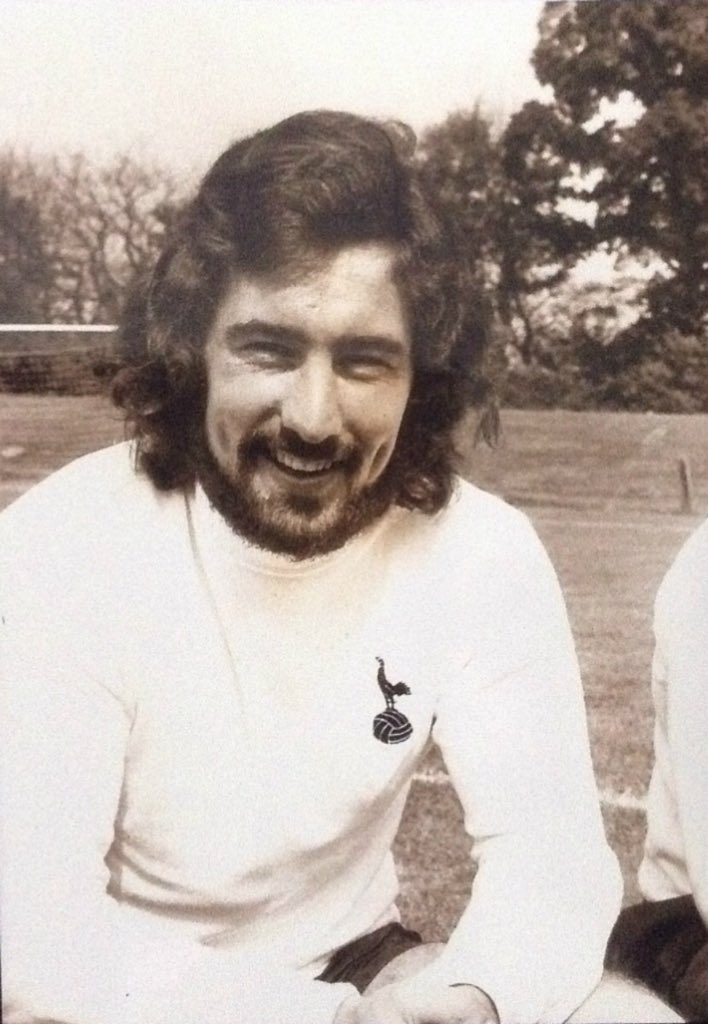
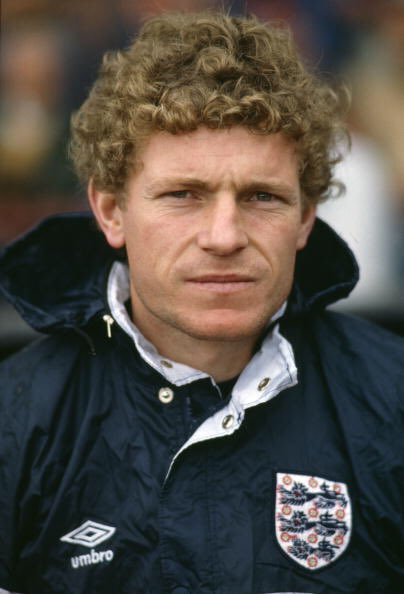
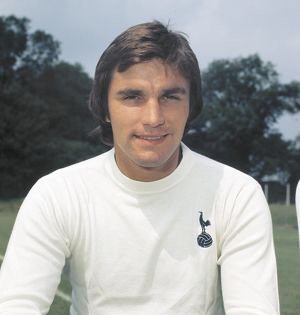
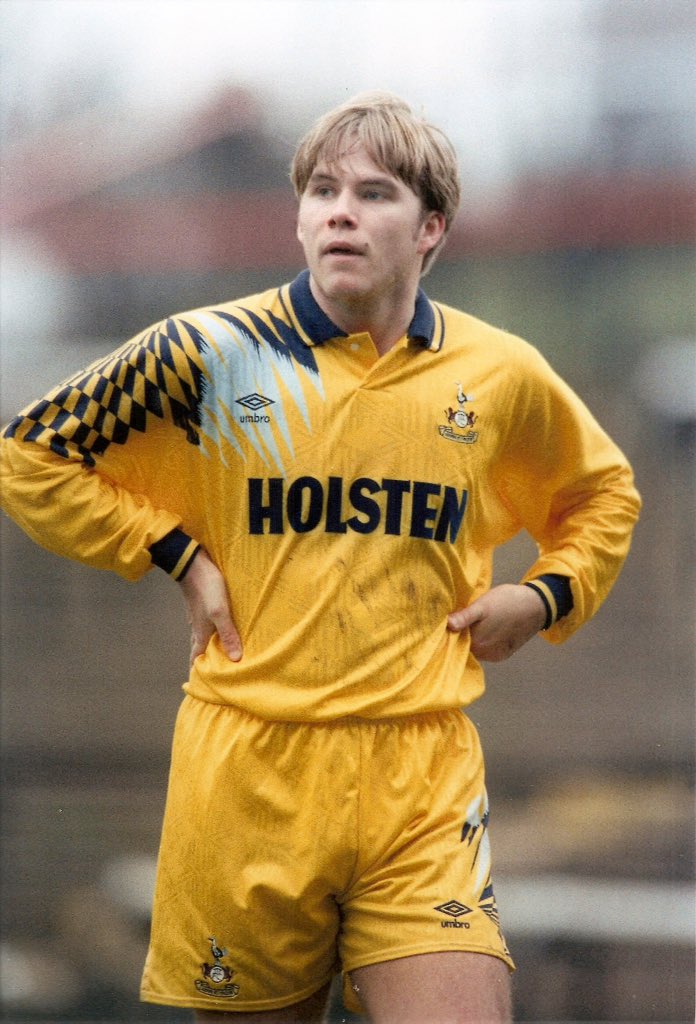
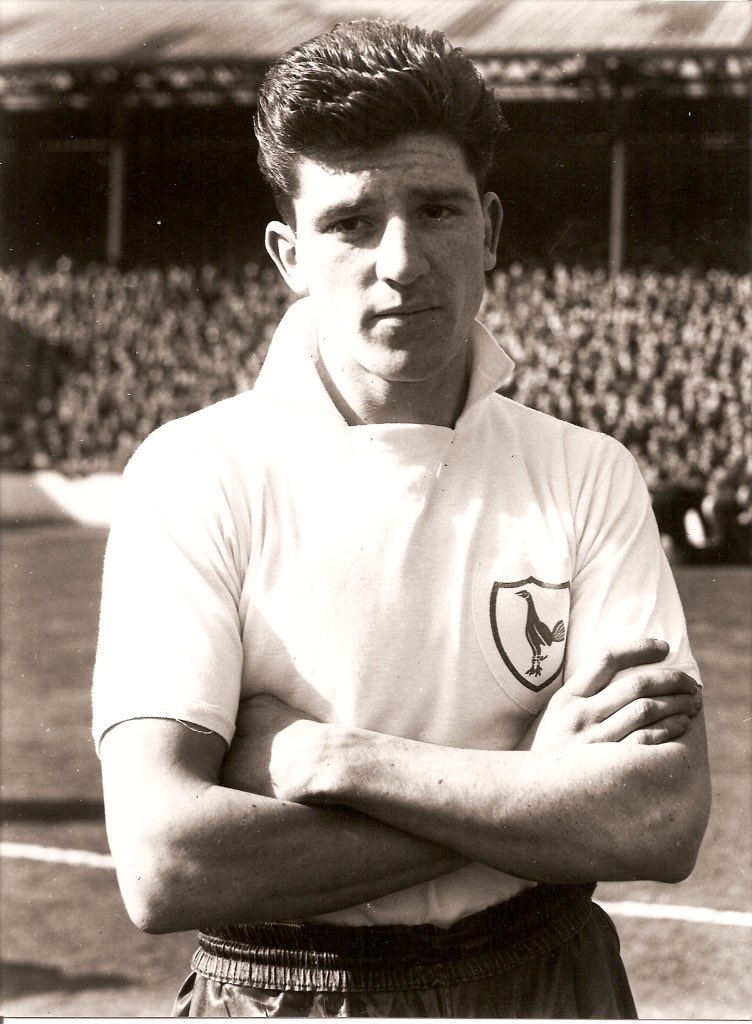
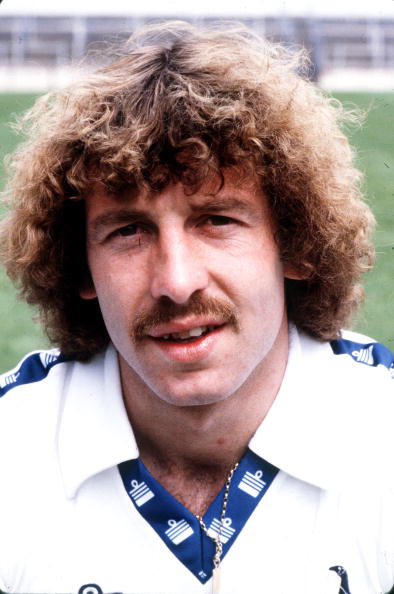
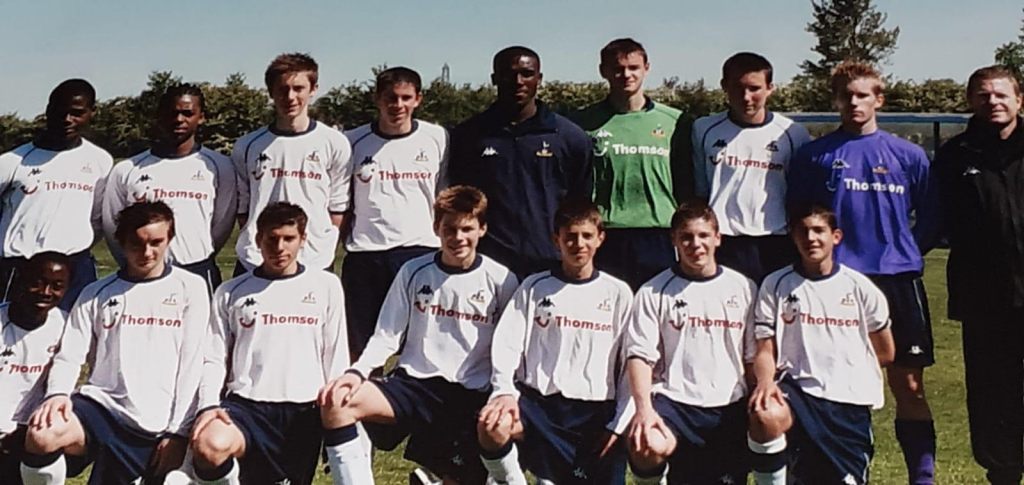
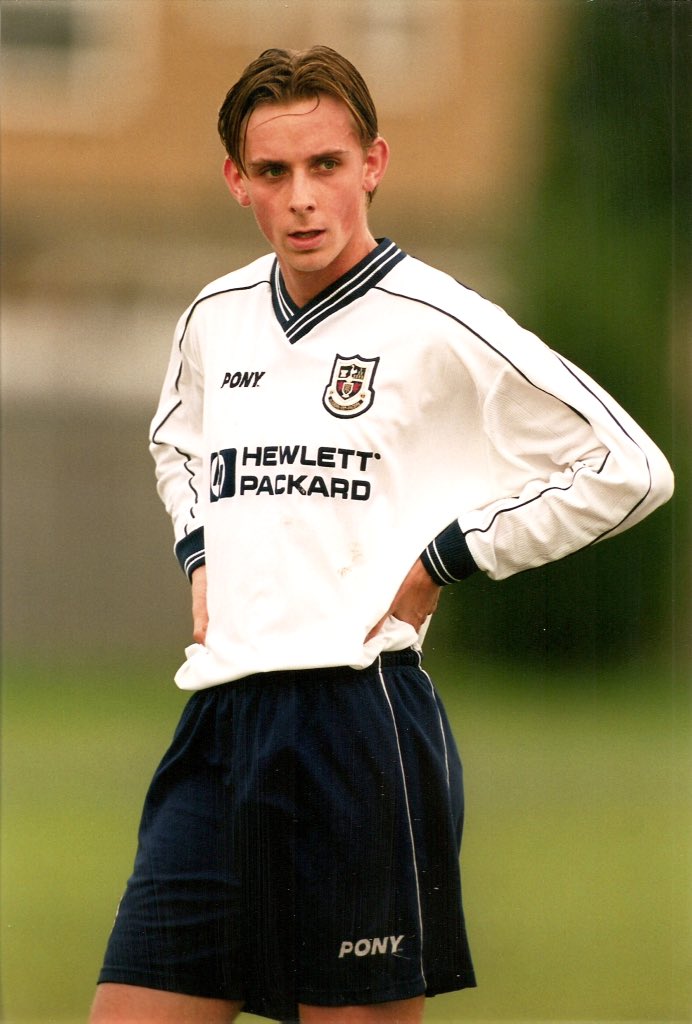
 superhotspur