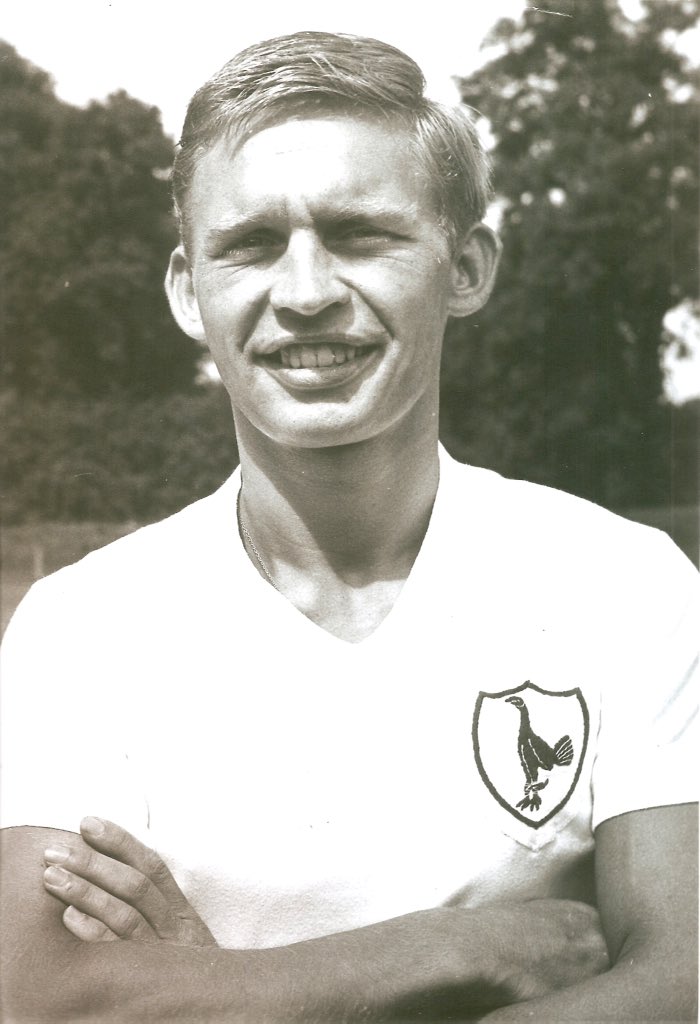
My interview with former Spurs player Vinny Samways:

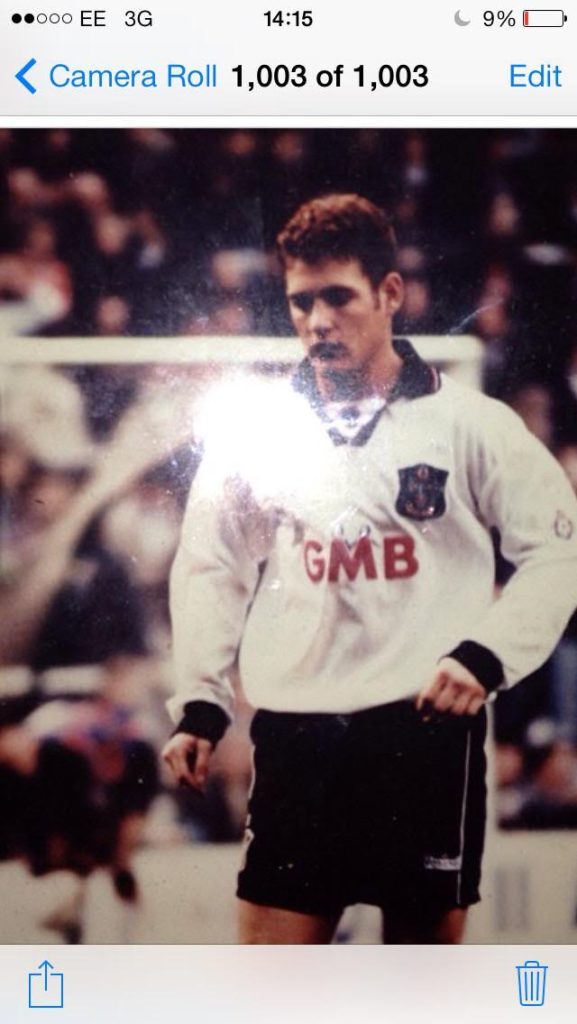
Vinny Samways was born and grew up in London’s east end in the late 1960’s before later moving to Cheshunt, Hertfordshire which was near where Spurs’ old Cheshunt training ground was. The one time London Schools player who had been at Spurs since a young age was signed as an apprentice in the April of 1985. A gifted and skilful central midfielder who could do the under appreciated sides of the game to great effect in regards to his passing, as well as being able to create good chances for teammates who were further forward with his fine range of passing. A ball playing midfielder, Samways was a player of slight frame however, he was a specialist in his own style of midfield play. A technically gifted player, Vinny Samways made well over 200 appearances for the Lilywhites and he put in some important performances in big games for them. Samways played a big part in helping Tottenham to avoid relegation during that 1993/94 season when we were battling to stay up, the midfielder also put in an excellent shift during the 1991 FA Cup when Spurs defeated Nottingham Forest, and in many ways he was a player ahead of his time. Vinny would leave Spurs in 1994 after spending several memorable and eventful years with the club during the 1980’s and 1990’s. He departed the club to join fellow English side Everton before later playing for Wolverhampton Wanderers, Birmingham City and Spanish side Las Palmas, Sevilla, Córdoba and Algeciras, as well as returning to England to play for Walsall during that time. The former footballer also turned his hand to management and coaching before becoming a football agent, a job which he still does to this very day in the south of Spain where he resides. I recently had the great pleasure of catching up with the former Spurs star to chat about his long and eventful time with the Lilywhites.

What are your earliest footballing memories?

Vinny: Obviously for me it was probably when I got the chance to go and train with Spurs and like yourself my family and even my wife’s family have always been big Spurs supporters. So to have the chance to go to the club that you support to train was always a dream really, and whether you succeed after that is another thing but fortunately enough and luckily enough I was able to have had that opportunity.

What are your earliest memories of your time at Spurs and how did you come about joining the club?

Vinny: Well obviously I was playing for our local team in east London and obviously the district and also the county, and I then got scouted when I was playing for east London. And at the time I was actually training with Crystal Palace and then Tottenham asked me if I would like to go there a couple of times a week to train. So obviously that was really good and so that was were it sort of started for me. My earliest memories of my time at Spurs were obviously that it was a massive club but it was also a very friendly club, and the coaching staff and everybody were top professionals in what they did, which you could only imagine for a club that size. 

What was your time at the Lilywhites like on the whole?

Vinny: It was fantastic and I’ve only great memories of my time there and it was actually my own choice to ask to leave, so I can only talk of having fond memories from the minute that I started at Spurs to the minute that I left. 

Did you have any footballing heroes/inspirations and if so who were they?

Vinny: Obviously once I started training at Tottenham I always looked at the likes of Ossie Ardiles and Glenn Hoddle and them kind of players. So for me they were ones that I would benchmark if you could get anywhere near them, as they were absolutely phenomenal players.

 Could you describe to me what type of player you were and what positions you played in during your time at Spurs?

Vinny: Well when I first sort of started out at Spurs I was sort of a left midfielder and most teams in them days played a 4-4-2, so I would have been left of the four in midfield. Then gradually over the years I played more inside as a central midfield player which I preferred and I would have said that I was more of a ball player, or organiser or that kind of title but I would call myself a ball playing midfielder.

Who were your greatest influences at Spurs?

Vinny: I would say that the one that really not only as a player but obviously I had the pleasure to play for and that was Ossie Ardiles. He was a guy that came over to England to play when it was super difficult for foreigners to come over, and he was a sensational player and a fantastic manager and person as well. 

Were there any players at Spurs who you would watch closely to try and improve your game or look to learn from?

Vinny: The likes of Ossie and people like that because for me the way he played and the way he wanted to play was obviously the way that I had been brought up. So obviously he would be one that I would try and look at and set a benchmark to, but that was obviously difficult because the guy was sensational.

Could you talk me through your memories of your competitive first team debut for Spurs against Nottingham Forest on the second of May 1987 and how it came about?

Vinny: Well obviously at the time I think that it was David Pleat as manager and for a couple of weeks before hand he was bringing me from the reserve team to train with the first team. That was obviously a great experience for me and then if I’m correct they had an FA Cup game or a very important game the following week, and David Pleat put me in the squad as a sub. So for me just being in and around the first team was fantastic but it was a surprise being so young, but I appreciated him having the trust in me.

Could you talk me through some of your memories of that 1991 triumphant FA Cup run and what it felt like to win the FA Cup with Spurs?

Vinny: Well I think every kid grew up watching the FA Cup and as a kid I always remember thinking one day I’d love to play in an FA Cup final. However, it didn’t used to matter what team was playing in it I used to religiously watch it from when it started and they used to have the cameras in the team hotels, and obviously it was always a dream to play in an FA Cup final but to play at Wembley. So to play for the team that you support and win it was like a dream come true, it was just an amazing experience. I think that we had a very good team during that campaign and I was fortunate to play with some exceptional players in that side such as Gazza and Lineker, so they are the two that stand out possibly the most however, we obviously had a very good team. We believed on our day that we were as good as any team but maybe over a period of five months and being consistent to challenge for the league wasn’t sort of in our make up. However, on our day in a cup competition we always thought that we could play against anybody, so it was an incredible journey.

What prompted you to leave Spurs and could you talk me through your career after you left the Lilywhites?

Vinny: I’d been training down at Tottenham since I was like 13/14 years old and I got to a stage where I just thought that I needed a change and I’d only just signed a new contract, and obviously I played one season under Ossie Ardiles who had put a lot of trust and faith in me. However, it was a decision that I felt was just right for me at that time and then obviously I left there and went to Everton which didn’t work out as I would have liked it to. However, they are another fantastic club but for whatever reasons which happens to many many players when they go to another club and it doesn’t work out for whatever reason. Obviously I then left Everton and I went to Las Palmas in Spain and I was their for I think six and a half seasons and I thoroughly enjoyed it because I think that the football in Spain possibly suited me more at that time. So I have very fond memories of playing in Spain and also at Sevilla which was a fantastic club, and to have the chance to play against some of the best players in the world in La Liga was a marvellous challenge.

What was the greatest moment of your footballing career?

Vinny: I would possibly say winning the FA Cup with Spurs which obviously was an amazing experience so that would possibly go down as the highlight. 

Who was the greatest player that you have had the pleasure of sharing a pitch with? 

Vinny: I would say that the best player I’ve ever played with was Paul Gascoigne as he was phenomenal. However, the best player that I’ve played against and I’ve been fortunate enough here in Spain so there are a couple that stand out such as Zidane, the Brazilian Ronaldo and Raúl. So that’s obviously why my experience in Spain was incredible because I played against some absolute world class players.

Could you talk me through some of your favourite memories of your time in the various Tottenham youth teams and reserves?

Vinny: Obviously coming through the youth team at the time you had two teams, so you had like the South East Counties one and two league. So I remember that I always started in the second team and then worked my way up from the A team, and then from the A team the next step would have been the reserves. So I sort of went quite quickly through the South East Counties team to the reserves and they were a really good side, because in the reserves a lot of the players that weren’t playing for the first team or were injured coming back used to be put in those teams to get match fitness. So you were playing with and against a lot of first team players, so that was a real good experience. 

Who was the toughest player that you ever came up against?

Vinny: That’s a difficult one but I would probably say the Liverpool midfield which back then had the likes of Souness and Steve McMahon and those kind of players in a great team. So they were super difficult to play against.

Were there any players at Spurs who you were particularly close to?

Vinny: I was very close to Mitchell Thomas and Justin Edinburgh who unfortunately passed away last year. I was also close to Andy Gray, so these were people that I was close to and I had very good relationships with them.

What would your advice be to the young Spurs players of today as they look to break into the first team?

Vinny: My advice is to just try and work as hard as you can day in day out, and obviously when you go to training training it’s obviously not just going through the motions, you’ve got to treat it as a match day because you can’t just switch on when it comes to games. So you need to work as hard as you can and be dedicated. 

After all these years how do you look back on your time at the Lilywhites and is Spurs a club who you still hold close to your heart?

Vinny: Spurs is the first result that I look for when there’s matches and I’ll always be a Spurs supporter and like I’ve said I’ve only got fond memories of my time at Spurs. You can see now that the club is on the move and they have built an absolute incredible stadium which is as good as any that is around at the moment. So let’s hope that they keep on improving and with a very good experienced manager let’s hope that they can get back to challenging for the top four at least and also get a good run in the cups. Because that is what everybody wants to see.

My interview with former Spurs player Danny Bolt:

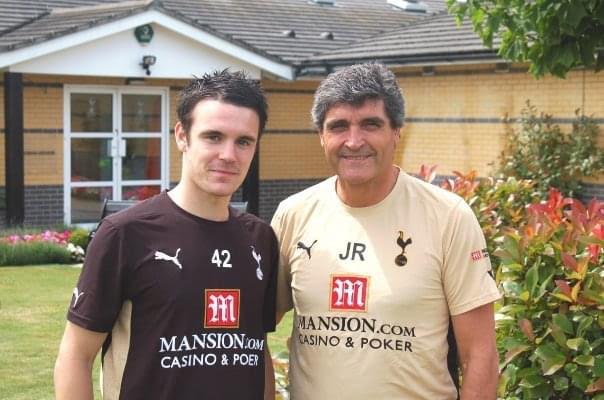
Southwest London born Danny Bolt was scouted and signed by Spurs at a young age and he would go onto play for the Lilywhites until the age of 16 when he was unfortunately not offered YTS (He did go onto play in one South East Counties game for Spurs). Bolt played as a centre forward at Spurs during his youth days but after leaving the club he would play out on the left wing and as an attacking midfielder, which was his preferred position. Upon leaving Spurs Danny joined then Second Division Fulham as a trainee in 1994, and he would go onto progress up the ranks at the London club to make over 15 competitive appearances for them, scoring two goals. After leaving Fulham Bolt went into the non league where he played for a whole host of clubs of which included Slough, Woking, Dover, Sutton United and Canvey Island. I recently had the great pleasure of chatting with Danny about his time at Spurs as a youth player.

What are your earliest footballing memories?

Danny: As a kid I was really hyperactive and as soon as I found football when I was probably about five or six years old my dad bought me a Spurs kit which was the 1983 kit, so that is probably my earliest football memory. Being hyperactive as a kid football was somewhere where I could release my energy and I was literally addicted to football, honestly I played every single day and all I wore up until I was 15 years old was football kits. So my earliest memory would be getting my first football kit.

What are your earliest memories of your time at Spurs and how did you come about joining the club?

Danny:  I lived in Tooting as a kid and then me and my mum moved over to Epsom in Surrey, and I then joined a local team in Stoneleigh called Stoneleigh Boys. I was playing for them but I was playing a year over my age group because I had just joined that team so I was playing in a team that was a year older than me. And the next year the manager pulled me in and said look you can stay in your own age group and play under 8’s. However, I then felt that I was better than everybody else in my age group if that makes sense, as there was a big difference. Anyway I was playing in Epsom for Stoneleigh and there was a manager floating around who wanted to make his own team, but really what he did was he nicked all the best players to form his own team. However, we didn’t know that at the time and I got asked to go for a trial with this new representative team and I was the first one picked. So they formed a new team and within about two months I was playing for him and there was a scout who came down to watch all of our games, and he was called Ted Powell, and he actually ended up being England under 18 manager with Sol Campbell. And so he scouted me and came up to my dad and introduced himself and said that he was a Tottenham Hotspur scout, my dad either laughed or burst into tears as he was a massive Spurs fan. And anyway my dad called me over at the end of the game and introduced me to Ted and said that he wants to ask you something, he is a scout (he didn’t tell me the team) and he said that he was a scout from Tottenham which I couldn’t believe because that’s my team. So my earliest memory would be at a place called Sylvans School as we used to train down in Crystal Palace every Monday night. Obviously we played football on a Saturday and Sundays for your teams and then you would go down there on a Monday, and it would be training inside a gymnasium with two age groups, one was five to six and the other was six to seven.

So some of them were there but actually weren’t with Spurs such as Ben Thatcher who was there but he ended up going back to Spurs later. So we had quite a few players from that centre that made it but actually didn’t play for Spurs however, my best memory was at the age of 12 when Gazza came down to train with us. So that was like just the best thing ever. However, from a football point of view everything at Spurs was very technical, like everything was to do with technique and skill. Ted Powell was a brilliant coach but he whispered so you couldn’t hardly hear him, so you had to really listen to what he said, but football wise he was a very intelligent coach.

What was your time at the Lilywhites like on the whole?

Danny: It was unbelievable as it was my dream to play for Spurs and I played one South East Counties game as a schoolboy for the Division Two team, and that was like the only time that I played in a competitive game at that level however, just to put the kit on was just a dream. So we trained at Sylvans in Crystal Palace until we were about 14 and so then what they did was they took the best players from the south of London which was the Crystal Palace set up and also the ones that trained at the ground, so they mixed them together at 14 to 16. So at 14 I went up to the ground to train every Monday and Thursday, we trained downstairs in the gym and then we trained up at the Astro pitch which was behind the old west stand. My dream was to be a professional footballer and play for Tottenham but I never made it at the top level but I did put the kit on, so to me I lived the dream. 

Did you have any footballing heroes/inspirations and if so who were they?

Danny: Glen Hoddle was my very first ever player that I actually loved so he was my absolute idol, and then on the world stage it was Maradona as he was left footed and he was just a class above the rest. Then growing up as a teenager and from the minute Gazza joined our club and to now he is my favourite player of all time.

 Could you describe to me what type of player you were and what positions you played in during your time at Spurs?

Danny: When I was at Spurs I played as a centre forward but when I left Spurs I went to Fulham and I ended up playing as a left winger. Then as I faded out of the pro game and went into the Conference and non league I sort of played as a number ten, so I would say that I was someone who liked to play in the hole as a number ten. However, I also liked to drift wide and put crosses in. I was skilful but I had deceptive pace not blistering pace, and at the time I was probably a typical Spurs player as I didn’t like tackling too much.

Who were your greatest influences at Spurs?

Danny: Ted Powell was one and also my last coach at Spurs was Pat Holland who was also a very good coach, but I only had a year with him. 

Were there any players at Spurs who you would watch closely to try and improve your game or look to learn from?

Danny: When I was at Spurs the year older than me was very strong and so we went to train at White Hart Lane and the year above us was a very strong team. A lot of the players (5) went to Lilleshall and there was a player who was the year above me called Danny Hill who I thought was unbelievable. He played in the first team for Spurs but Sol Campbell was the same age as Danny Hill, and if you had to say at that age who was going to make it then you would have said Danny Hill as he was unbelievable. I also remember that I did my work experience with Tottenham so when you’re at school everyones asked to do work experience, and everyone’s getting sent off to the garage or wherever. And I spoke to Spurs and said could I do my work experience at the club with the first team, and so they said yeah. And so I went in and one day after training they were doing shooting practice with the young apprentices and me, and Danny Hill hit this shot and I’ve never seen a ball being hit like that at that time in my life. However, if you were to ask anyone my age or above who was at Spurs then they would all probably say that they would watch Danny Hill.

What prompted you to leave Spurs and could you talk me through your career after you left the Lilywhites?

Danny: So I got to 16 and it was like whether you were going to get taken on or not and so there were three other forwards called Junior Haynes, Steve Slade and another whose name I forget. They were only taking three on and so Pat Holland called me in and he was ultra nice about it even though I was devastated about it at the time, he just said that we don’t think that you’re at that level that we think that we need you to be at. He said that I wasn’t far from it but he thought that there were other players in front of me, and probably at that time when I look back on it now he was probably right. I think that if I’d have stayed at Spurs because I was quite shy and I used to question myself and my ability all of the time, then I think if I’d have got taken on by Spurs then I think that I would have got swallowed up a little bit. I dropped down the leagues and obviously went to Fulham who were in Division Two at the time, and without being big-headed I was the best player in my age group ability wise and player wise. Because coming from Tottenham I had been educated and taught much better than they the Fulham players had been taught, so it benefited me more being a bigger fish in a smaller pond. However, I think if I had stayed at Spurs then I don’t think that I would have got a look in, and I think that the more powerful characters around would have swallowed me up. So after doing a two year apprenticeship at Fulham and a two year professional I played handful of games (I think that I started 13 and was a substitute for about six) and I eventually then got let go by Micky Adams, and eventually I dropped into the non league. I played at a team called Slough who were in the Conference and Brian McDermott was the manager, and then a bit of a sad story but I’ll tell you it, and so I played at Slough and had a really good year and there were clubs looking at me. And then the club got folded up at the end of the year because the chairman had a heart attack.

So I found myself down to Woking who were the top team in the Conference at the time, so I signed for them and then sadly a couple of months later a personal family tragedy happened. So I then didn’t play football for six months and so obviously from there I never recovered in terms of getting back in the pro game and I ended up drifting, so I went down another league and played for Sutton United and was a local player who had done well, and my mates used to come down and watch me play. So at that time in my life I was like 23 or 24 and I suppose i was going out on a Saturday night as I knew that I wasn’t going to be a professional anymore. So that was the next best thing.

How difficult was it to find out that you weren’t being taken on by Spurs full time as a youth player?

Danny: I was absolutely devastated but at the same time Pat Holland when he told me  that I wasn’t quite good enough for Spurs, did tell me that he thought that I was going to get an apprenticeship somewhere. He gave me a list of clubs that were interested in me and he said I know that I could go to Leyton Orient and he would get me a YTS now because he had connections at that club. He set me up trials at Ipswich and Norwich and Charlton, but at Fulham they literally trained around where I lived, and the youth team manager at Fulham had watched me play since I was about 11 years old. He came to watch a game once and I was playing on the left wing and as I have ginger hair and he went up to the manager and introduced himself and then asked about me. However, the manager said that he had no chance as I was at Tottenham and will never leave them so don’t even bother introducing yourself type of thing. However, I was devastated at being let go by Tottenham but ultimately I just wanted to be a professional footballer and so at that age you obviously think that I’ve been let go from Tottenham, but at Fulham I’m going to get in the first team and then Tottenham will buy me back. However, that never quite happened.

What was the greatest moment of your footballing career?

Danny: It was to make my first team debut for Fulham so that was probably my greatest moment. I’ve got a son now who’s 17 and I sometimes I go over to the park and watch games and you see every kid, and every kid wants to be a professional footballer. And to just play one game I think is an absolute unbelievable achievement, when you think that every team that you’ve ever seen play and you look at all the age groups, it’s got to be like millions of kids playing at one age group. And on the back of that teams take on about ten apprentices a year, so that’s 900 kids who get taken on a year, and out of those 900 probably about 200 play professional. And out of them 200 probably 150 play one first team game, and so now I’m older looking back at it I appreciate that more than I did at the time if you understand what I mean. So then you take it like I’ve just played a first team game, but now I appreciate it a lot more.

Who was the greatest player that you have had the pleasure of sharing a pitch with? 

Danny: I played against Glenn Hoddle for Fulham reserves against Chelsea reserves when he was Chelsea manager. I also trained with Gazza twice and I also played against Ruud Gullit, so they would probably be the best three at friendly and reserve team level. However, at youth level Mark Kennedy at Millwall was very good when I played for the Fulham youth team. 

Could you talk me through some of your favourite memories of your time in the various Tottenham youth teams?

Danny: I remember one game where we played against West Ham and I was having a bit of bad game to be fair and the goalkeeper got injured. And the manager got us in at halftime and said to all of us who wants to go in goal and of course no one stuck up their hands. I was having a shocker and I knew it, and so the manager looked at me and said do you want to go in goal? And so I said not really but he said I think that you should, so I ended up going in goal and kept a clean sheet and we won 3-2, so that was one memory. I also remember one goal that I scored against Wimbledon and at that time most of the kids who I knew that lived around me and played in the local leagues all played for Wimbledon. So that game which was 3-3 was probably the best game that I ever played in and I also scored a top corner goal at the old Chase Lodge training ground. Obviously also training with Gazza and just being among the first team was great, and I remember that we used to train at Cheshunt back in like the mid 1980’s, and I remember going there and getting all the players autographs. I remember that Steve Hodge who I liked at the time was there and I said can I have your autograph? And so he said yeah come over to my car as it was raining and here I was sitting in his car which was just great.

Who was the toughest player that you ever came up against?

Danny: There was one bloke called Mark Beard who was at Millwall and he wasn’t the best defender but he was difficult, like Stephen Carr for example who I played against after I was let go from Spurs. I didn’t find him as difficult as Mark Beard because we (Fulham) won 2-0 and I made one of the goals. However, Mark Beard who played for Millwall and scored against Arsenal in the FA Cup was just really difficult to play against and he was all elbows and knees, and just awkward to play against. I actually know him personally as he is a friend of mine, and I always say that he was my hardest opponent. Also another hard opponent was Duncan Jupp who was a year older than me at Fulham and he went to play in the Premier League for Wimbledon, and he was an absolute beast. So I trained against him for two years and on a daily basis he was so, so hard to get past.

Were there any players at Spurs who you were particularly close to?

Danny: There was a lad who was a year older than me called Chris Landon who I’m still very good friends with now and he was a left back who was in the same year as Sol Campbell. He played for England but never played a first team game for Spurs however, funnily he got a pro contract and was playing in the reserves and then one day he went in there and said for me it’s not for me and he quit, and he never played pro or non league again. He’s actually a Spurs fan now and we go to Spurs games together but he was a good friend, another one was a lad who I used to get the train with to Spurs called Billy Hudson, who was hilarious at the time. I’m actually still in contact with a few of the boys such as Ijah Anderson who I’m friends with on Facebook and we still have a chat every now and again along with Danny Foot who was in my age group. Also there was a kid called Neil Le Bihan at Spurs who was a nice lad and I actually played with him for non league Dover before years earlier having played with him as a kid outside of Spurs.

What would your advice be to the young Spurs players of today as they look to break into the first team?

Danny: I’m saying this as a 44 year old bloke who misses football badly, and it’s very hard because if someone had given me advice at that age I probably wouldn’t have listened to it if I’m being honest. Because you’re quite single mined and childish however, I would say enjoy every moment in football, that’s number one. Also work the absolute hardest you can and also listen. I would say for me personally that I sit here now at 44 and I’ve got regrets where I don’t think at certain times that I tried my hardest. I know that this is top level but someone like Frank Lampard got everything he absolutely could out of himself as a footballer and there are more gifted players than Frank Lampard who never made it such as Danny Hill. So I don’t think that I worked hard enough and I was quite moody so I used to get sulky about things quite a lot, so at them times I didn’t have the right attitude. So yeah attitude, listening and also asking questions of the more senior pros and ask why they hold that position or why do extra training. So I would seek advice from older players.

After all these years how do you look back on your time at the Lilywhites and is Spurs a club who you still hold close to your heart?

Danny: Like I said it was my dream to play for Tottenham at any level and I got to put a kit on and I played one South East Counties game where I was in a pro ground. And today I’m a season ticket holder and I go with my son, and I also went to the Champions League final. So I go every week and the club means so much to me and I’m emotionally involved in it, so it drives me mad that we don’t win trophies. However, as a kid I used to go to all the Tottenham games until about 1992 when I got let go by Tottenham and then I obviously went on my own career and played non league and pro. I then went back to Tottenham and took my son there when he was six and for the last ten years I’ve been going to every game.

My interview with former Spurs player Paul O’Donoghue:

Born in Lewisham, south London to Irish parents from County Kerry but brought up in Catford, strong central defender Paul O’Donoghue had previously played for Welling United before signing for Spurs as a 16 year old trainee in the summer of 2000. O’Donoghue would go onto represent the Republic of Ireland at under 19 and under 20 level while at Spurs and he also progressed up the ladder at club, first moving up from the under 17 side as a 17 year old into the under 19’s. The tenacious defender who was dominant in the air was also a regular for our old reserve side and he would also go onto play for our first team on six separate occasions in pre-season friendlies. O’Donoghue was loaned out to non league side Hornchurch in 2004 and during the following year he was loaned out to Heybridge Swifts who were managed by former Spurs man Brian Statham. The defender ended up signing for Heybridge Swifts on a permanent basis after being released at the end of that 2004/05 season. However, after not spending long with the non league side O’Donoghue had a brief spell with Beckenham Town before dropping out of the game all together. Also a talented Gaelic footballer the young O’Donoghue played for a number of Gaelic football clubs, of which included John Mitchels, Austin Stacks and the prestigious County Kerry side. I recently caught up with Paul O’Donoghue who is now a secondary school teacher and head of year to discuss his highly interesting career and time at Spurs. And can I just say that Paul is a thoroughly nice and motivational man who was an absolute pleasure to interview.

What are your earliest footballing memories?

Paul: They would probably just be getting taken to the park with my dad and playing around, and I don’t know if I can admit this but I was a Liverpool fan. And so we used to get the Liverpool kit and go to the park and pretend to be Steve McManaman or whoever when I was running with the ball, and we’d use a couple of trees for goals and you’d look for a few lads in the park. Everyone had their own team and you’d play a game called FA knockouts but you couldn’t both be the same team, so one would be Arsenal and one would be Liverpool or Man United. So we’d do that every Saturday and when you got a chance after school you’d go up but with Irish parents that would never leave you out of the house you had to wait for the weekend, and that would kind of be it. 

What are your earliest memories of your time at Spurs and how did you come about joining the club?

Paul: So I came in from a non league club called Welling and John Moncur brought me down via a lad called Robbie Stepney. I was actually about to sign for Welling and I can remember the youth manager at the time was saying look Paul I know a guy down at Tottenham called John Moncur and he’s had a look at you, so will you come down for a trial. So I went and I hoped for the best and you think give a good account of yourself and see what happens, and in the end I ended joining the club after being on trial. Joining the club was just unbelievable as it was such a big deal, Tottenham had such a huge reputation and even going down there on trial I think the first time that I went down that my dad came with me. I saw David Ginola come out with a cowboy hat on and you’d just think what! As a 16 year old boy before doing my GCSE’s it was just so surreal and the journey down there would see you get off at Chigwell but the name of it and the fact that you were heading into Tottenham, Tottenham Hotspur football club, Premier League. And no disrespect to someone like Crystal Palace or Charlton but the only step up for me after Spurs at that time would be going on trial to somebody like Manchester United. So going down to Tottenham would make you very nervous because of the prestige of the club, you’d go in and see Ginola on the way in and I think Stefan Iversen who had an unbelievable Mercedes, and he was just speeding down that little road when you were going down to Spurs lodge. My dad and I would walk down there and we’d see the cars going down and it was kind of like the Green Mile, and you were thinking will this be a good day or will it not be a good day however, it was good enough.

However, just going into Spurs you just get a feel of how serious the club is and even the grass was cut pristine and everything was just done well. The club were very welcoming when I came down and I think that there was three of us on trial that day, and I actually remember the name of another guy who I think was at Crystal Palace at the time and I think that Tottenham just brought him down to have a look at him. And this was Ricky Dobson’s (former Spurs youth player) cousin Craig Dobson and I think that he was like a Nike freestyler, and I can remember thinking when all three of us trialists were doing kick ups when this guys doing flicks and keeping the ball up on his neck. So I was that’s not me as I can’t do that and if that’s the standard that this club is at then that is not my game at all, as I was more of a robust defender who kept things organised and did my job and that was kind of it. Anyway when we were going into the games I felt that I could deal with this, and I was playing alongside a guy called Ronnie Henry we he just seemed to gel well with each other and the coaches saw that. However, it was the feel of the club such as putting on the training kit with the badge and knowing that it represented something huge and also knowing the history, so you were just trying to process that in your mind as a young man. However, you were trying to put that to the back of your head as it was just football so you should just get on with it and show them what you can do. However, going back to John Moncur he was genuinely a great guy who gave me a lot of guidance and a lot of advice, although I was kind of a bit scared of him when I was a bit young.

John Moncur seemed like a guy who had so much power at the club and over the youth team along with David Pleat, and also George Graham as well was fearful. I only have a couple of memories of him but John Moncur was very good, he would bring me in after every day training knowing that I had far to go from training from Catford to Chigwell. So they used to ask how was it today, also John Moncur knew that my parents were Irish and he used to joke around by saying that he couldn’t understand a word that my dad was saying. So he just settled me down because he knew the magnitude of the possibility of joining the club, and I think that he could kind of see that I was ok and doing well, so he would just guide me. I remember one day that I was going to be on the bench for Welling in a pre-season friendly against Millwall. The Welling manager Kevin Hale was aware that I was on trial at Tottenham and so he said look Paul we need you on the bench, and so it was a difficult decision for me and I can remember just going to John Moncur in the morning and saying look this is the situation. He said to me that I’ve got a real big chance here, and I think from that I thought I can’t blow this and I could read between the lines that they wanted me. So he was brilliant with me and then when I did sign again it was the same thing as he would ask me how I was getting on, and he’d tell me that we’ll get you in digs down here with a lovely lady who will take you in, as you’re travelling a bit far away. So John Moncur was a big influence and a good presence to have, plus when I heard other lads saying oh Paul Johnny Moncur’s talking to you he must like you. He did seem to take a bit of extra time for me, I don’t know if that’s because I came very late to Tottenham because I wasn’t that aware of the professional game, it was more go out with my friends kick a ball around, so I think that he could see that I had a bit of talent.

He knew that he could help my talent and finesse it by talking to me and reassuring me here and there and also taking an interest. And looking back now as a teacher and head of year at a school I would try and do the same thing every now and then if I could see that a kid needs it, and it doesn’t have to be shouting at them it’s more is everything ok. And John Moncur done that for me when I was injured a couple of times and he used to say look Paul don’t worry we know what you can do and you’ll be fine, he also used to ask me if everything was ok in digs and so it was good to know that there he was fighting in your corner for you. That calmed me down a bit because I came into it late I could really tell that the boys at Spurs were so on edge about getting a contract, because they were probably used to that from under 11 when they were thinking am I going to get a contract. Am I going to get a contract for under 12 and under 13, and am I going to get YTS. So because I missed that I think that John Moncur was letting me know look Paul at the end of these 18 months we’re going to be letting everyone know, so you need to hit the ground running. However, yeah he was very good for me and I was very thankful for it and if I ever saw him I’d just like to say that you were brilliant for me, because when you are that young you don’t think to ever say thank you.

What was your time at the Lilywhites like on the whole?

Paul: Honestly It was honestly brilliant and going there at 16 was absolutely incredible as a naive and very innocent person who just loved football, you just wanted to test yourself. And you do and then I suppose you can say I can do this and I can play at this youth level, and so I can break it down a bit for you. So the first year I done very well and I got into the youth cup team and there was a guy called Clayton Fortune who was the year above me who they kind of highly rated. I can remember doing well as an under 17 and Jimmy Neighbour was constantly praising me, and you can just get a feel so when I was in there people would say look Paul you’re the golden boy now blah, blah, blah. And I was playing really well and doing very well and I can remember that at 16 I was with the under 17’s and Pat Holland was over the under 19’s, and every now and then we would play against the under 19’s every week and the under 17’s had a good team, and every now and and then we would win. Chris Hughton the reserve manager at the time used to come over every now and then and borrow a couple of the under 19’s, and I remember that he came over he just bypassed the under 19’s and he said Paul you’re with us. And I can remember thinking that I didn’t even know that Chris Hughton knew my name, and then the under 17’s were just looking at me and when I was walking past the under 19’s I could kind of get the feel that in a really harsh way it was a little message to them that you’re contracts are coming up soon centre backs, and an under 17 is getting called up to the reserves before you. I can remember training and I was on a lad called Dave McEwen, and Chris Hughton and Theo Foley was there and they called me afterwards and they said look Paul you’ve done really well in fact you’ve done very well. And I remember then David Pleat when I was having breakfast the next day saying Paul I hear that you’re doing very well, and so then I knew that Chris Hughton, Theo Foley and David Pleat wouldn’t really be talking to all youth team players like that, I just got that kind of feel. 

So things were progressing very well and I done well in the youth cup and then Peter Suddaby called me into his office to let me know that Ireland now wanted to bring you into their international fold. Also England are enquiring about you so you’re going to have to make a decision and I was just still in shock genuinely, because six months before that I was playing against Thamesmead Town and Beckenham Town knowing that I was ok however, my plan was to get into Welling’s first team at 16, I’d like to be established at 17 and then I’d like to get a move when I’m 18 into professional football. However, then when you’re hearing the England and Ireland youth teams want you, then you start thinking what’s going on, this is a bit more serious than I thought. So things were brilliant in the first year and obviously I declared for Ireland as I couldn’t go for England or I’d have been kicked out of the house, as it was staunch Ireland in our house. Although I can remember speaking about it with mum and dad and they were quite relaxed about it but for me I thought that I’d love to play for Ireland and so I played for them. Then in the second year about three months in, and I think at this time that George Graham had gone and I can remember walking in in the morning and seeing Chris Hughton talking to Glenn Hoddle. And I had heard that Glenn Hoddle was coming in and I could just see Chris Hughton talking to him and Glenn Hoddle was sizing me up as Chris was telling him that I’ve got a good chance, so I could just get a good feel for that. And then one month in I got called after training by Penny who was a great woman who was a receptionist at Tottenham, and she looked out a lot for the youth team players. And she said Paul I’ve got a message for you, can you go to David Pleat’s office. 

And then I was thinking that somethings wrong genuinely because I had lashed out at an Ipswich player the week before and it just got a bit physical, so I just thought that this could be something to do with that. However, the boys in the changing room were saying that’s it your pro, and I would have been the first person in that team to get it and that was quite early. I went in and sat down with David Pleat and honestly when I flashback to it it feels as if you’re sitting in front of the president of America. You’re just thinking what’s going on, but he just explained to me that if we look at the first team we think that we can see you in the first team in a year. We can imagine that it will be you and Ledley at the back and that’s no lie, that’s exactly what he said to me. So I was just thinking right ok and so he was asking me do you have an agent and I said no and so he then said that I was very wise. However, it’s only now when I look back on things and think that maybe I wasn’t wise but you’re naive to it and you want to play for Tottenham and you know that you’re being offered a professional deal, and you think get me a pen now and I’m going to sign that. He said also said that you’ve got an option to sign for two and a half years or three and a half years, and so I signed for three and a half years. So I signed a contract to take me to my 18th birthday and then the three year contract would start when I was 18, but there was then a dip in my performance. And when I look back at it now retrospectively I can really see that, and even though I would be a very hard worker I took my eye off the ball when I signed that pro contract there’s no doubt in my mind when I reflect on things. I was 17 and three months before my 18th birthday and I thought that’s it as David Pleat had told me that I’m going to be in the first team I’m a year, so I’m going to be there in a year.

I think that made me take my eye off the ball a little bit and I think now that I lost my game a little bit, I lost a little bit of that fight, that edge and that want to show that I’ve come from non league but I’m just as good as you. It kind of felt as like yeah ok now I’m there, and it wasn’t arrogance it was naivety, and at this point I really notice my own sole responsibility. However, it would have been great for someone to realign me and say no Paul it’s nothing, you now need to come out and work even harder, and maybe I should have known that myself but I didn’t know it fully. I was still applying myself as well as I could but in the back of my mind I think that I lost an edge from that. So from then the January to the end of the year I got to the youth cup semifinal, and so at the end of my first year I was playing for the reserves which was pretty big and then into my second year I was still playing for the reserves. Colin Calderwood came in and I signed a pro contract but by about March/April I was kind of feeling as if somethings not right. I was pushed up to train full time with the reserves and I was like the only under 18 up at the reserves the whole time so it was like Paul forget the under 18’s you’re now up with the reserves. Pat Holland said that we don’t want to see you down here anymore so forget training with us as you’re now going to be with the reserves after you’ve signed professional. I wasn’t ready to do that looking back as I didn’t understand the game properly as a defender and I was very raw, anyway I went up to play and train with the reserves full time in my second year and was then told that I’m now a pro, so then by March I was thinking somethings not right here. And now when I go back and look at it, it is because I didn’t understand the game as a defender, I didn’t know when to press properly, I didn’t know when to drop off as it was just on instinct. At under 18 level you can get away with that because you don’t get punished as heavily for a moments lapse in positioning.

I didn’t learn quick enough and I couldn’t learn quick enough so I didn’t understand the game and that was probably because I didn’t watch football enough, and particularly players in my own position. I wasn’t good enough to know the game intuitively and to suppose I probably needed to be sat down and given video analysis, and shown what I needed to do and that’s what I needed to do, and plus I probably wasn’t seeking that myself because I was just so naive. I didn’t know that that’s what I needed to do, and probably I didn’t think hard enough about it as if this is not working out I’m not sure why as up until this point I’ve kind of been able to work things out for myself at football. However, I was very raw and going up to training with the reserves you’d be on people like Matthew Etherington, Simon Davies and Christian Ziege who was thrown down there a couple of times, and also Ben Thatcher who was actually there for a long period. These players didn’t care how you old you are, they just knew that you were in there and didn’t see that you’re 17 or just turned 18, so you’re expected just to know, and do and perform. So I think that I missed out in my own development, also the lads in my under 18 team were probably better defenders at the time because they understood the game and got it. However, I suppose I had the rawness of defending as well as the physicality but they understood the positioning more so than me, and they also understood the nuances of defending. Whereas I’d be a bit more robust which I think is the best way to describe it however, I could defend very well but it was more reactive than preventive. The higher level you were to go you can’t just be reactive, you have to be that the strikers looking to move here and that the player on the ball is making that movement because he’s looking to do this. When you’re in the back four or back three which we played with Hoddle at that time you need to be in this part of the field and you need to have this type of support around you. 

I really felt that I was sinking fast and I don’t understand why because I think I’m ok and people are telling me I’m a good player, but that’s not happening on the pitch, and that really affected my performance. It also affected my own outlook on how good I was as a player which was feeding into how I was performing as a player, and I didn’t seek the support that I needed. And that was foolish because I could of easily gone to Colin Calderwood who was again a great man and a great coach, but I couldn’t access the coaching because I didn’t know enough of I suppose the fine arts of defending, and to be able to tap into what he was doing. I could of easily gone to him and said Colin I’m at such a loss here as I don’t have a clue, and none of my mates are with me as they’re in the under 18’s so I’m around serious defenders like Alton Thelwell and Anthony Gardner, and I’m lost. I really should have said that and if I had my time again I suppose I would, and I’d be craving some video footage to say where do I need to be here and why, and I wasn’t confident in that environment. That is my own fault to not ask questions to Colin like I don’t get that, or what kind of training should I be doing and do I l now need to go to the gym and do some weights. Who should I ask what kind of strength exercise I should go on, nutritionist what do I need to be eating as I’ve noticed that the defenders here are all stronger than me which I wasn’t used to because I was generally one of the strongest in my youth team. So you’re kind of feeling that your advantages have now been neutralised and what can you do now to compensate for that, so I should have asked all of those questions and I should have demanded to know what I needed to eat, what gym sessions do I need to be doing and what extra stuff do I need to be doing. Plus perhaps I could have done that myself and gone off privately and done that but I didn’t, so I’ve got to take my own responsibility for that. However, just to be in that environment and not take advantage of that high level coaching I look back on it and think that that is so naive.

Now all I’m doing is looking for people in high level positions and thinking what can I take from them to add to my own profession. However, there I was as an 18 year old with world class coaching available and yet enough I was not smart enough to open my mouth to ask. So at the end of the second year I went into third year and that was a very bad year for me as I had some terrible injuries but I had been doing quite well, so I had been called into Ireland. However, even though I said that second year wasn’t great it was still ok but my first year was great and my second year was good, but it was the first time that I thought ok I’m up against it and this is what it means to be a professional footballer. I didn’t know the questions I needed to ask ask to move forwards, but in the third year I broke my jaw badly against Charlton and I was out for three months. The keeper Gavin Kelly was rushing out for a ball and talk about the nuances of defending I’m still being very naive running back, and then diving in with my head to make sure that the striker can’t get there. His knee then wrapped around my jaw and I was spitting out teeth at the back and that wasn’t good, so I was out for three months and then came back. I was back for about two or three weeks when my cartilage flipped upside down in my right knee and I felt something go, so I was carried in from training and was out then for seven months after that. So that was my whole third year gone which was tough to take, and in that third year to be honest when I was injured I was going out an awful lot in London. I had easy money and I just didn’t respect the fact that I was a professional footballer and I didn’t respect my body totally, and still the words of David Pleat were ringing in my ears that I’d be in the first team in a year. 

I also wasn’t doing the right thing and though I was doing the rehab probably I was then enjoying the night life in London, and just doing things with my friends who were other 18 year olds that worked in an office and were then blowing off some steam. At that time I didn’t realise that no Paul yes I’m 18 but they’ve got a different outlook as your body is actually your instrument that you need to refine and use and respect, because they are in an industry that doesn’t need that whereas you do need yours properly. So that was the end of third year and then I came back in my fourth year and at this point I’m 19/20 and I can feel now that David Pleat, John Moncur and Peter Suddaby are now thinking Paul what are you doing and are you giving everything that you can to being a professional footballer or are you now just expecting to be put in the first team because you’re a professional, because it doesn’t work like that. In my own mind I know it sounds crazy but I kind of did, because I thought that I’m doing ok in training and I’m feeling like I’m competing quite well. From next to Anthony Gardner and Alton Thelwell I think that I’m doing quite well comparatively but I’m not going above and beyond, and in my mind it’s so crazy to say but I didn’t know that you had to go above and beyond. That must sound ridiculous but I genuinely didn’t know that as I thought that you just had to get your training sessions done and show that this is what I can do. I remember Pete Suddaby really nailed it home to me one day because I was nothing to do with the youth team as I was beyond under 19 and I’m now playing for the reserves and doing ok, and captaining them here and there. However, Pete Suddaby really put a shot across my bow and said Paul what are you doing, I went to see you play for the reserves the other day and you weren’t good. And I was just thinking what do you mean I wasn’t good, as I thought that I’d done ok, but I suppose I was just in a pure comfort zone playing for the reserves and a prestigious club like Tottenham. 

I was thinking I’m going to get another contract soon anyway and I’ll be here until 24, and I’m on the verge of the first team and I suppose I was just living in la la land, I was genuinely not pushing myself and again not asking the big questions or knocking on Glenn Hoddle’s door and saying what’s going on. I’m doing ok in the reserves why I am I not getting a chance for the first team and what’s happening, so again I didn’t ask the right questions and when Pete Suddaby said that to me I thought Paul there’s a serious issue. Those little minor red flags in your head are now getting larger and you’re thinking hang on you’re 19/20 and there’s younger than you playing for Premier League clubs, maybe not as defenders but you are getting to a point now where maybe things aren’t going to work out. So you start thinking well hold on I need to do something and so fourth year was a very average year and I think that it was the first year where I thought I’m now doing something totally wrong. It’s not naivety I’m actively selecting to not do my job properly and why is that, and I need to do something about that. At that point I thought that I’m failing, and it’s not just now that things aren’t going to plan, I’m actively choosing to not do the right things, so I’m choosing to not go to the gym and how come and what’s the reason behind that. In fact Paul why have you been choosing not to go to the gym for the last two years, are you just expecting what you are doing on the pitch as being enough. Then fifth year came and Clive Allen was now our coach and Jacques Santini was in first and then Martin Jol came in, and then I just knew straight away that Martin Jol was just not fancying me at all. I played a few pre-season friendlies but he pulled me to a side and he was saying look Paul you’ve got very good distribution but you’re a long way off is essentially what he said to me. I kind of took from that that things weren’t working out here for you, Frank Arnesen then was saying Paul look you are a typical English defender and you’ve got the physical attributes but technically you’re not what we’re looking for. 

I just thought hold on, in my mind I’m still coming back to that point that David Pleat said I’m going to be in the first team in a year and that was now three years ago and I’d done absolutely nothing aside from just doing as well as I could on the pitch, I’ve done nothing and no extra work really to demonstrate that I’m going to make this happen. Looking back at it this is unforgivable it really is and it’s something that I’ve had to square my own head to be well Paul you didn’t do that then and you can’t dwell on that, you now need to make sure that you do everything as good as you can the whole time and then more, because it’s not enough to just do the acceptable amount. However, to get to an acceptable level you need to go beyond and just keep pushing, pushing, pushing. David Brailsford the UK cycling coach talks about marginal gains which is a real buzz topic and that’s something that I didn’t seek, like I didn’t go out and watch the first team and maybe players like Ledley King when he trained, to see his own positioning. Even before that I didn’t stay back and watch Chris Perry and Sol Campbell although you can obviously watch them in a game, but watching their application in training and what it was that they were doing is something that I need to be doing, so why am I not doing that. If he’s doing that and he’s playing in the first team then I need to be doing what he’s doing at a minimum and more, and I wasn’t showing that. I cannot believe that when I look back that I didn’t and that would be a bit of a regret but the fifth year came and I was captaining the reserves here and there next to Davenport, Dawson, Defendi and Naybet. However, they were not players that I would overly rate although Dawson in fairness was good, but I thought they are in and my time here is coming to an end and then it did and that was it, but definitely learning experiences all the way through Tottenham.

There were great people down at Tottenham and it was my own fault for not using those resources properly, and now when I’ve got the chances to get access to someone who is a field leader or a trailblazer in their own industry you’re really tapping into them because I know that that opportunity doesn’t come around a lot. So it took failing to recognise that however, overall Tottenham is an amazing club with great people. 

Did you have any footballing heroes/inspirations and if so who were they?

Paul: Definitely Paul McGrath and I can remember watching the World Cup and I was just thinking that this guy he just seems to be doing this effortlessly, but he generally did and he seemed like he could do this at his own leisure. I think just Paul McGrath was my footballing hero as he was big and growing up you wanted to be him. Then coming to Tottenham you hear about Ledley King and you just think that I should have been watching him the whole time, but again when you talk about effortless it was the same with Ledley. It just seemed like he could defend as if it was not meaningless but he could defend effortlessly and that came from positioning, as he had the physicality and the understanding of the game to just be in a position to prevent something from happening before it escalates to being a goal threat. So Ledley would be someone as well along with of course Sol Campbell who was such a dominant, dominant figure and he’d be someone when I was 14/15 you’d see him and a player like Jaap Stam and be thinking that they were giants of men. They were also natural leaders who imposed their personality on the game and you would try and take a bit from that yourself, but they would be two very different characters to Ledley and Paul McGrath but again I’m just showing the different types of defender that there were and you’d try and take a bit from all of them. So when I was young it was Paul McGrath, then it was Sol Campbell and Jaap Stam when you’re about 14/15 and you are thinking that you are a bit of a tough guy defender who needs to be doing the same thing as these guys, not realising how tough that they really were. Then when you get to Tottenham you hear about Ledley and then you see him and you see that he plays with the grace of a midfielder but as a centre back, and I suppose that that was an evolution to a different kind of centre back with the Rio Ferdinand and Woodgate’s.

What was it like to represent the Republic of Ireland at youth level?

Paul: That was incredible I remember getting dropped off at the airport by my dad and checking into Dublin airport however, before that I had been called up a few times but I couldn’t go with injury. You’re always worried incase they wonder that they think that I’m not declaring for Ireland because I’m going to jump into the next England squad and Brian Kerr rung me and I remember saying look Brian genuinely but he said Paul look we know that you are genuinely injured as we’ve been talking to the youth team lead coach Pete Suddaby. So we know that you’re injured so don’t worry you are always in our thoughts, so then when I did go over and I met Brian I was waiting at the airport for like five minutes and he said Paul have you been waiting long, and I said no, no not at all just about five minutes. And I can remember him saying to me that that was five minutes too long! You just remember things like that and it really relaxed me, but as a teacher now if I was late to see a parent then I would say the same thing. I was sharing a room with Damien Delaney who was again a very decent person but I can remember playing for Ireland and my family were at the game and it was a fantastic experience. I’ve still got the jersey’s and the caps for when I played for Ireland however, it was an amazing feeling knowing what’s going on and I think that you know that you’re doing it for you but I think the feeling that it gives your family and the sense of pride is a big deal. 

 Could you describe to me what type of player you were and what positions you played in during your time at Spurs?

Paul: So I was definitely a centre back although I did play right back a couple of times and by a couple I mean twice and I definitely didn’t like it all. So I was definitely just a centre back and I was a physical player who was good in the air, my distribution over a long distance was good although sometimes my pass selection from the back going into midfield was average. So I think that physical would be the best way to describe me as I enjoyed the physical side of the game and I was also very raw and competitive, and I was also a player who wouldn’t give you something for free. So I think that I was very much of the school of the ball can go past me and you can go past me but you and the ball aren’t going past me. That would be quite an old school defensive mindset where I wouldn’t allow that to happen, and I think that the coaches kind of like that, and the players around me also like that as they knew that I was kind of dependable to the point where I wasn’t going to allow that to happen. So there wasn’t a prayer or a hope that anybody was going to get an easy chance but when it came to the fine arts of defending I needed a lot more, and I needed to invest a lot more of my own time in working out what to do at this stage of the defensive phase. So if you didn’t have the ball, the organisational things and what to do then, and if we’re under a counter attack then not desperately trying to win the ball immediately but just getting yourself into a position to delay an attack. I didn’t have that type of defensive brain at that point although I would now, but definitely not the physicality because now you watch football and you understand it a lot more, whereas then it was a lot more defending on instinct. So I was an instinctive defender but not a considered defender nor a deeply thoughtful one either.

How difficult was it for a young Spurs player like yourself to break into the first team during the 2000’s?

Paul: Well if I look at our youth team you had Stephen Kelly at right back, you had Ronnie Henry and I at centre back, and then Marcel McKie and Chris Herron vying left back. You then had Mark Hughes and Dean Marney in midfield with another lad called Walter Thomas, you then had at left midfield David Galbraith and Nicky Wettner here and there, then at right midfield you had Mario Noto who was kind of in there and sometimes also Lee Barnard, you also had John Sutton and Jamie Slabber up front. So Stephen Kelly’s gone onto forge a good career in the game and he was a good player so there were opportunities definitely at Tottenham if you were good enough. Dean Marney was given an opportunity, Lee Barnard was given an opportunity and Burchy in goal was on the bench a few times, also Jamie Slabber was given an opportunity before Lee Barnard and also Mark Yeates and Johnnie Jackson who was a very very good player (you could talk to him too as he was very down to earth) were given opportunities too. So definitely there were opportunities there 100%, and if you looked at it Anthony Gardner who was brought in from Port Vale and was thrown into Tottenham’s first team  and then you had Alton Thelwell at 19 being thrown into the first team. Also you had Gary Doherty when he was 20/21 when he came from Luton, so you’re looking at Alton, Anthony and Gary Doherty who are three of your back five with Stephen Carr and Ben Thatcher and they are under 21. Also Simon Davies and Matthew Etherington were brought in, so there was definite opportunities for young lads particularly at Tottenham, as I suppose they weren’t challenging for the league so they needed to invest in youth and bring players through. That I think would have been David Pleat’s kind of overarching philosophy to develop the young from within, because it makes financial sense if you can find someone around the localities there to bring up to the first team. However, it didn’t happen for all of us but it did happen for enough to evidence that if you had the talent then you’re going to be given an opportunity. 

Who were your greatest influences at Spurs?

Paul: Definitely the coaches that I had such as Jimmy Neighbour, Pat Holland, Peter Suddaby, Johnny Moncur, David Pleat and Colin Calderwood. They were all just serious and strong people who were strong minded, so Pat Holland was very no nonsense and if you made a mistake he’d let you know immediately. And it’s amazing how much of there personality rubs off on you, because now if I see a child at school as I’m a head of a year group and I’ve got over 240 kids in there. So I kind of use a bit of Pat Holland and a bit of fire when you need to, then you kind of soften up with a bit of Jimmy Neighbour if you need to and then you’ve got the sharp eye of John Moncur and looking and thinking. For observation Pete Suddaby was the one as he used to be a maths teacher and I now also teach maths, but he was strict as well, also you had Colin Calderwood who was a bit of an uncle when we were 18/19. So we didn’t need the crazy shouting although he could do that too, but he was quite funny and also a serious coach as well. So they would kind of be the biggest influences.

Were there any players at Spurs who you would watch closely to try and improve your game or look to learn from?

Paul: I should have and I didn’t and that was a huge mistake as I should have and I think that Sol Campbell and Ledley King would be two, but how can you not do that. If it’s like being a young mathematician and you’ve got a maths genius next door, how can you not work with him and and find out why he’s processing information like that, so it is the exact same thing. I can’t work out why I didn’t take up that opportunity, I can only put it down to naivety and not making the most of it, and we were told about going out there and having a look at Sol Campbell and Chris Perry, and to a lesser extent go out there and have a look at Ramon Vega. However, someone Like Ledley, Anthony Gardner and Alton Thelwell were all guys who I could have easily spoken to, to improve and for whatever reason maybe not having enough confidence to do it or not having enough will power to do it I just didn’t take that opportunity. However that was a fundamental mistake because when you’re not asking questions you’re not developing, and you are just going to develop at the speed of what you’re learning naturally as oppose to going in and doing the extra work to find out what more do I need to do. I would always come back as a teacher and do the homework and do the class work passively and the drills, but it’s the people who are going on the internet and finding new ways of doing things. So that’s the same as being a player and finding out what other players are doing and finding out how you can do that, so in this part of the game Ledley’s standing here and Sol is standing there and they are talking and making sure that people aren’t switching off. They are pulling people in, the other team are playing with this kind of formation and leaving one up. For example when we played against Arsenal and Bergkamp was playing he just played in a way that I couldn’t work out on the fly how to deal with, because I’ve never come across someone like that. He was dropping into an area in between midfield and attack, and it was what do you do, do you push him and then leave the space for a runner to go forwards. If I leave Ronnie Henry one on one at the back with Jérémie Aliadiére I think it was, I think that Ronnie’s going to get caught for pace.

So going back to teaching references which is the easiest thing for me, so if you go into an exam and you’re unprepared it’s frightening. Because you need to work it out now, but with the pressure of an exam it can’t happen as you need to have your prep work done before hand and gone through any type of issue or problem, because when you’ve done that and you’ve trialed out your responses to it and you go into an exam or a massive game against Arsenal then you’re going to know what to do. Because you’ve done it 100 times already, but when you haven’t done it 100 times already that is through no fault of anyone but my own then it’s a difficult thing as you add making mistakes that are costly. You shouldn’t do that as a professional as you would have needed to have rehearsed time and time again that this is what happens in this situation, and that this is the natural response for that. If that happens then I need to do this and this is the measured response for that, and when you don’t have that in your defensive arsenal then it’s frightening when you’re up against the pedigree of players like that. It’s not like you’re playing in an under 18 game, this is a very serious game where there is a world class player up against you, and that’s it it’s curtains. 

What prompted you to leave Spurs and could you talk me through your career after you left the Lilywhites?

Paul: I suppose that there was no prompting there was just Paul that’s it, that’s time for you. I did have a few opportunities to go to a few places as Tottenham at the time had an association with Slavia Prague so they were saying for me to go over there, also Frank Arnesen had lined something up for me to go down to Millwall for a period, and also Charlton wanted me to go down there. However, I just totally thought that this isn’t for me and honestly when I say that now I know that it sounds crazy but I just thought that this is not for me. How can you say that you’re going to be in the first team or Tottenham were saying that they were going to give me another contract but it didn’t happen, and I was just thinking I’m 21 and can people genuinely do that. Can people say that they are going to do this and then not happen, so I’m going to have to take some responsibility here for my own life. What happens if I go to Charlton for a couple of years and I earn £1,500 a week, what am I going to do then at the end of those two years, that’s when I thought I need to find something and I need to do something where no one else has got control over my future. I need to have control over my future, plus I didn’t think that I was good enough to be a footballer at that level, I’d kind of seen that level and thought that I’m not good enough. On reflection now but Paul you didn’t give yourself a chance to work hard enough and get to that point, you were obviously thought of at that level to have been given that length of contract. People weren’t saying that I’m going to be in the first team without reason at this time, but looking back at it I just didn’t work hard enough to progress at the same level that was needed to get to that point. However, I didn’t know that at the time, when I got to 21 I thought well that hasn’t worked out, I’m not going to make it at that level where you’re going to earn enough money to have a guaranteed decent life. So then I started going back studying for A Levels and playing football in non league with a team called Heybridge Swifts under Brian Statham. I did have a couple of better offers however, going to Slavia Prague and going down to Millwall I just thought I’m going to be fighting it out my whole life to have a sustainable living. Then if I get to 33 or 34 what am I going to do.

So I done my A Levels and played football so I had some money coming into combine my studies but I didn’t enjoy it at all playing football in non league, that is ironic because at 16 I thought that that was the way into having a successful career. However, after about six or seven months at Heybridge I just thought that the players here are not interested at all and it’s so loose however, that’s through no fault of Brian. Brian was very articulate and a decent man who was highly intelligent, but it’s just the nature of the beast that these chaps who were obviously not playing professional football for a reason even though they were good decent guys as well. They don’t have either the physical capabilities or the mental attributes to be a professional, and it was just I thought I can’t be part of a dressing room that is just like this because they just don’t care. So I just drew a line through that and thought ok forget that, you’ve got enough to get through your A Levels and then your’e going to go to university and then that was it, just put football behind me. However, going back to Heybridge and Brian Statham, at that time I was a very hot headed young person who was feeling aggrieved about a lot of things, I’d been carted from Tottenham and not interested in too much to do with football and he was actually very good to me. Actually at the time he was really good to me and he used to say to me like Paul you’re going to be back playing in the professional game and you’ll be driving a car like me soon, and he had a Porsche. So Brian kind of gave me a glimmer of feeling good about football again but I was just totally lost to football at that point. No one could have brought me back to it, but he was a thoroughly decent man and I think that the way that I ended it with Brian was that I text Brian and said that I wasn’t coming to a game. However, he got me back involved, he said look Paul don’t worry he reached out to me and said come back when you can. 

And I came back for the next training session, but then I did it again and for me I had to be fully committed to it and I wasn’t as it was solely just for money. The way I left it with Brian, if I could go back and rewind and say to him look Brian I should have given it a better go at the time and I think that he if anyone could have been somebody to have. Because he had a good mindset about him but my psychology was not really in, but I think that he could kind of see that Paul is talented and if I can just get him mentally in the right frame of mind then I think that he might do well and that we might be able to get him back playing. However, he said some very nice things to me at halftime in games and at end of games where he’d be saying it in front of the whole team that Paul you’re not going to be here for long. That’s why this lad is going to be playing at this high level before you know it so let’s make the most of him while he’s here, so he kind of made me feel good about myself at a time when I suppose I was quite down from thinking I was at Tottenham and now that’s gone. So he was very good like that and then if I did get the chance to say something to him I would like to say that he was very good for me and I hope that everything going on for him works for him, as he is genuinely a very good person and I mean that beyond a football coach. After leaving football I did go onto play Gaelic football even though I did play it throughout my time at Tottenham. If there was a final I’d get a call and they’d put me under pressure to play this however, I’ve been playing since I was 12 and being from Kerry it’s honestly what you’re based on as a man down there. How good are you at football and the GAA, so I’d be playing that the whole time and it was kind of like an aspiration to play for Kerry.

 Even when I was playing for Tottenham you wanted to play in the Premier League but in the back of my mind there was always something to do with Gaelic football. In the back of my head I was planning to get my A Levels and go back to study in Ireland to put myself in the frame to play for Kerry. When I got my A Levels I applied to study in the Institute of Technology Tralee to study PE, I got in there and was playing well. So I got called into Kerry and played with Kerry a couple of times and it didn’t work out as I would have wanted with them but the key thing from that is that I learnt from Tottenham. I was doing everything that I could to play at the highest level I could over there, and playing for Kerry was very similar to playing for Ireland and Tottenham because it was a very proud moment for my family. Putting the jersey on and playing to a high level as you could was a great experience, and so I was playing football and doing my degree and done well in my degree and got a first. I then came back to London and even now I’m still playing a bit of Gaelic football for my own team, and just getting on with things.

What was the greatest moment of your footballing career?

Paul: I think playing for Ireland and signing professional for Tottenham has to be two of my greatest moments. I can remember a game and Glenn Hoddle came in and it was pre-season against QPR, and it was something like Stephen Carr right back, Christian Ziege left back and I was centre back with Chris Perry I think. Anyway it was a proper first team 11 plus me as a pro and I think that he had kind of done that to say look Paul what can you do. Chris Hughton told me that I was going to have a chance this year and so here it comes. Ten minutes in and it’s going good and I’m not feeling as if this is anything out of the norm as I’m playing with exceptional players who kind of make it easy for me. Then I remember a ball went up in the air and Kevin Gallen was the striker at QPR and he was good however, it was a ball that I could never have won but I think that you’re just dying to impress at that point as the Premier League was starting in four weeks. Here I am starting for the first team and it’s not as if we’re playing I don’t know Cirencester with a reserve 11, this is QPR and next week it’s Watford and we’re gearing up for the Premier League, so this was proper, proper things here so you need to show what you can do. I went up never won the ball as it was about five yards from me and flew in, and I took the head off Kevin Gallen along with my own head, and split my head open. Alasdair Beattie the physio comes running on and I just said Alasdair just tape it up but he’s looking at me like no Paul. I’m not saying that in a type of Braveheart way but I genuinely said to him just tape it up, because in your mind you’re thinking that this is a big opportunity and this is a huge opportunity with the Premier League starting in four weeks. You’ll probably be on the bench in a few weeks and then who knows what can happen and if there’s an injury then you are in. However, Alasdair was saying to me Paul just come off to the side of the pitch and we’ll bandage you up and see what happens. However, he just took me to the changing rooms and the doctor came down and stitched up my head and that was that. However, that was a huge moment and it was Watford after that and then an Italian side and that was Glenn Hoddle’s last friendly before the start of the season. 

So it was QPR and if I start in that then I’ll be on the bench for the next two games and the Premier League, so that was unfortunate. However, playing for Ireland, signing professional for Tottenham and I suppose starting in an established first team 11 like that knowing that you’ve got a chance to show what you can do. So they were all big moments.

Who was the greatest player that you have had the pleasure of sharing a pitch with? 

Paul: I think Bergkamp or Wayne Rooney, one of the two, they were very different players with Bergkamp being very indirect with his movements as he would get the better of you. He’d be getting the ball to feet and just slotting someone in and playing a ridiculous pass after controlling it ridiculously. Rooney on the other hand would take you on and beat you, and make it impossible for you to stop him as he was a very direct player. Those two were two world class players that were very very difficult to play against.

Could you talk me through some of your favourite memories of your time in the various Tottenham youth teams and reserves?

Paul: Winning with the under 17’s as we were a great team and the run to the youth cup semifinal felt like you just couldn’t be beaten. We knew that we were being watched by people in Tottenham’s hierarchy and we knew that they thought well of us so there was great synergy. Even the first team players knew the youth team but looking back on it I feel that we should have won the youth cup as we could have curtailed Rooney. We should have but he scored three over two legs against us but we could have curtailed him as I felt that we were the better team than Everton, and Aston Villa beat them in the final. Believe it or not a great memory from Tottenham wasn’t football but instead when we (the under 17’s) went on a team holiday to Spain and we had a great time with a lot of togetherness and great memories. On the pitch we were competing for contracts but off the pitch there was good spirit, other good moments in the youth team were I suppose seeing some people get called up to the first team as that was always good. When you went to a game and seen Rob Burch on the bench and seeing Stephen Kelly come back from QPR and then talking to Steo as we knew Stephen Kelly in the changing room, and finding out that he’d been called into the Irish senior squad and you’d just be thinking what! So an incredible thing like that was great whereas for the reserves I think it would be more when you got called up to the first team. Such as in pre-season friendlies as that would be a big moment and you’d be around top players, but for the reserves maybe captaining them was a good moment and shouting at people like Milenko Acimovic to track back his runner. Also shouting at Sean Davis and telling him that although this is the reserves that you need to do something. Another one was one day in training I shouted at Christian Ziege because he didn’t do something which he would have done in the first team so I said why are you not doing it here even though he’s a World Cup winner. I take moments like that and it’s just a basic standard and that is something that I would keep now.

It doesn’t matter who it would be at work there’s a level of accountability, so that would be a different type of favourite moment. So you’d think that you’d had the courage to hold people to account at that level but I just wish that I’d have held myself to account more by pushing myself. So to summarise any day that you go into Tottenham is a favourite moment as you are going into a world class institute so make the most of that. Everything we had there was top notch.

Who was the toughest player that you ever came up against?

Paul: On the pitch it was Bergkamp and Rooney but in training Teddy Sheringham was so difficult. However, you know who was tough for different reasons was Frédéric Kanouté because he was so awkward and he was quick, and how can you stop him because he was six foot three and powerful, and I can remember when he done the worst step over I’ve ever seen before. However, I can’t risk going into tackle him because if he goes on a run I’m just going to have to foul him to stop him, so he had different attributes which made him very difficult to defend against. And I suppose that those type of strikers were difficult but Hélder Postiga was different as I never thought that he was going to have a chance to do much here. Even at the time I thought that he’s going to struggle to make it in the Premier League here. However, playing against someone like Sheringham, Bergkamp, Rooney and Darren Bent who was tough enough to play against was again quite awkward. Also playing against Defoe was a nightmare because he’d get a shot off when you would think that you had an angle covered. Also Les Ferdinand was a seriously strong player who was also a very good man as well actually, so yeah they would probably be the top players who would make it very tricky for you as they’d ask you different questions but they were all different types of players. However, they’d all keep you guessing and none of them would give you a moments peace, whether it’s there movement or there physicality or just closing you down. They’d just let you know that this was going to be a tough game and that gets into your head as a player because you know that they are a good player and that I’ve got to be at the top of my game here.

Were there any players at Spurs who you were particularly close to?

Paul: I wouldn’t say overly close to as I had a lot of friends growing up and I came in quite late to Spurs as a 16 year old. So we went on a team holiday together and when I say team holiday that was not with Tottenham but just us as lads going on holiday. Stephen Kelly would be someone who I would speak to with the Irish connection, also George Snee I kind of talked to a little bit but you talk to everyone but nobody that you’d really confide in. I suppose that I was in digs with Dave Galbraith and Ronnie Henry and we’d kind of be knocking around with each other and going to the David Lloyd leisure centre here and there and talking about nonsense. I had my good friends outside of football and I kind of kept to that because I was always conscious that it was very competitive although we all got on with one another. I used to text with Lee Barnard when I was at university and he was getting into the first team at Spurs. I saw Burchy propose to his wife on GMTV and I couldn’t even send a message of congratulations however, in my own mind I kind of needed to shut everything down and move on because I didn’t want to be someone who was just hanging onto that. When I got to the end of 21/22 I needed to put that all behind me and learn from it and move forwards, because I’ve seen quite a few people hang on and when I was in non league there was a few of them who were talking like they were professional footballers and I thought that that’s not me. So I move on and wish the best for everyone but take the learning from it and and progress and move forward.

What was it like to play for Spurs’ first team on six occasions?

Paul: You’re just thinking what is going on and I can remember the first time it happened and me and Rohan Ricketts were warming up. We were playing Colchester United I think and so it was just after second year and I think that Glenn Hoddle fancied me as a player to give a chance to that year. And I had been on the bench at Bournemouth and these are proper first team friendlies and anyway me and Rohan Ricketts are talking and he is a bit of a live wire. It was about the 59th minute and I’m warming up and Rohan comes over to me and starts going on about some Arsenal youth team player who he used to play with that was unbelievable. In my own mind I’m thinking Rohan just be quiet as all I want to do is concentrate on what’s going on as there’s about 16,000 people here and we could be going on, so just be quiet. It’s only that I’ve studied psychology as it was part of my degree and I was actually then in my mental rehearsal stage and visualising what I needed to get done. So Rohan probably didn’t need to do that but I did, and then out of nowhere Chris Hughton’s just done his wolf whistle and said Paul you’re on. I’m thinking here it comes you’re on and you are just standing there and I think that Glenn Hoddle’s saying something but if I’m being very honest I’m not even listening, as I’m on the pitch here and whatever happens I’m going to make sure that I do as well as I can Glenn. I can remember that I done something and that felt very good and Glenn Hoddle was just shouting at me Paul well done! And so you’re thinking ok that’s not too bad and then I passed the ball to Darren Anderton and it was a good pass and he’s ended up doing something with it. However, he’s turned around and said Paul don’t ever do that again and I’m thinking what do you mean don’t ever do that again. Now I know that it’s because I played him a square ball and he needed to reposition his body quickly before he was going to be tackled, so it’s only when I’m older that you process why did he say that. However, coming on for that game and playing in subsequent friendlies was just unbelievable and just as good. 

What would your advice be to the young Spurs players of today as they look to break into the first team?

Paul: You’ve got to work and I was taken to work with my dad every summer holiday as he’s a builder. So every summer holiday and half term I’d be working, working, working, and I do it now I still work. I’m a maths and PE teacher at school but I’ve got a lot of responsibilities down there as I do a lot with discipline and behaviour too, and if you ask any teacher there or any member of staff they’ll joke that Paul sleeps in the building. As I am relentless with my work ethic absolutely relentless, and I say the same things to the kids that the minimum expectation is that you give your maximum effort, and I think that I have read that from Sean Dyche. That really is the mantra that needs to be kept for every single person that the minimum expectation is that you give your maximum and then you do what you can on top of that. That is something that I apply to all aspects of work whether if it’s in teaching or in the property business that I kind of run with my family, you have to do that, you absolutely must. If you’re not working hard then someone else is working hard and they are after your position. I’m earning good money with school and it’s that sustainable future that I always wanted as I have a family. It’s not like football where you can lose everything, I’ve got this with the money that I’ve got from professional football and I’ve invested it into some houses and I’m running this business with my brother and dad. That’s going well and we’ve got a portfolio of properties and the teaching is also going well, but I’m working all hours, and the reason why I am saying that is because it has to be the same as a youth team footballer. Because at that age you’re so naive and you are actually more smart as a ten year old because at ten you’re listening to adults for advice and you know that you need to learn, but at 16 you kind of think that you know but you don’t because you know nothing. So the way that I would say it is that you have to work at a minimum for what the coaches are saying for you to do, at a minimum. It can’t be just coming to training a minute before it starts and rushing to put your boots on, so you need to be there early.

You need to be getting to training like 45 minutes early and getting your pre training warm up in and knowing what you haven’t done in the game before, as well as knowing that your passing is a little bit of off for example. What would be great in the youth team is if they partnered kids up, I’m not sure if they do it but if they said look Paul you and Ronnie need to be here 45 minutes before training, with one of you serving the balls in and the other is chesting it and passing it out to a cone which is replicating the right position. Or Paul you, Ronnie and Burchy need to be coming in every Monday and Tuesday right through to Friday and you need to serve some balls into Ronnie and then he has to head that back to the keeper, and then Burchy you need to kick it out to Paul so he can head it back. To put it in a more concise way you need to identify what coaches should do as they should identify parts of your game that you need to work on and that you then take to work on an hour before training and an hour after training. And you would hope that the coaches are of an ability to identify what exactly it is you need to work on, so at 16 or any age you need a good coach. Particularly they need to say things like your distribution is off or your positioning is off, so rather than just going onto the pitch I will sit down for half an hour before training to show you the positioning of four of five top class centre backs, and not just like a clip that you’d see on Match Of The Day, instead a whole pitch view. Then look at it on the whiteboard and see where you need to be positioned and why, and then you don’t just sit there and take it in as if it’s Pythagoras’ theorem and you’re going to be at lunchtime shortly. They need to be taking all of that information in like it’s no ones business and that needs to be taking that information on and building on it and also applying that information throughout. However, it’s the work before and after training that will make them a success however, the coaching advice is key and seek out the information and ask the coaches questions and be brave to ask them.

It’s only by the age of 20 that as a defender you understand the fine arts of defending, it’s like a degree and you need to be taught it and you need take an example or a simulation of a scenario in your mind and replay it 100 times. You need to treat football as if it’s a degree and you need to go out and learn it and that you need to recognise that you’re not on the first row of the ladder as you are not even on the ladder. You need to get the coaches information and advice and strive to work and learn so you can start moving forwards and getting your way up that ladder because it’s not just going to happen for you. All of my kids in my PE class last year got and A or above in their exam results and that’s no lies. They got that because I was onto them everyday that we did PE, because on a Tuesday and Thursday we stayed for an hour extra after class.

After all these years how do you look back on your time at the Lilywhites and is Spurs a club who you still hold close to your heart?

Paul: I look back on my time at Spurs as a hugely formative experience and also as a great experience, they are a world class institute and there’s not many 16 year olds that can say that they spent five years at an establishment that is a world leader. It’s such a respected academy and it was an amazing place to be, and looking back at it the characters in there have shaped me to such a point where I can borrow some of the advice that I learnt from them especially from a lifestyle point of view. The advice of some of the coaches and how they carried themselves and behaved, and represented the club and demanded that you also represented the club well such as turning up in a suit with a tie that was done properly and with your shirts tucked in, and that would be when it came to Pat Holland when it came to some big games. However, it was definitely a great experience which shaped me, and from what I failed doing at Tottenham to be able to reflect on that and think ok now put that into practice in the future and make sure that what goes on from here you put into the right way that you can learn from it and move forwards. So as much as I did fail at Spurs what can I learn from it and why did it not happen in the way that I wanted it to, so now put that into practice and you can learn from it. However, they are a great club and I would definitely look back on them and still look back on them even now and look and see that they were doing well under Pochettino. They are a great place and I only want the best for the club.

My interview with former Spurs player Danny Hutchins:

West Londoner Danny Hutchins was a tidy, skilful, determined and highly rated fullback/midfielder who was part of a very talented Spurs youth team during the late 2000’s, of which included the likes of Danny Rose and Yuri Berchiche. The former Northolt High School pupil who was a member of the Spurs under 18 side which won the Premier Academy League title during the 2008/09 season, Hutchins was at Spurs from a young age. He would work his way up the various and many youth ranks at the club before moving into the reserve side and then being loaned out to then Football League club Yeovil Town in 2009. Hutchins would leave Spurs and sign permanently for Yeovil during the same year before later venturing into the non league where he played for the likes of Dunstable Town, Kings Langley and Hayes & Yeading United, before being forced to retire from the game at a relatively early age due to injury. However, the former Spurs man is still involved in football and he is currently a scout for Premier League side Crystal Palace. I was fortunate enough to catch up with Danny earlier in the week to chat about his eventful and interesting time at the Lilywhites.

What are your earliest footballing memories?

Danny: My earliest football memories are probably going to watch QPR as a kid because I grew up around the west London area and QPR was probably the nearest team to me. It’s weird because I grew up a Chelsea fan but I went to watch QPR quite a bit because of family, but then once I got into Tottenham at the age of seven I was just at the club every week and I started going to White Hart Lane and became a Tottenham fan. 

What are your earliest memories of your time at Spurs and how did you come about joining the club?

Danny: I was playing Sunday league as you do as a kid and I got offered to go to a soccer school which was a Steve Grenfell soccer school in Enfield. I was at the school for a few weeks and then I got offered to go to Tottenham which I think was the Centre of Excellence at the time, which was under 7’s or under 8’s. I went there and I signed for Tottenham and each year at the end of the year you get told if your getting kept on or not, and each year I just kept being told that I was being kept on. So I grew up with a lot of managers and I had a different manager every year, but I had the best time as a kid growing up playing for Tottenham. It’s every boys dream.

What was your time at the Lilywhites like on the whole?

Danny: It was very good and it was probably the best time of my life to be honest as I was at club for nearly 12 years, as I was there from the age of seven right up until 19. So yeah I had the best time travelling to training every week from west London and eventually when I went full time at the academy I moved into digs. I made a lot of good friends and my best friend now is somebody who I met through football, so it was the best time of my life as it was an amazing experience, and any kid who is at the club now is very very lucky. It’s a lot different now as you get a lot more perks and they get treated differently especially with the new training ground and all that, it must be amazing going there every week now. I used to go to White Hart Lane and there was a ball court outside White Hart Lane where we used to train and just as I left the club the new training ground was being built. However, as I say it was an amazing time and I’m very very proud of spending that long at the club. It was eventually hard leaving the club but I had no choice as my contract wasn’t getting renewed by Harry Redknapp at the time however, I went onto play in the Football League which stood me in good stead. 

Did you have any footballing heroes/inspirations and if so who were they?

Danny: Growing up I used to be compared with Dennis Wise although I was nothing like him the older that I got. When I was a Chelsea fan I always had the shirts with Wise on the back, and then as I got older my hero was Joe Cole. I loved watching Joe Cole as he was just brilliant to watch especially when he was a bit younger and in his early days at Chelsea, and he was just a brilliant player. And he sort of came through the same way that I did as well, growing up at West Ham as a kid and making it all the way through, but I used to love watching him. Dennis Wise and Joe Cole were my two footballing heroes.

 Could you describe to me what type of player you were and what positions you played in during your time at Spurs?

Danny: So at the start I was a central midfielder all the way up til 16 I think and then I played one game which I think was a friendly at the training ground. I remember that one of the fullbacks must have been injured and I played fullback and I honestly had the best game of my life. And then ever since then and all the way through my youth team days I was a fullback and then when I moved into the reserve team I got moved back into central midfield. I did really well for the reserves under Clive Allen and obviously playing with the reserves down at Leyton Orient a lot of us were coming to the end of our time at Tottenham, so you would get a lot of scouts at the ground, and that’s where I got spotted by Yeovil as a central midfielder. However, I went to Yeovil and played fullback so I was sort of central midfielder, fullback, central midfielder and then a fullback, but I class myself as a fullback now as I played all of my professional games in League One as a fullback. I was naturally both footed so I could play both right and left back but I preferred left back, but I wasn’t a quick player I was quicker more in my mind, but I was very technically gifted but I wasn’t physically gifted and that sort of let me down a little bit. If I had a bit more strength, power and pace I reckon and I’m going out on a limit that I would have made it a lot further than I did. 

How difficult was it for a young Spurs player like yourself to break into the first team during the 2000’s?

Danny: It was difficult because I saw a lot of change in managers and I think that a lot of managers came in with their own ideas and I was growing up around the time when we would buy a lot of overseas players. The academy didn’t really get a look in and funnily enough the biggest chance that I had was when Juande Ramos was in charge and I was called up to the first team, and while he was at the club I was training with the first team but as we know he didn’t last very long. I think that when he left we were in the relegation zone and that’s when Harry Redknapp came in and I got put back down to the reserves and never got out of it really. So it was very hard especially with the bigger clubs with a lot of money buying all the best players from overseas. In our youth team we had a Spanish player, a French player and a Czech player so it was hard in that sense but if you were good enough at the time you could be overlooked. So I wasn’t that good enough to make the first team although I was close when Ramos was their but unfortunately for me he was sacked, and that’s where it all started going a bit down hill for me.

Who were your greatest influences at Spurs?

Danny: As a young kid Micky Hazard helped me a lot and I’m still in touch with him now and that was from the ages of seven to 12. Then once I started getting into the youth team the big influence on my time at Tottenham was John McDermott and Alex Inglethorpe who came in when I was 16 which was my first year at Tottenham. They helped me a lot and I’m still in touch with them now, and the good thing with them is once you leave you don’t really feel like you have left properly because you’re always welcome back and they are always on the end of the phone to help you progress in your career. Whether that is playing, coaching, scouting or whatever you want to do, so Alex Inglethorpe and John McDermott were probably the biggest influences while I was at Spurs.

Were there any players at Spurs who you would watch closely to try and improve your game or look to learn from?

Danny: At the time we had a lot of good players when I was coming through the youth team as you had the likes of Gareth Bale, Tom Huddlestone and Aaron Lennon but I always personally although he is not in my position watched Jermain Defoe. He was always there to help the young kids and at lunchtime he would always sit with you and talk with you, and after training he was practicing his finishing after everyone had gone in. So it was good for the boys to look up to and learn from him, and the good thing with him is that he would sit and talk to you and try and help you improve in your game all while he is at the top of his game. Also players like Edgar Davids after training used to take five or six of us and become a coach and take us in a little session and try and help us to improve on our technical game.

What prompted you to leave Spurs and could you talk me through your career after you left the Lilywhites?

Danny: It wasn’t really my choice to be honest as my contract was coming to an end and Harry Redknapp had just come in and he got rid of all the reserve players that were at the club before him bar one or two. We got told around Christmas time that our contracts weren’t getting renewed, so we had a bit of time to look for a new club, and that was when I got the call from Yeovil to go on loan, it was an emergency loan as one of their fullbacks had got injured. So I got a call on the Tuesday afternoon asking me whether I could play on the Tuesday night, so I had to rush down to Yeovil and after it being an initial one month loan where I played a few games in that month. So then it got extended until the end of the season (I joined them on March the 9th) I had impressed and done well at Yeovil, well enough to earn a two year contract as they knew that my contract at Spurs was coming to an end. That’s when I got my first taste of league football and it went from there and so for two years I was with Yeovil in League One. After leaving Yeovil that’s when I dropped out, so about a year and a half into my contract at Yeovil I had to terminate my contract due to a few issues, and when I left Yeovil I got a bad ankle injury and I had to have surgery which meant that I was out for about six months in a cast. I then went on trial with a few clubs but I just couldn’t get that same fitness back as something wasn’t right with my body, and later on down the line I found out that I had a bad hip so I’ll need a hip replacement. I then fell into non league after Yeovil and played for Hayes & Yeading and Hemel Hempstead, and I just floated around non league until about two years ago when I couldn’t physically play anymore so I had to officially hang up the boots. I went into coaching and now I’m scouting for Crystal Palace. So yeah after Yeovil I just fell into non league like a lot of players do unfortunately.

What was the greatest moment of your footballing career?

Danny: A couple spring to mind, I think that I was 14 at the time when I was offered a pre-contract by Tottenham and so I signed a contract that said that I will be signing a professional contract in three years time. I was thought highly of at the time and that sort of secured my career if you like at the time, and meant that I could go to school knowing what I was going to do. And the second biggest one was probably making my Football League debut which is something that you’re working towards coming up through the youth team and dreaming of playing for the first team. My debut for Yeovil was probably one of my proudest moments as a 19 year old who was playing men’s football after coming out of the academy and out of the reserves. All of a sudden I was playing in games where every point and every kick of the ball mattered, and you were playing in front of fans who cared about the club. So it was amazing and I had a great two years at Yeovil.

Who was the greatest player that you have had the pleasure of sharing a pitch with? 

Danny: If you remember Adel Taarabt he was the probably the most talented and gifted footballer I have played with but at the same time he was very very frustrating. He was amazing to watch but if you were playing on the same team as him it was very frustrating however, another one was probably somebody like Ryan Mason who was brilliant and he went onto obviously play in the Premier League. Also you had Andros Townsend and Danny Rose who I was close to growing up, but if we’re talking about technically gifted players then it was probably Adel Taarabt as he was just amazing to watch, and the things that he could do was just outrageous.

Could you talk me through some of your favourite memories of your time in the various Tottenham youth teams and reserves?

Danny: A lot of good memories come from the international tournaments that we had and for three years running we went over to Switzerland and competed in tournaments. I saw a lot of Europe growing up and I was lucky and very very fortunate to do that because we traveled all the way around Europe and playing in these tournaments in different countries. I’d say that at least half of these tournaments we won and they great memories, just being in other countries and playing against the likes of Barcelona, Bayern Munich and Bayer Leverkusen and all the top international sides, so they were probably my best memories from Tottenham. Also making good friends for life and training day in day out and playing under so many top, top managers which I was lucky to do.

Who was the toughest player that you ever came up against?

Danny: The best player that I’ve ever played against is Jason Puncheon when I was a young kid on loan at Yeovil. We were playing against MK Dons and Jason Puncheon just ran the game and to this day I’ve probably said that he is probably the best player that I have played against. However, I have played against a lot of good players but on that day Jason Puncheon I would say. I’ve also played against Lukaku as well when he was at Anderlecht and playing at one of the tournaments, and he was good and also so much bigger and stronger and powerful than everyone else even though he was only 16.

Were there any players at Spurs who you were particularly close to?

Danny: Yeah so my best mate who is still my best mate now and that’s David Hutton who is another one who fell out of football after being in League One and League Two. However, I lived with Danny Rose when he first got bought by Spurs from Leeds and we were close and also Ryan Mason is still a good friend now along with Cian Hughton. So we had a little group which included Ryan Mason and Danny Rose, but a lot of the other lads now have fallen out of football and are working normal jobs back in the real world. 

You were part of a very talented Spurs youth side of which included players such as  Athletic Bilbao’s Yuri Berchiche. What was it like to play with and be a part of that team?

Danny: Yuri was a good lad and he was one of the ones who I was talking about earlier who was one of the overseas players along with Tomas Pekhart. However, our youth team was good and there was a lot more players from our youth team that should of played longer and higher, I mean the only ones who have only really succeeded from our youth team were Ryan Mason, Jake Livermore, Danny Rose and Andros Townsend. Then you’ve got others like the Jon Obika’s who have made a living out of football but are just in the lower leagues. Another good friend of mine is Steven Caulker and we’re still in touch and he is playing abroad now, but we had a great youth team and at the time we were the best, and we would always finish top of our league. We would go to international tournaments and we’d win half of the tournaments that we went to, so yeah there was us, Aston Villa and Leicester who were probably the biggest and best youth teams at that time which was about ten or twelve years ago now.

What would your advice be to the young Spurs players of today as they look to break into the first team?

Danny: Listen don’t think that you know it all as I fell victim to it as I had a bad attitude, but I would just say that you don’t know best at that age. Everyone of that age, the coaches and the players around you are trying to help you, and it’s too big an opportunity to mess up. Being a footballer is the best job in the world, every kid dreams of it so why would you even do anything to jeopardise it. Just keep your head screwed on and work hard everyday and listen, and even when you are at the top and you are England captain you’ve still got to listen to all of the advice given to you.

After all these years how do you look back on your time at the Lilywhites and is Spurs a club who you still hold close to your heart?

Danny: I follow Tottenham religiously now as my missus would tell you. I’m always watching them and screaming at the telly and I’ve become a big fan, and that is due to just being at the club for all them years. I didn’t start off as a Tottenham fan but I love the club now and my greatest memories were growing up in that Tottenham setup for 11 years, and I’m proud of it as it’s a big part of my life. It’s something that I can look back on and tell the grandkids and all that stuff. I love them now, I watch them every week and I’ve just turned into a proper avid fan.

My interview with former Spurs player Rakesh Dhall:


Talented central defender Rakesh Dhall was a player who was very good and comfortable on the ball during his playing days, and he could bring it out from the back with great effect. At Spurs from a young age, Dhall progressed up the various youth ranks at the Lilywhites to play for their under 17 and under 19 sides but was subsequently not offered YTS forms. The former footballer who grew up in County Hertfordshire would later trial with a number of clubs such as Luton Town and Notts County however, he saw his future away from football and ended up going into education, but today he is still involved in football in some capacity. I recently had the great pleasure of catching up with Rakesh to look back on his interesting time at Spurs, primarily during the 2000’s. 

What are your earliest footballing memories?

Rakesh: Some of my early football memories were to do with Arsenal because I’m a big Arsenal fan believe it or not, like a few of the lads at Spurs were. I always remember Ian Wright and Bergkamp and their combination play and how Ian Wright used to just always be the poacher and goal scorer. I remember always watching Arsenal versus Spurs games and so that stuck in my mind as my earliest sort of memories going back. Also looking at players like Michael Thomas and Paul Merson as well as that Arsenal back four with Tony Adams and those top performers going way back, but also looking at early memories beyond that I think that Michael Owen’s goal at the World Cup against Argentina for England was like one of those moments that just makes you excited about football. That just got me thinking about the prospect of this being a real future for me in football and also thinking about the possibilities, but also some personal early memories were looking up to players like Rio Ferdinand because I played centre back. However, I was like a footballing defender so I liked bringing the ball out from the back, so I was like a modern day centre back such as Piqué and players like that who would pass the ball out. I liked Rio Ferdinand because he was willing to take risks as a defender like bringing the ball out, and for me that he was somebody that I found had a lot of similarities with my game, and actually quite a few people said that about my game. So from a personal point of view I’ve said big moments like that Michael Owen goal however another early memory for me was the France 1998 World Cup as well. Because I actually went to the World Cup with my school team, and so being in France and seeing Ronaldo with his legendary Nike boots with him tearing up defences was great. I know that we’ve got Cristiano Ronaldo now but for me there is only one Ronaldo and that’s the Brazilian one, so yeah being in the middle of Paris soaking it all in was probably my earliest memory highlight. So there are a few early memories there.

What are your earliest memories of your time at Spurs and how did you come about joining the club?

Rakesh: It was a really interesting story, so when I was about ten years old I was playing for a Sunday league team called Broxbourne Saints because I lived in Hertfordshire. Ray Clemence was the president of our club and both him and Stephen Clemence were good friends of the club and Stephen actually went to the same school as me which was Broxbourne School. So the Clemence’s were partly involved and essentially I was one of the better players at the club, and I was winning player of the year at Broxbourne Saints every year and I was quite a young developer at football. Then essentially the best players in our Sunday league team were picked for the rural friendly rep team which was called the rural friendly league, so players like Graham Butler and Jamie Slabber who I know really well was part of that team. So essentially our rural friendly team played against a Spurs youth team in a match, and our coach Kevin Butler had good connections with Tottenham and so anyway he set up a match against the Tottenham youth team between the best players of the Sunday league team, and I was one of them. We basically spanked the Spurs team about 10-2 or something, and so a lot of the Spurs scouts were watching the game and thinking hang on a second a lot of these players from the rural friendly team are pretty good so let’s try and sign them up. So I think about six or seven of us got transferred over to Tottenham’s academy after that game and we got trained with them. So the noticeable ones would be like Jamie Slabber and Mark Bunn who was one and he went onto big things with Aston Villa and Blackburn and stuff as goalkeeper. So of that select group I was one of the fortunate ones and that’s how I joined Spurs but my earliest memory I would say even though I have so many good memories from my days at Spurs, but I would say that my earliest memory was seeing Alan Sugar and Gerry Francis in the Spurs reception, and just walking past them like it was just any other day. Also watching David Ginola was another early memory as we used to get free tickets to watch Spurs matches which was quite a nice perk at the time.

 So we used to go to all of the Spurs home games and we used to sit right in the lower east section right where Ginola used to pick up the ball from the left wing and he was just unbelievable. It was probably one of the best experiences to learn even though I was a defender, but seeing a winger and how he used to drop the shoulder and shimmy inside was just amazing to watch. So seeing Ginola playing on that left wing was my earliest memory of being at Spurs but also seeing people like Gerry Francis and Alan Sugar as well as seeing how many Spurs managers got changed throughout my time at Spurs was pretty crazy as well. 

What was your time at the Lilywhites like on the whole?

Rakesh: It was great although it was pretty intense because you’d be training like three times a week as well as playing a match on a Saturday. So it was all I ever knew really, so I would essentially go from age 10 to essentially 17/18 playing football after school and straight away going to training. Obviously football was what I loved to do so I didn’t see it as a chore or something that I thought was a really bad job or anything like that. So for me it was just all about playing football and I wanted to play more and more although I was kind of put in a situation where I almost didn’t have a choice, because when you are younger you just kind of get on with things like playing football and going to school and doing homework and things like that. However, for me I was just fortunate because I was really good at football that I had to play at that level but I didn’t have a say on it so I just got on with it. I loved the experience and I loved the regularity of like playing football however, I think I was always looking forward as I am a very forward thinking person. So I was always looking forward to the next game and the next training session or the next big match. And the coaches were great and the staff were brilliant and they looked after us, and I think that they kind of raised our expectations a lot as well in terms that there was only good things from players and coaches. However, we had coaches like Robbie Stepney back then and he was a real big advocate for me actually and he really championed me and used me as an example on a lot of things, and I loved playing under Robbie and that was really good. Robbie was also a legend of the Spurs academy and the coaching setup, he was just so passionate about football with him coming from Aldershot and he actually was the first person who had a real impact on my Spurs playing days, I would say because he was such a good man manager who would kind of take you under his wing. He would also really care about what we were doing outside of football and how we should work inside of football, and he was also quite strict and hard on us but I think from an early age I learnt valuable skills like discipline, teamwork and motivation which I think for me really helped me.

So I would say that overall that I wouldn’t change my experience but if anything I thought that I would be at the club for even longer really because it was always so good.

Did you have any footballing heroes/inspirations and if so who were they?

Rakesh: Very early on growing up I would look at a player like Tony Adams, as from a centre back point of view I felt that he was like an amazing role model because he wasn’t blessed with the most pace but his positional play as a defender was just amazing. So from an England point of view I would definitely say Tony Adams, but then kind of developing further Rio Ferdinand was as I mentioned definitely a real good role for me because I based my play and ability on Rio a little bit. However, I suppose more recently Patrick Vieira and Thierry Henry were big role models for me because Vieira and Henry for me just symbolised everything that I love about football. Vieira being the all rounded midfielder who could tackle, drive forward and score goals as well as being a leader, so for me Vieira is my favourite player of all time basically. I know that this is a Tottenham interview but I think that if you ask a lot of Spurs fans then they would say that they appreciate a player like Vieria because he could just do everything. I think after that I looked at a lot of players from abroad such as Cannavaro the Italian centre back who again was only short but he was probably the most brightest defender I’ve ever seen in terms of intercepting play and positionally being brilliant. He won the Ballon d’Or and the World Football Player of The Year one year, and so along with Cannavaro I watched a lot of Italian and Spanish football as well but as I say my real role models were Tony Adams and Rio Ferdinand, Vieira, Henry and players like Cannavaro as well.

 Could you describe to me what type of player you were and what positions you played in during your time at Spurs?

Rakesh: So I would say that I was a footballing defender but in terms of how to describe me I would say that I was very comfortable on the ball and liked to start attacks from defence. So I would often go on a few runs and play a few one twos into midfield as well as join up in the attacking play which was not typical from an English defender, because back then I think that when I was involved in the youth set up it was very much get the ball away when you were in danger, and just be a good defender like the John Terry’s and Colin Hendry’s of the world. However, I was quite different to that so I partnered very well with a player like Danny Foster and Marcel McKie back in the day, as they were very good at defending and being an all out and out defender. However, for me I was a really good defender but I was also really good on the ball so a lot of my earlier reports at Tottenham when I was under a coach whose name I can’t remember, his reports were saying that I could play in midfield because I was that good on the ball. So I got a lot of reports saying that I was really good on the ball and that I could play in midfield, so I would describe myself as a footballing defender who was blessed with pace and really strong at interceptions. I was also a really good man marker which was something that I was labelled as, so I was often asked to man mark I suppose the most dangerous striker on the opposing team because I’m good at man marking. Man marking was played quite a lot back in the day even though it’s more zonal now, but anyway I could take a big striker out of the game and I would also say that I was an intelligent defender as well. I was clever about the positions that I took as a centre back, and so yeah I was a technically strong and fast defender who also liked to play forward and join attacks.

How difficult was it for a young Spurs player like yourself to break into the first team during the 2000’s?

Rakesh: I would say that it was really difficult because for me I think that the highest that I played was under 19 level, so I played for the under 19’s which was one behind the reserves and then you had the first team. So it was only like two positions away as at the time those were the sort of levels that it was, so I was playing for the under 19’s which was great as I was picked to play for them at the time. Jimmy Neighbour at the time was our coach who coached the under 15’s and under 17’s and unfortunately he passed away, but again he was another legend of the club. And I loved playing under Jimmy because he just really believed in my ability and I was always in the starting eleven, and I was part of the key players in that set up in that under 17 team. So for me when I was in the under 19’s I thought that there was a real opportunity to really come and develop and turn into a real player at Spurs. Then I think that David Pleat was on the board at the time and when essentially he came to watch our matches and things like that there were a few players around me playing for the England team as well. So in the England setup at the time there was Jamie Slabber, Danny Foster, Marcel McKie and Nicky Wettner and they were all picked up by England but I wasn’t. So I kind of felt like for me to reach the first team or have any chance of that I’d have to be involved with the England setup at least as well. So I was a bit far away and then obviously when YTS happened I didn’t get YTS so that was basically a big blow, and what actually happened was a very interesting story actually because I thought that I was definitely going to get YTS and then a professional contract after that. The coaches really loved me and had nothing really bad to say about me and I really liked playing with the other players however, basically John Moncur was the head of the academy at the time and so he called me and my parents to his office. He said look we’ve got to make certain decisions and he was like if it was up to me then I would take you on, so he was kind of saying that it was up to higher people at the club such as David Pleat and other people who were making the decisions. 

John Moncur was saying all the right things like I saw you in the Watford match and you were intercepting brilliantly but we want to see that more often. So basically I got released around the 18 year mark when I basically would have got YTS and so I was devastated about it as I had never heard a bad word said about me and I was pretty much nailed on with the team. So nobody really gave me any foresight that I was not going to potentially make it so I was pretty devastated but then two weeks later I got a call from Spurs again. My phone was ringing all the time at home from other clubs all across the country because Spurs were trying to help me to get another club as well, so I went to Lilleshall and exit trials and I got scouted by Luton Town, Birmingham, Notts County, Fulham and Macclesfield. So a few clubs got interested in me straight away such as Fulham and Luton who were both in the Championship at the time so I went to trial at Fulham and Birmingham City so those three clubs were the real prospects at the time. I went to Birmingham and we actually played against Spurs and drew 1-1 however, there was a 90 minute rule that came into play and so I couldn’t join them as I was out of 90 minutes of the area because I was living in Hertfordshire and couldn’t move there. However, basically to cut a long story short I went to a few trials and then Spurs called me back after two weeks and they said that they might have made a mistake about me and that they thought that they wanted to call me back to be sure that they made the right decision. They also said that I was one of the better players and so they called me back, and you can imagine what’s going through my mind as a young man who had been at Spurs for eight years and who had never really wanted to leave the club. So when they called me back I was like ok I’ll go back and play for Spurs however, I was then under immense pressure to perform because all eyes were on me sort of thing and as a defender if you make one little mistake then the ball is in the back of the net.

So there was a lot of pressure to perform and I also had a lot going on as I was bright and could do my A Levels and go to University, and that sort of stuff. So I had lot of big decisions to make about my football career and whether I carry on playing football overall, so I did play a few more games for Spurs but it never transpired into them offering me a YTS but to be honest I don’t think that I was playing at my absolute best either because of the pressure. So that was a really strange story because so much was going on and after being at the club for eight years they had released me then called me back and then I was under a lot of pressure. However, I had been scouted by Micky Hazard who was my scout, and he championed me a lot and he loved the way I played, and so he was like look why don’t you go and play for Luton as I know that you’ll be a big hit over there and you’ll be in the Championship. So I went to Luton and I trained with them for four or five weeks and they wanted to sign me and take me onto their youth academy scheme. However, I felt like the facilities weren’t as good as Tottenham and I would have to stay in digs and leave home at a very early age and stay in Luton, so I had to make a big decision and in the end I rejected the offer from Luton. And so instead I decided that I’d carry on and do my A Levels and go to University, so I felt that was my biggest decision that I had to make however, I felt like I made that decision because it wasn’t a scratch on Tottenham Hotspur really as the facilities weren’t as good and also staying in Luton wasn’t really for me. I also didn’t want to work my way up as I wanted to stay in the Premier League and at the top, so it could have been a little naive thinking like that because I was quite young and also my dad was never the most vocal about me having to be a footballer. So I didn’t really have that background level of support like other people had with their dad doing that. So in the end I rang up the coach at Luton and said that I was going to go to University and they respected that decision, because it was my decision at the end of the day and ever since that I never really looked back. So it was a real interesting series of developments that happened during that time.

Going back to your question I felt that I was a little bit far away from the first team at Spurs though I think that if I’d have signed a professional contract and got YTS then I think that I would have been much closer to thinking about the first team. I definitely felt like I was good enough it was never that question, it was more about whether I was given the opportunity I think. 

Who were your greatest influences at Spurs?

Rakesh: So earlier on I mentioned Robbie Stepney and as a coach he was a real big influence for me because he used to use me as a role model in training with the rest of the team. He used to say look at Rak, look at how he’s running around and look at his effort and all this kind of stuff, so he always made me feel good about my football and so he was a big influence over me at Spurs. Also we had a good mix of players growing up that we played with week in week out but I always felt that I was always in the mix of like if not being one of the better ones, than I was one of the better ones of the other group really. Jamie Slabber who I’ve known for years and years from growing up in the same Sunday football rep team to going to training together and all of that kind of stuff, because he was the first one to really break the mould of like actually getting to the first team at Spurs and make a couple of appearances. He wasn’t an influence I would say but I admired what he did because he had a lot of troubled times as well in the youth days and there were times when he wasn’t getting picked or getting in the starting eleven but he stuck with it. I think that a lot of it was down to coaches as well, because at Spurs there was two or three different coaches that we had but my biggest influences at Spurs were definitely Robbie Stepney and Jimmy Neighbour as coaches as well as Ricky Hill who was a really good coach and also Chris Hughton as well. Chris Hughton’s daughter used to go to my school Broxbourne School, but I’d often seen Chris Hughton and he’d know that I was at the school also. He was in and around Spurs at a very high level and he wasn’t obviously biased to me being at the club but I did look to him as an influence as well because I kind of knew of him.

Were there any players at Spurs who you would watch closely to try and improve your game or look to learn from?

Rakesh: That’s a good question and yes there was a few players who I actually looked up to growing up at Spurs. One of them was Ronnie Henry who was another centre back who I played with and he was a really great lad who I played with at the back quite a few times, and I’m actually surprised that he didn’t go all the way to be honest, because he was a really good defender and guy. Another guy who I used to look at was Ben Bowditch and he was a brilliant player who was always amazing in training but again he was a player that I loved playing with as well as he was a top, top player who again I really looked up to. The other one was Chris Eagles who went onto play for Manchester United and Burnley as a winger, he actually came down to Spurs for a trial when I was there, and he was at the club for about a month before he went to Manchester United. However, he was unbelievable and I remember that he used to turn up for the training sessions and basically everyone used to be in awe of him and although many people don’t know that he was at Spurs he had a decision to make and he ended up joining Manchester United. I can remember when I first saw him it was like he had eyes in the back of his head because he used to get the ball and just be so aware of his surroundings, and he used to craft something out of any situation. So Chris Eagles even though he wasn’t at Spurs for a long time as he was a trialist but I was wowed by him, and obviously he went onto achieve great things as well however, I don’t think that he ever really fulfilled his potential as I don’t think he really developed himself physically. He was quite a slight player but I think that if he developed a bit more physically then he would have been a real strong player I think.

What prompted you to leave Spurs and could you talk me through your career after you left the Lilywhites?

Rakesh: So I obviously got released on YTS which was really tough to take and at the time I never really wanted to leave Spurs. So when I got a call back two weeks later to say come back for another trial I was under a lot of intense pressure about the situation and I didn’t get to say goodbye to a lot of the players that I had played with for so many years. So that was a little bit of a shame because I had grown up with all of these lads and I had played with them for many many years and to be honest with you a lot of those players in the under 19’s did end up getting released anyway. So there was a side of me that thought that I was quite fortunate that I didn’t have those couple of years and then not have anything to fall back on. However, what prompted me to leave Spurs were that were other opportunities elsewhere where I knew that I could have a go at it and when I had decisions to make whether I was to go into football, I’m one of those people who loves tennis and socialising and has other interests outside football as well. So for me to make it as a footballer I would have to devote 100% of my time to football, and at the time I wasn’t able to do that because I could still go to University and do other things. So I had to make this tough decision whether I was 100% going to be a footballer which is a big decision for somebody so young, so for me I didn’t have that hunger to be devoted 100% to football. Also I wasn’t willing to work my way upwards because I was at Spurs for eight years which is such a long time that was all that I basically lived. So for me to leave Spurs and go to like a lower league side would have been difficult, and then the other side is that the quality of football as you go lower down the leagues also really dropped. I can remember going for a trial at Notts County and they paraded me like a new signing and they showed me their stadium and said that I was going to be really great here and all this. However, when it came to the trial I played probably the worst that I’ve ever played in my life, like it was the worst trial that I ever had and I was actually pretty embarrassed because my mum and dad and brothers came to watch me. However, the ball was always up in the air and there was no technical play it was just get it down the wing, cross it in and there will be a big unit to head it in and that just wasn’t the football that I was used to.

So I was playing with more physical players than me with a different type of football, and I just felt that this was not the quality of football that I was used to and that was probably why I was looking so bad, because I was like this trial is going really horrendously bad and in the end obviously they didn’t call me back for another trial. I did give it a go at different clubs however, I think that the main chance where I could of made it was at Luton when I decided to stop playing football basically. Even after that I left the door open, I went to Leicester University and played for their first team and played at the then Walkers Stadium and stuff like that. However, for me the reason why I left football was obviously Spurs shutting the door was one. But I don’t think that there was a real enticing opportunity, with the only one being at Birmingham where I would have been willing to go. However, it was just unfortunate that there was this FA rule that I had to live within 90 minutes of the club, but if I had have been within 90 minutes of Birmingham I am pretty sure that I would have joined them because it had a good academy set up. It was also similar to Spurs whereas Luton was just too far the other way that I wasn’t willing to go to them. I can remember going to Luton and looking in the changing room and just being shocked because it was so run down and just so bad. There was another guy who played with me at Spurs called Matthew Judge who was a really good player and he went to Luton at the time and he carried on playing for Luton, but I wasn’t willing to do what he did. I can remember going to training with Luton and being transported in this rugby van to this bumpy park so from going to train their to training at Chigwell was just not football for me. So I think that what prompted me to leave Spurs was obviously they shut the door on me, but it was also the fact that I wasn’t willing to go to another club which didn’t do Spurs’ way of doing things nor have their facilities. 

What was the greatest moment of your footballing career?

Rakesh: I think that there was definitely a season in the under 17 team with Jimmy Neighbour where I think that we went unbeaten for that whole season. I was at the back playing with Danny Foster, Marcel McKie and Daniel Perry, so that back four  and also Luke Bauckham in goal as well as a really strong team. I just loved that season because we were like invincible and no one could beat us, and I was going into every game knowing that I was starting basically. However, a real memory that stands out for me was this game against Chelsea and I was on the bench but we were losing like 2-0 or something and either Robbie Stepney or Jimmy Neighbour decided to stick me up front. I was playing striker and I played out my skin and I scored the equaliser and I also hit the bar, and then I set up the winning goal in that game to see us beat Chelsea 3-2 and we had nowhere near looked like beating them before that. It was only because I came on that we won but I can remember all of the lads after the game calling me Rakaldo and so that became a bit of banter in training after that. I was a defender obviously but because I had pace and was also good on the ball the gaffer just stuck me up top, and I can remember being at the Chelsea training ground which had amazing facilities, and I was coming off the pitch thinking I’ve just scored a goal and set up one and it just felt really good. Because I didn’t score loads of goals I can still remember that goal now and it was a really good technical goal as well, where I faked to shoot and then just flicked it over two defenders and hit it in the corner. So it’s weird those memories that you get but I think that that was one of the best memories I had in a Spurs shirt, so along with those two memories the Spurs versus Arsenal games were also great ones being an Arsenal fan. Playing against Arsenal gave me an extra buzz and also their facilities at London Colney were great, so yeah playing against Arsenal was great as well.

Who was the greatest player that you have had the pleasure of sharing a pitch with?

Rakesh: It’s quite interesting because I’ve shared a pitch with quite a lot of very good players but there’s three or four that stick out who have gone onto big things. However, I would say Glen Johnson was a really good player who I’ve shared a pitch with, and as a centre back with West Ham he was really accomplished at football and a really good defender. So I would say that he was one of them, I also shared a pitch a lot with Ashley Young when he was at Watford and I actually had to mark him once when I was playing right wing back, and I was like this is going to be interesting because he was quite small and I was quite tall. So I couldn’t really find him when he was running around me and so I was like where is he, but he was often behind me or trying to play me offside or things like that. So that was a hard game to play right wing back when I was used to playing centre back, so marking Ashley Young was quite hard, but I think that Ashley was a good player and the Watford coaches raved about him but personally speaking I didn’t rate him as highly as other players. However, he was a player who went onto make it pretty successfully, so along with the two that I’ve mentioned I’d also say David Bentley as well as I was in the same age group as David Bentley growing up and everyone at Spurs and in our year group used to talk about him a lot. Because he had this arrogance about him and he was technically so gifted, so he was a player who I would often mark when he was playing for Arsenal and he was a great player, but I think that he just fell out of love with football really which was his thing. So I would say Glen Johnson, Ashley Young and David Bentley and then also Chris Eagles and Dean Marney as well, and the great thing about Dean Marney was that he actually got better and evolved after the youth days and the coaches loved him. However, he kept the game really simple and he was a really good passer who liked to go from side to side and also drive forward, but he always very very slight, and then afterwards he really bulked up a bit a lot more because he needed to. Another player who I would mention was John Sutton who is Chris Sutton’s brother, and he just scored goals for fun in every other game basically. 

Again I wouldn’t say that he was a great player but he was someone who was kind of strong, and actually another player was Lee Barnard the striker who I was always marking in training and I always played against him. That was really good actually because he was a real good target man and we had loads of tussles in training and stuff like that and he went onto have a successful career as well. Again I’d say that those players were some of the greatest that I’ve shared a pitch with.

Could you talk me through some of your favourite memories of your time in the various Tottenham youth teams?

Rakesh: I touched upon the under 17 team which was a really special memory because we had an unbelievably strong team back then, and I was playing regularly as part of the starting eleven. So that was a really good memory for me, another one was very early on when I used to play at the ball court which was within White Hart Lane, and that was an indoor AstroTurf complex and that was where we used to train every day basically. Then after training we’d go into the tea room and get paid our money which was like £2 a training session, and that was a really special memory because I used to love playing in that ball court. It used to get really hot in the ball court as there was no real ventilation or stuff like that however, you felt close to Tottenham Hotspur because you were literally going into the stadium every other day and seeing the stadium, as well as really getting a feel for Spurs at the age of 10/11. So you really got to see how big a club Tottenham Hotspur is and going in the big gates and the car park, as well as the ball court where you would train so they were some of the best memories, especially going into the ball court. And I always felt comfortable and at home their, and it obviously became a home as well as I was spending so much time their, so they were some good memories from playing at White Hart Lane from the age of 10 to 14. Also playing at Chigwell was great because we had the best facilities and the match days were brilliant however, I think that the one thing that was lacking was the atmosphere which was something which really dawned on me as I was getting older. As I loved playing in front of a crowd and actually feeling the buzz from the fans, so missing out playing out in front of crowds made me have to motivate myself all of the time as only coaches could speak to you because parents had to stay silent. So you lose a bit of the edge from games however, good memories would be training week in week out and playing at the ball court from an early age, and also playing really competitive matches against the likes of Arsenal and Chelsea and some of the best other academies in the Premier League which was great.

Going back to early memories another one was I would say seeing players like Ledley King and Les Ferdinand in and around the ground, and seeing Darren Anderton pulling up in his Ferrari were all pretty vivid memories. Because they stick with you and you think maybe one day I might get a Ferrari and be doing that, so they were quite interesting memories as well.

Who was the toughest player that you ever came up against?

Rakesh: When we played Millwall I came up against a striker called Cherno Samba and on Championship Manager he used to have amazing stats and everyone used to sign him and he would score loads of goals. However, whenever we played Millwall a lot of the lads were like we’re in for a tough game here, and often I had to mark Cherno Samba and you could really tell that this guy was electric. He was really quick and he was also a really good player, so he was probably the toughest opponent that I came up against. Also there was a player called Andre Boucaud and he played I think for Reading at the time, and he always reminded me of Luis Suaréz or Carlos Tevez in the fact that he was really arrogant and quite a nasty player. However, he gave me quite a tough time, so I would say the two toughest players that I came up against were Cherno Samba and Andre Boucaud as they were really tough competitors to play against. 

Were there any players at Spurs who you were particularly close to?

Rakesh: There was a group of about four players and we all grew up in Hertfordshire and we all used to go to training together and matches together, so I was very close to them. However, as we’ve got older I’ve kind of lost touch a little bit more just because of our own lifestyles, but Jamie Slabber who went onto play for the first team, I used to go to training with him and so I was very close to him coming through the ranks. There was another guy called Lee Barnett who went to the same school as me and we played in the same Broxbourne School team, and he actually went onto YTS as well. He was a really strong footballer and a really good player who I was very close to because I would basically go training with him everyday. Daniel Perry the right back was another one, so he, Lee Barnett and Daniel Perry, Jamie Slabber and another guy called Osman Ibrahim who grew up in my area, and I was really close to him then as well as now. There were other players within that sort of set up who grew up within that area such as Mark Bunn who was part of the same rep team, so I was close to those guys particularly because we were basically the guys fromHertfordshire and the rest of them were all from other areas. However, we all used to go to training together and I sort of grew up with them. Also not forgetting Mario Noto who I was really close to after he initially joined as a trialist, and he did really well as a winger because he had a lot of pace and he was also a nice guy who was also part of our group I suppose.

What would your advice be to the young Spurs players of today as they look to break into the first team?

Rakesh: My advice would be to basically sacrifice everything to become a footballer, so dedicate yourself to football. That means living well, eating well and sleeping well as well as not partying out and dining out because the sacrifices will be worth it if you want to make it, but if you do want to make it you do have to sacrifice everything. If I really wanted to make it I know that I could have at a certain level but I would have had to sacrifice everything. But I wasn’t willing to do that. So if you are really serious about your football and you really want to make it at Spurs then you’ve got to dedicate yourself to playing for Spurs, and also don’t lose sight of the bigger picture as well. Don’t get too wrapped up in the hype about making it because very few do make it and you do need a little bit of luck as well, so I would always let your football do the talking and I’d work hard at my craft.

After all these years how do you look back on your time at the Lilywhites and is Spurs a club who you still hold close to your heart?

Rakesh: Definitely because almost half my life was playing for Spurs really, so up to my 20’s all my life was playing football and even now I just love football. So for me Spurs will always be a close club to my heart even though I might support Arsenal I always look out for Spurs and how well they are doing. And that year when they got to the Champions League final I couldn’t believe because it was something that I didn’t think in my life time that I would see, but I think that I was really proud to have been part of the Spurs set up when it was and I was at the club for a good chunk of time. It wasn’t like I was at the club for like a month, I was with them for a good eight years so for me those memories and those contract renewals just don’t go away. So for me I think that it taught me invaluable skills that I can take on in my life now, like stuff like discipline and teamwork and understanding about stuff like routine which is so important for mental health. I do think that football can help you with your mental health as much as it can also affect your mental health if you leave football and don’t make it I suppose. So some of the best memories in football have been from Tottenham Hotspur for me, and it’s just unfortunate that it didn’t carry on for me, but I’ve got no regrets at all for me because I don’t really have any regrets in life. If it’s meant to be then it’s meant to be, so that’s how I think of it, and I’ll always keep an eye on Spurs’ results whether it’s from their youth academy or their first team going forward. However, I loved my time at Spurs and I was proud to play for them during my time and I think that if you ask those players in and around the youth set up when I was at the club then I think that they would say the same. However, on the flip side I would say that I’ve learnt a lot about academies and about coaches and about how football is played in this country. My career now is going into football in a different way but I’ve learnt that there are very few Gazza’s around or Joe Cole’s around in this country although they are starting to emerge more now which is great. Such as the Ross Barkley’s of this world and Sancho’s and Sterling’s so we’re in a good moment in this country with football, whereas a few years back we were thinking about where these players were going to come from and it wasn’t that far away. 

I think that a lot of that is down to like over coaching players because at an early age you just want to be encouraged to play football and have freedom to play football, but I think that the over coaching that we do in this country is sometimes detrimental because it doesn’t allow players to be as skilful or as free to play their football. So they are not as free to play their football like Brazilians or the Spanish players do and it really stifles that creativity. So as much as I loved playing through the set up of academy football I did find it very intense and restrictive to the point where you just weren’t allowed to go and play your football, as there were always like stops in training where you had to stop and do certain drills and that sort of stuff. I feel like when you are young you just want to be told to have fun and enjoy yourself because when it comes later down the line, then tactics and certain formational stuff begins to matter more than it did in the beginning. So I think that that is the reason why we don’t get the Gazza’s and the Joe Cole’s of this world, and even now we have got good wingers but if you ask where are we going to get the next Messi or Ronaldo then it will be tough because they are one offs but yeah I’ve learnt a lot from my time at Spurs but I would say that some of the best years I’ve had were playing for Spurs, no doubt.

My interview with former Spurs player Freddie Sharpe:

Former footballer and half-back Frederick Charles Sharpe from Brockley in south London was a talented player who joined Spurs as a junior in 1954. Sharpe would go onto represent Spurs at A team, reserve and first team level during his nine years with the club. An important member of the Spurs side that won the 1960/61 Eastern Counties League, Sharpe was also a regular for the reserves during his time in north London. He also made two competitive appearances for Spurs’ first team with both coming in the First Division. Sharpe’s debut was a memorable one as he scored the winning goal of our 1958 league game against Nottingham Forest at White Hart Lane. Later going onto play for Norwich City after departing Spurs in 1963, Freddie Sharpe would make over 100 competitive appearances for the ‘ Canaries ‘ before finishing his playing career with Reading. He would later coach football in various schools whilst also working as a salesman as well as running a car valeting business. A popular person on the playing staff during his time at Spurs, Sharpe’s love for the club is still as strong now as it ever was. I recently had the great pleasure of catching up with Freddie to look back on his time with the Lilywhites during the 1950’s and 1960’s.

What are your earliest memories of your time at Spurs and how did you come about joining the club?

Freddie: That would be when I played for London School boys against Germany when they were travelling all over England playing games. And in that game Tottenham had seen me play and so they asked me to go along for a trial, and afterwards they took me on the ground staff and while I was on the ground staff you used to have to put the kit out everyday as well as train with the club at the younger age group. So it was all very competitive, and when the reserves used to play the first team you would think that it was two different clubs who were playing against each other because as I say it was very competitive. Even when we used to play games such as table tennis against each other it was very competitive and the environment was also very strong. That competitiveness and that strong environment went a long way to getting them the success that they had at that time along with also the good manager that they had in Bill Nicholson. 

What was your time at the Lilywhites like on the whole?

Freddie: My time at Spurs was first class and I had some great memories such as my debut against Nottingham Forest which was one. I enjoyed the competition that there was at Spurs, not just on a Saturday but also in training as well, everything at the club however, was genuine and there was no ifs and buts. During my time at Spurs I also went into the army at 17 which you had to do in that era, and so I went to Aldershot but had already signed for Spurs at 17 before I went into the army. I did the eight weeks at Aldershot which they used to call square bashing, and while I was in the army I also represented the army side which had first class players from all different clubs all over England such as Tottenham, Chelsea, Arsenal and Manchester United. When I was in the army it didn’t matter where you were stationed as we had a contract which meant that we were to be their from Monday to Friday, but then on a Saturday you could go back to your clubs to play for them. Then back on a Monday and during the week you would play for the army side and I went all over the world representing the army. So basically it was a good life basically playing with top class players.

Did you have any footballing heroes/inspirations and if so who were they?

Freddie: They were Danny Blanchflower and Dave Mackay as they were two of the best players in their position that you could ever have. 

 Could you describe to me what type of player you were and what positions you played in during your time at Spurs?

Freddie: Well I was a defender who could play as a four and as a six, also fortunately I could kick with two feet which was very rare in those days. I wasn’t frightened to go into tackles or anything like that and so I always had a few cut eyes here and there, and I only ever had one bad injury but other than that that was what it was like.

Could you describe to me what it was like to make your first team debut for Spurs against Nottingham Forest on the 17th of September 1958?

Freddie: It was great that I was playing for this great club and I was also very excited as well. The goal that I scored in that game I can remember right up until now, and I was not an attacker but a defender however, for some reason or another I got into the other part of the field and after it had been passed around I eventually ended up finishing up and putting it in the back of the net. So it was a joy for me even though I wasn’t in the position that I should have been in, but it happened.

How difficult was it for a young Spurs player like yourself to break into the first team back in the late 1950’s and early 1960’s?

Freddie: The thing was that there were great players ahead of you although they all got on well with one another all the way to the staff in the office. That was Spurs’ policy that nobody was to rule type of thing which didn’t happen at every club then and even now I should think. The Spurs players at that time were stars but they didn’t behave like stars as they were genuine people away from the club who you wouldn’t even think were stars. That was the way that their life was and they were successful and they enjoyed their football, and that was what the club was bred on really because that was the attitude from the directors down to Bill Nicholson and the young players coming into the club, or those who had been signed on from other clubs. And Bill Nicholson was very fair, there was no doubt about that and you couldn’t get over him that type of thing because that’s the way it was and it worked. Whether or not that still goes on now I think that one or two might overstep the mark and think that they are too great, but that is life. However, that is in life in general, not just in football.

Who were your greatest influences at Spurs?

Freddie: Again that would have to be Danny Blanchflower and Dave Mackay who were two different types of players and the ability and the style that they had was top class. However, everyone at Spurs was treated the same by the likes of Blanchflower and Mackay, even down to Bobby Smith and on and so on. For example Maurice Norman is my daughters godfather and the reason I came to Norwich was because he was a Norfolk boy and he came from Norwich to Tottenham. I never thought that I was going to get another chance to play in the Tottenham first team due to the successful types of players that they had, but anyway Maurice told me about Norwich and so I went to the club and fortunately it was the best thing I ever did as otherwise I probably wouldn’t have stayed in football much longer. I had five years at Norwich and the club was great but that’s nothing to do with Tottenham but it gave me the same feeling of what I had at Tottenham. So it was great to know that I had been at that club and had the same excitement and enjoyment that everybody else did which went right through to the supporters. The competition at that time made people want to be part of the club.

Were there any players at Spurs who you would watch closely to try and improve your game or look to learn from?

Freddie: I would say that the two players that I spoke about earlier on Dave Mackay and Danny Blanchflower who were both different than each other. Dave had good ability but he also had strength as well, while Danny was a stylish player, and those were the two players that I looked up to as a defender myself. However, I still looked up to and appreciated the attackers but the two that I looked closet at was Dave Mackay and Danny Blanchflower, who were right the opposite from one another but were still great and efficient. However, the two of them as well as everybody else at the club was not bigger then anybody else as we were all on the same level and appreciated, there were certainly no primma donna’s in those days but again that was in life in general. Even when we as players used to have a day off or whatever we still used to come in and train and that shows you what life in general was like then.

What prompted you to leave Spurs and could you talk me through your career after you left the Lilywhites?

Freddie: I left Spurs basically because I wasn’t going to get in the side on a regular basis even though I was a regular in the reserves which was as far as I could get. Anyhow Norwich made an offer to Spurs for me after scouts had watched me and Maurice Norman came to know about it and so the first thing I asked him was what was the club like. Bill Nicholson had told me that my contract was alright for next year but that another club had come after me which was Norwich, so I thought that if I wanted to improve and get a bit higher as well as being a regular player then I thought that I should sign a contract with Norwich as I was never going to get ahead of the Dave Mackay’s and Danny Blanchflower’s on a regular basis. So that’s why I took the decision to join Norwich really which fortunately really worked out for me even though Tottenham was my life basically. After my time at Norwich had come to an end I went to play for Reading where I was captain of the club for two years, and then at the age of 32 and after 14 years as a professional I ended my career as a footballer. After that I went to colleges and schools to teach sport however, Tottenham as far as I’m concerned was the number one thing and there is no doubts about that as everything to do with the club was first class. I actually still go and see some of my old Tottenham teammates such as Maurice Norman.

What was the greatest moment of your footballing career?

Freddie: The greatest moment of my footballing career was the first game that I played for Tottenham. At that time I didn’t see it coming and also at that time the results for Spurs weren’t going too good however, that game against Nottingham Forest was the best moment of my career. However, I did have a good career and I enjoyed it, and I couldn’t have met a nicer crowd than the Tottenham supporters.

Who was the greatest player that you have had the pleasure of sharing a pitch with? 

Freddie: The greatest one in my opinion was Dave Mackay because he had everything  but also to a certain degree I also thought that Jimmy Greaves was.

Could you talk me through some of your favourite memories of your time in the Tottenham A team team and reserves?

Freddie: Well when I was playing in the reserves towards the end of my time at Spurs I became captain of the side and that was a great honour for me. However, the greatest honour was being at Tottenham and also playing for them as well as scoring that goal against Nottingham Forest. The first club that I look at when football is on now is Tottenham and that will never change. 

Who was the toughest player that you ever came up against?

Freddie: I would say that the toughest player that I’ve ever played against was Peter Osgood funnily enough as he had that difficult style of play as well as being bigger than me. Although I wasn’t as big as him I had extra training at the club where they had the ball up on a rope and I had to go up and head the ball and the ball would end up getting higher and higher. With me not being six foot I used to then be able to get above the bigger players and head the ball even though I used to get a few cuts which I excepted. The training at Tottenham was first class there was no doubt about it.

Were there any players at Spurs who you were particularly close to?

Freddie: Maurice Norman from when he joined Spurs from Norwich, and we still go up and visit him in Norwich as he is my daughters godfather. I also still correspond with Jimmy Greaves and last year I spoke with Jimmy and we remembered the good times at Spurs.

What would your advice be to the young Spurs players of today as they look to break into the first team?

Freddie: Enjoy making a career for yourself in the game and listen to advice, and don’t give up. It’s you who has got to make it enjoyable and it works two ways both with you and with the club, and you’ve got to give everything and you must be dedicated. You get for what you put in.

After all these years how do you look back on your time at the Lilywhites and is Spurs a club who you still hold close to your heart?

Freddie: I love the club itself full stop and I loved every minute of it, and Tottenham will never leave me. I will love them until the end of my days.

My interview with former Spurs player John Holsgrove:

A towering, consistent and commanding defender who played at centre half for over half of his footballing career, Southwark born John William Holsgrove started his career with Arsenal before making the short trip across North London to join Spurs as an amateur where he played as an inside forward. The defender who was regarded by many as a starlet during his youth would go onto play for Spurs’ youth and A team during his time their (he scored six goals in ten games for the A team during the 1962/63 season), before departing the club to join then Second Division side Crystal Palace at the end of the 1962/63 season. He was at the ‘ Eagles ‘ for two years before transferring to Wolverhampton Wanderers where he spent six years, and was a part of the talented side that won promotion back to the First Division. Later playing for Sheffield Wednesday where Holsgrove was the captain of the club for a period as well as playing against footballing legend Pelé, the defender would then move onto Stockport County where he played with George Best, in total Holsgrove made 311 appearances in the Football League. John Holsgrove would later play for Non-League side Stalybridge Celtic before retiring from playing the game. John’s sons Paul, Lee and Peter were also footballers, and his grandson Jordan currently plays for Reading. I recently had the great pleasure of catching up with John Holsgrove to look back on his time at Spurs during the early 1960’s.

What are your earliest footballing memories?

John: Basically when I was younger I got into the South London football team and this would have been in 1958. After getting in the South London team I then got in the Surrey team and then the London team however, I was really disappointed that I never got a trial for the England Schoolboy team at the time. So basically because of all of that I had the opportunity of going to three clubs and this is in about 1958, and these clubs were Arsenal, Spurs and Chelsea. They all offered me the chance to come along and train with them and my father used to tell me to go to Arsenal as they’ll always look after you. So that was good and I ended up going to Arsenal when I was about 12 years old or something like that, and I stayed on their until 1962. While I was at Arsenal Billy Wright became manager of the club and I was offered the chance of signing for Arsenal for two years but instead I stayed at school for two more years just in case I didn’t get through or make it. So I lost those two years and people who I used to play with in trials like Harry Redknapp and John Hollins, we all trialled together with the likes of Arsenal, Spurs and Chelsea and teams like that. However, they both left school and went in and got benefits from it but I ended up losing those two years. So to cut a long story short, after the two years of school Billy Wright became manager of Arsenal and everybody else there was ok but one day he phoned up my dad and said that he wasn’t going to take me on at Arsenal. So my dad phoned Bill Nicholson who was then the manager of Spurs and he gave me the opportunity of going their. However, I didn’t stay at Spurs for long, I was literally at the club for a year maybe 18 months, and of that time we had a massively bad winter in 1963 and for about three months there were no matches from the first team down.

With Tottenham they were in the Eastern Counties League which was for their third team, and that was unusual because Arsenal and most of the other teams never had a third team. So I don’t know why Tottenham had it, but anyway they ended up having this third team but what happened was that most of the players who were their, if they didn’t break up to the reserve team then they would be offered a job like I was to be signed by Bill Nicholson as a player who would play in that third league. And therefore they would pay me a bit of money, maybe enough to get to a game and back and then but you’d also have to have a job if you wanted to train with Spurs twice a week, so I didn’t want to do that as I wanted to sign. Anyway in comes to the scene Arthur Rowe and he was the manager of Tottenham who won them the league in 1951 and he was a legend, but he went to Crystal Palace and became manager. However, I think that he had decided that he was a bit too stressed over it and he was also getting older so he stepped away from management but stayed at the club. He contacted me and said come to Crystal Palace, so it was either go to Crystal Palace who were then in the Third Division and so bear in mind Tottenham was in the First Division so it was a bit of a gamble. However, they quickly got into the Second Division and when I left them to go to Wolves in 1965 they were also in the Second Division but soon got into the First Division. Anyway as I say that’s basically what happened. 

What was your time at the Lilywhites like on the whole?

John: Obviously the greatest thing for them to say to me would have been we’re going to sign you as you’ve done well in the third team so that would have been the best thing. But the great thing was that I used to play on a Saturday in the Eastern Counties League and we used to play in the morning, and then in the afternoon we’d watch the first team play, as one Saturday was the home game and the next was the away game. So after playing these game in the Eastern Counties a coach would take us back to Tottenham and you’d sit near the dressing room, and all of a sudden the door would open at about 2:15 and out would come Jimmy Greaves and people like that and you just used to sit there and think wow. Jimmy Greaves was the greatest goalscorer that I’ve ever played against, and then you had Dave Mackay who was like a brick wall and it was just incredible. I used to think maybe one day I might be playing with them but obviously it wasn’t to be at Tottenham it was against them with other clubs.

Did you have any footballing heroes/inspirations and if so who were they?

John: Funnily enough I don’t know if I did really as for us it was just growing up after the Second World War when things were different and you just did what you did. There were some great players and funnily enough as a youngster in the 1950’s I used to go to Chelsea one week and Charlton the next week, and funnily enough Wolves were fantastic and I used to watch the likes of Ron Flowers who I ended up playing with for Wolves which was just absolutely amazing. Also in that team that I used to watch was Billy Wright but as I say he didn’t do me any favours but that’s just the way it is as some people think you’re alright while others don’t. So really I didn’t have any footballing heroes but as a club Wolves were the club really and in the late 1950’s and early 1960’s they were very successful. The players at that club were top class.

 Could you describe to me what type of player you were and what positions you played in during your time at Spurs?

John: I was an inside forward and I scored quite a few goals when I played for South London and Surrey and London as well, as that’s what I could do at that time. Funnily enough you find that as you get older that you are better suited for another position,  and eventually I ended up at Wolves as a centre back. However, when I was an inside forward I was a very good passer of the ball if I dare say, I wasn’t quick or anything like that but I was a two footed passer of the ball which I practised always in the house where my mum and dad used to live with both feet for years before I became a professional. 

How difficult was it for a young Spurs player like yourself to break into the first team back in the early 1960’s?

John: Hard because as I say they had great players and there was no doubt about it but to be honest it’s probably not as hard as it is now.

Who were your greatest influences at Spurs?

John: To be honest there wasn’t really anyone because at the time I had just left Arsenal because they didn’t want to sign me or Billy Wright didn’t want to sign me. So all it was was getting to Tottenham and getting into their team, but there wasn’t anybody really in particular who influenced me at that time if you know what I mean. It was all down to me and I can remember saying to my dad once that I’m going to try and make my time at Spurs good, and all that I was interested in was becoming a professional footballer. However, I wasn’t really anywhere near the top players that were at Tottenham with the likes of Jimmy Greaves, Dave Mackay, Danny Blanchflower and Cliff Jones. It was just an incredible incredible team.

Were there any players at Spurs who you would watch closely to try and improve your game or look to learn from?

John: Again it was more about you getting on with it and for example I couldn’t do what Jimmy Greaves did because how many people can do what he did. It was all about proving to yourself as a player that you had a bit of ability and then you’d take it on from there which luckily for me worked out. In that Tottenham side you had Dave Mackay who could run through brick walls and even when I was a defender I wouldn’t say that I was like Dave Mackay because he was like the side of a house, he was an absolutely fantastic footballer and just unbelievable. 

What prompted you to leave Spurs and could you talk me through your career after you left the Lilywhites?

John: Well basically Arthur Rowe had always believed in me and he had remembered me from playing for South London and London and whatever. And he thought that I had the right attitude and that sort of thing, and I’ve still got a fantastic letter from him which he wrote and he complimented me on being 100% involved in what I wanted to do and he just believed in me. He suddenly came in from nowhere and he had followed me all the way through to going to Arsenal and then Spurs and he understood why I wanted to go to them. And he went to Crystal Palace and had always remembered me and I actually had the opportunity of signing on for them again on the basis of playing for this third team which I didn’t quite get as I didn’t quite understand why they had that team. A lot of the players in that team were part time players and that’s what they wanted me to be, but I wanted to be a full time professional. Anyway Arthur Rowe contacted me and my dad and ended up coming round to our flat, and this man Arthur Rowe wanted me to come down. I was actually on trial at Crystal Palace for nearly a season and it was a case of if I did well then I would be offered a pro, but I did quite well and they signed me on. So after that  I ended up going to Wolverhampton Wanderers as one of the coaches there was called Ronnie Allen who used to play for West Bromwich Albion and England, and he was a very very good striker. However, Ronnie came to me one day at Crystal Palace when I was already in the first team and been a part of the side that had made the quarter-finals of the FA Cup, and anyway Ronnie said to me that he was going to Wolves as a coach. He knew that the manager of Wolves wouldn’t be their for more than five minutes and that he would become the manager, so he said that he would be coming back for me and so I thought that I’d just leave it at that.

So Ronnie went to Wolves and as he thought that I was a good player he came back to Crystal Palace where I had played 18 games, and Wolves paid £18,000 for me which was £1000 a game! The country then was different in the sense that they had only just built motorways and anyway if you went to the Midlands then it was almost as if you were from a different country. And so I went up to Wolverhampton and Ronnie knew that he was going to become the manager but I as a 19/20 year old had to start all over again as nobody knew me at the club. So I had to work my way into the team at Wolves and Ron would say it’s ok you’ll play in the reserves, but again nobody really knew me. In about 1965 Wolves went somewhere and were beaten 6-0 and Ron came to see me and said that you’ll be in the team now and that it was all down to me, and so I got into the team and I played regularly for them for six years. The 1960’s was a really funny time but also a good time as well as I ended up at Wolves, and this was the team that years before I used to watch and they’d be winning the cup finals and things like that, but being in the Second Division then we had to build the team up again. However, when I eventually left them I think that they were about fourth in the First Division. I later went to play for Sheffield Wednesday after doing my six years at Wolves but as is so often the case when you have a bad injury and someone takes your place you can’t get back into the side, and that’s what happened to me at Wolves. So I went to Sheffield Wednesday who were then in the Second Division and my time their is one of those things where I think that I could have done better along with a lot of the other players at the club. However, I didn’t do well enough their and I should have done but in the end I moved onto Stockport, and I hated that because all of a sudden I was at Stockport and you are playing in the Third Division and your playing against players who not only kick the ball but also kick you.

You didn’t used to get that in the First Division when you were playing against Jimmy Greaves and Dennis Law as they just worried about themselves. They didn’t worry about who they were going to kick here and there, and I hated that and so I said to the club look I’ve just had enough. I did also have a very short spell with Staylbridge Celtic which I also hated. I knew by then that it was time for me to call it a day and so me, my wife and Paul my eldest son came back down to London and that was it, and there you go you’re 31 years of age and what am I going to do now? Some people tend to forget this although the players of today don’t as they get so much money, but even then if you’ve earned an absolute fortune what do you do with your life after your career has ended. You’ve got a lot of money in the bank but is there any incentive to go and get a job, I really don’t know. I often think that I was happier playing the game in the time that I did.

What was the greatest moment of your footballing career?

John: I’ve got to be honest and say that probably playing against Jimmy Greaves and him not ever scoring when I was marking him or whatever was a good one. Another one was when I played a game against Southampton and I played against their centre forward Ron Davies who was a tremendous player and I played that well in this game that was on BBC television. After we came off the pitch and got changed a gentleman who was working for the BBC said to me England next! So that was a good one as I had really done well in that game. However, the best moment was when Sheffield Wednesday played a game against Santos’ Pelé which was very interesting, but I had played against some great players don’t get me wrong such as Jimmy Greaves who was a great great player and also Dennis Law. There was another thing which happened in my career though I can’t say that it was absolutely true but when I mentioned to you about that Southampton game and what the man from the BBC said, funnily enough I was told then that Bill Nicholson wanted me back at Spurs but I can’t be sure on that! I was also told by a former Leeds United player who came to Wolves that Leeds were interested in me but it never happened.

Who was the greatest player that you have had the pleasure of sharing a pitch with? 

John: I suppose I’ve got to say Pelé but there was also Dennis Law and Jimmy Greaves. Jimmy used to talk to you when you played and compliment you during a game because he was such a nice bloke. Other great players who I played with were Bobby Charlton and Derek Dougan. 

Could you talk me through some of your favourite memories of your time in the Tottenham A team and youth team?

John: The thing is that I can’t remember it to be honest with you as I would just be making it up to be honest. I can’t remember whether I scored a goal or how well I played as it’s such a long time ago and it was also such a short period because of that bad winter that we had in 1963 which cut it even shorter. If Bill Nicholson had come and said to me that he wanted me to sign as a full professional at the club then I would have said yes. 

Who was the toughest player that you ever came up against?

John: I suppose Jimmy Greaves was really because he floated around which would make you think that he wasn’t really involved but then all of a sudden he was off. He could smell a rat and see where the ball was going to go and then he was off, and before you knew it the ball was in the back of the net after you hadn’t seen him for half an hour. He was very very hard to play against but as were Dennis Law and Bobby Charlton who were great players, to that there is no doubt. However, Jimmy Greaves was a player who I always had such great respect for.

Were there any players at Spurs who you were particularly close to?

John: I knew Derek Possee because I’m sure that he had played for Surrey with me so I already knew him. The other one was John Sainty who was in the same London team as me before he got involved with the England Schoolboys, and he got all of the trials that I never got invited to. He was a very very strong player and to be honest with you he was head and shoulders above the rest of us because physically he was incredible. However, he never managed to get into the top divisions at all although he was a terrific player.

What would your advice be to the young Spurs players of today as they look to break into the first team?

John: It’s very difficult to say. I would go back to what Arthur Rowe used to say to me and that would be about having to get out there and not worrying about everybody else. You just do what you’ve got to do and hold your head up and get on with it, as that’s the way that he would look at it. He had such an interest in my career that I actually went to his funeral. He was a great man who was fantastic for me and I think that he did things in the background to help me, especially when I left Arsenal and when it could have all went wrong for me. There he was in the background helping me out.

After all these years how do you look back on your time at the Lilywhites and is Spurs a club who you still hold close to your heart?

John: I have to say that I am a Tottenham man more than I am an Arsenal man although I played for both clubs. Tottenham for me and that team that they had in the 1960’s and when I was at the club was just sensational. They were great times and it was a great experience for me as well. They are a terrific club and whenever Spurs are playing Arsenal I will always be a Tottenham man.

My piece on promising and versatile young Spurs development side defender Jubril Okedina:

(This photograph is from Tottenham Hotspur FC)

A consistent, hardworking and reliable player for Tottenham Hotspur’s development side, versatile defender Jubril Adesope Okedina (19) has enjoyed two fine seasons of development at Spurs after enduring an injury hit campaign during his first season with the club full time. The former Beths Grammar School pupil who was born and raised in Woolwich, South London is a centre half (RCB) by trade however, since the 2018/19 campaign he has predominantly played as a right back, a position in which he has settled down nicely in. In the following piece I shall be giving Spurs fans who may not have seen Jubril Okedina play an understanding of what type of player he is, and what his traits and attributes are as a player. Having been at Spurs since a young age and risen up the various youth ranks at the club, Okedina made his competitive debut for Spurs’ under 18 side in a PL South fixture against Aston Villa in the February of 2017. Spurs fielded a very young side for that fixture due to having an important FA Youth semifinal tie against Chelsea soon afterwards. Okedina completed the entirety of the 2-1 defeat to the ‘ Villains ‘ at their Bodymoor Heath training, he played at centre half and did a fine job as he looked comfortable throughout the game. During the summer of 2017 Jubril Okedina signed scholarship forms with Spurs in time for the new 2017/18 campaign. However, for the young defender it was to be a difficult campaign with extremely limited playing time for the Londoner. Okedina made his first competitive appearance for our under 18’s that season when he started our Premier League Cup group stage game against Fulham. He put in a competent performance at RCB in that game as he partnered Brooklyn Lyons-Foster in central defence. Unfortunately in a season when Okedina was out for significant periods due to injury, the then first year scholar didn’t play again for our under 18’s in a competitive fixture until January 2018, when he came on as a late substitute in a pulsating 6-3 victory over Brighton and Hove Albion down on the south coast. 

In his second year of scholarship with the Lilywhites the teenager enjoyed an impressive break through season at under 18 level for the club. The defender who is also eligible to represent Nigeria at international level started the 2018/19 campaign when he came on as a substitute for our under 18’s in a PL South game against Swansea. It took a little bit of time before he established himself in the under 18 side in which he properly got a chance in after putting in a good performance and 3-2 victory over Arsenal in the league, a game in which he scored in. Okedina started every remaining league game that season for our under 18’s after that Arsenal game. Combining his time playing in his natural position of central defence as well as at right back the Spurs man who in addition to his 16 league games that season (he also featured once for them in the FA Youth Cup as well as making a couple of appearances in the Premier League Cup), also made his debut for our under 19’s in the UEFA Youth League against PAOK, as well as his under 23 debut in a PL2 game against Brighton and Hove Albion at right back. Okedina excelled for our under 18’s during that season with some excellent defending at both right back and centre half. However, our penultimate league game of the season against Chelsea in Cobham was arguably his best performance, as he put in a faultless defensive display with his reading of the game and anticipation of danger second to none. Promoted to our development side after signing a professional contract during the summer of 2019, Okedina played a number of games for our development side during pre-season, as well as travelling to France to play for Spurs in the Tournoi Europeen. Okedina started the 2019/20 season proper by performing very well at right back in our under 23’s 4-0 opening day PL2 victory over Liverpool. 

Jubril Okedina would play the vast majority of our development sides games up until March and before the season was curtailed due to the pandemic. The defender almost always played at right back, with the one exception being after he came on as a late substitute in a 4-0 PL2 defeat to Blackburn Rovers when he played at RCB. A very consistent performer throughout the campaign as he continued to adapt to his new position following the 2018/19 season, Okedina played 17 times for our development side during the season just gone, scoring one goal. As a right back during the season just gone some of Okedina’s impressive traits were defending tightly and aggressively down the right flank. In addition to that the versatile defender who is good with the ball at his feet and has good close control, is a skilful player who is capable of dribbling his way out of tight situations. He is a cool and composed defender who rarely panics, and reads the game mostly well and effectively. Some of Okedina’s best defensive attributes include being good in the air, possessing good pace, remaining defensively disciplined and also steady, with him usually making well timed challenges and rarely making rash decisions. A well rounded defender, one of the pluses to him playing at right back regularly is the fact that it will help him to further improve his ability to bring the ball out from the back when playing at centre half. Another plus to playing at right back is that it allows him to put his attacking qualities into practice. Last season the hardworking right back demonstrated a real willingness to get up and down that right flank throughout matches. Okedina who is strong at going forward on darting runs, knows when to overlap the Spurs right winger, but also when to stay deep and defend. The technically good young player is agile and that along with his strength allows him to get forward to effect. 

A good passer and crosser of the ball Okedina’s form shortly before the lockdown and subsequent curtailment of the season was very good indeed. The young defender put in two really good performances at right back against both Leicester City and Wolverhampton Wanderers respectively in the PL2. In the game away to Leicester he defended solidly but also did some really good offensive work. Overlapping his man (the Spurs right winger – Maurizio Pochettino) at the right times, he really threatened Leicester down that side of the pitch. Okedina also scored a good goal after powering home an unstoppable low effort on the edge of the Leicester box. In the following and final league game of the season against Wolves in Stevenage, the right back once again put in a really good well rounded performance. Getting up and down that right flank so well, he defended tenaciously as well as being potent at the other end of the pitch. Okedina was also involved in our opening goal of that 3-2 win, when he curled a nice pass all the way down the right flank for winger Maurizio Pochettino to run onto and set up Troy Parrott. When you think about the fact that Jubril has really had to adapt to his new position over the course of the last two seasons, it really is quite impressive as he has looked really at home in that right back role. He is still young and developing his game as well as learning new things all the time, but he is a player I really like and admire for how he consistently performs on the pitch. Hopefully the defender who turns 20 in October can keep pushing on next season for our development side and continue to improve his all round game. I do really hope that he gets his chance to play for the first team in the future at some point, maybe one pre-season. Now that our development side players have returned to training at Hotspur Way I would like to wish Jubril all the very best of luck for the 2020/21 season as well as congratulate him for having a fine 2019/20 season.

Some notes on Spurs youngster Troy Parrott’s loan move to Millwall:

18 year old Tottenham Hotspur striker Troy Parrott joined Championship club Millwall yesterday on a season long loan. The Republic of Ireland international who is from Dublin and attended the O’Connell School, made some some big strides during the 2019/20 season despite not playing that many games. Parrott is one of if not the most exciting prospect to come out of Ireland in recent years, and the young man who has represented the Republic of Ireland at every level from under 15 has risen up the ranks quite remarkably since making his under 18 debut for Spurs in a league game against Swansea City in February 2018. The tall and very physical centre forward who scored a great number of goals for our under 18’s during his first year of scholarship at Spurs (he scored 15 goals in 10 games), has in my opinion improved remarkably in his all round game during the space of the last year. The former Belvedere player has always been a prolific scorer of goals, somebody who is a clinical finisher who scores a variety of goals but is also dangerous in the air, Parrott has improved on his pace, skill, balance, physicality, decision making and finishing since joining Spurs full time in the summer of 2018. The Dubliner looked far too good for under 18, 19 and 23 football during the season just gone (he contributed to at least one goal during all of the games that he played), with it all looking far too easy for him whenever he did play. He also stepped up during the pre-season of the 2019/20 campaign when he made four appearances for Spurs’ first team. He would also go onto make four appearances for Spurs’ first team in competitive competitions, including two in the Premier League as well as making his full Republic of Ireland debut in a friendly against New Zealand. Parrott is far more than just a goalscorer, a creative player who is intelligent and fairly unselfish in his play, the teenager can lay the ball off to teammates to great effect as well as being able to see a pass and hold the ball up effectively.

A great worker off the ball, this loan represents a fantastic opportunity to develop further as a player. To experience regular men’s football is in my opinion imperative in helping young players improve their game as well as prepare for the future at Spurs. Following in the footsteps of great Spurs striker Harry Kane who was also loaned out to Millwall during his youth, Parrott who reportedly turned down a number of interested clubs including Scottish giants Celtic to sign for the ‘ Lions ‘, has joined a fantastic club to develop at. Managed by a manager who plays quite an attractive but structured style of football in Gary Rowett, Millwall often play with only one centre forward up top. Currently Parrott will be competing with Matt Smith, Tom Bradshaw and Jón Dadi Bödvarsson for a starting berth in the Millwall team unless they play with two centre forwards which is something they did do on occasions in the Championship last season. Even if Millwall do stick with playing with one man up top, Parrott is in fact a versatile forward. He has played for Ireland as a CAM/second striker at youth level and even as a a left winger. Millwall only narrowly missed out on the Championship play offs last season, but with the loan signing of Parrott now completed I have a feeling that they will now achieve the play offs next season. Parrott is still very young but he is a mature player for his age and that will help him to adapt to life in the Championship. What will also help him to adapt is the fact that Millwall have a number of Irish players on their books, of which includes fellow Dubliner and veteran Shaun Williams and winger Shane Ferguson who hails from Tamnaherin in County Derry. The Millwall fans will in my opinion really admire Parrott’s work ethic and pressing, along with the feisty and aggressive side of his game. Parrott, who played at the Den for Spurs’ under 18’s in an FA Youth Cup third round tie back in 2018 will hopefully get good service when he does play for Millwall. And with one of the Championship’s most creative players on Millwall’s books in Jed Wallace (he registered 12 assists in the Championship last season), who with his vision and passing ability could link up really well with the young Irishman, especially when he whips crosses into the box.

To conclude I have nothing but positive things to say about this loan move for Troy as it will be so beneficial for his development in the game, and it will also help his chances of making the Republic of Ireland squad for their important European Championships qualifier against Slovakia in October. I would like to wish Troy all the very best of luck for his season at Millwall and I look forward to following his progress at the ‘ Lions ‘. Having watched the vast majority of Troy’s games for Spurs since he made his under 18 debut it has been an absolute pleasure to watch his rapid progression in the game. Hopefully he will be the first of a good number of our academy players to be loaned out this summer. 

Spurs and Ireland a short history:
Spurs and Ireland a short history:

B38EC6A2-BCDF-4533-A55D-E0AC597FE329

(This photograph is from INPHO and includes influential former Spurs player and Republic of Ireland international Chris Hughton).

Few countries have had more of an impact on the history of Tottenham Hotspur than the island of Ireland. Apart from having a huge fan base in Ireland, with supporters clubs ranging from Limerick to Belfast, it is quite surprising that so little has been written on the importance that Ireland (Northern and Republic) has had on the famous Tottenham Hotspur. From first generation to second and third generation players, many have put on the Lilywhite shirt of Spurs from first team to youth team level. As an Irish Spurs fan I thought that I’d write a short history about Spurs and Ireland and the role it has played in helping to influence Spurs to a certain degree, through chronicling every Irish (first, second and even third generation) player to have played for Spurs throughout the years, and briefly telling their footballing story (this is an updated and revised edition of my 2018 article). From Tony Galvin to Troy Parrott, I have tried my utmost to be as accurate as possible through my thorough research, trying to leave no player to have played for Spurs with Irish connections out. If I have left anyone out, or if I have made any errors I would greatly appreciate being informed.

Players who have played for Spurs’ first team (includes friendlies and testimonials) and played for, or were eligible to play for the Republic of Ireland or Northern Ireland:

Jack Kirwan: Born in Dunlavin, County Wicklow, John Francis Kirwan was the first ever Irishman to play for Spurs. Kirwan was an outside left who played GAA (Gaelic football in his youth) for County Dublin, and he was a part of the Dublin side which won the All-Ireland Championship in 1894, and defeated Cork in the final. Also a talented footballer, Kirwan made the trip across the Irish Sea to England in the late 1890’s to start his footballing career. Starting off with Lancashire League side Southport Central, Kirwan soon caught the eye of Football League clubs, and after a bidding war took place between both Blackburn Rovers and Everton, the Irishman decided to sign for the latter in 1898, and in doing so became Everton’s first ever Irish player. He played for the ‘ Toffees ‘ for one campaign (he was a regular in their side), but ended up moving on in May of 1899, following in the footsteps of Scotsman and former teammate John Cameron. At the time Cameron was player-manager of Spurs and he happily gave Kirwan the opportunity of signing for the Lilywhites. At Spurs the outside left adapted well to life in north London, his consistent performances on the pitch, as well as his exciting an unpredictable style of play made him a fan favourite at Tottenham. He was quick, direct and skilful in his play which made life very difficult for opposing fullbacks. In his six seasons at Spurs, Kirwan made 340 appearances, scoring 98 goals. He was instrumental in helping then non-league Spurs win the 1900 Southern League, the 1901 FA cup and the Western League in 1904 under the tutelage of John Cameron, putting in a match winning performance against Aston Villa in the semifinals of the FA Cup. The Dunlavin man became an iconic figure at Spurs during the early days of their existence, and his somewhat maverick and highly effective style of play played a big part in this.

Jack Kirwan would depart Spurs for fellow London club Chelsea in the May of 1905, and at the ‘ Blues ’ he made 76 appearances, scoring 16 goals, and he played a part in helping the west London club win promotion to the old First Division in 1907. After leaving Chelsea he would later play for both Scottish club Clyde and then Leyton, before retiring from playing the game in 1909. Kirwan then took the step up to management, first taking charge of Dutch side Ajax Amsterdam, where in 1911 he helped them to win the Dutch Second Class Title, subsequently leading them into the first tier of Dutch football for the first time in their history. Later on in his coaching career he had one season with Italian side Livorno, but in between his time in Holland and Italy Jack Kirwan coached Irish side Bohemians and Southport Vulcan. For his native Ireland Kirwan won 17 international caps, scoring two goals. He was a member of the side that won the 1903 British Championship. Later on in his life, Kirwan who kept both the match ball as well as his medal from the 1901 FA Cup final, as well as other international caps for Ireland, would settle in the outskirts of London (Hendon) with his wife Edith. Jack Kirwan was the last surviving member of the 1901 FA Cup final winning Spurs team up until his passing at the age of 80 in 1959. Jack Kirwan was not only the first Irish Spurs player, he was also the first Irish legend at the club.

David Quinn: The second Irishman to play for Spurs was inside forward and County Tyrone native David Quinn. First playing for Hudson’s Club who were based in Bootle Northwest England, Quinn later moved to Darwen in 1900 where he helped them to win the Lancashire League. Despite interest from a number of Football League clubs Quinn opted to sign for the Lilywhites in May of 1902. Life got off to a good start for Spurs when he scored on his debut against the London FA in a friendly in late 1902 (I acquired this information from the brilliant book the Spurs Alphabet). However, life thereafter at Spurs wouldn’t have been how Quinn would have anticipated, with appearances few and far between. The inside forward made eight more non competitive appearances for Spurs, as well as making his only competitive appearance for the north London club in a Western League match against West Ham United in February of 1903. He left Spurs during the summer of 1904, and it is unclear where he went or if his footballing career progressed.

Charlie O’Hagan: Born in the small sea side town of Buncrana, County Donegal in July of 1881, inside forward Charles O’Hagan started his footballing career with St Columb’s Court before moving to County Derry side Derry Celtic. O’Hagan who was capped 11 times by Ireland scoring two goals, transferred to English club Everton in 1903 after being spotted playing for Liverpool based club Old Xaverians. The inside forward never ended up playing a senior competitive game for the ‘ Toffees ’ but he was a regular for their reserve side. O’Hagan signed for Spurs in 1904, making his debut for them against Brighton & Hove Albion in a friendly in September of that same year. In total Charlie O’Hagan who was a lively and entertaining player, made 49 appearances for Spurs, scoring 20 goals, and although he was never a regular at White Hart Lane, he did form a good partnership with his compatriot Jack Kirwan. He was released by Spurs in the summer of 1906 (arguably his greatest moment at the north London club came when he scored the goal that knocked Middlesbrough out of the FA Cup in 1905) and was picked up by Middlesbrough who he only stayed with for a couple of months, before moving further up north to Scottish side Aberdeen for a fee of £175, where he arguably had his best years in the game. O’Hagan spent four seasons with Aberdeen making 112 appearances for the ‘ Dons ’ scoring 24 goals. In 1910 he moved on to Greenock Morton before later playing for the now defunct Glasgow based club Third Lanark. During the First World War the Irishman fought with the Highland Light Infantry in France, but after the war was over and he had retired from playing at a relatively young age, he took charge of Norwich City for less than a season. He later made the interesting move to Spain to become the first ever non Spanish manager of Andalusian based club Sevilla. 

He didn’t spend too long with Sevilla (only one season) but would later move to Germany to manage Berlin in what would be his final managerial role of a fascinating football career. Charlie O’Hagan would in later life turn his hand to journalism, sailing all the way from Derry to New York to make a life for himself. However, he passed away far from home in July of 1933.

Francis McMullan: Northern Irishman Francis McMullan (born in Castlewellan, County Down) in 1882 is part of the one and only club, players to have only played one competitive game for Spurs. McMullan at some point during the early 1900’s moved over to Liverpool where he first played for Old Xaverians before briefly being on Liverpool’s books. The inside forward joined Spurs in May of 1905 and made his one appearance for them in a Western League match against Brentford in 1906 (the Spurs Alphabet says that Spurs fielded a reserve side for this fixture as Spurs had to play Birmingham two days later in the FA Cup). McMullan was released by Spurs in the April of 1906 and it is unknown where he went after leaving them.

Matt Reilly: From Donnybrook, County Dublin, Matthew Michael Reilly’s first sporting passion during his younger years was Gaelic football like many young Irishmen at the time. It was only when Reilly was with the Royal Artillery in Glasgow that he started to play football, he operated as a goalkeeper with junior side Benburb. Matt ‘ Gunner ’ Reilly as he was known later played for the Royal Artillery who were based in Portsmouth (he would end up going out on two loans during his time there), and he was a part of the side which reached the FA Amateur Cup final in 1896, losing to Bishop Auckland. A sharp shot stopper who was also good with his kicking, Reilly also played for the Army as well as Hampshire and Forfarshire. However, it was for Portsmouth as they were now known where he did well in the Southern League, and he won two international caps for Ireland for it. Interestingly during a game for Portsmouth against Swindon in January of 1904, Reilly resorted to punching a spectator after being struck by an object which had been thrown from the crowd. He would be banned from playing football for two weeks. After spending five seasons with ‘ Pompey ’ Reilly moved to Scottish side Dundee, where he spent a season making just three appearances. For the following season he moved to Football League side Notts County but after starting a good number of games to begin with he lost his place halfway through the season. He signed for Spurs that same year for a fee of £100 after impressing during a trial. He made 26 competitive appearances for Spurs during the 1906/07 season before returning to Ireland at the end of that campaign after being released, to join Shelbourne (he was a member of the Shelbourne side that reached the 1908 Irish Cup final). After retiring from the game the County Dublin man went back to Hampshire, Southsea to be precise, where he became a publican. However, in later years he returned to Dublin where he passed away at the age of 80 in 1954.

J.Doyle: On Dublin Bohemians books when he featured for Spurs on trial in a London Football Combination game against Fulham in February of 1916 as a guest. Doyle was a fullback by trade who didn’t go on to play any more games for Spurs.

Harry McCleneghan: Goalkeeper Harry McCleneghan started his career with Belfast Distillery before trialling with Norwich City in 1914. It was actually while on trial with the ‘ Canaries ’ that he impressed Spurs in a South Eastern League game at reserve team level. McCleneghan signed for Spurs in February 1914 and would go on to make one first team appearance in a friendly against Chelsea and two appearances for the reserves, before being released at the end of the season. Like J.Doyle it is unknown where McCleneghan went after leaving Spurs.

J.McVey: Another guest for Spurs during World War One, J.McVey was on the books of Dublin club Shelbourne when the forward made two appearances for the Lilywhites during the war. Those appearances came in London Football Combination fixtures against Chelsea and Millwall during the 1916/17 campaign.

McCalmont: One of three Irish guests to feature for Spurs during the First World War, McCalmont was on the books of Belfast based club Linfield. The centre forward made two appearances for Spurs, the first coming against Arsenal in a London Football Combination game against Arsenal, while the second came shortly afterwards in a friendly against an RAF team in Reading. 

Dick Rowley: Enniskillen born centre forward (he was also adept at playing inside forward) Richard William Morris Rowley’s family had a proud history in the British Army. With Rowley’s father being a major in the British Army. The Rowley family left Northern Ireland when Dick was a young child, and ended up settling in Hampshire, England where Dick was educated at Taunton’s Grammar School in Southampton. A talented sportsman, Rowley joined the army after leaving school and served in Lancashire and Wiltshire. However, Rowley started his footballing career while in Wiltshire with Tidworth United, later playing for Andover Town, Swindon Town, London Casuals and Southampton who he had a good spell with averaging a goal every other game. It was at Southampton where Rowley really made his name in the game and he attracted the interest of many clubs. However, it was then Second Division Spurs who bidded £3,750 in February of 1930 and Southampton simply couldn’t refuse. Rowley however, didn’t get as many games as Spurs would surely have anticipated (he made 24 appearances scoring ten goals, making his debut in the FL against Oldham Athletic) and the player who won six caps for Ireland throughout his career scoring two goals, spent a fair bit of his one season and a half at Spurs with the reserves. In December of 1931 the Ireland international left Spurs to transfer to Preston North End for £5,000. He spent three years at Preston before retiring in 1934. After retiring from the game he coached both at Lancashire AFA and RAF Uxbridge. He also became a pilot officer which later changed to flying officer, and then flight lieutenant. Dick Rowley passed away in Southampton at the age of 80 in April of 1984.


Bobby Browne: Derry man Robert James ‘ Bobby ’ Browne was born in February 1912. The Northern Irishman who played for his country six times (he made his debut against England in Belfast in 1935) was a half back by trade, and a talented one too. One of ten children (his youngest brother Leonard was killed when the HMS Firedrake was sunk) he started off playing for junior clubs Maleven and Cooney Rovers however, Browne began his senior career with hometown club Derry City in the early 1930’s. He played for the ‘ Candystripes ’ until 1935 winning both the City Cup and the North-Western Cup, when English side Leeds United were impressed by Browne who was playing in the game between the Irish League team and the English League, and came calling. He joined Leeds for a fee of £1500 and despite his small frame he settled in well to life at the Yorkshire based club. Before, during and after the war Browne made in total 121 appearances for Leeds. During the war he joined the police force in England, he later resigned and would become an Army PT instructor in Colchester, Essex. In the midst of all this he also guested for a number of clubs including Derry City when he was posted back to Ulster, Aldershot, Luton Town, Swansea Town, Colchester United, Watford and Spurs. For Spurs, Browne made three appearances in total, making his debut against Queens Park Rangers in the FLS in the September of 1942. After the war had ended Bobby Browne played for York City, before becoming player-manager of Thorne Colliery and then coach and caretaker manager of his old club Halifax Town in 1954. Browne passed away in 1994 when he was in early 80’s.

H.Harris: Starting off with Belfast based club Distillery, inside forward H.Harris guested for north London clubs Spurs and Arsenal during the Second World War. For Spurs Harris made three appearances during the 1943/44 season, whilst serving with the Irish Guards.

John Hayes: John Franklin Hayes was born in Northern Ireland in 1913 but emigrated to Canada as a 16 year old. Playing for Saskatoon Sons of England and Thistle in Canada, before then playing his only game for Spurs as a guest and as a relatively old player in 1952. Hayes guested for Spurs when he was introduced at half time to replace Spurs goalkeeper Ted Ditchburn in their friendly game against the Saskatchewan FA in their tour of North America. The goalkeeper was most likely recommend to guest for Spurs due to his experience in the game, as he was most probably the most experienced goalkeeper in Saskatoon, Spurs won the game 18-1! In later years he would coach a number of clubs and also referee games. Hayes passed away in September of 1974.

Johnny Gavin: Limerick man John Thomas Gavin was a pacy goal scoring winger who enjoyed a distinguished career in the game. Born in April 1928, Gavin started his career in the game with Jamesborough United before signing for his now defunct hometown club Limerick City in 1947. He combined playing for the ‘ Super Blues ’ with working hard on the Irish railways, mainly as a painter. Capped internationally by Ireland on eight occasions scoring two goals, Johnny Gavin was scouted by Norwich City while playing for Limerick City and the then Norwich manager Doug Lochhead wanted to sign him, despite interest from London club West Ham United. Gavin signed for the ‘ Canaries ’ in 1948 and he spent six memorable years there scoring 76 goals in 203 competitive appearances. His time at Norwich City had impressed Spurs manager Arthur Rowe who secured the Irishman’s signing in October of 1954. Gavin only spent just over one season in north London (he resided locally in Ponders End) as he didn’t enjoy life as much as he did in Norwich. However, the former Limerick man did well at Spurs making a good impression at the club, scoring 15 goals in 32 appearances. However, Gavin was happy for return to Norwich in November, 1955 in a part exchange which saw defender Maurice Norman go to Jimmy Anderson’s Spurs. He endeared himself to the Norwich fans once more, and Gavin added to his goal scoring total during his second three year spell there, taking his total tally to 132 competitive goals in 338 appearances. He departed the ‘ Canaries ’ in 1958 and would go on to play for Watford, Crystal Palace, Cambridge City, Newmarket Town and finally Fulbourn Institute. In later years Gavin managed the Rock Hotel in Cambridge where he lived. He passed away in the city at the age of 79 in September 2007.

Brendan McNally: A trialist who was playing for Dublin club Shelbourne, Brendan McNally was recommend to Spurs by his manager and former Arsenal player David Jack (born in Drimnagh, Dublin in January of 1935) and he made his one and only appearance for Spurs in a friendly against Accrington Stanley. A talented fullback (he predominantly played on the right) who played for junior clubs St.Finbarrs and St John Bosco FC during his youth, McNally also represented Ireland at schoolboy level. He was signed by Shelbourne in 1954 and in the same year he made the trip across the Irish Sea to trial for Spurs. Unfortunately for McNally heavy rain brought the game to a premature end on 52 minutes. And although scouted by Spurs after returning to Shelbourne, the Lilywhites decided not to bring the Irishman back to north London. Brendan McNally did however, return to England to trial for Luton Town in 1956 and he ended up being signed by the ‘ Hatters ’ who he made in total 134 league appearances for, scoring three goals. McNally had a good career with Luton in the First Division and he was a part of the side which made the 1959 FA Cup final where they lost to Nottingham Forest. After leaving Luton he played for Cambridge City and Dunstable Town before entering management, taking charge of former Spurs youth player Kerry Dixon at Chesham United before then managing Dunstable Town. The former fullback who won three caps for the Republic of Ireland at international level throughout his career, passed away in Luton in July 2011.

Danny Blanchflower: Spurs’ original captain fantastic, Robert Dennis Blanchflower was a visionary of the game. For many Spurs fans Danny Blanchflower remains one of the greatest and most influential ever players to pull on the famous Lilywhite shirt of Tottenham Hotspur. With his exceptional vision and incisive passing ability, the Belfast born right half was the on the field brains behind Spurs‘ double winning success of the 1960/61 season. The on the field manager as he has been described by former teammates, had a profound impact on the history of our great club throughout its most successful period. Blanchflower was as I say a visionary, a man light years ahead of his time. He was also a hero to so many Spurs supporters including myself, even though he was long, long before my time. Danny Blanchflower (his mother played football at a relatively high level) was born in East Belfast, Bloomfield on the 10th of February 1926, Blanchflower would later attend Ravenscroft public elementary school and then the Belfast College of Technology. Having started out with Northern Irish side Glentoran as an amateur, Blanchflower earned himself a move to English team Barnsley after impressing during his 124 appearances for the ‘ Glens ’ and Barnsley paid £6,000 for him to join them in 1949. After a spell in Yorkshire with former Spurs manager Jimmy Seed, the Ulsterman then moved to Aston Villa before transferring in 1954 to Tottenham Hotspur a club whose name he had liked the sound of since he was a young boy. Blanchflower would spend ten years at the Lilywhites and while he did clash with Jimmy Anderson during the former Spurs managers reign at the club in the 1950’s. Danny’s time at Spurs was overwhelmingly positive and along with manager Bill Nicholson and that great team that we had during the early 1960’s, he helped to shape the history of Spurs. Voted the FWA Footballer of the Year in 1958 and 1961, he captained Spurs to winning the double in the 1960/61 season, the highly versatile and adaptable Belfast man also helped Spurs to win a further FA Cup, and also the European Cup Winners Cup in 1963, before departing them at the end of that season (Danny also won 56 caps for Northern Ireland during his career scoring 2 goals. He also captained them to the quarterfinals of the 1958 World Cup).

He later went abroad to play for the likes of Toronto City (guest), Boksburg (guest), and Durban City (guest) as well as serving the South African club as a guest coach. After retiring from playing the beautiful game, Blanchflower turned his hand to management, taking charge of Chelsea (unfortunately it was an ill fated reign at the ‘ Blues ’) and Northern Ireland (had Bill Nicholson had, had his way then Danny would have replaced him as Spurs manager in 1974). He also became a hugely respected football journalist where he wrote about the game for the Sunday Express, as well as commentating on football games on television. In later life Blanchflower was awarded a testimonial match at White Hart Lane in May of 1990 but just over three years later he sadly passed away after suffering from pneumonia in Cobham, Surrey. He was the definition of a legend of the game. Former Spurs teammate Eddie 

Clayton had the following to say about Danny when I spoke with him recently: “ Danny was a very professional footballer and when he played he was very attack minded. He played with a smile on his face although he was still very serious about his football, but with Danny it was all about attacking football, he never thought about defending and that’s why he clashed with Bill Nicholson who was very defensive minded. Whereas Danny was attacking minded, he used to say look if they score one then we’ll score two, if they score two then we’ll score three and so on, and that’s how he was. That was Danny’s way of playing football, he was happy if we won 10-9! As a player Danny was very skilful and he was very good on the ball. He was also a good passer of the ball and even though he wasn’t very quick, his positioning and his reading of the game was very good. He was a good captain who was friendly, and he loved a bit of a laugh. However, he was still a serious guy and I would call him a true professional. ”

Pat Jennings: Legendary goalkeeper Patrick Anthony Jennings was one of Spurs’ all time great goalkeepers, and at one stage in his career arguably the best goalkeeper in the world. Jennings, who is from Newry, County Down, started his footballing journey with Newry Town before later playing for Newry United. The commanding young goalkeeper (17) was playing for a Northern Ireland youth side in the final of an English youth tournament against England at Wembley, when Bill McCracken who was a scout for Watford at the time was impressed by him and recommended him to the ‘ Hornets ’ who paid Newry Town £5,000 for his services. Jennings excelled for the then third division club, since making his debut in May of 1963. During the following season he played every league game for Watford as well as winning two caps for his country, Northern Ireland. Jennings, who was a superbly athletic goalkeeper who commanded his box excellently, as well as being able to comfortably pluck the ball out of the air (without gloves), was soon attracting the interest of a number of clubs. And unbeknownst to him in June of 1964, he was sold to Spurs after they had bid £27,000. Starting a 13 year spell with the Lilywhites, ‘ Big Pat ’ as he was known made 656 appearances for Spurs, winning the FA Cup in 1967, the League Cup three years later as well as in 1973, and of course the UEFA Cup in 1973. He was also voted the Football Writers’ Player of the Year in the early 70’s as well as the Players’ Player of the Year. A firm fans favourite with the Spurs fans, his association with the club was legendary and the sheer quality of his many, many excellent saves, along with with the way that he dealt with crosses and set pieces made him a defenders dream to be playing with. The goalkeeper who in total won 119 caps for Northern Ireland including playing at the World Cup, was amazingly sold to bitter rivals Arsenal at the end of the 1976/77 season following Spurs’ relegation to the Second Division, was Keith Burkinshaw’s decision. Although Jennings didn’t want to go over to the other side of north London, he ended up serving Arsenal really well during his eight years their.

A member of the side which won the 1979 FA Cup, as well as making three other cup finals with the ‘ Gunners ’, Jennings made 327 competitive appearances for Arsenal before retiring from playing in 1985. However, Pat returned to Spurs in August of 1985 to maintain his match fitness for the 1986 World Cup with Northern Ireland. He went on to make one more competitive appearance for Spurs in the Football League Super Cup against Liverpool in the winter of 1986. After leaving Spurs again he signed for Everton as cover but never made an appearance for the ‘ Toffees ’ during his time their. After officially returning from the game he has coached goalkeepers at Spurs where he still coaches (now part time as an academy coach) and during the early 2000’s he was also a goalkeeping coach of Oxford United. Jennings’ son who is also named Pat was also on Spurs’ books as a youth player but would go on to have a good career in Ireland. Pat Jennings, along with Danny Blanchflower is a Spurs legend of the modern day.

Joe Kinnear: Born in Kimmage, Dublin, but brought up in Watford, England, where he moved to with his family at a relatively young child. Joseph Patrick Kinnear started his career with St Albans City but was taken on trial by Spurs who had been impressed with his progress at the non league club, during the early 1960’s. The fullback who loved to attack was signed by Spurs as an amateur in 1963 while working in the printing trade, he eventually signed professional terms with the Lilywhites in February of 1965. A dependable player who was a good tackler (he also had pace) who managed well to combine both his defensive duties with his attacking duties, Kinnear made his competitive senior debut for Spurs in a Football League game against West Ham United in the April of 1966. He enjoyed a good 1966/67 season, first winning his first cap for the Republic of Ireland in a game against Turkey and then enjoying a good run in the Spurs side during the second half of that season after first choice full back Phil Beal had been ruled out for the season with a broken arm. Kinnear performed well in Beal’s absence and he was a member of the side which reached the 1967 FA Cup final and beat Chelsea (Kinnear started that game). He continued to be an important player in the seasons after Spurs’ FA Cup triumph, going on to become an important and reliable player for manager Bill Nicholson. Kinnear helped Spurs to win two League Cups, an FA Charity Shield and the UEFA Cup. During his ten year spell with Spurs, Joe Kinnear made over 200 appearances, and he only started to fall out of favour at fullback when Northern Irishman Terry Neill took over from Bill Nicholson. He left Spurs to move to south coast club Brighton and Hove Albion but a bad knee injury put an end to his professional career in the game. The Irishman who made 26 appearances for his country would later play for Dunstable Town before being player-manager of Woodford Town. Kinnear then turned his hand to coaching, beginning an interesting managerial career as trial manager of Nepal, before then coaching UAE side Sharjah. 

He would go on to coach a number of clubs in Asia as well as managing Nepal on a permanent basis. However, Kinnear would also have a successful managerial career in England, managing the likes of Wimbledon where he won LMA manager of the year in 1994, Luton Town, Nottingham Forest where he managed future Irish Spur Andy Reid, and Newcastle United. He was also Director of football at both Oxford United and Newcastle United until resigning from his role at the ‘ Magpies ’ in February of 2014.

Chris McGrath: Christopher Roland McGrath was born in south Belfast in November 1954, and during his younger years he impressed playing for both Belfast and Northern Ireland Schools, where he was scouted playing by Spurs. McGrath was signed by Spurs as a young apprentice in July of 1970, first starting off as a midfielder he worked his way up the field to play as a forward. A future Northern Ireland international who would play under Spurs legend Danny Blanchflower (he won 21 caps and scored four goals) McGrath, who had a good sense of humour as a young man, would impress at youth level for Spurs (he signed professional terms in January 1972) and he made his competitive first team debut for them in a North London Derby against Arsenal in October of 1973. A player whose nickname during his playing days was ‘ Paddy ’, McGrath would play in a number of positions at Spurs of which included playing in midfield, on both wings (he had pace to beat his man) and up front as a central striker. He may not have lived up to his potential at domestic level for Spurs however, McGrath did do well in Europe, scoring some important goals during their 1973/74 UEFA Cup campaign (he featured in both legs of the final against Feyenoord). Chris McGrath made in total 38 appearances, scoring ten goals for Spurs, during his time their. After the 1973/74 season the Northern Ireland international struggled for appearances under manager Terry Neill, and McGrath was sold to Manchester United for £30,000 in October 1976, after initially being sent out on loan to Millwall the season before. McGrath spent five years at Manchester United but only made 38 competitive appearances for them, scoring one goal. He would later transfer to American side Tulsa Roughneck in 1981 before later playing for Hong Kong based club South China AA, and he would do well their, becoming captain of the team. He retired from playing the game in 1985.


Noel Brotherston: Dundonald man (situated just east of Belfast) Noel Brotherston grew up on the Balybeen estate where he first developed his love of football. Brotherston was a stylish winger who played for North Down and Northern Ireland Schools, before playing in the Glentoran youth system for a time during the Northern Ireland troubles. Noel Brotherston who was the son of a Belfast shipyard worker, was spotted playing football by scout Bob Bishop who wasted no time in recommending the tricky winger to a number of clubs, of which included Spurs. The young man whose hero was George Best was signed by the Lilywhites as a 15 year old schoolboy in 1972, Brotherston impressed at youth level at Spurs with his highly skilled and direct approach to the game (he was also quick). And the teenager became an important part of the Spurs youth team that won the 1974 FA Youth Cup under the tutelage of manager Pat Welton. Brotherston then stepped up to reserve team level where he also performed well, and then in March of 1976 he made his one and only competitive appearance for Spurs in a league game against Aston Villa in when he replaced the injured Jimmy Neighbour however, he was replaced by Martin Robinson at half time. The Northern Irishman who represented his country on 27 occasions and who scored the winning goal in the British Championships final against Wales in 1980, wasn’t favoured by Spurs manager and fellow countryman Terry Neil. So at the end of the 1976/77 season Brotherston was given a free transfer by Spurs and he joined Second Division side Blackburn Rovers. At Blackburn, Brotherston became a cult hero making over 300 appearances, scoring over 40 goals and endearing himself to the fans in the process. After leaving Blackburn, Brotherston’s career took him to Bury, Scarborough, Swedish side Motala AIF and Chorley Town. Tragically the much loved family man who later became a painter and decorator, passed away in Blackburn of a heart attack in the May of 1995, the month that his beloved Blackburn Rovers won the Premier League.

Terry Neill: Although many remember Terrence John William Neill as manager of Spurs, the Belfast man did appear once for them as a player during the clubs post season tour of Canada, Fiji and Australasia in 1976. Neill had enjoyed a good playing career during his younger years, first starting off with Northern Irish side Bangor as a youth player before moving over to Arsenal in 1959, first to their youth team before later being promoted to their senior squad. Neill captained Arsenal at the tender age of 20 and the former wing half turned centre half became a near permanent fixture for the ‘ Gunners ‘ over an almost eight year period. Making over 240 league appearances for the north London side, Neill who had won 59 international caps for Northern Ireland during his playing career, was a member of the Arsenal side which made the 1968 Football League Cup final. He would later become captain of Northern Ireland in the late 1960’s before leaving Arsenal to join Hull City as player-manager in July of 1970, but he left them a year afterwards (he also became player-manager fo Northern Ireland for a period during the 1970’s). Neill was hired as Bill Nicholson’s successor in 1974 but his time as manager of Spurs didn’t make him a fan favourite due to his links with Arsenal. The Belfast man narrowly avoided relegation from the First Division during his first season in charge of the club however, in his second season in charge Spurs managed to achieve a ninth place league finish. Neill returned to Arsenal this time as manager in 1976 to start a seven year spell with the ‘ Gunners ’ which saw him win them 1979 FA Cup. Interestingly Neill reportedly tried to sign Glen Hoddle from Spurs, during his time in charge of Arsenal, something which would have made him even less popular with the Tottenham faithful. Terry’s one and only appearance for Spurs came as a substitute in a post season friendly against Northern New South Wales in Newcastle, Australia in 1976. Nowadays Neill owns a couple of sports bars in the London area, as well as commentating on games on Arsenal TV.

Gerry Armstrong: Tall, physical and extremely versatile centre forward Gerard Joseph Armstrong had the perfect build to play Gaelic football in Ireland. In fact Armstrong played GAA seriously up until the age of 16, when he was serving a suspension from the sport and decided to try football. The Belfast born man who grew up on the Springfield road in the mid 1950’s, first played for St. Paul’s Swifts, who he once scored 35 goals in a season for. Armstrong later played for Cromac Albion and then Bangor who he helped to win the County Antrim Shield in May of 1975. Only part time with Bangor due to the fact that he was working with the Northern Ireland Housing Executive as a Senior Clerical Officer. Armstrong was spotted by Spurs playing for Bangor but looked set to sign for bitter rivals Arsenal however, Terry Neill did manage to secure his signing in the end, as Spurs paid Bangor £25,000. Spurs wanted to play the then 22 year old Armstrong as a centre half initially but he wasn’t content to be playing in that position. A striker who had great strength and good pace, Armstrong was a good team player who although wasn’t prolific during his time in north London, he did win admirers due to his direct and effective style of play. He was also good in the air and he scored a good number of headed goals during his career and this made life difficult for opposing teams defenders. Unfortunately for Armstrong he was a member of the Spurs side which was relegated to the Second Division in 1977 however, he played a good role in helping them to bounce back at the first time of asking. Gerry did play in central defence for Spurs during his time their however, even his versatility couldn’t stop him from being sold in 1980 to Watford as Spurs recruited a number of new additions. (he scored 10 league goals in 84 appearances for Spurs). Armstrong was much loved at Watford where he scored 12 goals in 76 appearances, the Northern Irishman who played 63 times for his country, scoring 12 goals, including a very important winner against Spain at the 1982 World Cup, was also a part of the Watford side which got promoted to the First Division in 1982.

Armstrong’s success at the 1982 World Cup with Northern Ireland brought with it some new admirers, and in 1983 he signed for Spanish side RCD Mallorca for £250,000. He would later play for the likes of West Bromwich Albion, Chesterfield, Brighton, Millwall, Glenavon, Bromley, Waterford, Worthing (player-manager) and Whitehawk in what was a long career in the game. After retiring from playing the game Armstrong worked as a scout for Watford, had two spells as assistant manager of Northern Ireland and managed Whitehawk along with a number of other roles in the game. He also commentated on La Liga for Sky Sports for a number of years, and he is now a football analyst where he lives back in his home city of Belfast.

Jimmy Holmes: James Paul Holmes, of the Liberties in Dublin (born in 1953), was a very solid and dependable defender (adept at playing at left back and central defence) during his playing days. Holmes, who began his career with Dublin side St John Bosco (he also played for Ireland as a youth player) and who attended the Emmet Road Technical School, was spotted playing for St John Bosco by Coventry City scout Bunny Fulham, and he ended up signing for them in 1969. Then a central defender, Holmes anticipated danger well in games and he managed to settle in well to life at the ‘ Sky Blues ’. After initially playing for Coventry’s youth side, Holmes was a member of the side that reached the 1969/70 FA Youth Cup final against Spurs however, they lost over the course of three games. He would go on to make 128 league appearances for Coventry City over the next seven years, in addition he would also become the youngest ever player to make his debut for the Republic of Ireland at the age of 17 years and 200 days, in a game against Austria in 1971. It would be the first of 30 International caps for his country. The Dubliner who once played against Pele in later years, was a key player for Coventry during his time their. In March of 1977 he moved on to Spurs for a fee of £120,000, Holmes would go on to make 92 competitive senior appearances for Spurs (he scored two goals). He showed his qualities as a ball playing defender at the Lilywhites, and he became a reliable player for Keith Burkinshaw’s men, as he helped them to win promotion back to the First Division during the 1977/78 season. However, he was never to be the same player after suffering a horrific leg break in a World Cup qualifier against Bulgaria in Sofia, in 1979. The leg break would cause a number of other problems for Holmes but it meant that after being out for a year he was never again to be the player that he was before. In the February of 1981 he signed for Canadian club Vancouver Whitecaps. Holmes would later have spells with the likes of Leicester City, Brentford, Torquay United, Leicester United and Peterborough United as player-assistant manager.

In 1985 Holmes was awarded a testimonial match by the Irish FA at Dalymount Park in Dublin, as a Glenn Hoddle XI took on an Irish XI. After retiring from playing Jimmy became a police officer in the West Midlands and would later work a chauffeur a job which he still does today in Nuneaton, where he drives the mayor of Nuneaton around town. 

Tom Heffernan: A player whose party trick was heading cricket balls, Thomas Patrick Heffernan was born in Dún Laoghaire in the April of 1955, and would grow up in the Sallynoggin district of the town. Heffernan began his playing career with Dún Laoghaire Celtic and it was their that he was spotted by a scout from Spurs. Heffernan had a successful trial with the Lilywhites and was signed by the club in 1977, meaning that he had to give up his day job in Dublin, working at a rehabilitation centre. The Irishman played for the youth team and the reserves at Spurs, a regular in both teams he made his one and only appearance for Spurs in a testimonial game against Arsenal in November of 1977. Heffernan would come on as a substitute and ultimately score a goal in the game. He departed Spurs for AFC Bournemouth in 1979 and would play under future Spurs manager Harry Redknapp down on the south coast during his second spell at the club in 1985. In between that the now primarily central defender played for Sheffield United, and then after leaving Bournemouth for a second time in 1988 he dropped in to the non league, playing for the likes of Swanage Town and Herston, as well as Parley Sports. Nowadays Tom Heffernan resides back in his native County Dublin.

Tom Sloan: Ballymena born midfielder Thomas Sloan was a player of small build who despite his size, was an industrious midfield player who had good vision and passing ability. Sloan started off with Raglan Homers before signing for Northern Irish side Ballymena United in 1978. The midfielder came on to the scene at Ballymena in the Northern Irish Premier Division (he made 40 appearances in total) and he was a member of the Ballymena side that reached the final of the Irish Cup in 1978 (they were defeated by Linfield). Sloan, who also made an appearance for  Northern Ireland’s under 21 side during that fruitful year of 1978, also attracted the attention of English sides Spurs and Manchester United during the summer time. Tom Sloan was taken on trial by Spurs for their end of season tour of Sweden and Norway, and he played two games for the Lilywhites. The first was against FC Hamar, and the second game was against Kvik Halden. In the end Spurs decided not to take Sloan on but Manchester United did after he impressed during his subsequent trial their. The Ulsterman only made 11 league appearances for Manchester United during his four years on their books. The footballer who won three caps for Northern Ireland, left Man United to sign for Chester City in 1982. He would later return home to Northern Ireland where he had a good career, playing for the likes of Linfield, Coleraine, Carrick Rangers, Larne and Ballymena United once again. He would go on to work as a plasterer while playing Saturday morning football for his first club Raglan Homers.

Chris Hughton: Talented and highly effective left back Chris Hughton rose up through the youth and reserve ranks at Spurs to appear in 398 games for them and become one their best ever fullbacks in the process (born in Forest Gate, London in 1958). Hughton was the son of a Ghanaian father and an Irish mother, and he would go on to represent the Republic of Ireland with great distinction on 53 occasions, scoring one goal (Hughton would always go to great lengths to travel to Ireland games). The former St Anthony’s Catholic School pupil signed for Spurs as a part time professional (he combined his time at Spurs working as a lift engineer) in 1977 and excelled for them both at youth and reserve team level. Hughton signed full time professional in 1979 and he made his competitive senior debut in a league game against Manchester United two months later. A determined, offensively potent, consistent and archetypal left back who never gave up any challenges, Hughton was a great servant to both Ireland and Spurs throughout his career. With Spurs he played a key part in helping them to win two FA Cup’s during the early 1980’s, as well as the 1984 UEFA Cup when he performed excellently in the second leg of the final against Anderlecht, he was also a part of the Spurs side that shared the 1981 FA Charity Shield with Aston Villa (Hughton also helped Spurs to reach the 1982 League Cup final). He left Spurs to join West Ham United on loan in November 1990, before joining them on a permanent transfer the following month. He played for the ‘ Hammers ’ until 1992 before then transferring to fellow London club Brentford in 1992, spending one season with the ‘ Bees ’. He retired at the end of that season to become Spurs under 21 coach during that summer, before later becoming reserve team manager. Hughton would also become caretaker manager of Spurs as well as assistant manager on two occasions, also being assistant manager of the Republic of Ireland from 2003 to 2005.

Chris Hughton would then go on to have a successful career in management which lasts up until the present day. The former fullback has so far managed Newcastle United, Birmingham City, Norwich City and Brighton and Hove Albion, he also commentates on games for Sky Sports. Hughton is not only a Spurs legend but a real gentleman who is without doubt one of their most influential Irishmen.

Tony Galvin: Huddersfield born winger Anthony Galvin represented both Yorkshire and England Schools during his youth (born in July 1956) before going on to study for a Bachelor of Arts degree in Russian Studies at Hull University (he qualified for the Republic of Ireland through his grandfather on his mothers side, and would go on to win 29 caps, scoring one goal. He also played at Euro 1988). Galvin combined his studies with turning out for the university team, before then going on to go to Teacher Training College, while also playing for non league side Goole Town. It was during his time with Goole Town that he was spotted playing by Bill Nicholson and Spurs signed him in January of 1978 for £30,000 (he actually didn’t become a full time professional for Spurs until the summer time, so that he could complete his teacher training course). Galvin was a winger who would always hug the byline and would use his frame to go on powerful forward runs down the flank (he was strong), he also possessed very good stamina. Making his competitive first team debut for Spurs in a First Division game against Manchester City in February of 1979. Galvin did struggle to get a consistent run in the Spurs team until the 1980/81 season when he became an important player in the side which won the FA Cup (he assisted Ricky Villa’s famous goal in the final). However, he did suffer a number of disruptive injuries which massively hampered his playing time at the Lilywhites. Although he did win an additional FA Cup in 1982 and the UEFA Cup in 1984. Galvin who did until recently play for the Spurs legends team, was one of a number of players sold when David Pleat took over as Spurs manager in 1987. After years of good service for Spurs (he made over 200 league appearances for Spurs, scoring 20 goals) he went to Sheffield Wednesday before later having a spell with Swindon Town, first as a player and then as assistant manager and caretaker manager. His coaching career would see him become assistant manager at Newcastle United, manager of Royston Town and coach of Potton United among a number of other roles that he held.

After retiring from the game Tony Galvin lectured for a time at a London college.

Mike McCabe: Waterford man (born in August of 1964) Michael John McCabe would go on to represent Ireland Schools, Republic of Ireland under 16’s and 19’s during his youth. The feisty and good pressing young striker started out with local club Johnville before being spotted and subsequently signed for Spurs as a 15 year old schoolboy apprentice in 1980. McCabe had a fairly good goal scoring record for Spurs’ youth team in the old South Eastern Counties League, and the former Gaelic footballer and hurling player would go on to progress to the reserves. However, during his time at Spurs the then young centre forward was tormented by injuries and this severely hampered his progress and meant that he was never able to reach his full potential at the club. Making his senior debut for Spurs as a substitute in Welshman Paul Price’s testimonial against Luton Town in October of 1981, after that game he was swiftly offered a professional contract by Spurs. He was however, let go (presumably as a result of his injury troubles) shortly before he turned 20. McCabe then took the unusual step of moving to Norwegian third tier club Vard Haugesund (McCabe is still fondly remembered in Norway for his goal scoring exploits) a side who where struggling in the league when McCabe arrived however, his goals pushed them up the table, and by the end of the season they had won promotion to the second tier of Norwegian football. Then in 1988 Mick McCabe was signed by Norwegian First Division side Trømso who he played for, for over five and a half years, helping them to a second place finish in his final season. He later played for Viking before retiring from playing and then entering the coaching side of it. To note just some of his roles, he was assistant manager of Hana IL, coach of Hundvåg and coach of SAFK Fagernes. Mick McCabe still lives in Norway to this very day. 

Liam Brady: Legendary former Arsenal and Juventus man Liam Brady was a naturally gifted attacking midfielder who is considered to be one of Arsenal’s all time greats. Brady was born in Dublin in 1956, and the former St. Kevin’s Boys club player was signed by the ‘ Gunners ’ in 1971 and would go on to spend nine successful years their. Brady, who was known for his passing ability and ability to set up goals, was a member of the Arsenal side which won the FA Cup in 1979 and that finished runners up in the 1980 UEFA Cup Winners Cup. The Dubliner who was named PFA Players’ Player of the Year in 1978/79 would then move on to Italian side Juventus in 1980, after making 235 league appearances for Arsenal, scoring 43 goals. Brady excelled in Italy becoming a key player for Juventus as they won two Serie A titles in the early 1980’s. The supremely talented playmaker who was capped on 72 occasions for his country would then go on to play for Sampdoria, Inter Milan, Ascoli and West Ham United after leaving Juventus. Brady would also go on to manage Celtic and Brighton and Hove Albion, as well as serving the Republic of Ireland as assistant manager, and he also served a couple of other coaching roles during his career. Liam Brady’s one and only appearance for Spurs was as a guest player in Keith Burkinshaw’s testimonial against an England XI in May of 1984. He found the back of the net in that game. 

Tim O’Shea: Pimlico born (born in 1966) defender Timothy James Peter O’Shea played for London Schools during his youth before training on a part time basis with Fulham and Wimbledon, as well as being a schoolboy at Arsenal. However, O’Shea signed YTS forms with Spurs in 1983, and he would sign professional forms in August of the following year. Capped at both under 19 and under 21 level for the Republic of Ireland, O’Shea also played for Ireland at the 1985 FIFA World Youth Championship. Loaned out to Welsh club Newport County in 1986 after playing for Spurs at youth and reserve team level. O’Shea played predominantly at CDM during his time at Newport. The then young defender came back to Spurs in December of 1986, and he stepped up to make his competitive first team debut as a substitute in a First Division game against Sheffield Wednesday in April 1987. O’Shea would go on to make two more appearances for Spurs’ senior side including one start, before departing the Lilywhites to join Leyton Orient in 1988. After initially going out on loan to Gillingham he joined them on a permanent basis the following year. He spent three years their, before moving on to Yeovil and later Hong Kong based side Eastern AA in 1992 as well as later playing for a number of other clubs, and he would spend seven successful years with Eastern AA. O’Shea did also have a career as a coach working at Millwall’s academy, as well as Grays Athletic and being manager of Croydon Athletic and most recently Lewes who he left in 2011.

Phil Gray: Belfast man Philip Gray played for Belfast Schools and Northern Ireland Schools as a schoolboy before joining his first club Ballyclare Comrades (born in 1968). Gray, who operated as a striker, was impressing at Ballyclare Comrades when Spurs signed him as an apprentice in 1985. ‘ Tippy ’ as he was known at Spurs, was prolific at youth team level and he quickly progressed in to the first team at a young age. Gray signed professional terms with the Lilywhites in 1986 and made his debut in a First Division game against Everton in May of the following year. The hardworking and tigerish centre forward would go on to make nine more competitive senior appearances for Spurs, but he failed to find the back of the net in any of those matches. The future Northern Ireland international who would go on to represent his country on 26 occasions, scoring six goals, would leave Spurs on loan first to Barnsley and later Fulham to get more first team experience. Gray would eventually leave Spurs permanently in the summer of 1991 to join Luton Town for £275,000. At Luton he did well, scoring 22 goals in 59 games for the ‘ Hatters ’ and in 1993 he joined Sunderland where he also had a good scoring ratio, this time in over 100 appearances. Spells with French side Nancy and Dutch side Fortuna Sittard followed for Gray, who had now developed a good reputation as a reliable goal scoring striker. He would later go on to return to Luton Town, before playing for the likes of Burnley, Boston United, Chelmsford City, Stevenage Borough, Maidenhead United (player-assistant manager) and finally Hertfordshire based non league club Stotfold. 

Ritchie Johnston: Born in Portadown, Northern Ireland in the autumn of 1969, midfielder/striker Richard William Johnston was an intelligent player who represented his country Northern Ireland, all the way from under 17 to under 23 level. Johnston had played for Northern Ireland Schools and Lisburn Youth Club, and was signed by Tottenham Hotspur as a trainee in the summer of 1986. The Northern Irishman signed professional terms with Spurs during the following year and he would go on to make two first team appearances in friendlies (his debut came against Brentford as a substitute in December 1987) during his time in the English capital. Johnston whose main strength as a forward was holding up the ball, would later depart Spurs on loan to Scottish side Dunfermline Athletic in 1990, before leaving the Lilywhites on a permanent transfer in August 1990 to move back to Northern Irish Premier Division side Linfield. He did well at the Belfast based club despite being out for over two years with a very bad knee injury. At Linfield he won the Irish League, Irish League Cup and the Ulster Cup. After leaving Linfield in 1998 Johnston went on to play for Tandragee Rovers, Armagh City and Richill before retiring from the game in 2005.

Eddie Gormley: Edward Joseph Gormley was born in Dublin City in October of 1968 and was a pupil of the Cabinteely Community School. Gormley was a tricky and skilful winger during his playing days, and he would start off his career with St Joseph’s Boys Club before signing terms with Irish Premier Division side Wanderers in 1987. He made his debut for Bray against Derry City at the young age of 16, and he would make 11 league appearances for the ‘ Seagulls ‘ scoring three goals. The young Eddie Gormley who primarily played out on the left of midfield was soon attracting interest from across the water, with Liverpool and Spurs interested in the Dubliner. Gormley did go on trial with Liverpool but never ended up signing for the Merseyside club, and when Spurs came calling after watching him in a league game against Dundalk he signed terms with them in November 1987. The midfielder who would go on to win three caps for the Republic of Ireland’s under 21 side, would not get off to the best of starts at Spurs after he suffered a bad ankle injury, it would be the first of a number of injury setbacks during his time in London. Gormley was a regular for Spurs’ reserve side throughout his time their, before going out on loan to Chesterfield in 1988 and later Scottish side Motherwell (he didn’t make a single appearance for them) as well as Barnet and Shrewsbury Town during the following year. It was actually in 1989 that Gormley made his first team debut as a substitute for Spurs in an autumn friendly against French side SM Caen, in Cherbourg. He would make another appearance for Spurs as a substitute in Danny Blanchflower’s testimonial against a Northern Ireland XI. Unable to break through to the first team at Spurs, Gormley left to sign for Billy Bremner’s Doncaster Rovers after being given a free transfer at the end of the 1989/90 season. He would spend three seasons their, before going on to return to Ireland where he played for Drogheda United, St Patricks Athletic where he won three League of Ireland titles and a FAI Super Cup, Bray Wanderers, Ballymena United and Pearse Rovers. Later becoming a coach, Gormley initially coached Bray Wanderers before becoming manager of the club in September 2006. After leaving them he since became director of coaching with Cabinteely and later became manager of the Irish second tier club, who he is still in charge of to this day.

Dave McDonald: A Republic of Ireland under 21 and B international, Dubliner (born in 1971) David Hugh McDonald started his career with Dublin side Home Farm before joining Spurs at the end of the 1986/87 season as a trainee, after being watched by the Lilywhites. McDonald was a determined fullback who possessed decent pace, and after doing well in both the youth team and the reserves he was picked to play for an injury stricken Spurs team in a league game against Liverpool at Anfield in May of 1993, Spurs lost the game 6-2. McDonald would make an additional three appearances for Spurs (two in competitive fixtures) before being sold to Football League side Peterborough United at the beginning of the 1993/94 season after having previous experience out on loan to other Football League clubs. After a season with Peterborough he transferred to Barnet who he had a good spell at. McDonald would then play for a host of clubs out of the Football League, of which included Boreham Wood, Enfield and Billericay Town. The former fullback who still lives in England, would also become player-manager at Enfield and assistant manager of Boreham Wood.

Andy Turner: Born in Woolwich, London in March of 1975 of Irish heritage, despite representing England Schoolboys during his youth (he had graduated from the old FA School of Excellence), Andrew Peter Turner would come close to winning a senior cap for the Republic of Ireland during his career, although he did represent them at under 21 level on seven occasions. Turner was a lightening quick and direct winger during his playing days who signed for Spurs as a trainee in 1991. Andy Turner progressed through the youth ranks to make his competitive first team debut for Spurs as a mere 17 year old, although he had already featured in pre-season friendlies for Spurs already. Bursting on to the scene for Terry Venables side when he was given a start against Southampton on the opening day of the 1992/93 Premier League season. He did well on his debut and soon afterwards he scored his first goal for the club in a league game against Everton (becoming the youngest ever Premier League scorer at the time). Turner would go on to make an additional 21 competitive appearances for Spurs, scoring four goals. However, he would hardly been seen again at Spurs after that 1992/93 season and he spent the majority of his time out on loan, playing for the likes of Wycombe Wanderers and Huddersfield Town. The former Republic of Ireland youth international left Tottenham permanently in 1996 to join Portsmouth after being released. Turner was a consistent performer at ‘ Pompey ‘ during his two years their, he would later have a lengthy career in the game playing for Crystal Palace, Wolverhampton Wanderers and Rotherham United to name but a few teams, before then dropping into non league. Since retiring from playing he has had an interesting career as a coach, managing the likes of Alsager Town and Romulus FC. Andy Turner is currently working out in Dhaka, Bangladesh, where he is an academy coach for the Bangladesh national team.

Stephen Carr: Dublin born, attack minded right back Stephen Carr was a stalwart of Spurs and the Republic of Ireland for a number of years during his footballing career. Carr was not only an attack minded fullback, but he was also one who kept good positioning, was difficult to get past, and who read the game well. The former Donahies Community School pupil who represented Dublin Schools during his youth, first really played for Stella Maris. It was their that he was scouted by Spurs and brought over on trial in the summer of 1992 as a 15 year old and duly signed for then manager Ossis Ardiles’s team. Carr was playing well in the Tottenham youth team when he signed professional forms, and soon afterwards the then 17 year old fullback made his competitive first team debut, bursting on to the scene in the absence of regular right back Dean Austin in a CC Cup game against Burnley in the September time. The Irishman would however, return to the reserves when David Kerslake was signed however, when he finally did break through again he became a fans favourite and won the 1999 Football League Cup and the Tottenham Hotspur player of the year award in the same year. Carr, who was capped 44 times for his country at the highest level (unfortunately he missed the 2002 World Cup due to injury), was when at the peak of his career the best right back in the Premier League. After giving 12 years of great service to the Lilywhites he moved on to Newcastle United in August 2004, spending four years their and winning the 2006 UEFA Intertoto Cup. After leaving them he went on trial with Leicester City in 2008, but announced his retirement from football soon afterwards. However, in 2009 Carr started to train again this time with Birmingham City, and after being awarded an initial one month contract, he signed an extension to the end of the season. Like at his previous clubs Stephen Carr gave Birmingham great service and he would end up spending over four years their, helping them to defy the odds and win the 2011 Football League Cup.

Steve Robinson: Lisburn man Stephen Robinson played for Lisburn Schools and Northern Ireland Schools during his youth before signing for Northern Irish giants Linfield as a trainee. It was at Linfield that Spurs signed Robinson in 1991, with the then striker signing professional terms with Tottenham less than two years later. Steve Robinson progressed up the youth ranks and up to reserve team level when he was thrust in to the action in a Premier League game against Blackburn Rovers in October 1993. The young striker made an additional league appearance for Spurs as a substitute not long after the Blackburn game, in addition to that appearance he also played three non competitive games for Spurs’ first team in friendlies. After a loan spell with Leyton Orient, the forward/midfielder was sold to AFC Bournemouth in the autumn of 1994. He excelled at the ‘ Cherries ‘, scoring 52 goals in 241 competitive appearances. Robinson would spend just less than four years at Bournemouth before moving on to Preston North End in 2000. A loan move to Bristol City and a permanent spell with Luton Town followed, before the Ulsterman retired from playing the game in 2008. Since retiring from playing he has held a post with the Irish FA, been assistant manager with Lisburn Distillery, managed Oldham Athletic as well as Motherwell where he is currently doing a fine job as boss, already leading them to two domestic cup finals.

Gerry McMahon: A young 14 year old with Northern Irish side Glenavon having previously been on Lurgan Celtic’s books, winger Gerard Joseph McMahon was seen as a hot prospect by top clubs over the water. Spurs bid £100,000 to secure his signing in 1992 although he would stay on at Glenavon until the end of the 1991/92 season, and in doing so he scored the winning goal in the 1992 Irish Cup final to defeat Linfield. After some time in the youth and reserves (also featuring for the first team in friendlies), as well as time on loan at Barnet, the skilful winger who was known for accelerating past players at speed, was given his first team competitive debut against Coventry City in the Premier League at the end of the 1994/95 season. ‘ Ged ‘ as he was known would go on to represent Northern Ireland at the highest level on 17 occasions, scoring two goals. During his time at Tottenham Hotspur however, he would also make 20 competitive domestic appearances, as well as scoring his one and only goal for Spurs in a UEFA Intertoto Cup game against Östers IF. McMahon trialled with the likes of Stuttgart and Udinese in 1996 before leaving Spurs for second tier side Stoke City. After two years with the ‘ Potters ‘ he left to go to a good St Johnstone where he would arguably spend the best two years of his career. Later Gerry McMahon would move back to Northern Ireland, first playing for Glenavon before then becoming their assistant manager and caretaker manager. He was also reserve team manager and assistant manager at Loughall. As well as being player-manager of Dromara Village, a role he held until 2014. Only last year McMahon returned to his old club Lurgan Celtic to play in goal against Banbridge in a league game! As there were no senior goalkeepers available to play the game.

Neale Fenn: Born near to White Hart Lane in Edmonton, London, Neale Michael Charles Fenn played for Enfield, Middlesex and the Republic of Ireland Schools as a school boy (he was eligible to represent Ireland as he had an Irish grandmother). The young striker joined his boyhood club Spurs as a trainee in 1993 and the highly rated Fenn who was good with his feet and could link play well, would sign professional forms in 1995. He would make his competitive first debut for Spurs more than two years later after doing well in the reserves. His debut came with his reserve team striking partner Rory Allen in the third round of the FA Cup tie against Manchester United, and by all accounts the two young strikers did well however, Spurs lost by two goals to nil. Fenn would represent the Republic of Ireland’s B team and under 21’s during his career as well as being called up to the senior squad on two occasions, and after that Manchester United game he would go on to make a further 10 competitive appearances for Spurs, scoring one goal in a Football League Cup game against Carlisle United. Fenn would have loan spells with Leyton Orient, Norwich City, Swindon Town and Lincoln City as well as a trial with Dutch side RBC Roosendahl before leaving the Lilywhites after being released in 2001. He would play for Peterborough United, and after that go on a number of trials with lower league clubs before going to Ireland. In Ireland he played for Waterford United, Cork City, Bohemians, Dundalk,  Shamrock Rovers and Swords Celtic before going in to coaching. Fenn has so far coached at a number of levels including managing Longford Town. He is currently manager of Irish Premier Division side Cork City.

Kevin Maher: Ilford born tenacious former central midfielder Kevin Andrew Maher is of Irish heritage and would play for the Republic of Ireland’s under 17’s, 21’s and B team. Maher had previously played for Essex Schools before joining Tottenham as a trainee in July 1993 (he turned professional in 1995). A skilled midfield player, Maher would do well in the youth ranks and the reserves, and he got his chance in the Spurs first team during the 1997/98 pre-season tour of Norway (he made his debut against Faaberg). Maher would play in all four of our matches of the tour but would subsequently only appear for the first team in one other friendly game. The midfielder  was handed a free transfer to join Southend United in January of 1998 and he would give over ten years of tremendous service to the ‘ Shrimpers ‘ making over 400 appearances and scoring over 20 goals. During the latter stages of Maher’s playing career and after being released by Southend United in 2008, he plied his trade with Oldham Athletic, Gillingham, Dagenham & Redbridge, Bray Wanderers and Whitehawk. Since entering coaching following his retirement from playing Kevin Maher has held the roles of Chelmsford City head coach and manager of Southend United’s development squad. Maher is currently one of the favourites to succeed Sol Campbell as manager of Southend United.

Paul McVeigh: Northern Irishman Paul Francis McVeigh was an exciting young talent with Lisburn Youth when Spurs brought him over to London in 1994 to sign him as a trainee. McVeigh, who operated either as a forward or a midfielder signed professional terms with the Lilywhites in 1996. Progressing well in the youth and reserve team, the Belfast man who was not the biggest of forwards, made his competitive first team debut for Spurs in a Premier League fixture against Aston Villa towards the end of the 1996/97 season. The nimble footed forward would play two more league games for Spurs scoring one goal, and during the following season he played a fair few games in pre-season but didn’t get any more first team opportunities after that. McVeigh trialled with both Cambridge United and Norwich City before moving to the latter on a permanent deal in 2000. He did well for the ‘ Canaries ‘ where he arguably enjoyed his best years in the game, making over 200 appearances for them and scoring over 30 goals. Winning 20 caps for Northern Ireland at the highest level McVeigh would later be loaned out to Burnley before trialling with Italian side Pisa and Plymouth Argyle, but in the end he ended up signing for Luton Town where spent two years of his career. After a trial with American side San Jose Earthquakes McVeigh rejoined Norwich City after a successful trial, and he played for them during the 2009/10 campaign before retiring from playing at the end of the season. Nowadays Paul McVeigh works as a motivational speaker.

Ross Darcy: Yet another Irish player who suffered terrible injury troubles during his time in England, talented and classy central defender Ross Darcy was tipped for great things in the game. From Ballybriggin, County Dublin, Darcy started out at Glebe North before moving on to Dublin side and Stephen Carr’s former team Stella Maris. However, it was at the annual Milk Cup in Northern Ireland when Darcy was spotted by scouts from Spurs, and brought over to London where he signed with the Lilywhites as a trainee even though he also had the chance to sign for Manchester United. A former Republic of Ireland Schools international and future under 21 player, the centre half did well in the Spurs youth team and he was an important member of the under 18 side which reached the 1995/96 FA Youth Cup final, losing to Manchester United over two legs with Ross impressing in both. The Ballybriggin man continued to do well for the youth team however, he did suffer a quite terrible knee injury early on his career. This knee injury even when fixed by surgery would plague Darcy throughout his footballing career and he was never to be the same player that he was, but despite this the young man whose footballing idol was Paul McGrath did manage to feature in three pre-season friendlies for Spurs’ first team, the first of which came in a friendly against Peterborough United in July of 1998. He left Spurs the following year to join Barnet, he was loaned out to Dover Athletic in the winter of 2000 before returning to Barnet and eventually returning to Ireland where he played for Dundalk I. 2002. Darcy was forced to retire from the game in January of 2004 due to suffering persistent pains in his bad knee. The Irishman may not have had a too enjoyable playing career after leaving Spurs however, it was his younger years at the Lilywhites which still stay fondly with him. These days Darcy lives back in his native County Dublin.

Peter Gain: Qualifying for the Republic of Ireland through his parents, Hammersmith born midfielder Peter Thomas Gain was a player who shone at youth level during his younger years at Spurs. A skilful and hardworking player, Gain represented the Republic of Ireland Schools as a schoolboy (he would go on to represent them as high up as under 21 and B level) before joining Spurs as a schoolboy in April of 1991. He signed as a trainee for Spurs in 1993 and then as a professional two years later. Peter Gain was loaned out to Football League side Lincoln City shorty after signing his first professional contract and he did well in his first spell at the ‘ Imps ‘ before returning to Spurs at the end of the season. It was during the next pre-season that he featured as a substitute for Spurs’ first team in a friendly against Birmingham City, it was to be his one and only appearance for the senior side. He joined Lincoln City on a permanent transfer during the same summer and he would become an important player throughout his six years their, as well as endearing himself to the Lincoln City faithful in his over 220 competitive appearances for them. He would later move to Peterborough United in 2005, spending close to three years their before spending the last years of his career in the non league with Dagenham & Redbridge.

Gary Doherty: Born in Carndonagh, County Donegal but brought up in Luton, England where his family moved at the age of six. A versatile defender/forward Gary Michael Thomas Doherty who would become somewhat of a cult hero at Spurs, started off with Luton Town as a trainee, working his way up the ranks at the ‘ Hatters ‘ before making over 80 competitive first team appearances for them, scoring 15 goals in four years. The former Republic of Ireland under 18 international who had won the European Championships in 1998, as well as played for their under 20 and under 21 sides, Doherty was signed for Spurs by then Director of Football and former Luton Town manager David Pleat in April 2000 for £1m. Doherty was a different type of player in the sense that he could play central defence and bring the ball out effectively from the back due to him being good on the ball. However, he also could play up front as a target man with him being good and dominant in the air. During the early days the Donegal man combined his time playing first team and reserve team football however, the former Republic of Ireland international who was capped 34 times by his country, started to get regular playing time in defence in the 2001/02 season. Yet just as he was starting to make good progress he suffered a broken ankle after a challenge from Eifion Williams in a Football League Cup tie against Torquay United. He did return to play the last few games of that season but ended up not being a regular for the start of the next campaign, combining the minutes that he did get up front as well as in central defence. The ‘ Ginger Pele ‘ as he was known was seemingly not a key player during the following 2003/04 season under Glenn Hoddle however, when David Pleat took charge for a second spell as manager during that season, Doherty got more minutes and despite rumours circling that he may be leaving Spurs, he stayed on for the entirety of that campaign. The central defender did however, leave Spurs during August of 2004 and after Jacques Santini took charge of the club, as Doherty moved to Norwich City for a fee of £1m after making more than 75 competitive appearances for Spurs including netting a memorable goal against Manchester United in a game at Old Trafford, and a brace in a league game against Sunderland.

Doherty stayed with Norwich for almost six years before later playing for Charlton Athletic and Wycombe Wanderers. He retired from playing the game in December 2014.

Gavin Kelly: Hammersmith born and former Middlesex and Republic of Ireland Schools  goalkeeper Gavin Kelly signed for Spurs as a trainee in 1997, and went on to do well at youth team level for Spurs. Signing professional forms with Spurs in 1999, Kelly got his first taste of first team football in the same year when he was loaned out to non league club Chelmsford City. Then in the following year he went out on another loan, this time to London club Kingstonian. After those two separate loans Kelly was for a period Spurs’ third choice goalkeeper, and during the 2001/02 pre-season Kelly was with the first team, and made three appearances for them in friendlies (he made his debut against Stevenage Borough). A fine shot stopper, he was put on the transfer list in 2002 and eventually signed for Kettering Town after going on a number of trials with other clubs. Later on in Kelly’s career he played for the likes of Welling United, Cambridge United, Leatherhead and Scarborough Athletic.

Ciarán Toner: A former Northern Ireland international from Craigavon, Ciarán Toner combined playing Gaelic football and football during his youth in Northern Ireland. Toner, who operated as a right sided midfielder but could also drop in to defence if needed (he possessed good strength) during his playing days, first started off with Glenavon as a youngster before being scouted and signed by Spurs as a schoolboy in May of 1995. He continued with Glenavon before moving to London permanently to join the Lilywhites as a trainee in the summer of 1997. A Northern Ireland under 21 and senior international (he won two caps for the seniors) Toner was a regular for the Spurs youth side during the late 1990’s, before progressing in to the reserves for the 2000/01 season. He continued to make good progress and during the 2001/02 season he made his one and only appearance for Spurs’ first team in a friendly against Stevenage Borough. Ciarán continued to play for the reserves for one half of that season, before going out on loan to Peterborough United. He was released by Spurs at the end of the season and after a couple of trials with other clubs he joined Leyton Orient for the start of the 2002/03 season. After spending two years with Leyton Orient Toner has since played for Lincoln City, Cambridge United, Grimsby Town, Rochdale, Harrogate Town and Guiseley. He was also a coach at York City for a spell before becoming player-coach of Gainsborough Trinity, and later head coach of Dearne Valley College Football Club. The bright young coach is currently Youth Development Phase coach of Rotherham United, a role that he has held since the summer of 2013.

Paul O’Donoghue: Strong central defender Paul O’Donoghue was raised in Lewisham, London, the son of Irish parents from County Kerry. O’Donoghue who had played for Inner London Schools, Villacourt Rovers and Welling United during his youth, moved to the other side of London when he was spotted and signed by Spurs as a scholar in the summer of 2000 (he signed professional forms during the following year). The future Republic of Ireland under 19 and 20 international did a good job for the Lilywhites at youth and reserve team level, and he would manage to make three appearances for Spurs’ first team in pre-season friendlies during his youth (his debut came against Colchester United in July 2002). Paul O’Donoghue would be loaned out to Hornchurch in 2004, before going out on another loan the following year, this time to Heybridge Swifts whose manager at the time was former Spur Brian Statham. The Irishman who was an excellent Gaelic football player during his school days, would later sign for Heybridge Swifts permanently in 2005, before his career in the game ended quite abruptly shortly after a move to Beckenham Town. After he stopped playing football, O’Donoghue started to play Gaelic football once again, playing for Birmingham based club John Mitchels, Austin Stacks and Round Towers. He also traveled to Ireland, at one point playing Gaelic football for the Tralee Institute of Technology. He would go on to train as a teacher, studying first at the Tralee Institute of Technology and later the University of Limerick. Nowadays Paul O’Donoghue currently teaches PE at a London school.

George Snee: Dubliner George Snee played for well known Irish youth side Belvedere during his youth as well as the Republic of Ireland Schools. The forward and former Maynooth School pupil signed for Spurs as a 16 year old trainee in 1999, signing professional forms the following year. Snee was an exciting young player who was adept at playing out wide on both flanks, as well as in midfield. After progressing up the youth ranks he became a consistent player in the reserves, and his hard work was rewarded in the pre-season of the 2002/03 campaign when he got his opportunity as a substitute to play for Spurs’ first team in a friendly against AFC Bournemouth. Unfortunately for Snee he was released by the club at the end of that season, and after going out on trial for a number of clubs the Irishman who had represented his country up to under 20 level would sign for AFC Wimbledon for a short period in 2004. Snee would later play for Hampton and Richmond Borough before going on trial with Woking and then seemingly disappearing from the game. George was last known to be back in Dublin working as a Financial Derivatives Trader.

Stephen Kelly: Right back Stephen Michael David Kelly was a quite skilful, quick, determined and consistent player. Born in Finglas, Dublin the former footballer who started his footballing career with Dublin youth side Belvedere, joined Spurs as a scholar in July of 2000 (he signed professional terms in September). Kelly played in a talented Spurs youth side that included the likes of Dean Marney and Lee Barnard, and he managed to make that right back spot his own. ‘ Steo ‘ as he was known during his Tottenham days later progressed to the reserve team as well as being a regular for the Republic of Ireland’s under 21 team. Kelly made his competitive first team debut for Spurs after going out on three successive Football League loans, in a Premier League fixture against Charlton Athletic in December 2003 (the first of 44 competitive appearances for Spurs. He scored two goals) however, Kelly was very unlucky with injuries during his time at Spurs and this stopped him from getting consistent playing time. Capped 39 times at the highest level by the Republic of Ireland as well as playing at Euro 2012, Kelly had the unfortunate task of initially having to dislodge his compatriot Stephen Carr from the Spurs team. And even when Carr left Spurs in 2004, Kelly was then behind other right backs in the pecking order. He more often than not looked good whenever he played for Spurs and also potent in attack however, the Dubliner who scored Premier League goals against both Aston Villa and Birmingham City would eventually be forced to leave Spurs to find regular first team football. During the 2006/07 pre-season he departed Spurs for a fee of £750,000 to move to Birmingham City. While at Birmingham he was a regular and important player for a couple of seasons until new additions to the team kept him on the bench and out of the side. The right back moved out on loan to Stoke City in 2009 before returning to Birmingham for the start of the following season where he was faced with the challenge of keeping Stephen Carr out of the side. In the end he moved to Fulham before later going on to play for Reading and Rotherham United. Since he stopped playing ‘ Steo ‘ has been doing some radio work for radio station talkSPORT.

Robbie Keane: A Republic of Ireland legend and the top scorer and winner of caps in their history, Robert David Keane is also an iconic figure in the history of Tottenham Hotspur. Born in Tallaght, Dublin in July 1980, clinical striker Robbie Keane was not only one of Ireland’s greatest ever players, but he is also a member of the Premier League’s 100 club (players who have scored 100 or more league goals). ‘ Keano ‘ started his playing career with local side Fettercairn United at a young age, before later moving on to Crumlin United. The extremely skilful and silky striker who learnt his trade by playing football on the streets of Tallaght, was impressing scouts with the ability that he was showing at Crumlin United. Keane was sought after by a number of big clubs but he ended up signing YTS forms with English side Wolverhampton Wanderers in 1996, before signing a professional contract a little over a year later. The Dubliner burst on to the scene at Wolves as a teenager and the then youthful striker netted an impressive total of 29 competitive goals in over 70 appearances for them. A number of big clubs came in for the confident young player but it was Coventry City who secured his signature after bidding a then record £6m for the teenager. Continuing to improve in his all round game Keane spent one successful season with the ‘ Sky Blues ‘ before moving to Italian giants Inter Milan in 2000 however, his time in Italy wasn’t a happy time. After making only six competitive appearances for Inter Milan, Keane left Italy to join Premier League side Leeds United on loan. After initially doing well he signed for them permanently before the start of the 2001/02 season. After another season at the Yorkshire based club he signed for Spurs in September 2002, starting a more than six year first stint at Spurs, and it was an extremely successful one too. Keane was not only a striker, he could also operate out wide or as a second striker and CAM. Pace was one of his strengths during his younger years, but for his biggest strengths as a played were his extremely quick feet and agility, as well as being a clinical finisher which made him so potent in front of goal (he was also extremely feisty and confident). Keane scored many goals for Spurs (well over 100), some of which were outstanding ones. He was a big game player for the Lilywhites and him being a member of the side which won the 2008 Football League Cup was just a small reward for his excellent service to the club.

Robbie Keane left Spurs to join Liverpool at the end of the 2007/08 season for £19m, breaking many Spurs fans hearts in the process. However, like his time at Inter Milan earlier on his career, his spell with the Merseyside giants also wasn’t as successful as he would have hoped, as he only scored five goals in 19 league appearances for Liverpool. New Spurs manager Harry Redknapp managed to bring Keane back to the English capital on January transfer deadline day during the 2008/09 season. During his second spell at Spurs it was clear that Keane’s confidence had been damaged during his time up north, and although the Republic of Ireland’s captain was never to be the same player again he did give the same excellent work rate and leadership on the pitch, averaging a league goal every four games for Spurs. Loan moves to Celtic and West Ham United followed for Keane who eventually left Spurs permanently to join MLS side LA Galaxy in 2011. After a successful time in America, Keane did have a brief loan spell with Aston Villa before finishing his playing career as player manager of Indian Super League side ATK. Since he retired from playing Robbie Keane has held the positions of assistant manger of the Republic of Ireland and of Middlesbrough. I am intrigued to see where he goes next in his coaching career.

Mark Hughes: Dungannon man Mark Anthony Hughes started off with Donaghmore Youth, before progressing on to Dungannon United and later Dungannon Swifts. A hardworking, energetic and powerful midfielder, the Northern Irishman who would win two caps for his country at the highest level during a tour of the USA in 2006, was a solid and consistent performer for Spurs at youth level after joining them as a scholar in 2000. Hughes had soon progressed up to the Spurs reserve side where he also did well, always putting in a shift for the team. He would then make his first team debut for Spurs in a pre-season friendly against Oxford United during the 2003/04 season. Hughes would appear in four more friendlies during his time at Spurs however, he would leave the Lilywhites to further his footballing career. Having already experienced first team football on loan at Northampton Town, before joining Oldham Athletic on loan in November 2004, with the move being made permanent in 2005. He was released in the summer of 2006, Hughes then joined Thurrock before having a loan spell with Chesterfield. He has since played for Stevenage Borough, Chester City, Barnet where he enjoyed arguably the best years of his career, Eastleigh, Chelmsford City, Eastbourne Borough, Bishop’s Stortford and currently Isthmian Premier League side Cheshunt who he has been playing for since 2018.

Mark Yeates: Skilful Tallaght born wide man/attacking midfielder Mark Stephen Anthony Yeates started off with Greenhill Boys, a club that his father Stephen who played for Shelbourne and Shamrock Rovers and grandfather were involved with. Yeates later progressed to famous Dublin youth side Cherry Orchard, the technically gifted footballer then signed for Spurs as a scholar in July 2001 after coming over on trial to London with Willo Flood and Stephen Quinn, and he soon made his mark on the Tottenham youth side with his skill, directness and confidence. The determined Dubliner did well in the youth team (u17 and u19’s) and the reserves where he was making good strides, and during the early stages of the 2003/04 season he was loaned out to Brighton and Hove Albion. Playing mens football did Yeates good, and by the end of the season he had made his competitive senior debut for Spurs’ first team, appearing in a Premier League game against Wolverhampton Wanderers in the May of 2004, setting up a goal for Robbie Keane with a fine pass. A reliable player throughout his playing career, Yeates would make a further eight appearances for Spurs’ first team, scoring one goal in total. Capped as high up as under 21 level for his country the Republic of Ireland, ‘ Yeatesy ‘ would be loaned out to Swindon Town, Colchester United, Hull City and Leicester City during his time at Spurs. However, in July of 2007 he signed for Colchester United on a permanent basis. He spent two good years in County Essex before moving to Championship side Middlesbrough in 2009. Yeates would later have spells with Sheffield United, Watford, Bradford City, Oldham Athletic, Blackpool, Notts County, Eastleigh where he once registered 26 assists in one season, and most recently AFC Fylde who he is currently still on the books of, going strong at the age of 35. Unlucky not to win a senior cap for the Republic of Ireland during his career, Yeates’ first club Spurs is one that he still has extremely fond memories of.

Kieran McKenna: Born in London’s Irish community of Kilburn in May of 1986, Kieran Thomas McKenna moved to Enniskillen, Northern Ireland with his family at a young age. A midfielder who had good vision for a pass, McKenna played for Enniskillen Town and Ballinamallard Youth during his teenage years before signing for Tottenham Hotspur as a scholar in 2002. Capped by his country Northern Ireland at under 19 and under 21 level, McKenna played for Spurs’ youth and reserve team during his time their. He also made six appearances for Spurs’ first team in friendlies (McKenna made his debut against Stevenage Borough in July 2004) however, a bad hip injury for the young Northern Irishman kept him out of action for over two years, harming his development as a young player. At the age of 23 he was forced to retire from playing the game however, this didn’t stop McKenna from staying in the game. After doing his coaching badges he became a Spurs Academy coach before later having spells coaching Nottingham Forest’s Academy, Loughborough University, Vancouver Whitecaps and St Thomas Aquinas College before later becoming head coach of Spurs’ under 18 side, winning the 2013/14 PL South. He would be lured to his boyhood club Manchester United in 2016 to become head coach of their under 18’s, leading them to the 2017/18 PL North. However, once Ole Gunnar Solksjær was appointed manager of Manchester United in 2018 McKenna has been an assistant first team coach. The young coach undoubtedly has a bright future in the game.

Andy Reid: A somewhat underrated but skilled midfielder, the son of former St Patrick’s Athletic player Bill Reid, former Republic of Ireland international Andrew Matthew Reid (he represented them on 29 occasions scoring four goals) had a good quality career in English football. Born in Crumlin, Dublin, Reid started off with Templeogue United before playing for Lourdes Celtic and then Cherry Orchard. While developing at Cherry Orchard Reid he attracted interest from a number of clubs, of which included Manchester United and Arsenal, in the end Reid signed for Nottingham Forest as a trainee in 1998. He made his competitive debut for Nottingham Forest against Sheffield United in 2000 and he would make a further 144 appearances for the Midlands based club, scoring 21 goals. A player who loved a long shot during his playing days, Reid signed for Spurs along with central defender Michael Dawson in 2005 after more than seven years with Nottingham Forest. He spent a season and a half at Spurs making over 25 appearances in the process (he made his debut against Portsmouth in a league game in February 2005), scoring one goal. However, he left Spurs to join then Championship club Charlton Athletic in the summer of 2006 for a transfer fee of £3m. Reid spent a successful year and a half with Charlton before moving to Sunderland in 2008. He later played for Sheffield United on loan and Blackpool before returning to Nottingham Forest, his first club in English football, and it was their that he ended his career in 2016 due to injury problems. The gifted attack minded midfielder who could see and execute a pass well, was a fine footballer who is now developing in to a fine young coach. Now a UEFA A licence coach, Reid is a coach for Nottingham Forest’s under 23 side as well as being the head coach of the Republic of Ireland’s under 18 side.

Kenny McEvoy: Speedy winger Kenneth McEvoy had bags of pace and trickery, and he was a very direct player during his time as a youth player at Spurs. Born in Waterford, Southern Ireland, McEvoy signed scholarship forms with Spurs in the summer of 2011 ready for the 2011/12 under 18 Premier League season. He did a good job for our under 18’s that season, and would later progress up to the clubs development side where he was a mainstay for a number of seasons. The former Republic of Ireland under 21 international made his one and only appearance for Spurs’ first team when he started for Spurs in Ledley King’s testimonial at the end of the 2013/14 season. McEvoy would spend the rest of his time at Spurs playing for the development side. He went out on loans to Peterborough United, Colchester United, Stevenage Borough and York City, joining the latter side permanently half way through the 2015/16 after having his contract terminated at Spurs. He was released by York City at the end of the 2015/16 season, later signing for non league club South Normanton Athletic before moving back to Ireland to sign for Waterford United in 2017 however, he returned to South Normanton Athletic during the same year, and that is the club who he was last heard playing for while living in County Derbyshire.

Aaron McEneff: From the Cornshell Fields area of Derry, technical central midfielder Aaron McEneff played for Don Boscos and Maiden City, and later Institute as a schoolboy. The former Northern Ireland under 17, 19 and 21 international who would later switch international allegiances to the Republic, was signed as a scholar by Spurs in the summer of 2012. A regular for the clubs under 18 side, then Spurs Technical Director Tim Sherwood once said that McEneff reminded him of a young Roy Keane. However, injuries did affect the player who later played for Spurs’ development side, and he wasn’t able to reach his full potential while at the Lilywhites. A very talented young player whose brother Jordan now of Arsenal was also on Spurs’ books as a youth player, Aaron McEneff had trials with Sheffield Wednesday and Nottingham Forest after being released by Spurs at the end of the 2014/15 season. He ended up returning to Ireland to sign for Derry City where he had a really good three year spell, developing a reputation as a bit of a goal scoring midfielder as well as being named in the 2017 PFAI team of the year. Linked with a couple of English clubs during his time at Derry, McEneff signed for Shamrock Rovers in 2019 as he continues to progress as a footballer at the age of 25 and is doing really well in the League of Ireland.

Dominic Ball: Welwyn Garden City born defender Dominic Martin Ball was a schoolboy at Watford before signing a two year scholarship with Spurs in 2012. Ball is a versatile player who is good on the ball and can also play at fullback, and as a defensive midfielder. Eligible for Northern Ireland who he represented up until under 19 level, afterwards he represented the country of his birth up to under 20 level. Ball was a stand out player in Spurs’ under 18 side before later moving up to the under 21’s. He was first named on the bench for the first team in a UEFA Europa League last 16 tie against Benfica in 2014. And he would make his first team debut for Spurs in a friendly against Juventus during their pre-season tour of Australia, playing in central defence. Having previously been out on loan with Cambridge United and Rangers, he left Spurs after a five year association with the club in 2016 to join Rotherham United where he spent three years on their books. However, during that time he was loaned out to Peterborough United and Scottish club Aberdeen. He was released by Rotherham in July 2019 and has since joined London side QPR. His first season at QPR has been a solid and productive one for the 24 year old who will now be looking to kick on and improve further during the 2020/21 campaign. Could a senior Northern Ireland call up be in the offing?

Jamie Bowden: Central midfielder Jamie Patrick Bowden (19) has already made two senior appearances for Spurs in pre-season friendlies against Girona (in the summer of 2018) and Juventus respectively. Bowden is one of those Spurs players who has Tottenham running through his veins, having been born in London and brought up off the Park Lane in Tottenham. Qualifying for the Republic of Ireland through his parents, the son of a Dublin City man made his first appearances for Ireland’s under 19’s (three in total) during the 2019/20 season, impressing on his debut against Denmark at the Sligo Showgrounds in October 2019. Having been at Spurs since the age of six and having worked his way up the various youth ranks at the club, Bowden signed scholarship terms with his boyhood club during July of 2017. After an excellent season as a first year scholar, his second full season at the club was disrupted by injuries although he did manage to step up to the clubs under 23 side. The last campaign (2019/20) was also disrupted by injury although when fit he captained the under 19’s in Europe and was also a regular for the development side, scoring three goals in nine league games. A creative deep lying midfielder who can operate either as a four or as an eight, as well as having played at centre half during his younger years. Bowden is a young player who possesses terrific vision, is capable of making defence splitting forward passes, is tenacious and plays with bite, as well as demonstrating good positional play. Young Jamie Bowden is a player who I have very high hopes for both for Spurs and the Republic of Ireland.

Troy Parrott: A remarkably well rounded young centre forward who can hold the ball up well, press defenders effectively and score all different types of goals. Troy Daniel Parrott was born in Dublin City in February 2002 and would start off with renowned Dublin youth club Belvedere. The former O’Connell School pupil would join Spurs as an under 15 and he made his competitive debut for Spurs’ under 18 side in a league game against Swansea City in the February of 2018. Parrott, who would sign scholarship forms with the club during that summer, became a star player for our under 18’s and 19’s during his first year full time with the club, as well as featuring a fair bit for our under 23’s despite only being a first year scholar. During the campaign just gone he started pre-season off by making his first team debut in a friendly against Juventus, he would go on to play three more games for the first team before pre-season was over. Almost exclusively training with the first team for the entirety of the season, Parrott also made his debut for the Republic of Ireland in a friendly against New Zealand in November 2019 after representing them at all underage levels  (he registered an assist in that game). Featuring on the bench for Spurs’ first team in a number of competitive fixtures, the extremely clinical centre forward made four appearances for Spurs’ first team during the season, three of which came under Jose Mourinho. A player who has a fantastic future in the game for both Spurs and Ireland, the 18 year old Dubliner incidentally joined Championship side Millwall on a season long loan earlier today. That loan move will do the youngsters career the world of good.

Spurs youth players (past or present) who represented either the Republic of Ireland or Northern Ireland at any level:

Ciaran Duffin: A Northern Ireland youth international from Toomebridge, County Antrim (he represented them up until under 21 level), midfielder Ciaran Duffin joined Spurs as an apprentice in 1997. Duffin only spent a year at Tottenham in which he scored a memorable goal against Arsenal under 18’s in a league game however, at the end of the 1997/98 campaign he returned to Northern Ireland to finish his education. The boyhood Spurs fan also played for Moyola Park fc during two spells, Coleraine and Ballyclare Comrades. After graduating from the University of Ulster Duffin has worked in the IT Industry in Northern Ireland ever since.

Darren Grogan: Dubliner and midfielder Darren Grogan was playing for Dublin youth side Rivermount Boys Club when he was spotted by Spurs. Signed by the club in the early 1990’s after coming over on various trials during his schoolboy days, Grogan missed most of his first couple of years at Spurs due to injury in what was an injury blighted career. Grogan represented the Republic of Ireland at under 18 level and was a member of the Spurs youth side which reached the League Cup final against Norwich City. He eventually left Spurs in 1994 before going on to play in Portugal with Leixoes Club of Portugal. Grogan later returned to Ireland where he played for Sligo Rovers before retiring from the game at the age of 21 due to injuries.

Terry Dixon: A talented young striker who many thought would make it at Spurs, Archway born Terry Dixon whose mother was born in Bailieborough, County Cavan, and whose father played for Spurs at youth level, was a clinical and powerful striker who could also hold the ball up effectively. However, a series of serious injuries robbed Dixon of a career at the highest level in the game. The former St.Ignatius College pupil who joined Spurs full time as an apprentice in 2005 after being at the club since the age of eight, after being brought to Spurs by former player Garry Brooke. Dixon who was capped by Ireland as high up us their under 21 side, and who would also be called up to the senior side as a teenager. The centre forward who suffered numerous detrimental knee injuries including two dislocations signed a professional contract with Spurs at the age of 17. After playing for both the under 18’s and reserves for a number of years Dixon was unfortunately released by Spurs in March of 2008. He joined London rivals West Ham United almost a year later after working on his fitness during that time. He never featured for West Ham’s first team and after departing the ‘ Hammers ‘ in 2010 he played for the likes of Stevenage Borough, Ware and Tooting and Mitcham United. He would later be signed by Bradford City before being loaned out to FC Halifax Town and then playing for Dover Athletic, Dunstable Town, Berkhamstead and lastly Aylesbury.

Chris Herron: Spotted playing for youth side Enfield Eagles by Tottenham scout Dick Moss, Herron started off as a defender before working his way up the pitch to play in midfield. Qualifying for Northern Ireland through his parents, Herron would go on to represent them as high up as under 21 level, playing with the likes of Steven Davis and Paddy McCourt. The Londoner who was at Spurs from the age of eight to 18, after being released by Spurs he joined QPR after playing for Spurs as high up as reserve team level. After leaving QPR without featuring for the first team, Herron would go on to play for non league clubs Berkhamstead Town, Chesham United, Hemel Hempstead Town, Slough Town during two spells and Arlesey Town. After retiring from playing Chris Herron became a Football Development Officer with the London Borough of Barnet.

Andrew Burke: A former Republic of Ireland under 16 international, midfielder Andrew Burke of Camden, London joined Spurs at the age of 11. Burke played for Spurs at youth and reserve team level predominantly during the 1990’s before being released at the end of the 2000/01 campaign. The midfielder was later on the books of the two main Bristol clubs Bristol City and Bristol Rovers, before playing for non league clubs Braintree Town, Cambridge City, Waltham Forest, Folkestone Invicta, Ashford Town, Folkestone Town and Kent club Chatham Town before retiring from playing the game.

David Hutton: A tireless midfielder who played for Spurs at under 18 and reserve side level, Enfield born David Edward Hutton was capped by the Republic of Ireland at under 15 and 16 level during his schoolboy days. Hutton was a rising star at Spurs during his youth ever since joining the club as a scholar in 2006. Playing with the likes of Athletic Bilbao player Yuri Berchiche who was in his age group. Hutton was named player of the tournament at the Le Tournoi De Football de Talence competition in 2008. The talented midfielder was loaned out to Cheltenham Town in March of 2009 before joining them permanently at the end of that season. Now 30 years of age, in a long career thus far David Hutton has played for the likes of St Albans City, Jerez Industrial and Dunstable Town. He is currently plying his trade with Southern League Premier Division South side Hayes & Yeading United.

Owen Coll: A Republic of Ireland under 21 international (he won three caps in total) County Donegal man and former central defender Owen Oliver Coll was a part of the Spurs team that competed in the UEFA Intertoto Cup. Coll, who was signed from non league club Enfield in 1994 would spend two years with Spurs. He later had a loan spell with Yeovil Town before departing Spurs to play for the likes of AFC Bournemouth, Stevenage Borough and Cheshunt before being forced to retire from the game due to a knee injury in 2004.

Aaron Maguire: A part of next seasons Spurs academy first year intake, 16 year old goalkeeper Aaron Maguire has represented the Republic of Ireland at both under 15 and under 16 level. Maguire has also represented the country of his birth England, at under 16 level. It will be interesting to see which country the talented young goalkeeper commits to in the coming years. 

Spurs players (past or present) who were/are eligible to represent the Republic of Ireland or Northern Ireland, or had Irish roots:

Roman Michael-Percil: Irishman Roman Michael-Percil is a central midfielder who came up the youth ranks at Spurs after joining them full time as a scholar in 2013. Michael-Percil also played for Spurs’ under 21’s up until 2014 when he was released by the club. Since leaving Spurs the midfielder (25) has since played for Concord Rangers, Dulwich Hamlet and Wingate and Finchley. He is currently on the books of Haringey Borough.

Dennis Cirkin: A young left back by trade (18) Dennis Cirkin was born in Dublin in 2002 but moved to London with his family aged three (also eligible to represent Latvia who he played for at youth level). All but name checked during Jose Mourinho’s first few weeks as manager of Spurs, England youth international Dennis Cirkin is a hot prospect who featured on the bench for Spurs’ first team on three occasions last season. A star for our under 18’s side which finished in second place in the 2018/19 PL South. Cirkin, who has also played on a number of occasions for our under 23’s, is an attacking left back who loves to get forward and take players on. The teenager who is so cool and composed on the ball, is a reliable defender who is strong in the challenge and never afraid to slide in He is yet another young player who has a very bright future in the game.

Cian Hughton: Playing for Spurs’ first team on one occasion in a friendly, the son of Spurs legend Chris Hughton, Cian James Hughton is eligible to represent his grandmothers country the Republic of Ireland at international level. Signed by the club as a scholar in 2005, the fullback who was a fine player during his youth days, mainly played both at under 18 and reserve team level during his time their. Departing the club in 2009, he later played for Lincoln City before trialling with a number of clubs. His last involvement in the game was as a scout with Norwich City.

Tom McDermott: Born in Derry but raised in Strabane, County Tyrone, goalkeeper Tom McDermott joined Spurs as a scholar from Northern Irish side Warrenpoint Town in 2014. Never a regular for our under 18’s or development side during his time in north London. McDermott, who is a good shot stopper was released by Spurs in 2017 and has since returned to Ireland, playing for the likes of Derry City, Ballymena United and Finn Harps who he is currently playing for in the League of Ireland.

Jamie O’Hara: The son of a Magherafelt man, midfielder Jamie Darryl O’Hara represented England as high up as under 21 level. The Dartford born player who is currently player manager of Billericay Town would rise up the youth ranks at Spurs after joining as a schoolboy from Arsenal in 2003. Also eligible to represent the Republic of Ireland at international level, O’Hara went on to make 34 appearances for Spurs’ senior team scoring two goals, before later moving on where he played for the likes of Wolverhampton Wanderers, Blackpool and Fulham among others.

Pat Jennings Jr.: The son of legendary Spurs goalkeeper Pat Jennings, Pat Jennings junior was on Spurs’ books as a youth player but never made the grade at the Lilywhites. The Broxbourne born goalkeeper would later move to Ireland, first playing for Dublin side UCD before making over 50 appearances for Derry City. Jennings who has won one League of Ireland title, has since played for Shamrock Rovers, Glenavon, Athlone Town and St Patrick’s Athletic where he is currently one of their goalkeeping coaches.

Jonathan Black: From Larne in Northern Ireland, skilful winger Jonathan Black was part of the group of youth players which included Mark Yeates during the early 2000’s. After leaving Spurs the winger went on trial with Cambridge United however, I was unable to find out during my research where he went after this. Jonathan is currently residing in America.

Martin O’Donnell: Talented midfielder and former Spurs youth player Martin O’Donnell was considered to be an exciting prospect during the 1960’s. Part of the group of young players which included Jimmy Pearce, O’Donnell the son of Irish parents suffered a horrific injury to his femur shortly before the club and Bill Nicholson were about to offer him a professional contract. O’Donnell left Spurs and was unable to go on to play at a high level due to the effects of his injury. However, he did play non league football with the likes of Dave Bassett at Hayes as well as playing for Walthamstow Avenue, Hastings United and Southall. Martin also went on to have an extremely successful professional career out side of football, where he worked for the likes of Estée Lauder as a senior sales executive. Now retired the former Spurs man now lives just outside of the city of Liverpool.

Taffy O’Callaghan: A Tottenham Hotspur legend who dazzled as an inside forward for the Lilywhites after joining Spurs during the mid 1920’s. Eugene O’Callaghan was born in Ebbw Vale, Wales to Irish parents in October of 1906. Taffy O’Callaghan began his footballing journey with Victoria United (Ebbw Vale’s junior side) before progressing up to Ebbw Vale’s reserve side. He divided his time playing football as well as working in the pits. O’Callaghan was scouted by Spurs and initially invited to join the ground-staff in 1925 however, he was soon farmed out to nursery clubs Barnet and Northfleet United who he did very well at. A bright spark during a dark time for Spurs during the late 1920’s as well as in the early 1930’s, the inside forward made his competitive senior debut in a Football League game against Everton in January of 1927. O’Callaghan was adept with both feet, had a good shot at his disposal, and he was also capable of dribbling with the ball at speed. The young footballer adapted well to life at Spurs and it didn’t take him long to make his mark on the club. An accurate passer of the ball who also had a creative side to his game, O’Callaghan also scored a lot of goals for Spurs (121 in 313 appearances). A player who was described by journalists at the time as an artist, he enjoyed many fine years at Spurs and the Welshman was a key member of manger Peter McWilliam’s Spurs side which was known as the ‘ Greyhounds ’ in the early 1930’s.  O’Callaghan, who won 12 caps for his country Wales during his footballing career, would leave Spurs as a firm fans favourite in March of 1935 to join then Second Division side Leicester City much to Tottenham fans surprise. While at Leicester O’Callaghan quickly became an important player and helped them to win the Second Division title in his second season at the club. After leaving the ‘ Foxes ’ Taffy signed for Fulham who he played for until the start of the war.

During the war years O’Callaghan played for a number of clubs (he also served as a policeman and as an ambulance driver) including his old club Spurs who he returned to, to make a good number of appearances for in the LWL and FLS. The inside forward continued to play for Fulham in the first season after the end of the war however, he retired from playing in 1946. He went on to take up the position of assistant trainer at Fulham, right up until his untimely death in October 1956. Taffy O’Callaghan was a true Spurs legend.

Wilf Mannion: Middlesbrough legend Wilfred John Mannion was one of the greats of English football from the period ranging from the 1940’s right through to the 1950’s. Mannion was rightly inducted in to the English Football Hall of Fame in 2000, which was a testament to his footballing career in this country. Born in South Bank, Middlesbrough to Irish parents in May of 1918, Mannion who was one of ten children, used to play football on the waste ground in South Bank as a lad before he joined local side South Bank St Peters. He played for them until he signed amateur forms with Middlesbrough in 1936 (he made his league debut for them in 1937). Standing out during his early days for Middlesbrough, the tough but ultimately very quick and skilful inside forward settled in well, and he scored a good number of goals for his team. However, the Second World War arrived and the then promising young footballers career was put on a temporary hold. Mannion served for the British Army in France where it had even been reported that he had been killed however, he had been evacuated from Dunkirk at the time of this report. He also served in Italy during his time on the continent and was part of the British force which invade Sicily in 1943 (Mannion made his four appearances for Spurs before this period. He also guested for Bournemouth and Boscombe Athletic). However, after the war had ended Wilf Mannion won his first full international cap with England scoring a hat-trick in a 7-2 victory over Northern Ireland. He continued to enjoy many more very fine years with Middlesbrough and he won a lot more England caps (he won 26 in total and played at the 1950 World Cup) but after initially retiring from the game in 1954 after making 351 senior league appearances for Middlesbrough, Mannion ended up returning to the game when he signed for Hull City in the same year. Mannion would later play for Poole Town, Cambridge United where he would have played agains Spurs’ A team, King’s Lynn, Haverhill Rovers and Earlestown where he served as player-manager.

Wilf Mannion was granted a testimonial match by Middlesbrough in 1983. He passed away in Redcar, Cleveland in April 2000.

Jimmy Lye: Tipperary born, to an Irish mother and an English father, but brought up in Hackney, London. Fullback Jimmy F Lye was signed for Spurs in 1959, only ever a part time player at Spurs, Lye was a regular for the old A team and reserve side during a period in the 1960’s before later playing for the likes of Cambridge City and Dagenham & Redbridge after leaving the Lilywhites.

Eddie Clayton: A stylish, steady and reliable player for Bill Nicholson during his more than ten years at Spurs. Inside forward Eddie Clayton was desperately unfortunate to have been playing for Spurs during the most successful period in their history. The Bethnal Green born player who was signed from Eton Manor along with Bill Dodge in 1956, would make over 100 competitive appearances for Spurs over the next 12 years. Clayton was a hardworking player who had a fantastic attitude and work ethic. The Londoner whose great grandfather had came to England from County Cork, would later play for the likes of Southend United and Margate before coaching for a period, and later becoming a teacher, a job that he did for many years.

B.Neill: A half back by trade who played regularly for Spurs’ A team and reserve side during the early 1950’s. Neill was from Southern Ireland however, virtually nothing else is known about him and his footballing career.

Kyle Naughton: An attack minded fullback (31) who is eligible to represent the Republic of Ireland at international level. Kyle Naughton joined Spurs with Kyle Walker from Sheffield United in 2009. He would make over 40 appearances for Spurs before later playing for Middlesbrough and Leicester City on loan. Naughton currently plays for Championship side Swansea City who he has made over 160 competitive appearances for. Naughton has made a good and successful career in the game for himself.

Aaron Lennon: Eligible to represent the Republic of Ireland on his mother’s side, speedy and skilful right winger Aaron Lennon burst on to the scene with hometown club Leeds United as an exciting 16 year old before joining Spurs in 2005. He would spend over ten successful and memorable years at Spurs before moving to Everton in 2015, and later Burnley. Currently a free agent after leaving Burnley the 33 year old who won 21 caps for England was a player at Spurs who would get you up of your seat and excite you. Lennon was a member of the Spurs side that won the 2008 Football League Cup.

Grant Hall: Still eligible to represent the Republic of Ireland, central defender (recently signed for Middlesbrough) Grant Hall played for non league Lewes and Brighton and Hove Albion during his youth. The Brighton born defender signed for Spurs in 2012 and he would spend the majority of his time with the Lilywhites playing for their under 21 side, as well as going out on numerous loans, before being released in 2015 when he joined QPR who he spent five years with before recently joining Middlesbrough.

Harry Kane: The son of a Galway man (his grandad on his dads side used to live in Letterfrack) Harry Kane has worked his way up the ranks at the Lilywhites, performing well at both under 18 level and in the development side. The extraordinarily well rounded London born centre forward has gone on to achieve extraordinary things in the game despite only being 27 years of age. The 2018 World Cup golden boot winner who is far more than just a prolific goal scoring centre forward, Kane is a world class player who has excelled both on the domestic and international stage. And for Spurs fans the best bit is that it will only likely get better for the England captain.

Past members of the Spurs coaching staff with Irish connections:

Theo Foley: The only past member of the Spurs coaching staff that I could recall having Irish connections that didn’t play for Spurs was Theo Foley. The Dubliner (Inchicore born) who played for Home Farm in Ireland before playing for English clubs Exeter City, Northampton Town and Charlton Athletic. The former Republic of Ireland international who represented his country on nine occasions would later become a coach. The Irishman was George Graham’s assistant at both Spurs and Arsenal, and he also managed his former club Northampton Town during the early 1990’s. Theo Foley passed away at the age of 83 in June 2020.