I am an avid Spurs supporter! I have been all my life, I go to many home games and watch all away games on TV I also have a great interest in the academy set up, and shall report on every aspect of this wonderful club. COYS
“ Chris was a very quick defender. He was solid defensively, but could also get forward and create opportunities for others. In essence he was the template for the modern day full-backs like Trent Alexander-Arnold, Andy Robertson, Luke Shaw, Kyle Walker and Ben Chillwell. ” (former Spurs youth and reserve team player Andy Rollock)
Christopher William Gerard Hughton is without doubt one of the finest players to have ever played at full-back for Spurs. At his peak he was arguably one of the best left-backs in European football, and he was a left-back with a really good balance to his game. Someone who came up through the youth system at Spurs and into the first team, Hughton was such a consistent footballer for the club, and his association with them goes a lot further than the 398 competitive first team games that he played for them. A coach at youth, reserve and also first team level at Spurs for many, many years before embarking on his own career in management, the former Republic of Ireland international is a true Spurs legend. Born in Forest Gate, London, in the December of 1958, Chris Hughton attended St.Bonaventure’s Secondary School, and would later represent Newham Schools and also play football for a local side during his youth. It was during the 1970s that Hughton joined Spurs, as a junior player. He would sign amateur forms with the club, as he progressed through into the youth team set-up, because he was also doing an apprenticeship as a lift engineer. His brother Henry Hughton, would later join Leyton Orient, which was where he started his footballing career.
During his Spurs youth team days in the late 1970s, Hughton was part of some great Spurs youth sides. Sides which also included the likes of Paul Miller, Micky Hazard and Stuart Beavon. He played both as a winger and also as a full-back on occasions during his Spurs Youth team days, and he was a part of some cup successes, but he was unlucky not to have won the FA Youth Cup during the late 1970s with Spurs, as that team was so, so good. The then part-time professional would make a good number of appearances for the Spurs reserve side in the old Football Combination League. He even made his first team debut as a part-time professional, in a friendly with Swedish side IFK Gothenburg in late 1978, before signing professional forms with Spurs during the following year. The right footed left-back made his competitive debut for Spurs’ first team in a Football League Cup match against Manchester United in the August of 1979. 397 competitive matches and three major cup winning successes later, Chris Hughton would have enjoyed one of the finest Spurs careers’ of any defender in the clubs’ history.
The Londoner qualified for the Republic of Ireland through his Limerick born mother, Christine. The former Spurs player won an impressive 53 international caps for Ireland in an international career that started in 1979, and ended in 1991. He represented Ireland at UEFA Euro 1988, and also traveled with the squad to the 1990 FIFA World Cup. Hughton showed just how good he was as a footballer, adapting to an international team that played completely differently to Spurs, and yet the former Spurs player did so well for Ireland over the years. Perhaps one of his finest game in a green jersey, actually came in a 1-0 loss to The Netherlands at UEFA Euro 1988 (in a group game), when Chris had a fabulous defensive game against great players such as Ruud Gullit. Getting back to his Spurs days, the very consistent left-back who had great pace to his game, was always very determined in games. He was a really good defender, who did both sides of the game really well, but going forward he showed just why he was often selected as a winger during his youth team days at the club. He formed a great relationship with Spurs’ winger Tony Galvin during the early 1980s, under the tutelage of the great Keith Burkinshaw. And Hughton’s link-up play with Galvin on the left flank, was consistently so very good.
Strong in the challenge and classy on the ball, the full-back had a good eye for goal and he loved to get forward. From watching old Spurs matches that were played during the 1980s, you get to appreciate what a fabulous all-round player Chris was for Spurs, and also, how important he was to Keith Burkinshaw’s side of the early 1980s. Playing in both the first match and also the replay of the successful 1981 FA Cup final against Manchester City, the left-back would subsequently be part of the Spurs sides that won the 1982 FA Cup and the 1984 UEFA Cup, and he also started the 1981 FA Charity Shield game between Spurs and Aston Villa, which was shared that year. Of course the Spurs youth team graduate also started the 1987 FA Cup final against Coventry City, which Spurs unfortunately lost. Injuries affected Chris Hughton during the latter years of his time at Spurs, but he ended up staying at the club until late 1990, when he joined West Ham United on loan initially, before soon joining them on a free transfer. He left West Ham in the March of 1992, and would end his playing career with Brentford, helping them to win the Third Division during the 1991/92 season. Chris had to retire from the game because of injury in 1993.
Chris Hughton joined Spurs again, this time as head-coach of the new Spurs Under 21 side for the start of the 1993/94 season, although he would also work closely with reserve team manager Pat Holland during that season, his first as a coach. Hughton would then take charge of the Spurs reserve side for a good number of years, and he was very well respected by the reserve team players that he coached. Hughton would also lead Spurs’ reserve side to the 1994/95 Football Combination League title. The then promising young coach would later move up to the Spurs first team set-up, where he worked as an assistant manager to several Spurs managers (he was also caretaker manager of the club on a couple of occasions). The last Spurs manager that the former Spurs player worked with, was Martin Jol. Hughton has since gone on to have a very successful managerial career of his own, such as at Newcastle United, Norwich City and Brighton & Hove Albion. While not as a head-coach, his most recent role has been with the Ghana senior national team as a technical advisor. A gentleman of the game, from the many ex-Spurs players who played for the club at all levels that I’ve interviewed, so many who were at the club while Chris was there as a player and also as a coach, have told me what a great man Chris is.
So loved by the supporters of Spurs to this day, Chris Hughton has had a wonderful career both as a player, coach and as a manager, and I’m sure that he’ll continue to have a wonderful career as a manager. Chris is a true Spurs legend.
“ Chris Hughton was a great guy at Spurs, who had time for everyone and took an interest in everyone. I had a lot of respect for him, not just because he played for Ireland, but because of just how decent he was. ” (Former Spurs youth and reserve team player Darren Grogan on Chris Hughton as a coach)
John Lacey was a left-back during his days at Spurs as a youth team player during the 1960s. From Tottenham, John made the most appearances for the Spurs Youth team in the South-East Counties League, during the 1963/64 season. Quite a defensive left-back, after leaving Spurs Lacey would play in the non-League for Finchley. I recently had the great pleasure and privilege of speaking with John about his memories of his time at Spurs.
What are your earliest footballing memories?
John: I played for my school team (Devonshire Hill) when I was about seven. I’ll always remember that the teacher saw me playing football in the playground, and he asked me if I was an attacker or a defender. And not really knowing the difference between them, I said that I was a defender. And so I ended up playing at centre-half for Devonshire Hill, for three or four years, until I was 10. I then played for Tottenham Schoolboys, where I played in my own year and also the year ahead of me as well. When I was 13 I was approached by Harry Evans, who was Bill Nicholson’s right hand man, and he came to my house and spoke to my mum and dad, and me, and asked if I wanted to sign on as an amateur. So I did sign for Spurs as an amateur, and so I just started going training on a Tuesday and a Thursday at the ground.
What are your earliest memories of Spurs?
John: My grandad was a big Spurs supporter, while my dad was West Ham. I’ll always remember that I saw Racing Club of Paris versus Spurs, and so that was my first game at Spurs as a spectator. So it stuck with me since then, and I still go now to watch Spurs, and I have thoroughly enjoyed it.
Did you have any footballing heroes/inspirations and if so who were they?
John: The two players that really stuck out to me were Dave Mackay and John White, and there was also Jimmy Greaves as well. Later on in life there were people like Mike England, Cyril Knowles and many others, but when I first went to Spurs as a 13 year old there was a man called Jimmy Joyce, who used to be in charge of the second youth team. I think that we used to play in the Wood Green and Metropolitan League, which I played in for a couple of years, before obviously progressing into the youth team. Although you never used to train with the senior players of the double winning era, you used to just stand there and admire them.
Who were your greatest influences at Spurs?
John: It would really have been just watching the first team play in the games and also in the training sessions as well, which was just a dream to be that close to them.
Could you describe to me what type of player you were? And what positions you played in during your time at Spurs?
John: I used to play at left-back for Tottenham Schoolboys, which was why they used to pick me there. I was probably more of a defensive player rather than an attacking player, and so I used to like to making sliding tackles and heading the ball. But I wasn’t the kind of player who was rushing down the wing putting crosses in, and so I was a more defensive player.
Were there any players at Spurs who you would watch closely to try and improve your game or look to learn from?
John: Obviously I looked up to Ron Henry, as he used to play in the same position as me. Whenever we used to finish playing in the morning we would go over and watch the first team, and we used to sit down by the pitch where the old scoreboard things used to go up. So I used to watch Ron Henry all of the time, to see how he did and how he played, and try and copy what he did on the pitch.
What was your time at the Lilywhites like on the whole?
John: I really enjoyed it. I was local to the ground, and it only took me about 15 minutes to walk to the ground, and so I’d look forward to the training on a Tuesday and Thursday, and also to the matches as well. It was a dream to go on the coach to Cheshunt to play home games, and then also to play away games against West Ham and Arsenal, and also Leyton Orient. So I thoroughly enjoyed it.
What was the greatest moment of your footballing career?
John: Firstly it would have been joining them, and then secondly it would have been playing for London Schoolboys. Unfortunately we never won the South-East Counties league or the FA Youth Cup while I was at Spurs, but we did win some cups, such as the Winchester Cup and one other as well.
What was future Spurs first team player Jimmy Pearce like to play with in the same team?
John: Jimmy Pearce was a year younger than me, but he used to play in my team in the Tottenham Schools team, and he used to play on the wing. He was a really good player, and back then he was very small and slim, but very quick and very good with the ball, and also at scoring goals.
Who was the greatest player that you have had the pleasure of sharing a pitch with?
John: I would have to say people like Harry Redknapp and John Sissons, and also Joe Kinnear. I played against Ron Harris, but apart from that no one else really springs to mind.
Could you talk me through some of your favourite memories or ones which stand out from your time in the Spurs Youth side?
John: Getting to the finals were good, but I used to thoroughly enjoy the pre-season training and mixing with the professionals and the reserve team players, but the whole thing was just great. It was a bit disappointing when I was told that I wasn’t going to make it there, but not everyone makes it and I knew that.
Some players that you played with for the Spurs Youth team went on to have very good careers. What was it like to play for that side?
John: I thoroughly enjoyed playing for that side, which was a really good side. Everyone got on well together, and as far as I’m concerned there were no natural stars in the team and everyone played for each other. Obviously some are better than others and they progressed and made it, and had good careers.
Who was the toughest player that you ever came up against?
John: It was probably Harry Redknapp. He was very quick, and I remember playing against him before I joined Spurs, when he played for East London Schoolboys. When he had the ball I always used to show him on the outside, and he used to run to the corner, and nine times out of ten he overran it and I tackled him and got the ball, but I would have to say Harry Redknapp, to answer your question.
Were there any players at Spurs who you were particularly close to?
John: Tony McGurk was someone who I was close to at Spurs. As I used to play for Tottenham Schoolboys with him, but I’d also have to say Jimmy Pearce and Joe Kinnear as well, because Joe used to play on the other flank to me as a full-back.
What prompted you to leave Spurs? And could you talk me through your career after you left the Lilywhites?
John: Well I left because Bill Nicholson rang me up one evening and said that he didn’t think that I’d make it. Because I went to grammar school, the best thing that he advised me to do was to get a job, and also play football as well. He introduced me to Finchley amateur side, as he knew the manager. And so I went there to play for Finchley for a couple of years, but when I left school I started off working for an insurance company in London, before working for a travel agency. And then when I was 21 I joined the Metropolitan Police, and I played for their Notting Hill side and later the Metropolitan Police side.
What would your advice be to the young Spurs players of today as they look to break into the first team?
John: You need to train hard and not get distracted at all with anything, and listen to your coaches. Also, you should watch other players to help you to improve, and just work hard and try your best.
After all these years how do you look back on your time at the Lilywhites and is Spurs a club that you still hold close to your heart?
John: Yes they are. About a group of 30 of us go to all of the home games and most of the away games and European games, and I thoroughly enjoy it. To be honest Spurs has been my life.
Midfielder Dylan Duncan was at Spurs for a good number of years as an Academy player. The Londoner signed scholarship forms with Spurs in the summer of 2015, and was part of a very good Spurs Under 18 side during the next two seasons, which included the likes of Japhet Tanganga, Brandon Austin, Samuel Shashoua and Marcus Edwards. Primarily starting matches in central midfield, Dylan can also play as a defensive-midfielder, as a CAM and out wide as a winger. Capable of running games from midfield, the now 23 year old footballer showed his very good technical ability on the ball over the years for Spurs, and also his fine skill on the ball, and ability to go past players with it. Duncan would feature regularly for the Spurs Under 18 side during the 2015/16 season and also the 2016/17 season. A midfielder player who has an eye for goal, Dylan joined the then Spurs Under 23 side for the start of the 2017/18 season, and during that season and the following 2018/19 season he would play a really good number of games for the Spurs Under 23 side.
Dylan scored one goal from 26 Premier League 2 appearances for the Spurs Under 23 side, and he also showed the creative side of his game. Unfortunately Dylan left Spurs at the end of his contract, at the end of the 2018/19 season. He soon joined Queens Park Rangers for the following 2019/20 season. Getting a good amount of games for the QPR Under 23 side during the first part of the 2019/20 season, Dylan joined Scottish side Dunfermline Athletic, on loan in the January of 2020. He would then return to QPR for the start of the 2020/21 season, and would join up again with their Under 23 side. Dylan left the West London side at the end of that 2020/21 season, after his contract with them came to an end. After spending quite a while without a club, Dylan signed for League of Ireland Premier Division side Finn Harps on the 18th of June 2022. The club from County Donegal in Ireland, are currently in ninth place in the The League of Ireland Premier Division, and they will be hoping to avoid relegation from the top division this season.
Dylan will be an important player for Finn Harps during the remainder of the season. He made his competitive debut for Finn Harps as a second half substitute in a league game against Sligo Rovers, and Dylan has subsequently featured in their last two league fixtures. Dylan was always a played that I thought highly of during his Spurs Academy days, and it is really good to see him playing full-time football, again. I would like to wish Dylan all the very best of luck for the remainder of this season with Finn Harps.
It was in the January of 2021 that former Spurs Academy player Anthony Georgiou’s time with the club came to an end. Georgiou, who has represented Cyprus at senior level, was born in Lewisham, and had previously been with Watford at youth level, before joining Spurs some time before signing scholarship forms with the club. A player that I wrote a lot on during his time at Spurs as an Academy player and professional, the winger who I have always thought is a quality player, was a regular for Spurs at Under 18 and 21/23 level, over his years at the club full-time. A winger who mainly plays on the left flank, he has great pace and close ball control, as well as a very good left foot. Georgiou can also play at left-back/left wing-back, as he has shown on numerous occasions throughout his footballing career so far. As well as featuring regularly for Spurs’ Academy sides over the years, the very direct winger (he can also play on the right flank) also made some appearances for the Spurs first team, over three separate pre-seasons. He also made one competitive appearance for the Spurs first team, as a late substitute in a UEFA Champions League group-stage match against Cypriot side APOEL, during the 2017/18 season.
Anthony went on three loans during his time at Spurs, with the last one being to Bolton Wanderers, in the 2019/20 season. Often very unlucky to pick up injuries during very important times in his Spurs career, Georgiou returned to Spurs for the start of the 2020/21 season, and he would make two competitive appearances for the then Spurs Under 23 side, during the first half of that season. He would leave Spurs on a permanent transfer to sign for Cypriot side AEL Limassol, who play in the Cypriot First Division, in the January of 2021. Georgiou would go on to make 23 competitive appearances for AEL Limassol, in just under a year at the club, scoring two goals from those 23 appearances in all competitions. I watched a good amount of the games that Anthony was involved in for AEL Limassol, but he didn’t always start as many matches as he probably would have like to (particularly during the second season). However, in a good number of matches for AEL Limassol, the former Spurs player showed what he is about on the pitch – determination, skill and going forward with the ball at pace. During his first season with AEL Limassol, Anthony helped them to finish in second place in the Cypriot First Division during the second half of the 2020/21 season, just one point behind the league winners.
Anthony had some really fine games against Anorthosis (he scored a goal in a 2-1 loss, while playing on the right flank) and also against Apollon Limassol, respectively. Showing some really good technique and good link-up play as well, on either flank when he played for AEL Limassol, the Londoner got to experience playing professionally in a different league, with a different style of play to what he had often been used to in England. However, the now 25 year old footballer only made seven competitive appearances for AEL Limassol, during the first half of his second season with the club. His last appearance came against Paphos, in a league game that he completed 79 minutes of. Anthony left AEL Limassol in the January of 2022, and while he spent some time without a club, upon his return to England he would join London club Leyton Orient on trial. He was actually on trial with the League Two side for quite a long while during the 2021/22 season, and he impressed in some behind closed doors friendlies for them, prior to signing for them on a one year contract on the 30th of June 2022.
Anthony made his official debut for Leyton Orient in a pre-season friendly against non-League side Haringey Borough on Friday evening. He completed the first half of the 2-1 win for Leyton Orient, scored the opening goal of the match and was also very lively going forward with the ball down the left flank. The 2022/23 season will be one that Georgiou will be hoping is very successful for him and for his new club, Leyton Orient. I would like to wish Anthony all the very best of luck at Leyton Orient for the upcoming season, and I look forward to the JE3 Foundation Trophy game between Leyton Orient and Spurs Under 21’s, later this month.
John Kearney was a tough and talented centre-half, who was also good in the air during his playing days. From Kilburn in London, John played for Spurs at youth team level (he would later have a good non-League career) during the late 1970s/early 1980s, and he would often play for the Spurs Youth side in the South-East Counties League Division 2. I recently had the great pleasure and privilege of interviewing John, who is a great guy, about his time at Spurs.
What are your earliest footballing memories?
John: It would be kicking a football up against the coal shed in the backyard, and that would have been when I was about four/five. So I was just constantly kicking this football up against the coal shed wall, and obviously the faster that you kicked it, the faster it came back at you. So I would try and hit it against the wall without it hitting the floor, but that would probably be my earliest memory.
What are your earliest memories of your time at Spurs? And how did you come about joining the club?
John: I used to play for the school team on a Saturday morning, and I was obviously selected to play for the borough, which was Camden Borough at the time. On Saturdays the lads were aware that was some talk that there were scouts watching us in the matches, but I think that most of the time that it was just talk. So my earliest memory was that we definitely knew that was someone there, and I think that it was a gentleman called Jack Price, who approached me and asked me if I would like to train with the Spurs Youth team on Tuesday’s and Thursday’s. So I was obviously delighted with that, and then when I got back in the changing room all of my mates were asking me what the man was asking me, and so I told them. So I was quite delighted with that. If I’m going to be honest I can’t really remember if I followed Spurs as a supporter, but they were always there or thereabouts. I think that my dad used to watch QPR a bit, because of where we lived and where he worked. So we went to one or two of QPR’s games, but I think that Spurs was a club that I wanted to go to, and to be honest it was like a dream come true to go and train with them.
So my earliest memories of my time at Spurs felt strange, as I arrived there after a long train journey from Kilburn, before getting some buses. So I went in there not knowing if I was the only lad who was there on his first night, but I saw that some of the other lads knew each other and so I presumed that they were regulars. But we got on and trained, and no one said too much to me, but all the time I was wondering what was next in other words. I actually didn’t return to training for a couple of weeks, because no one had said to me that they’d see me on Thursday, or whatever. So I didn’t know if I was turning up uninvited, and so I turned up for one session not realising that it was to be continued. So I started attending training on a Tuesday and Thursday, and being around the club you got to see one or two of the first team players, but you were sort of spoken to in a way not to approach them, and to just get on with your training. I also remember that I think I first went to the club with an injury, and so there was George McAllister and Mike Varney, who were the two guys in the treatment room. So a lot of my early days there I would get treatment, before being sent out to do training or jogging with a couple of other lads.
I remember finding out later on that the lads who I had been training with were Danny Greaves, which was Jimmy’s son, and also Gary O’Reilly, who was on the verge of good stuff at the club.
Did you have any footballing heroes/inspirations and if so who were they?
John: As a youngster who watched the World Cup, people like Pelé and Bobby Moore were people who I used to like to watch. There were also one or two hard players such as Micky Droy and Dave Watson, who were very tough players, as well as Dave Mackay of Spurs. So people that you didn’t want to mess around with too much were people that appealed to me.
Who were your greatest influences at Spurs?
John: I would say that Robbie Stepney was the person who I really listened to, and he seemed to get his message across very well to us. So I enjoyed working with him, as he just had a way of explaining things, and he knew if you weren’t giving it your all then he knew what to look out for. So he really did influence me and I thought that he was a great guy. Although he wasn’t at Spurs when I was there, Terry Dyson was my school teacher, who knew me from school, and who was my mentor.
Could you describe to me what type of player you were? And what positions you played in during your time at Spurs?
John: Although I was not the tallest of players I was a centre-half, although I always had a really strong head and quite a leap as well. So my legs were very, very strong from an early age. I can remember being in the treatment room once and Mike Varney did a measurement of my thighs compared to Ricky Villa’s, who had big thighs. And they were having a bit of a laugh and a joke that as a 15 year old my thighs were almost bigger than Ricky Villa’s at the time. But centre-half was my position, and I felt that I was a good reader of the game. A lot of teams at that time were playing with what they called a Beckenbauer, who was a good sweeper. So someone like Simon Webster, who was also a colleague of mine who played alongside me, if he was going for the main ball then I’d usually sweep up behind. So I can remember one time in a training game against the reserves when they put me in central midfield. And I had the most awful sort of training game, that I think that I got pulled up twice for just giving the ball away. So I was totally out of my depth in that game, but I’m not sure if they were trying to see what type of an engine I had. Although I could play anywhere in the back four, I liked playing in central defence because of my heading ability.
Were there any players at Spurs who you would watch closely to try and improve your game or look to learn from?
John: The player that I admired and always looked to model myself around was Graham Roberts. I felt that Graham was not the tallest of centre-halves, but he was a very tough player who was an all-rounder who could play in various positions, and always be an eight or a nine out of ten, and never below. So he was always a player that I looked to.
What was your time at the Lilywhites like on the whole?
John: As a youngster it was an exciting time, but I suppose looking back it was also a little bit frustrating. One because of two injuries that I had there, but amongst my time there there were maybe 30 to 40 junior players that came and went, but I came to realise that it was possibly only my parents who were the only ones who hadn’t attended the club with me, because my father worked unsociable hours. I could also see that when I was training at the time that some of the lads’ parents were pushing their case for their lads to the back room staff. That is a normal thing to do, but I also found it a little bit frustrating. Although at no time did I resent the fact that my parents couldn’t come to the matches, as dad had to work and that was that. But I loved my time at Spurs, and I wouldn’t have changed it for the world. Going anywhere else after Spurs, which we all tried to, it was never going to be the same as Spurs, because it was the very best and also the place to be.
What was the greatest moment of your footballing career?
John: I think that the greatest thing that there could be was being selected to train for Spurs. I mean we all pick moments in games that we’ve gone up for a corner in and scored a great goal, or we’ve won a cup final or won medals, but I think that all these years later, the greatest thing for me, like yourself and one or two people remember, was being selected to play for Spurs. So that’s got to be my greatest moment, without a doubt.
Who was the greatest player that you have had the pleasure of sharing a pitch with?
John: I think that in non-League terms it would have to be a lad called Paul Shields. And although he was only a left footer, he was a great all-round centre-half who I could learn off everyday. But years later Paul would say that he learnt his game of me, although he was three years older than me. But he was definitely one of the best that I’ve seen on a pitch, and he could defend, was tough, observant and could score goals. And he also had a wonderful left foot. There were many other wonderful players who I shared a pitch with, but they were probably all too wonderful to mention really.
Could you talk me through some of your favourite memories or ones which stand out from your time in the Spurs youth sides?
John: The standout memories would be Saturday mornings at Cheshunt, which no matter who the opponent was, eight of the 11 players on our team would be the same every week. So we’d be forming relationships on the pitch, playing with a guy who I went to school with, called Allan Cockram, Simon Webster, Tony Parks in goal, while up front there was Andy Rollock and Paul Wilkins. Also, you had Paul Baxter and Martin Duffield in the side, and so they were the regulars who we would be building a good relationship with.
What was that talented Spurs Youth side that you were a part of, like to play for?
John: I think that it was a very talented side, and also now when you look back the majority of the guys that I played with would go on to have a career in the game. So I think that it was a very talented team that we had, with the likes of Ian Crook, John Cooper, Simon Webster, Mark Bowen and Allan Cockram all having good careers in the game. And also Martin Duffield had a non-League career, but they all had reasonable careers, and so I thought that it was a very talented side.
Who was the toughest player that you ever came up against?
John: The toughest player without a doubt was John Fashanu, who was very tough, although I can’t remember where I played against him. So he was definitely the toughest opponent who I ever came up against.
Were there any players at Spurs who you were particularly close to?
John: It would be Allan Cockram, because we went to school together, and we also traveled to training together as well, as Allan’s father used to drive us everywhere. So Allan was definitely the player who I was closest to at Spurs. I remember when Allan broke a leg in a game on a Saturday that I wasn’t involved in, but I heard about it. So I had to travel to training on my own for the next six months, as Allan was getting rehabilitation elsewhere at the time. I can remember buying records with Allan, and going to his house we would sit together as he had his leg in plaster, with his mum making us cups of tea. I myself had a very serious break on the 26th of January 1980, against Swindon Town at The County Ground. Spurs’ first team were playing Swindon in the afternoon in the FA Cup, but we played against them in the morning. So I had a very serious break in that game, and I got taken to the first team dressing room and Chris Hughton and Ossie Ardiles were there. And Ossie Ardiles gave me his tracksuit top and some stuff to keep me warm, before I got taken off to hospital. And Chris Hughton spent some time with me as well, giving me some encouragement and saying that I’d be back playing in no time. So I remember that very well.
What prompted you to leave Spurs? And could you talk me through your career after you left the Lilywhites?
John: So I received a letter saying that I was going to be released, and so I took it straight off to Terry Dyson to find out what I was to do next. As I was very unsure and I didn’t have a father figure to guide me where to go, and so Terry put me in touch with a fellow at Charlton called Ian Salter. I don’t think that I went down to Charlton, but Terry advised me to go to the non-League circuit for a year or two, and then work my way into the game that way, rather than go to the big clubs and just get knocked back again, so to speak. So I ended up going to Tring Town, then Hendon and then Wembley Football Club. I seemed to play in the non-League for quite some time, but I had to get myself a job as well to earn some money. So I was earning money and also playing some part-time football hoping that I was going to get back in, but unfortunately it never materialised.
What would your advice be to the young Spurs players of today as they look to break into the first team?
John: Well for the way that football has gone, it would be very difficult for me to advise a young footballer at Spurs now. The opportunities are totally different to when I was around, but like everything in life I think that you need a little bit luck to go with your dedication and all of your hard training. You do need a little bit of luck, and maybe a certain amount of guidance as well, but my advice would be to keep the training as hard as you can and to keep playing football, as there’s nothing better than playing football in the fresh air.
After all these years how do you look back on your time at the Lilywhites and is Spurs a club that you still hold close to your heart?
John: I’m so proud of myself that I went to Spurs, and I had a great time at the club. I do think that things could have gone what you call differently for me, when I saw people forge careers who weren’t as good as me in certain areas, and I’m not saying that I was brilliant. But looking back now I thought to myself for a few years, I wish, I wish, I wish. But then you start to realise that it’s a very short career. It might be ok for the young players of today who earn a lot of money, but back then it was expenses, and that was it.
Terence William Fenwick is from County Durham, in the North-East of England. However, he started his professional footballing career in south London, with Crystal Palace, a club that he would make his league debut for, against Spurs at White Hart Lane in late 1977. Primarily a defender during his playing days the former England international was a very good reader of the game. Terry Fenwick could also play in midfield, and he would represent his country at the 1986 World Cup. Having moved from Crystal Palace to Queens Park Rangers, the talented, tough and versatile defensive player who played against Spurs in the 1982 FA Cup final, was also good on the ball as well. After a number of fine years with Queens Park Rangers, Fenwick joined manager Terry Venables, once again during his career when he signed for Spurs in the December of 1988. He was a regular starter for Spurs since joining them. However, Terry unfortunately broke his leg in a match against Manchester United, in the autumn of 1989, and upon his return to fitness he joined Leicester City on loan. A leader on the pitch, when Fenwick returned to Spurs he was very unlucky to have picked up another bad injury, after he broke his angle ahead of an FA Cup match against Portsmouth in the 1990/91 season. Sadly he missed out on playing in that seasons’ final with Nottingham Forest.
After leaving Spurs in 1993, after making over 100 competitive appearances for the club, Terry joined Swindon Town, where he finished his playing career. He has since gone into coaching and management, where he has held a number of positions. Most recently Terry Fenwick was the Trinidad and Tobago head-coach. I recently had the great pleasure and privilege of speaking with Terry about his time at Spurs during the late 1980s and early 1990s.
Could you briefly sum up your playing career?
Terry: When I look back over my career I was very fortunate to have learnt off some of the best coaches that Britain have ever produced. And I’m talking about people like John Cartwright, who was my youth team coach at Crystal Palace, and this was a team that had Kenny Sansom in the same team and also Peter Nicholas. We won back to back FA Youth Cup finals, and I scored the only goal and the winning goal in both of those finals. But I learnt so much off John Cartwright that I could almost play every position on the field, and in them early days at Crystal Palace I did. I played full-back, centre-back, midfield, centre midfield and on the right and left flank as a winger, and I even had one game where I played up front. I was so versatile because of the coaching that I had over the years with John Cartwright. Malcolm Allison was there before him, and obviously Terry Venables was Malcolm’s assistant who went on to Crystal Palace and QPR and Spurs. So I’ve been very fortunate to have gone through some outstanding coaches in British football, and I learnt my trade and career through them. Unfortunately I never won any of the cup finals that I played in, but I played in FA Cup finals and a League Cup final, and I’ve had some wonderful memories and great times, at a time when football was so much different than it is today.
I love football today, it’s great. There’s very little contact in comparison to back in the day but I loved my career and I had a great time. I did have some ups and downs, particularly off the field where I had a couple of issues, like an early marriage and divorce and also drink-driving, and six weeks in prison. And that was awful, but that was how it was at that time and it was how everybody was, as win, lose or draw you had a beer with the opposite number after the game.
What are your earliest memories of your time at Spurs? And how did you come about joining the club?
Terry: It was quite an amazing day that I had at Queens Park Rangers. I turned up for training at 9:00am to be told by Jim Smith that he’d been contacted by Arsenal manager George Graham, and that he’d arranged a meeting for me at 10:00am at the Target Roundabout, and there used to be a pub there on the A40 and it was there that I met George. I knew George from my Crystal Palace days and he was at one time on the coaching staff at QPR with the youth teams. I had one of the old brick mobile phones with me, and whilst I was in this meeting with George, the phone went. And it was Terry Venables who was on the other line, and he’d just taken over at Spurs. While I’m talking to Terry, George is looking across the table and asked me if it was Terry on the phone, and so I nodded my head and told Terry that I’d meet him that night at six o’clock. So it was amazing and in one day I had both the Spurs and Arsenal managers tracking me down and trying to sign me. Of course I had a long standing relationship with Terry Venables, and not only was he a great coach, but he was a great friend. There was no doubt once I met Terry that evening that I’d sign for Spurs. I’d had a long chat with him that evening, and we had a giggle as we talked about old times which was great, and we pretty much did the deal there and then.
When I got to Spurs the club was going through a transition, and Alan Sugar had taken over and he could be very difficult. What I noticed when I met him up in the boardroom was that when he came across to say hello, he put his hand out to shake mine, but turned away at the same time. So I’m shaking a hand with someone who had turned away from me, and hadn’t even acknowledged me, and so that was sort of a strange beginning for me at the club. But there were some great players there at the club at that time, like Ossie Ardiles, who was still there. There was Chris Waddle, who was a great lad and player, and there was also Mabbsy (Gary Mabbutt) and some wonderful other players and characters. When you think of the players that Terry brought in to Spurs, like Paul Gascoigne and Gary Lineker, that was different class. Of course some brilliant players came up through the youth development, and I used to do a bit of the coaching myself on a Thursday night, in the inside gym. Tottenham are renowned for bringing some fabulous players through their development ranks, like Vinny Samways, and what a player he was. And also there was David Howells as well, but I thoroughly enjoyed doing the coaching. But as I said earlier, at that time at the club it was a transitional period for Tottenham.
Terry Venables was trying to build a top side at Spurs, and when you look at the Paul Gascoigne’s and the Paul Walsh’s that he brought in, they were great players, as well as Gary Lineker, who was some player. So I saw the club going in the right direction, but unfortunately the issues at the top with Terry Venables and Alan Sugar were just too much in the end.
Did you have any footballing heroes/inspirations and if so who were they?
Terry: My inspirations were people like Sir Bobby Charlton. I loved Bobby Charlton, he was so silky on the ball and a great player. I also liked Roy McFarland at Derby, who was a centre-back. I also liked Norman Hunter, who was not just a tough guy, but he was a good player as well, and so I used to watch Match of the Day all of the time and watch these guys. There was also Kevin Keegan and Tommy Smith, who were great players. As a youngster (at 13/14) I was invited across to Liverpool by Bill Shankly. They sent their chief-scout to pick me up and take me over to Liverpool, and I was wowed. They took me up into the boardroom and into the trophy room, and then downstairs into the dressing room. They played Man City and beat them 4-0 and Phil Thompson made his debut. But there was Kevin Keegan in the dressing room and also Tommy Smith, and I was like in shock as it was just unbelievable meeting all of these superstars of British football. And of course Ray Clemence was in goal for Liverpool at the time, and what a great guy he was, and I was very fortunate to still have Ray around at Spurs when I joined the club. He was a wonderful character on and off the field, and a very good professional who I loved. So there were some amazing times in my early years growing up.
Malcom Allison was amazing. He got on a flight to watch me play in a schoolboys match in the North-East of England, with the raining pouring down on a Tuesday night. This man in a sheepskin coat with his chairman turned up to watch this youngster Terry Fenwick play in a school football match, which turned into a cup final because everybody recognised Malcolm Allison on the side of the field. But I have some brilliant memories of my youth and growing up with some great coaches.
Who were your greatest influences at Spurs?
Terry: Well I think that everyone looked up to Ossie Ardiles, and that was on and off the field. He is a great guy and he used to take you to one side and whisper suggestions in your ear, such as what about doing this, rather than that. He was such a lovely man and was still a great player at that time, but he was coming to the end of his contract at Spurs, but he always had a lot to offer. Of course Ray Clemence was also at Spurs at that time, and he had been there, seen it and done it, and so he was another big influence behind the scenes.
Were there any players at Spurs who you would watch closely to try and improve your game or look to learn from?
Terry: I would think all of them. I remember Chris Hughton, who was a great player for Tottenham, and always very difficult to play against, whenever I came up against him when I was playing for QPR and Crystal Palace. He was someone who said very little, got on with his job and was very professional. I loved characters like that because although they weren’t saying too much, you couldn’t underestimate how passionate they were about the game and how much they wanted to win. My word during my time at Tottenham there were some great players who came in, like Gary Lineker, Chris Waddle and Paul Gascoigne, who was the best player that I’ve ever played with. And when you look at his period of time with Tottenham, he was unbelievable and he was unplayable. He also had so much passion to want to win and do good things, both on and off the field. Over my career I played with Gerry Francis, Tony Currie, Glenn Hoddle and Bryan Robson, but Paul Gascoigne was better than all of them, by a country mile. Because he was brilliant and he could do anything. As a young lad coming down from Newcastle he made such an impact at Spurs.
While playing for Crystal Palace’s Youth team as an apprentice during the late 1970s, you would have played against a talented Spurs Youth team on a number of occasions. Do you have any memories of that time?
Terry: We recorded a 3-3 draw against Spurs, at Crystal Palace in the FA Youth Cup semi-final, but we beat Tottenham at the Lane, the following week. That was against a number of Spurs players who came through to the first team, such as Paul Miller. And with him as you can appreciate, everything was competitive and he was a tough guy to play against. But we had some stars like Kenny Sansom and Peter Nicholas, and with John Cartwright running the show we were very well organised and disciplined, and we had a style of play that was different to most other youth teams, and that’s why so many players came through. John Cartwright actually did a tour of Great Britain, trying to find the best young footballers that he could from Britain, and I think that out of that Crystal Palace youth team, eight or nine of the players that started got into first team football, and five of them into the national team. Also in that Spurs youth team that we used to play against at Crystal Palace, there was Micky Hazard. And he was from Sunderland, which is just up the road from me. So I came up against Micky in County Durham games and obviously he was a great talent, and I look back at Micky and think to myself if he hadn’t have had Glenn Hoddle in front of him, then he might have been a much bigger star somewhere else, which I think just took the shine off of Micky Hazard, who was also a very talented player.
What was that Spurs team of 1982 like to play in the 1982 FA Cup final?
Terry: At the time Spurs had a very good and well balanced side, who were hard to play against. People didn’t realise what a good player Steve Archibald was. He could drop into midfield and link the play and make it very difficult for the opposition, and then there was Glenn Hoddle in behind him. Then there was Tony Galvin on the left wing, and you couldn’t stop him running as he was such an athlete and what a player he was, and then there was also Garth Crooks. So Spurs had a very good side at the time, and were well balanced and well organised, and also I thought that the manager Keith Burkinshaw was brilliant at that time. So I always loved the Spurs. What a club, what a team and the fans were brilliant. They gave me a hard time for a while, which I understood as if it wasn’t me then it would have been someone else. So I loved my time at Spurs and it was very engaging, and it was a transitional time for Tottenham. If only Terry Venables had been able to hold on and stay at the club, then I think that they could have gone on to unbelievable things. Then looking at it today with the new stadium, which I can’t wait to go to, it’s so set up to be a top club, and also Antonio Conte is a top manager. So hopefully he can move the club forward, win a trophy or two and build the foundation.
Spurs has everything, like a great following and fans, and also a great stadium. And for six or seven years now we have ended up above Arsenal in the league. But Tottenham have in my opinion got to be in that frame and in the top three teams in the league.
What are your memories of your Spurs debut, against Watford in a league match on the first of January 1989? And how did that day come about?
Terry: It was a great occasion for me, but it was actually a bit of a difficult one for Spurs, who had just let Graham Roberts go to Rangers. David Pleat had actually tried to sign me earlier, but it was a difficult transitional period for Tottenham, with the fans thinking what’s going on here, and what’s happening next and also what will Terry Venables do. So there was a lot of excitement around Spurs at that time. Terry was a great man manager, who built great teams, and so I think that there was a lot of enthusiasm around the club that they were going in the right direction. But my first game against Watford was unbelievable, as I put on that Spurs shirt. It was brilliant, and I was so proud to be walking out as a Spurs player at a great club, in front of great supporters. I loved it!
What was your time at the Lilywhites like on the whole?
Terry: Well I took some stick over time, and before me Gary Stevens used to take a bit of stick, and before him it would have been Paul Miller, so on and so on. But every team has got to have someone in it who is down to earth, and who gets on with thing and organises things. That was one of my biggest attributes, and I was a good leader and talker who could recognise how the game was flowing and what we needed. That was all because I grew up with the same coaches, and in particular Terry Venables, and I knew what his system of playing was all about. I think that the fans were having to get used to something different that they’d not had before at Tottenham. They were blessed with so many wonderful players over such long periods of time, but Terry wanted to win and of course he won the FA Cup in 1991. And when you look at that team there was obviously some astonishing players like your Gary Lineker’s and Paul Gascoigne’s, but what people didn’t realise was that there were some great players who had come through the youth system as well, like David Howells and Vinny Samways. That was all part of Terry’s growth of the club.
It was a very entertaining time when Spurs made the additions of Paul Gascoigne, who was just incredible both on and off the field, and who just changed everything up.
What was the greatest moment of your footballing career?
Terry: It would be playing for England, playing in a World Cup and also scoring in an FA Cup final. I had some great times, but obviously I’m very proud to have played for my country and won 20 caps, and also to have played in the World Cup, and obviously played against the best player ever in Diego Maradona. So I loved all that, but now I’m enjoying football development and I’ve got my own football factory in Trinidad, which is going really well. I’ve been approached by two or three British clubs that want to set up an academy in the Caribbean, as there’s talented young footballers on the islands. And so coaches are reaching out to me, and I’ve had 131 players who have come through my development and got professional contracts around the world. What is amazing is that the people who I played with and against during my career, we still stay in touch. And so it’s great that people give a helping hand.
Who was the greatest player that you have had the pleasure of sharing a pitch with?
Terry: I think that it’s got to be Diego Maradona, as he was unbelievable. But the best player that I played with was Paul Gascoigne, as he was absolutely head and shoulders above everybody else, and I played with pretty much all the best players of my era. He could do everything, was fearless on the ball, and could dribble with it and also tackle and defend as a box to box midfielder. So he could do everything and he almost transformed Spurs overnight.
You played quite a bit with Spurs legend Gary Mabbutt in central defence, at Spurs. What was Gary like to play alongside?
Terry: What a lovely man. He always had a smile on his face and was always there to help, and if there’s anyone that’s Spurs through and through then it’s Gary Mabbutt. People don’t realise that he had a problem with his weight for a while because of a medical condition. But this man stuck at it and trained twice as much as everyone else, and kept himself fit and kept on being a winner. He kept on doing all of the right things, and he was a great leader of the club and just a brilliant man.
Could you talk me through some of your favourite memories or ones which stand out from your time at Spurs?
Terry: Obviously there was the cup run, which I unfortunately broke my leg in, which was actually a bit of a story. I broke my leg at Old Trafford, and the surgery that I had missed that I had a crack right across my ankle, which wasn’t picked up on. So I went back to training and then on loan to Leicester to get myself back into gear, but when I came back to Spurs we played Portsmouth in the third round of the FA Cup, and on a freezing cold day my ankle cracked in the warmup. So I had to get carried off in the warmup, which was just unbelievable. So that wasn’t good and it was really disappointing, but the FA Cup was great but I think that signing for Terry was memorable, because everyone was very buoyant because of Terry and Alan Sugar’s partnership. So everyone thought that that was going to be brilliant, including me as I thought that it was the ideal way for the club to move forward and build. But unfortunately Alan Sugar and Terry fell out. There’s a little bit of an anticlimax there because I always felt that when I signed for Spurs, a while after that George Graham went on to win the league with Arsenal, and I still reflect on that today. Everything that he did at Arsenal with his back four was everything that we did at Queens Park Rangers, and at Crystal Palace before that with Terry, and even Malcolm Allison before that.
So George Graham had that same defensive philosophy, and back then all of your top teams had top teams and top defences, and were hard to beat. And so they had two or three players in that team who could score that goal, and that was what all of the British teams were like at that time. So British sides were on a defensive formation and were going to be very difficult to beat, and yes I did think that Terry brought that to the table at Spurs, but when you look at the signings that he made, his side was much more attacking than it had been previously, when I had played for him.
It obviously must have been very difficult for you to miss the final of the 1991 FA Cup final through injury. You bounced back from that bad ankle injury well in time for the start of the following season, but how difficult was it to have to miss that final?
Terry: It broke my heart mate, because I’d never been injured in my life as I always get up and go. But when I’d broke my leg at Old Trafford, it was that my studs were caught in the turf, and my body weight had gone through it, which was what had broken my leg. But then to get back in six/seven months after training and doing good things to get myself back in shape, my ankle went in that FA Cup tie in early January, which I just couldn’t believe. I was in the gym everyday with the physio Dave Butler, training hard. Then the lads would come in and do there bit, and we would have a chat and have fun, while I was in the gym trying to keep myself in good shape, ready to go again.
Who was the toughest player that you ever came up against?
Terry: I think that Graham Roberts would be up there, and also Graeme Souness as well. Kevin Ball of Sunderland was also up there as well, but they were all great players who were tough. But I think that the toughest guy was a guy that I came up the youth ranks with at Crystal Palace, and that was Peter Nicholas, who later went to Arsenal. He was a tough, tough character.
Were there any players at Spurs who you were particularly close to?
Terry: Yeah, so Paul Walsh and I were room partners, and on and off the field we got on great. What a lovely fellow and a great player, and Walshy was a lovely lad and we got on very well. He was a lovely player who could do anything on the ball and he could change things around, and he was the player who could open things up. I think that Paul Walsh was another player who fell under the shadow of Paul Gascoigne, when he was at the club. But what a talent Paul Walsh was, but Spurs had so many others as well, like Chris Waddle, who was a lovely fellow and a great player. Players didn’t realise the turn of speed that Chris Waddle had and how he could use the ball, but he also had that magic left foot and he could just do anything. When I lived in West Hampstead, Gary Lineker used to pick me up and we’d drive to the training ground together, and so little things make me think oh my word I used to share a car with Gary Lineker. And I was part of the organisation committee with all of the other players, like Gary Mabbutt, and before him Chris Hughton. There were some great characters there, and we always used to do things with the fans and organise forums and things like that.
Everybody in the league realised what Terry Venables was doing at Spurs, and myself included I think that everyone thought that the 1991 FA Cup final was just the start, and the FA Cup was the biggest competition in world football then. I can remember that in the 1982 FA Cup final against Spurs, on the way from the tunnel on to the field this man told us that this game was going live to 91 countries around the world. Then in 1991 I was sat on the bench with all of the lads, and while I was upset that I wasn’t out there playing, I was delighted for the team. Beating Arsenal in the semifinal with Paul Gascoigne’s free-kick and Lineker scoring the next goal, my word what a day that was. And although they had a good side at the time, that kept Arsenal quiet. But I didn’t think that Terry got that time to make and turn Tottenham into that Liverpool type and Man United type top of the league side, and that was a disappointment.
What prompted you to leave Spurs? And could you talk me through your career after you left the Lilywhites?
Terry: Well I just had to move on as I wasn’t getting playing time. I had got involved with the coaching at Spurs, and as a 29 year old I had already done my full FA coaching license, and Terry helped me through that. I was already coaching with some of the Spurs youth sides on a Thursday evening, and Terry was pushing me towards the coaching side of it. But I didn’t think that I wanted to stop my playing days that early, and when Terry eventually left Spurs there was no doubt in anyone else’s mind that the next one to go would be Fenwick, because of the alliance that I had with Terry Venables. So that was pretty much how that one spiralled out, and so I went to Swindon just after Glenn Hoddle had left, but I went there and there was no structure or organisation, and just nothing behind the team. And I’m just looking at the Premier League at the time, and thinking that this team was going to struggle if they didn’t get some shape and organisation around the side. I was an experienced player then, who had been around the block and played with lots of really good players and had some really good teammates and coaches over the years.
So I would sit down with the manager and say that we needed to work on this and that, but the manager just wasn’t interested.
After all these years how do you look back on your time at the Lilywhites anis Spurs a club that you still hold close to your heart?
Terry: I used to be the only Tottenham fan in The Caribbean, and win, lose or draw I’d have my Spurs shirt on. But now there’s a lot of people over here supporting Spurs, and we have different areas where we’ll turn up and watch a game together, and there can be as many as 150 or 200 people supporting Spurs, and the support down here in The Caribbean is brilliant. Win, lose or draw we are sticking with the Lilywhites.
(This photograph is from Tottenham Hotspur FC. Gerry is pictured last on the right of the front row.)
Born in Dagenham to Irish parents, former Republic of Ireland Under 18 international Gerry Reardon signed for Spurs in 1977 on schoolboy forms, and he would spend two seasons with the club at youth level, before leaving in 1979. Part of a very talented Spurs Youth team, Reardon was primarily a midfield player for Spurs at youth level, during his two seasons with the club. Gerry would later move to the U.S. on a scholarship, at Adelphi University, achieving ‘All American honours and he would later have a successful career with Tulsa Roughnecks in the North American Soccer League, but he would also play for New York Cosmos, later on in his footballing career in America, before returning to England because of work. The former Spurs player who used to for many years work for the FAI (the Irish football association) in Ireland, also coached current Spurs player Matt Doherty, when he was coaching at Dublin based side Home Farm. I recently had the great pleasure and privilege of speaking with Gerry about his memories of his time at Spurs.
What are your earliest footballing memories?
Gerry: I grew up in a very Irish neighbourhood, and so my first really clear footballing memory would have been the 1967 European Cup final between Celtic and Inter Milan. My dad would have had mates at the house to watch it, as it was sort of a late afternoon game, and I sort of just remember the happiness after the final whistle, and I would have been six when that match took place. The whole neighbourhood where I was living at that time would have been Celtic, with also some West Ham fans as well, as they were a local club.
What are your earliest memories of your time at Spurs? And how did you come about joining the club?
Gerry: I would have gone to some clubs on trial, but I never really thought that I was anywhere near the standard. I played representative football for Barking and Essex, but when I was 16 Robbie Stepney, who had a fabulous career at Spurs, he had a local connection with the team that I played for growing up. However, he was running a business football team for a shoe company called Bata, and they had a bit of money as well. So they had an interesting Tottenham connection with double winner Terry Dyson, who played for them, and also Eddie Presland as well as a couple of other ex-pros and non-League players, but Robbie asked me to come and play for this team. And they had this fabulous ground which I believed England used to train at for the 1966 World Cup, and it was down at East Tilbury. So I went and played senior football down there at 15/16, and playing football with all those ex-pros meant that you had a totally different dimension to your game. What I became very good at was having an educated football mind, such as talking on the pitch, adding to my football education, and letting colleagues know they had time, and could turn etc. Robbie then went to Spurs that summer, and after saying to me that he had looked at the standard, he thought that I could play down there.
I went down to Cheshunt and played a trial game for Spurs, and then Peter Shreeves and Keith Burkinshaw basically asked me to come and join the youth team. I had done quite well in my O-levels, and so I was about to join the Sixth form, but I said yes to staying at Spurs on a part-time basis, and so I stayed at school and ended up doing quite well. I remember us (Spurs) playing Norwich in the FA Youth Cup at The Lane, and then the next morning Robbie Stepney said that there was an offer there at Spurs, if I was interested. But to be honest I was never, ever confident enough. I always wanted the security of an education, as I never thought that I was good enough to be a professional. So I relied on remaining at school and then by the time it came to leaving school I was always going to go to America, as I had a scholarship lined-up over there. And so for me it never became a conversation of becoming pro at Spurs, and so I just really drifted off into this scholarship.
Did you have any footballing heroes/inspirations and if so who were they?
Gerry: It would have been George Best, who was a fantastic player. But then as time went on it would have been Liam Brady. But also, John Giles was a hero of mine and in my household as well, and he was actually my manager when I played for Ireland at Under 18 level, and he is a fabulous person, and I have met him whilst at the FAI, and worked on some projects involving Ireland Supporters’ Clubs with him.
Who were your greatest influences at Spurs?
Gerry: Robbie Stepney would have obviously been one, and I would get a lift off him to matches and training, as he was from my area. Then there was also Bill Nicholson, who was always behind the scenes. He would always have a friendly word to say and also a lot of time for me, which I thought was quite an honour. I think that he liked the idea of players continuing their education, and so he would always ask how I was getting on at school. I think that I was a bit different to the apprentices who were around at the time, as well. Also, Peter Shreeves was a great coach as well, but they were all positive influences.
Could you describe to me what type of player you were? And what positions you played in during your time at Spurs?
Gerry: I would have gone there as a sweeper, but I didn’t have the size for a defender. I was predominantly left footed, and there wasn’t many left footed players around at the club then, and so eventually I moved to left sided midfield. During my first year at Spurs I played at the back, and that suited me really, really well. Then when I went into midfield in my second year in the youth team, almost everyone was full-time, and I was still at school then. So I used to also work behind a bar on Friday, Saturday and Sunday nights, to earn a few quid. So the pace of the game made me really struggle, as I didn’t have those energy or stamina levels, so on reflection I’m not surprised that I wasn’t setting off alarm bells anywhere at that stage.
Were there any players at Spurs who you would watch closely to try and improve your game or look to learn from?
Gerry: We used to obviously get complimentary tickets, but we used to get into the stadium early just to watch Glenn Hoddle warm up, and he was incredible. During the holidays and during bad weather, I had the pleasure of just watching him with a football, when everybody was in the gym. He was world class and to see him at those close quarters was just brilliant. After I had moved to America, whenever I used to come back to England I used to get invited back to Spurs through Robbie Stepney and Peter Shreeves. I remember when Spurs were playing Nottingham Forest in a rearranged cup tie as the previous game the week before had been postponed, and Spurs needed a runner to play for the reserves against the first team at Cheshunt, in about 1982/83. I was sort of off the pace and Glenn Hoddle was playing in that game, and it was just wonderful to be on the same park as him. I also seem to recall in the ball-court at White Hart Lane, that the ball seemed to rebound back to him, and he seemed to catch the ball between his calf and his hamstring, as it was travelling at pace. Maybe I’m just imagining it, but I seem to remember everyone just applauding him. Witnessing his ability with a football was just incredible.
What was your time at the Lilywhites like on the whole?
Gerry: It was good, although I never ever felt although I was going to go on and become a professional there, as there was so many good professionals there. But I enjoyed it and I met some really, really nice people, such as Mark Kendall, who was a really, really lovely fellow who was always interested in everyone. Also, there was Tony Galvin, who I think was in digs near Cheshunt at the start, and we always used to sit together on the way back to training, after he was picked up. I’ve subsequently met Tony through the Republic of Ireland Supporters Club, and he was very interesting. There was also Micky Hazard and Mark Falco, and with Mark I used to think to myself that I’m never going to be of his level, just like with Garry Brooke, who I’d have regularly played against at representative level. But they were genuinely really nice people, although you didn’t really have much to do with them outside of matches. Spurs didn’t used to take on that many apprentices, and so it was a really limited number of apprenticeships at that time.
What was the greatest moment of your footballing career?
Gerry: Because of my background it would probably have to be playing for Ireland, as that was huge for me. A member of that Irish Under 18 squad was Ronnie Whelan, who was a big success. There was also Gary O’Reilly, who was a member of that Irish side, and who also played for Spurs, and he had a good career. Also, part of that squad was Alan Campbell, who had a good career, and there was also the late Dermot Drummy, who coached at Chelsea.
Who was the greatest player that you have had the pleasure of sharing a pitch with?
Gerry: Franz Beckenbauer. I played against him when I was playing for the Tulsa Roughnecks, while he was playing for New York Cosmos. So that was a surreal moment to be playing against Franz Beckenbauer, but that was the beauty of playing football in America. And so I played against some magnificent footballers.
Could you talk me through some of your favourite memories or ones which stand out from your time in the Spurs youth teams?
Gerry: I remember the game when we beat Norwich 3-0 in the FA Youth Cup, and although they were a good side we did play really, really well, and Micky Hazard was fantastic during that great game. We also beat West Ham 2-1 in the FA Youth Cup at Upton Park, in my second year at Spurs. And as it was obviously just up the road from where I was l brought up, I had a lot of family and friends at the ground, to see a really, really good performance against a good side. And then the only ever time that I played for the Spurs Under 17 side, was against Oxford United in the second leg of a cup final (we had lost the first leg 4-1). The team was obviously strengthened up a little bit for the second leg, and we ended up winning 4-0 in front of a decent crowd at White Hart Lane. So all of the games at White Hart Lane and other senior grounds do stand out, and I can also remember us losing away against Aston Villa in the Southern Junior Floodlit Cup, and while we had a very good team, they were excellent. They would have had Gary Shaw up front, and what a player he was. But any games that we played at stadiums standout in my mind.
Who was the toughest player that you ever came up against?
Gerry: At youth level I would probably have to say Gary Shaw and Clive Allen. Clive is from Havering/Barking, which was the neighbouring borough to me. When he got to QPR he was really electric and clever, and he would take me on runs all over the place on the pitch. Similar to Gary Shaw, both players stick in my head as being fabulous players at youth level. Then when I went to America every club that I played against had a sort of expensive signing, like Franz Beckenbauer. I remember when we played away against Vancouver once, and they had the former Ipswich player Frans Thijssen, who was fabulous. So there were plenty of brilliant players in America who I played against, and the Peruvian international Cubillias was another, at Fort Lauderdale Strikers.
Were there any players at Spurs who you were particularly close to?
Gerry: I would of been fairly close to Kerry Dixon, and we used to have a chat. I would also have been quite close to Gary O’Reilly, as we used to play in the same Essex teams. So I’d like to think that I’d got on well with everyone, although I wasn’t a really loud person off the pitch, but I would have gone out of my way to be polite to anyone. I also must mention Garry Brooke, who was a great player who I got on well with, and also Peter Southey, who was such a lovely lad.
You played with some great players at youth level for Spurs, such as Micky Hazard. What was he like at youth level?
Gerry: Micky was fantastic and just a really, really nice guy. He was very down to earth, maybe because he was from Sunderland and was a big Sunderland fan. I think that he wore a Sunderland shirt to a Spurs versus Sunderland game, which was unusual as people didn’t wear football shirts to matches then. I used to see him grow into matches, and we played one game away to Arsenal at London Colney, and we were 3-1 down. He then took over the match and scored twice, which I hadn’t seen him being so influential before.
What prompted you to leave Spurs? And could you talk me through your career after you left the Lilywhites?
Gerry: As I said to you I was keen to stay in education, and I’d actually been to America on a football tour when I was 16, and so I had a number of colleges get in touch with me. So I eventually chose to go to a place in America called Adelphi University, in Long Island in New York, and as at that time I didn’t feel that I had an automatic future at Spurs, it just felt like a natural decision to make. I left on really, really good terms with everyone at Spurs, and I had a really nice letter from Peter Shreeves recommending me, in case I wanted to go anywhere else in football. He said in the letter that I could have been a professional for Spurs, but I’d done well at school and I wanted to attend university. So it was a really nice letter that he took the time out to write, but I ended up going to America and doing a degree in politics and economics at this college in Long Island, which was a really good experience for me, both academically and socially, and also living abroad etc. So it was all really, really fascinating, and I ended up doing really well in football in America. They still had a draft system for the old North American Soccer League.
I got picked by a team called Tulsa Roughnecks, who were managed by an old Welsh international called Terry Hennessy, who was a fantastic man and although we weren’t a very fashionable team we won the Soccer Bowl in 1983, with a team made up mainly of older English and Northern Irish players. So that was like Leicester City winning the Premier League, as we had the lowest budget and we played in the smallest city, but we had great team spirit. So in 1984 the Olympics was on, and so the New York Cosmos needed players, and so I ended up signing for them on a one year contract. That was also a great experience as well. I was into financial markets over there, and via a chance meeting I was offered a job as a money broker for an international company called Tullett & Tokyo, and so I worked on Wall Street. But at that time I was still playing part-time football over there, up until I was offered the chance to go back to London to work there. I only thought that I would be in London for a year or two, but things went well there and I remained there for going on 20 years. Although the job was quite demanding I did play for a team down in Motspur Park with some great friends until this day with the Old Tenisonians in the ‘London Old-Boys league until I was in my early 40s.
What would your advice be to the young Spurs players of today as they look to break into the first team?
Gerry: It’s probably a question beyond my scope, but without stating the obvious I’d recommend looking to develop yourself beyond football, and also try and keep your feet on the ground.
What was it like to represent your country, the Republic of Ireland at youth international level?
Gerry: It was fantastic, and I probably knew that even as an 18 year old it might be the pinnacle of my career, and so I took it all in. It was just fantastic.
After all these years how do you look back on your time at the Lilywhites and is Spurs a club that you still hold close to your heart?
Gerry: Yes they are, even though it’s obviously changed since I was there. I’ve been to the new stadium for a game against Crystal Palace, over two years ago now. But I don’t know anyone around the club now, although I still have great memories of my time at Spurs.
David Culverhouse was a tough tackling and talented centre-half, but one who unfortunately had injury problems during his career. The younger brother of former Spurs player Ian Culverhouse, David signed trainee forms with Spurs in 1990, and would later sign professional forms in 1992. From Harlow in Essex, Culverhouse was a regular in the senior Spurs South-East Counties League Division 1 side, and would later play for the Spurs reserve side. David would even make two appearances for the Spurs first team, during his time at the club. Those two appearances came in a pre-season tour of Norway, before the start of the 1993/94 season. After leaving Spurs in 1994, David Culverhouse played for the likes of Dagenham and Redbridge, Aveley, Billericay Town and Heybridge Swifts. He would later go into coaching in non-League football, for a while. I recently had the great pleasure of interviewing David about his time at Spurs.
What are your earliest footballing memories?
David: Obviously I’ve got a brother called Ian, who was firstly a pro at Tottenham before being transferred to Norwich City. So it was really a Tottenham household, as my dad is originally from Tottenham. So I would follow my brother’s career, and go to places like Cheshunt, and then also I remember the two cup finals in 81 and 82, and so they are real memories for me. My brother was my idol and Tottenham was in my heart and it was all family orientated, and so to have my brother at Spurs at that time was lucky and fantastic for me. So as a youngster I followed my brother all around the country in a successful Norwich team. So I was slightly more fortunate than others as having someone older in the family who was involved in football was a real bonus.
What are your earliest memories of your time at Spurs and how did you come about joining the club?
David: I got scouted playing for the county, and John Moncur Senior was there (Spurs’ chief-scout) and me and another lad called Lee Hodges were asked to come down to train as schoolboy footballers at the old White Hart Lane ball court. And I remember first seeing Sol Campbell there that day, as it was also his first training session. So it was then just a Tuesday and Thursday effort from there with games at the weekend, but it’s so difficult to remember how it all transpired. You knew that you were always being assessed and judged, and just hoping that you’d be playing a match on a Saturday. So I think that I had the maturity and physical capabilities to be able to handle it, and I never really looked back. You’re just hoping that you’ll make it into the next rounds, and so those years including the YTS years just went so quickly. So I was fortunate to be offered a two year YTS scheme, where I was amongst some great players, and the club were looking at youth players from the north of England, Scotland and Ireland. So to be selected was a real honour. We were very kindly given first team tickets to attend some of the first team games, and so it just becomes this is what I want and this is what I’m going for.
My time at the club was a bit of a rollercoaster ride for me, but I was just very, very fortunate at the time to be involved in the best youth set-up in the country, and we won so many competitions. So when the YTS comes in and you are going to the club full-time and you are around these superstars, then it just becomes reality, even though you can’t believe that you are there. Sometimes I think that that worked against me, and I questioned myself as to was I good enough, and not just at our level, because you also had the next youth team up as well, as well as the reserves and the first team. However, I’ve got nothing but good memories. In my first year as a YTS I probably wasn’t in for the shout to be offered professional forms, as I was in the South-East Counties Division 2 side. God rest his soul, the big centre-half Del Deanus, who I used to play alongside so much, he was being selected to play for the Division 1 side. However, my progression in the second year of the YTS was immense, and so I managed to get in front of Del and unfortunately they released him and so they offered me that place instead. So I was incredibly grateful.
By this stage in my career I had injury problems, and I’d had two operations on my knees and it had started to become a lingering doubt in me. And before I had left the football club I had probably had about three or four cartilage operations, after having meniscus tears in my knees. I actually had my first bad injury when I was playing in the South-East Counties League, when I was 15, and so that was always going to be a bit of a problem for me. I had the same surgeon who famously went on to repair Paul Gascoigne’s knee, when I was 15. So the injuries did mean that I finished early, as I retired at 30, and probably should have done a couple of years before that. I did have a good second year at Spurs though, and I started to become more comfortable and confident, but when they called you into that office to say if they were going to offer you a professional contract or release you, it was just like all of your Christmases and lottery wins coming at once. I am still to this day very proud of the fact that I made it as a professional footballer, and although it didn’t go the way that I would have loved it to, to actually have achieved it is a wonderful feeling that no one can take away from you.
In Anthony Potts’ book Losing My Spurs, a lot of his memories of his time at Spurs resonates with me. I can always remember that day when Ossie Ardiles told me that my contract wasn’t going to be renewed and that I was going to be released, and so you walk away from that football club and the training ground and never look back. But I’ve got nothing but good memories, although I have a few regrets such as the injuries, and also a bit of self doubt. But I was also very fortunate that Ossie Ardiles called me into a Spurs squad that went on a pre-season tour of Norway, which was just a wonderful experience for me. I thought that I was there with the big players now, but then I came back again after that and got injured. So when I came back again I never got a look in again with the first team. But I did make those two appearances for the Spurs first team, and being in a first team squad of players for Tottenham Hotspur Football Club, is something that no one can ever take away from me, even though it wasn’t on home soil.
Did you have any footballing heroes/inspirations and if so who were they?
David: Glenn Hoddle was definitely one, and he was from Harlow like me, so I would watch him. As a centre-half at Spurs you were encouraged to play football, and I was a massive Franco Baresi fan, and I also liked Ronald Koeman as well. So I liked those defenders. But then when Paul Gascoigne came to Spurs I was in awe of him, and I was lucky to play with him and also against him as well. And I’ve never seen an English footballer as gifted as him. I did like anyone who was in the 1981/82 Spurs teams, but for me it was mainly Glenn Hoddle.
Who were your greatest influences at Spurs?
David: Patsy Holland was definitely one. He saw this centre-half who wasn’t particularly technically gifted, but who had a massive heart and who was determined to succeed. Patsy worked with me to help me to get better as a player, and even though he rightly criticised me on occasions, when I was progressing he would let me know. Patsy knew that I might fall short, but he was always willing me to achieve what I wanted to, and I listened to him a lot, and then in my second year I learnt off of Keith Waldon. Then later on after I progressed up to the reserve side, I learnt from Ray Clemence. But the man who I learnt the most off was Patsy, and I owed him a lot for my progression. I’ve also got to mention my brother Ian, who would always watch me when he could, and also he was a really good player. I tried to take as many of his good attributes as I could, and I would have conversations with him on a weekly basis. We also did lots of pre-season work together.
Could you describe to me what type of player you were and what positions you played in during your time at Spurs?
David: I was a centre-half, even though Ossie Ardiles played me at right-back in my first team debut for Spurs, as I was quite quick then. But it was at right sided centre-half that I played at throughout my time in the youth team, at Spurs.
Were there any players at Spurs who you would watch closely to try and improve your game or look to learn from?
David: Gary Mabbutt was great and courageous, and he could also play football as well, but he was a leader on and off the field. But in my position I never felt that anyone was outstandingly strong at Tottenham, in my opinion. I was just mesmerised by Paul Gascoigne, and you would watch him whenever you could. He was a genius to watch, and it didn’t matter what position you played, everyone was just in awe of what he could do with a football. He was just incredible. So I would say that other than watching the group collectively, I would have to say that Gary Mabbutt and Paul Gascoigne were the two Spurs players that I would watch the most.
What was your time at the Lilywhites like on the whole?
David: It was brilliant. It goes in a flash, because you are in a bubble that you are very lucky to be in, but you don’t know that until it’s over. I’ve got nothing but good memories of my time at Spurs, and they were a great club to be at. I was lucky enough to be a pro at Spurs for two years, and you kind of have to pinch yourself that it’s happened. So it’s something that I cherish very, very much, and I feel absolutely honoured to have been at Spurs. Even for there to be a picture of me in The Spurs Alphabet, it’s something that will be there for ever. And nobody can take it away from you.
What prompted you to leave Spurs and could you talk me through your career after you left the Lilywhites?
David: Like I say I broke my leg in my first year, in a game against Barnet for the reserves. So I was out for most of my first year, but the then Spurs manager Terry Venables gave me another year. That was when I really rolled my sleeves up and thought let’s really have a go. I remember playing in a game at St Albans, which was where the reserve team used to play at. I played well in that game, and Ossie Ardiles was there watching the match, and then the next day the first team were off to Norway, and I got a phone call saying that they wanted me to join the team for the trip. I’d got in in front of the likes of David Tuttle and Stuart Nethercott. Then when I got back I got another knee injury, and then after that I got that vibe that it was just about seeing out the remainder of my time at the club. Queens Park Rangers were interested in me, and I went on trial with them for a month, but nothing ever came of it. I then went on trial with Cambridge United, when Gary Johnson was the manager. However, they were in the old fourth division, and as a Tottenham lad I was trying to play football the Tottenham way, whereas they are putting balls into the box, and want me to jump to contest a ball with a six foot five centre-forward.
I was feeling very sorry for myself, but I did have a twist of luck. John Still, who was the manager of Peterborough, had just left his role with Dagenham & Redbridge. He said to me that he wanted me to go to Dagenham & Redbridge, and he said that while he didn’t think that I was quite ready to play for Peterborough, he would watch out for me at Dagenham & Redbridge. So that’s where I went, and they were in the old Vauxhall Conference then, and so even though I was out of league football, I was at the highest level that I could be at. So I stayed with Dagenham for seven years/seasons, and in my second year I had a trial at both Oldham and Macclesfield, but I wasn’t sure that it was for me, and so nothing came of it and so I decided that it was going to only be a semi-professional career in football for me. But I had a wonderful time at Dagenham & Redbridge, and I managed to achieve a lifetime ambition of playing at Wembley Stadium, when we got through to the 1997 FA Trophy final. After leaving Dagenham I went to Billericay Town, and then Braintree Town and then Heybridge Swifts. But I did go back to Braintree where I would be player-manager for half a season.
So because of injuries I decided to stop playing football, although I was tempted to continue coaching, but by then I’d ended up falling out of love with football. Even non-League was a big commitment for me, and so before I reached my 30th birthday I stopped playing football semi-professionally, and I never looked back. Now I’m just a supporter of Spurs and England.
What was the greatest moment of your footballing career?
David: I think that it would be being offered professional terms at Tottenham, and also making those two appearances for the Spurs first team. It means nothing to anybody else, but I got into a team of 11 players that at the time were representing the first team of Tottenham Hotspur. That was an amazing feeling, and having a brief encounter with the first team was just fantastic.
Who was the greatest player that you have had the pleasure of sharing a pitch with?
David: Paul Gascoigne. After he had his bad injury and when he was returning to fitness, the youth team players were involved in football games with him, as some representatives from Lazio had come over to England to look at him. Him at his best, you just couldn’t get the ball off of him, he was just incredible. He had a lot of courage to demand the ball from anyone and everyone, and he had that positive arrogance to demand it. If it didn’t work out the first time then unlike others he would just try it again. So it was just a pleasure to share a pitch with him.
Could you talk me through some of your favourite memories or ones which stand out from your time in the various Tottenham youth teams and reserves?
David: One of the early memories was going over to Northern Ireland with the Spurs youth team to compete in the Milk Cup, in 1991. Nicky Barmby, Darren Caskey, Jeff Minton, Lee Hodges and Neil Young were all part of the team. That was a great week, but we played well and worked hard, and we went on to win the competition. Then a year later we competed in an international tournament in Switzerland, and I know that we got through to the final. I think that we won it as I know that there was a penalty shootout in the semi-final, and I scored the winner. Also, Arsenal in the South-East Counties League had a really good team, and it was always between us and them, but we always seemed to get the advantage over them. As a team we had so much ability, and winning matches just became an expectation for us. I was also lucky enough to have got the opportunity to play at most of the Premier League grounds. In my first year in the reserves I had a bad injury, but then after Terry Venables gave me that extra year I came back really fit and ready for that season. I don’t know how some of the players from the Spurs youth team that I was a part of, didn’t go on to have better careers in football. For example Jeff Minton was an unbelievable player, who I thought was destined for the top.
Could you talk me through your debut for Spurs’ first team in a friendly against Norwegian side Team Nord-Trøndelag? And how did that day come about?
David: Like I say I had been playing in a reserve game at St Albans, and the next thing I know I’ve got a phone call saying that I was going to be going to Norway with the first team, after Ossie Ardiles had watched that game. If I’m going to be honest with you I don’t really remember the game, but I just remembered being elated to be a part of it. It’s in the history books, and that for me is priceless.
Who was the toughest player that you ever came up against?
David: One of them would probably be Nicky Barmby, when we played a team from Lilleshall at Mill Hill, and he was tough and back then he used to play at centre-forward. He ended up becoming a really good friend of mine, but at the time he was very highly rated.
Were there any players at Spurs who you were particularly close to?
David: Neil Young and Lee Hodges. I used to pick both of them up, and also Paul Mahorn who was a real character, in my car on the way to White Hart Lane everyday, as they were all quite local to me. They were all great lads at Spurs.
What would your advice be to the young Spurs players of today as they look to break into the first team?
David: Grab it with both hands and never let it go. You need to believe that you deserve to be there, and so you shouldn’t waste that opportunity. Just do what you do best.
After all these years how do you look back on your time at the Lilywhites and is Spurs a club who you still hold close to your heart?
David: Absolutely. I’m actually very fortunate that a very good friend of mine has four tickets in the tunnel club, so I go to the stadium quite a lot. Nowadays I’m just a big Spurs supporter. I’ve got one last story to tell you though. My first car was an old w reg Ford Fiesta, which was metallic bronze, and it had one electric window. In those days when Tottenham signed new players they put them up in accommodation in hotels. I remember picking up Lee Hodges in Waltham Abbey, and as we came up to these traffic lights and turned around, there was Paul Gascoigne in this big new Mercedes with Paul Stewart in the front, and so Paul Gascoigne winds the window down and says let’s swap cars. So at 17 out I get and go into this brand new Mercedes, while him and Paul Stewart got into my car, and I thought oh no! As he’d done things like this before, and I could remember that he’d driven David Tuttle’s car to Heathrow Airport and left it there. But anyway there I go to pick up a few more of the lads in this Mercedes, and we’re cruising around in this top of the range Mercedes. I got to Mill Hill, and so I was waiting and waiting for Paul Gascoigne, when I heard this car being absolutely thrashed up the high road. We swapped keys and everything, but that car was never the same again!
Spurs legend Terence Michael Patrick Naylor made well over 300 appearances for Spurs, during his time at the the club during the 1960s and 1970s. From Islington in north London, Naylor was a very tenacious, hardworking, but also talented full-back during his playing days at Spurs, and he was a defender who the Spurs fans really appreciated, for the work that he did on the pitch, for their team. Not a full-back that opposing players liked to come up against on the pitch by any means, Terry Naylor was a part of the Spurs team that won the 1972 UEFA Cup. He joined Spurs as an amateur player in 1966, and during the early stages of his career with the club he would play for the Youth team in the Senior South-East Counties League, The Metropolitan League with the A team and also the Football Combination League, which he played in for the Spurs reserve side. He worked as a porter at Smithfield Meat Market, not far from where he lived in London, up until he signed professional forms with Spurs in 1969. Naylor made his first team debut in a league game against West Bromwich Albion, in the March of 1970. The versatile defender would go on to become an important player for Spurs over the years, but he would leave Spurs in late 1980, to sign for Charlton Athletic. After spending three years with Charlton, Terry would later play non-League football for the likes of Haringey Borough and Gravesend and Northfleet, before managing Tonbridge Angels for a short time.
This interview looks back on a Spurs fan favourite’s time with the club. It was an absolute pleasure and privilege to interview Terry about his time at Spurs.
What are your earliest footballing memories?
Terry: If you go right the way back, I suppose seriously I can remember when I was playing at the flats on my estate. From when I was seven onwards I always had a football with me, as for whatever reason I loved it so much. Every time that we could we’d have a game of football, after we’d all had our tea. And youngsters back then had more things to do then, like run outs, when you’d run all over the estate. So all of these things makes you become adult a lot quicker, and so you’re clued in to what is happening around you, unlike today.
What are your earliest memories of your time at Spurs? And how did you come about joining the club?
Terry: I joined the club through a man called Fred Rye (he was an ex-boxer), who used to drink with my father down in Clerkenwell. He said to my dad that he knew a fellow and that he could have a chat with him, to see if he could maybe get me a trial with Spurs. So I went down to see him, and there were about eight of them and they were all mates together, and he said “ look son if I get you a trial, don’t let me down. ” So I said “ look Mr.Rye if you get me a trial then I’ll definitely get in. ” What had happened with me was that I had a trial with Millwall, and I got in. And my first game which was at Chadwell Heath, was only my second time outside of London. So I ended up turning up 20 minutes after kick off, as I had no one to drive me there in a car. And so after getting a little bit lost and turning up late I was told that I couldn’t play for the next three games after that, and so I understood that and I apologised. While I was a substitute watching the game, we played Tottenham. I looked at the Tottenham team and I honestly thought to myself that I could get in the team, as although it was a good team, if I had trial with them I think that I’d do well. That stayed in my head and then of course that opportunity arose, and that’s how I took it with both hands.
The man who had got me the trial at Spurs – Fred Rye, was a great stalwart of Spurs supporters. He used to go on tour with them and everything, and so for him as well I’m glad that everything ended well and that he knew that he’d done the right thing, like I had as well.
Did you have any footballing heroes/inspirations and if so who were they?
Terry: I think that I appreciated all football really. Obviously there were your Dave Mackay’s, your Danny Blanchflower’s and Dennis Law’s, who were absolutely brilliant. And at that time you had Stanley Matthews coming to the end of his career, at 48! Which sounds incredible today. So you had your heroes, and really you tried to be like them. You used to take them as role models, and so you’d do your best. Wherever you are in life, if you get a trial then you must standout. So make sure that you do the business, and if you have a bad game then don’t leave it down to other people not feeding you the ball, as if you have a bad game then you have a bad game. So make sure that that’s very rare, as you don’t want too many bad games.
Who were your greatest influences at Spurs?
Terry: Well from top to bottom I’ve got say Bill Nicholson. When I first went training at Spurs on Tuesday and Thursday’s, I never used to see Bill. Obviously then I used to captain the Spurs Youth team, and I wasn’t even an apprentice, even though the rest of them were. So I also learnt a lot there, growing up and playing good football against slightly older people, but it was just a privilege to go over there then and play football for Spurs. I’d never really met Bill properly until he signed me. As I say I was the captain of the youth team, who did really well with people like Jimmy Pearce, Terry Reardon, Jimmy Walker and John Collins, who were all terrific players. So after I was too old to play for the Spurs Youth team, I went in the Spurs A team. I remember the day that I played with Dave Mackay for the A team against Chelmsford City, and he said that we’d beat them 10-0! And we beat them 10-0, but that was Dave’s comeback after he’d broken his leg, but Dave was a wonderful role model and a marvellous player. He was a winner, whereas Danny Blanchflower had the same sort of ability as Dave and could read a game superbly well, but he was not as forward as Dave. Dave was robust and also very skilful, which is hard to get.
Going back to your question, Bill Nicholson was my main influence at Spurs. And when I worked at Smithfield Meat Market and played for Spurs during those early years as an amateur, I never saw Bill Nicholson until he sent me a telegram. He sent me this telegram when we were playing Crystal Palace reserves on a Friday night, telling me that he was coming to watch. I was playing and so he wanted to watch me in that match, and we won it 3-1 and so afterwards Bill phoned me up and signed me for Spurs on the Monday.
Could you describe to me what type of player you were? And what positions you played in during your time at Spurs?
Terry: Well these things can go for you or against you, but I was a utility player who could play anywhere across the back line, like right-back and left-back, and also centre-back, right and left midfield, and also inside-forward, but never centre-forward! I don’t know why I didn’t ever play at centre-forward as I scored a lot of goals as a youngster. But my sort of thing was fitness and toughness, and I had the will to win which you’ve really got to have. Also, when you’re down you’ve got to lift the people around you and not look at yourself and feel sorry for yourself, so at least have a go during the last 20 minutes of play or whatever, as then you’ve got no recall on yourself later on.
Were there any players at Spurs who you would watch closely to try and improve your game or look to learn from, especially as a young player with the club?
Terry: I think to be the honest with you I’d have to say all of them, as it was such a good side at Spurs. I mean you had Cyril Knowles who was a top left-back and a marvellous player, and also you had Joe Kinnear who was so unlucky as he broke his leg when he was about 19, and he would have been every bit up there with Cyril. You also had Pat Jennings, and if there are two goalkeepers as good as him, then you’ll be lucky to find them, as he was the greatest. So I did play with quality players and what you have to remember is that the better players you play with, the better you will look. So by playing with good players you learn off them, and copy off them good things that they do on the pitch.
What was it like during your early days at Spurs when you played for the Senior Spurs Youth team in the Senior South East-Counties League? And do you have many memories of playing for that team?
Terry: Funnily enough you can’t think off three games really, and I had 21 games for that team. But it was just a pleasure to play with the youth team players at Spurs, and don’t forget that at that time they were all apprentices, who were getting coached football everyday, whereas I was only getting it twice a week. But my get out with that was that I used to play with the meat market team and so I played with good semi-pros, and at 16/17 I learnt so much off of playing in that team. I could read a game naturally, and so there’s always something that you get that you do really well, and I could read a game, and you can’t give that to people. Bobby Moore had it in bucket loads, Danny Blanchflower had it in bucket loads, and it’s also a terrific skill but you’ve just got it automatically. Going slightly off topic, myself, Tony Want, John Pratt and Jimmy Pearce would have walked into any other First Division side at that time, when we weren’t always regulars for the Spurs first team.
You would also play for Spurs quite a bit in the A team in the Metropolitan League during the late 1960s. And you were also a part of the Spurs A team that won The Metropolitan League during the 1966/67 season. What are your memories of the Spurs A team days?
Terry: We had three players in the Spurs A team, and they were myself, Bobby Strickland and Roy Woolcott. And they were in the Spurs A team, and I knew them as they trained with me on a Tuesday and Thursday. But then you also had stars like Ron Henry dropping down to the A team a little bit, and also Dave Mackay playing a little bit after coming back from injury. So that was what it was like, but you learnt from it because you had class players and you were learning from them, even if some of them didn’t have the pace anymore, they still had that football brain. Even though I can’t actually remember the A team winning The Metropolitan League, it was lovely to be a part of. Going slightly off topic again about the Spurs days, Steve Perryman was too good really for the A team as a youngster, and Bill Nicholson knew that he was too good not to be in the first team. And another class player was Phil Holder, who was very unlucky not to get more games in the first team for Spurs. One of the treasures that I’ll always hold dear, was that Daily Express five-a-side competition, when we had all home grown players, and we won it. And the other teams all fielded their top players, and yet we won it. And Bill Nicholson turned around afterwards and said that that was the first time that he’d picked the side for that particular competition, and we’d won it!
Are there any memories of your time in the Spurs reserves which really standout to you?
Terry: Many times. I had a bit of arrogance about me in the reserves, as at times I looked down on some of the forwards that were playing against me, but when the game was finished I’d still buy them a drink. But out on that pitch you’ve got no friends, apart from in your own team as you’ve got to be ruthless to succeed in anything.
From your time playing in the talented Senior Spurs youth team and also the Spurs A team, were there any players who really stood out to you on the pitch, for Spurs?
Terry: Paul Shoemark was one, as he was a very talented player. He had terrific pace and he played for and scored goals for England at youth level, but I don’t think that he got the chances he deserved for Spurs.
What was your time at the Lilywhites like on the whole?
Terry: It was fantastic, and just the greatest wish that you could have. It was always a privilege to be turning out for Spurs with the greatest supporters in the world, no question. I know that as a youngster I was an Arsenal supporter, as I came from Islington, but after spending 13 years at Tottenham I’m now a real Spurs man. That move to the club worked out so well for me in my life.
What was the greatest moment of your footballing career?
Terry: There’s been so many, and there’s been some disappointments as well. But one of the greatest ones was playing AC Milan at home in the UEFA Cup, and they were so arrogant in that match, it was unbelievable. They went 1-0 up and scored first, and I started as Phil Beal was injured. However, we won the match 2-1, and as the final whistle went they were all hugging each other and I couldn’t believe it as they’d just lost. But they thought that no one was going to score in Milan against them in the second leg, as they were going to win. Don’t forget that this was a top team, but we were also a really good team. Anyway we went out there and Alan Mullery scored first and we recorded a 1-1 draw comfortably, but we could have won the game comfortably. But that was a great occasion, although a not so good memory was the 1974 UEFA Cup final (second leg) against Feyenoord, and if Chris McGrath’s early goal had counted then we would have won that match, no question. They got a late goal after Pat Jennings surprisingly dropped the ball, and then as we went in search of an equalising goal, they scored another goal. Of course the scenes in the crowd at that game was what people say was what made Bill Nicholson retire, but I think that Bill, who had been so brilliant with Spurs, could only go so far. But in my opinion he is arguably the greatest manager ever, at least in my time.
Keith Burkinshaw, was another great Spurs manager who I played for. But also his assistant Peter Shreeves helped him a lot. Peter was brilliant technically, and showed Keith all about Tottenham Hotspur. But Keith was so important and influential in getting Spurs out of the Second Division and into the First Division, which was so important to the club. I had many ups and downs with Keith, but I respected him as a man and as a manager.
Who was the greatest player that you have had the pleasure of sharing a pitch with?
Terry: George Best, by a mile! You didn’t want to upset George Best, as he could produce that match winning moment just like that. But I must also mention Glenn Hoddle, who had absolutely marvellous skill. His first touch of a football was incredible, and while Ossie Ardiles and Ricky Villa were incredible players, Glenn was in a bit of a league of his own to be honest. He had reading of the game that you just can’t give to people.
Who was the toughest player that you ever came up against?
Terry: I would have to say Tommy Smith. I’ll tell you a little story about him. Well Tony Want was on holiday, and he heard someone talking, so he turned around and saw Tommy Smith walking up this hill to get to his hotel. All of a sudden he slipped and hit this post and a lump of concrete came out of this post and hit him, but Tommy kept on walking as if nothing had happened, but Tony couldn’t believe it. But Tommy Smith was the hardest man that I ever came up against in football, and he was also a great reader of the game.
From your time in the Spurs first team what are your favourite/standout memories?
Terry: You’ll always remember the games that didn’t go so well, more than the games that did. But luckily there were a lot more of the games that did, and so you took them a little bit for granted. For me there was never any real satisfaction there, with myself. I remember listening to Frank McLintock after Arsenal did the double, and he said that they had worked so hard to do the double, and when they finally did it he had nothing left, as it was like he’d won it and now that’s it. So I can understand what he meant by that. The elation is there in every game until you finish, but when you win a trophy, you just think well next season here we go again, but that’s what you had to do. But some of my favourite memories at Spurs were playing with some great players. I’ve also got to give Eddie Baily a big mention, as like Bill Nicholson he was one part of the club. He was a fantastic coach, and he used to go out to training and draw a line out, and he would hit that line with the ball eight out of ten times, it was fantastic. But he was also a big assistant coach for Bill Nicholson, and he should get more mentions.
Were there any players at Spurs who you were particularly close to?
Terry: I’d definitely say Phil Holder, Steve Perryman, John Pratt and also Tony Want as well. We were all mates, but Phil Holder was probably the best mate that I had at Spurs, but John Pratt, Tony Want and Steve Perryman were also good friends as well.
What would your advice be to the young Spurs players of today as they look to break into the first team?
Terry: I think that the first thing that you’ve got to do is look at the history of that club and realise that you are out there performing to the greatest supporters in the world, bar none. The team is fantastic, but it’s the reception and the crowd that follow the team everywhere who are just marvellous, and I can’t say enough about them really.
After all these years how do you look back on your time at the Lilywhites and is Spurs a club that you still hold close to your heart?
Terry: Until I pass away I’ll always be a stalwart of Tottenham. As I say the supporters and the people that I bump in to have always been fantastic. We had great players, but we all had fun together as well. However, when that whistle went we were on it for those supporters.
Oliver Skipp’s rise to the Spurs first team has been excellent to see, having seen the midfielder and Spurs Academy graduate rise through the Academy ranks at the club that he has always supported. The player from Welwyn Garden City, who was brought up in Hertford, has so far made 51 competitive first team appearances for Spurs, and it surely would have been quite a lot more, but for the fact that he missed much of the second half of last season because of injury. The 21 year old is a central midfielder who can play as a defensive midfielder or in a more forward midfield role. He made 23 competitive appearances for the Spurs Under 18 side in the 2016/17 season, before signing for the club full-time as a first year scholar in the summer of 2017. Yet even though he was one of the most inexperienced players of the Spurs Under 18 side during the 2016/17 season, he looked like he had been playing football at that level for years. An excellent reader of the game and someone whose confidence on the ball was wonderful to see, Skipp was already able to run games from midfield at that stage of his career, at that high Academy level.
Starting a decent number of matches for the Spurs Under 18 side during 2016/17 and 2017/18 in central defence, I never saw Skipp have a bad game in that position. In fact I thought that he was excellent and very assertive in defence, with his fantastic reading of the game very apparent. He has also shown good leadership qualities ever since I first saw him play for Spurs, and he would always point things out and give instructions to players, regardless if they were second year scholars, when he was still not a scholar himself. He even made his debut for the Spurs Under 23 side as a schoolboy footballer during the 2016/17 season, as a late substitute. No schoolboy footballer has since gone on to feature for the Spurs Under 23 side since Oliver Skipp made his competitive debut for the side. A good passer of a football who is always looking to pass the ball forward, Skipp made great strides during his first season of scholarship with Spurs, when he was mainly with the Spurs Under 23 side, who he made a really good number of appearances for.
In 2017/18 I saw Oliver boss matches in midfield against sides who had older first team players playing for their Under 23 side. Skipp was a regular for the Spurs Under 19 side in the UEFA Youth League that season, and he would also feature for the Under 18 side on occasions, where his class and experience of already playing for the Under 23 side really showed. A brave player whose positioning has always been very good, he would always give more than 100% in every Academy game that I saw him play in for Spurs, and I was lucky enough to watch almost every game that he played for the Under 18’s, 19’s and 23’s, live. Providing that link between the defence and the forwards, Oliver’s surging forward runs at pace and with skill, that he would often go on at Academy level for Spurs were brilliant. He reminds me quite a bit of a player that he came up against at Under 18 level, in West Ham United’s Declan Rice. Both such assertive players in that midfield role, both are so good at carrying the ball forward from deep with skill and are also able to glide past players, while also being such tenacious defensive midfield players at the same time. I have often thought that there are a lot of similarities between both players, even though Declan Rice is older than Oliver Skipp.
The 2018/19 pre-season was a good one for Oliver, who impressed with the first team in pre-season friendlies. Skipp would make some appearances early on in the season for the Spurs Under 23 side, but it was a season that he would often train with the first team, and he did make a good number of competitive appearances for the Spurs first team, as a then second year scholar with the club. Then the following 2019/20 season saw the England youth international who has represented his country right up to Under 21 level, spend the whole of that season with the Spurs first team (he made 11 competitive appearances for them). On loan with Norwich City for the 2020/21 season, where he helped them to win the Championship, Oliver made 47 competitive appearances for Norwich, becoming such an important team player for them. And then we get to the 2021/22 season, the season just gone. Given a regular first team midfield role by the then Spurs head coach Nuno Espírito Santo, Skipp was impressive and he would keep his place in the side after Antonio Conte took over as the new head coach at the club.
Unfortunately Oliver missed much of the second half of the 2021/22 season because of injury, which was a real shame. However, I do hope that he is able to return to the first team for the upcoming pre-season, as I believe he has so much more to give, and so much potential for further improvement. This technical, energetic, tenacious and highly skilful midfielder, in my eyes has all the attributes to become a Spurs great, and a future England international too. And I’m hoping that Oliver can continue to progress really well, and I also do believe that he will be very important for Spurs over what will be a 2022/23 season which has so many games to play.


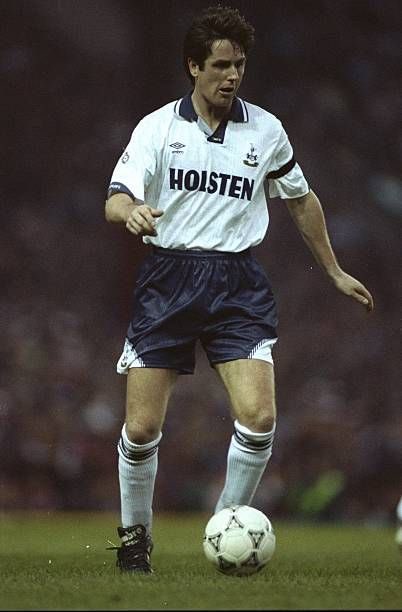
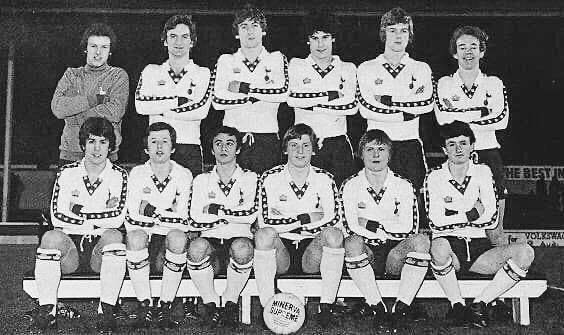
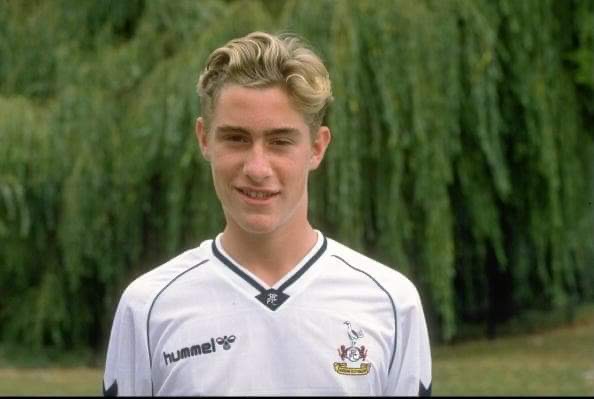
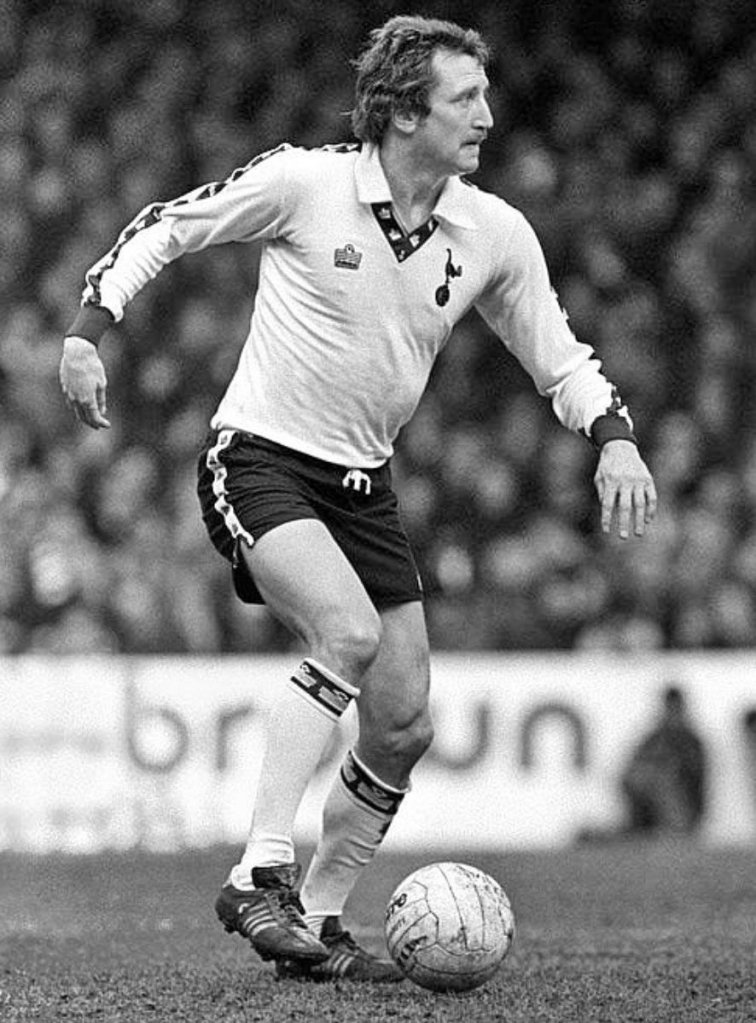
 superhotspur