Looking back at the last time a Spurs youth team won the Milk Cup, in Northern Ireland (in 1996):

Although this wasn’t the last time that Spurs have entered the Northern Irish Milk Cup, the 1996 edition of the prestigious youth tournament, was the last time that Spurs had won it. In the following piece I will be looking back at the players who played in that year’s successful tournament, and also looking at where they went after leaving Spurs. With a big thank you to members of that Spurs Milk Cup winning team – David Lee and also Ciaran Toner (Ciaran played one game for Spurs’ Under 16 side at the 1996 edition of the tournament, as he was on international duty with Northern Ireland at youth level at the time), for their insights into some of the players of the 1996 Spurs Milk Cup winning side. They were a great help to me in writing this piece. A memorable experience for the Spurs players who were a part of the 1996 Milk Cup winning side, they certainly won’t have forgotten winning it, and what it meant at that stage of their careers to win it. Spurs had won the 1990 edition of the Milk Cup six years earlier, with players such as Jeff Minton and Nicky Barmby featuring for Spurs in that year’s tournament. However, Spurs started the 1996 Milk Cup by winning their opening group game 2-0 against Scottish side Hearts, with centre-forward Luke Bauckham and Darren Twidell scoring their goals, at Anderson Park, in Coleraine.

After this very talented group of Spurs players which included Ledley King, Peter Crouch and John Piercy had won their opening group game of the tournament, this group of Spurs players won 2-0 against Middlesbrough in their second group game (at the Showgrounds, in Coleraine), thanks to goals from prolific centre-forward Wayne Vaughan and the highly skilful John Piercy. With Spurs already through to the quarter-finals with one group game still to go, they recorded a 0-0 draw with County Tyrone in their final group game, at Roe Mill, in Limavady. However, in the quarter-finals stage of the 1996 Milk Cup, Bobby Arber’s Spurs side came up against Danish side Brøndby IF, at Cricket Park, in Ballymoney. With the game finishing in a 1-1 draw against a good Brøndby IF youth side, the outcome would be determined by penalties, after Ledley King’s own goal saw Spurs respond through Peter Crouch. Spurs’ captain David Lee scored the winning penalty to book Spurs’ place in the semi-finals with another English side, in Crewe Alexandra. In the semi-finals, the game once again was a close one. Jamie Dormer got Spurs’ goal, but it ended up finishing in a draw. However, Spurs once again showed the courage and composure to win on penalties at the Showgrounds in Limavady, to book their place in the final of the competition!

As always at the Milk Cup, there were some top, top players playing at the tournament. In the final Spurs faced Blackburn Rovers, who had some real talents of their own, at the Showgrounds, in Coleraine. The game was a competitive one, but John Piercy, who had impressed throughout the tournament for Spurs, would deservedly score the winning goal for Spurs at the tournament, to put Spurs’ name on the trophy of the 1996 edition of the Milk Cup.

Goalkeepers: 

Chris Marshall: A goalkeeper who was calm and composed inside his penalty area, as well as being good at making reflex saves, Chris Marshall was a member of the Spurs Under 16 team that competed at the 1996 Milk Cup. During the 1996/97 South-East Counties League season Chris Marshall was the first choice goalkeeper for the South-East Counties League Division Two side. However, after going full-time with Spurs, he decided to leave football, and instead he went onto study away from the game.

Gavin Kelly: Gavin Kelly was a goalkeeper who commanded his penalty area really well, and who was a fine all-round goalkeeper. The Hammersmith born former Republic of Ireland Schools international was a player who would rise up the ranks at Spurs, in the Academy and later into reserve team football. Kelly had signed trainee forms with Spurs the year after Spurs had won the Milk Cup tournament, and he would actually feature on three occasions for Spurs’ first team in pre-season friendlies during the early 2000’s. He would do well at Spurs, where he did well to progress up the various ranks at the club. However, after spending some time out on loan with non-League clubs, he would leave Spurs to go on trial with some lower league clubs, before joining Kettering Town on loan, and then later joining them on a permanent basis in late 2003. Gavin would later play for Welling United, Cambridge United and Leatherhead.

Defenders:

Gavin Stone: Good with both feet and tall, Gavin Stone had a real presence about him as a central defender, and he was also composed on the ball. The Stafford born former Spurs youth player was also good in the air, and he scored a decent amount of goals for Spurs at youth level. Gavin would make good progress during the 1996/97 season with Spurs. After leaving Spurs later on in the 1990’s, Gavin Stone would spend a good amount of years in non-League football, playing for  Stafford Rangers, Hinckley United and Ilkeston Town, to name just some of Gavin’s former clubs.

Steve Dobson: A right-back/wing-back who was tireless on the pitch, defender Steve Dobson was also very good at getting forward out wide on the flanks. He would make the right-back spot almost his own in Spurs’ South-East Counties League Division Two side in 1996/97, following Spurs’ success at the Milk Cup, as well as also featuring in the Division One side. After leaving Spurs, Steve Dobson was around the time of the mid 2000’s playing non-League football for Burnham Ramblers.

Ledley King: A former Spurs player who needs no introducing. Ledley King is without doubt one of the finest Spurs Academy graduates, ever! A central defender with real class, quality and reading of the game, Ledley King was a one club man and Spurs legend, who played a big part for Spurs’ first team over the years, despite his very unfortunate injury record. The Londoner who captained Spurs to the 2008 League Cup final success against Chelsea, was just so unlucky, particularly with knee injuries during his footballing career. However, the former England international still achieved great things in the game, and along with Peter Crouch from this group of Spurs youth team players, would have a fantastic career in the game at the top level. Ledley now works as an ambassador for Spurs.

Jamie Dormer: Jamie Dormer was a clever and technically gifted left-back. He would progress well at youth level for Spurs, and he would spend a good number of years with Spurs. The defender would make a good amount of South-East Counties League Division One appearances during the 1996/97 season. Jamie got the all important goal which took the Milk Cup semi-final tie with Crewe Alexandra to penalties. After being released by Spurs in the early 2000’s, he joined Billericay Town when the late Justin Edinburgh was manager, but Jamie would also play non-League football for East Ham United and later AFC Hornchurch.

Narada Bernard: Narada Bernard was very good at defending in one v one situations. A left-back who had good pace, the Bristol born former professional footballer would mainly play in the South-East Counties League Division Two side during the 1996/97 season after the Milk Cup. However, Narada would later join Arsenal from Spurs as a youth team player, and he would progress up to reserve team level with them. He would enjoy a long career in the game, playing for AFC Bournemouth, Woking and Weymouth, to name just some of the clubs that Narada played for. He also won a full international cap for Jamaica during his playing career.

Kevin O’Brien: Waterford man Kevin O’Brien joined Spurs just after the mid 1990’s, from local side Villa FC, in Waterford. A solid and versatile player who could play in defence as well as in midfield, O’Brien did the under appreciated side of the game really well, and he was tenacious. Kevin was a strong tackler who kept good defensive positioning. After playing his part in Spurs’ Milk Cup winning success pf 1996, Kevin O’Brien would spend a good couple of seasons with Spurs at Academy level. After leaving Spurs the former Republic of Ireland youth international would return to Ireland to sign for Waterford, where he played League of Ireland football.

Midfielders:

David Lee: The captain of the Spurs youth side that competed in the 1996 edition of the Milk Cup, highly skilful and also versatile midfield player David Lee was a key player at that year’s tournament. A central midfielder with a really good range of passing, David could also play out wide on the flanks as a winger. He was unlucky with injuries during his career and it would in the end mean that he had to retire from the game quite early, but in 1996 as the captain of the Spurs Milk Cup winning side he was a really important player for Spurs at that tournament. In the following seasons David would progress up to reserve team level with Spurs, where he became a regular. He would later move to Southend United in 2000, before later playing for Hull City and Brighton & Hove Albion, before finishing his career with Canvey Island during the late 2000’s, after having played for a decent number of other clubs. David now works as a football agent.

Nicky Hunt: In 2022 I attended a legends evening with Ledley King and Michael Dawson (hosted by Micky Hazard) in which Ledley mentioned former Spurs youth player Nicky Hunt as being someone who he thought would go onto make it in the game and have a good career, such was his talent. Nicky Hunt was a skilful box to box midfielder who had an eye for goal, and the former Spurs youth player would play for both Spurs youth sides in the South-East Counties League Division One and Two, during his time with the club. 

Ciaran Duffin: A wide player who was industrious and hardworking, but also direct with the ball at his feet, Ciaran Duffin was one of two Northern Irish Spurs players at the Milk Cup in 1996, to play at the tournament. Ciaran only spent one season with Spurs as an apprentice, before returning to Northern Ireland, where he continued to play football. He played for clubs such as Coleraine and Moyola Park, after returning to Northern Ireland.

Ciaran Toner: A player who would go on to become a full Northern Ireland international, Craigavon born former professional footballer Ciaran Toner was a hardworking, two footed midfield player. He could pass well off both feet, and he also worked well off the ball. A former Spurs youth and reserve team player, Ciaran only made one appearance for Spurs’ youth side at the 1996 Milk Cup, in their final group game against County Tyrone. This was because Ciaran was away on international duty with Northern Ireland at youth level, during the tournament. The player who made one first team appearance for Spurs in a pre-season friendly, would later play for the likes of Leyton Orient, Rochdale and Grimsby Town.

John Piercy: A versatile midfield player who played the game with flair, John Piercy was a real standout player at the 1996 Northern Irish Milk Cup, scoring the winning goal in the final against Blackburn Rovers. The Forest Gate born former Spurs man was a good dribbler with the ball at his feet, and he was also creative with the ball. John would progress up through the youth and reserve team ranks at Spurs to make nine competitive appearances for Spurs’ first team during the late 1990’s/early 2000’s. He would later play for Brighton & Hove Albion, and later Eastbourne Borough and Worthing for a short time. John Piercy was a key player for Spurs at the 1996 Milk Cup.

Darren Twidell: Central midfielder Darren Twidell was a midfield player who was capable of keeping the ball moving in the central areas of the pitch, as well as having good ball retention skills. Darren would later play non-League football after leaving Spurs, playing for Great Wakering Rovers.

Jamie Sinclair: A left-back who worked hard, was difficult to get past on the pitch and who also had a good range of passing, Jamie Sinclair was a fine player for Spurs at youth team level. However, I was unable to find out where he went after leaving Spurs, or whether he continued playing football.

Forwards:

Luke Bauckham: A centre-forward and a competitive player on the pitch, Luke Bauckham always made it difficult for the central defenders. He was good at being able to receive the ball and at making runs in behind, and he was also a good finisher. Luke scored one goal at the 1996 Milk Cup, for Spurs. Luke would later play for Billericay Town and East Thurrock, later on in his footballing career.

Wayne Vaughan: A tenacious and very hardworking centre-forward, who certainly knew where the goal was, Barking born former Spurs Academy player Wayne Vaughan scored a lot of goals for Spurs at youth level, and he would also play for the Spurs reserves side. Wayne was a talented player, who did really well at the Milk Cup in 1996. In one season with Spurs he scored 22 goals from 31 appearances for the club at youth level. Wayne would later play in the non-League for Romford and Aveley, to name just a couple of his former clubs.

Peter Crouch: Like Ledley King, Peter Crouch had a wonderful career in the game. A former England international, the centre-forward would play for the likes of Aston Villa, Liverpool and of course Spurs’ first team on his return to the club in 2009. A centre-forward who I always thought had good skill on the ball, and who was also good in the air and at holding up the ball, with the ability to finish well inside the penalty area. Peter Crouch played for Spurs as a youth team player, and he scored an important goal against Brondby IF, in the 1996 Milk Cup. A player who would of course have a great footballing career, and who played at the highest level of the game. It was great to see Peter return to Spurs later on in his footballing career, as a first team player.
A piece on former Spurs prospect and player Steve Pitt:

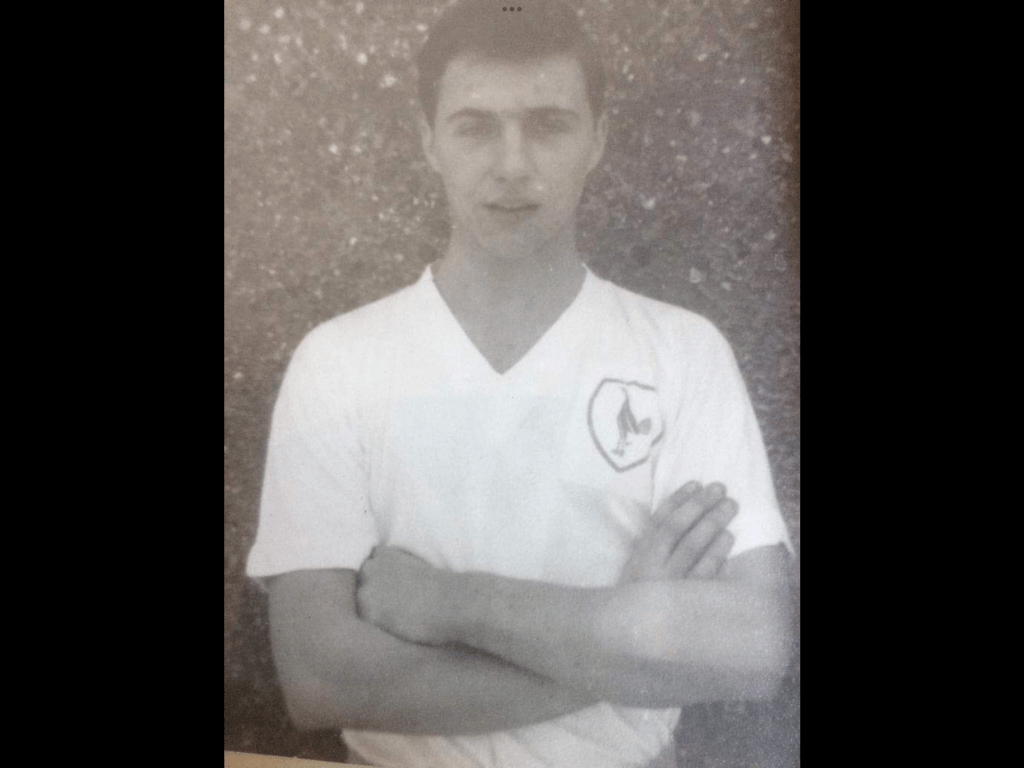
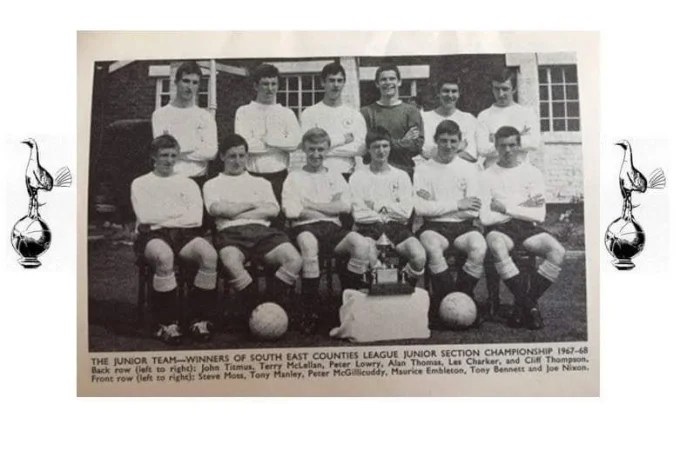
Stephen William Pitt made his competitive first team debut for Spurs at the age of 17 years and 26 days, making him at the time one of the youngest ever first team debutants in Spurs’ history. From Willesden in London, Steve Pitt joined Spurs as an apprentice in 1963 for the 1963/64 season following a time on trial with the club, after being recommended to Spurs by their chief-scout Dickie Walker. Steve had played for the London Schools side during his youth, but he would adapt to life at Spurs really well during his first season at the club. Pitt scored 13 goals in the South-East Counties League from 23 appearances in the South-East Counties League in 1963/64, with only centre-forward David Tobitt scoring more goals for Spurs’ youth team in that league (18), that season. Steve Pitt was a winger with exceptional pace and quick feet. Steve, as he was described to me by an old teammate, was a natural winger who was very tricky and skilful with the ball. In fact the same former Spurs teammate of Steve’s told me that me that Steve reminded him of Jimmy Robertson in his style of play. 

Steve would progress really well in his first couple of seasons at Spurs. A creative and direct winger, with a real eye for goal, Steve scored a lot of goals for the Spurs A team after progressing up into that side from the youth team (in one season Steve finished as the top scorer in the Metropolitan League – 1967/68), and also for the reserves during his time with Spurs. Steve was without doubt a real prospect at Spurs during the 1960’s, and at 16 he was selected to travel with the Spurs first team to Israel during the mid 1960’s for the John White Testimonial game, against the Maccabi club of Tel Aviv. Steve actually provided an assist for one of the goals, which was scored by Alan Gilzean in that testimonial game. Not long after that game, in the August of 1965, Steve was selected to start for the Spurs first team in a home first division game against Blackpool at White Hart Lane, shortly after his 17th birthday. This must have been one of, if not the biggest occasions of Steve’s footballing career. He was playing alongside greats of the game, such as Jimmy Greaves and Dave Mackay, and by all accounts in that match Steve had a good game despite being up against Jimmy Armfield.

That game against Blackpool would be Steve’s last for the first team, despite excelling for the A team and doing well for the reserves also, in subsequent seasons. He was a great prospect at Spurs during the mid 1960’s, and it’s just a real pity that because of just how difficult it was to get into the first team at Spurs during the 1960’s, that Steve didn’t get another chance to play for the first team. He was great friends with former Spurs first team player Jimmy Pearce at Spurs, with both signing apprenticeship forms in the same year, as well as former apprentice Jimmy Walker. I had the the great pleasure of interviewing Steve Pitt earlier this year about his time at Spurs, and I must say that he is an absolutely top man, and one of the nicest ex-footballers that you’ll ever meet! Now enjoying his retirement, Steve has great memories of the Spurs days. Steve, along with Jimmy Pearce and also Paul Shoemark were just some of the former Spurs youth team players who were considered to be top prospects in football during the mid 1960’s era. And Steve managed to write his name into the Spurs history books during the 1960’s.

My interview with former Spurs Youth team player Joe Nixon:

Barking born former footballer Joe Nixon signed for Spurs as an apprentice in 1966 and would play for the junior youth team, senior youth team and the A team, during his time at the club. Quick when running with the ball and skilful on it, Joe would spend a couple of seasons with Spurs during the mid to late 1960s, before being released by the club. He would play for QPR at reserve team level, and then move over to Australia, after spending a season with Romford, to sign for a team called South Sydney. Upon his return to England, Joe played one season with Barnet before finishing his playing career. I recently had the great pleasure of talking to Joe about his time at Spurs.

What are your earliest footballing memories? 

Joe: My earliest memories are playing for my junior school in Barkingside, in Essex. Then afterwards I played football for the senior school, and later Ilford and Essex as a schoolboy, so there were some happy memories there.

What are your earliest memories of your time at Spurs? And how did you come about joining the club?

Joe: My dad was approached by Spurs’ chief-scout Dickie Walker after a county game, and I was probably 13 at the time. I was asked whether I’d be interested in going to Spurs as a schoolboy, and being coached in the evening. So for two years before I signed as an apprentice I used to go to White Hart Lane on a Tuesday and a Thursday to be coached. That was good except for the footballs that used to hang from the underside of the stand, and you used to have to run and head them, and it felt like you were heading a medicine ball sometimes. So they are my earliest memories of Spurs. 

Did you have any footballing heroes/inspirations and if so who were they?

Joe: I always thought of George Best as probably the most skilful player that I’ve ever seen. So George Best was the one, but from the point of view of somebody that you could look up to as being at the same club that you were, well Dave Mackay was without a doubt a leader. Not just because he was the captain of the team, but he led by example, and if he said something then nobody argued.

Who were your greatest influences at Spurs?

Joe: Dave Mackay would be the one, but I also used to like watching Cliff Jones, as although he was an older player he had a work ethic when he was there. He wasn’t one of those who joked around all of the time, and although he did have a laugh and a joke, everything that he did regarding his football, he took seriously. I thought that he was a bit of a role model.

Could you describe to me what type of player you were? And what positions you played in during your time at Spurs?

Joe: I was a winger who was quite quick, and although I wasn’t as quick as some of the other players, I could run at almost the same speed with the ball. So I had some pace running with the ball. I wasn’t that good defensively and I didn’t sort of think that it was up to me if someone played a poor pass to you. So while I didn’t think that my attitude then was bad, looking back on it I think that I should have put in a little bit more than what I did.

Were there any players at Spurs who you would watch closely to try and improve your game or look to learn from?

Joe: Of the ones that were around with the crowd that I played with I thought that the couple who would go on to do well because of their attitude and their ability was Ray Evans, who I always thought was a solid player. Some people have bad games now and then, but Ray wouldn’t. He might not be as good as some of the others, but he generally wouldn’t have a bad game. So he was one player, but in the first team at that time the player who impressed me most for being very consistent was Philip Beal. He never seemed to get flustered and he didn’t panic or do anything really wrong on the pitch. It was just always a steady game when Phil was there. So I would try and watch those two players to see what they did, and that was pretty ironic as they were both defenders, while I was pretty useless at defending, albeit later in my career I ended up playing as a defender. Playing as a defender felt so easy that I wondered to myself why I didn’t move back a bit on the pitch when I was younger, because I had a bit of pace, could tackle and I could also read the game well.

What was your time at the Lilywhites like on the whole?

Joe:  It was good from the point of view that I was full-time as an apprentice, and that I got into the routine of turning up at the ground and doing whatever you had to do before getting on the coach, to go to Cheshunt. So it was a good way of when you left school, of having some responsibility of things that you had to do, but I wouldn’t say that my time at Spurs in terms of football was my happiest. I had an injury which had torn the ligaments in my ankle, and so I was in plaster for six weeks and so I had to recover from that. However, they weren’t the happiest times because really I don’t think that I was strong enough then, to sort of stand up for myself. So when people were taking the mick which was always going to happen at a football club, sometimes the banter was a bit over the top, but if you were someone who would stand up for themselves, then you were sort of accepted, but I didn’t. And the more that I didn’t do anything, the more it happened. So at that time I didn’t think that it was in my nature to really stand up for myself. But with regards to the football side of things, I played with some great players and I thoroughly enjoyed playing for the youth team and also the odd game in the A team.

What was the greatest moment of your footballing career?

Joe: I would say that the greatest moment wasn’t actually in this country. I went to Australia in June 1972, and I was there until September 1975. In 1974 we (South Sydney) won the Australian equivalent of the FA Cup, and that match was televised and it was great getting the cup afterwards, with a good crowd of between 25,000 and 30,000. The hairs on the back of your neck would stand up in that game, and it was just a terrific and really enjoyable experience. 

Could you talk me through some of your favourite memories or ones which stand out from your time in the Spurs Youth side and A team?

Joe: We had some really good games when everyone played really well and everyone was happy about it, although there were odd times when it wasn’t. One standout memory was when we were running around the track at White Hart Lane and Johnny Wallis was out with us, and there was an entrance from the side of the pitch to the gym. The physio Cecil Poynton had shouted to Johnny to send one of the lads in, and so Johnny selected me to go to the gym. During those days when someone told you to do something, then you didn’t argue. So he told me with his voice raised to get in there now, after I’d asked him why. So I said alright and went into the gym and it’s the first team who are in there, and I’m looking around and there was Dave Mackay, Jimmy Robertson, Alan Gilzean and Cliff Jones. So I thought blimey this is great, and so we’re playing two touch football and as I get the ball and roll it off Terry Venables came in strongly and gave me a bit of a clatter, and so a few words were spoken. The reason why I’d went in there in the first place was because there’d been an argument and so someone was told to go the shower to cool off. So two or three minutes later I get the ball and thought I’ll lay it off straight away this time, which I did, but Terry Venables once again clattered me! So Dave Mackay came over to Terry Venables and got his shirt and turned it around, tearing the shirt to pieces before throwing him along the wall. He then shouted at him to go back to Chelsea!

After that had happened in the gym, Bill Nicholson had said that that was it and that everybody had to finish up and have a shower to cool off. I’d only been in there for about three minutes and I’d been clattered twice and it was already finished. So that was my lasting memory of training with them, but it was a shame that it didn’t last any longer, although I won’t forget playing football in the gym with those guys. I can also remember playing in a game for the A team, and Brian Parkinson was playing. He was a very, very skilful player, and so I was thinking blimey if someone like that was not progressing further ahead then he was a year ago, then at that time I felt a bit sad really, as he was just so good. I can also remember being in the changing room, and Jimmy Greaves had been on the cinder track at the ground, and as he came in he took his boot off and it had red cinder all on it, so he put it behind and so there was a bit of it on the wall. He then called Johnny Wallis and said to him had anybody cleaned the changing room? To which Johnny replied that Joe had done it. He then asked Jimmy why he was asking, and Jimmy, who was joking around said that he didn’t want to cause any trouble said that it was fine, but Johnny then started having a go at me about the red cinder that was on the floor. Jimmy found it amusing which it was, and to be honest it was the kind of thing that I could see myself doing! Although I thought oh no! As I would have to clean up the changing room again.

I can also remember when Spurs beat Chelsea 2-1 in the 1967 FA Cup final, which was a great day. Afterwards when we all went for the meal, there was at the time a bit of an embarrassing moment for me with the cutlery, as me and a few of the other young lads before hands were trying to work out how to properly cut the food, but thankfully in the end we were alright! 

Who was the toughest player that you ever came up against?

Joe: The toughest player was probably Phil Holder when I was playing for QPR reserves against Spurs, when I went back to Spurs. And Phil was playing at left-back, with me playing on the right flank as a winger. About only five minutes in to the game the ball got passed out to the right, and I was about four inches taller than Phil at least. As the ball came up in the air I thought that I was going to win it, when I felt his studs on the top of on of my calves. And then there was an elbow over my shoulder, and so he’d only got there above of me because his studs were on my calf, and I couldn’t believe that the referee hadn’t seen what he’d done. So Phil would have been one of the hardest players and one of the most aggressive players that I ever came up against in my career. 

Were there any players at Spurs who you were particularly close to?

Joe: Spurs was very competitive then so everyone was competing with each, even though they were all mates. So they didn’t want to help each other. I wouldn’t say that I was particularly close to anyone, even though you had players who were good mates, like Phil Holder and Terry Shanahan, and also Phil Holder and Steve Perryman. I did know Peter McGillicuddy, who was a nice guy, but I had more actual friendships when I went to QPR. The players there wanted you to do well, and so it was two really different atmospheres at the two clubs.

Could you talk me through your career after you left the Lilywhites and what prompted you to leave the club?

Joe: I left Spurs because they released me and so I wasn’t signed on for another year. So I left Spurs and went to QPR, who I had a couple of years at, mainly in the reserves. I did however, play for the first team in things like a testimonial or a friendly. So I did get to play with some really good players in the reserves, as you had first team players playing for the reserves after coming back from injury. The most skilful player who I ever played with was Rodney Marsh, who played for the reserves for 20 minutes or so with me. He was incredibly skilful and just so good that he could take the mick out of players on the pitch, and he was just a tremendous player. After leaving QPR I spent a season with Romford, but I didn’t like it at all! The referee often couldn’t control the games. The only good thing about being there was playing against John Charles, who was in his late 30s/early 40s then. I’ve never seen anyone head a ball like him, as it was just absolutely unbelievable, and he was just an exceptional player. I later went to Australia to join South Sydney, and during those three or so years I was playing first team football and playing competitive football.

During my time in Australia I actually got picked to play for the Australian Under 21 side, but when they asked me about it I never gave it a thought. I immediately said that I was English, but what I should have done was said yes and that that would he great. Because if I had wanted to play for them then I could have taken up citizenship, but I enjoyed my time in Australia. My final team upon my return to England was Barnet, and I liked my time there. But it was just too much, playing football for Barnet and also having a job at the same time. So in the end I had to make a choice that if I didn’t think that I was going to make it in football, and then in my mid 20s I had a young family and so I needed to earn some money. So it was a decision that I didn’t really have a lot of choice in.

What would your advice be to the young Spurs players of today as they look to rise up through the ranks at the club?

Joe: I would say that if I’ve learnt anything, then that’s that you shouldn’t assume that you’re not good enough. You’ve got to go in there and believe that you’ve got the ability and have the work ethic, a bit like Steve Perryman, then there’s no reason why you can’t make it and get as far as you should do. So my advice is to have a bit of confidence in your own ability, and believe that you deserve to be there.

After all these years how do you look back on your time at the Lilywhites and is Spurs a club that you still hold close to your heart?

Joe: My endearing memory of being at Spurs is actually feeling very proud of wearing that Spurs shirt and having everything one else thinking that those players play for the Spurs youth team. So even though it never amounted to anything I understand what people would give to have been in my position.

My interview with former Spurs Youth, A team and Reserve team player Jimmy Walker:


Edmonton lad Jimmy Walker joined Spurs as an apprentice in 1963, and the tenacious and talented right-back/defender would spend a good number of years with Spurs during the 1960s. Walker was associated with Spurs as a player from 1963 until 1968, and the player who was a fine athlete, would make many an appearance for the Youth team and also for the A team, as well as making some appearances for the reserves. Tough tackling and difficult to play against, Walker would leave football all together after he left Spurs, as he would work in the scrap metal business. I recently had the great pleasure of talking to Jimmy about his time at Spurs. He is a top man!

What are your earliest footballing memories? 

Jimmy: So when I was about six or seven I was living in a little street in London which had a fence at the bottom of a cinema (The Granada), where you could kick a ball. The plastic ball had just come out, and I could lift it off of the floor, unlike the old leather balls, as they were solid. So I can remember kicking the ball up against the fence for hours, and there was only one car on the street (Mr Adams’) so I have to apologise for the ball hitting his car on occasions! At my school to start off with I played in goal, but I don’t think that we won a game for about two years, as the other school teams that we were playing were two years older than us. Eventually after I started playing outfield, I was selected for one of the Edmonton Schoolboys’ teams, which was when I first started to think that I must have been an alright player. I would also play for a Sunday morning team at Walthamstow, which was where I first met Dennis Bond, who I used to play against. And Dennis was a class player.

What are your earliest memories of your time at Spurs? And how did you come about joining the club?

Jimmy: I’d been training with Edmonton Schoolboys at Spurs on a Tuesday night, even though Spurs didn’t take the training. So we used to have to train under the stands, but there were a lot of iron poles under the stand, which made it difficult to play football. However, just the thought of going to Spurs for training was great, and at that time they could get all of the top players. After a little while I was invited to go to Spurs for training with the schoolboy footballers, and the Spurs player Tony Marchi used to train us. His dad used to have an ice cream stall on Edmonton Green, and Tony was a recently nice man. Eventually we got to play/train in the five-a-side ball court, but before that I had been going to train with West Ham United as a schoolboy. It was nice to train with West Ham, as well. Dickie Walker (Spurs’ chief-scout) was the one who had actually first recommended me to Spurs, and what a character he was.

Did you have any footballing heroes/inspirations and if so who were they?

Jimmy: At the time it was Dennis Law. I think that he was released by Huddersfield when he was 14 because they thought that he was too small. But I used to love him as player when he used to play against Spurs. However, I mainly used to go to Spurs back then to watch the reserves play and you used to get around 8,000 people watching those games. Playing for the Spurs reserves then was Johnny Brooks and Tommy Harmer, and Tommy was a player who I used to like watching. I didn’t go to a lot of first division Spurs games then, but my dad did used to take me when he wasn’t working.

Who were your greatest influences at Spurs?

Jimmy: I’ll be honest with you, as I don’t think that I really got coached at Spurs during my time there, but Eddie Baily was probably the best coach there. You never used to see a ball, and you used to run all around the stands and down to the north stand. Most of the first team used to be split up into groups to train with us, and Jimmy Greaves when I was there, he never ever, ever used to train. You’d be on the cinder track at the ground and Eddie Baily would be blowing whistles and holding sprints and relays, but Jimmy used to be standing in the stands watching everyone. Eddie Baily used to get really annoyed and start blowing his whistle! He once asked Greavsie to do three laps of the track, but he ended up running from corner flag to corner flag. Then afterwards he’d go straight into the ball court and go in goal! However, on Saturday he was amazing, which was why he always got away with not training. I couldn’t get away with that! When we used to go to Feyenoord with the youth team and to other international tournaments, I think that Feyenoord had about 14 training pitches outside the stadium. The players who were there all used to watch us training, and I used to wonder why because we didn’t do anything interesting. But they were watching us because we didn’t have a football. 

The Feyenoord players would do ten laps, the same as us, but they had a ball at their feet, because that made sense. At the time I think that Jimmy Pearce was the best player out of all of us in the youth team, and as far as I know Feyenoord came in and contacted Spurs wanting to buy Jimmy Pearce. He was 17 at the time. And on those proper pitches out at the Feyenoord tournament, he was great and I used to think wow! As that was my mate. Jim was someone to watch on the pitch, and back then Jimmy was very small before they started building him up and building him up. And in the end I thought that they built him up too much, but he did well before his injury. 

Could you describe to me what type of player you were? And what positions you played in during your time at Spurs?

Jimmy: I could run for ever, even though I used to come last in all of the sprints. But I did win all of the cross-country races five years in a row when I was at school. I used to play mainly at right-half and I used to get up and down the flank, but when I joined Spurs they put me at right full-back, and I didn’t like to have someone running at me at all, and you were told to take players out of the game. I marked Trevor Brooking loads of times when he was at West Ham, and I used to let him know that I was in the game in the first seconds of the match, as that’s how it was then. But playing at full-back wasn’t for me, and I can remember playing for the Spurs A team in the Metropolitan League, and that was the worse league in the world as it was full of old professionals, whereas we were trying to make something of ourselves. However, those old professionals weren’t having any of that, and you didn’t get near them. As a full-back I used to just hit two balls, the long one forward or the long cross-field ball, but if I started to go forward then they just used to start shouting at me from the sidelines. Brian Parkinson was the best player who I’ve ever seen with the ball and if you gave him the ball then he could go past a player four times! But Johnny Wallis used to tell him to get rid of the ball, but when we went abroad with the youth team Brian was just great. 

Another really good player was the right-back Joe Kinnear, who apart from Jimmy Robertson, he was the fastest player at the club. Steve Perryman arrived at the club not long before I left Spurs, and you just knew that he was going to make it at the club, as he had the ability and was just too good.

Were there any players at Spurs who you would watch closely to try and improve your game or look to learn from?

Jimmy: I used to try and mould myself in my head on Dave Mackay, and I could tackle, but Dave Mackay was a really good player with the ball, and he could hit the ball all over the place. In my first week at Spurs as an apprentice I went into the ball court, and I don’t know how but I was put in Dave’s five-a-side team, and so it started and I was doing alright, and then this big wing-half (Freddie Sharpe) had left a gap along the wall. So I thought that I’d go along the wall, but as I went past him he just hit me, and so I hit the wall. I finished up on my back looking at the lights on the ceiling, so did he knock me out? I think he did! I can remember him standing over me when Mackay grabbed him and ended up hitting him! So I thought that that will do me and Mackay, you’re my man. When Dave broke his leg later on, I played with him for a year in the A team. He was never going to be the same player again, but he just wanted to be as good as he could, because that was a badly broken leg. So he played all of the time during that year playing for the Spurs A team. It was very competitive in that ball court, and I think that Mike England and Phil Beal used to argue all of the time in there, as did Terry Venables and Dave Mackay. But I was lucky, as I was always on Dave’s side. You didn’t want to play against Dave Mackay as he was the hardest thing that I have ever hit on a football pitch, as he was like hitting a brick wall! 

Dave Mackay was one of the few first team players who would speak to you, and he was a nice guy. As was John White, and if you were cleaning the dressing room in the afternoons, then all of a sudden a bucket of water went over you. And it was him, as he was always messing around and having a laugh. He actually used to pick me up in the mornings when I was an apprentice, as he lived in a building up at Church Street with his wife. He was a Scottish international then, who was playing for the Spurs first team. 

What was your time at the Lilywhites like on the whole?

Jimmy: For me it was a bit strange. I remember playing at Brentford in the FA Youth Cup, and Bill Nicholson wasn’t there. In that game I had probably the best game that I’ve ever had at Spurs, and I don’t know how or why but I was playing as a sweeper and I just swept up everything in that game, even though we lost. Anyway, Bill Nicholson came in the dressing room asking what had happened to the captain Terry Reardon, who said that we were all basically not good in that particular game, and that he was sorry. But Bill Nicholson said that if we were no good in that game, then why’ve I had Arsenal on the phone wanting to buy Jimmy Walker! At that moment in time I felt a million dollars, and I thought get me out of here! Because I’d have rather Spurs said that they didn’t want me, rather than carrying the skips around. I didn’t play a game for six weeks after that, even though I trained every single day. But when it came to checking the team-sheet on the Saturday, written next to my name was skip-man, and that went on for six weeks. I should have gone in there straight away and said that I wanted to go to Arsenal. But Keith Weller went through all of that when he went to Millwall, which was hard for Keith.

I can remember making an appointment to see Bill Nicholson to see if I could have my wage of £18 a week raised to £20 a week as a professional, because I was married at the time. As I went there I saw Keith Weller there sitting down, and he asked me what I was doing there and so I told him why, and then Keith told me that he wanted another £5. He had already probably played quite a lot of games in the first team, and you could see that Keith was a class player. I eventually spoke to Bill Nicholson at his desk and explained to him that I wanted another £2 a week. He said that my timing wasn’t good and that I couldn’t head a ball, and to be honest if I could have got under the door then I would have. So eventually he said no, and he was right, but I just wish that he’d have sacked me. As I was coming out of the office I said to Keith that he didn’t have a chance of getting an extra £5 a week, but Keith was good enough to say that he wanted to go on the transfer list. Bill Nicholson wanted for the club to get £30,000 for Keith’s transfer which was a lot of money, but after a tribunal it went down to £17,000 and so off he went to Millwall, and he finished up being a great, great footballer, which was what he was, and he deserved it. 

Bill Nicholson did however, give me three World Cup final tickets in 1966. Me, Jimmy Pearce and Terry Reardon all going. Eddie Baily did give me some good advice though as a coach, and another story is that he must have been the only assistant manager, when were at the youth tournament at Feyenoord, to have the police called to carry him out! As he was getting so worked up on the sidelines, as he was smoking his cigar. We were playing a German side and Keith Weller got hit quite bad by one of the players, and so Baily got so angry that he said something like that’s it, go and kick all of the opposing players’ legs! I was behind Joe Kinnear on the pitch, who was at right-half, and I think that Roger Hoy was playing then, and you didn’t have to tell him twice! So everyone on the pitch was just kicking each other, and I’d never seen anything like it in my life on a football pitch. I think that they could have taken the ball off the pitch, and no one would have taken any notice. I can still now see the police pulling Eddie Baily out of the ground. Another story was when I was sent off in a youth team game against QPR, and I was actually the first professional footballer for Spurs to be sent off for 30 years. Frank Sibley, who was someone who I’d known as a youngster, I’d kicked him up in the air on the pitch, and then as he came back down I kicked him again! The referee came up to me, took my name and said that I had to go off the pitch.

As I was sent off I asked the referee to tell me where to go, as in my life I’d never seen anybody sent off. So anyway the referee said that he was sending me off the pitch, and as I was walking off Eddie Baily was there with a big cigar, walking up and down, and he asked me what I was doing? So I explained to him what had happened, and he ended up asking the referee the same thing that I had. I think that that same afternoon Cliff Jones got sent off for Spurs. I made the back pages of one of the big newspapers, and my dad was so proud that I’d made the newspaper. On another topic I can remember that Eddie Baily was still so good with a football, even then. I can also remember Bill Nicholson taking us out to do running out near Cuffley, in pre-season. There were no mobile phones then, and I remember us calling for Bobby Smith to be collected, and as he was in the car going past you, he’d wave at us. That was one of the good memories of my days at Spurs.

What was the greatest moment of your footballing career?

Jimmy: I’d probably have to say that Brentford game. We’d won a few tournaments abroad, but to be honest I was never in it, as I was always on the outside looking in. I did try and I’d run up and down the pitch. When I see Jimmy Pearce again I’m going to ask him about Johan Cruyff, because I’m sure that I came up again Johan Cruyff in a youth tournament against Ajax. I can remember Eddie Baily saying that Ajax had this young player on the wing, who was already in the first team. Jimmy Pearce, me and I think Joe Kinnear all had to double up on him as he came past, but he was so quick with the ball. Somehow we beat Ajax 1-0 in that game, I don’t know how! The time/year before that year’s Dutch tournament, which we won, we also got to the final of another tournament. This final finished 1-1, and so after the referee sounded his whistle for full-time, I just thought that we would share the trophy and that was it, and that we’d be able to have a free day. Sid Tickridge was the coach at that tournament, and he said to us that the final was going to penalties. He told us that both teams would take six penalties each, with the one who got the most winning the trophy.

After Sid had asked people to take the penalties and the first couple of players had agreed to take one, he was struggling to find any other players. So I said that I would take one, to which he told me that this was serious! Eventually he put John Pratt’s name on the list, and he hit this ball which I think they are still looking for! Stuart Skeet was in goal for Spurs, and he faced the first penalty against this Dutch side, but the player taking it hit it over the bar. Skeetsy, who was something else and a real character, came up to the player who was lying on the floor distraught and crying, and started clapping! He had annoyed all of the crowd by doing that, and after that I think that he’d let the next five penalties in.

Could you talk me through some of your favourite memories or ones which stand out from your time in the Spurs Youth side, A team and the reserves?

Jimmy: We played in this game against Bury Town for the A team in the Metropolitan League, with Joe Kinnear at wing-half and me at full-back. We came up against this winger who was as fast as a greyhound, and I couldn’t get near him in that match. Joe Kinnear was laughing at me, and I as the full-back was one v one with him. If you thought that you’d go higher up the pitch to get tight to him when he had the ball, then someone would shout to me to get back, as he was so quick. My time in the youth team was good in the first couple of years when I was captain, but there was no progress for me to be honest, before I got into the famous A team. Had I have stayed with West Ham then I think that I could have made it as a professional footballer. Going back in time, I remember shortly after Bill Nicholson had won the double with Spurs he had phoned my parents up to say that he wanted to come around to say that he wanted to meet my mum and dad. I can remember my mum and dad doing the front room up to get ready for him arriving. There were no cars in my street then, and I can remember Bill Nicholson arriving outside my house in a black Austin Westminster car. 

Bill Nicholson came into the house with a big box of chocolates and a bunch of flowers. My dad was quite a shy man who never said a lot, but my mum could talk. Anyway he came in the front room and I was sitting in there with my mum and dad and he was saying that he wanted to sign me as an apprentice. I could see my mate knocking on the window as if to signal if I wanted to go out. I said yes, got up and said see you later. I can still see Bill Nicholson’s face looking at me in disbelief. From there I don’t think that we ever got back on level tracks to be honest, but I didn’t think anything of it. I had some good times with some good lads at Spurs though like Tony Want, Joe Kinnear and Neil Johnson. Neil was like the most powerful player that I’ve ever seen. He was from Grimsby and while us as teammates used to go out and wear our suits, Neil would turn up wearing a green Beatles suit. But he didn’t care! And Neil did well for himself at Spurs, and played for the first team. You could never outrun, outmuscle or out-tackle him. 

When I used to play against Arsenal’s John Radford, I used to do alright against him, and he was a big, strong player. I didn’t get the ball off him, but he didn’t get the ball much either. John Pratt did really well at Spurs and he never stopped running, and Johnny Wallis nicknamed him lungs, which was written on his slippers. I don’t want to repeat myself, but there was another game, this time in I think the Southern Junior Floodlit Cup. I didn’t even play this game as I was the one who had to pick all of the rubbish off the floor and put it in a skip. Bill Nicholson came in after the game, I didn’t even know what the score was, but he started moaning and having a go at me, basically saying that I’d had a bad game. But I didn’t even answer him as I was just gobsmacked, as I hadn’t even played. Terry Reardon told Bill that I hadn’t even played, but he didn’t apologise to me after that. We just never got on. 

Who was the toughest player that you ever came up against?

Jimmy: For me as a player it has to be Billy Bonds, when I played against Charlton Athletic in a youth tournament in Holland, as he was a big and strong player. But also there was a player at Millwall who was a boxer called Adams, and he was really tough. Millwall was a really difficult place to go in them days, and there used to be lots of dockers in the crowd. In one game against Millwall, Terry Naylor said that his shoulder was playing up, so he asked me if I could go over to the other side of the pitch to take the throw-ins. Well my back was covered in spit from the fans as I was taking the throw-ins! 

Were there any players at Spurs who you were particularly close to?

Jimmy: Me, Jimmy Pearce and Steve Pitt were like the three stooges. John Pratt was also another good friend, even though he didn’t join full-time until 18.

Could you talk me through your career after you left the Lilywhites?

Jimmy: At the end of I think the 1967/68 season Bill Nicholson told me that he wouldn’t be signing me on for another season and so I went into the scrap metal business with my brothers, and I never really kicked a ball again (I did get an offer from Enfield at one time). I did play for a Sunday morning side for a mate, for a while though. 

What would your advice be to the young Spurs players of today as they look to rise up through the ranks at the club?

Jimmy: Well I’ve always thought that you’ve really got to stand out when you’re having a trial. But really I don’t think that I was that good to advise people, but I did have some good times at Spurs.

After all these years how do you look back on your time at the Lilywhites and is Spurs a club that you still hold close to your heart?

Jimmy: I really think that I went down to Tottenham first of all for my dad, to be honest. I did want to be a footballer, but I did do it for my dad as well. I do think that I would have been better staying with West Ham, as I enjoyed it more there than at Tottenham, as it didn’t really work for me. I think that I gave up at Spurs in the end.

My interview with former Spurs Youth Team player David Shacklock:

David Shacklock was a tough and talented central defender, who also had a very good leap, meaning that he was good in the air during his playing days. From Hertfordshire, David played for Spurs at Junior, Youth and A team level during the early 1960s, before leaving the club in 1964. He would later play for Cheshunt for a short time, before playing for Hendon, which was probably the highlight of his amateur playing career, as David got to play at Wembley in the 1966 FA Amateur Cup final. I recently had the great pleasure and privilege of speaking with David about his time at Spurs during the 1960s.

What are your earliest footballing memories and how did you come about joining Spurs?

David: Someone called Roy Bailey saw me playing and invited me to go along for a trial with Spurs, and that was at Cheshunt, the old Spurs training ground. Sid Tickridge was in charge at the Spurs trial at Cheshunt, and he was in charge of the junior side.

What are your earliest memories of your time at Spurs? 

David: So it would be the time when I was invited by Bill Nicholson to go for a trial at Cheshunt. I can remember training in the gym under the old terraced stand and also where we did the sprints as well. There were lots of characters at Spurs in my team, such as Ricky George and Joe Kinnear and Keith Weller, they were all real characters who you used to have a real laugh with, and I have to say it was good fun at Spurs. I think that I only left the club because I was a bit ambitious, and one day I asked Sid Tickridge what the chances of me going forward at the club were, and so he had a word with Bill Nicholson. So I was put up to the A team, and we played Crystal Palace at Cheshunt and it must have been one of the worst games that I’ve played, and so it was a goodbye after that. 

Did you have any footballing heroes/inspirations and if so who were they?

David: I didn’t really have any footballing heroes, but my dad did used to take me to Tottenham and we used to stand at the Paxton Road end. And so we used to get passed down the crowd, all the way to the front. So we used to go to Tottenham every other Saturday, with my brother and my dad. So it was very good, and you had great players like George Robb on the wing.

Who were your greatest influences at Spurs?

David: Well obviously there was Jimmy Greaves, but he was a forward and I was a defender. But from after I left Spurs Mike England stands out to me, as he dominated in defence, unlike the defenders of today.

Could you describe to me what type of player you were? And what positions you played in during your time at Spurs?

David: I played in central defence, and for my size I could leap very high. Jimmy Lye used to comment on it every time I played in the gym, and he couldn’t believe how high I could get to the ball. Even after leaving Spurs I used to out-jump 6ft plus players easily, even though I’m 5ft, 8 inches. So I’m quite proud of that.

Were there any players at Spurs who you would watch closely to try and improve your game or look to learn from?

David: I used to watch the positioning of Maurice Norman at the back continuously, as he was the one to watch. 

What was your time at the Lilywhites like on the whole?

David: It was really, really enjoyable. It was great fun and I didn’t have any falling outs with anyone, and it was just meant to be.

What was the greatest moment of your footballing career?

David: It would be playing in the FA Amateur Cup final, by a country mile. Walking out of the tunnel to the centre of the park at Wembley, in front of 45,000 people was absolutely fabulous. There’s many a player who never got to do that, but I can say that I did it.

Who was the greatest player that you have had the pleasure of sharing a pitch with? 

David: It would have to be from the Spurs A team, when I played with Jimmy Lye. This man ran on his toes, and he got tremendous speed. I remember seeing him play for the A team one day and my word could he hit that football!

Could you talk me through some of your favourite memories or ones which stand out from your time in the Spurs Youth side?

David: I think it would be when I played for the Spurs Youth team in the South-East Counties League. I was in there quite regularly, and so the matches that I played for the Spurs Youth team in that league were very enjoyable.

Some players that you played with for the Spurs Youth team went on to have very good careers. What was it like to play for that side?

David: Generally the Spurs Youth team had great characters in it. What a man Joe Kinnear was! Me, Joe Kinnear and Steve Pegram used to have some laughs, and like Joe Kinnear, Ricky George was also very, very funny. I can also remember Keith Weller well, as well.

Who was the toughest player that you ever came up against?

David: Colin Buster Brown. He was a very strong player for the Spurs A team.

Were there any players at Spurs who you were particularly close to?

David: Obviously it would be a lot of the local lads to me, like Steve Pegram and Joe Kinnear, and also Keith Weller. I was very, very close to them, and I was very pleased to see Joe and Keith get on so well at Spurs, because they deserved it.

 Could you talk me through your career after you left the Lilywhites?

David: After I left Spurs I went to Cheshunt, where I played with my former Spurs teammate Larry Springthorpe. For Cheshunt I played against Hendon in the  London Senior Cup, and we beat them 3-2 at Hendon, which was a big shock for Hendon. The manager there was Ron Burgess, and so I got an invitation to go to training with them, and I was playing at right-back then. So after that I was invited to join them, and I ended up playing one year for their brilliant reserve team, and that was when they won the FA Amateur Cup in 1965. Then in 1966 I managed to get into the team, and we managed to get into the final again. I don’t regret any of my football days, because everything was really, really enjoyable. Unfortunately I had to retire from playing in 1972, because of a knee injury. 

What would your advice be to the young Spurs players of today as they look to break into the first team?

David: My grandson has just signed a three year contract with a professional club, for the first time. He asks me for advice sometimes and I tell him to do the best that he can. I’ve gone to watch him play, and the progress that he has made is ridiculous.

After all these years how do you look back on your time at the Lilywhites and is Spurs a club that you still hold close to your heart?

David: I loved it. I don’t regret anything that I did or anything that happened at Tottenham, or anywhere else for that matter. I thoroughly, thoroughly enjoyed every minute.

A short piece looking back at Terry Naylor’s time at Spurs:

Terry Naylor was recommended to Spurs by former boxer Fred Rye, and would join the club on amateur forms in 1966. Terry used to work at Smithfield Meat Market, and the Islington born former professional footballer in his early days at Spurs, would play for the senior youth team in the South-East Counties League. A tenacious defender who often played at full-back (he used to play at defensive-midfield, early on in his career), Naylor did train with local side Arsenal and also with Millwall (Terry’s younger brother Peter, would later join Millwall, after training with Spurs for a time) prior to signing forms with Spurs. In the senior youth side at Spurs during the 1966/67 season (he made 21 appearances for the senior youth side that season, scoring one goal), Terry played with the likes of Jimmy Neighbour and Ray Evans, both players that he would also play with in the first team. Later on in the 1960s he would progress to the A team and the reserves, where he was also a regular. Terry made his competitive first team debut for Spurs in a First Division fixture with West Bromwich Albion in March, 1970, and he would make well over 300 (includes friendly matches) additional appearances for Spurs’ first team, scoring one goal, after that game, undoubtedly becoming a Spurs legend, for his great service to the club. 

The Londoner would win the hearts of the Spurs fans for being a full-back/defender who gave 110% in every game that he represented the club in, making him a fan favourite. He was always a very tough tackling defender who opposing players certainly didn’t enjoy facing on the football pitch, as he made it difficult for them to play their game. However, he was also a clever and fair defender who was good at making important defensive interventions, and during one game which I watched a replay of recently (from the early 1970s), I was very impressed with how effective he was at playing as a sweeper, where he performed his defensive role really well, and against a good side at the time, in that game. Naylor was a leader and a very vocal player on the pitch, and he also demonstrated many a time that he could get forward on the pitch to good effect, and also deliver fine crosses into the penalty area, from either flank. His determination and real defensive nous and patience to become a regular, would pay off. Terry unfortunately missed the 1973 Football League Cup final through injury however, he did start in both legs of the 1974 UEFA Cup final against Feyenoord. 

Similar to John Pratt and Steve Perryman, Terry Naylor had so much energy on the pitch, and he was a tireless runner for the team, and a fine athlete. He was also a very important player for Spurs during the 1977/78 promotion winning season from the Second Division, often playing at right-back in that side. Not only is he a Spurs legend, but he is someone who loves the club dearly, and who still has so much time for the Spurs supporters. He is a real gentleman of the game, and a top, top man, and without doubt one of the nicest former footballers who I have ever had the pleasure of meeting! Terry left Spurs in 1980, to move to another London club, in Charlton Athletic. He spent some good years with Charlton, before later playing non-League football for the likes of Gravesend and Northfleet and Haringey Borough. Now retired, Terry still has a great knowledge of the game (I’ve had the great pleasure of interviewing him and meeting him on a couple of occasions), and nowadays he sings in pubs in London. He should look back on his time at Tottenham Hotspur with great pride, and it’s a testament to his sheer determination and adaptability to the game, that he managed to progress through the ranks at Spurs, to make so many first team appearances for the club.

A piece on the Spurs Academy players who have left the club this summer:

It was announced on Thursday that nine Spurs Academy players had left the club following the end of their contracts/scholarships with Spurs. The Academy players were Kallum Cesay, Jamie Bowden, Malachi Fagan-Walcott, Roshaun Mathurin, Marqes Muir, Romaine Mundle, Thomas Bloxham, Brandon Bryan-Waugh and Riley Owen. In the following piece I will write a bit on each player and their time with the club. I wish them all the very best of luck for the future.

Kallum Cesay: The Sierra Leone international who joined Spurs as an academy player from West Ham United sometime before signing scholarship forms with the club, really showed his versatility during the season just gone, for the Spurs Under 21 side. Kallum usually plays at right-back, but he has also played in central midfield and as a winger for Spurs at Academy level. He signed scholarship forms with the club in the summer of 2019, and would even feature for the Spurs first team a couple of years later during pre-season. Kallum is a skilful player who loves to get forward, and he did get a good number of assists for Spurs at Under 18 and Under 21 level over recent seasons. His off the ball movement and forward runs have always impressed me, and he had some fine games for Spurs at Academy level.

Jamie Bowden: Local lad and central midfielder Jamie Bowden was another player who would feature for the Spurs first team in pre-season friendlies. He had been at Spurs for many years, and his great quality on the ball and passing ability meant that he was selected to represent both England and the Republic of Ireland at youth level in the past. Bowden’s reading of the game has always been very good, and for the Spurs Under 18 side and the Under 21’s, I have seen him control games from midfield. Injuries that he has sustained since being at the club full-time, certainly hasn’t helped him to fulfil his potential as of this moment in time. However, I have some really good memories of watching Jamie play for Spurs at Academy level, and the player who has always been a Spurs supporter, really showed his quality at Academy level, but as I mentioned previously, it’s just such a pity that in recent seasons that he has missed so much football because of injury.

Malachi Fagan-Walcott: Central defender Malachi Fagan-Walcott had an excellent first season of scholarship with Spurs in 2018/19, and his all-round defending was excellent that season, for a very talented Spurs Under 18 side. In the following seasons he would quickly establish himself as a regular in the Spurs Under 21 side, a team that he would spend a number of seasons with. Malachi did make one competitive appearance for the Spurs first team, as a substitute in a UEFA Champions League game with Red Bull Leipzig in 2020, but like with Jamie Bowden, he was at times very unlucky with injuries. These injuries would rule him out for quite a while at a time, and he would also miss the latter stages of last season for the Spurs Under 21 side with injury. A commanding central defender who is great at making defensive interventions and blocks, but who also has good pace, Malachi is also good in the air and on the ball. He had some really good seasons for Spurs at academy level, and would for a number of seasons form a very good central defensive partnership with Luis Binks.

Roshaun Mathurin: The highly skilful winger who made his debut for the Spurs Under 18 side prior to joining the club full-time, showed great promise in his first season of scholarship with Spurs. Roshaun was excellent for Spurs’ Under 18 side in 2020/21 scoring a really good number of goals, would unfortunately sustain a serious injury during the early stages of the following season, which would rule him out until the following pre-season. He did make a good number of competitive appearances for the Spurs Under 21 side in 2022/23, but a lot of those appearances came from the bench. A player with a real eye for goal and whose skill on the ball is class, Roshaun would score a memorable hat-trick against Chelsea’s Under 18 side in 2021.

Marqes Muir: The central defender from Lambeth, who I’ve always thought highly of, was a player who I thought did ever so well as a first year scholar with the club, and who also did well in his following seasons with the club, having some fine games. Marqes Muir is good on the ball and is good at bringing it out from defence, but as well as his ability on the ball, he is a player who is capable of making very good blocks and tackles. He reads the game well and is also good in the air, and he had some really fine and memorable games for Spurs at Under 18 and Under 21 level in central defence, and also at right-back on occasions. He is a player who I personally hoped would stay for another season with Spurs, but I’m sure that he will get a good club in the very near future.

Romaine Mundle: Very skilful winger Romaine Mundle made fantastic strides with Spurs over recent seasons. Romaine used to play some games in central midfield for Spurs’ Under 18 side as a first year scholar, but he has since developed into a really good and promising winger, who is very creative, and who is capable of providing good chances for teammates with his skill on the ball and crossing ability. Romaine is very quick and he really established himself as a very important member of the Spurs Under 21 side and he was their most productive player last season. It’s a pity that Romaine won’t be at Spurs next season, as I can really see him getting better and better in the future.

Thomas Bloxham: A second year scholar during last season, who would spend some time on trial with Blackburn Rovers during that season, the Republic of Ireland youth international had a good first season of scholarship with the Spurs Under 18 side in 2021/22. Thomas is a forward/winger with really good balance and a great low centre of gravity, who is creative and skilful on the ball. He enjoyed his best/most productive time with Spurs as a full-time academy player in early 2022, when he scored a good number of goals for the Spurs Under 18 side.

Brandon Bryan-Waugh: Versatile defender Brandon Bryan-Waugh often plays at right-back, and he is capable of pushing forward with the ball on the right flank. A former England youth international, Bryan-Waugh had in my opinion a good first season as a scholar in 2021/22, and I was particularly impressed with him whenever he played at full-back. He is a good defender who is also good on the ball, and capable of making good challenges. Brandon didn’t feature a lot for the Spurs Under 18 side much as a second year scholar, last season.

Riley Owen: Skilful winger Riley Owen featured quite a lot for the Spurs Under 18 side as a first year scholar, although he didn’t feature as much for them during last season. He is quite similar to Thomas Bloxham in his style of play as a winger, and he is a clever player who reads the game well. Riley scored a memorable brace against Birmingham City’s Under 18 side during the early stages of the 2021/22 season.

Where are they now? Former Spurs Youth team player Andy Rollock:

Former Spurs youth player Andy Rollock was a footballer who had real quality. A former England Schoolboys international, Andy was scouted and recommended to Spurs by the legendary Bill Nicholson during the 1970s. Andy grew up in Enfield and during his youth he wasn’t just a talented footballer, but also a talented all-round sportsman, doing well at basketball and swimming. However, as a footballer he was a real prospect, and having been selected to play for the England Schoolboys team, even scoring a goal for them in a game at Wembley with West Germany, speaks volumes about his talent. Joining Spurs as an apprentice in the May of 1979, in his two seasons as an apprentice with the club, the forward who often played off the left flank, would play for both the Spurs Junior side and the senior youth side in the South-East Counties League, as well as the reserves on occasions. As a forward Andy was skilful and very good technically, had great pace and was very good in 1v1 situations, with the ball. He was also a good goalscorer, and he did well for both the senior and junior South-East Counties League sides, and also for the reserves, when he was selected for them.

Although Andy joined Spurs as an apprentice, he had also trained with Fulham and QPR, prior to signing his apprenticeship with Spurs. Before that, he had played for Eversley, managed by Don Ball, who was a great influence on Andy, as he recalled to me in our Spurs interview in 2019. In the junior and youth sides at Spurs, Andy Rollock had some really memorable games, scoring some memorable hat-tricks, and during his time in the senior Spurs South-East Counties League side, he was a member of the team which won the league in 1980/81, playing alongside players such as Terry Gibson and Tony Parks. Andy was also a member of the Spurs Youth side that reached the final of the 1980/81 FA Youth Cup, that same season. Andy looks back on his time at Spurs now with great memories, and he got further at the club than most players at the time, because of how good the reserves side was at the time. After leaving Spurs at the end of the 1980/81 season (Spurs wanted Andy to stay), Andy played for a number of clubs. Starting with Arsenal, who he was with for six months as a reserve player, Wolves for a short time and also for a team in Finland for a while.

After returning to England from Finland, the former Spurs man played for a number of non-League clubs, of which included Boreham Wood, Enfield Town and Walthamstow Avenue. Andy subsequently became an FA qualified coach, coaching in local football in the Enfield area, where he coached former Spurs youth player Dean Harding, a player who I interviewed, and who thinks very highly of Andy. However, during the season just gone he was appointed as a coach for Ely City’s Under 18 side, where he was assisting manager Paul Braybrooke. Andy is a top man, and like I say with all of the former Spurs youth and reserve players, he has so much to be proud of, especially to be associated with Spurs at such a special time in the club’s history.